
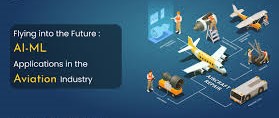
Artificial intelligence (AI) and automation are revolutionising military aviation. These technologies enable maximum operational capability through autonomous flight, real-time decision-making, and enhanced resource management. They also raise significant safety concerns, including system reliability, ethical considerations, and the need for continuous human-AI interaction. Achieving an optimal balance between enhancing capability and ensuring operational safety is essential. This requires rigorous testing, adaptive standards, and human oversight to ensure mission success and promote safety.
Capabilities Enhanced by AI and Automation
Automation is transforming military aviation by adding new capabilities, enhancing combat effectiveness and efficiency.
Autonomous Operations and Swarm Tactics. AI enables autonomous take-off, navigation, and landing even in hostile or GPS-denied environments. Projects such as the U.S. Department of Defence’s Replicator vision of sending thousands of autonomous vehicles, including drones, on deployment by 2026. They intend to employ swarm intelligence to be utilised for reconnaissance, targeting, and swarming enemy defences. Boeing’s MQ-28 Ghost Bat is an example of a system that augments manned fighters by carrying out reconnaissance and engaging threats independently, de-loading pilot workload. India’s Combat Air Teaming Systems (CATS) and Rustom UAVs use sensor fusion technology, so that manned and unmanned platforms can work together in real time to attack and defend against threats.
Predictive Maintenance and Logistics. Predictive maintenance with AI analyses data from aircraft engines to predict failures, maintaining optimal scheduling and fleet availability. Digital twins, or virtual replicas that account for wear, damage, and flight history, allow faults to be preemptively identified before they occur. A 30% reduction in downtime and millions of dollars in savings can be achieved. The Air Forces and others have utilised these systems to improve logistics and strategic readiness, with aircraft still mission-effective.
Navigation and Decision Support. AI routes for safety and fuel optimisation. AI in emerging fighters such as DARPA’s Air Combat Evolution (ACE) program assists pilots with real-time battlefield analysis and threat identification. This aids faster and more accurate decisions. For instance, AI-controlled F-16s have executed high-speed manoeuvres exceeding 550 mph, responding to dynamic combat scenarios in increments of a fraction of a second.
Command and Control Improvements. The US Joint All-Domain Command and Control (JADC2) employs AI to enable unfettered sharing of information across air, land, sea, and cyber domains. This enables man-machine collaboration for rapid and precise decision-making. AI systems such as the XQ-58A Valkyrie demonstrate autonomous reconnaissance, jamming, and strike operations. They are force multipliers in network-centric warfare. These innovations disrupt the power balance, enabling a rapid response against emerging threats.
Safety Risks and Challenges
Just as AI enhances competence, it poses real threats that must be dealt with in order to promote safe functioning.
System Reliability and Failures. AI’s adapting behaviour can result in unpredictable effects, i.e., errors or bias, during exceptional incidents. Past software failures in military systems have led to accidents, and poor testing increases the potential for these effects. Premature deployment of unmanned systems can result in unforeseen lethal outcomes, i.e., in actual drone crashes during the Ukraine wars.
Ethical and Stability Implications. Autonomous systems can misinterpret circumstances, possibly worsening conflict or jeopardising global stability. Moral dilemmas arise with AI-generated lethal decisions, notably responsibility dilemmas under international humanitarian law. The swift proliferation of autonomous drones addresses actual threats in the world and not alleged dangers such as bioterrorism.
Certification and Regulatory Gaps. Current standards, such as DO-178C and MIL-HDBK-516C, do not fully account for AI’s adaptability. This creates challenges in validation and exposes hardware vulnerabilities. Unlike civil aviation, military applications often experience inconsistent safety compliance, complicating certification for AI-driven systems.
Human Factors. There can be an overdependence on AI, causing pilot proficiency to be lost, particularly in manual flying and quick decision-making. Control handover between human pilots and AI may be challenging in a crisis. There can be automation bias that causes pilots to ignore critical cues. New ideas, e.g., AI-checked conditions of ejection seats and well-being of the pilot, are thrilling but require scrupulous application so that it does not create unforeseen problems.
Cybersecurity Threats. Military aircraft powered by AI are vulnerable to hacking, spoofing, and adversarial attack. These can invalidate important systems and bring about disastrous failures. Cybersecurity plays an important role in maintaining operational integrity.
Balancing Capability with Safety: Strategies and Frameworks
Various measures are being taken by military forces across the globe to contain risks and maximise benefits from AI.
Strict Testing and Phased Introduction. Projects such as Replicator and DARPA’s ACE target strict testing in complete simulations to predict infrequent events and provide reliability prior to deployment. Phased integration within simulated areas provides additional robustness. Autonomy training conducted by the U.S. Air Force employs onboard sensors for enemy detection, while periodic manual flight and emergency procedure training maintain pilot proficiency.
Human-in-the-Loop Systems. Human control over major decisions, particularly the application of force, is important for secure integration of AI. AI is used as a co-pilot and never a replacement, with override rights still under human pilots. For example, autonomous jet test flights like those for the XQ-58A Valkyrie include standby pilots to ensure control.
Redundancy and Fail-Safes. Various safety features, such as manual reversion modes and fallback emergency provisions, enable pilots to regain control when AI systems fail. Tough validation procedures, as those in place for Helsing’s Centaur agent and its interaction with Saab’s Gripen E, enable AI to integrate with installed systems securely.
Certification Standard Development. The development of a systematic safety approach to AI-critical systems involves reviewing existing standards, such as MIL-HDBK-516C and the EASA AI Roadmap, conducting a gap analysis to identify where weaknesses lie, iteratively revising standards to incorporate AI-specific conditions, and examining them in depth to remove overlaps and new requirements. It adapts civil and military systems to deliver effective verification, validation, and continued airworthiness for AI systems.
Talent Development and Recruitment. Artificial intelligence technologies for weather forecasting, maintenance, and operational decision-making enhance readiness through optimising training. Hire AI specialists to monitor and refresh high-risk models under strict testing to provide long-term reliability and safety.
Conclusion
Military aviation is being transformed by artificial intelligence and automation. They provide capabilities that have never been seen before in terms of autonomy, decision-making, and logistics. They bring significant safety, ethical, and strategic problems, too. The future relies on man-machine collaboration, where AI augments human decision-making and not substitutes it. Through constant testing, adaptive certification standards, robust cybersecurity, and ethical governance, militaries are able to leverage AI potential while reducing risks. Ongoing global forums, such as 2025 panels, present cooperation and human control across the globe to ensure AI assists airpower responsibly, balancing capability and safety in driving sustainable advancement.
Please Add Value to the write-up with your views on the subject.
For regular updates, please register your email here:-
References and credits
To all the online sites and channels.
Pics Courtesy: Internet
Disclaimer:
Information and data included in the blog are for educational & non-commercial purposes only and have been carefully adapted, excerpted, or edited from reliable and accurate sources. All copyrighted material belongs to respective owners and is provided only for wider dissemination.
References:-
- Cummings, M. L. (2017). Artificial intelligence and the future of warfare. Chatham House.
- Eraslan, E., Yildiz, Y., & Annaswamy, A. M. (2019). Shared control between pilots and autopilots: Illustration of a cyber-physical human system. IEEE Transactions on Human-Machine Systems, 49(5), 436–447.
- Heydarian Pashakhanlou, A. (2019). AI, autonomy, and airpower: The end of pilots? European Security, 28(4), 523–538.
- Hobbs, K. L., & Li, B. (2023). Safety, trust, and ethics considerations for human-AI teaming in aerospace control. Journal of Aerospace Information Systems, 20(6), 280–293.
- Jurado, R. D. A. (2024). The current state of standardisation of AI for civil and military aviation. Safety Science, 169, 105178.
- Jurado, R. D. A. (2025). Enhancing safety in military aviation: A systematic approach to the development of AI certification standards. Aerospace, 12(1), 72.
- Kirwan, B. (2024). The impact of artificial intelligence on aviation safety culture. Aerospace, 11(10), 863.
- Lopes, N. M. (2025). Challenges and prospects of artificial intelligence in aviation: A bibliometric and systematic review. Journal of Air Transport Management, 128, 102054.
- Mayer, M. (2023). Artificial intelligence and human-autonomy teaming in military systems. Journal of Defence Studies, 7(3), 45–61.
- Molnar, T. G., Kousik, S., Singh, S., & Ames, A. D. (2024). Collision avoidance and geofencing for fixed-wing aircraft with control barrier functions. IEEE Transactions on Control Systems Technology, 32(5), 1954–1967.
- Rashid, A. B. (2023). Artificial intelligence in the military: An overview of capabilities and risks. Computational Intelligence and Neuroscience, 2023, 1–12.
- Sachdev, A. K. (2021). Artificial intelligence in military aviation. Air Power Journal, 16(2), 1–18.
- Tafur, C. L., Gómez, J. A. Y Martínez, P. (2025). Applications of artificial intelligence in air operations. Aerospace Science and Technology, 152, 109123.