
Inputs (video bytes) provided to the NDTV (Hindi) on 14 Mar 26.
The recent United States attack (on March 13-14, 2026) on Kharg Island marks a major escalation in the ongoing conflict between Washington and Tehran. The strike targeted military installations on the island, which serves as the primary hub for Iranian oil exports. Although the oil terminals themselves were reportedly spared, the operation has raised serious concerns about the future of the war, Iran’s potential response, and the stability of global energy markets.
This development highlights how modern conflicts increasingly involve not only military objectives but also economic pressure, particularly through attacks on critical infrastructure. The targeting of Kharg Island has therefore become a key geopolitical event with consequences that could extend far beyond the Middle East.
Strategic Importance of Kharg Island
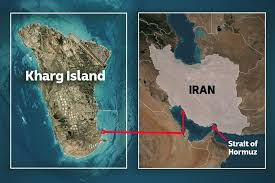
Kharg Island is far more than a military target; it is the absolute epicentre of Iran’s economic survival. The 83-square-kilometre island is located in the Persian Gulf, 25 kilometres off the southwestern coast. The island is often referred to as the “crown jewel” of the Islamic Republic for several critical reasons.
It is located off the coast of Iran’s Bushehr province. Despite its modest size, it holds enormous economic and strategic significance for Iran. The island functions as the country’s main oil export terminal and handles the vast majority of its crude shipments to international markets.
Estimates suggest that around 90% of Iran’s oil exports (approximately 1.7 million barrels per day) pass through Kharg Island, making it the backbone of the country’s petroleum industry and a central pillar of its economy.
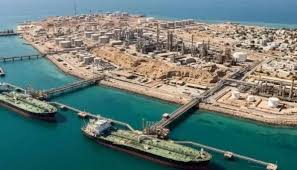
The island contains massive oil storage facilities capable of holding tens of millions of barrels of crude. Its deep-water terminals allow large supertankers to dock and load oil, something that many parts of Iran’s coastline cannot accommodate due to shallow waters.
Because Iran’s government relies heavily on oil revenues to finance its state budget, military operations, and social programs, Kharg Island effectively acts as the financial lifeline of the Iranian state. Any disruption to operations there can immediately reduce Iran’s export capacity and significantly weaken its economy.
The island has long been regarded as one of the most sensitive and heavily protected targets in the Persian Gulf.
The U.S. Strike and Its Objectives
According to reports, U.S. forces conducted airstrikes that destroyed military installations and defensive systems (including air defences, a naval base, missile/mine storage sites, and related facilities) on Kharg Island. However, the oil infrastructure itself was not directly attacked.
This selective targeting reflects a strategic calculation by Washington. By striking military defences rather than oil facilities, the United States may have intended to send a strong warning to Iran without immediately triggering a full-scale economic crisis in global energy markets.
At the same time, the attack demonstrates that the United States possesses the capability to strike at the heart of Iran’s energy system if tensions escalate further. U.S. officials have also indicated that oil infrastructure could become a target if Iran disrupts international shipping or escalates attacks on U.S. forces and allies in the region.
This approach effectively places Kharg Island at the center of strategic pressure in the conflict.
Possible Iranian Retaliation
Iran is unlikely to ignore an attack on such a critical national asset. Several possible retaliatory options are being discussed by military analysts.
Disrupting the Strait of Hormuz. One of Iran’s most powerful strategic tools is its ability to threaten shipping through the Strait of Hormuz. Roughly 20% of the world’s oil supply passes through this route, making it one of the most important energy chokepoints on Earth. Iran could attempt to mine the strait, attack tankers, or use missiles and drones to disrupt shipping traffic. Even a partial disruption would significantly affect global energy supplies.
Attacking Regional Energy Infrastructure. Iran may also target oil facilities in neighbouring countries allied with the United States, such as Saudi Arabia or the United Arab Emirates. Such strikes could mirror previous attacks on Gulf energy infrastructure and would aim to increase economic pressure on Western allies.
Targeting U.S. Military Bases. Iran has several options for direct military retaliation against U.S. forces stationed in the Middle East. American bases in Iraq, Bahrain, Qatar, and other Gulf states are within range of Iranian ballistic missiles and drones.
Expanding Proxy Warfare. Iran could also rely on allied militant groups across the region. Organisations in Lebanon, Iraq, Syria, and Yemen have historically acted as Iran’s proxies and may launch attacks on U.S. interests or allied targets.
Any of these responses could escalate the conflict into a broader regional war.
Impact on Global Energy Markets
The attack on Kharg Island has already raised concerns in global energy markets. Because the island is responsible for the majority of Iranian oil exports, any disruption could remove significant volumes of crude from global supply.
Even before the strike, tensions in the region had caused oil prices to rise sharply. Analysts warn that further escalation could push prices dramatically higher, potentially reaching levels not seen in years.
The situation becomes even more serious if shipping through the Strait of Hormuz is disrupted. A prolonged closure or reduction in tanker traffic would create a major supply shock for the global oil market.
In recent weeks, tanker traffic through the strait has already declined dramatically amid fears of attacks, illustrating how quickly the conflict can affect global energy flows.
Economic Consequences for the World
The broader economic consequences of escalation could be severe. Oil price spikes typically lead to higher transportation costs, increased inflation, and pressure on national economies.
Countries heavily dependent on energy imports—especially in Asia and Europe—would be particularly vulnerable. China, India, Japan, and South Korea all rely heavily on oil shipments passing through the Persian Gulf.
Higher oil prices could also slow global economic growth. If energy costs remain elevated for an extended period, industries such as aviation, shipping, and manufacturing may face rising operational expenses.
A prolonged disruption to Middle Eastern energy supplies could even trigger a global recession, especially if combined with instability in financial markets and trade routes.
Conclusion
The U.S. attack on Kharg Island represents a pivotal moment in the escalating conflict between the United States and Iran. While the strike targeted military facilities rather than oil infrastructure, it has demonstrated that one of Iran’s most important economic assets is vulnerable.
For Iran, Kharg Island is not merely a piece of territory—it is the cornerstone of the nation’s oil export system and a vital source of government revenue. Any sustained disruption to operations there could have profound consequences for Iran’s economy and its ability to sustain military operations.
At the same time, Iran possesses several options for retaliation, ranging from attacks on regional energy infrastructure to disrupting global shipping through the Strait of Hormuz. Such actions could dramatically intensify the conflict and push the region closer to a wider war.
Perhaps the most significant concern is the potential impact on the global economy. Because the Persian Gulf remains the world’s most important energy corridor, any escalation involving Kharg Island or the Strait of Hormuz could trigger sharp increases in oil prices and widespread economic instability.
In this sense, the attack on Kharg Island is not just a regional military development—it is a geopolitical event with global consequences that could shape the future of energy security and international economic stability.
Please Add Value to the write-up with your views on the subject.
For regular updates, please register your email here:-
References and credits
To all the online sites and channels.
Pics Courtesy: Internet
Disclaimer:
Information and data included in the blog are for educational & non-commercial purposes only and have been carefully adapted, excerpted, or edited from reliable and accurate sources. All copyrighted material belongs to respective owners and is provided only for wider dissemination.
References:
Axios. (2026, March 13). U.S. conducts major bombing of strategic Iran island. https://www.axios.com/2026/03/13/iran-strike-trump-us
Hamilton, J. D. (2011). Historical oil shocks. In R. E. Parker & R. M. Whaples (Eds.), The handbook of major events in economic history (pp. 239–265). Routledge.
International Energy Agency. (2023). World energy outlook 2023. International Energy Agency.
International Monetary Fund. (2024). World economic outlook: Commodity price shocks and global growth. IMF.
Mansour, M. (2026, March 11). The orphan pearl: Inside Kharg, the beating heart of Iran’s oil empire. Al Jazeera. https://www.aljazeera.com/features/2026/3/11/the-orphan-pearl-inside-kharg-the-beating-heart-of-irans-oil-empire
Reuters. (2026, March 14). Kharg Island struck by U.S. is key hub for Iran oil exports. https://www.reuters.com/business/energy/kharg-island-struck-by-us-is-key-hub-iran-oil-exports-2026-03-14
Reuters. (2026, March 14). Trump threatens strike on Iran’s Kharg Island oil network if shipping lanes remain blocked. https://www.reuters.com/world/middle-east/trump-threatens-strike-irans-kharg-island-oil-network-if-shipping-lanes-remain-2026-03-14
S&P Global Commodity Insights. (2025). Iran adds crude storage capacity at Kharg Island. https://www.spglobal.com/energy/en/news-research/latest-news/crude-oil/051825-iran-adds-2-million-barrels-of-crude-storage-capacity
Tehran Times. (2007). Iran exports over 90% of its crude oil via Kharg Island. https://www.tehrantimes.com/news/130703/Iran-exports-over-90-of-its-crude-oil-via-Kharg-Island
U.S. Energy Information Administration. (2024). World oil transit chokepoints. https://www.eia.gov/international/analysis/special-topics/World_Oil_Transit_Chokepoints
World Bank. (2024). Commodity markets outlook. World Bank.
