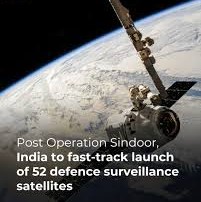
712: EYES IN THE SKY: OPERATION SINDOOR SPURS INDIA’S SPACE DEFENCE SURGE


My Article was published in the “Life of Soldier”  Journal, Aug 25.


In the wake of Operation Sindoor, conducted from May 7 to 10, 2025, India has launched an ambitious mission to enhance its space-based defence capabilities. The operation, a retaliatory strike against terror camps in Pakistan following the devastating Pahalgam attack on April 22, 2025, underscored the critical need for “deep” and “persistent” surveillance over adversarial territories. This necessity has prompted India to accelerate the deployment of 52 dedicated defence satellites under the Space-Based Surveillance (SBS) Phase-3 programme, which was approved in October 2024 with a budget of Rs 26,968 crore. Coupled with the finalisation of a comprehensive military space doctrine, India is poised to transform its strategic surveillance and defence framework, reducing reliance on foreign assets.


The Catalyst: Operation Sindoor

Operation Sindoor was a pivotal moment in India’s defence strategy, highlighting both the strengths and limitations of its current surveillance capabilities. The operation targeted terror infrastructure in Pakistan-occupied territories, relying on satellite imagery from foreign providers. While these assets provided critical intelligence, the operation exposed India’s dependence on external sources for real-time, high-resolution imagery. This dependency posed risks, including delayed access to data and potential vulnerabilities in data security, especially during high-stakes military engagements.

The Pahalgam attack, which killed 29 people, including civilians and security personnel, revealed gaps in India’s ability to monitor cross-border activities with the granularity and persistence required for pre-emptive or retaliatory actions. The subsequent success of Operation Sindoor, while a tactical victory, emphasised the need for an indigenous, robust, and self-reliant space-based surveillance system. The operation’s reliance on foreign satellites underscored the urgency to develop a dedicated constellation capable of providing continuous, high-resolution coverage of strategic areas, including Pakistan, China, and the Indian Ocean Region (IOR).


The Space-Based Surveillance (SBS) Phase-3 Programme

The Indian government had approved the SBS Phase-3 programme in October 2024, allocating Rs 26,968 crore to deploy 52 defence satellites. This ambitious initiative, led by the Indian Space Research Organisation (ISRO) in collaboration with private industry, aims to establish a comprehensive space-based intelligence, surveillance, and reconnaissance (ISR) network by 2029. The programme is structured to leverage both public and private sector expertise, with ISRO tasked with launching 21 satellites and three private companies deploying the remaining 31. Key Features of the Programme are as follows:-


Satellite Constellation. The 52 satellites will operate in a mix of low Earth orbit (LEO) and geostationary orbit (GEO). LEO satellites, positioned at altitudes between 500 and 900 km, will provide high-resolution imagery (up to 0.3 meters), ideal for detailed monitoring of military installations, troop movements, and infrastructure. GEO satellites, stationed at 36,000 km, will provide continuous wide-area coverage, which is critical for tracking maritime activities in the IOR and monitoring large-scale developments along India’s borders.


Technological Capabilities. The satellites will be equipped with advanced synthetic aperture radar (SAR) and electro-optical sensors, enabling all-weather, day-and-night imaging. SAR systems are exceptionally vital for penetrating cloud cover and monitoring during adverse weather conditions, a frequent challenge in regions like the Himalayas. The constellation will also incorporate secure communication links to ensure real-time data transmission to ground stations and military command centers.


Public-Private Partnership. The involvement of private companies marks a significant shift in India’s space strategy. Companies like Tata Advanced Systems, Larsen & Toubro, and startups such as Pixxel and Skyroot Aerospace are expected to contribute to satellite manufacturing and launch services. This collaboration aims to accelerate deployment, reduce costs, and foster innovation in India’s burgeoning private space sector.


Timeline and Deployment.  The first satellite launch is scheduled for April 2026, with the entire constellation expected to be operational by 2029. The phased rollout will prioritise coverage of high-threat areas, including the Line of Actual Control (LAC) with China and the Line of Control (LoC) with Pakistan, before expanding to broader regional surveillance.


Strategic Imperatives

The SBS Phase-3 programme is driven by India’s need to counter growing regional security challenges. China’s expansive space program, with over 1,000 satellites, including advanced ISR and anti-satellite (ASAT) capabilities, poses a significant threat. Beijing’s ability to disrupt or destroy satellites, demonstrated by its 2007 ASAT test, underscores the need for India to develop resilient and redundant space assets. The People’s Liberation Army (PLA) has integrated space-based ISR into its military doctrine, enabling precise targeting and real-time battlefield awareness, as seen in its activities along the LAC.

Pakistan, while less advanced in space technology, relies on Chinese support for its satellite capabilities, including the Pakistan Remote Sensing Satellite (PRSS-1). The growing China-Pakistan nexus necessitates enhanced surveillance to monitor joint military exercises, infrastructure development (e.g., the China-Pakistan Economic Corridor), and potential terror activities emanating from Pakistani territory.

The IOR, a critical maritime domain, is another focus area. With China’s increasing naval presence and the strategic importance of chokepoints like the Malacca Strait, India requires persistent surveillance to safeguard its maritime interests and counter piracy, smuggling, and hostile naval operations.


Complementary Initiatives: HAPS and Beyond

In addition to the satellite programme, the Indian Air Force (IAF) is pursuing three high-altitude platform systems (HAPS) aircraft to complement space-based ISR. These solar-powered, unmanned platforms, operating at altitudes of 18-20 km, can remain airborne for weeks, providing persistent surveillance over specific areas. HAPS aircraft are particularly suited for monitoring border regions and can serve as a cost-effective alternative to satellites for localised ISR missions.

The IAF is also exploring the integration of artificial intelligence (AI) and machine learning (ML) to process vast amounts of satellite data. AI-driven analytics can identify patterns, detect anomalies, and provide actionable intelligence in real time, enhancing India’s ability to respond to threats swiftly.


Challenges and Opportunities

While the SBS Phase-3 programme and the military space doctrine represent a significant leap forward, challenges remain. The ambitious timeline requires seamless coordination between ISRO, private companies, and the military, which could face delays due to technical complexities or funding constraints. The private sector’s relative inexperience in defence-grade satellite manufacturing may also pose risks to quality and reliability.

Moreover, the global space environment is increasingly contested, with space debris and ASAT threats complicating satellite operations. India must invest in space situational awareness (SSA) capabilities to monitor and mitigate these risks. International norms on space militarisation, which are still in their infancy, could also impact India’s plans, necessitating diplomatic efforts to safeguard its interests.

On the opportunity front, the programme positions India as a significant space power, fostering technological innovation and economic growth through the private space sector. The public-private partnership model could serve as a blueprint for future defence projects, reducing costs and enhancing efficiency. Additionally, the doctrine’s focus on international cooperation opens avenues for technology transfers and strategic alliances, strengthening India’s geopolitical standing.


Conclusion

Operation Sindoor served as a wake-up call for India, highlighting the indispensable role of space-based surveillance in modern warfare. The SBS Phase-3 programme, with its 52 dedicated defence satellites, and the forthcoming military space doctrine mark a transformative step toward self-reliance and strategic dominance in the space domain. By addressing regional threats, leveraging public-private partnerships, and integrating advanced technologies like HAPS and AI, India is poised to secure its borders, maritime interests, and national security.


Please Add Value to the write-up with your views on the subject.


2110
Default rating

Please give a thumbs up if you  like The Post?


For regular updates, please register your email here:-

Subscribe


References and credits

To all the online sites and channels.

Pics Courtesy: Internet

Disclaimer:

Information and data included in the blog are for educational & non-commercial purposes only and have been carefully adapted, excerpted, or edited from reliable and accurate sources. All copyrighted material belongs to respective owners and is provided only for wider dissemination.


References:-


  1. Times of India (ToI). (2025). “India to Fast-Track 52 Defence Satellites After Operation Sindoor.”
  2. Indian Space Research Organisation (ISRO). (2024). “Space-Based Surveillance Phase-3 Programme Overview
  3. Ministry of Defence, Government of India. (2024). “Approval of Rs 26,968 Crore for Defence Satellite Programme.” Press Release, October 2024.
  4. Defence Space Agency (DSA). (2019). “Mission Shakti and India’s Anti-Satellite Capabilities.” Government of India.
  5. Jane’s Defence Weekly. (2025). “India’s High-Altitude Platform System (HAPS) Acquisition for ISR Missions.”
  6. Stockholm International Peace Research Institute (SIPRI). (2024). “China’s Space Programme and Anti-Satellite Capabilities.” SIPRI Yearbook 2024.
  7. Observer Research Foundation (ORF). (2025). “India’s Military Space Doctrine: A Strategic Roadmap.”
  8. The Hindu. (2025). “Operation Sindoor: India’s Response to Pahalgam Attack.” May 12, 2025.
  9. SpaceNews. (2024). “India’s Private Space Sector: Emerging Players in Defence Satellite Manufacturing.”
  10. Center for Strategic and International Studies (CSIS). (2024). “Space Situational Awareness and the Contested Space Environment.”

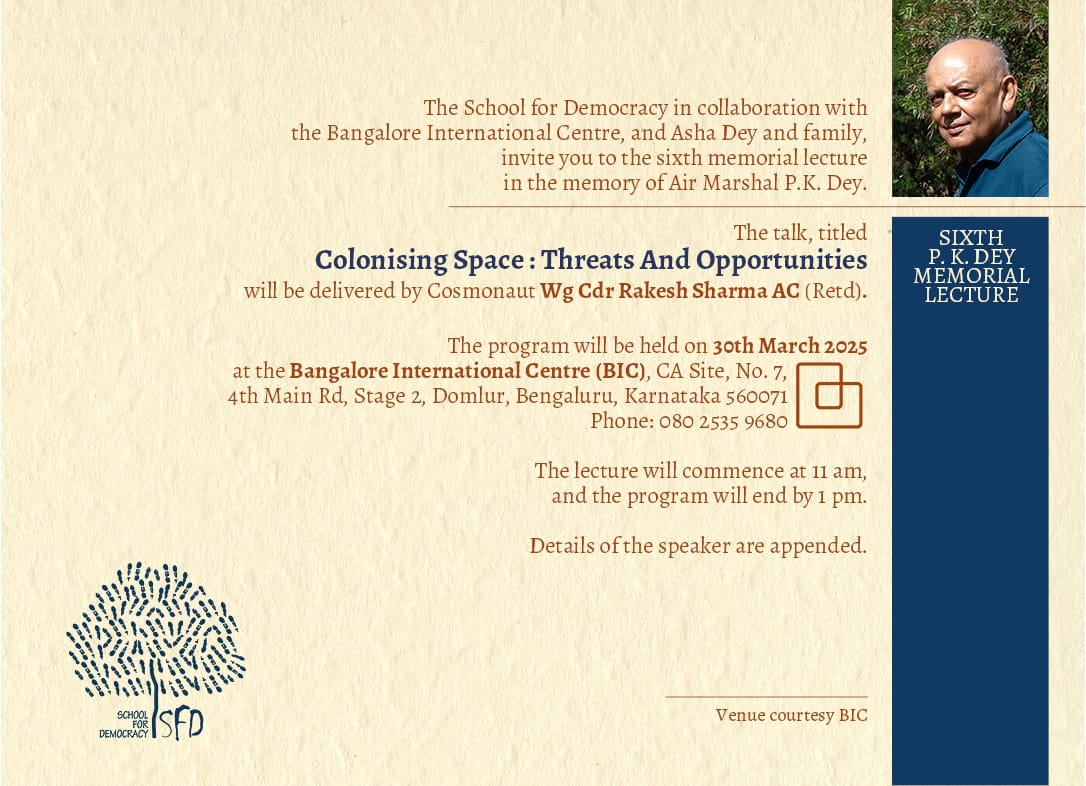
631: COLONISING SPACE: OPPORTUNITIES AND CHALLENGES


The sixth Air Marshal PK Dey Memorial Lecture was held on 30 March 25.


Organised by the Dey Family & School for Democracy

at Bangalore International Center


Topic

Colonising Space: Threats and Opportunities.


The lecture was delivered by Wg Cdr RK Sharma (Retd)


My article on the subject: –


SPACE COLONISATION: OPPORTUNITIES AND CHALLENGES.


The idea of colonising space has long captured human imagination, from the early musings of science fiction writers to the serious scientific discussions of today. With rapid technological advancements, space colonisation is shifting from fantasy to a potential reality. Space agencies such as NASA and ESA and private enterprises like SpaceX and Blue Origin actively develop plans for human settlement beyond Earth. However, while space colonisation offers numerous opportunities, it also presents significant threats. Space colonisation offers potential benefits but also has its associated challenges.


Opportunities

Resource Extraction and Economic Growth. One of the primary motivations for space colonisation is the immense untapped wealth available in space. Asteroids contain vast amounts of precious metals like platinum, gold, and rare earth elements, which are critical for modern technology. The Moon and Mars are also resource rich. Commercialising these resources could reduce dependence on Earth’s limited resources.

Expansion of Human Civilisation. Colonising space would allow humanity to expand beyond Earth, reducing the risks associated with overpopulation, resource depletion, and environmental degradation. Establishing permanent human settlements on the Moon, Mars, or space habitats would ensure that civilisation continues to thrive even if Earth faces catastrophic events such as nuclear war, pandemics, or climate change.

Technological and Scientific Advancements. Space colonisation requires ground breaking innovations in various fields, including artificial intelligence, robotics, life-support systems, and sustainable energy production. The technological advancements necessary for sustaining life in space could lead to solutions that improve life on Earth, such as more efficient renewable energy systems, improved medical technologies, and enhanced AI-driven automation.

Inspiration and Cultural Evolution. The prospect of colonising space has the potential to inspire new generations to pursue careers in science, engineering, and space exploration. The cultural impact of becoming a multi-planetary species could also lead to new art forms, philosophy, and human identity as societies adapt to living in extra-terrestrial environments.

Survival of the Human Species. One of the most compelling arguments for space colonisation is ensuring humanity’s survival. Earth is vulnerable to existential threats such as asteroid impacts, super volcanic eruptions, and global pandemics. Establishing colonies in space would safeguard against such catastrophes, ensuring that human civilisation endures despite planetary-scale disasters.


Challenges

Harsh and Hostile Environments. Space is an inherently hostile environment. Extreme temperatures, high radiation levels, and the absence of breathable air make it challenging for humans to survive. The psychological and physiological impacts of prolonged space travel and living in confined habitats could pose serious risks to human health and well-being.

Technological and Logistical Challenges. Building and maintaining colonies in space will require significant advancements in technology and logistics. Current propulsion technologies make space travel slow and expensive. Additionally, establishing self-sustaining colonies that can produce food, oxygen, and water without constant resupply from Earth is a major challenge that needs to be addressed before large-scale colonisation can occur.

Economic and Ethical Concerns. Space colonisation will likely be dominated by wealthy nations and private corporations, raising concerns about economic inequality and ethical issues. If access to space remains restricted to a select few, it could lead to exploiting extra-terrestrial resources by powerful entities, exacerbating global inequalities. There are also ethical questions regarding the potential displacement or destruction of extra-terrestrial microbial life, should it be discovered.

Geopolitical and Military Conflicts. The competition for space resources and strategic locations could lead to conflicts among nations. Just as territorial disputes exist on Earth, similar conflicts could emerge over the ownership of the Moon, Mars, and valuable asteroids. The militarisation of space poses another serious threat, as countries and corporations could use space-based weapons for strategic dominance, leading to a new form of the space race with potentially dangerous consequences.

Environmental Risks and Contamination. Human activities in space could have unforeseen ecological consequences. Space debris is already a growing problem, with thousands of defunct satellites and debris fragments posing collision risks. Additionally, the potential for planetary contamination—both forward (Earth microbes contaminating other planets) and backward (extra-terrestrial microbes posing risks to Earth)—raises concerns about irreversible ecological damage.


The Options and Possibilities

There are several options for human expansion beyond Earth, each with unique possibilities and challenges.

Colonising the Moon. The Moon, Earth’s closest celestial body, is the most immediate and realistic option for colonisation. NASA, China, and private companies like SpaceX and Blue Origin have expressed plans to establish permanent lunar bases. The Moon offers several advantages, such as lower gravity (1/6th of Earth’s), which makes launching spacecraft cheaper, and water ice in polar craters, which can be used for drinking water and fuel production. Challenges include extreme temperature variations, lack of a breathable atmosphere, and solar and cosmic radiation exposure. However, underground bases or structures made from lunar regolith could mitigate some risks. The Moon could serve as a stepping stone for deeper space missions, providing a platform for spacecraft refuelling and construction.

Mars: The Next Earth. Mars is the most frequently discussed candidate for colonisation due to its similarities to Earth, including a 24.6-hour day, an atmosphere (though thin and mainly carbon dioxide), and water ice. Elon Musk’s SpaceX is working toward making Mars colonisation a reality with its Starship rocket. Mars presents opportunities for self-sustaining agriculture, resource extraction, and potential terraforming. However, colonising Mars has significant challenges like long travel times (6-9 months), harsh radiation, low temperatures, and low atmospheric pressure. Some scientists propose living in underground lava tubes or using domed habitats until a more permanent solution is developed.

Orbital Space Stations and Artificial Habitats. Instead of colonising planets, some scientists advocate for massive space stations or O’Neill cylinders—gigantic rotating habitats capable of simulating Earth-like gravity. These structures could be built in Earth’s orbit, the Moon’s orbit, or at Lagrange points, where gravitational forces create stable positions. The advantage of space stations is that they can be designed to optimise conditions for human life, including controlled gravity, radiation shielding, and resource recycling. However, building such mega structures would require vast amounts of materials and energy, likely sourced from the Moon or asteroids.

Colonising the Asteroid Belt. Asteroids contain abundant raw materials, including metals like iron and nickel and rare elements critical for industry. Some suggest hollowing out large asteroids and converting them into space habitats could provide self-sustaining colonies. The biggest challenges would be providing artificial gravity, possibly through rotation, and securing a long-term food and water supply.

Interstellar Colonisation: The Long-Term Dream. Beyond our solar system, humanity could look toward exo-planets as future homes. Concepts like generation ships, suspended animation, and warp drives have been proposed for interstellar travel, but current technology is far from making such missions viable. However, discoveries of exo-planets in distant stars’ habitable zones suggest that future propulsion and life-support systems breakthroughs could one day enable interstellar colonisation.


Potential Strategies for Safe and Sustainable Space Colonisation

Developing Advanced Propulsion Technologies. Faster and more efficient propulsion systems, such as nuclear propulsion or ion drives, could make space travel more practical and cost-effective. Reducing travel time to Mars or beyond would mitigate many health risks associated with prolonged exposure to space radiation.

Creating Self-Sustaining Habitats. Developing closed-loop life-support systems that recycle air, water, and waste will be crucial for long-term space habitation. Hydroponic farming, 3D printing, and advanced robotics can help create self-sufficient colonies that minimise reliance on Earth for supplies.

International Collaboration and Regulation. International cooperation is necessary to prevent conflicts over space resources and ensure ethical practices. Treaties and agreements similar to the Outer Space Treaty of 1967 should be expanded to address new challenges, ensuring that space remains a peaceful and accessible domain for all humanity.

Ethical Exploration and Environmental Protection. Space exploration should be conducted with moral considerations, ensuring that planetary environments are preserved and any potential extra-terrestrial life is studied responsibly. Establishing guidelines for planetary protection can help prevent harmful contamination and ensure sustainable practices in space exploration.

Public Engagement and Education. Encouraging public interest and investment in space colonisation is essential for long-term success. Governments, educational institutions, and private companies should work together to promote space science and exploration through outreach programs, media engagement, and educational initiatives.


Conclusion

Space colonisation is no longer a fantasy but a future goal within humanity’s reach. It presents a unique combination of opportunities and threats. While it holds the promise of economic expansion, technological progress, and the survival of humanity, it also brings challenges related to environmental risks, ethical dilemmas, and geopolitical tensions. A balanced approach that prioritises sustainable development, international cooperation, and ethical considerations will be necessary to ensure that humanity’s venture into space is a success. If done responsibly, colonising space could begin a new era for human civilisation—one where our destiny is no longer confined to Earth but extends into the vastness of the cosmos. While technological, ethical, and financial hurdles remain, ongoing efforts in lunar and Martian exploration and orbital habitat development suggest that this century’s first human colonies beyond Earth may be established. As science and technology progress, the dream of becoming an interplanetary species moves closer to reality, opening up new frontiers for exploration, survival, and human ingenuity.


Please Do Comment.


2110
Default rating

Please give a thumbs up if you  like The Post?


For regular updates, please register your email here:-

Subscribe


References and credits

To all the online sites and channels.

Pics Courtesy: Internet

Disclaimer:

Information and data included in the blog are for educational & non-commercial purposes only and have been carefully adapted, excerpted, or edited from reliable and accurate sources. All copyrighted material belongs to respective owners and is provided only for wider dissemination.


References:-

  1. Crawford, Ian A. “Space Colonization and Energy Supply: A Scenario for the 21st Century.” Space Policy, vol. 27, no. 4, 2011, pp. 217–222.
  1. Metzger, Philip T. “Space Resources Fundamentals: Implications for Human Settlement.” Acta Astronautica, vol. 173, 2020, pp. 37–52.
  1. Cockell, Charles S. “The Ethical Challenges of Space Colonisation.” New Space, vol. 2, no. 3, 2014, pp. 113-118.
  1. Szocik, Konrad et al. “Political and Legal Challenges of Space Colonization: Space Settlers and Earth Independence.” Space Policy, vol. 51, 2020, p. 101337.
  1. Grinspoon, David. “Colonizing Other Planets: Prospects for the Future of Humanity.” Philosophical Transactions of the Royal Society A: Mathematical, Physical and Engineering Sciences, vol. 376, no. 2134, 2018, pp. 1-15.
  1. Blue Origin. “The Road to Space Colonization.” Blue Origin, 2023.
  1. Impey, Chris. Beyond: Our Future in Space. W. W. Norton & Company, 2015.
  1. O’Neill, Gerard K. The High Frontier: Human Colonies in Space. William Morrow, 1976.
  1. Sagan, Carl. Pale Blue Dot: A Vision of the Human Future in Space. Random House, 1994.
  2. Zubrin, Robert. The Case for Mars: The Plan to Settle the Red Planet and Why We Must. Free Press, 2011.

549: SPACE POWER: SHAPING FUTURE CONFLICTS


Pic Courtesy Net


My Article published on the Indus International Research Foundation

on 06 Dec 24.

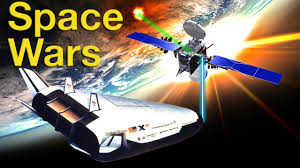
As nations increasingly recognise the strategic importance of space, the implications of space-based technologies and strategies for future warfare have come into sharp focus. The militarisation of space has evolved from a speculative concern to a pressing reality, with countries investing heavily in capabilities that leverage space for national security and military advantage. This article explores the implications of space-based technologies and strategies for future warfare, examining their potential impact on military operations, geopolitical dynamics, and international security to illuminate the challenges and opportunities presented by the rise of space in the defence landscape.


Evolution of Space-based Military Capabilities. Military interest in space can be traced back to the Cold War when the United States and the Soviet Union recognised the strategic advantages that space capabilities could confer. The launch of Sputnik in 1957 marked the beginning of the space race, leading to significant advancements in satellite technology, reconnaissance, and missile defence systems. In the decades since, space has become integral to military operations. Satellite systems provide crucial communication, navigation, reconnaissance, and surveillance support. For example, the Global Positioning System (GPS) has revolutionised military navigation and targeting capabilities, enabling precision strikes and enhancing situational awareness on the battlefield.


Recent Developments. In recent years, the pace of technological advancements in space has accelerated dramatically. Emerging technologies such as miniaturised satellites, space-based sensors, and the potential for its weaponisation are reshaping the strategic landscape. Notably, the rise of commercial space ventures has democratised access to space, allowing non-state actors to contribute to military capabilities. The future of warfare will be defined by the ability to operate seamlessly across domains, including space. This underscores the growing importance of space in contemporary military strategy.


Strategic Implications of Space-based Technologies


Pic Courtesy Net

“The ability to see through clouds and darkness allows for persistent surveillance that can transform battlefield dynamics”.

 – Dr Peter Hays, a space policy expert


Enhanced Intelligence, Surveillance, and Reconnaissance (ISR). Space-based technologies significantly enhance a military’s ability to gather intelligence, conduct surveillance, and perform reconnaissance. Satellites with advanced sensors can provide real-time data on enemy movements, infrastructure, and operational capabilities. For instance, the U.S. military’s use of the National Reconnaissance Office (NRO) satellites during the Iraq War exemplified the impact of space-based ISR capabilities. These satellites provided critical intelligence that informed tactical decisions, contributing to the success of operations. Moreover, emerging technologies such as synthetic aperture radar (SAR) enable all-weather surveillance, further enhancing the effectiveness of ISR missions.


Space-based Navigation and Timing. Navigation and timing capabilities provided by space assets are essential for modern military operations. Initially developed for military applications, GPS technology is now a cornerstone of military operations worldwide. Accurate positioning allows for effective force coordination, precision targeting, and enhanced logistical operations. In conflicts such as the Gulf War and the War in Afghanistan, GPS-guided munitions have played a pivotal role in achieving tactical objectives with minimal collateral damage. However, reliance on space-based navigation systems also introduces vulnerabilities. Adversaries can employ jamming or spoofing techniques to disrupt GPS signals, potentially crippling military operations. The need for redundancy in navigation systems and the development of alternative technologies is becoming increasingly vital.


Space-based Communication. Satellite-enabled communication systems facilitate real-time information exchange among military units, command centers, and allied forces. Secure, reliable communication is essential for effective coordination and decision-making in modern warfare. Satellite communication (SATCOM) systems have become ubiquitous in military operations, enabling troops in remote areas to maintain contact with command and control centers. However, increasing reliance on satellite communication raises concerns about cyber threats and electronic warfare vulnerabilities.


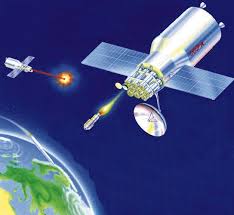
Potential for Space-based Weapons. The prospect of weaponising space has generated significant debate among military strategists and policymakers. While the Outer Space Treaty of 1967 prohibits the placement of nuclear weapons in space, the development of conventional weapons systems designed to operate in or from space raises ethical and strategic concerns. Various concepts for space-based weapons are being explored, including missile defence systems and directed energy weapons. The Strategic Defence Initiative (SDI) proposed during the Reagan administration exemplifies the historical interest in space-based defence systems. Moreover, China and Russia are actively pursuing anti-satellite (ASAT) weapons capable of targeting and neutralising enemy satellites. The potential for space-based weapons creates a new dimension of conflict, where controlling space assets becomes a critical strategic objective.


Geopolitical Dynamics and Space-based Warfare


Pic Courtesy Net

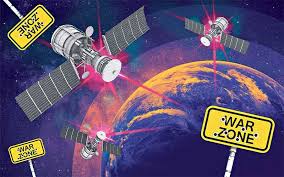
Space as a Theatre of Conflict. The increasing militarisation of space has transformed it into a potential theatre of conflict. Nations recognise that control of space assets can significantly influence the outcome of terrestrial conflicts. The competition for dominance in space is not limited to traditional military powers; emerging space-faring nations are also seeking to establish their presence. India’s successful test of an ASAT weapon in 2019 demonstrated its growing capabilities in space warfare. The test raised concerns among regional adversaries.


Space Diplomacy and Treaties. Space becomes an arena for potential conflict, so the importance of diplomacy and international agreements cannot be overstated. Establishing norms and regulations governing space activities is critical to preventing escalation and ensuring responsible behaviour among nations. The Outer Space Treaty and the 1972 Anti-Ballistic Missile Treaty are examples of agreements promoting peace in space. However, as technological advancements evolve, there is a pressing need for updated frameworks that address contemporary challenges. Discussions around establishing a “Code of Conduct for Outer Space Activities” have gained traction recently. This initiative aims to promote responsible behaviour in space and prevent conflicts arising from misunderstandings or miscalculations.


Space Alliances and Partnerships. In evolving geopolitical dynamics, nations increasingly form alliances and partnerships to enhance their space capabilities. Collaborative efforts can improve technological development, share intelligence, and foster interoperability among allied forces. NASA’s establishment of the Artemis Accords in 2020 exemplifies this trend. The accords promote international cooperation in space exploration and outline principles for sustainable exploration of the Moon, Mars, and beyond. NASA Administrator Jim Bridenstine states, “We must work together to ensure that space is a peaceful domain for all humanity” (Bridenstine, 2020). Moreover, NATO has recognised the significance of space in collective defence strategies. The 2019 NATO Space Policy emphasises the need for member states to enhance their space capabilities and improve coordination in space operations (NATO, 2019). This commitment to collaboration underscores the understanding that space security is a shared responsibility.


Challenges and Risks Associated with Space-based Warfare


Space Debris and Collision Risks. As the number of satellites in orbit grows, the risk of space debris and collisions poses significant challenges. Collisions between satellites or debris can create catastrophic consequences, rendering space assets inoperable and potentially jeopardising military operations. The European Space Agency (ESA) estimates that over 34,000 pieces of debris larger than 10 centimeters are in orbit, with millions of smaller fragments posing threats to operational satellites. The risk of collisions not only threatens national security assets but also raises concerns about the sustainability of space activities.


Cyber Security Threats. As military reliance on space-based technologies increases, the vulnerability of these systems to cyber threats becomes a pressing concern. Cyber attacks can target ground control stations, communication links, and satellites themselves, undermining the integrity of space operations. In 2020, the Russian military conducted a cyber exercise simulating attacks on U.S. satellite systems, highlighting the potential for adversaries to disrupt critical space capabilities. Ensuring robust cyber security measures for space assets is essential to maintain operational readiness and protect sensitive information.


“We must avoid actions that could lead to an escalation in a domain where the stakes are incredibly high.”

 – General John Raymond


Escalation and Miscalculation. The militarisation of space raises the risk of escalation and miscalculation in conflicts. As nations develop capabilities to target each other’s space assets, the potential for conflict increases. A misstep or misunderstanding could lead to unintended consequences and broader military confrontations. Diplomatic efforts to establish norms of behaviour and prevent escalation are critical in mitigating these risks.


Case Studies of Space-based Warfare Implications


The Gulf War and the Role of Satellites. The Gulf War (1990-1991) serves as a crucial case study in understanding the implications of space-based technologies in modern warfare. The U.S.-led coalition leveraged satellite intelligence, surveillance, and reconnaissance capabilities, significantly enhancing operational effectiveness. Satellite imagery allowed coalition forces to assess Iraqi troop movements, monitor logistics, and plan airstrikes with precision. The use of GPS-guided munitions further demonstrated the transformative impact of space technology on military operations. The ability to use satellites for real-time intelligence fundamentally changed the war’s course.


Ukraine Conflict and Space-based Surveillance. The ongoing conflict in Ukraine highlights the significance of space-based surveillance in contemporary warfare. Both Russia and Ukraine have utilised satellite technologies for reconnaissance and intelligence-gathering purposes. The use of commercial satellites for monitoring troop movements and assessing battlefield conditions has become increasingly prevalent. Moreover, the conflict underscores the vulnerabilities associated with space-based technologies. Russia’s reported jamming of GPS signals in contested areas raises concerns about the reliability of navigation systems for military operations.


China’s Space Ambitions and Military Modernisation. China’s rapid advancements in space capabilities have significant regional and global security implications. The country’s focus on developing anti-satellite weapons, satellite constellations, and manned space missions reflects its ambition to establish itself as a significant space power. China’s successful test of an ASAT weapon in 2021 demonstrated its growing capabilities to target and neutralise enemy satellites. China’s military modernisation efforts emphasise integrating space capabilities into its defence strategy.


The implications of space-based technologies and strategies for future warfare are profound and multifaceted. As nations invest in space capabilities, the strategic landscape is evolving, presenting opportunities and challenges. Enhanced intelligence, surveillance, and communication capabilities are transforming military operations, while the potential for space-based weapons raises ethical and strategic concerns. Geopolitical dynamics are shifting as nations vie for dominance in space, prompting discussions around treaties, alliances, and responsible behaviour. However, challenges such as space debris, cyber security threats, and the risks of escalation underscore the need for caution and international cooperation. As we look to the future, it is clear that space will play an increasingly pivotal role in shaping the nature of warfare. Acknowledging the complexities and responsibilities associated with space activities is essential for ensuring that space remains a domain for peaceful cooperation rather than conflict.


Your valuable comments are most welcome.


Link to the article:

https://55nda.com/blogs/anil-khosla/2024/12/06/549-space-power-shaping-future-conflicts/


2110
Default rating

Please give a thumbs up if you  like The Post?


For regular updates, please register your email here:-

Subscribe


References and credits

To all the online sites and channels.

References:

  1. Bridenstine, J. (2020). NASA Administrator Jim Bridenstine on the Artemis Accords. NASA.
  1. Department of Defense. (2021). Annual Report to Congress: Military and Security Developments Involving the People’s Republic of China 2021. Retrieved from defense.gov.
  1. Department of Defense. (2022). National Defense Strategy. Retrieved from defense.gov.
  1. European Union. (2020). The EU Space Strategy for Security and Defence. Retrieved from europa.eu.
  1. Fedorov, M. (2022). Vice Prime Minister of Ukraine on Satellite Imagery. Ukrinform.
  1. Friedman, G. (2020). The Future of Warfare: China, Russia, and the New Space Race. Geopolitical Futures.
  1. Ghosh, A. (2019). India’s ASAT Test: Implications for National Security. The Diplomat.
  1. Hays, P. (2021). The Future of Space Operations: Technology and Strategy. Air & Space Power Journal.
  1. Moseley, T. M. (1992). The Air Campaign in the Gulf War. Air Force Historical Studies Office.
  1. NATO. (2019). NATO Space Policy. Retrieved from nato.int.
  1. Raymond, J. W. (2020). Chief of Space Operations on the Future of Space Warfare. U.S. Space Force.
  1. U.S. National Reconnaissance Office. (2021). NRO Support to Military Operations. Retrieved from nro.gov.
  1. U.S. Space Command. (2020). Threats to U.S. Space Assets. Retrieved from spacecom.mil.
  1. Waugh, W. (2021). Space Debris: A Growing Concern for National Security. Space Policy Journal.

Disclaimer:

Information and data included in the blog are for educational & non-commercial purposes only and have been carefully adapted, excerpted, or edited from reliable and accurate sources. All copyrighted material belongs to respective owners and is provided only for wider dissemination.

English हिंदी