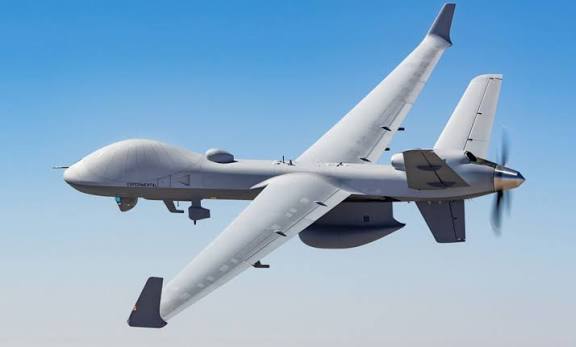
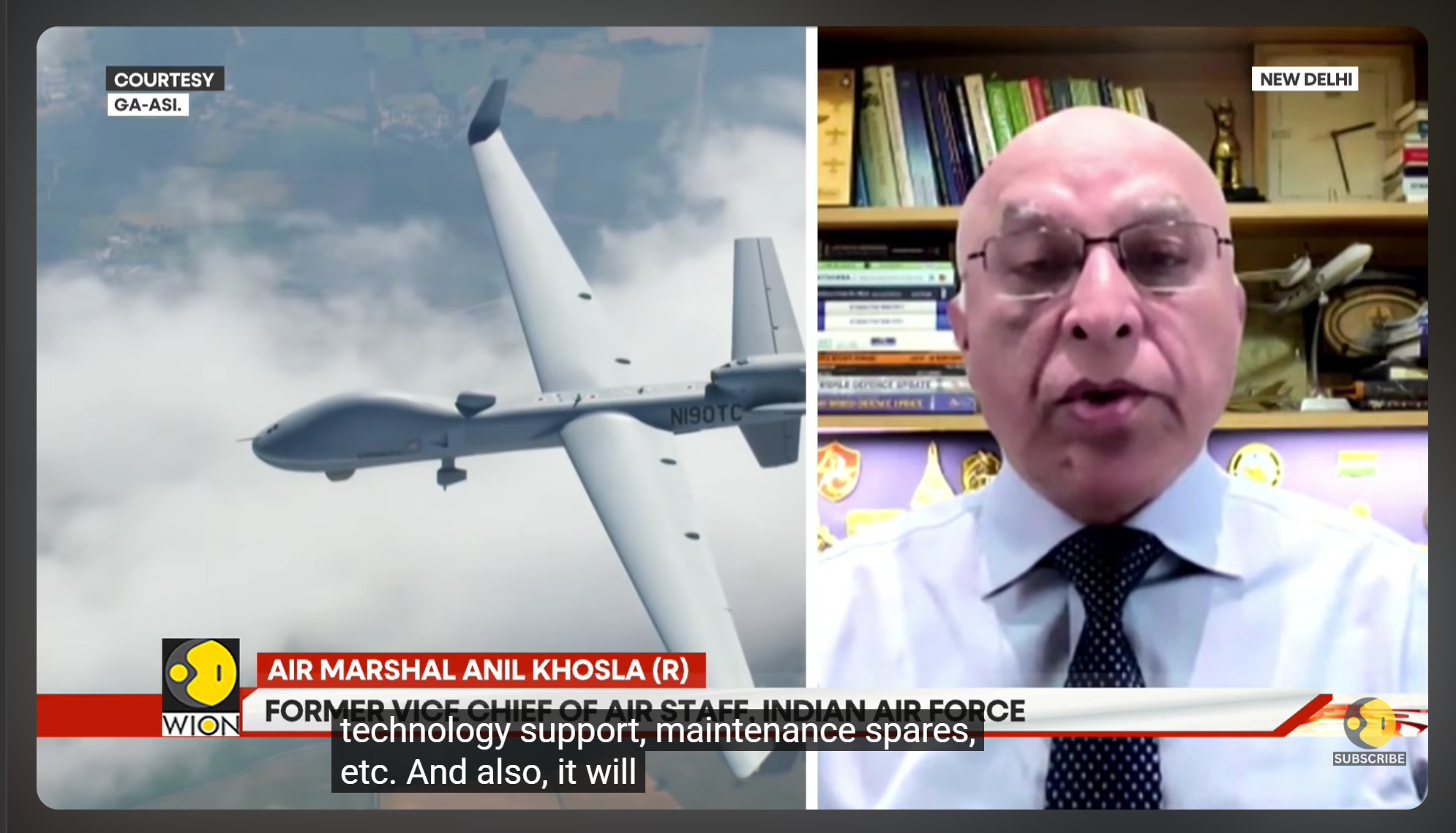
India has operated leased SeaGuardians since 2020. India leased them because the Navy needed persistent ISR capability while the much larger procurement moved through the system. The Indian Navy has found them useful and has flown them for thousands of hours.
The new lease contract has reportedly been signed on17 August 2026. It includes a 30-month lease for two MQ-9B Sea Guardian drones from General Atomics Aeronautical Systems. The contract is valued at approximately ₹1,943 crore.
On the face of it, ₹1,943 crore for two MQ-9B SeaGuardians for only 30 months looks extremely expensive. The ₹1,943 crore price tag is not a basic rental fee for two airframes. It represents a Company-Owned, Company-Operated (COCO) capability package. The value proposition includes sensors, communications, ground-control infrastructure, technical support, maintenance, operators/support personnel, availability, etc.
Complete Operational Burden. General Atomics (GA-ASI) provides the entire ecosystem (possibly including Ground Control Stations (GCS), satellite communication bandwidth, continuous payload integration, spare parts, and on-site engineering support).
Assured Flight-Hours. The cost includes availability of a guaranteed number of operational flight hours. The manufacturer would bear the cost associated with airframe degradation, maintenance cycles, component failures, and logistics overhead.
Specialised Payload Rent. The lease includes high-end, mission-specific sensor suites (360-degree maritime surface search radars, synthetic aperture radars (SAR), electro-optical/infrared (EO/IR) balls, and signals intelligence (SIGINT) packages).
The lease would buy time and capability. India entered into the agreement in October 2024 for 31 MQ-9Bs (specifically 15 SeaGuardians and 16 SkyGuardians). India’s acquisition of 31 aircraft does not mean they will become operational right away; reports indicate the first deliveries will not take place until late 2028 or early 2029. Since we need the capability right now, there will be a gap of several years. To sum up, the purchase is the long-term solution, while the lease is a short-term remedy.
There’s another way of looking at it. The lease would be a training and transition bridge. The new lease could allow personnel, maintenance teams, operators and mission planners to continue building experience while the larger fleet is inducted. It would allow operational availability, training, experience, maintenance support, sensors, contractor support, insurance/replacement risk, and immediate access. Rather than a redundant expense, the lease would serve as a high-readiness bridge. It would provide immediate maritime surveillance capacity while laying the tactical groundwork for the larger fleet’s arrival.
In short, the two newly leased Sea Guardians are not a standalone act but a deliberate interim measure that keeps the Navy’s IOR surveillance posture strong and operationally continuous while the larger, permanent 31-aircraft tri-service fleet is manufactured and delivered.
The bigger picture
The drones complement, rather than replace, the P-8I fleet. India’s surveillance architecture is increasingly layered:
MQ-9B SeaGuardian: long-endurance unmanned surveillance, able to remain on station for extended periods.
P-8I Poseidon: manned long-range maritime patrol aircraft with sophisticated radar and anti-submarine warfare capabilities.
Satellites: wide-area, space-based observation.
Coastal and island-based sensors/radars: persistent monitoring closer to shore and around strategic maritime chokepoints.
Other naval assets: ships, submarines and aircraft that can investigate or act on information generated by the surveillance network.
A layered network:
Satellites → see broadly ↓ MQ-9Bs → stay over an area for a long time. ↓ P-8Is → investigate and conduct sophisticated maritime/ASW missions. ↓ Ships/submarines → physically respond.
The MQ-9B lease fits into that picture as the tactical, tasking-responsive layer of a system whose outer layers are space-based sensing and coastal radar, and whose command layer is the fusion-centre network.
Information and data included in the blog are for educational & non-commercial purposes only and have been carefully adapted, excerpted, or edited from reliable and accurate sources. All copyrighted material belongs to the respective owners and is provided only for wider dissemination.
The concept of unmanned flight dates back to World War I, but drones became a viable military asset not until the late 20th century. The U.S. military’s use of the Predator drone during the 1990s and early 2000s marked a significant turning point. Armed variants of the Predator demonstrated the feasibility of unmanned precision strikes, ushering in a new era of aerial warfare. Since then, countries such as China, Russia, Turkey, and Iran have rapidly developed their combat drone capabilities. Technological advancements in artificial intelligence (AI), sensor miniaturisation, and autonomous navigation have expanded the capabilities of combat drones. Modern drones can operate autonomously, engage in complex swarm tactics, and integrate with network-centric warfare systems.
India’s journey with combat drones has evolved from reliance on imports to an ambitious push for indigenous development. Initially dependent on Israeli UAVs for surveillance and reconnaissance, India has steadily expanded its drone capabilities, integrating armed drones into its military strategy. The emergence of global drone warfare, exemplified by conflicts in Nagorno-Karabakh and Ukraine, has accelerated India’s efforts to develop and deploy its combat UAVs. With indigenous initiatives like the DRDO’s Archer and HAL’s CATS Warrior, alongside procurements of MQ-9B Sea/Sky Guardians, India is positioning itself as a significant player in unmanned warfare, reshaping its military doctrine for the future.
Drone Warfare
Key Advantages of Combat Drones. Combat drones, also known as unmanned aerial vehicles (UAVs), have rapidly transformed modern military operations. They offer a range of significant advantages that enhance strategic effectiveness and operational efficiency. These advantages are crucial for established military powers and smaller nations seeking to improve their defence capabilities.
Cost-Effectiveness. One of the most prominent advantages of combat drones is their cost-effectiveness. In contrast to manned aircraft, combat drones are more affordable to produce, operate, and maintain.
Reduced Risk to Human Life. The ability to operate drones remotely means that military personnel are not physically present in the combat environment, which significantly reduces the risk to human life.
Persistent Surveillance and Endurance. Combat drones can remain airborne for extended periods, often hours or even days. Unlike manned aircraft, this endurance enables drones to conduct continuous operations over extended periods without needing to return to base for fuel or rest.
Precision Strike Capabilities. Modern combat drones are equipped with advanced targeting systems, enabling them to conduct precise strikes with high accuracy.
Operational Flexibility. Another significant advantage of combat drones is their operational flexibility. Drones are highly versatile and can be deployed in a variety of roles. This adaptability makes drones valuable assets in numerous military operations, enhancing their utility in diverse combat scenarios.
Drone Usage in Recent Conflicts
Nagorno-Karabakh Conflict. The 2020 Nagorno-Karabakh conflict saw extensive use of drones by Azerbaijan, which utilised both tactical drones for surveillance and loitering munitions for precision strikes. The success of drones in this conflict highlighted their role in modern warfare, marking a shift in how airpower is utilised in regional conflicts.
Ukraine-Russia Conflict. In the ongoing Ukraine-Russia conflict, drones have become pivotal for both sides. Both sides have relied heavily on drones and loitering munitions for intelligence, surveillance, reconnaissance (ISR), and precision strikes. The conflict has exemplified how UAVs transform modern militaries, enabling them to conduct warfare on the ground and in the air.
Israel-Hamas War. During the Israel-Hamas conflict, drones played a significant role in both offensive and defensive strategies. The conflict has highlighted the growing reliance on drones for modern warfare, as they offer cost-effective, high-precision capabilities in asymmetric conflicts.
U.S. Counterterrorism Operations. Combat drones have been central to U.S. counterterrorism operations, particularly in regions like the Middle East and North Africa. The U.S. military has employed drones for targeted strikes against high-value targets, including terrorist leaders and militants affiliated with groups like Al-Qaeda and ISIS. These operations have raised ethical and legal concerns about civilian casualties, sovereignty violations, and the long-term strategic consequences of drone warfare.
Future Trends in Drone Warfare
AI-Driven Autonomy. AI-driven autonomy in drone warfare will revolutionise decision-making, enabling UAVs to analyse data and execute missions independently. This reduces human intervention, enhances speed, and improves operational efficiency, allowing drones to make real-time tactical decisions and adapt to changing battlefield dynamics without relying on constant human oversight.
Swarm Tactics. Swarm tactics involve deploying many drones that can communicate and collaborate autonomously to overwhelm targets. This approach maximises impact, confuses enemies, and complicates defence strategies. Swarms can be employed for both offensive operations, such as saturation attacks, and defensive roles, including countering incoming threats in coordinated formations.
Hybrid Manned-Unmanned Operations. Hybrid manned-unmanned operations combine human decision-making with autonomous drone capabilities, enhancing flexibility and situational awareness. Human pilots can control UAVs while receiving support from AI systems that automate data processing and mission planning. This synergy enables optimal control and strategic execution while reducing the cognitive burden on operators.
Miniaturisation and Stealth. Miniaturisation and stealth technologies are enhancing drones’ ability to operate undetected. Smaller, quieter UAVs with reduced radar signatures can infiltrate enemy defences, gather intelligence, or carry out strikes without being easily intercepted. These advances improve tactical flexibility and extend the operational range of drones in contested environments.
India’s Tryst with Drones: Evolution and Expansion
India’s journey with drones has evolved over the past few decades, driven by security imperatives and technological advancements. Initially dependent on imports, particularly from Israel, India procured drones such as the Heron and Searcher for surveillance and reconnaissance missions along the sensitive borders with Pakistan and China. The 1999 Kargil conflict was a pivotal moment that highlighted the critical role of drones in modern warfare, pushing India to invest in enhancing its UAV capabilities. Over the years, the Indian armed forces have increasingly relied on drones for intelligence, surveillance, and reconnaissance (ISR) operations, with a growing focus on indigenous development to reduce dependence on foreign suppliers.
The Defence Research and Development Organisation (DRDO) has spearheaded several indigenous drone programs, including the Rustom, Nishant, and Archer UAVs, to bolster India’s aerial capabilities. Concurrently, private sector participation has expanded, with startups and defence firms innovating in drone swarms, autonomous systems, and logistics applications. Under the “Atmanirbhar Bharat” (Self-Reliant India) initiative, the government has introduced policy reforms to encourage local production and innovation, positioning India as an emerging player in the global drone ecosystem.
Despite progress, India still faces technological challenges in developing advanced stealth drones and autonomous systems comparable to international standards. While India has made substantial strides in drone development, it faces several critical challenges that must be addressed to achieve self-sufficiency and operational superiority. One of the primary concerns is technological dependence on foreign suppliers for key components such as avionics, sensors, and propulsion systems. Efforts to bridge this gap through Indigenous programs, such as the Ghatak stealth UCAV and the Archer-armed UAV, are ongoing; however, delays and budgetary constraints have hindered progress. The growing threat posed by adversarial drones, mainly from Pakistan and China, has also necessitated the development of robust counter-drone technologies, including electronic warfare systems and directed energy weapons.
The 2020 Galwan Valley standoff with China underscored the urgent need for persistent aerial surveillance in high-altitude regions. This prompted the Indian military to explore AI-driven autonomy and swarm tactics for enhanced situational awareness. Looking ahead, India’s drone strategy focuses on expanding its indigenous manufacturing base, fostering public-private partnerships, and investing in next-generation technologies such as autonomous drone swarms and high-altitude long-endurance (HALE) UAVs. With sustained government support, increased defence budgets, and collaboration with international partners, India could become a significant player in the evolving drone warfare landscape.
MQ-9 Sea/Sky Guardian: Latest Weapon in Indian Arsenal
Predator Series of Drones. The Predator series of drones, developed by General Atomics, revolutionised modern warfare with their long-endurance, remotely piloted capabilities. Beginning with the RQ-1/MQ-1 Predator, primarily used for intelligence, surveillance, and reconnaissance (ISR), the series evolved into the more advanced MQ-9 Reaper, which features greater payload capacity and strike capabilities. Armed with Hellfire missiles and precision-guided bombs, these drones have played crucial roles in U.S. military operations, particularly in counterterrorism. Widely exported, Predator drones are now integral to modern air forces, enhancing strategic and tactical operations. Sea/Sky Guardians are variants of the MQ-9 drone.
MQ-9 Sea Guardian Usage By Indian Navy. In 2020, the Indian Navy began operating MQ-9B Sea Guardian drones under a lease agreement with the United States, marking a significant step toward modernising its maritime surveillance and reconnaissance capabilities. These drones are a variant of the MQ-9 Reaper, adapted for long-endurance maritime operations with enhanced sensors, radar, and payloads designed explicitly for naval use.
Maritime Capability Enhancement. The MQ-9B’s capabilities give the Indian Navy an edge in tracking enemy vessels operating near India’s borders and the broader Indian Ocean. With a range of over 5,000 km and the ability to stay airborne for up to 35 hours, these drones can cover vast areas, from sensitive chokepoints like the Strait of Malacca to critical regions of the Bay of Bengal and the Arabian Sea. Their versatility in real-time intelligence gathering and precision strike capabilities enables the Navy to act quickly and decisively in defending Indian interests, including counter-piracy operations and protecting vital sea lanes. The Sea Guardian drones provide the Indian Navy with persistent surveillance, allowing real-time monitoring of maritime traffic, enemy vessels, and submarine activity, significantly enhancing maritime domain awareness.
Indian MQ-9 Sea/Sky Guardian Drone Acquisition Program. In October 2024, India’s Ministry of Defence finalised a contract with the U.S. government to procure 31 MQ-9B drones from General Atomics, valued at approximately $4 billion. The deal comprises 15 Sea Guardian drones designated for the Indian Navy and 16 Sky Guardian drones allocated between the Indian Army and Air Force. The procurement was executed under the Foreign Military Sales (FMS) program, facilitating a government-to-government transaction. The contract includes a performance-based logistics agreement with General Atomics Global India Pvt. Ltd. for depot-level maintenance, repair, and overhaul within India, ensuring sustained operational readiness.
Capability Enhancement. India’s acquisition of the MQ-9 drones, made by General Atomics, marks a significant step in enhancing the country’s defence capabilities. These drones will provide India with advanced intelligence, surveillance, and reconnaissance (ISR) capabilities, significantly boosting its ability to monitor vast, remote, and high-altitude border regions. The drones are equipped with cutting-edge sensors, capable of carrying multiple munitions, making them highly versatile for both strategic and tactical operations. As a force multiplier, these drones mark a significant leap in India’s aerial warfare capabilities.
Conclusion
The rise of combat drones represents a paradigm shift in modern warfare, challenging the supremacy of traditional air power. While manned aircraft will continue to play a crucial role in future conflicts, the increasing integration of drones necessitates a revaluation of military doctrines, investment priorities, and force structures. The future of air warfare lies in a balanced approach that leverages the complementary strengths of both manned and unmanned systems. The induction of MQ-9B Sea/Sky Guardian will be a game-changer for India’s defence forces, significantly enhancing maritime domain awareness, surveillance, and precision strike capabilities. It will bolster India’s preparedness against emerging threats, provide a crucial edge in monitoring adversarial activities, and strengthen deterrence. As India modernises its military, the MQ-9B’s integration signals a shift towards greater reliance on cutting-edge drone warfare technology.
Please Do Comment.
For regular updates, please register your email here:-
Gormley, D. M. (2017). Unmanned Combat Aerial Vehicles: Opportunities, Challenges, and Strategic Implications. RAND Corporation.
Pant, H. V., & Bommakanti, K. (2023). India’s Military Modernisation: Strategy, Structures, and Emerging Technologies. Routledge.
Observer Research Foundation (ORF) – India’s UAV Strategy: Lessons from Global Conflicts. Examines how India is integrating drones into its military doctrine
Carnegie India – Arming the Skies: India’s Transition to Combat Drones. Evaluate India’s shift from reconnaissance to armed UAVs
RAND Corporation – The Role of UAVs in Modern Warfare. Analyses MQ-9B’s role in ISR and combat missions
Brookings Institution – Drones and Indo-Pacific Security: India’s Response. Covers regional drone warfare and India’s UAV strategy.
Institute for Defence Studies and Analyses (IDSA) – Combat Drones and India’s Future War Doctrine. Discusses India’s tri-service approach to UAV deployment.
The Hindu (2023). India’s Combat Drone Roadmap: Indigenous and Foreign Systems.
The Indian Express (2023). Drones in Warfare: How India is Catching Up.
LiveMint (2023). India’s Shift from Surveillance to Armed Drone Warfare. MQ-9B Sea/Sky Guardian in India
Aviation Week & Space Technology (2023). General Atomics Delivers MQ-9B: India’s UAV Modernisation Plans.
Reuters (2023). India’s Drone Power: U.S. Approves Sale of MQ-9B UAVs Amid Rising Tensions with China.
Turkish TB2 vs MQ-9B: Lessons for India – Royal United Services Institute (RUSI) Report (2022)
UAVs in the Armenia-Azerbaijan War (2020): Key Takeaways for India – RAND Corporation Study (2021)
Ukraine War and the Role of UAVs: What India Can Learn – Carnegie Endowment Report (2023)
Disclaimer:
Information and data included in the blog are for educational & non-commercial purposes only and have been carefully adapted, excerpted, or edited from reliable and accurate sources. All copyrighted material belongs to the respective owners and is provided only for broader dissemination.