615: TRUMP-ZELENSKY MEETING: A CASE STUDY IN DIPLOMATIC DISASTER AND ITS AFTERMATH


My article published on the EurasianTimes Website on 08 Mar 25.


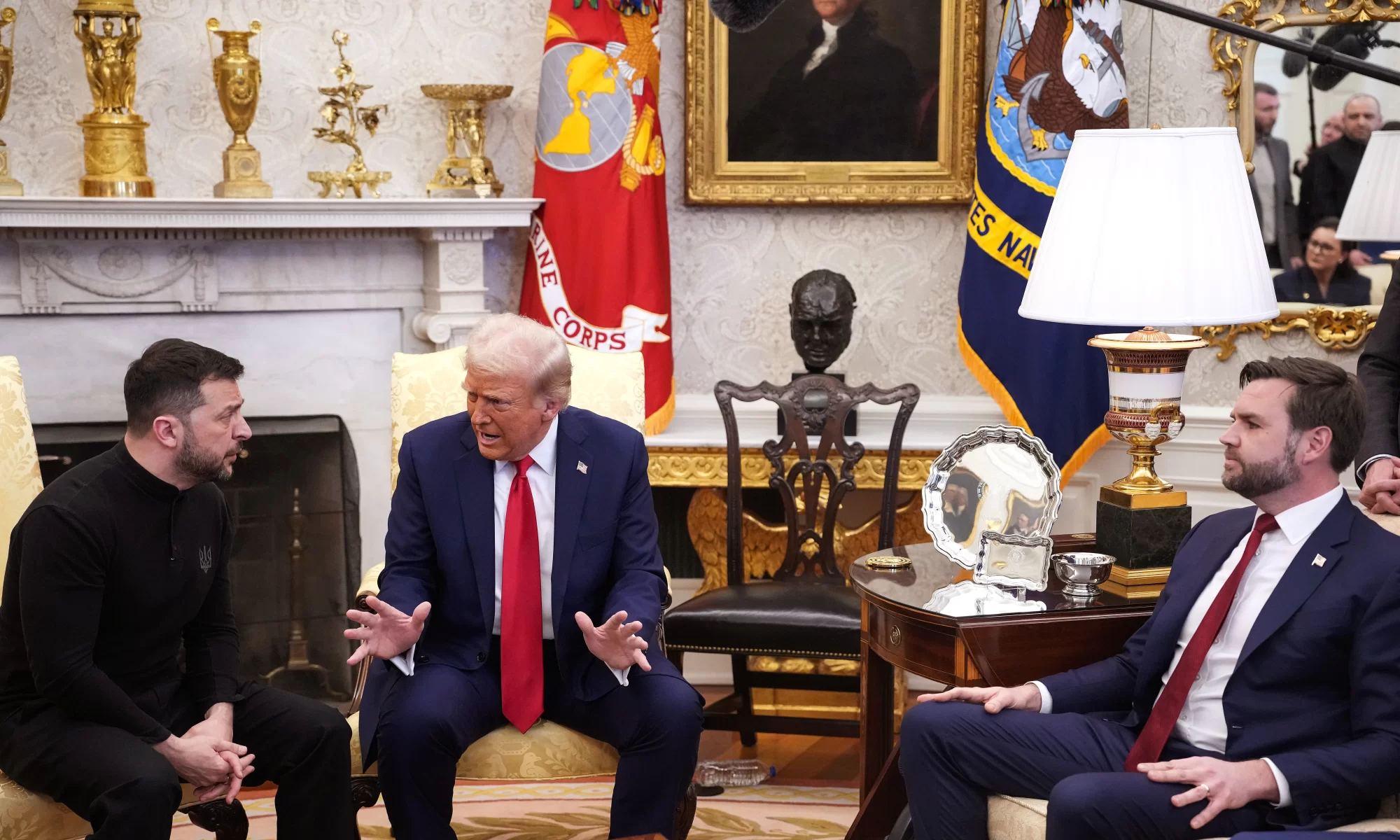
Diplomatic meetings between world leaders are often carefully choreographed to project unity, resolve, and a sense of shared purpose. However, the recent press meeting between U.S. President Donald Trump and Ukrainian President Volodymyr Zelensky defied all such expectations, quickly descending into a diplomatic debacle. Marked by confusion, contradictions, and apparent miscommunication, the event highlighted broader concerns about U.S. foreign policy, Ukraine’s ongoing struggle for support, and the personal dynamics of both leaders.


Background: A History of Tense Relations

The Trump-Zelensky relationship has never been straightforward. From the infamous 2019 impeachment inquiry that stemmed from a call between the two leaders to ongoing questions about U.S. military aid to Ukraine, the relationship has been defined by political manoeuvring and controversy. Trump’s scepticism regarding continued assistance to Ukraine and his past praise for Russian President Vladimir Putin further complicated the dynamic, making any public engagement between him and Zelensky a high-stakes affair. Zelensky, who has tirelessly lobbied for international support, entered the meeting seeking reassurances of continued U.S. backing. Conversely, Trump appeared less committed to a strong pro-Ukraine stance, leading to inevitable friction.


The Press Meeting:  Breakdown of the Fiasco

Opening Remarks and Immediate Tensions. The meeting began with a sense of unease. Zelensky, clearly aware of the political delicacy of the moment, attempted to emphasise the need for U.S. solidarity with Ukraine. He spoke about Ukraine’s resilience, the necessity of sustained military aid, and the importance of a united front against Russian aggression. Trump, however, struck a different tone. Instead of affirming U.S. support unequivocally, he pivoted to grievances about past U.S. financial commitments, echoing his longstanding argument that European nations should bear more burden for Ukraine’s defence. He also made cryptic remarks about Ukraine’s leadership and the need for a negotiated settlement with Russia, which many interpreted as a sign of wavering commitment.

Contradictory Statements and Public Disagreements. As the meeting progressed, the contradictions between the two leaders became more evident. In response to a journalist’s question about military aid, Zelensky reaffirmed Ukraine’s urgent need for continued weapons shipments. Trump, however, avoided direct commitments, instead suggesting that if he were in office, he would have “ended the war in 24 hours,” a vague assertion he repeated without offering concrete details. The starkest moment of discord came when a reporter pressed Trump on whether he believed Ukraine could win the war against Russia. Trump hesitated, then pivoted to criticising NATO and questioning whether Europe was doing enough. Zelensky, visibly frustrated, countered by stressing that Ukraine’s ability to win depended on consistent U.S. and allied support. The exchange underscored the growing gap between the two leaders’ worldviews.

Mixed Signals. Observers were quick to highlight the numerous diplomatic missteps throughout the meeting. Trump’s non-committal language and refusal to explicitly endorse continued U.S. military support for Ukraine was seen as a signal of uncertainty, leaving allies and adversaries speculating about future policy shifts. While maintaining his composure, Zelensky’s increasingly direct responses indicated his dissatisfaction and frustration with Trump’s reluctance to take a firm stance. Trump’s critique of NATO contributions muddled the broader message further about Western unity, raising concerns among European allies.


Diplomacy at its Worse.

 The Fragility of Diplomatic Engagements. The meeting’s abrupt shift from a planned minerals agreement to a contentious exchange underscores the delicate nature of diplomatic interactions. Despite prior negotiations, the inability to finalise the deal highlights how quickly diplomatic efforts can unravel when foundational trust and mutual respect are compromised.  The casual and often adversarial tone of Trump’s remarks toward Zelensky further exemplified a shift in diplomatic norms. Rather than projecting a united front, Trump’s statements highlighted internal divisions and personal grievances.

The Importance of Diplomatic Protocol and Respect. The public nature of the dispute, with President Trump accusing President Zelenskyy of ingratitude, deviated from traditional diplomatic decorum. Such breaches can strain bilateral relations and diminish the effectiveness of future diplomatic engagements, emphasising the need for maintaining professionalism and mutual respect in international affairs. ​Despite attempts to project unity, Zelensky’s visible discomfort and Trump’s dismissive attitude toward concerns about quid pro quo revealed the limitations of public diplomacy when deeper tensions exist behind the scenes. The meeting failed to resolve underlying doubts about U.S.-Ukraine relations and instead amplified media scrutiny.


Mixing Domestic Politics with Foreign Relationships

The Influence of U.S. Domestic Politics on Foreign Relations. The press conference underscored how U.S. foreign policy, especially toward allies, is deeply entangled with internal political battles. President Trump’s confrontational stance, influenced by internal political dynamics, exemplifies how domestic agendas can shape foreign policy decisions. Trump’s remarks about Ukraine and its supposed history of corruption tied directly into his impeachment inquiry, showing how personal political interests can shape international dealings. This incident illustrates foreign leaders’ challenges when navigating the complex landscape of U.S. internal politics, especially when partisan considerations overshadow international commitments. ​

The Influence of Personal Diplomacy on International Relations. The incident highlights how personal dynamics between leaders can profoundly impact bilateral relations. The personal grievances aired during the meeting suggest that individual personalities and interpersonal interactions play a critical role in shaping the course of international diplomacy.

The Precarious Position of U.S. Allies in a “Transactional” Foreign Policy. Trump’s “America First” approach was evident in his insistence that European nations should contribute more to Ukraine’s defence. This transactional nature of U.S. support made it clear that Ukraine (and similar allies) could not assume unconditional backing but had to navigate shifting expectations and potential political costs.


Domestic and International Reactions 

U.S. Political Response. Reactions to the meeting in Washington were polarised. Trump’s Republican allies attempted to downplay the discord, with some arguing that Trump’s tough talk was aimed at pushing European nations to contribute more. However, critics, especially from the Democratic Party and foreign policy experts, warned that Trump’s ambiguity could embolden Russia and undermine Ukraine’s war effort. Some within the party, particularly those who support continued aid to Ukraine, expressed concerns about how Trump’s remarks might be interpreted in Kyiv and Moscow. Some in Congress argue that Trump’s stance weakens America’s leadership role, while his base largely supports a reduced involvement in Ukraine.

Ukrainian Stance. Reactions in Ukraine were mixed but largely apprehensive. Ukrainian officials emphasised their appreciation for past U.S. support but privately expressed concerns about Trump’s unpredictable stance. Some Ukrainian commentators viewed the meeting as a missed opportunity to secure more substantial commitments from a key U.S. leader with potential future influence.

European Reactions. European leaders, meanwhile, were alarmed by Trump’s comments on NATO burden-sharing. French and German officials reiterated their commitment to Ukraine but privately worried that Trump’s rhetoric could further strain transatlantic relations. Moscow, predictably, seized on Trump’s remarks as evidence of weakening Western resolve, with Russian state media amplifying his criticisms of NATO and U.S. financial commitments to Ukraine.

Russian Reaction. Moscow obviously approved of the discord between the U.S. and Ukraine. Russian officials have openly expressed satisfaction over the fallout, viewing it as a potential weakening of NATO unity and a strategic advantage for Russia. ​Russia may see this as an opportunity to prolong the war and test NATO’s resolve.


Post-Meeting US Follow-up Actions

Following the contentious Oval Office meeting with Ukrainian President Volodymyr Zelensky on February 28, 2025, President Donald Trump has reportedly undertaken several actions.

Public Criticism of President Zelensky. In the aftermath of the meeting, President Trump publicly criticised President Zelensky, accusing him of disrespecting the United States during his visit to the Oval Office. Trump expressed that Zelensky’s attitude was not conducive to peace negotiations and suggested that U.S. support could be reconsidered if Ukraine is not committed to resolving the conflict.

Suspension of Military Aid. President Trump ordered a “pause” on U.S. military aid to Ukraine, aiming to pressure President Zelensky into engaging in peace talks with Russia. This suspension affects all military equipment not yet in Ukraine, including weapons en route by air or sea and those held in transit areas in Poland.

Suspension of Intelligence Sharing. President Donald Trump has suspended intelligence sharing with Ukraine. The suspension encompasses critical data on Russian military movements and intentions. The Trump administration has indicated that this suspension is a temporary measure contingent upon Ukraine’s engagement in peace negotiations with Russia.

Re-evaluation of U.S. Support for Ukraine. The administration is reassessing its stance on unconditional support for Ukraine. White House Press Secretary Karoline Leavitt indicated that the U.S. is no longer willing to provide unchecked aid without a clear path to peace, reflecting a shift in policy towards a more conditional approach based on Ukraine’s cooperation in peace efforts. National Security Adviser Mike Waltz mentioned that the U.S. is pausing and reviewing all aspects of its relationship with Ukraine.


Russian Recent Kursk Operations

​In recent developments, Russian forces have launched a significant offensive in the Kursk region, aiming to encircle Ukrainian troops. On March 5, 2025, taking advantage of the cessation of U.S. intelligence support to Ukraine, Russian units advanced rapidly southward, threatening the main Ukrainian stronghold at Sudzha. This manoeuvre risks encircling approximately 10,000 Ukrainian soldiers, prompting the Ukrainian command to consider a strategic withdrawal to avoid substantial losses. The suspension of U.S. military aid and intelligence sharing has critically weakened Ukraine’s defensive capabilities in the area. ​These developments underscore a rapidly evolving and precarious situation in the Kursk region, with potential implications for the broader conflict dynamics.


Implications

Uncertainty over Future U.S. Policy. The meeting reinforced growing uncertainty over the future of U.S. policy toward Ukraine. With Trump’s return to the White House, Ukrainian officials must prepare for a more transactional approach to diplomacy that could demand greater European involvement and a shift in U.S. support priorities.

Impact on Ukraine’s War Effort. For Ukraine, clarity on long-term U.S. support remains critical. Trump’s lack of firm commitments in this meeting means Kyiv will likely intensify its outreach to Congress and other Western leaders to secure ongoing aid. If Trump or his allies push for a reduction in assistance, Ukraine may face more significant challenges in sustaining its military operations against Russia.

Zelensky’s Political Future. Domestically, Zelensky faces mounting pressure. Critics argue that his confrontational approach with Trump may jeopardise Ukraine’s international support, leading some U.S. lawmakers to question continued assistance. Senator Lindsey Graham suggested that Zelensky consider resigning or altering his stance to maintain U.S. support. ​

Geopolitical Ramifications. Beyond the U.S.-Ukraine dynamic, the meeting had broader implications for global diplomacy. It highlighted deepening divisions within the West over approaching the Ukraine conflict and signalled to adversaries that American foreign policy may remain unpredictable. This uncertainty could embolden Russia while complicating efforts to maintain a strong and united Western response.


Knock-on Effects

Impact on NATO and Global Diplomacy. The incident has exposed rifts within NATO and raised questions about the alliance’s cohesion. European nations would now contemplate increased defence budgets and a more autonomous security strategy independent of U.S. leadership. ​

Power Dynamics in Asymmetrical Alliances. Zelensky’s cautious and deferential tone initially highlighted the challenges faced by smaller nations dependent on U.S. military and financial support. His attempt to downplay the controversy around Trump’s alleged pressure suggested an effort to maintain favour with Washington while avoiding deeper entanglement in U.S. domestic politics.

The Strategic Calculations of Smaller Nations. Ukraine’s predicament reflects the complex calculus smaller nations must perform when aligning with major powers. Balancing national interests against the expectations of powerful allies requires astute diplomacy, especially when those allies’ internal politics are in flux. Countries reliant on U.S. security guarantees may reconsider their alliances, fearing instability in American foreign policy.

The Necessity for Allies to Diversify Support. Given the U.S. administration’s unpredictable stance, Ukraine’s subsequent outreach to European leaders signifies the importance of nations diversifying their alliances. Relying on a single ally, especially one with shifting foreign policy positions, can leave countries vulnerable, underscoring the need for a broad base of international support. ​


Conclusion

The Trump-Zelensky press meeting was a textbook example of how diplomatic engagements can go awry. The event showcased the growing uncertainty surrounding U.S.-Ukraine relations, from mixed messaging to visible tensions. For Ukraine, securing unwavering support remains a top priority, while for Trump, the meeting underscored his evolving and often ambiguous stance on foreign policy. As the war in Ukraine continues, the need for clear, consistent, and unified diplomatic messaging has never been greater. Whether future engagements between the U.S. and Ukraine can avoid similar pitfalls remains an open question with high stakes for both nations and the wider international community.


Please Do Comment.


1879
Default rating

Please give a thumbs up if you  like The Post?


For regular updates, please register your email here:-

Subscribe


References and credits

To all the online sites and channels.

Pics Courtesy: Internet

Disclaimer:

Information and data included in the blog are for educational & non-commercial purposes only and have been carefully adapted, excerpted, or edited from reliable and accurate sources. All copyrighted material belongs to respective owners and is provided only for wider dissemination.


References:-

  1. The Guardian. “Trump criticises European leaders at Starmer’s Ukraine summit for saying they need US support – as it happened.” The Guardian, March 3, 2025. ​
  1. New York Post. “Trump pauses all US military aid to Ukraine after heated Oval Office meeting with Zelensky.” New York Post, March 3, 2025. ​
  1. The Times. “Zelensky ‘won’t be around very long’, says Trump – as it happened.” The Times, March 3, 2025. ​
  1. Vanity Fair. “Kremlin Hails Trump’s Zelensky Blow-Up: Washington Now ‘Aligns With Our Vision’.” Vanity Fair, March 3, 2025. ​
  1. India Today. “Zelenskyy breaks silence on Trump’s public dressing-down: Don’t think it’s right.” India Today, March 3, 2025. ​
  1. Hindustan Times. “US News Live Today March 1, 2025: Donald Trump says Zelenskyy can return for talks when ‘ready for peace’.” Hindustan Times, March 1, 2025. ​
  1. The Indian Express. “Zelenskyy wants to work ‘directly’ with Trump, suggests measures to end Russia-Ukraine war.” The Indian Express, December 1, 2024. ​
  1. The Times. “Trump and Zelensky clash at the White House – as it happened.” The Times, March 1, 2025. ​
  1. TFI Global News. “Trump Zelensky White House clash: A Diplomatic Disaster with far-reaching consequences.” TFI Global News, March 1, 2025. ​

584: CONTEMPORARY WARS THROUGH THE LENS OF GALTUNG’S THEORY


Pics Courtesy Net


My Article published on the Life of Soldier website on 17 Jan 25


In the 21st century, war and conflict have evolved significantly. From interstate wars to protracted civil conflicts, the causes and consequences of contemporary violence are deeply complex. Johan Galtung, a peace and conflict studies pioneer, provides a theoretical framework uniquely suited to analyse these modern wars. His conflict theory, encompassing the conflict triangle, structural and cultural violence, and distinctions between negative and positive peace, offers hope for a comprehensive understanding of conflicts and pathways to resolution. This article explores how Galtung’s theory can be applied to analyse and address contemporary wars, focusing on cases such as the Russia-Ukraine war and the Israel-Hamas conflict.


Galtung’s Conflict Theory


Johan Galtung’s Conflict Theory is foundational peace and conflict studies framework. Galtung, a Norwegian sociologist and the discipline’s founder, developed theories to understand conflict dynamics and pathways to sustainable peace. His most influential contributions include the conflict triangle, the concepts of structural violence, and distinctions between negative peace and positive peace.


Galtung’s Conflict Triangle. Galtung describes conflict as having three interrelated components, often visualised as a triangle. The first component, the Attitudes (A), includes the perceptions, emotions, and assumptions that parties hold about each other, usually shaped by prejudice, fear, or hatred. The second Behaviour (B) is the actions taken by parties, such as violence, protests, or negotiations. The third segment is the Contradictions (C), i.e. the underlying incompatibilities or structural issues, such as resource disputes or unequal power distributions. For sustainable peace, all three corners of the triangle must be addressed. Resolving the structural root causes (contradictions) without addressing hostile attitudes or violent behaviour might lead to a fragile and temporary resolution.


Types of Violence. Galtung expanded the concept of violence beyond direct physical harm. He categorised violence as direct, structural, and cultural. Direct violence is observable physical or verbal aggression, such as war, assault, or terrorism. Structural violence is indirect harm embedded in societal structures, such as poverty, discrimination, and inequality, which systematically disadvantage certain groups. Lastly, cultural violence is the result of cultural norms and values that justify or legitimise violence, such as ideologies, religions, or traditions that perpetuate oppression. Structural and cultural violence often underpin direct violence. Addressing these forms of violence is essential for creating lasting peace.


Negative Peace vis-a-vis Positive Peace. Negative peace is the absence of direct violence (e.g., a ceasefire or truce). While it stops immediate harm, underlying issues may remain unresolved. On the other hand, positive peace is a holistic state where structural and cultural violence is also eliminated, leading to a just and equitable society. Peace-building efforts should aim for positive peace by transforming societal systems and relationships rather than ending immediate hostilities. Achieving positive peace not only stops violence but also addresses the root causes of conflict, creating a more stable and just society.


Conflict Transformation. Unlike conflict resolution (which seeks to end conflict) or conflict management (which seeks to control it), Galtung emphasises conflict transformation, which involves addressing the root causes and creating conditions for long-term peace and harmony. At the heart of Galtung’s theory, this approach is crucial for understanding and resolving contemporary wars, enlightening us about the importance of addressing the underlying issues and keeping us informed about the complexities of peace and conflict studies.


Multilateral organisations like the UN can use Galtung’s theory to design peace processes and post-conflict rebuilding efforts. Analysing Inequalities can help identify systemic injustices that contribute to conflicts. Education and advocacy can provide a lens to critique cultural norms and challenge violent structures.


Understanding Russia-Ukraine War through Galton’s Conflict Theory


Analysing the Russia-Ukraine war through Johan Galtung’s Conflict Theory offers a structured way to understand the root causes, dynamics, and potential pathways to resolution. We can dissect this complex conflict by using Galtung’s conflict triangle, concepts of violence, and distinctions between negative and positive peace.


Galtung’s Conflict Triangle. The three components—contradictions, attitudes, and behaviour—highlight the interplay between the conflict’s structural roots and immediate manifestations.


    • Contradictions (Structural Causes). Historically and geopolitically, Ukraine’s position as a buffer zone between Russia and the West (NATO/EU) has created long-standing tensions. Russia perceives NATO expansion as a threat to its security, particularly with Ukraine’s aspirations for NATO/EU membership. Russia’s annexation of Crimea in 2014 and the conflict in Donbas (eastern Ukraine) reflect disputes over territorial sovereignty and self-determination. Control over natural resources, pipelines, and strategic ports, particularly in Crimea and the Black Sea, adds to the structural causes.


    • Attitudes (Perceptions and Narratives). The Russian perspective is a historical closeness to Ukraine influenced and shaped by shared cultural, linguistic, and religious ties. Its nationalist rhetoric frames Ukraine’s Western alignment as a betrayal and existential threat. The Ukrainian perspective points to a strong drive for independence and self-determination, with resistance to Russian domination. It sees growing alignment with Western values and institutions as a pathway to sovereignty and development.


    • Behaviour (Observable Actions). Observable actions include Russia’s military invasion of Ukraine and Ukraine’s resistance through armed defence. They also include international diplomacy, appeals for Western support, sanctions on Russia, military aid to Ukraine, and diplomatic efforts to de-escalate the conflict.


Types of Violence. Galtung’s framework identifies direct, structural, and cultural violence in the war.


    • Direct Violence. This includes military aggression, missile strikes, sieges, and combat operations resulting in civilian and military casualties. It resulted in the displacement of millions of Ukrainians due to attacks on civilian areas.


    • Structural Violence. Economic disparity between regions (e.g., eastern Ukraine vs. the rest of the country) exacerbates local grievances. Russian control of occupied areas imposes governance that marginalises Ukrainian identity and rights. Western sanctions against Russia, while aimed at reducing aggression, create hardships for ordinary Russians, particularly marginalised groups.


    • Cultural Violence. Both sides use propaganda and rhetoric in the form of nationalist narratives that justify violence or delegitimise the opponent’s position. Competing narratives about Ukraine’s identity and sovereignty deepen the divisions.


Negative Peace vs. Positive Peace. Negative Peace (Ceasefire/Absence of war), i.e. a cessation of direct violence, might be achieved through ceasefires or peace agreements, but without addressing underlying causes, hostilities could reignite (e.g., post-2015 Minsk Agreements). Positive peace (Structural Transformation) would be achieved by acknowledging Ukraine’s sovereignty while addressing security concerns for Russia. An inclusive framework would have to be created to address ethnic and linguistic diversity in Ukraine (e.g., the rights of Russian-speaking minorities). Trust must be rebuilt through cultural and educational exchanges to counter divisive narratives. Institutional reforms would ensure economic and political stability in Ukraine, reducing vulnerabilities to external manipulation.


Conflict Transformation Strategies. Galtung’s emphasis on conflict transformation rather than resolution suggests a need for holistic approaches.


    • Multi-Level Dialogue. Engaging Russia, Ukraine, NATO, and other stakeholders in genuine negotiations prioritising long-term stability over short-term gains. Including civil society and regional actors in peace-building efforts.


    • Rebuilding Trust and Cooperation. Addressing Russian fears of NATO expansion with security guarantees. Establishing international frameworks for shared governance of contested areas like Crimea or Donbas.


    • Economic and Social Reconstruction. International support is needed to rebuild Ukraine post-war and ensure equitable development. Addressing energy dependency and economic grievances that fuel tensions.


    • Countering Cultural Violence. Challenging nationalist and antagonistic narratives through media, education, and cultural initiatives. Promoting shared historical understanding and reconciliation efforts.


Through Galtung’s lens, the Russia-Ukraine war is not just about military aggression but a deep-rooted conflict shaped by structural inequalities, hostile attitudes, and geopolitical contradictions. Achieving sustainable peace requires moving beyond negative peace (ceasefire) to positive peace (addressing root causes). This would involve transforming systems of inequality, reframing narratives, and fostering cooperative international relations.


Understanding Israel-Hamas War through Galtung’s Conflict Theory


Understanding the Israel-Hamas conflict through Johan Galtung’s Conflict Theory allows one to analyse the underlying causes, ongoing dynamics, and potential paths toward resolution. This protracted and deeply rooted conflict can be delved into by applying Galtung’s conflict triangle, concepts of violence, and distinctions between negative and positive peace.


Galtung’s Conflict Triangle. Its three components—contradictions, attitudes, and behaviours—offer a framework for examining this conflict.


    • Contradictions (Structural Causes). The conflict over land, particularly Israel’s occupation of Palestinian territories (West Bank, Gaza), is a core issue. The blockade on Gaza and disputes over East Jerusalem exacerbate tensions. Differing claims to the same land are based on historical, religious, and political narratives. Palestinians in Gaza face significant restrictions under the Israeli blockade, including limited access to resources, employment, and healthcare. Ongoing settlement expansions in the West Bank undermine the viability of a two-state solution. Divisions within Palestinian leadership (e.g., Hamas in Gaza and the Palestinian Authority in the West Bank) hinder cohesive representation in negotiations.


    • Attitudes (Perceptions and Narratives). Israeli perspective highlights the fear of existential threats, given Hamas’s stated aim of opposing Israel’s existence and history of attacks on civilians. A perception that security measures, including the blockade and military actions, are necessary for survival. Palestinian perspective includes resentment over dispossession, systemic inequality, and perceived denial of their national and human rights—narratives of resistance against occupation and framing Israeli actions as colonial and oppressive. Decades of violence, asymmetric power dynamics, and failed negotiations have entrenched mistrust and hostility on both sides.


    • Behaviour (Observable Actions). This includes Israeli military operations, airstrikes, and ground incursions in Gaza. Hamas rocket attacks on Israeli cities and other forms of armed resistance. Cycles of escalation and de-escalation are often influenced by external actors (e.g., the U.S., Egypt, and Iran).


Types of Violence. Galtung’s classification of violence highlights the multifaceted nature of the conflict.


    • Direct Violence. Examples of direct violence are physical attacks and bombings by both sides, resulting in civilian and combatant casualties. Indiscriminate rocket fire from Gaza targeting Israeli cities. Military operations destroyed in Gaza and loss of life.


    • Structural Violence. The blockade on Gaza restricts freedom of movement, trade, and access to essential services, contributing to widespread poverty and humanitarian crises. Settlement expansions in the West Bank create conditions of displacement and inequality—unequal access to legal rights, resources, and political representation for Palestinians.


    • Cultural Violence. Religious and nationalist narratives that justify actions on both sides. For example, it claims that divine rights grant exclusive control over the land—narratives framing the “other” as inherently violent or illegitimate. Educational materials and media perpetuate stereotypes and deepen divisions.


Negative Peace vs. Positive Peace.  Negative Peace (Absence of Direct Violence), i.e. temporary ceasefires or truces, has been achieved through external mediation but failed to address root causes. Examples include the 2021 ceasefire and previous agreements mediated by Egypt or Qatar.  Whereas Positive Peace (Structural and Cultural Transformation) would involve addressing underlying issues, such as Lifting the blockade on Gaza, enabling economic and social development, halting settlement expansion, ensuring equitable access to resources and establishing mechanisms for coexistence, justice, and reconciliation.


Conflict Transformation Strategies. Galtung’s emphasis on conflict transformation suggests a need for systemic and relational changes.


    • Addressing Structural Causes: Internationally mediated solutions to establish a fair and sustainable framework for coexistence, such as a two-state or one-state solution; economic initiatives to improve living conditions in Gaza and the West Bank.


    • Rebuilding Trust and Addressing Narratives. Promoting dialogue initiatives between Israeli and Palestinian communities. Countering hate speech and fostering narratives highlighting shared humanity and potential for coexistence.


    • Inclusive Negotiations. Engaging all stakeholders, including Hamas, despite its controversial designation as a terrorist organisation by many countries, to ensure meaningful representation. External Mediators: Leveraging the influence of regional powers (e.g., Egypt, Turkey) and international actors (e.g., the U.S., UN) to facilitate equitable negotiations.


Through Galtung’s lens, the Israel-Hamas conflict highlights a deeply rooted struggle involving structural inequalities, hostile attitudes, and cyclical violence. Sustainable peace requires addressing direct, structural, and cultural violence and transforming the systems and narratives perpetuating the conflict. Moving toward positive peace would involve creating conditions for justice, equity, and mutual recognition.


Conclusion


Johan Galtung’s conflict theory provides a valuable framework for analysing and addressing contemporary wars. By examining contradictions, attitudes, and behaviours and addressing direct, structural, and cultural violence, pathways to sustainable peace can be imagined. While challenges remain significant, a focus on positive peace can transform cycles of violence into opportunities for reconciliation and coexistence. These contemporary war studies illustrate the urgency and relevance of applying Galtung’s insights to modern conflicts, offering hope for a more peaceful future.


Please do Comment.


1879
Default rating

Please give a thumbs up if you  like The Post?


Link to the article on the website:-

Contemporary Wars Through The Lens Of Galtung’s Theory


For regular updates, please register your email here:-

Subscribe


References and credits

To all the online sites and channels.

References:-

  1. Galtung, Johan, and Dietrich Fischer. Constructive Conflict: From Escalation to Resolution. Lanham: Rowman & Littlefield, 2013.
  1. Galtung, Johan. Peace by Peaceful Means: Peace and Conflict, Development and Civilization. Oslo: PRIO, 1996.
  1. Barash, David P., and Charles P. Webel. Peace and Conflict Studies. Thousand Oaks: Sage Publications, 2018.
  1. Ramsbotham, Oliver, Tom Woodhouse, and Hugh Miall. Contemporary Conflict Resolution: The Prevention, Management and Transformation of Deadly Conflicts. Cambridge: Polity Press, 2016.
  1. Menon, Rajan. Conflict in Ukraine: The Unwinding of the Post-Cold War Order. Cambridge, MA: MIT Press, 2015.
  1. International Crisis Group. Russia and Ukraine: Preventing Further Escalation. Crisis Group Europe Report No. 260, 2022.
  1. Khalidi, Rashid. The Hundred Years’ War on Palestine: A History of Settler Colonialism and Resistance, 1917–2017. New York: Metropolitan Books, 2020.
  1. Human Rights Watch. Israel-Palestine: Events of 2022. Human Rights Watch Annual Report, 2023.
  1. Stockholm International Peace Research Institute (SIPRI). Global Conflict Trends and Analysis. Accessed December 2024. https://www.sipri.org.

Disclaimer:

Information and data included in the blog are for educational & non-commercial purposes only and have been carefully adapted, excerpted, or edited from reliable and accurate sources. All copyrighted material belongs to respective owners and is provided only for wider dissemination.

418: NEWS AND VIEWS (INTERNATIONAL)


NEWS-1 (ISRAEL HAMAS WAR)

Israel’s military said it had resumed combat against Hamas in Gaza on Friday after accusing the Palestinian militant group of violating a seven-day temporary truce by firing toward Israeli territory.


VIEWS

  • The seven-day pause, which began on Nov. 24 and was extended twice.
  • The terms of the cease-fire were in favour of Hamas. It gives some respite to the Israeli government from both domestic (to bring back the hostages safely at the earliest) and international (to regulate the extent of force and to allow humanitarian aid) pressure.
  • The cease-fire facilitated the entry of humanitarian aid into the shattered coastal strip. But deliveries of food, water, medical supplies, and fuel remain far below what is needed.
  • 105 Israeli hostages held in Gaza were exchanged for 240 Palestinian prisoners.
  • Qatar and Egypt have been making intensive efforts to extend the truce.
  • Israel has sworn to annihilate Hamas, which rules Gaza, in response to the Hamas attack on 07 Oct. Israel is preparing to turn the focus of its operation to southern Gaza after its seven-week assault to the north.
  • The cease-fire to some extent has reduced the chances of the escalation of the conflict.
  • Military force is not a permanent solution to the complex problem.
  • The two-nation theory needs to be implemented earnestly.


NEWS-2: RUSSIA UKRAINE WAR

Russian Defence Minister Sergei Shoigu chaired a roundtable meeting with military officials in Moscow on November 21, 2023. He said that Russian troops are advancing on all fronts in Ukraine. They are occupying and expanding their zones of control.

It was announced that Russia has taken control of Khromove, a small village on the outskirts of Bakhmut in Ukraine’s eastern Donetsk region.


VIEWS

  • The war started in Feb 2022. The intensity has been varying.
  • In 2023 the frontline has barely shifted. Both sides keep claiming success.
  • The latest major flashpoint is the war-battered industrial town of Avdiivka.
  • It is likely to be a long-drawn affair. Both sides are adamant and gradually weakening themselves.
  • Israel Israel-Hamas war has taken the spotlight away from it.


NEWS-3: EUROPE’S DEFENCE SPENDING


The Annual Conference of the European Defence Agency (EDA) took place in Belgium in hybrid mode on 30 Nov 23.

Defence companies, militaries and EU chiefs all agreed that Europe is sorely lacking, especially in what is available to support Ukraine.

Many participants pointed to issues from financing to interoperability to research and development.


VIEWS

  • Europe is ploughing billions into its defence industry, with record sums being spent since Russia’s all-out invasion of Ukraine.
  • Military spending in the European Union has hit a record 270 billion euros ($295 billion) this year.
  • Moscow has announced a massive 68 per cent hike in its military spending for 2024 (almost a third of all of Russia’s government outlays).
  • The EU’s 27 member states spend on average 1.5 per cent of their country’s economic output. NATO’s target is two per cent for its members (22 of which are also EU member states).
  • The United States, in contrast, spends 3.5 per cent of its already higher GDP on defence.
  • Out of all this, maximum gainers are the Defence and arms industry.
  • Collective security is valid, and interoperability is very important.


NEWS-4: SPACE WARFARE IN KOREAN PENINSULA

A SpaceX Falcon 9 carrying Seoul’s first domestically made reconnaissance satellite launched from the Vandenberg Space Force Base in California at 10:19 a.m today (01 Dec 23).

Seoul’s satellite is set to orbit between 400 and 600 kilometer above the earth and is capable of detecting an object as small as “30 centimetres” (11.8 inches), according to the Yonhap news agency.


VIEWS

  • Two weeks back, North Korea had successfully put its own spy satellite into orbit. This launch of the “Malligyong-1” was Pyongyang’s third attempt at putting such a satellite in orbit, after two failures in May and August.
  • Seoul plans to launch four additional spy satellites by the end of 2025 to bolster its reconnaissance capacity over the North.
  • Until now, South Korea relied heavily on US-run spy satellites.
  • While the South has “succeeded in the launch of a military communications satellite, it has taken much longer for a reconnaissance satellite due to higher technological hurdles.
  • Maybe it is the beginning of space race in the Korean peninsula.
  • Space warfare (a natural extension of air warfare) is the new domain of warfare.


Suggestions and value additions are most welcome


For regular updates, please register here:-

Subscribe


References and credits

To all the online sites and channels.


Disclaimer:

Information and data included in the blog are for educational & non-commercial purposes only and have been carefully adapted, excerpted, or edited from sources deemed reliable and accurate. All copyrighted material belongs to respective owners and is provided only for purposes of wider dissemination.


English हिंदी