707: TURKEY’S TANGO WITH INDIA’S NEIGHBORS A STRATEGIC DANCE WITH REGIONAL IMPLICATIONS


My Article published on the “Indus International Research Foundation” website on 18 Jul 25.


In the grand theater of global geopolitics, alliances and rivalries shape the dynamics of diplomacy. Over the past decade, Turkey under President Recep Tayyip Erdoğan has pursued an increasingly assertive foreign policy that extends well beyond its traditional spheres of influence. One of the most intriguing and consequential elements of this strategy is Turkey’s deepening engagement with India’s neighbours. Turkey’s relations with India’s immediate neighbours form a complex web of strategic, military, economic, and ideological engagements. Turkey has pursued a neo-Ottoman foreign policy, leveraging historical ties, Islamic solidarity, and defence exports to expand its influence in South Asia. This “strategic tango” has significant implications for South Asia’s balance of power, particularly from New Delhi’s perspective.


Turkey and Pakistan: Ideological Brotherhood beyond Diplomacy

The relationship between Turkey and Pakistan is characterised by its closeness and growing complexity, grounded in a shared Islamic identity, historical connections, and reciprocal geopolitical backing. Under the leadership of Erdoğan, these ties have developed into a strong strategic partnership.

The two nations have engaged in collaboration concerning military training, defence manufacturing, and joint naval exercises. Turkey ranks as Pakistan’s second-largest arms supplier, following China, providing sophisticated military equipment, including Bayraktar TB2 and Asisguard Songar drones, corvettes, missile systems, and enhancements for Pakistan’s F-16 fleet. These exports have strengthened Pakistan’s military capabilities, notably in drone warfare, which constitutes an increasing concern for India along the Line of Control (LoC) and other unstable border regions. During the recent India-Pakistan conflict (Operation Sindoor), reports suggest Turkey supplied Pakistan with between 300 and 400 drones, along with other military assistance, thereby intensifying tensions.

Turkey has also supported Pakistan’s stance on Kashmir, frequently raising the issue at the United Nations and other international forums. Ankara has consistently condemned India’s 2019 abrogation of Article 370, which nullified the special status of Jammu and Kashmir, and has articulated this position at various international platforms, including the United Nations. Conversely, Pakistan endorses Turkey on issues such as the Cyprus dispute and Azerbaijan’s stance in the Nagorno-Karabakh conflict, thereby reinforcing their strategic alliance.

By clearly aligning with Pakistan on a sensitive bilateral matter, Turkey has indicated its readiness to confront India on the international stage. This has led to a strong Indian reaction, with tourism bookings to Turkey decreasing by 60% and cancellations increasing by 250% in 2025, along with calls for trade boycotts.


Bangladesh: Growing Engagement and Deepening Ties.

Turkey’s diplomatic relations with Bangladesh have markedly strengthened, primarily due to defence collaboration and economic prospects. Ankara has employed a strategic approach incorporating humanitarian assistance, cultural diplomacy, and religious outreach to foster rapport with Dhaka. The Turkish Cooperation and Coordination Agency (TIKA) has been actively engaged in Bangladesh, financing educational institutions, healthcare facilities, and infrastructure developments. Furthermore, the administration of President Erdoğan has adopted a firm stance regarding the Rohingya crisis, providing refuge to displaced persons and vocally criticising Myanmar’s policies. This stance aligns closely with the perspectives held by Bangladesh.

Bangladesh has reportedly acquired Turkish Bayraktar TB2 drones. These drones, whilst augmenting Bangladesh’s military capabilities, evoke concerns in India regarding their possible deployment along the shared 4,096-kilometre border. Economically, Turkey has actively engaged with Bangladesh through trade and infrastructure initiatives, capitalising on Dhaka’s expanding economy and strategic positioning. Turkey’s neo-Ottoman ambitions align with certain political factions within Bangladesh, notably those sympathetic to Islamist rhetoric, thereby further fortifying bilateral relations.

This ideological alignment, coupled with defence cooperation, has raised concerns in New Delhi, which fears that Turkey’s influence could destabilise its eastern neighbourhood.


Emerging Engagements With Other Neighbours

Turkey has also expanded its focus to smaller South Asian nations, including Nepal, Sri Lanka, Bhutan, Myanmar, and the Maldives. These countries, often overlooked in global strategic considerations, possess significant geopolitical importance due to their strategic locations and vulnerability to external influences.

In Nepal, Turkey’s influence is predominantly diplomatic and cultural. Ankara has increased its embassy presence, provided scholarships, and facilitated interfaith dialogue through its Diyanet Foundation. Although not explicitly political, these initiatives form part of Turkey’s broader strategy to extend its influence via cultural engagement and religious diplomacy.

Turkey’s engagements with Sri Lanka are less pronounced but strategically significant. Turkey has pursued economic ties and limited defence cooperation, including potential drone exports. In Bhutan, Turkey’s presence is primarily economic, with investments in infrastructure and trade.

Myanmar, notwithstanding its political instability, has experienced Turkey’s outreach through humanitarian aid and limited defence negotiations, capitalising on shared Islamic affiliations with specific communities. Although these efforts are less advanced than those with Pakistan and Bangladesh, they demonstrate Turkey’s broader strategy to augment its presence in India’s vicinity.

The Maldives, a small island nation located in the Indian Ocean, has attracted interest from numerous international actors, including China, India, and currently Turkey. The government led by Erdoğan has enhanced bilateral engagements and extended development aid. As the archipelago increasingly assumes a pivotal position in the contest for influence within the Indian Ocean, Turkey’s engagement signifies its aspiration to participate actively in regional maritime geopolitics.


The China Factor: Converging Interests, Diverging Identities

While not a neighbour in the strict sense, China has a significant influence on India’s strategic outlook and is becoming increasingly important for Turkey as well. Ankara and Beijing share common viewpoints in criticising Western dominance and promoting multipolarity. Turkey participates in China’s Belt and Road Initiative (BRI), though with varying enthusiasm. Economic needs have motivated Erdoğan to pursue Chinese investment, especially during Turkey’s ongoing financial instability.

Nevertheless, the relationship encounters some friction. Turkey has historically been a vocal critic of China’s treatment of the Uighurs, a Turkic Muslim minority in Xinjiang. Erdoğan previously characterised Chinese policies as “genocide,” although such rhetoric has become less prominent in recent years as economic pragmatism has gained precedence.

From India’s perspective, Turkey’s ties with China heighten concerns. Both nations have shown a readiness to oppose India on Kashmir and support Pakistan. Although their ideological bases differ—Turkey with its neo-Ottoman and Islamist inclinations, and China with its authoritarian state capitalism—their strategic interests sometimes align, especially in efforts to counter Indian influence.


Strategic Implications for India

Turkey’s neo-Ottoman ambitions, propelled by President Erdoğan’s vision of global Islamic leadership, frequently conflict with India’s secular, multipolar foreign policy. Turkey’s increasing engagement with India’s neighbouring countries carries strategic implications that New Delhi must carefully consider. Although Turkey does not possess the economic strength or geographical proximity to directly challenge India, its ideological assertiveness and alignment with adversarial interests render it a disruptive presence in South Asia.

Ankara’s vocal endorsement of Pakistan regarding Kashmir elevates the issue to an international level, countering India’s stance that it is a bilateral matter. This not only strengthens Pakistan’s position but also offers diplomatic protection for narratives that contest India’s territorial sovereignty.

The Turkey-Pakistan alliance, fortified through defence cooperation and shared stances on issues such as Kashmir, remains highly contentious. Turkey’s provision of advanced weapons, including drones and naval equipment, boosts Pakistan’s military strength, directly challenging India’s security along its western border. Additionally, Turkey’s defence collaborations with Bangladesh and the Maldives pose a threat to India’s influence in South Asia and the Indian Ocean Region.

Turkey’s soft power efforts, particularly in Muslim-majority areas, aim to establish Ankara as a leader within the Islamic world. This contrasts with India’s approach, which focuses on building ties with Muslim-majority nations through economic and developmental partnerships, rather than religious solidarity.

Turkey’s growing collaboration with China and Pakistan may constitute a loose yet influential axis characterised by common objectives to curtail Indian influence. While the establishment of a formal alliance appears improbable, convergences on particular issues, such as opposing India’s ascent or supporting anti-Indian narratives, could pose a persistent strategic challenge.


India’s Options

In response to Turkey’s assertiveness, India needs to adopt a multifaceted strategy. India’s displeasure needs to be signalled by reducing high-level diplomatic exchanges, and through economic levers such as trade and tourism advisories. Another option is to strengthen ties with countries that view Turkish policies with suspicion. Enhancement of defence and economic cooperation with Greece, Armenia, Cyprus, Israel, and the United Arab Emirates (UAE) would convey the right message. Closer at home, India needs to leverage its cultural diplomacy, economic strength, and infrastructure investments to counter Turkish influence in neighbouring countries. Initiatives like the BIMSTEC (Bay of Bengal Initiative for Multi-Sectoral Technical and Economic Cooperation) and the Indo-Pacific outreach provide platforms that could be used to build alternative narratives to Ankara’s Islamic solidarity approach.

Conclusion

Turkey’s strategic engagement with its neighbours in South Asia, often described metaphorically as a Tango, appears to be more than mere diplomatic manoeuvring. It seems to constitute a deliberate effort to reshape regional alliances and enhance Ankara’s influence within the Muslim world and beyond. For India, this diplomatic dance presents both a challenge and an opportunity: a challenge to its strategic environment and regional influence, and an opportunity to refine its diplomatic strategies and foster resilient partnerships. India must navigate these intricate geopolitical developments with vigilance to safeguard its regional interests. By fortifying its alliances and leveraging its economic and military capacities, India should endeavour to ensure that Turkey’s actions do not destabilise the delicate balance of power in South Asia.


Please Add Value to the write-up with your views on the subject.


1879
Default rating

Please give a thumbs up if you  like The Post?

Link to the article on the website:-

Turkey’s Tango with India’s Neighbours: A Strategic Dance with Regional Implications

For regular updates, please register your email here:-

Subscribe


References and credits

To all the online sites and channels.

Pics Courtesy: Internet

Disclaimer:

Information and data included in the blog are for educational & non-commercial purposes only and have been carefully adapted, excerpted, or edited from reliable and accurate sources. All copyrighted material belongs to respective owners and is provided only for wider dissemination.


References:-


  1. Hindu, T. (2025, March 10). India Sees 60% Drop in Tourism to Turkey Amid Kashmir Tensions.
  2. Dawn. (2025, February 15). Turkey Supplies 300–400 Drones to Pakistan During Operation Sindoor, Sources Say.
  3. Jane’s Defence Weekly. (2024, November 20). Turkey’s Defence Exports to Pakistan: Bayraktar TB2 and Beyond.
  4. Ministry of External Affairs, India. (2024). India’s Response to Turkey’s Stance on Kashmir at the UN. New Delhi: Government of India.
  5. Reuters. (2025, January 5). Bangladesh Acquires Turkish TB2 Drones, Raising Concerns in India.
  6. Sharma, A. (2023). Turkey’s Neo-Ottoman Ambitions in South Asia. New Delhi: Observer Research Foundation.
  7. Siddiqui, N. (2024). Pakistan-Turkey Strategic Partnership: Defence and Diplomacy. Islamabad: Institute of Strategic Studies.
  8. Times of India. (2025, April 2). 250% Surge in Cancellations of Turkey Travel Bookings After Operation Sindoor.
  9. Yilmaz, I., & Shakil, K. (2023). Turkey’s Foreign Policy Under Erdoğan: The Rise of Neo-Ottomanism. Journal of South Asian Studies, 46(3), 231–245.
  10. The Diplomat. (2023). Turkey’s Growing Footprint in South Asia: Soft Power or Strategic Intent?


  1. Asia Foundation. (2022). Turkey’s Soft Power Diplomacy in Bangladesh and the Rohingya Crisis.


  1. Pantucci, R. (2022). China-Turkey Relations: A New Axis of Authoritarian Influence? Royal United Services Institute (RUSI).
  1. Sharma, R. (2021). India’s Strategic Realignment in the Eastern Mediterranean: Balancing Turkey’s Outreach. Institute of Peace and Conflict Studies (IPCS).


  1. Kugelman, M. (2020). Turkey and Pakistan: A Budding Strategic Alliance? Wilson Center.


  1. Anadolu Agency. (2020). Erdoğan Says Kashmir Is as Important to Turkey as It Is to Pakistan.


  1. Raja Mohan, C. (2020). The Rise of Turkey in Asia: A Challenge to India’s Regional Position? Carnegie India.
  1. Yavuz, M. H., & Hakan, M. (2019). Erdoğan’s Vision and the Transformation of Turkish Foreign Policy. Middle East Critique, 28(3), 217–232.

694: THE TRUMP-MUNIR MEETING: TRANSACTIONAL DIPLOMACY OR A GEOPOLITICAL QUID PRO QUO?


My article was published on the Indus International Research Foundation website on 30 Jun 25.


On June 18, 2025, U.S. President Donald Trump hosted a rare and controversial meeting with Pakistan’s Chief of Army Staff, General Asim Munir, at the White House. The two-hour lunch, which took place without any representatives from Pakistan’s civilian leadership, triggered widespread geopolitical debate. The phrase “you scratch my back, I scratch yours” has surfaced in online discourse. While the meeting was presented as a gesture of gratitude for Pakistan’s role in de-escalating recent India-Pakistan tensions, the circumstances, tone, and implications of the event go far beyond mere diplomacy. Potential fallout of this bizarre engagement could signal a reconfiguration of regional alliances and a confirmation of Trump’s transactional diplomacy.


Analytical Perspective

Context: Post-War De-escalation and Unorthodox Diplomacy. The Trump–Munir meeting comes just weeks after a volatile conflict between India and Pakistan that erupted in early May 2025. For several tense days, both nations exchanged missile and drone attacks, raising fears of a full-scale war between two nuclear-armed neighbours. In the June 18 lunch, Trump publicly credited General Munir for helping to prevent a full-blown war between India and Pakistan. This approach reflects Trump’s foreign policy style, which prioritises deal-making, personal connections, and pragmatic alliances over institutional norms or long-term strategic planning.

Unprecedented Format. This was not an ordinary diplomatic meeting. For the first time, a U.S. president hosted a foreign military leader at the White House without including any civilian government officials from that country. Pakistani Prime Minister Shehbaz Sharif and Foreign Minister Ishaq Dar were conspicuously absent. Their exclusion drew immediate criticism from both within Pakistan and abroad, highlighting the enduring imbalance between Pakistan’s military and civilian institutions. By engaging directly with Munir, Trump sent a clear message that he considers the Pakistani military, and not its elected leadership, as the country’s true center of power. This is not a new perception, but such overt validation from a major global power (that champions and supports democratic values worldwide) is rare and diplomatically risky.

Pakistan: Military Strengthened, Civilian Leadership Marginalised. In Pakistan, the reaction was mixed. Supporters of the military celebrated the meeting as a diplomatic win and a sign that General Munir is elevating Pakistan’s global profile. However, many others viewed the event as a glaring example of the country’s persistent “military-first” governance model. Political commentators and opposition figures criticised Prime Minister Shehbaz Sharif for being sidelined and described the episode as humiliating. Some accused the military of bypassing civilian institutions in foreign policy and seeking direct international legitimacy. The episode has further strained civil-military relations within Pakistan, with fears that the military is consolidating even more power at the expense of democratic norms and constitutional roles.

Undermining Civilian Institutions. The overt exclusion of Pakistan’s civilian leadership from a meeting of this magnitude may set a dangerous precedent. It sends a signal, not just to Islamabad but to other nations, that direct engagement with military leaders is not only acceptable but perhaps preferable. This undermines the principle of democratic civilian oversight and can weaken global efforts to promote governance reforms in countries with fragile democratic institutions.

U.S.–Pakistan Rapprochement. Just months ago, U.S.–Pakistan relations were marked by scepticism, primarily due to lingering mistrust over Islamabad’s historical links to extremist groups, as well as its close ties to China. However, this meeting suggests a dramatic shift. Trump praised Pakistan’s intelligence services for capturing the perpetrator of the 2021 Kabul airport bombing, a symbolic gesture indicating renewed U.S. trust in Pakistan’s counterterrorism efforts. Pakistan’s military, in its official statement, highlighted that the conversation also covered trade, economic cooperation, cryptocurrencies, artificial intelligence, energy resources, and rare-earth minerals. These are key sectors for a future-oriented partnership, suggesting that both parties are looking beyond traditional military and security cooperation.

The Iran Angle. An equally important but more understated aspect of the meeting was its potential connection to rising tensions in the Middle East, specifically between Israel and Iran. Trump reportedly remarked that “Pakistan knows Iran very well,” and indicated that Islamabad could play a key role in future diplomatic or covert operations involving Tehran. This is particularly significant as the U.S. appears to be exploring regional support for managing, or possibly confronting, Iran. Given Pakistan’s geographic proximity, historical ties to Iran, and deep intelligence networks, it is plausible that Washington sees Islamabad as a useful intermediary or asset in this context. For Trump, such a partnership would align with his transactional style: if Pakistan helps the U.S. manage Iran, the U.S. could reciprocate by offering economic or political rewards to Pakistan.


Strategic Implications

Transactional Realignment, Not Strategic Partnership. While the meeting suggests a thaw in U.S.–Pakistan ties, the underlying dynamic appears transactional rather than strategic. Trump is known for valuing short-term gains and personal relationships over long-term institutional alliances. In this case, the “mutual back-scratching” attitude reflects a deal-based mindset: Pakistan helps with Iran’s intelligence sharing, and the U.S. acknowledges its role and discusses potential economic partnerships. Such diplomacy can deliver quick results, but it often lacks the staying power that is based on democratic values or mutual trust.

Potential Iran Confrontation Strategy. By engaging Pakistan now, the U.S. could be preparing for a broader containment strategy against Iran. If tensions between Israel and Iran re-escalate into direct conflict, the U.S. may look to regional partners for logistical support, intelligence sharing, or diplomatic mediation. Pakistan, with its strategic location and regional experience, becomes a valuable partner in this context. However, such an alignment carries risks. Iran and Pakistan share a border, and any overt Pakistani support for U.S. actions against Iran could destabilise Baluchistan and strain Islamabad’s internal security.

India: Strategic Alarm. In India, the Trump–Munir lunch was met with alarm and criticism. Defence Secretary Rajesh Kumar Singh labelled the event “an embarrassment” for Pakistan’s civilian government. Indian officials were quick to reject Trump’s claim of him helping avert war, insisting that the May ceasefire was a direct call from Pakistan, asking for a ceasefire with no U.S. involvement. Shashi Tharoor,  senior Congress leader, reminded observers about Pakistan’s past harbouring of Osama bin Laden and cautioned the U.S. against viewing Pakistan as a trustworthy long-term partner. The general sentiment in Indian strategic circles is that the meeting signifies an unbalanced U.S. approach that undermines democratic institutions in the region and encourages military dominance in Pakistan.


Conclusion

The Trump–Munir meeting represents a symbolic moment in U.S.–Pakistan relations and South Asian geopolitics. It highlights Trump’s characteristic deal-making style, the enduring dominance of Pakistan’s military in foreign affairs, and the shifting focus of U.S. strategic interests toward rapid, transactional engagements. For the U.S., this may be a way to quickly regain influence in South Asia and prepare for broader conflicts in the West Asia. For Pakistan, it is a short-term diplomatic victory that risks further marginalising civilian institutions. For India, this is a cause for concern and a call to monitor the shifting U.S. priorities closely. The long-term consequences will depend on whether this meeting marks the beginning of a more profound realignment or is simply another small move in the ever-evolving saga of geopolitical chess.

Please Add Value to the write-up with your views on the subject.


1879
Default rating

Please give a thumbs up if you  like The Post?


Link to the article on the website:-

The Trump-Munir Meeting: Transactional Diplomacy Or A Geopolitical Quid Pro Quo?

For regular updates, please register your email here:-

Subscribe


References and credits

To all the online sites and channels.

Pics Courtesy: Internet

Disclaimer:

Information and data included in the blog are for educational & non-commercial purposes only and have been carefully adapted, excerpted, or edited from reliable and accurate sources. All copyrighted material belongs to respective owners and is provided only for wider dissemination.

References:-

  1. The Guardian. (2025, June 19). The thawing of relations between Pakistan and the US raises eyebrows in India.
  1. Times of India. (2025, June 19). ‘Must be an embarrassment’: Defence secretary’s jibe at Shehbaz Sharif over Trump–Munir lunch; warns of China-Turkey nexus.
  1. India Times. (2025, June 18). Donald Trump hosts General Asim Munir for a White House lunch, credits him with ending the India–Pakistan war; here’s what we know.
  1. Dawn News. (2025, June 18). The military confirms that General Munir meets with Donald Trump to discuss strategic cooperation and regional stability.
  1. Al Jazeera. (2025, June 19). US-Pakistan talks signal shifting alliances in South Asia amid tensions with Iran.
  1. Reuters. (2025, June 18). Trump thanks Pakistan Army chief for avoiding war with India, eyes trade ties. Retrieved from
  1. NDTV. (2025, June 20). India rejects US mediation claims, stating that the ceasefire was a bilateral agreement reached between the parties.
  1. BBC News. (2025, June 18). Trump meets General Munir: What it means for Pakistan’s democracy.
  1. “Trump Hosts Pakistan Army Chief Asim Munir at White House, Discusses India-Pakistan Tensions.” Hindustan Times, June 19, 2025.
  1. “Unorthodox White House Lunch: Trump and Munir Talk Trade and Peace.” The News International, June 19, 2025.
  1. “Trump’s Transactional Diplomacy: A Look at His Foreign Policy Style.” Foreign Affairs, January 202

685: OP SINDOOR: PUNITIVE DETERRENCE –  TARGETING TERROR CAMPS


My article published on the IIRF website on 19 Jun 25.


India’s policy of punitive deterrence is a strategic doctrine aimed at dissuading Pakistan from sponsoring cross-border terrorism by imposing credible costs through calibrated military responses. Rooted in the need to break the cycle of provocation and restraint, this policy combines political resolve, precision strikes, and international diplomatic engagement to establish red lines. As exemplified by earlier responses, it marks a shift from reactive to proactive counter-terrorism. This framework underscores India’s intent to reshape adversary behaviour, strengthen national security, and reinforce deterrence without escalating into full-scale war, thereby maintaining strategic stability in South Asia.

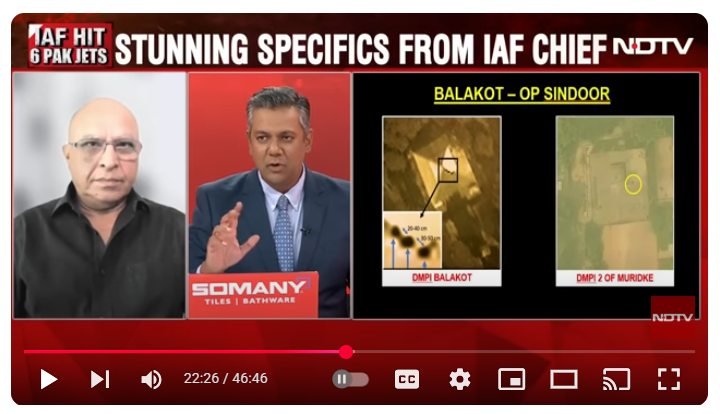
Operation Sindoor was a series of precision strikes conducted by the Indian Armed Forces against the terror infrastructure in Pakistan. On May 7, 2025, nine terror camps in Pakistan and Pakistan-occupied Jammu and Kashmir (PoJK) were hit in retaliation for the 22 April 25, terror attack at Pahalgam that killed 26 civilians.

Geographic Distribution of Terror Camps and Their Strategic Importance. The nine targeted camps were critical nodes in the terror infrastructure of Jaish-e-Mohammed (JeM), Lashkar-e-Taiba (LeT), and Hizbul Mujahideen (HuM). These groups have been responsible for major attacks on Indian soil, including the 2008 Mumbai attack, 2016 Uri attack, 2019 Pulwama attack, and the 2025 Pahalgam attack. The camps served as hubs for recruitment, training, indoctrination, logistics, and infiltration, often with logistical support from Pakistan’s military and ISI. Three camps (Bahawalpur, Muridke, Sialkot) were located in mainland Pakistan, 5–200 km from the International Border. Six camps (including Muzaffarabad, Kotli, Bhimber) were closer to the Line of Control, 9–15 km, reflecting their role as infiltration and staging points. Camps near the IB/LoC (e.g., Sialkot, Kotli, Bhimber, Muzaffarabad) were critical for immediate infiltration and logistics, posing direct threats to Jammu and Kashmir. Deep inland camps (e.g., Bahawalpur, Muridke) served as ideological and operational headquarters.


Extent of Overall Damage.

Indian sources reported the destruction of all nine camps, with over 100 terrorists killed, including high-value targets like Yusuf Azhar, Abdul Malik Rauf, and Mudasir Ahmed, linked to the IC-814 hijacking and the Pulwama attack. Satellite imagery confirmed extensive damage, with key facilities like Markaz Subhan Allah (Bahawalpur) and Markaz Taiba (Muridke) reduced to rubble. The operation reportedly used SCALP cruise missiles, HAMMER precision-guided bombs, and loitering munitions, ensuring minimal civilian casualties and no targeting of Pakistani military installations.

Pakistani Claim.  Pakistan claimed 26–31 civilian deaths and damage to mosques and residential areas, labelling the strikes an “act of war.” These claims remain unverified by independent sources, and India refuted them, asserting that no civilian infrastructure was targeted.

Indian Perspective. The strikes were described as “focused, measured, and non-escalatory,” targeting only terror infrastructure with no civilian or military targets hit. Indian officials provided satellite imagery and videos to substantiate claims of precision and extensive damage to terror camps.


Message through Operation Sindoor.

Operation Sindoor was not just a tactical military response; it was a calibrated strategic message from India to Pakistan, signalling a decisive shift in how India intends to respond to cross-border terrorism. It sent a powerful message that India would strike precisely when provoked and where it hurts most. It reframed the India-Pakistan dynamic from reactive defence to assertive offence, clarifying that India will no longer play by the rules written in Rawalpindi.

Zero Tolerance for Cross-Border Terrorism. India conveyed that state-sponsored terrorism will no longer be met with diplomatic restraint or reactive defence, but with proactive and pre-emptive military action. By hitting deep into Pakistan and PoK, India underscored that terror safe havens will be treated as legitimate military targets.

Deterrence by Punishment. Rather than relying solely on deterrence by denial (defensive security), Operation Sindoor shifted to deterrence by punishment, raising the cost of using terrorism as an instrument of state policy.

Strategic and Tactical Escalation Control Lies with India. India emphasised that the strikes were “focused, measured, and non-escalatory,” targeting only terror infrastructure and avoiding Pakistani military or civilian sites. By choosing the time, location, and scale of the strikes, India seized escalation dominance, demonstrating that it can punish terror proxies without triggering a full-scale war. The precision and speed of the operation signalled India’s ability to strike hard while managing strategic escalation.

Deep-Strike Capability and Political Will. The strikes were more profound and extensive than previous cross-border operations, such as the 2016 surgical strikes or the 2019 Balakot airstrikes. This conveyed India’s enhanced ISR (Intelligence, Surveillance, Reconnaissance), strike capabilities, and, more importantly, a firm political will to act on them.

Terror Infrastructure Will Not Be Tolerated. By targeting Terror organisation headquarters, training camps, launch pads, and logistical nodes, India conveyed that no location, whether in PoK or even close to Pakistan’s heartland, is beyond reach if it harbours anti-India terror operations. By striking deep into Pakistan’s Punjab province (e.g., Bahawalpur, Muridke, Sialkot) and PoJK (e.g., Muzaffarabad, Kotli, Bhimber), India demonstrated its military reach and resolve to target terrorist sanctuaries regardless of location. The message was clear: “No place is beyond India’s reach,” challenging the sense of impunity enjoyed by terror groups.

Global Signalling: From Victim to Enforcer. India sent a signal not just to Pakistan, but to the worldwide community—that it is no longer content with merely being seen as a victim of terrorism. India now positions itself as an active enforcer of its national security, willing to act unilaterally when international pressure fails to deter terror networks.

A Warning for the Deep State and Proxy Groups. India’s message was also aimed at the Pakistani military-intelligence complex (ISI). If you continue to support terrorist groups like Jaish-e-Mohammed (JeM) and Lashkar-e-Taiba (LeT), the cost will be imposed not only on your proxies but on your assets and territory.


Conclusion

Operation Sindoor marks a watershed in India’s counter-terrorism doctrine—an audacious assertion of sovereign resolve against cross-border terrorism. By targeting deep-rooted terror hubs across both Pakistan-occupied Jammu and Kashmir and mainland Pakistan, the operation showcased India’s enhanced surveillance, precision strike capability, and political will to act decisively. Each of the nine camps held operational and symbolic relevance—from the ideological headquarters of Lashkar-e-Taiba in Muridke to suicide bomber training camps in Kotli and pre-infiltration staging points in Sialkot. The comprehensive destruction of these facilities, verified through satellite imagery and on-ground assessments, sent a clear message: India will not hesitate to dismantle the terror infrastructure at its source, regardless of geographical or political boundaries. The strikes redefined the contours of Indian deterrence, shifting from reactive defence to offensive punishment, and conveyed a strong message to the Pakistani establishment and the global community alike. India has demonstrated that it is no longer a passive recipient of terror but a proactive enforcer of its national security imperatives.


List of Terror Camps Targeted

  1. Markaz Subhan Allah, Bahawalpur (Pakistan) – Jaish-e-Mohammed (JeM).

Location and Relevance. Bahawalpur, Punjab, is approximately 150–200 km from the international border with India (near the Rajasthan or Punjab border). Located in Pakistan’s Punjab heartland, far from the LoC, this was a strategic, ideological and operational hub, making it a deep-strike target. Considered the ideological and operational headquarters of JeM, a major anti-India terror group and served as a recruitment, training, and indoctrination center for JeM operatives. Historically, it hosted senior cadre training sessions linked to major attacks, including the 2019 Pulwama attack and reportedly financed by Osama Bin Laden with rupees one crore for constructing a mosque and a guest house within the complex.

Extent of Damage: Satellite imagery showed significant destruction, with the mosque’s dome collapsed, widespread debris, and surrounding buildings reduced to rubble. Before-and-after visuals confirmed substantial structural damage, leaving the hub in ruins.


  1. Markaz Taiba, Muridke (Pakistan) – Lashkar-e-Taiba (LeT).

Location and Relevance. Muridke, Punjab, Pakistan. Approximately 30–40 km from the International Border (near Wagah, Punjab, India). Situated near Lahore, this 200-acre facility was close to the IB, making it a high-priority target due to its proximity and role in training for major attacks like the 2008 Mumbai attack. A 200-acre compound serving as the operational and ideological heart of LeT, known as Pakistan’s “terror nursery.” Used for indoctrination, logistics, and planning major attacks, including the 2008 Mumbai attack, where terrorists like Ajmal Kasab were trained. Key infrastructure for training and coordinating terror activities against India.

Extent of Damage. Satellite imagery revealed extensive destruction, with buildings reduced to rubble. Videos and images showed rescuers searching through debris, indicating severe structural damage. The Indian military confirmed the destruction of command centers and training facilities.


  1. Syedna Bilal Camp, Muzaffarabad (PoJK) – Jaish-e-Mohammed (JeM)

Location and Relevance. Muzaffarabad, Pakistan-occupied Jammu and Kashmir, approximately 10–15 km from the Line of Control. A key infiltration point in PoJK, its proximity to the LoC made it critical for cross-border terror activities targeting Kashmir. A key infiltration point and training facility for JeM sleeper cells. Linked to attacks in Sonmarg, Gulmarg (October 2024), and Pahalgam (April 2025). Served as a logistics and transit point for terrorists infiltrating into Indian-administered Kashmir.

Extent of Damage. Destroyed at 1:04 AM on May 7, 2025, OSINT imagery confirmed significant damage to infrastructure with minimal civilian impact.


  1. Shawai Nala Camp, Muzaffarabad (PoJK) – Lashkar-e-Taiba (LeT)

Location and Relevance. Shawai Nala, Muzaffarabad, Pakistan-occupied Jammu and Kashmir, approximately 10–12 km from the Line of Control. Another Muzaffarabad-based camp, close to the LoC, is used for training and staging infiltrators for attacks in Jammu and Kashmir. A major LeT center for training terrorists involved in attacks on Sonmarg, Gulmarg (October 2024), and Pahalgam (April 2025). Used as an infiltration point and staging facility for cross-border terror activities.

Extent of Damage. Destroyed, with UAV reconnaissance and OSINT imagery confirming the elimination of training facilities and arms depots.


  1. Abbas Terrorist Camp, Kotli (PoJK) – Lashkar-e-Taiba (LeT)

Location and Relevance. Kotli, Pakistan-occupied Jammu and Kashmir, approximately 13 km from the Line of Control. A nerve center for suicide bomber training, its proximity to the LoC made it a significant threat for infiltration into India.

Extent of Damage. Satellite imagery confirmed that the camp was reduced to rubble.


  1. Markaz Abbas, Kotli (PoJK) – Jaish-e-Mohammed (JeM)

Location and Relevance. Kotli, Pakistan-occupied Jammu and Kashmir, approximately 13 km from the Line of Control. A hub for suicide bomber training and weapons distribution for PoJK-based terrorists. Facilitated by Pakistan’s Special Services Group for logistics and training.

Extent of Damage. UAV surveillance confirmed the elimination of key infrastructure, with precision strikes targeting training and logistical centers.


  1. Sarjal/Tehra Kalan, Sialkot (Pakistan) – Jaish-e-Mohammed (JeM)

Location and Relevance. Tehra Kalan, Sialkot, Punjab, Pakistan, approximately 6 km from the International Border (near Jammu, India). A pre-infiltration camp located within a primary health center premises, its proximity to the IB made it a key staging ground for infiltration and logistics coordination, established in the late 1990s and linked to the March 2025 attack in Kathua, Jammu, where four J&K police personnel were killed.

Extent of Damage. Satellite imagery confirmed its destruction, showing significant damage to infrastructure.


  1. Mehmoona Joya Facility, Sialkot (Pakistan) – Hizbul Mujahideen (HuM)

Location and Relevance. Sialkot, Punjab, Pakistan, approximately 5–7 km from the International Border. A facility for Hizbul Mujahideen, a pro-Pakistan separatist group founded in 1989, was used for training and planning attacks in Indian-administered Kashmir.

Extent of Damage. Destroyed in the strikes, with the elimination of key infrastructure.


  1. Markaz Ahle Hadith, Barnala, Bhimber (PoJK) – Lashkar-e-Taiba (LeT)

Location and Relevance. Barnala, Bhimber, is in Pakistan-occupied Jammu and Kashmir, approximately 9 km from the Line of Control. A logistics and training hub for LeT, its strategic location near the LoC supported cross-border operations. It is used for training in weapons, improvised explosive devices (IEDs), and jungle survival.

Extent of Damage.  Destroyed, with satellite imagery confirming the elimination of logistical and training facilities.


Please Add Value to the write-up with your views on the subject.


1879
Default rating

Please give a thumbs up if you  like The Post?


For regular updates, please register your email here:-

Subscribe


References and credits

To all the online sites and channels.

Pics Courtesy: Internet

Disclaimer:

Information and data included in the blog are for educational & non-commercial purposes only and have been carefully adapted, excerpted, or edited from reliable and accurate sources. All copyrighted material belongs to respective owners and is provided only for wider dissemination.


Link to the article on the website:-

OP SINDOOR: Punitive Deterrence – Targeting Terror Camps

References:-

  1. Ministry of Defence, Government of India. (2025, May 8). Press Briefing on Counter-Terror Strikes: Operation Sindoor.
  1. Indian Air Force. (2025, May 9). Statement on Precision Air Strikes Against Terror Infrastructure, May 7, 2025.
  1. South Asia Terrorism Portal (SATP). (2025). Profiles of Terrorist Groups and Training Camps in Pakistan. Institute for Conflict Management.
  1. WION News. (2025, May 8). India’s Operation Sindoor: A Deep Dive into the Strikes on Terror Camps.
  1. BBC News. (2025, May 8). India Strikes Terror Camps in Pakistan: What We Know So Far.
  1. The Hindu. (2025, May 9). Nine Terror Camps Targeted in India’s Precision Air Strikes: Official Sources.
  1. Daily Excelsior. (2025, May 8). Operation Sindoor: India Targets Terror Camps in PoJK, Pakistan.
  1. India Today. (2025, May 8). Operation Sindoor: India’s Precision Strikes Hit 9 Terror Camps in Pakistan, PoJK.
  1. ORF Occasional Paper No. 396. (2021). The Terror Infrastructure in Pakistan: The Role of JeM and LeT. Observer Research Foundation.
  1. Singh, A. (2020). India’s Cross-Border Strikes and Strategic Signalling: The Doctrine of Deterrence by Punishment. Carnegie India.
  1. Bhatnagar, G. (2019). Terrorist Training Camps in Pakistan: Locations, Capabilities and Patterns. Centre for Land Warfare Studies (CLAWS).
  1. CSIS Transnational Threats Project. (2018). Pakistan-Based Militancy and the Role of the ISI. Center for Strategic and International Studies.
  1. Sethi, M. (2025). India’s Offensive Deterrence Post-Balakot and Operation Sindoor: A Strategic Shift?. Manohar Parrikar Institute for Defence Studies and Analyses (MP-IDSA).
  1. Jane’s Defence Weekly. (2025, May 10). Analysis of Satellite Imagery Confirms Targeted Destruction of Militant Infrastructure in PoJK and Punjab, Pakistan.
  1. NDTV. (2025, May 8). India Used SCALP, HAMMER and Loitering Munitions in Operation Sindoor.
  1. GlobalSecurity.org. (2024). JeM, LeT, and HuM Training Facilities: Historical Patterns and Tactical Analysis.
  1. Maxar Technologies. (2025, May). Satellite Imagery of Bahawalpur, Muridke, Muzaffarabad Before and After May 7 Strikes.

English हिंदी