
Inputs to questionnaire from journalists
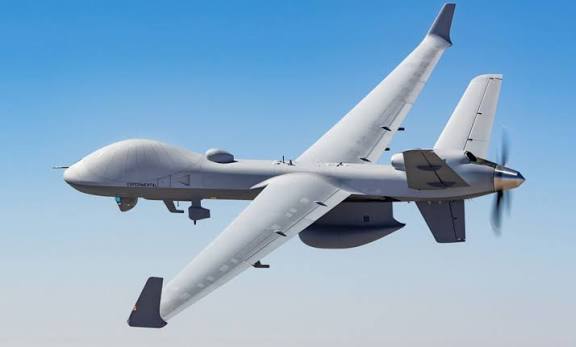
India has operated leased SeaGuardians since 2020. India leased them because the Navy needed persistent ISR capability while the much larger procurement moved through the system. The Indian Navy has found them useful and has flown them for thousands of hours.
The new lease contract has reportedly been signed on17 August 2026. It includes a 30-month lease for two MQ-9B Sea Guardian drones from General Atomics Aeronautical Systems. The contract is valued at approximately ₹1,943 crore.
On the face of it, ₹1,943 crore for two MQ-9B SeaGuardians for only 30 months looks extremely expensive. The ₹1,943 crore price tag is not a basic rental fee for two airframes. It represents a Company-Owned, Company-Operated (COCO) capability package. The value proposition includes sensors, communications, ground-control infrastructure, technical support, maintenance, operators/support personnel, availability, etc.
-
- Complete Operational Burden. General Atomics (GA-ASI) provides the entire ecosystem (possibly including Ground Control Stations (GCS), satellite communication bandwidth, continuous payload integration, spare parts, and on-site engineering support).
-
- Assured Flight-Hours. The cost includes availability of a guaranteed number of operational flight hours. The manufacturer would bear the cost associated with airframe degradation, maintenance cycles, component failures, and logistics overhead.
-
- Specialised Payload Rent. The lease includes high-end, mission-specific sensor suites (360-degree maritime surface search radars, synthetic aperture radars (SAR), electro-optical/infrared (EO/IR) balls, and signals intelligence (SIGINT) packages).
The lease would buy time and capability. India entered into the agreement in October 2024 for 31 MQ-9Bs (specifically 15 SeaGuardians and 16 SkyGuardians). India’s acquisition of 31 aircraft does not mean they will become operational right away; reports indicate the first deliveries will not take place until late 2028 or early 2029. Since we need the capability right now, there will be a gap of several years. To sum up, the purchase is the long-term solution, while the lease is a short-term remedy.
There’s another way of looking at it. The lease would be a training and transition bridge. The new lease could allow personnel, maintenance teams, operators and mission planners to continue building experience while the larger fleet is inducted. It would allow operational availability, training, experience, maintenance support, sensors, contractor support, insurance/replacement risk, and immediate access. Rather than a redundant expense, the lease would serve as a high-readiness bridge. It would provide immediate maritime surveillance capacity while laying the tactical groundwork for the larger fleet’s arrival.
In short, the two newly leased Sea Guardians are not a standalone act but a deliberate interim measure that keeps the Navy’s IOR surveillance posture strong and operationally continuous while the larger, permanent 31-aircraft tri-service fleet is manufactured and delivered.
The bigger picture
The drones complement, rather than replace, the P-8I fleet. India’s surveillance architecture is increasingly layered:
-
- MQ-9B SeaGuardian: long-endurance unmanned surveillance, able to remain on station for extended periods.
-
- P-8I Poseidon: manned long-range maritime patrol aircraft with sophisticated radar and anti-submarine warfare capabilities.
-
- Satellites: wide-area, space-based observation.
-
- Coastal and island-based sensors/radars: persistent monitoring closer to shore and around strategic maritime chokepoints.
-
- Other naval assets: ships, submarines and aircraft that can investigate or act on information generated by the surveillance network.
A layered network:
Satellites → see broadly
↓
MQ-9Bs → stay over an area for a long time.
↓
P-8Is → investigate and conduct sophisticated maritime/ASW missions.
↓
Ships/submarines → physically respond.
The MQ-9B lease fits into that picture as the tactical, tasking-responsive layer of a system whose outer layers are space-based sensing and coastal radar, and whose command layer is the fusion-centre network.
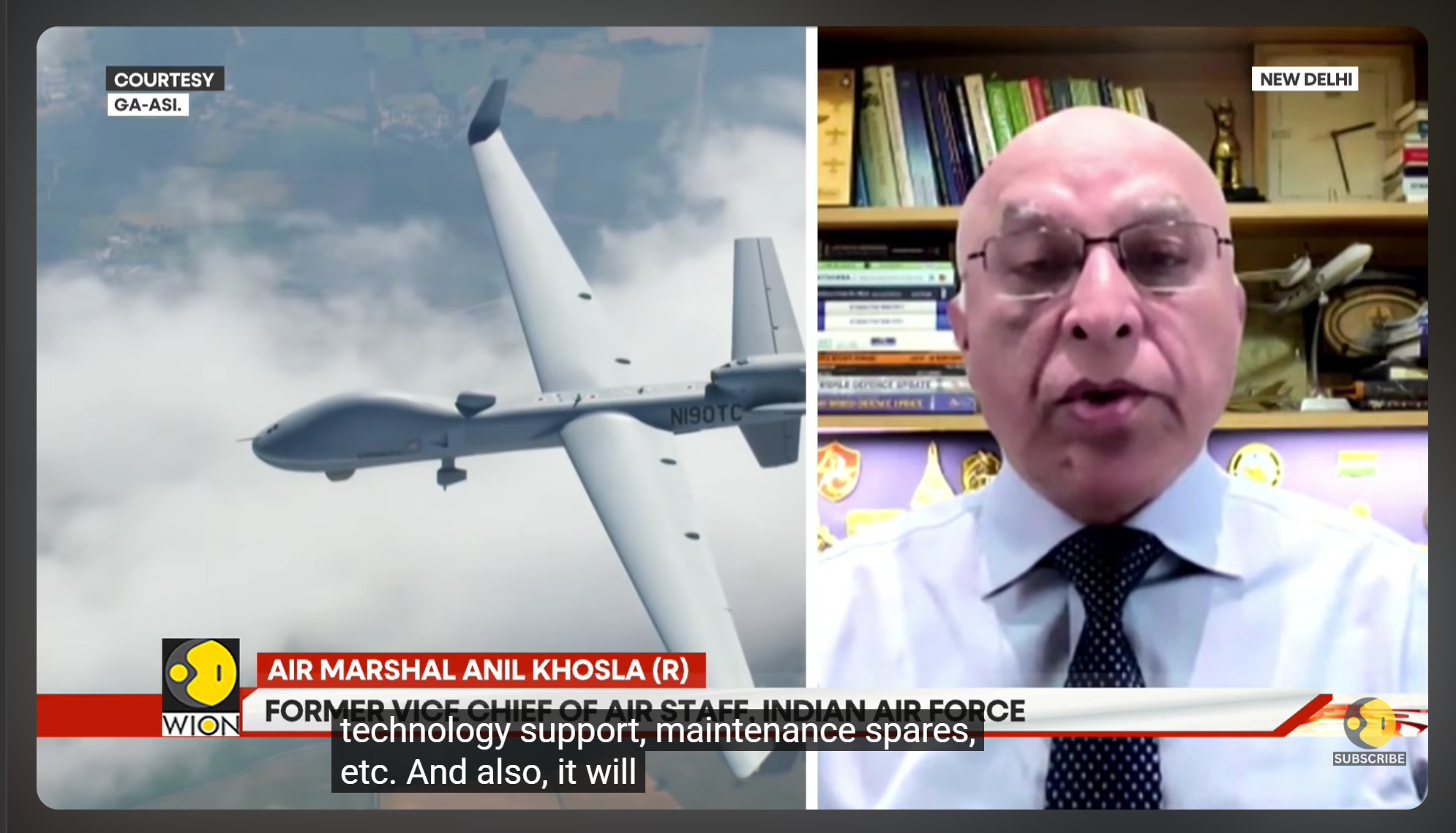
Link to the report on Wion TV:-
Please Add Value to the write-up with your views on the subject.
For regular updates, please register your email here:-
References and credits
To all the online sites and channels.
Pics Courtesy: Internet
Disclaimer:
Information and data included in the blog are for educational & non-commercial purposes only and have been carefully adapted, excerpted, or edited from reliable and accurate sources. All copyrighted material belongs to the respective owners and is provided only for wider dissemination.