My article published on the EurAsian Times Website on 26 Nov 24.
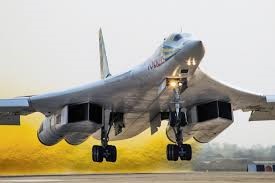
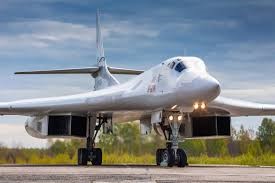
To strengthen bilateral defence cooperation, Russia has offered India the opportunity to procure the Tu-160M strategic bombers, known as the “White Swan.” This move, reflecting Moscow’s ongoing ambition to bolster military ties with its long-standing partner, could provide India with substantial aerial capabilities. As India considers this offer, questions arise regarding its practicality, implications for regional security, strategic deterrence, and the broader Indo-Russian defence relationship.
Background and Features. The Tupolev Tu-160, developed initially in the Soviet Union during the late 1970s, is the world’s most oversized and fastest supersonic bomber. The modernised variant, the Tu-160M, incorporates significant upgrades over its predecessor. Equipped with advanced avionics, enhanced navigation systems, and state-of-the-art NK-32-02 engines, the Tu-160M is designed to improve operational efficiency and extend mission capabilities. Each aircraft is capable of carrying up to 12 long-range cruise or nuclear missiles, enabling precision strikes far from home bases. With a remarkable range of 12,000 km without refuelling and variable-sweep wings allowing flexible mission adaptation, the Tu-160M maintains supremacy as a long-distance strategic bomber. The model’s design allows for high-speed, low-altitude flight and quick acceleration, granting it a unique operational profile suitable for conventional and strategic missions.
Geopolitical Aspects. The offer of the Tu-160M aligns with Russia’s goal of deepening defence ties with India amid shifting global alliances. India and Russia have historically shared a strong defence partnership, which has marked extensive arms sales and technology transfers. This relationship has weathered challenges posed by India’s increasing engagements with Western powers, notably the U.S., for defence technology. Accepting Russia’s offer could reaffirm this bilateral relationship, counterbalancing Western influence while ensuring India maintains diverse sources for its defence procurement. This diversification reduces reliance on any single country and allows India to navigate its complex strategic environment more flexibly. Additionally, the offer comes as Russia seeks to assert its position in global arms markets amid sanctions and the fallout from geopolitical conflicts. By selling advanced military equipment like the Tu-160M, Moscow reinforces its image as a provider of cutting-edge technology to key partners.
Multi-Role Fighters Vis-a-Vis Strategic Bomber. Historically, the Indian Air Force has favoured multirole fighters over a dedicated strategic bomber. The potential acquisition of the Tu-160M would significantly shift India’s defence posture. This addition would enhance India’s capability to project power across the Indo-Pacific region and serve as a formidable deterrent amid evolving regional threats. Presently, India relies on fighters like the Sukhoi Su-30MKI and Dassault Rafale for long-range strikes. These aircraft, while versatile, do not match the range and payload of the Tu-160M, which can carry nuclear-capable Kh-101 and Kh-102 cruise missiles.
Pic Courtesy Net
Capability Enhancement. The Indo-Pacific is witnessing an intensification of geopolitical rivalries, particularly with the rise of China’s military capabilities and assertive stance in territorial disputes. For India, a strategic bomber like the Tu-160M could provide enhanced reach, allowing it to strike deep into adversarial territories or support extended deterrence strategies. This would complement India’s existing nuclear triad, comprising land-based missiles, submarines, and fighter-borne atomic weapons.
Regional Balance. Strategic bombers could alter the military balance regionally, compelling neighbouring states to recalibrate their security strategies. For instance, though formidable, China’s fleet of H-6 bombers lacks the same speed and range as the Tu-160M. Thus, India’s acquisition could establish a new tier of deterrence, countering strategic depth advantages that adversaries maintain.
Cost Factor. Despite the potential benefits, the Tu-160M’s high price tag poses significant budgetary implications. The need for specialised training, new infrastructure, and extensive maintenance compounds high acquisition costs. Given its size and operational demands, the IAF would have to consider adapting airbases and logistical support systems to operate and sustain such an aircraft.
Doctrinal Challenges. The bomber’s survivability in contested airspace that India is likely to face is another issue for consideration. Furthermore, integrating the strategic bomber into IAF operations would require significant investments in pilot training programs and mission planning resources to optimise its use. Training specialised crews and adopting new operational doctrines may also present a challenge, as India’s air force has historically not fielded heavy bombers.
Place in Priority List. Currently, the Tupolev Tu-160 may not occupy a high priority in the Indian Air Force’s defence acquisition plans. India focuses primarily on enhancing its missile defence, air superiority fighters, and long-range strike capabilities through multi-role aircraft and cruise missiles. The Tu-160, while a potent strategic asset, may not align with India’s current needs due to the high cost of acquisition and maintenance and the presence of alternative means of strategic deterrence. However, its role in a long-term strategic vision could be revisited if future developments necessitate it.
The potential acquisition of the Tu-160M bomber presents India with a pivotal opportunity to enhance its strategic capabilities and solidify its position as a regional power. While the benefits of range, payload, and deterrence are substantial, India must consider the broader implications, including costs, logistics, and geopolitical messaging. If India integrates the Tu-160M into its air force, it will signify a significant milestone in its defence modernisation. This decision would reinforce its strategic deterrence and strengthen Indo-Russian ties at a time when global power dynamics are in flux. India However, acquiring such a platform involves more than financial investment. India must weigh the strategic benefits against operational challenges, including the bomber’s relevance in modern warfare, which increasingly favours multi-domain and network-centric approaches over traditional heavy bombardment. Ultimately, the choice will reflect India’s long-term vision for its role in the regional and global security landscape.
Your valuable comments are most welcome.
For regular updates, please register your email here:-
Information and data included in the blog are for educational & non-commercial purposes only and have been carefully adapted, excerpted, or edited from reliable and accurate sources. All copyrighted material belongs to respective owners and is provided only for wider dissemination.
My Article published on The EurAsian Times Website on 24 Nov 24
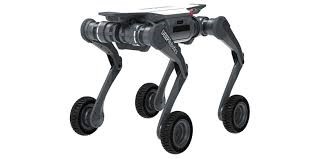
The Chinese company Deep Robotics recently unveiled the “Lynx ” advanced quadruped robot.” This robot is designed for rugged, off-road environments and showcases its versatility by navigating extreme terrain and performing stunts like backflips and sharp turns. The robot’s robust design allows it to move at high speeds across rugged landscapes, enhancing its utility in real-world applications like disaster response and exploration. The robot represents a significant move in China’s broader strategy of embracing unmanned warfare.
Lynx Robot
Pic Courtesy: Net
Deep Robotics, founded in 2017, has made a name for itself with its innovative quadruped robots, and the Lynx represents a leap forward in terms of versatility and performance. The Lynx has all-terrain wheels, allowing it to cover uneven ground easily. Thanks to its waterproof design, it can operate in challenging conditions, including temperatures ranging from -20°C to 55°C, and in wet environments. The Lynx can autonomously navigate challenging environments for up to 4 hours on a single charge. This robot has garnered attention for its practical applications in search and rescue, mapping, inspection, and potential military uses.
Possible Military application.
The Lynx robot by Deep Robotics, with its rugged capabilities, mobility, and autonomous navigation of extreme terrains, presents several potential military applications. These features make it suitable for a range of tactical and logistical operations in military contexts, from reconnaissance missions in complex environments to providing logistical support in combat zones.
Reconnaissance and Surveillance. The Lynx’s ability to traverse complex environments—such as rough, mountainous terrain or urban rubble—makes it ideal for reconnaissance missions. Its autonomous navigation capabilities allow it to gather intelligence in areas that are too dangerous or difficult for human soldiers to access, providing real-time data without risking lives.
Logistical Support. The robot’s capacity to carry heavy loads and its off-road agility make it a potential asset in logistical operations, particularly in combat zones. It could transport supplies, ammunition, and equipment across uneven terrain, ensuring that military units are well-supplied in challenging environments.
Search and Rescue Operations. Given its versatility and ability to function in extreme conditions, the Lynx could be used in military search and rescue operations. It can be deployed in environments where traditional vehicles may struggle, such as collapsed buildings or hazardous zones after combat.
Explosive Ordnance Disposal (EOD). The robot’s agility, ability to handle rough terrain, and precision could make it a valuable tool in EOD operations. It would allow military personnel to remotely detect and disarm explosives in hostile areas without exposing humans to danger.
The Lynx’s robust design and all-terrain features lend it to military applications. As with many advanced robotic systems, its military potential could be seen as a means to reduce human casualties and enhance combat capabilities.
Future Warfare with Unmanned Systems
Unmanned systems, encompassing unmanned aerial vehicles (UAVs) and unmanned ground vehicles (UGVs), are rapidly transforming the landscape of modern warfare. With technological advancements, these systems have moved from the periphery of military operations to the forefront, providing unprecedented surveillance, reconnaissance, logistics, and combat capabilities. This article explores the tactical applications of unmanned systems in future warfare, illustrated with examples, insights from military experts, and a look at the implications for global security.
The Evolution of Unmanned Systems. The concept of unmanned systems is not new; however, their application has dramatically evolved over the past two decades. Initially utilised primarily for reconnaissance missions during the Cold War, UAVs gained prominence in the 1990s and early 2000s, particularly in the U.S. military’s operations in the Middle East. The 2001 invasion of Afghanistan and the subsequent Iraq War marked a turning point where UAVs like the MQ-1 Predator and MQ-9 Reaper became integral to combat operations, enabling real-time intelligence gathering and targeted strikes without risking pilot lives. A 2021 U.S. Defence Innovation Board report states, “Unmanned systems are reshaping how wars are fought, enabling forces to conduct operations with greater precision, efficiency, and reduced risk to personnel” (Defence Innovation Board, 2021).
Tactical Applications of Unmanned Aerial Vehicles (UAVs)
Surveillance and Reconnaissance. One of the primary applications of UAVs is for surveillance and reconnaissance missions. The ability to gather intelligence over vast areas without risking human life is invaluable. For example, during the 2012 conflict in Mali, French forces employed UAVs to monitor enemy movements and gather intelligence on insurgent groups. This enabled precise ground operations planning, significantly improving their forces’ effectiveness.
Precision Strikes. UAVs have also become crucial in delivering precision strikes against high-value targets. The use of drones for targeted killings has been a controversial yet effective tactic. Israel’s use of UAVs in conflicts, such as the 2006 Lebanon War, demonstrated the effectiveness of drones in both surveillance and combat roles. The Israeli Air Force’s use of the Heron and Hermes UAVs allowed for persistent monitoring and targeted strikes, significantly impacting Hezbollah’s capabilities.
Logistics and Resupply. Unmanned systems are also revolutionising military logistics. The U.S. Army has begun to deploy UAVs for logistical support, delivering supplies to frontline troops. This capability was notably highlighted during the 2020 Nagorno-Karabakh conflict, where Azerbaijani forces utilised UAVs not only for combat but also for logistical operations, effectively resupplying troops in the field while minimising the risk of ground convoys being attacked.
Tactical Applications of Unmanned Ground Vehicles (UGVs)
Combat Support and Logistics Unmanned ground vehicles (UGVs) are increasingly integrated into combat operations. These systems can perform various tasks, including surveillance, logistics, and direct enemy forces engagement. The U.S. Army’s Robotic Combat Vehicle (RCV) program exemplifies this trend, as it aims to develop UGVs that can operate alongside manned units to enhance combat effectiveness. The UGVs deployed in recent military exercises have demonstrated their ability to scout ahead of troop formations, providing critical intelligence without endangering soldiers.
Counter-Improvised Explosive Device (C-IED) Operations. UGVs are particularly effective in counter-IED operations, where they can safely detect and disarm explosive devices. The U.S. military has employed systems like the PackBot and Talon, successfully reducing casualties among dismounted troops. During operations in Afghanistan, UGVs were instrumental in clearing routes for ground convoys by detecting and neutralising IED threats.
Humanitarian Assistance and Disaster Relief (HADR). UGVs are also involved in humanitarian assistance and disaster relief operations. In the aftermath of natural disasters, these vehicles can be deployed to assess damage, locate survivors, and deliver supplies. For instance, after the 2011 earthquake and tsunami in Japan, UGVs were used to navigate debris and assess the condition of affected areas, demonstrating their versatility beyond traditional military applications.
Future Warfare and the Role of Unmanned Systems.
As warfare continues to evolve, the role of unmanned systems will only expand. Integrating artificial intelligence (AI) and machine learning into unmanned systems will enhance their capabilities, enabling them to operate autonomously in complex environments. This shift toward autonomy presents both opportunities and challenges for military planners.
Enhanced Decision-Making. Integrating AI into unmanned systems will facilitate improved decision-making in combat scenarios. AI algorithms can analyse vast amounts of data from multiple sources, providing commanders with actionable intelligence and recommendations for operations. The future battlefield will be defined by speed and the ability to process information faster than the enemy.
Ethical Considerations. However, the increasing reliance on unmanned systems raises significant ethical questions. The use of drones for targeted killings has sparked debate over accountability and the rules of engagement. As military operations become more automated, the question of human oversight becomes critical. Experts argue that while unmanned systems can enhance operational efficiency, they must be governed by strict ethical guidelines to prevent misuse and collateral damage.
Global Security Implications. The proliferation of unmanned systems is reshaping global security dynamics. As countries like China and Russia invest heavily in their drone capabilities, the balance of power is shifting. The use of UAVs in conflicts such as the Syrian Civil War and the ongoing tensions in the South China Sea highlights the strategic importance of these systems in contemporary military strategies.
China’s Investment in Unmanned Systems
China has heavily invested in unmanned systems as part of its broader goal to modernise its military and lead in technological innovation. These investments are spread across several key sectors, including unmanned aerial vehicles (UAVs), unmanned underwater vehicles (UUVs), and unmanned surface vessels (USVs). These technologies have military, commercial, and strategic implications that extend beyond China’s borders.
Unmanned Aerial Vehicles (UAVs). China is a global leader in UAV technology, mainly through the success of companies like DJI. DJI dominates the global drone market, controlling up to 70% of the worldwide share. China’s military has also developed advanced UAVs, including surveillance, reconnaissance, and strike capabilities. The Wing Loong series, for example, is a family of Chinese UAVs designed for intelligence gathering and targeted strikes. These UAVs are being developed for domestic consumption and export purposes, making China a significant player in the global defence drone market.
Unmanned Surface Vessels (USVs). China is making significant strides in developing USVs, which are used for maritime surveillance, reconnaissance, and mine detection. These unmanned vessels are seen as cost-effective alternatives to manned naval operations, offering the ability to patrol contested waters like the South China Sea without risking human life. USVs also help maintain a constant presence in strategic maritime regions. These vessels align with China’s broader naval ambitions to assert its presence and power projection capabilities in the Indo-Pacific.
Unmanned Underwater Vehicles (UUVs). China’s investment in UUVs has been critical to its maritime strategy, particularly in the South China Sea and other key waterway areas. These vehicles are essential for underwater surveillance, anti-submarine warfare, and potentially offensive operations against rival naval forces. China’s UUV technology has evolved to encompass various capabilities, from scientific exploration to military applications, such as the Haisi underwater vehicle series.
Strategic and Military Applications. China’s investments are strategically aimed at bolstering its military capabilities, enhancing its surveillance capabilities, and reducing operational risks. By focusing on unmanned systems, China can maintain a technological edge in surveillance, reconnaissance, and potential combat operations. The country’s Military-Civil Fusion policy further accelerates the integration of civilian technological advances into the military, making these unmanned systems even more pivotal for national defence and global influence.
Global Influence and Export Strategies. China’s dominance in the unmanned systems market has implications for its foreign policy and international influence. While Western countries like the U.S. have stricter export controls on unmanned systems, China’s more flexible approach allows it to export these technologies widely, especially to developing countries. This has led to China’s increasing presence in markets previously dominated by Western companies, positioning it as a critical player in the global defence and technology sectors.
China’s strategic investments in unmanned systems are part of a broader national ambition to lead in defence technology while reducing reliance on traditional military platforms. The country’s dominance in the drone market and advancements in USVs and UUVs make unmanned systems a cornerstone of China’s military modernisation efforts and broader geopolitical ambitions. These investments strengthen China’s defence capabilities and enhance its influence across global markets, particularly in rising geopolitical tensions in the Indo-Pacific and other strategic regions.
The increasing use of unmanned systems by state and non-state actors presents a new paradigm in warfare, challenging traditional military doctrines and necessitating a re-evaluation of defence strategies. As nations continue to develop and deploy unmanned systems, it is imperative to strike a balance between leveraging their capabilities and ensuring accountability in their use. These technologies will undoubtedly shape the future of warfare, making it essential for military leaders and policymakers to understand their implications for global security.
Your valuable inputs are most welcome.
For regular updates, please register your email here:-
Aviation Week Network. (2019). UAVs in Mali: The Role of Drones in Modern Warfare. aviationweek.com.
Center for Strategic and International Studies (CSIS). (2020). The Future of Unmanned Systems in Global Security. csis.org
Cohen, R. (2021). Logistical Innovations in Warfare: Lessons from the Nagorno-Karabakh Conflict. Military Review.
Defence Innovation Board. (2021). The Future of Warfare: Unmanned Systems and Autonomous Operations. defenseinnovationboard.gov
Dunford, J. (2016). Counter-IED Operations: Lessons Learned from Afghanistan. Joint Force Quarterly.
McGhee, J. (2018). The Evolution of Unmanned Aerial Systems in Combat. Air Force Journal.
McRaven, W. A. (2020). The Role of Robotics in Modern Warfare. Military Affairs.
Shay, S. (2019). Drones in Israel’s Military Strategy: A Case Study. Journal of Military Strategy.
Singer, P. W. (2019). Ethics of Drone Warfare: A Contemporary Debate. Ethics & International Affairs.
Walker, W. J. (2022). Artificial Intelligence and the Future of Warfare. Army Command and General Staff College.
Yasuda, T. (2012). The Role of Unmanned Systems in Disaster Response: Case Study of Japan. Disaster Management Journal.
Disclaimer:
Information and data included in the blog are for educational & non-commercial purposes only and have been carefully adapted, excerpted, or edited from reliable and accurate sources. All copyrighted material belongs to respective owners and is provided only for wider dissemination.
My Article published on The EurasianTimes website on 21 Nov 24
Pic courtesy Net
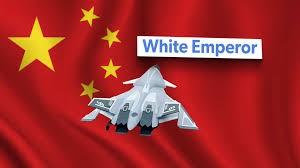
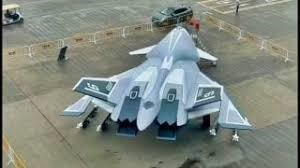
At the 2024 Zhuhai Airshow, China made a significant leap forward in its military aerospace capabilities by unveiling a prototype of its sixth-generation fighter jet, “Baidi B-Type,” also known as the “White Emperor.” This advanced fighter is part of China’s Project Nantiamen, a research initiative to develop next-generation aviation technologies. The unveiling of this aircraft highlights China’s commitment to staying at the forefront of aerospace innovation, positioning itself to compete with global leaders in the field.
Project Nantiamen. Project Nantianmen is an advanced Chinese aerospace initiative responsible for developing the “White Emperor,” a conceptual sixth-generation fighter aircraft. The project, overseen by the state-owned Aviation Industry Corporation of China (AVIC), aims to push the boundaries of aviation technology. Unveiled as a mockup at the 2024 Zhuhai Airshow, the White Emperor has been described as an “integrated space-air fighter” with potential capabilities to operate in Earth’s atmosphere and beyond.
White Emperor: Design Features.
While many details remain speculative due to the project’s classified nature, images and mock-ups at the Zhuhai Airshow emphasise sleek, angular designs that blend modern stealth with futuristic elements. The design of the White Emperor claims to incorporate several advanced features that aim to set it apart from existing aircraft.
Integrated Space-Air Operations. The White Emperor is described as an “integrated space-air fighter,” indicating an ambition to function in atmospheric and near-space environments. This includes potential space capabilities like engaging satellites or other orbital assets. Its design may incorporate propulsion and structural features suited for operating at extreme altitudes, though these capabilities remain unverified.
AI and Data Fusion Technologies. The White Emperor is claimed to be a dual-role aircraft designed for air superiority and strike missions. The inclusion of artificial intelligence (AI) and data fusion technologies indicates its future role as a networked combat system, integrating seamlessly with unmanned systems. This would allow the aircraft to process and disseminate real-time information on the battlefield, increasing situational awareness and enhancing combat effectiveness.
Stealth and Aerodynamics. The fighter has advanced stealth capabilities, including reduced radar cross-sections and infrared signatures. The cockpit design minimises reflective surfaces, a common feature in next-generation stealth aircraft. The design includes canards, which are debated for their potential impact on stealth. While they enhance manoeuvrability, they might increase radar detectability, raising questions about the trade-offs in the design.
Payload and Armament. Its design maximises internal space for advanced munitions, suggesting it could carry a diverse range of air-to-ground weapons. The White Emperor reportedly features expanded internal bays capable of carrying larger and heavier munitions, allowing it to fulfil multi-role missions (air-to-air and air-to-ground) while maintaining stealth. The emphasis on heavier payloads suggests adaptability for precision strikes, indicating a focus on versatility and operational readiness.
Flexibility and Versatility. Regarding operational flexibility, the fighter’s modular construction is intended to streamline maintenance, ensuring it remains battle-ready for quick deployments. The fighter’s landing gear is designed for operation on rough runways, unusual for stealth aircraft that traditionally require specialised infrastructure. This feature enhances its deployment flexibility in diverse environments.
Avionics and Systems. The aircraft’s design also incorporates significant upgrades to avionics and cockpit ergonomics, enhancing the pilot’s operational experience and improving the aircraft’s maintenance cycle. Enhancements to the fighter’s avionics likely include AI-assisted systems for situational awareness and target acquisition. These features are designed to streamline operations and reduce pilot workload, a hallmark of sixth-generation designs. Improvements focus on protecting the pilot from infrared and laser targeting systems and enhancing operational efficiency.
Speculative Features. The claim of space-operational capability introduces technical challenges, including propulsion systems capable of transitioning between atmospheric and space flight and robust life-support systems. China’s history of challenges with advanced jet engines (e.g., those used in the J-20) casts doubt on its ability to achieve these ambitious design goals soon.
Strategic Implications and Global Context
The strategic implications of China’s Nantianmen Project and its White Emperor fighter highlight significant global military power dynamics shifts, particularly in aerospace technology and space militarisation. Introducing the Baidi B-Type underscores China’s growing ambition to challenge global powers like the United States and Russia in aerospace. With tensions between Washington and Beijing continuing to escalate, particularly in the context of military competition in the Pacific, developing such an advanced fighter is a clear signal of China’s intention to gain air superiority in traditional air combat and the new frontier of space.
Militarisation of Space. The White Emperor’s reported “space-air integration” capability aligns with China’s broader efforts to dominate near-Earth space, potentially enabling the disruption of enemy satellites and GPS systems. This could alter future battlefronts, where controlling space-based assets becomes critical for communications, navigation, and surveillance.
Global Competition. The U.S. and China are racing to perfect technologies such as hypersonic flight, space access, and integrated network-centric warfare, with each country aiming to deploy its next-generation fighters by the 2030s. This unveiling underscores China’s efforts to challenge the United States and European nations, which are also heavily invested in sixth-generation fighter technology. For instance, the U.S. is advancing its Next Generation Air Dominance (NGAD) program, while the European Union is working on the Future Combat Air System (FCAS) with its allies. China’s push into this domain is part of a broader trend to modernise its military and assert technological superiority. The White Emperor will likely be vital to the People’s Liberation Army Air Force’s (PLAAF) future lineup. This move could accelerate development timelines for next-generation fighters globally.
A shift in Power Dynamics in the Indo-Pacific. The White Emperor, alongside China’s other advanced fighters like the Chengdu J-20 and Shenyang J-35, positions the People’s Liberation Army Air Force (PLAAF) to assert dominance in the Indo-Pacific. This could impact the balance of power, particularly concerning Taiwan, the South China Sea, and China’s broader strategic ambitions.
Innovation in Aerospace and Domestic Self-Reliance. Project Nantianmen reflects China’s drive for self-sufficiency in high-tech military sectors, reducing reliance on foreign suppliers. This initiative demonstrates China’s ambition to lead in aerospace innovation, potentially influencing the global defence industry’s focus and technological benchmarks.
Geopolitical Messaging. The White Emperor’s unveiling serves as a strategic message to global powers about China’s readiness to compete in advanced military technology. The timing, coinciding with the 75th anniversary of the PLAAF, underscores its importance as a symbol of China’s rising military prowess and technological capabilities.
Implications for India. The Baidi B-Type, alongside other advanced Chinese military assets, would enhance the People’s Liberation Army Air Force’s (PLAAF) capabilities, posing a challenge to India in the region. With potential deployment along contentious areas like the Line of Actual Control (LAC), these advanced jets may provide China with enhanced reconnaissance and strike capabilities, pressuring India’s defensive postures. India must accelerate its development or acquisition of sixth-generation technologies to maintain a competitive edge. This highlights the urgency for India to further its Indigenous defence programs, such as the Advanced Medium Combat Aircraft (AMCA).
Despite the White Emperor’s excitement, analysts remain cautious about the aircraft’s true capabilities and future development. The model on display at the airshow is still considered a concept, and its operational status remains unconfirmed. The prototype’s potential remains speculative, and it is unclear how long it will take for such advanced technologies to be fully realised and integrated into the Chinese military. Whether the White Emperor will live up to its promises in the coming years will be critical in determining China’s future role in global military affairs.
While the Baidi B-Type remains a concept at this stage, it’s unveiling at the Zhuhai Airshow showcases China’s rapid advancements in military technology and its vision for the future of warfare. As global defence analysts continue to monitor the development of both U.S. and Chinese sixth-generation fighters, the competition is set to shape the future balance of power in both the air and space domains.
Your valuable comments are most welcome
For regular updates, please register your email here:-
Information and data included in the blog are for educational & non-commercial purposes only and have been carefully adapted, excerpted, or edited from reliable and accurate sources. All copyrighted material belongs to respective owners and is provided only for wider dissemination.