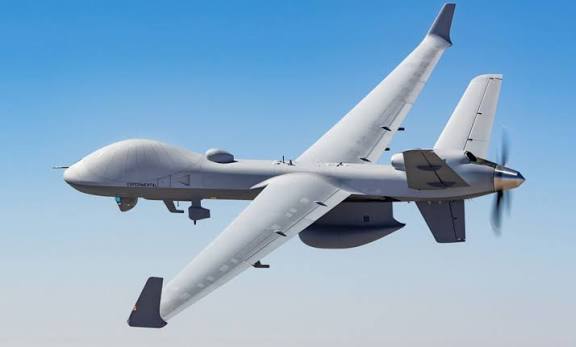
India has operated leased SeaGuardians since 2020. India leased them because the Navy needed persistent ISR capability while the much larger procurement moved through the system. The Indian Navy has found them useful and has flown them for thousands of hours.
The new lease contract has reportedly been signed on17 August 2026. It includes a 30-month lease for two MQ-9B Sea Guardian drones from General Atomics Aeronautical Systems. The contract is valued at approximately ₹1,943 crore.
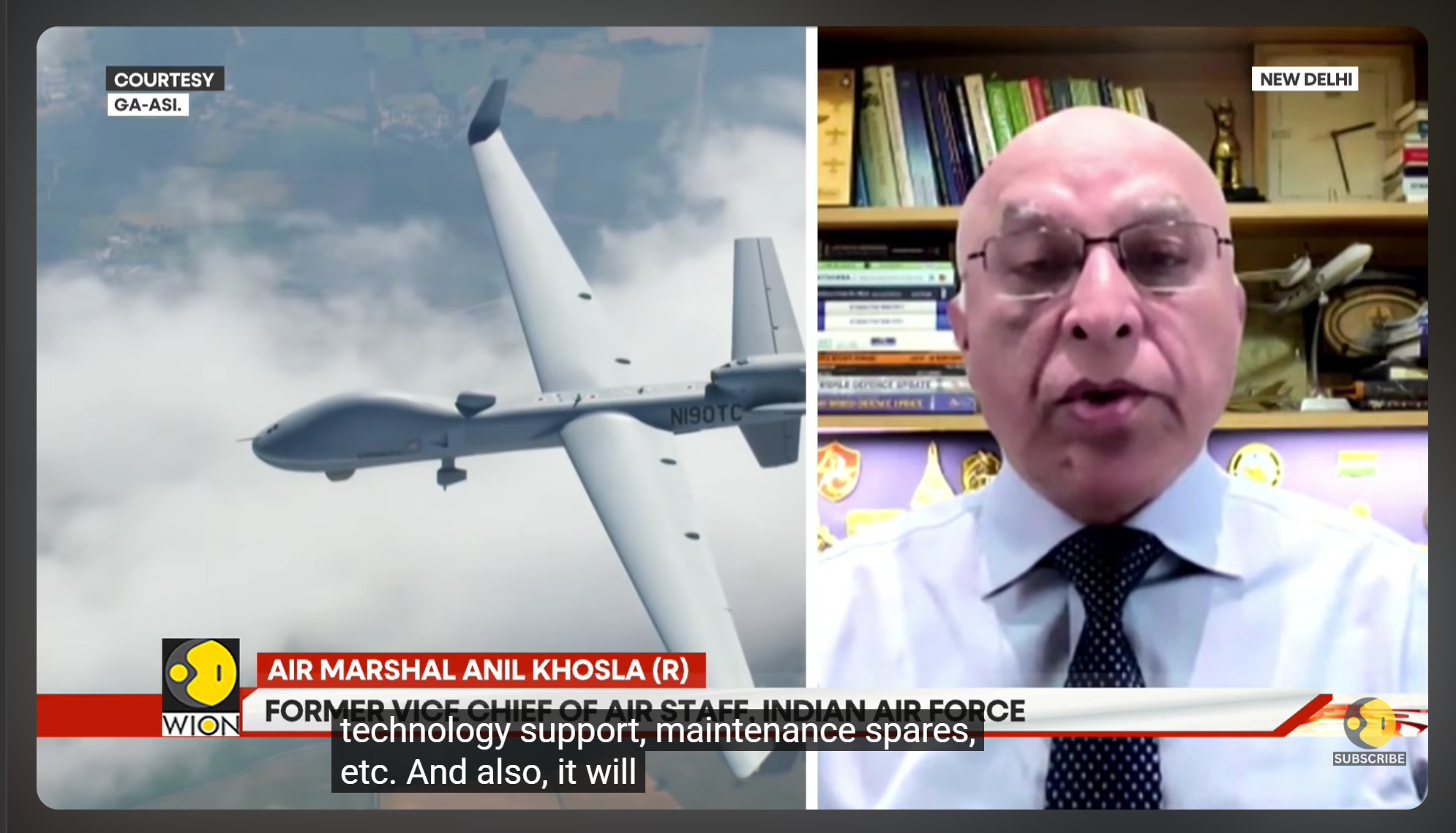
On the face of it, ₹1,943 crore for two MQ-9B SeaGuardians for only 30 months looks extremely expensive. The ₹1,943 crore price tag is not a basic rental fee for two airframes. It represents a Company-Owned, Company-Operated (COCO) capability package. The value proposition includes sensors, communications, ground-control infrastructure, technical support, maintenance, operators/support personnel, availability, etc.
Complete Operational Burden. General Atomics (GA-ASI) provides the entire ecosystem (possibly including Ground Control Stations (GCS), satellite communication bandwidth, continuous payload integration, spare parts, and on-site engineering support).
Assured Flight-Hours. The cost includes availability of a guaranteed number of operational flight hours. The manufacturer would bear the cost associated with airframe degradation, maintenance cycles, component failures, and logistics overhead.
Specialised Payload Rent. The lease includes high-end, mission-specific sensor suites (360-degree maritime surface search radars, synthetic aperture radars (SAR), electro-optical/infrared (EO/IR) balls, and signals intelligence (SIGINT) packages).
The lease would buy time and capability. India entered into the agreement in October 2024 for 31 MQ-9Bs (specifically 15 SeaGuardians and 16 SkyGuardians). India’s acquisition of 31 aircraft does not mean they will become operational right away; reports indicate the first deliveries will not take place until late 2028 or early 2029. Since we need the capability right now, there will be a gap of several years. To sum up, the purchase is the long-term solution, while the lease is a short-term remedy.
There’s another way of looking at it. The lease would be a training and transition bridge. The new lease could allow personnel, maintenance teams, operators and mission planners to continue building experience while the larger fleet is inducted. It would allow operational availability, training, experience, maintenance support, sensors, contractor support, insurance/replacement risk, and immediate access. Rather than a redundant expense, the lease would serve as a high-readiness bridge. It would provide immediate maritime surveillance capacity while laying the tactical groundwork for the larger fleet’s arrival.
In short, the two newly leased Sea Guardians are not a standalone act but a deliberate interim measure that keeps the Navy’s IOR surveillance posture strong and operationally continuous while the larger, permanent 31-aircraft tri-service fleet is manufactured and delivered.
The bigger picture
The drones complement, rather than replace, the P-8I fleet. India’s surveillance architecture is increasingly layered:
MQ-9B SeaGuardian: long-endurance unmanned surveillance, able to remain on station for extended periods.
P-8I Poseidon: manned long-range maritime patrol aircraft with sophisticated radar and anti-submarine warfare capabilities.
Satellites: wide-area, space-based observation.
Coastal and island-based sensors/radars: persistent monitoring closer to shore and around strategic maritime chokepoints.
Other naval assets: ships, submarines and aircraft that can investigate or act on information generated by the surveillance network.
A layered network:
Satellites → see broadly ↓ MQ-9Bs → stay over an area for a long time. ↓ P-8Is → investigate and conduct sophisticated maritime/ASW missions. ↓ Ships/submarines → physically respond.
The MQ-9B lease fits into that picture as the tactical, tasking-responsive layer of a system whose outer layers are space-based sensing and coastal radar, and whose command layer is the fusion-centre network.
Information and data included in the blog are for educational & non-commercial purposes only and have been carefully adapted, excerpted, or edited from reliable and accurate sources. All copyrighted material belongs to the respective owners and is provided only for wider dissemination.
The review was published in the IIRF Strategic Yearbook 2026
Co-authored with Rishi Athreya
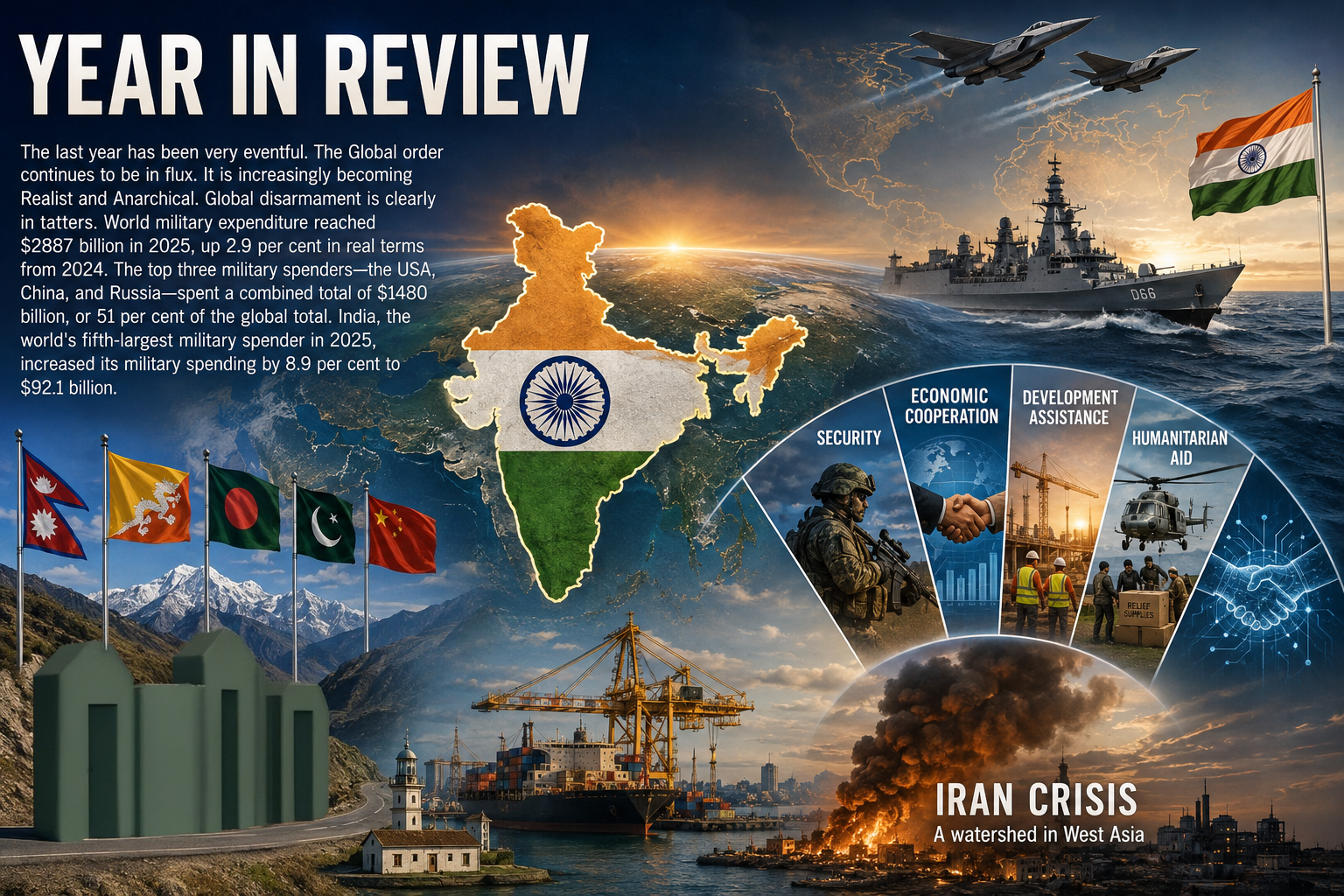
The last year has been very eventful. The Global order continues to be in flux. It is increasingly becoming Realist and Anarchical. Global disarmament is clearly in tatters. World military expenditure reached $2887 billion in 2025, up 2.9 per cent in real terms from 2024. The top three military spenders—the USA, China, and Russia—spent a combined total of $1480 billion, or 51 per cent of the global total. India, the world’s fifth-largest military spender in 2025, increased its military spending by 8.9 per cent to $92.1 billion[1].
Immediate Neighbours
Continental neighbours are of relevance to India.
Nepal: Nepal has a new government. This is a change to the entire political order. India continues to provide development assistance to Nepal[2]. India has resumed land trade with China through the Lipulekh Pass in Uttarakhand, Shipki La Pass in Himachal Pradesh, and Nathu La Pass in Sikkim[3]. India continues to have close ties with Bhutan[4].
Bangladesh: Bangladesh elections have restored an elected government. The current Prime Minister, Tarique Rehman of the Bangladesh National Party, represents a change from the Awami League. This government creates an opportunity for India to restore ties that had dipped during the Yunus caretaker government[5]. Here too India continues to assist in the political, security, economic and cultural domains[6].
Pakistan: OP SINDOOR has changed the entire South Asian scenario. One result is Pakistan’s rapid military modernisation. Pakistan’s military spending increased by 11 per cent to $11.9 billion[7]. Further, Pakistan is acquiring advanced military hardware that brings it nearly on par with India. However, this is largely driven by borrowing and overseas support. Moreover, Pakistan is integrated into collective security with Saudi Arabia[8]. Pakistan continues to be a global hub of terror. Pakistan is a base of operations and/or target for numerous armed, non-state militant groups, some of which have existed since the 1980s. The Lashkar-e-Taiba, Jaish-e-Mohammed, Harakat-ul Jihad Islami, Harakat ul-Mujahidin, and Hizbul Mujahideen are the main anti-India groups[9]. Pakistan has a unique ability to chase with the hounds and run with the hares[10].
China: China remains active along its borders with India and neighbouring countries. China’s establishment of new administrative counties near the tri-junction of Xinjiang, Afghanistan, and Pakistan-Occupied Kashmir (POK) must be understood not merely as an internal adjustment but as part of a geopolitical strategy with significant implications for India’s territorial sovereignty and regional security[11]. China is engaging in the Sinicisation of Tibet to reduce the legitimacy of the Tibetan Government in exile in India. Further, it is building dams on the rivers in Tibet to restrict water flow to India and increase the danger of flooding. These create threats that India would need to address[12].
Maritime Scenario: As a largely maritime nation, India faces vital challenges in this sphere[13]. India’s ‘Neighbourhood First’ policy and Vision MAHASAGAR, i.e. Mutual and Holistic Advancement for Security and Growth Across Regions[14]. The entire Indian Ocean Region remains important to India[15]. As part of its global strategy, China has been developing ports and other infrastructure in littoral countries of the Indian Ocean Region for many years. It has a maritime presence in the Indian Ocean Region, including anti-piracy escort missions, port calls, and the deployment of research and survey vessels. India’s relations with regional countries are distinct from those with other countries[16]. India continues to have security links with several littoral states. It also has links in economic, developmental, humanitarian, and technological spheres[17]. The recent crisis in Iran has disrupted maritime security[18].
Iran Crisis
The attacks by the US on Iran commencing 28 Feb 2026, titled OP EPIC FURY, are a mark of the greatest watershed in the West Asia region in several decades. These attacks are the culmination of several decades of effort by the US, Europe, Oman, and the IAEA to curtail Iran’s nuclear programme. Notwithstanding various efforts, Iran remained nuclear-capable. The US and Israel claim to have attacked because they feared an Iranian strike[19]. Israel launched OP ROARING LION on Iran alongside the US. Besides removing nuclear installations, the objective was the overall degradation of Iran’s missile capability. Both the US and Israel expected a short operation of around 72 Hrs. Israel has, for over a year, been targeting Iran[20]. This has clearly been a miscalculation. There are fears of long-term strategic overreach by the US[21]. In response, Iran claims to have never started a war. It claims that starting with the coup in 1953, and later support for Iraq in the war, the US has been hostile to Iran. Iran claims that US bases in the region pose a threat to it. Iran condemns the destruction of their infrastructure. Further, it claims a legitimate right to defend itself[22]. Iran continues to claim readiness to respond to attacks, even as mediation continues[23].
Doubtful Planning: As pointed out in a RUSI Commentary, there has been poor planning by the US in anticipating the implications for maritime security, especially in the Strait of Hormuz. While the US and Israel deployed aerial power, they provided little maritime support. Iran enjoys a geographic advantage and operational readiness in the region[24]. As highlighted in an NMF Commentary, the maritime aspect is a serious casualty of the US-Iran conflict. The US has apparently damaged parts of the Iranian Navy assets using land-based air power. However, the IRGC Navy (Sepah), a distinct entity, has not been damaged. The US has assets through CENTCOM. However, these may not be deployable in the narrow waters of the Strait of Hormuz and the Gulf of Oman[25]. Any US naval asset deployed in the region becomes a soft target[26].
Hormuz Strait: Iran has blocked the Strait of Hormuz. While a few ships are selectively allowed, any ship deemed affiliated with the USA or Israel is not permitted. In response, the USA has blockaded the Strait and is stopping ships bound for Iranian ports[27]. Saudi Arabia has reportedly expressed concern to the US administration that its action may encourage the Iran-backed Houthis to attack and disrupt Red Sea shipping routes, as was the case from 2023 to 2025. Iran has said that it would threaten trade in the Persian Gulf, Red Sea and Gulf of Oman if the US “create[s] insecurity for Iran’s commercial vessels”, describing the US action as a “prelude to a violation of the ceasefire”[28]. Irrespective of a ceasefire being announced, the US claims that it is serving as a deterrent to Iran[29]. The Strait of Hormuz remains a flashpoint. The USA claims to be enforcing a blockade on Iranian ships[30]. However, Iran claims that its ships are crossing the Hormuz Strait[31]. At another level, Iran is treating US actions as piracy and terrorism[32].
Negotiations: Pertinently, the USA has released a statement claiming that there is ample legal justification for the attack on Iran. They claim that even after June 2025, hostilities between Iran, Israel and the USA continued. They also assert that negotiations with Iran failed[33]. Conversely, Iran claims that the attack was launched amid negotiations[34]. A day before the commencement of OP EPIC FURY, Iran released a statement that claimed that negotiations were going well[35].
Israel Factor: Iran considers the US a proxy for Israel[36]. A noteworthy point is that the USA has openly supported Israel[37]. In some ways, Israel is a major factor in the West Asian scenario. Israel and the US said that Pakistan’s agreement did not include Lebanon. Iran said any negotiations with the US would be “unreasonable” if the Israel–Hezbollah conflict were to continue[38].
GCC Countries: Iran’s strategy to cause a rift between the Arab states and their US and Israeli allies appears to have failed; rather, it had an opposite effect of unifying them in their opposition to Iran and improving their security bond with America and possibly with Israel further. At the High-level GCC summit in Jeddah on 28 April 2026, the six GCC members Bahrain, Kuwait, Oman, Qatar, Saudi Arabia and the United Arab Emirates supported American action. Emphasising the need to secure the Strait of Hormuz’s opening, which impedes the flow of one-fifth of the world’s oil and liquefied natural gas supplies, the US must caution that any finalised deal must result in a permanent, long-term arrangement[39]. At a deeper level, the GCC Countries have a larger oil supply than Iran. Moreover, they have invested in Artificial Intelligence and technology. This gives them a clear edge over Iran, as well as China and the USA[40].
Russian Stance: Russia remains a major player in the region and globally. It is an active party in the war in Ukraine. It is also present geographically in the West Asian context. Russia is a continental neighbour of Iran. Their relationship has long been troubled, driven by pragmatic considerations. The Comprehensive Strategic Partnership was signed in 2025[41]. It is not a mutual defence agreement. Russia was quick to condemn the attacks on Iran. A key point was that these attacks occurred while Iran was engaged in negotiations, including on the nuclear issue. Russia claims this attack is akin to the 2003 attack on Iran, based on false claims of weapons of mass destruction[42]. Most recently, the Iranian Foreign Minister Abbas Araghchi visited Russia and met President Vladimir Putin. Russia commended Iran for facing the American aggression[43]. Russia appreciates India’s multi-pronged foreign policy and respects it unconditionally. However, it believes in the particularly privileged strategic partnership with Russia[44].
Sanctions: The USA has applied sanctions on China for buying and refining Iranian Oil[45]. These target independent “teapot” oil refineries in China, primarily in Shandong Province, because they continue to import and refine Iranian crude oil[46].
Talks and Mediation: Pakistan is mediating talks between the US and Iran, and issues under discussion include freedom of navigation through the Strait of Hormuz, Iran’s nuclear and ballistic programme, reconstruction and sanctions, and a long-term peace agreement. On 11 April, talks were held in Islamabad, Pakistan’s capital. Both sides reported progress, but they reached no agreement. No further talks have been confirmed[47]. Pakistan has been facilitating talks between the USA and Iran. This is an example of Pakistan’s effective Perception Management. It has long been very effective in the Cognitive and Information domains.
Challenges for India: The recent crisis in Iran has once again posed a maritime challenge[48]. There is the targeting of civilians, of infrastructure and of commercial shipping. It also raises economic concerns, including energy, fertilisers, and food security[49]. The sinking of IRIS Dena by the US is a diplomatic incident with extensive consequences[50]. From India’s perspective, the issue has raised questions about whether the entire Indian Ocean could be seen as India’s sphere of influence. While India is not expansionist, deeper strategic challenges remain[51].
Multilateral Reactions. The current situation in the Strait of Hormuz has drawn the attention of multilateral organisations, especially the International Maritime Organisation, and the United Nations Security Council.
IMO Task Force: A major concern has centred on the safety of merchant mariners. The International Maritime Organisation has raised this issue[52]. France and the UK chaired a conference on the Strait of Hormuz Maritime Navigation Initiative. The conference brought together around fifty non-belligerent states[53]. The meeting underlined the international community’s determination to support freedom of navigation, uphold international law, and safeguard global economic stability and energy security. France and the United Kingdom confirmed that they are establishing an independent, strictly defensive multinational mission. It would protect merchant vessels, reassure commercial shipping operators, and conduct mine-clearance operations. Further planning is underway to implement this multinational force[54].
United Nations Resolution: the SC Resolution of 11 March 2026, which demanded that Iran stop the attacks on its neighbours[55]. The UN Security Council has failed to adopt a resolution aiming to boost security in the Strait of Hormuz as the critical shipping corridor remains largely closed to global trade and the transport of humanitarian aid, with war continuing to rage across the region. Bahrain submitted the text alongside Jordan, Kuwait, Qatar, Saudi Arabia, and the United Arab Emirates. Eleven countries voted in favour of the draft, which the permanent members vetoed. China and Russia voted in favour, while Colombia and Pakistan abstained. One concern of China and Russia was that the resolution was biased against Iran and failed to mention the role of the USA and Israel in initiating the attack[56].
UN Open Debate: The United Nations Security Council held a High-Level Open Debate on the Safety and Protection of Waterways in the Maritime Domain[57]. The Secretary-General highlighted the current disruption to global shipping caused by the blockade of the Strait of Hormuz. He mentioned the humanitarian effects, including in energy and food security. The SG also mentioned the dangers faced by seafarers and commercial vessels. Other issues raised were piracy, terrorism, and damage to critical maritime infrastructure. The Black Sea Initiative is cited as a successful example of a humanitarian navigational agreement, even during a war[58]. Several member nations raised broader concerns about commercial vessels, seafarers, economics, piracy, and shadow fleets[59]. China made a statement condemning the attack by Israel and the USA on Iran. China commended Pakistan’s mediation efforts. Further, China raised issues of UNCLOS, Piracy, and Ocean Governance[60]. China also expressed concern about the situation in Gaza and the humanitarian fallout. They believe that Israel is unnecessarily attacking Gaza, and the two-state solution is non-negotiable[61]. Russia continues to hold the USA and Israel responsible for the war in Iran. Further, they hold that in times of war, a coastal State under attack may limit navigation in its territorial waters for security purposes. Russia also raised concerns about energy, the economy, fertilisers, and food security[62]. The USA also lamented China and Russia vetoing the aforementioned resolution. The USA also mentioned the blockade of the Strait of Hormuz. The support by Iran of the Houthis in the Red Sea and the Gulf of Aden is also condemned. They highlighted the issue of nuclear non-proliferation. A concern raised was around sea mines supposedly planted by Iran. Finally, the USA called for commercial shipping, maritime finance and insurance, humanitarian aid agencies, and militaries to come together to address this situation. The USA mentioned the need for an anti-piracy force in the Strait of Hormuz[63]. The Baltic states also share concerns about navigation in the Strait of Hormuz[64]. The UK condemned the veto on the UN resolution. They stressed the need to open the Strait of Hormuz and highlighted their joint efforts with France[65]. In this context, the IMO mentioned freedom of navigation without tariffs. They also said seafarers are being evacuated[66].
Ukraine War
The war in Ukraine continues unabated, with several consequences.
Military Spending: The main contributor to the global increase in military spending in 2025 was a 14 per cent rise in Europe to $864 billion. Spending by Russia and Ukraine continued to grow in the fourth year of the war in Ukraine. At the same time, ongoing rearmament by European NATO members drove the sharpest annual growth in spending in Central and Western Europe since the end of the Cold War. Russia’s military spending grew by 5.9 per cent in 2025 to $190 billion, bringing its military burden to 7.5 per cent of GDP. Ukraine, the seventh-largest spender in 2025, increased spending by 20 per cent to $84.1 billion, or 40 per cent of GDP. The USA made no new allocation for Ukraine in 2025[67].
Changing US Stance: The USA has reduced assistance to Ukraine. The European Union, the UK and NATO are picking up the tab[68]. Some argue Europe should emerge as a military bloc independent of the USA[69]. There are calls to use the European Defence Industrial Programme to build more weapons within Europe. Europe is described as a sleeping giant[70]. Ukraine, for its part, calls for more support from Europe and NATO. It links the broader European safety from Russia to the Ukrainian front. There is even a view that the USA is appeasing Russia to the detriment of Ukraine and even Europe[71].
Maritime Aspects: Russia, at another level, accuses Ukraine of armed attacks on civilian vessels flying the Russian flag or transporting Russian energy resources in different waterways around the globe. These concerns affect seafarers, energy, the environment, and trade. Russia claims that attacks are occurring on the coasts of countries supporting Ukraine, which raises questions about their complicity in these attacks. The Black and Mediterranean Seas, and the Bosphorus Strait, are mentioned as sites of these attacks. Russia suggests upholding UNCLOS 1982 to prevent future incidents[72]. On the other hand, the EU is concerned that Shadow Fleets support the Russian war economy[73]. Nordic countries also worry about Russia’s interference with the satellite navigation system in the Baltic Sea[74].
Minerals Deal: The US and Ukraine signed a deal granting the US access to Ukraine’s vast mineral wealth, including Critical Minerals[75]. This is supposed to give the US access to mining while recognising Ukraine’s ownership. This pact would make it difficult for the USA to recognise Russian sovereignty over Ukrainian territory and deter further territorial claims[76].
China Factor: Some view China as supporting Russia in the war in Ukraine. China has supplied military supplies, including Drones. China is also buying oil from Russia[77].
Sanctions: The USA has applied sanctions on both Iran and Russia. These are in response to Iran’s support for Russia in the Ukraine War[78].
Global Energy Scenario
Both wars are affecting the global supply of natural resources and their prices[79].
Oil: A major consequence of this crisis is the need to use alternative, often more expensive, sea routes[80]. Around 20% of global petroleum and 20% of liquefied natural gas traverse the strait each year. Pre-conflict, around 3,000 vessels used the strait each month. Their numbers now stand at around 5% of this level. This has pushed up global oil and gas prices (benefiting both Russia and, temporarily, Iran). Several Arab states were forced to cut or suspend oil production due to Iranian attacks[81]. Russia remains India’s leading supplier of Hydrocarbons[82].
Effect on Fertiliser: The sustained reduction in LNG production and/or shipments from the Gulf (Qatar supplies around 10% of globally traded natural gas) will affect worldwide nitrogen fertiliser production. Natural gas is both a key feedstock and the primary energy source for producing ammonia, the building block for all nitrogen fertilisers. Other ingredients include urea, Phosphate, and Sulphur. India is particularly affected by these shortages[83]. Fertiliser shortages also threaten major global food insecurity[84].
Alternative Energy Routes: Only Saudi Arabia and the UAE have operational crude oil pipelines that could reroute flows to bypass the Strait of Hormuz. While additional capacity may exist in major pipelines to bypass the Strait, the logistics and supply chains needed to reroute and export substantial flows have not been tested under stress[85].
Maritime Insurance: Opening the Strait of Hormuz remains a grave issue. A deeper problem is whether commercial underwriters will insure vessels at reasonable rates. This would essentially need a political solution[86]. One suggestion is for India to have national Protection and Indemnity Clubs[87]. Most recently, the Government of India has approved this in principle[88].
Indian Energy Situation. India has made significant strides in energy and climate change.
Power Generation: India is successfully balancing the twin goals of meeting rising electricity demand and promoting sustainability. According to the International Energy Agency, 85% of the increase in global electricity demand over the next three years will come from emerging and developing economies. As one of the fastest-growing major economies, India plays a central role in the global energy transition. India’s share in global primary energy consumption is projected to double by 2035. Electricity generation has increased from 1,168 billion units (BU) in 2015–16 to an estimated 1,824 BU in 2024–25. Similarly, total installed capacity has grown from 305 gigawatts (GW) in 2015–16 to a projected 475 GW in 2024–25[89].
Multiple Energy Sources: India’s energy journey is no longer defined by a single source; it’s now drawing strength from solar parks, rooftop panels, hydrogen pilots, modernised nuclear frameworks, smart meters, and digital platforms. Milestones such as expanding renewable capacity, advancing the National Green Hydrogen Mission, strengthening DISCOMs, and building the India Energy Stack reflect a structured, forward-looking transition. Policy reform, infrastructure investment, technological innovation, and global cooperation support this transformation. As India moves toward its Net Zero 2070 commitment, the evolving energy mix shows that growth and sustainability can go hand in hand. India is redesigning how power is produced, delivered, and shared for a future that is secure, sustainable, and self-reliant[90]. India is increasing its use of renewable energy, and the country now ranks third globally[91].
Emerging Trends
Events over the past year point to a few emerging trends to watch in the coming years. The war in Ukraine remains a stalemate. The West Asia scenario got more complicated with the US-Israel attacks on Iran. This is also an asymmetric conflict and remains inconclusive. Both these conflicts show the chasm in NATO. While continental Europe is fighting against Russia in the Ukraine War, the USA has reduced its support. While the EU and even the UK offer diplomatic support to the USA in West Asia, this does not translate into military backing. Russia is the active party in the war in Ukraine. Iran has been supporting Russia. The USA sanctioned this. China has also been supporting Russia. Currently, both Russia and China are providing diplomatic support to Iran against the USA. The partnership agreement, while not necessarily military, has political objectives. While it may not be obvious, there are currently two powers, namely the USA and Russia, at war, where the other supports the adversary. China, while not a party to either war, is on the opposite side to the USA.
Both wars are linked in the maritime sphere. Discussing one leads to the other. There are concerns about maritime aggression by both the USA and Russia. Russia, for its part, accuses Ukraine of maritime hostility. China, while apparently concerned about the USA’s maritime belligerence in the Iran War, is itself confrontational in the South China Sea. The concerns of the UN and the IMO, supported by France and the UK, show that the Hormuz Strait has morphed from a military issue to a constabulary one. The IMO is taking positive steps to address humanitarian issues.
The Iran War is also in the Cognitive domain, with both sides making claims and counterclaims. While specific battles and incidents are a matter of detail, the underlying issue is around the legitimacy of the USA and Israel invading Iran. Moreover, there is the whole issue of whether Iran is justified or not in building up an arsenal, including nuclear weapons.
Please Add Value to the write-up with your views on the subject.
For regular updates, please register your email here:-
Information and data included in the blog are for educational & non-commercial purposes only and have been carefully adapted, excerpted, or edited from reliable and accurate sources. All copyrighted material belongs to the respective owners and is provided only for wider dissemination.
[22] Government of the Islamic Republic of Iran, (02 April 2026), President Pezeshkian says Iran has never initiated war, https://irangov.ir/detail/479346
[32] Ministry of Foreign Affairs, Iran, (21 April 2026), Statement by the Ministry of Foreign Affairs regarding the US attack on an Iranian commercial vessel and the hostage-taking of Its crew and their families, https://en.mfa.gov.ir/portal/newsview/786655
[34] Government of the Islamic Republic of Iran, (02 April 2026), President Pezeshkian says Iran has never initiated war, https://irangov.ir/detail/479346
[35] Government of the Islamic Republic of Iran, (27 Feb 2026), Significant Progress Made in Third Round of Iran–U.S. Talks in Geneva, FM Says, https://irangov.ir/detail/478575
[36] Government of the Islamic Republic of Iran, (02 April 2026), Ibid
[37] US Department of State, (21 April 2026), Ibid
[41] Ministry of Foreign Affairs of the Russian Federation, (02 Oct 2025), Foreign Ministry statement in connection with the entry into force of the Treaty on Comprehensive Strategic Partnership between the Russian Federation and the Islamic Republic of Iran, https://mid.ru/en/foreign_policy/news/2050909/
[42] Permanent Mission of the Russian Federation to the UN, (28 Feb 2026), Statement by Permanent Representative Vassily Nebenzia at UNSC Briefing in connection with US and Israeli Strikes against Iran, https://russiaun.ru/en/news/28022026
[44] The Ministry of Foreign Affairs of the Russian Federation, (25 April 2026), Foreign Ministry Spokeswoman Maria Zakharova interview with an Indian news website Firstpost, April 25, 2026, https://mid.ru/ru/detail-material-page/2100214/?lang=en
[59] United Nations, (27 April 2026), Immediately Restore Freedom of Navigation through Strait of Hormuz, Speakers Urge in Security Council Condemning Critical Waterway’s Use as ‘Bargaining Chip’, SC/16349, https://press.un.org/en/2026/sc16349.doc.htm
[62] Permanent Mission of the Russian Federation to the UN, (27 April 2026), Statement by Permanent Representative Vassily Nebenzia at a UNSC Briefing on the Safety and Protection of Waterways in the Maritime Domain, https://russiaun.ru/en/news/27042026
[64] Permanent Mission of Iceland to the UN Statements, (27 April 2026), N5 Statement at the Security Council Open Debate on the Safety and Protection of Waterways in the Maritime Domain
[70] European Commission, (10 Feb 2026), Speech by Commissioner Kubilius at the Plenary Session of the European Parliament “Building a stronger European defence in light of an increasingly volatile international environment”, https://ec.europa.eu/commission/presscorner/detail/en/speech_26_367
[72] Permanent Mission of the Russian Federation to the UN, (27 April 2026), Ibid
[73] Delegation of the European Union to the United Nations, (27 April 2026), EU Statement – UN Security Council: The Safety and Protection of Maritime Waterways
[82] The Ministry of Foreign Affairs of the Russian Federation, (25 April 2026), Foreign Ministry Spokeswoman Maria Zakharova interview with an Indian news website Firstpost, April 25, 2026, https://mid.ru/ru/detail-material-page/2100214/?lang=en
How has the role of air power evolved in modern warfare, particularly in the context of rapid, high-precision operations?
When I was commissioned in 1979, air power was largely conceived as a force multiplier — something that supported ground operations, provided interdiction, and contested the skies above the battlefield. That mental model has been fundamentally overturned.
I often describe this evolution through three distinct eras. First came the Pilot Era, where individual skill was everything. Then the Platform Era, where multi-role systems defined capability. We are now entering what I call the Weapon Era — where the munition itself, and increasingly the autonomous system behind it, is the decisive element. In each transition, air power has moved further from the periphery and closer to the centre of strategic decision-making.
The IAF’s own doctrinal journey reflects this precisely. The 1995 doctrine focused on the basics of air power — offensive operations, C4I networks, and force multipliers. By 2012, the doctrine had expanded to connect air power with national security across the full spectrum, including counter-terrorism. The 2022 doctrine went further still — it unequivocally advocates the shift from air power to aerospace power, and identifies No War No Peace (NWNP) scenarios as a distinct operational category requiring both kinetic and non-kinetic responses. This evolution from tactical support to strategic aerospace power is not merely doctrinal — it reflects the operational reality that a strike today is simultaneously a cyber operation, a space-dependent operation, and an information operation.
The shift has been driven by two converging developments: precision and speed. The ability to place a munition within metres of its intended target — from standoff distances, in any weather, at any hour — has collapsed the old calculus of attrition warfare. You no longer need to destroy an entire column; you destroy its command node, its logistics, its will to function. And you can do it in hours rather than weeks. What this means strategically is that air power now operates at the intersection of the military and political realms — a strike is not just a tactical event; it is a signal, a message, sometimes a red line being drawn or crossed.
Do you believe air power is increasingly becoming the decisive arm in limited conflicts?
In limited conflicts — which is the dominant mode of contemporary warfare — yes, air power has become the decisive arm in most scenarios. The reasons are structural. Limited conflicts, by definition, operate under tight political constraints. There is usually an imperative to achieve effects quickly and visibly, without triggering uncontrolled escalation. Ground operations are slow, costly in lives, and difficult to control once initiated. Naval power projects presence but rarely delivers the kind of immediate, calibrated effect that a conflict demands.
As I have written, air power possesses significant offensive potential and is the most responsive arm of military action. It can be switched on and off. It can be precise. It can be deniable if necessary, and visible when you want it to be. These qualities make it the instrument of choice for governments that need to communicate resolve without opening an indefinite campaign.
That said, I would caution against treating this as an absolute. As John Warden’s body of work — which I have studied closely — rightly argues, jointness does not mean equal portions of action for all services. Sometimes air power should support land and sea forces; sometimes it should be supported by them; and sometimes, applied correctly against the right targets, it can be decisive independently. But this works only when air power is used within a coherent strategic framework. When employed without clarity of political purpose, it yields tactical results that fail to translate into strategic outcomes.
How should air forces adapt to a battlespace that now includes cyber, space, and electronic warfare domains?
The honest answer is that the adaptation is already overdue in most air forces, including our own. The battlespace has not merely expanded — it has become layered. What happens in the electromagnetic spectrum shapes what is possible in the air. What happens in space determines the quality of information available to every commander. What happens in the cyber domain can degrade or destroy systems before a single aircraft takes off.
The IAF’s 2022 doctrine explicitly recognises this by calling for a shift from air power to aerospace power — with space and cyber treated as integral domains rather than peripheral ones. The establishment of the Defence Space Agency and the Defence Cyber Agency reflects this institutional direction. But doctrine and structure are only the beginning. Air forces must stop thinking of these domains as managed by specialists in the rear. They need to be woven into operational planning from the outset.
One effect of advanced technology on air warfare is the increased pace and intensity of operations. In such a scenario, the decision-making process must keep up with the OODA cycle. The three most important contributing factors are high situational awareness, a robust and fast network for information sharing, and AI-based decision-support systems. Structurally, this requires investment in electronic warfare capabilities, hardened communications, and space-based ISR. But more than hardware, it requires a doctrinal shift — a willingness to plan and fight across domains simultaneously rather than sequentially. Air power is, at its core, indivisible: splitting it into domain silos destroys its greatest asset: flexibility.
Operational Experience & Lessons
You were closely associated with both Doklam and Balakot. What strategic lessons do these episodes offer for future conflict scenarios?
Both episodes were defining moments in how India thinks about the use of force, and they offer very different but complementary lessons.
Doklam was fundamentally about persuasive presence and persistence — and what I would call strategic patience. It underscored the importance of credible deterrence backing diplomacy. It also highlighted the importance of maintaining calm, holding your position steadfastly, demonstrating readiness, and refusing to be pressured. A combination of these factors forced a resolution. Air power played an important role in speedy deployment, sustenance of ground forces and signalling of resolve. Its availability as a credible option was part of what made the overall posture convincing.
Balakot was something categorically different. It was the first cross-border air strike by India since 1971 — conducted in a nuclear-armed environment, against a near-parity state. It demonstrated what I would describe as punitive deterrence — the ability to strike deep within adversary territory to deliver a political message while managing the escalation ladder with precision. The lesson was about the importance of the entire decision-action cycle: intelligence, planning, execution, and escalation control. Political resolve was intense; ISR fusion was critical; and messaging mattered as much as the physical effect.
Together, these episodes reinforce a single overarching lesson. In modern conflict, especially in our neighbourhood where China and Pakistan operate in close strategic collusion, you must be able to act quickly with precision and then manage the aftermath with equal skill. Future conflicts will be short and high-intensity, requiring 24/7 readiness.
What distinguishes a successful air operation in politically sensitive, escalation-prone environments?
Three things, above all.
First, clarity of objective — not in military terms alone, but in political terms. What message are you sending? What behaviour are you trying to change? Any ambiguity at the objective level results in confusion at the execution level. A successful operation requires complete synergy between military execution and political intent and resolve.
Second, proportionality and precision. In escalation-prone environments, the magnitude of the effect must match that of the political message. Over-strike and you hand over to the adversary a narrative. Under-strike and you signal weakness. The targeting process must be driven by strategic logic, not tactical preference — and collateral damage must be minimised to avoid losing the narrative war.
Third — and this is chronically underestimated — the ability to communicate. What happens after the strike matters as much as the strike itself. How you characterise it publicly, what back-channels convey, how de-escalation is signalled — all of this shapes whether the adversary escalates or stands down. Successful air operations in politically sensitive environments are as much information operations as kinetic ones.
How do air forces calibrate force projection without triggering uncontrolled escalation?
This is the central challenge of modern air power employment. The instinct of any military operator is to maximise effect. The instinct of strategic management is to control outcomes. These two instincts exist in constant tension.
Calibration begins with target selection. Striking military targets rather than civilian infrastructure, avoiding symbols of national sovereignty, choosing targets that punish without humiliating — these provide the adversary an off-ramp. Selecting munitions that limit collateral damage, managing timing and sequencing — all of these are tools of escalation management embedded in the targeting process.
One critical lesson from recent air campaigns is the growing importance of standoff precision weapons in a networked environment. Precision-guided standoff weapons and missiles have rendered traditional geographical barriers almost meaningless. The optimal basing posture for high-intensity operations is increasingly shifting toward depth, dispersion, and resilience — moving air assets, using expeditionary airfields, operating from unprepared landing grounds — rather than fixed forward basing, which presents lucrative targets. Calibration, therefore, is not only about what you strike, but how you position and present your force to the adversary.
The most effective force projection is often graduated — it begins at a level that hurts but does not humiliate, and it signals clearly that more is available if needed. The adversary must understand both the cost of continued provocation and the availability of a dignified way out.
What role does signalling play in air operations during crises?
Signalling is, in many ways, the primary function of air power in a crisis that has not yet crossed the threshold of open conflict. Air operations are, in the deepest sense, the language of the state. When you generate additional sorties, forward-deploy assets, or conduct exercises at conspicuous times, these are not just operational preparations. They are communications (Strategic/Coercive signalling) to the adversary, to allies, and to the international community simultaneously.
Signalling is inherently ambiguous. The adversary interprets your actions through their own lens. Your defensive posture may be perceived as offensive intent. Signalling must be carefully managed and accompanied by clear communication to remove the ambiguities.
The IAF’s own doctrine now explicitly addresses the No War No Peace environment — a recognition that the space between peace and war is itself a domain requiring active management. In this space, air power is uniquely effective. The appearance of fighters at a forward base, the conduct of a high-profile exercise, the demonstrable capability to generate surge sorties — these convey something that a diplomatic note simply cannot. Used wisely, that is enormous strategic leverage. Used carelessly, it can produce exactly the escalation you were trying to deter.
Jointness & Integrated Warfare
Having worked extensively with the Army and Navy, how would you assess India’s progress toward jointness?
We have made genuine progress, and I say that without qualification. There is far more institutional understanding among the services today than there was twenty years ago. Exercises are more integrated, communication is better, and there is at least a shared vocabulary around joint operations. The creation of the Chief of Defence Staff and the Department of Military Affairs represented a significant structural step forward. Recent exercises like Prachand Prahaar — conducted in the high-altitude terrain of Arunachal Pradesh in March 2025 — have validated integrated surveillance, command and control, and precision firepower across all three services in a genuinely multi-domain environment. That kind of exercise provides invaluable insights into how to improve inter-service coordination.
But I would be misleading you if I said the transformation is complete, or even that the hard part is behind us. India must move beyond what I would call de-conflicting — simply staying out of each other’s way — toward true integration, where services plan, train, and fight as a unified whole. That requires shared warfighting concepts, integrated planning staffs, and common C4I architectures. Above all, it requires a cultural shift — officers who think in joint terms from the beginning of their careers. That culture takes a generation to build, and we are still in the middle of that journey.
The formation of theatre commands is being vigorously advocated as a possible solution to integration. In my view, it is not a panacea for jointness, but rather one of the approaches, and, further, an idea whose time has not yet arrived in the Indian context. The timing and circumstances are unsuitable, and many other high-priority areas need urgent attention to meet future challenges.
What are the key challenges in integrating air power into joint operational doctrines?
The core challenge is operational: air power is inherently centralised, while the other services are inherently decentralised. A ground commander thinks about his sector, his axis of advance, and his immediate fire support requirements. An air commander thinks about the entire battlespace — air superiority, strategic interdiction, close support, logistics, and ISR — and must allocate finite, high-value assets across competing priorities simultaneously.
There is also a persistent tendency to treat air power as a support system for surface forces rather than as a coequal, central component of the joint force. Warden’s insight — that sometimes air power should support land and sea forces, sometimes it should be supported by them, and sometimes it can be decisive independently — has not yet fully penetrated joint doctrinal thinking in the Indian context. Employment of air power assets must be viewed holistically — as an overarching, comprehensive basis for planning that achieves synergy in warfighting rather than sub-optimised service allocation.
Does India need a fundamentally different approach to theatre commands to maximise air power effectiveness?
The theatre command concept is useful, especially in expeditionary operations. India needs a uniquely Indian model rather than a direct transplant of Western structures.
The concern I have — and I am not alone in this — is that any theatre command structure must preserve the ability to concentrate air power rapidly across theatres. Air power’s greatest advantage is its flexibility: the ability to mass effect at the decisive point regardless of geographic boundaries. If theatre commands create rigid geographic silos, we will have sacrificed the very quality that makes air power strategically valuable.
Air power must not be subordinated to a land-centric model that fragments its reach and reduces its mass below decisive levels. The model we need is one in which air assets are organically assigned to theatres for day-to-day operations and training, but with a clear, exercised mechanism for rapid reallocation when the situation demands it. The IAF’s doctrine advocates centralised command with decentralised execution — this principle must be preserved within whatever theatre structure India.
Technology, Capability & Future Warfare
How critical is technological superiority in maintaining credible air dominance?
Technological superiority is foundational. A technological edge (in sensors, stealth, networking, precision munitions, and BVR missiles) is now a prerequisite for credible air superiority. AI, Quantum, Robotics, Space technology, and Directed energy weapons are becoming essential parts of air war.
Technology creates the capability. Training, doctrine, and leadership determine how you utilise the capability to your advantage. Without a credible and indigenous technology base, you are outmatched in ways that training and tactics cannot fully compensate for. The Atmanirbhar Bharat imperative in defence is therefore not merely a nationalistic slogan but is an operational necessity.
What role will AI, autonomous systems, and unmanned platforms play in the future of air combat?
Transformative — we are already seeing the emergence of what I consider the defining concept of future air combat. The Loyal Wingman — unmanned platforms flying alongside manned aircraft, extending reach, absorbing risk, and multiplying mass with a reduction in human cost. Programmes like India’s CATS Warrior, the US Skyborg, and Boeing’s MQ-28 Ghost Bat indicate the future trajectory of air combat.
AI will fundamentally reshape the decision-making process. In 2020, DARPA’s AlphaDogfight Trials demonstrated that an AI-piloted simulator could outperform experienced human pilots in dogfighting scenarios. AI-controlled drone swarms are emerging as a game-changing technology — deploying multiple autonomous drones to overwhelm enemy defences with coordinated attacks, distributed ISR, and autonomous electronic jamming. Countries like the US, China, and India are actively researching this as a force multiplier.
The 2020 Nagorno-Karabakh war was a watershed. The title of John Antal’s seminal analysis — 7 Seconds to Die — refers to the average time Armenian soldiers had to react once a drone detected their position. That statistic encapsulates what AI-enabled unmanned systems mean in practice: the compression of the kill chain to a point that human reaction cannot match. The conflict demonstrated how drones systematically dismantled traditional air defences — Azerbaijani forces used Turkish and Israeli drones to destroy Armenian SAM sites, rendering the entire conventional air defence network ineffective.
For India, the imperative is to build indigenous capability in this space while also developing a counter-drone doctrine. We need to work diligently towards developing drone warfare capabilities. This gap must be addressed urgently, given the proliferation of armed UAVs in our immediate neighbourhood.
How should India approach capability building in an era of rapid technological disruption?
India must define a defence science and technology strategy with a vision to harness technology and convert it into a decisive capability. The focus areas I advocate are: AI-based situational awareness and decision-support systems; space-based ISR and assured communications; electronic warfare suites; advanced munitions, including standoff glide bombs and hypersonic systems; and autonomous platforms.
India must also embrace a hybrid model — leveraging foreign technology transfers and offsets while steadily building domestic R&D and production ecosystems. The goal is technology harvesting: extracting maximum learning from every foreign acquisition to accelerate the indigenous base. Civil-military fusion can accelerate this. And we must invest heavily in simulation and virtual training environments — areas where India’s software talent can rapidly and cost-effectively produce world-class capabilities.
Are legacy platforms becoming a liability, or do they still hold strategic relevance?
They remain relevant, maybe with reduced efficiency. A legacy platform upgraded with modern sensors, weapons, and datalinks — integrated into a broader system-of-systems architecture — can still perform effectively in many scenarios.
But the adversary’s capabilities are rapidly changing the calculus. China’s investment in advanced munitions, electronic warfare, and space-based systems gives it precision strike capability with increasing speed and depth. Pakistan’s collusive relationship with China means that technology flows across that border as well. In this environment, legacy aircraft face threats they were not designed to survive — particularly in the electromagnetic domain, where modern integrated air defence systems can engage and track platforms at ranges and in environments that older avionics cannot counter.
The answer is a phased, funded transition plan — maintaining sunset fleets for immediate operational needs while aggressively funding sunrise technologies. The transition must be managed carefully — you cannot create a capability gap — but it must be managed with urgency. Keeping platforms in service beyond their operational relevance for budgetary reasons is a false economy. The risk is not the maintenance cost. It is the operational liability in the conflict you may not have chosen, but cannot avoid.
Maritime & Multi-Domain Operations
With your experience in maritime air operations, how do you see the role of air power evolving in the Indian Ocean region?
The Indian Ocean has become the central arena of strategic competition in a way that would have been difficult to anticipate even two decades ago. China’s desire to dominate Asia — and eventually the world — has direct implications for India. China’s strategy in the IOR involves systematic investment in littoral states to achieve footholds and extend influence. The String of Pearls is not merely a geographic concept; it is an operational framework.
In this environment, air power is the long arm of maritime strategy. Long-range maritime patrol aircraft, carrier-based aviation, and land-based strike assets operating from our island territories enable India to monitor and contest approaches to the subcontinent over vast distances. The P-8I has been genuinely significant in the ISR dimension. Air power also provides the capability to secure sea lines of communication and to conduct anti-submarine warfare at ranges that surface assets alone cannot match. Most of the modern aircraft in the IAF inventory are now maritime-capable.
The priority now must be on persistent maritime domain awareness — knowing where adversary assets are before a crisis develops — and on developing the strike depth, including standoff and air-to-air refuelling capability, to match our surveillance reach.
How important is air-sea integration in countering emerging threats in the Indo-Pacific?
It is the central operational challenge of the Indo-Pacific security environment. Countering anti-access/area-denial systems and long-range missile-drone threats requires an integrated air-sea kill web. Maritime aviation needs to be tightly linked with naval surface and subsurface forces through shared networks, common targeting data, and joint doctrine.
An adversary submarine that evades a surface task group can still be located and prosecuted by maritime patrol aircraft. An adversary surface group that poses a threat beyond the range of naval strike assets can be engaged by land-based air assets. The integration of these capabilities into a coherent, exercised joint maritime operational concept is what turns individual service capabilities into genuine strategic leverage.
India’s engagement with partners — the United States, Japan, Australia, and other maritime powers — in exercises and interoperability initiatives is valuable precisely because it develops the habits, protocols, and mutual understanding that make real-time integration possible under stress. That work needs to continue and deepen, particularly as China’s naval presence in the IOR grows more persistent and capable.
Planning, Force Structure & Preparedness
You have been involved in war planning and force structuring. What are the biggest gaps India must address today?
I will identify three clearly.
First, the two-front scenario remains inadequately resourced. India faces a collusive threat from two nuclear-armed neighbours — and this is not a theoretical construct. Pakistan openly boasts of Chinese support in the event of a conflict with India. China’s philosophy of systems destruction warfare — disruption, paralysis, or destruction of enemy operational systems — is precisely tailored to the kind of fast, compressed conflict our neighbourhood could generate. Our current force structure, with the IAF’s sanctioned strength of 42 squadrons but an actual strength hovering around 30, is inadequate to handle simultaneous contingencies on both borders. Closing that gap — through the MRFA programme, accelerated AMCA development, and Tejas inductions — is the single most urgent capability priority—both quality and quantity matter. The fighter aircraft need to be complemented with combat enablers (strategic lift, aerial refuellers, AWACS and unmanned platforms).
Second, precision-guided munitions inventory and infrastructure resilience. Munitions stockpiles must cater for the frequent, short, intense exchanges amid prolonged hostility. Forward air bases, once the cornerstone of rapid reaction, are increasingly vulnerable to modern standoff weapons, cruise missiles, and armed drones. The optimal posture is shifting toward depth, dispersion, and resilience — the ability to operate from dispersed and expeditionary airfields, rotate assets, and avoid presenting fixed targets.
Third, technology absorption. China’s investment in space-based systems, quantum technology, and directed-energy weapons gives it surveillance and precision-strike capabilities at an increasing pace. Our institutional capacity in both offensive cyber and space-based ISR needs urgent strengthening. These are not niche capabilities anymore — they are foundational to everything else we do militarily. Project Kusha, India’s indigenous long-range air defence programme, represents exactly the kind of capability-based, self-reliant response needed across multiple domains.
How should air forces balance between immediate operational readiness and long-term capability development?
This is a genuine and permanent challenge, and no formula easily resolves it. What I would say is that operational readiness (Minimum deterrence value) cannot be sacrificed to long-term development. You must always be ready to fight with what you have today, while thinking long-term.
But development cannot be permanently deferred in favour of readiness, because the capability gap that accumulates will eventually become unbridgeable. A two-track approach is needed, i.e. maintain sufficient capacity now (enough modern platforms, trained crews, and robust logistics) while simultaneously pursuing long-term programmes (such as next-generation fighters, AI-enabled systems, and drone warfare doctrine).
What makes this possible is a clear, honest, multi-year capability roadmap that senior leadership has genuinely committed to — not a wish list, but a funded, sequenced plan with accountability attached and threat scenarios driving the prioritisation.
What lessons have recent global conflicts offered in terms of preparedness and force employment?
The conflict in Ukraine and the recent war in Iran are the most consequential recent laboratories for air power concepts. Air superiority — which most major powers assumed could be achieved rapidly — proved far more difficult and costly than anticipated against adversaries with a well-equipped air defence system and long-range standoff weapons.
The 2020 Nagorno-Karabakh conflict provided important lessons. Azerbaijan’s drones (Turkish and Israeli) systematically defeated the Armenian air defences. The loitering munitions destroyed SAM sites, creating conditions for conventional forces to advance with minimal opposition. It demonstrated how unmanned systems, when integrated with ISR and fires, can achieve effects that previously required far more expensive and risk-laden manned operations. The democratisation of warfare — the proliferation of military-grade capabilities to smaller nations and even non-state actors through cheap, commercially available drone technology — is perhaps the most consequential trend in modern conflict.
For India, the combined lesson is that we must be capable of employing drone swarms and loitering munitions at the required scale. At the same time, build an integrated air defence, EW, and counter-drone capabilities. And we must not take airbase survivability for granted — the ability to operate from dispersed, expeditionary locations is now a war-fighting imperative, not a contingency planning footnote.
Crisis Management & Decision-Making
How do military leaders make decisions under extreme time pressure and incomplete information?
The honest answer is that you make the best decision available given what you know at that moment, with the explicit understanding that you will refine it as information improves. The temptation to wait for certainty has to be resisted — certainty rarely arrives, and the cost of delay in a fast-moving situation is almost always higher than the cost of an imperfect decision made promptly.
I think of this in terms of the OODA loop — Observe, Orient, Decide, Act. One effect of advanced technology on air warfare is the dramatically increased pace and intensity of operations. In such a scenario, the decision-making process must keep up with the adversary’s OODA cycle — or preferably, get inside it. The three most important factors are high situational awareness, a robust, fast network for information sharing, and AI-based decision-support systems that compress the analytical phase without removing human judgment at critical points.
What training does is prepare one for decision-making, reducing the cognitive burden at the moment of crisis. In a crisis, you are not solving a novel problem from scratch, but applying a well-rehearsed framework to new variables. The leaders who perform well in genuine crises are invariably those who have navigated high-pressure, ambiguous situations throughout their careers and developed the resilience that comes from managing uncertainty before.
What distinguishes effective crisis leadership from reactive decision-making?
Intent — and anticipation. Effective crisis leadership is driven by a clear sense of what outcome you are trying to achieve — the political objective, the strategic end state — and every decision is evaluated against that intent. I would also describe it as anticipatory planning: having scenarios ready before the crisis hits, so that you are never purely reacting.
Reactive decision-making is driven by the immediate stimulus — what just happened, what the adversary just did — without the anchoring clarity of what you are ultimately trying to accomplish. The danger is that the adversary ends up setting your agenda. You respond to their moves rather than pursuing your own objectives. Over time, that cedes the initiative and almost always produces worse outcomes — including unnecessary escalation.
China’s systems destruction warfare philosophy is precisely designed to exploit reactive leadership — to disrupt, paralyse, and disorient the adversary’s operational systems before coherent responses can be organised. The counter to this is not just better systems; it is leadership that anticipates and maintains clarity of intent even as the operational environment degrades around it.
The other distinction is composure. Effective crisis leaders create calm around them — not by suppressing information, but by demonstrating, through their manner and decisions, that the situation, however serious, is being managed. That composure is contagious.
How important is inter-agency coordination during high-stakes operations?
Essential, and chronically underestimated in peacetime. Military operations of any significance today occur within a political, diplomatic, intelligence, and informational context that requires constant coordination across agencies. A strike that achieves its military objective but creates an intelligence problem, or triggers a diplomatic crisis the government was not prepared for, has not truly succeeded.
The investment in inter-agency relationships across the national security architecture pays dividends that are difficult to quantify but impossible to replace when the moment comes. Agencies that do not exercise together, that do not share information routinely, that do not develop personal relationships across institutional boundaries — they will not coordinate effectively in a crisis, regardless of how many coordination mechanisms exist on paper.
Safety, Training & Institutional Culture
As former DG (Inspection & Safety), how do you view the balance between operational urgency and safety protocols?
Safety is not the enemy of operational effectiveness — it is a prerequisite for it. An aircraft lost to an avoidable accident is one less aircraft available for war. A trained pilot lost to a preventable incident is an irreplaceable asset gone. I have always argued that safety is a subset of operational effectiveness, not a constraint imposed upon it.
The discipline of safety thinking (including rigorous procedures, honest incident reporting, systematic analysis of near-misses, a just culture where human errors are reported and learned from rather than punished) builds the institutional culture that produces operational excellence. Safety protocols conflict with operational efficiency if they become bureaucratic rather than substantive. It is necessary that safety thinking is intelligent, adaptive, and embedded in operational culture rather than imposed from the outside.
What role do training and simulation play in preparing pilots for modern conflict environments?
Training is everything. A modern combat aircraft is an extraordinarily capable system, but its combat effectiveness is almost entirely a function of the quality of the crew operating it.
We are in the Weapon Era, and simulation has become indispensable precisely because the scenarios we need to rehearse — dense electronic jamming environments, degraded navigation, multi-domain threats, AI-assisted engagement, drone swarm defence — cannot be safely or economically practised in live flying. High-fidelity simulators allow pilots to fly more complex tactical scenarios than could ever be safely replicated in actual flight training. The best training programmes integrate simulation and live flying, enabling pilots to achieve high levels of tactical proficiency in the simulator before they encounter those scenarios in the air.
Macro Strategic Perspective
Are we entering an era where short, high-intensity conflicts will replace prolonged wars — and what does that mean for air power?
The trend is clearly toward shorter, sharper conflicts with prolonged hostilities. It is also an era of grey zone confrontations and high-intensity shocks. This is driven by economic costs, nuclear thresholds, international scrutiny, and the speed at which modern military systems can generate and absorb effects. China’s systems destruction warfare philosophy, Pakistan’s strategy of proxy warfare backed by the nuclear card, and the proliferation of precision standoff weapons all point in the same direction: decisive effects in compressed timelines, or stalemate.
For air power, this trend is highly consequential — and highly favourable, if we are prepared for it. Air power’s speed, reach, lethality, and ability to apply force quickly make it the decisive instrument in the compressed windows of modern conflicts. The IAF’s own doctrine now explicitly addresses this through the No War No Peace framework — recognising that the threshold between peace and war is neither clean nor binary, and that air power must be postured and employed across the full spectrum from day one.
What this demands is a fundamentally different approach to readiness. There will be no extended mobilisation phase. The force you have at H-Hour is, in large measure, the force you will fight with. That places a premium on peacetime readiness levels, pre-positioned munitions, resilient basing, and plans that are already developed and exercised — not improvised under fire. The IAF must remain adaptive and agile to win wars on a network-centric battlefield, with conflicts spanning the full threat spectrum.
Optional Section: Iran & West Asia
How do you assess the evolving military balance in West Asia, particularly about Iran’s capabilities?
Iran has systematically invested in capabilities designed to offset conventional military disadvantages — mastering what I would call asymmetric air power. Its ballistic and cruise missile inventory is the largest in the region. Its drone programme has reached a level of sophistication that has surprised many countries. And its proxy network provides strategic depth that a conventional military cannot provide.
The democratisation of warfare is nowhere more visible than in the Iranian model. Dual-use commercial technologies are widely used in drones and missiles. Their off-the-shelf availability has given non-state actors access to capabilities once reserved for state militaries.
The direct attacks on Israel demonstrated both capability and intent. Presently, Israel and the Gulf states, with advanced air forces, integrated air defences, and strong intelligence networks, retain decisive advantages in conventional aerial confrontation. This balance, however, is dynamic rather than stable.
What role does air power play in deterrence and escalation management in the region?
Air power is the central instrument of both deterrence and escalation management in West Asia. Israel’s air dominance has been the cornerstone of its security architecture for decades. The ability to strike anywhere in the region with precision — and to gain air superiority within hours, as the IAF demonstrated in the 1967 Six-Day War with pre-emptive strikes that neutralised Arab air forces on the ground — remains the foundation of Israeli deterrence.
Iran cannot conventionally match Israeli or American air power. It has invested in missiles, drones, and proxies to offset this asymmetry. The region’s deterrence architecture is built on these mismatched capabilities. The thresholds and redlines that function in a symmetric competition do not translate cleanly to an asymmetric scenario. The mismatch is a persistent source of miscalculation risk and creates inherent instability.
How significant are missile and drone technologies in shaping modern conflict dynamics involving Iran?
They have been transformative — genuine game-changers. The proliferation of precision-guided rockets, cruise missiles, and armed drones — from Iran directly and through its proxies — has fundamentally changed the threat environment for every state in the region. The economics heavily favour the attacker: a relatively inexpensive drone absorbs an interceptor that costs many times as much. High-scale saturation attacks impose costs on even the most capable air defence architectures — in interceptors expended, in operational tempo, in economic disruption.
The Nagorno-Karabakh template — using loitering munitions to destroy air defence sites before conventional forces advance systematically — has clearly informed how Iran and its proxies think about the operational use of drones. Air defence has consequently evolved from point defence to what I would call offensive defence, with the spectrum now required to cater for threats ranging from sub-conventional drone swarms to long-range hypersonic weapons. Layered, AI-driven defence networks capable of simultaneously countering manned and unmanned threats are the only credible response.
What implications do tensions in the Gulf have for India’s strategic and energy security interests?
They are direct and significant. India’s energy security is substantially dependent on Gulf hydrocarbon supplies, and the sea lanes through which those supplies travel pass through some of the most contested waters in the world — the Strait of Hormuz, the Gulf of Aden, and the Red Sea approaches. Any conflict that disrupts these lanes, even temporarily, has immediate and severe economic consequences for India.
The Gulf has an Indian diaspora of some 8 million people. Their welfare and remittances are both economically and politically important. India, therefore, needs to maintain strong maritime and air surveillance capabilities in the IOR, secure logistics corridors, and engage in robust diplomatic engagement with all major players. The Indian Ocean Region is simultaneously India’s most vital economic artery and its most complex strategic environment.
India’s policy of deliberate strategic autonomy — maintaining strong relationships with all major players, avoiding alignment in regional disputes — is not indecisiveness. It is calibrated strategic prudence. But it must be backed by a credible military capability to protect Indian nationals and interests if diplomacy fails.
Do you see the risk of direct state-on-state conflict in the region increasing, or will proxy dynamics continue to dominate?
Proxy dynamics will continue to be the primary mode of competition — mutual deterrence and the high costs of direct war make sustained conventional conflict unattractive for all parties. But the direct state-on-state dimension has now been established as a real possibility in a way it simply was not before 2024. The threshold crossings over the past two years have created a new, more dangerous escalation ladder.
The democratisation of warfare — the proliferation of cheap drones, loitering munitions, and cyber capabilities to non-state actors — makes the management of escalation progressively harder. Proxy skirmishes, maritime incidents, drone-missile exchanges, and cyber operations are likely to remain the dominant mode. But any of these can escalate rapidly if the political and military guardrails are not firmly in place — and the guardrails in West Asia are under greater strain than at any point in recent memory.
For India, the implication is to maintain the deepest possible awareness of regional dynamics and to plan contingencies across a range of scenarios — not because India would be a party to such a conflict, but because the economic and security ripple effects would be unavoidable.
Please Add Value to the write-up with your views on the subject.
For regular updates, please register your email here:-
Information and data included in the blog are for educational & non-commercial purposes only and have been carefully adapted, excerpted, or edited from reliable and accurate sources. All copyrighted material belongs to the respective owners and is provided only for wider dissemination.