447: SPEED RACE: HYPERSONIC WEAPONS


Pic Courtesy: Internet


Hypersonic projectiles and platforms are emerging as a highly valued weapon system for militaries worldwide, due to their unique combination of attributes. The characteristics of hypersonic missiles include sustained high speed (five times the speed of sound), increased manoeuvrability, and a High altitude trajectory (in the upper atmosphere – higher than cruise missiles but lower than the apogee of ballistic missiles). These attributes make them difficult for the existing missile defence systems to intercept.

Hypersonic Weapons

The emerging class of missile technologies include manoeuvrable vehicles that carry warheads through the atmosphere at more than five times the speed of sound. Hypersonic glide vehicles (HGVs), like all weapons delivered by medium and longer-range rocket boosters, can travel at speeds of at least Mach 5, or about 1 mile per second. The key difference between missiles armed with HGVs and missiles armed with ballistic re-entry vehicles (i.e., those that travel on a ballistic trajectory throughout their flight) is not their speed, but their ability to manoeuvre and change course after they are released from their rocket boosters. Hypersonic weapons can be classified into two distinct categories:

  • Hypersonic cruise missiles operate like typical subsonic and supersonic cruise missiles (using air-breathing engines to power themselves through the atmosphere) but fly at higher speeds. They cannot match the speeds or ranges achievable by boost-glide vehicles.
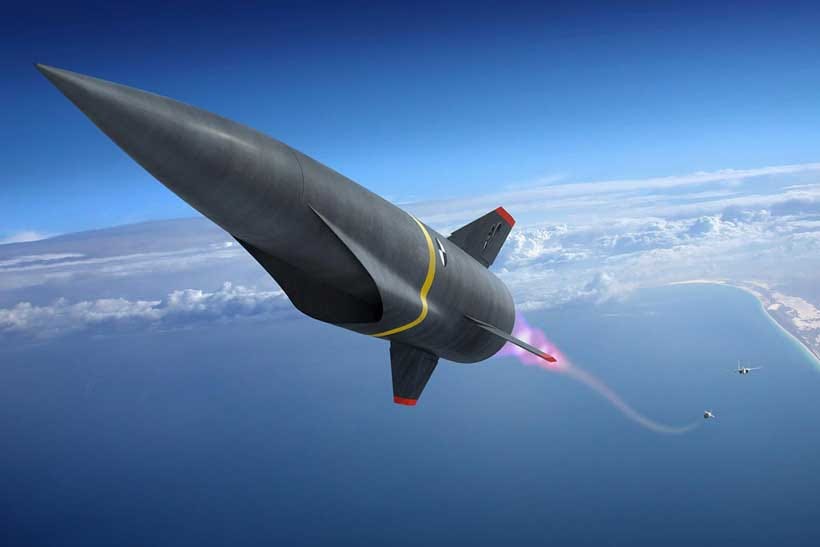
  • Hypersonic boost-glide Vehicles. They are accelerated to extremely high velocities on rocket boosters like those used to launch ballistic missiles. They then proceed to glide, unpowered, through the upper atmosphere until reaching their target.

The flight of a hypersonic boost-glide vehicle is divided into six stages: boost, ballistic, re-entry, pull-up, glide, and terminal phases. In the boost phase, a rocket booster accelerates the missile carrying the hypersonic vehicle until the booster exhausts its fuel. At this point, it detaches from the glide vehicle and falls back to Earth. In the ballistic phase, the vehicle travels above the atmosphere on a ballistic trajectory under only the influence of gravity. Both of these phases are comparable to a ballistic missile launch. Hypersonic trajectories diverge from those of ballistic missiles in the re-entry and pull-up phases. Here, the vehicle pierces the upper atmosphere and then slows its descent to enter a stable glide trajectory. In the glide phase, the vehicle generates aerodynamic lift to sustain near-level flight. Finally, in the terminal phase, the glider dives toward its target.

These weapons outperform existing missiles in terms of delivery time and evasion of early warning systems. Their flight characteristics are distinct from those of typical ballistic missiles, which spend most of their flight above the atmosphere and are capable of only limited manoeuvrability, and those of subsonic or supersonic cruise missiles, which travel through the atmosphere but fly more slowly.

Effect on Warfare

Hypersonic missiles are commonly depicted as a “game changer and the unprecedented capabilities of these weapons portend a revolution in missile warfare. It is considered that the speed, accuracy, and manoeuvrability of hypersonic boost-glide weapons will fundamentally change the character of warfare. Developments in hypersonic propulsion will revolutionise warfare by providing the ability to strike targets more quickly. With unmatched speed, these weapons will likely hit over-the-horizon targets in a fraction of the time. This claimed speed advantage is ostensibly accompanied by near-immunity to detection, rendering hypersonic weapons “nearly invisible” to existing early warning systems. Together, these capabilities will significantly compress decision and response times.

 War Fighting Utilisation Philosophy. Hypersonic missiles launched from planes or ships can reach targets further away than equivalent ground-based systems launched from mainland bases. More importantly, they can approach a target from a wider range of locations than if launched from a land-based system, compounding their ability to evade existing BMD systems. These weapons are most likely to be employed in the opening phases. Because of their speed and unique trajectory capabilities, hypersonic missiles can, as first-strike weapons, facilitate follow-on attacks by non-hypersonic strike systems by disabling an adversary’s air and missile defence systems. In future, they could be employed as a network of hypersonic UCAV swarms.

Hypersonic Threat Mitigation. A comprehensive missile defence strategy must deliver an integrated and practical capability to counter ballistic, cruise, and hypersonic missile threats. Some passive defensive measures against traditional missiles are also effective against hypersonic weapons; these include deception, dispersal, hardening, concealment, etc. The speed of hypersonic weapons leaves little time for computing a fire control solution, communicating with command authorities, and completing an engagement for active interception of these weapons. In the future, more active responses could encompass disrupting hypersonic data links and sensors, space-based sensors that can track missiles in the upper atmosphere, and novel technologies for interception during various phases of the weapon’s flight.

Hypersonic Race

The United States, China, and Russia are racing to develop these weapons, and each plans to field a wide array of hypersonic systems in the coming decades. The ongoing U.S., Russian, and Chinese development of HGVs and boost-glide weapons is an arms race as each nation seems to develop them and expand them to include short, medium, and long-range systems. Individually, each country claims to be developing them to meet its security needs and national objectives. These technologies are changing the nature of warfare, and they have the potential to destabilise the global security environment.

USA. The U.S. has pursued both hypersonic weapons technologies since the early 2000s. It has sought to develop longer-range systems that could reach deep into an adversary’s territory to attack defended, hardened, and time-urgent targets. The Department of Defence (DOD) is developing hypersonic weapons under the Navy’s Conventional Prompt Strike program and through several Air Force, Army, and DARPA programs. The Pentagon’s FY2022 budget request for hypersonic-related research is $3.8 billion, approximately 3 % of the total defence research and development budget.

Russia. Russia is reportedly the first nation to deploy a hypersonic missile. It characterises these weapons as a centrepiece of its security strategy and has extensively tested at least three distinct hypersonic systems. Russia’s HGV, known as Avangard, is equipped with a nuclear warhead and deployed on SS-19 long-range land-based ballistic missiles. Avangards reportedly feature onboard countermeasures and can manoeuvre in flight to evade ballistic missile defences. Russia conducted successful Avangard tests in 2016 and 2018. On December 27, 2019, the Russian military announced that it had activated two SS-19 missiles equipped with Avangard. Beginning of March this year, Russia launched its most significant aerial attack in its ongoing war with Ukraine. The attack comprised a variety of weapons, including the air-launched Kinzhal (literally ‘dagger’) hypersonic missiles with a speed of Mach 10 and a payload of 480kg. The Kinzhal is a modified version of the Russian Army’s Iskander short-range ballistic Missile (SRBM) truck-mounted weapons system. The Kinzhal version is launched at high altitude from modified MiG-31 aircraft to get maximum range.  

China. As in the space race and other high-technology fields, China has made a significant effort to match Russian and U.S. capabilities. In the past, PRC research into the military potential of hypersonic technologies used to lag far behind that of Russia and the United States. However, China has invested heavily in new hypersonic research, development, test, and evaluation programs and facilities during the past decade. Now, her research may have surpassed that of the U.S. in some regards. China is also investing heavily in hypersonic development infrastructure and weapon systems, reportedly outpacing the United States in testing these technologies. China has developed an HGV known as the DF-ZF (previously referred to as the WU-14) and has tested it at least nine times since 2014. It is estimated that the HGV may be capable of performing extreme manoeuvres during flight, allowing it to evade ballistic missile defences. Unclassified reports indicate this glider would likely be equipped with conventional warheads, and when mated with the DF-17 booster, could travel to ranges of 1,800-2,500 kilometres. China is also developing the DF-41 long-range intercontinental ballistic missile, which could carry a nuclear hypersonic glide vehicle.

India. Realising the combat value of hypersonic weapons, India has been endeavouring to develop them independently. R&D on hypersonic weapons in India goes back to 2007. India’s primary hypersonic pursuit is premised on the remarkably successful medium-range, supersonic BrahMos missile. India’s Defence Research and Development Organisation (DRDO) successfully tested the Hypersonic Technology Demonstrator Vehicle (HSTDV) in September 2020. The HSTDV is an unmanned scramjet demonstration aircraft designed to cruise at hypersonic speeds. The successful test marked a significant advancement in India’s development of hypersonic capabilities. In addition to the HSTDV program, India is continuing its research and development efforts in various aspects of hypersonic technology, including propulsion systems, materials science, and guidance systems

Controls and Measures. These developments may pose new risks and exacerbate existing risks to regional stability and international peace and security. The advancements of and growing interest in hypersonic missile technology, primarily by China, Russia and the United States, but also increasingly by other states, threaten to spur new arms race dynamics. The proliferation of more established missile technology, particularly in Asia and the Middle East, continues quickly. These trends demand a serious re-evaluation of the existing international missile non-proliferation instruments. Without new missile arms control instruments on the horizon, it is important to explore to what extent existing ones are equipped to address these risks and challenges. The Missile Technology Control Regime (MTCR) and the Hague Code of Conduct against Ballistic Missile Proliferation (HCOC) have established necessary export control standards, transparency, and confidence-building measures. While both instruments face serious challenges and limitations, they have also taken strides towards more engagement with non-members and other relevant regimes, expansion of their coverage, transparency and sharing of good practices. Suitably reviewed and modified control regimes, instruments, and agreements must be implemented.

Technology is a good gadget, but a destructive weapon. Hypersonic weapons represent a significant advancement in military technology, offering unparalleled speed and manoeuvrability compared to traditional ballistic weapons. Several countries are actively developing and testing hypersonic weapons, including the United States, Russia, China, and others. The proliferation of hypersonic weapons could have significant strategic implications for international security and stability. Their speed and manoeuvrability could reduce decision-making time in crises and increase the risk of miscalculation. The development of hypersonic weapons has also raised concerns about a new arms race, as countries seek to maintain or gain military superiority in this area. The rapid pace of technological development and competition could exacerbate tensions between major powers. Appropriate checks and balances need to be put in place.

    • Suggestions and value additions are most welcome


For regular updates, please register here:-

Subscribe


References and credits

To all the online sites and channels.

 References:–

1.https://jamestown.org/program/chinas-development-of-hypersonic-missiles-and-thought-on-hypersonic-defense/

2.https://partyardmilitary.com/hypersonic-missiles-what-are-they-and-can-they-be-stopped/

3.https://www.drishtiias.com/daily-updates/daily-news-analysis/hypersonic-technology-2

4.https://spectrum.ieee.org/russia-china-the-us-who-will-win-the-hypersonic-arms-race

5.https://55nda.com/blogs/anil-khosla/2021/11/10/hypersonic-long-range-weapons/

6.https://media.defense.gov/2020/Sep/01/2002488689/-1/-1/1/2020-DOD-CHINA-MILITARY-POWER-REPORT-FINAL.PDF

7 https://gjia.georgetown.edu/2021/01/27/chinas-hypersonic-weapons/

  1. https://link.springer.com/article/10.1007/s11432-019-2765-7

09.https://www.uscc.gov/sites/default/files/Research/China%20and%20INF_0.pdf

10.https://www.atlanticcouncil.org/wp-content/uploads/2020/08/Hypersonics-Weapons-Primer-Report.pdf

11.https://www.defense.gov/Portals/1/Interactive/2018/11-2019-Missile-Defense-Review/The%202019%20MDR_Executive%20Summary.pdf

12.https://www.indiandefencereview.com/news/hypersonic-weapon-systems-for-india/#:~:text=India’s%20primary%20hypersonic%20pursuit%20is,land%20or%20ships%20and%20submarines.

Disclaimer:

Information and data included in the blog are for educational & non-commercial purposes only and have been carefully adapted, excerpted, or edited from sources deemed reliable and accurate. All copyrighted material belongs to respective owners and is provided only for purposes of wider dissemination.

 

441: RITU’S COLUMN: Asian Space Race Heats Up


Pic Courtesy: Internet


Ritu Sharma is a journalist, with a Master’s Degree in Conflict Studies and Management of Peace from the University of Erfurt, Germany. Her areas of interest include Asia-Pacific, the South China Sea, and Aviation history. She has been writing on subjects related to defence, foreign affairs, and nuclear technology for the last 15 years. She has written for PTI, IANS and The New Indian Express. Presently she is writing for the EurAsian Times.  


Her informative article on the subject was published on 28 feb 2024 on “The EurAsian Times”

(Views of the author are her own)


Asian ‘Space Race’ Heats-Up!


China Plans 100 Satellite Launches In 2024, as India Gears-Up For 1st Manned Space Voyage. The two countries of over 1.4 billion population have been jostling for influence in the world when not having stand-off over borders. India and China are gearing up to compete on a new frontier – Space.India has revealed the identity of the four cosmonaut designates for its first manned space mission and China is going to have two manned spaceflight missions besides 100 orbital launches.


India


This week, India announced 100 per cent Foreign Direct Investment in its space sector, spurring its growth. At present, the Indian space economy is valued at around US $8.4 billion, with a 2 per cent share in the global space economy. It is projected to reach US $44 billion by 2033 with about 8 per cent global share. And by 2040, it is expected to be a trillion-dollar industry.


Since the Indian government opened the sector for private players, 100 deep tech start-ups have sprung up. With Russia embroiled in the war in Ukraine, satellite launch services are predicted to be the fastest-growing segment in the Indian space economy, followed by satellite manufacturing. In the last 10 years, India launched about 400 satellites, whereas 10 years before that, only 33 satellites were launched.


The first Indian human spaceflight is scheduled to be launched in 2024-25. The spacecraft will take a crew of three and orbit around the Earth before being brought back to Earth. Revealing the identity of the four Indian Air Force pilots trained to go to space in an Indian-built spacecraft, Prime Minister Narendra Modi said: “By 2035, India will have its space station that will help us study the unknown expanses of space. In this period of Amrit Kaal, Indian astronauts will land on the surface of the moon on our rocket.”


Indian Space Research Organisation (ISRO) reached for the moon with its ambitious Chandrayaan-2. It was a technological leap for the space organization.


China

Meanwhile, China achieved a significant milestone in space exploration by sending its first manned mission on October 15, 2003. During this historic event, the Shenzhou V spacecraft, launched by a Long March 2F rocket, carried a single astronaut named Yang Liwei into orbit. This made China the third country to send humans into space after the US and Russia. Since then, China has taken giant strides in its manned space program with successful rendezvous and docking missions with the Tiangong-1 space station module.


In comparison to India, China’s space station is entering the normal operation stage, and within 2024, there will be two cargo spacecraft missions, two manned spaceflight missions, and two return missions.


The China Manned Space Agency (CMSA) recently unveiled the names of the new vehicles for future manned lunar exploration missions. The new manned spacecraft is named Mengzhou, which means “dream vessel.” The lunar lander is named Lanyue, which means “embracing the moon.” China plans to land its taikonauts (astronauts) on the moon before 2030.


China’s state-owned space giant China Aerospace Science and Technology Corporation (CASC) released the annual blue paper, which asserted that China’s space program is set to witness new milestones in 2024, with around 100 orbital launches planned. China is creating multiple satellite constellations.


China’s current Yaogan series of spy satellites allowed constant surveillance across the South China Sea, the Western Pacific, the Indian Ocean, Tibet, and also Galwan, where the Indian and Chinese soldiers had a deadly clash. For global navigation purposes, China is depending on a 35-satellite Beidou constellation.


According to a statement the CASC sent to the Chinese government-owned Global Times, Beijing has scheduled nearly 70 orbital launches for 2024, aiming to send some 290 spacecraft into space.


Among the missions, newly-developed Long March-6C and Long March-12 carrier rockets will execute their maiden flight missions. China’s much-anticipated Phase-4 lunar probe mission will see new progress, including the launch of the Queqiao-2 relay satellite and Chang’e-6 mission, which will bring back the first lunar sample from the South Pole-Aitken Basin on the far side of the moon.


In 2023, China executed 67 launch missions, the second highest in the world, and 221 spacecraft were developed and launched. The blue paper said it broke Chinese records for launch frequency and spacecraft quantity.


The Long March series of carrier rockets successfully launched 47 times with a perfect success rate, breaking through 500 launches cumulatively, and other commercial rockets launched 20 times.


Space: The Next Frontier


China’s space exploration has evoked considerable interest, caution, and concern from the US, which considers it a top security concern.


The US intelligence community’s annual threat assessment, published on April 13, 2021, mentions that Chinese civilian space programs, such as a future space station and a network of navigation satellites, are capabilities that China is pursuing that could be a threat to the United States.


Space technology has a dual purpose. There is apprehension that China could use civilian space programs as a cover for military advancements. For instance, a country can develop a satellite capable of conducting rendezvous and proximity operations for refuelling or debris removal from space. But the same technology can be used to attack an adversary’s satellite, degrade its orbit, or simply get close enough to have a look. Repurposing a rocket’s second stage for commercial or scientific use has military applications such as hosting payloads or sensors.


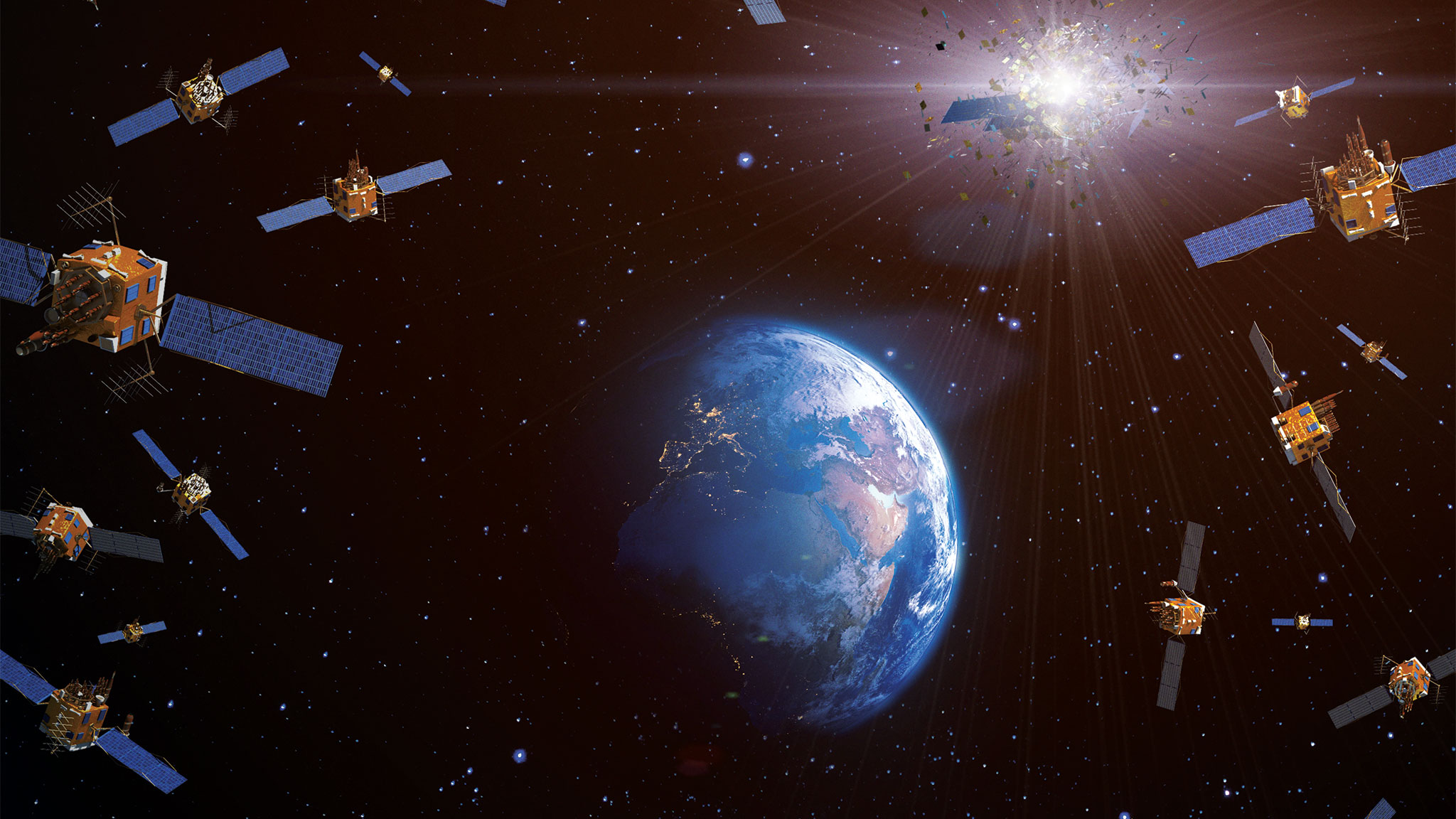
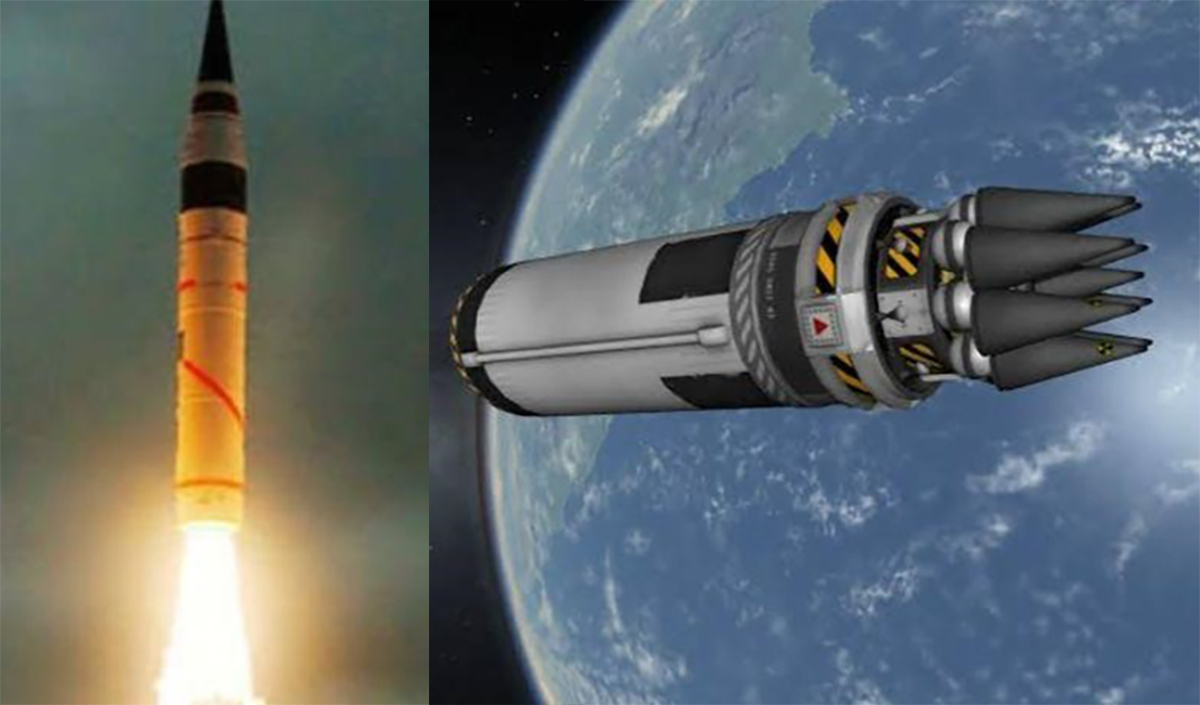
In 2007, the Chinese space program drew international criticism after Beijing conducted an unannounced test in 2007 in which it used a missile to blow up a defunct Chinese satellite. This created debris that posed a threat to other space assets. India also conducted its Anti-Satellite (ASAT) test on March 27, 2019.


The lower earth orbit is becoming “congested, competitive and contested.” Tiny shards of metal can pose a danger, and the number of objects is growing rampantly. In 2021, the US Space Command is now tracking more than 48,000 in near-Earth orbit, including satellites, telescopes, space stations, and pieces of debris of all sizes, up from 25,000 just three years ago.


While the doubt over China’s intent has evoked apprehension about its space program, the US signed a deal with India in 2023 to send a manned spaceship with an Indian astronaut to the International Space Station. ISRO and the US National Aeronautics and Space Administration (NASA) have agreed to launch a joint mission to the International Space Station (ISS) in 2024. This could be the precursor to ISRO’s Gaganyaan (meaning spaceship) – the manned mission to space scheduled to happen by the end of 2024 or the beginning of 2025. NASA will provide advanced training to ISRO astronauts to launch a joint mission to the ISS in 2024.


India also signed the Artemis Accords, which are a set of principles and guidelines for countries seeking to explore the moon, Mars, and beyond. The American-led effort seeks to maintain a permanent presence in the lunar orbit and on the moon’s surface, more than half a century after the Apollo missions put the first human on the moon’s surface. China is not part of it. The accords set up the basis for international cooperation in space exploration. The multilateral arrangement is meant to make humans “interplanetary species” as they venture onto Mars. The accord will pave the way for the 26 signatory countries to share data, technology, and resources to realize lunar exploration.


Suggestions and value additions are most welcome


For regular updates, please register here

Subscribe


References and credits

To all the online sites and channels.


Disclaimer:

Information and data included in the blog are for educational & non-commercial purposes only and have been carefully adapted, excerpted, or edited from sources deemed reliable and accurate. All copyrighted material belongs to respective owners and is provided only for purposes of wider dissemination.
 

403: US REPORT ON CHINA: EXCERPTS WESTERN THEATRE COMMAND & INDIA

WESTERN THEATER COMMAND


Key Takeaways


  • The Western Theater Command is oriented toward India and counterterrorism missions along China’s Central Asia borders.


  • The Western Theater Command focuses on Xinjiang and Tibet Autonomous Regions, where the CCP perceives a high threat of separatism and terrorism, particularly among Uyghur populations in Xinjiang.


  • Since early May 2020, sustained tensions along the India-China border have dominated the Western Theater Command’s attention, including at least one border clash in December 2022 along the PRC border with India’s Arunachal Pradesh state that injured multiple soldiers.


The Western Theater Command is geographically the largest theater command within the PRC and is responsible for responding to conflict with India and what the PRC refers to as “terrorist threats” in western China. PLA units located within the Western Theater Command include 76th and 77th Group Armies and ground forces subordinate to Xinjiang and Xizang Military Districts; three PLAAF bases, one transportation division, one flying academy, and one PLARF base.


Within China, the Western Theater Command focuses on Xinjiang and Tibet Autonomous Regions, where the CCP perceives a high threat of separatism and terrorism, particularly among Uyghur populations in Xinjiang. According to the U.S. Department of State’s 2022 Country Reports on Human Rights Practices, in the PRC, “genocide and crimes against humanity occurred during the year against the predominantly Muslim Uyghurs and other ethnic and religious minority groups in Xinjiang.” Authorities were reported to have arbitrarily detained more than one million ethnic Uyghurs, Kazakhs, Kyrgyz, and other Muslims in extrajudicial internment camps designed to erase religious and ethnic identities. Although PRC government officials justified the camps under the pretense of “combatting terrorism, separatism, and extremism,” information from the international community, including the UN, refute such justifications. Moreover, oppression of Muslim Uyghurs and other ethnic and religious minority groups in Xinjiang is likely used by extremist organizations as a propaganda and recruiting tool, generating new threats to the region.


Since early May 2020, sustained tensions along the India-China border have dominated the Western Theater Command’s attention. Differing perceptions between India and the PRC regarding border demarcations along the LAC, combined with recent infrastructure construction on both sides, led to multiple clashes, an ongoing standoff, and military buildups along the shared border. In response to a skirmish in June 2020 between PRC and Indian patrols in Galwan Valley, the most violent clash between the two countries in 45 years, the Western Theater Command implemented a large-scale mobilization and deployment of PLA forces along the LAC. Commander-level negotiations meant to reduce tensions continued in December 2022 with the 17th round of talks. The Western Theater Command’s deployments along the LAC will likely continue through 2023.


2022 Western Theater Command Leadership


Commander– General Wang Haijiang [汪海江] Previous position: Commander, Xinjiang Military District DOB: July 1963

Age: 59

Birthplace: Anyue County, Ziyang, Sichuan Province

Education: Unknown


Political Commissar– General Li Fengbiao [李凤彪] Previous position: Commander, Strategic Support Force DOB: October 1959

Age: 63

Birthplace: Anxin County, Baoding, Hebei Province

Education: Xinyang Army Infantry School; received a Master’s degree in strategic studies from National Defense University


Chief of Staff– Major General Li Zhonglin [李中林]

Previous position: Commander, 71st Group Army, Eastern Theater Command Army

DOB: Unknown

Age: Unknown Birthplace: Unknown Education: Unknown


PLA Force Laydown in Western Theater Command


INDIA 


Key Takeaways


  • In 2022, the PLA increased the deployment of forces and continued infrastructure build up along the LAC.


  • Negotiations between India and the PRC made minimal progress as both sides resisted losing perceived advantages on the border.


Beginning in May 2020, PRC and Indian forces faced off in clashes with rocks, batons, and clubs wrapped in barbed wire at multiple locations along the LAC. The resulting standoff triggered the buildup of forces on both sides of the disputed border. Each country demanded the withdrawal of the other’s forces and a return to pre-standoff conditions, but neither China nor India agreed on those conditions. The PRC blamed the standoff on Indian infrastructure construction, which it perceived as encroaching on PRC territory, while India accused China of launching aggressive incursions into India’s territory. On 15 June 2020, patrols violently clashed in Galwan Valley and resulted in the death of approximately 20 Indian soldiers and four PLA soldiers. This incident was the deadliest clash between the two since the 1962 Sino-Indian War. (Actually this incident was the deadliest clash between the two since 1967 clash at Nathu la with nearly 500 causalities).


Following the 2020 clash, the PLA has maintained continuous force presence and continued infrastructure build up along the LAC.


  • In 2022, China continued to develop military infrastructure along the LAC. These improvements include underground storage facilities near Doklam, new roads in all three sectors of the LAC, new villages in disputed areas in neighboring Bhutan, a second bridge over Pangong Lake, a dual-purpose airport near the center sector, and multiple helipads.


  • In 2022, China deployed one border regiment, supported by two divisions of Xinjiang and Tibet Military Districts with four combined arms brigades (CAB) in reserve in the western sector of the China also deployed as many as three light-to-medium CABs in the eastern sector from other theater commands and an additional three CABs in the central sector of the LAC. Although some elements of a light CAB eventually withdrew, a majority of the deployed forces remain in place along the LAC.


  • On July 17th, China and India held the 16th round of Corps Commander-level talks focusing on the resolution of border disagreements in the western sector of the LAC. Both sides agreed to withdraw forces from the Gogra-Hotsprings area of the LAC and to maintain dialogue through military and diplomatic channels to reach a mutually acceptable solution to the remaining border issues. Two previous rounds of Corps Commander-level talks in March and January made no progress to resolve the China-India border dispute.


  • On September 8th, Chinese and Indian forces began to withdraw from the Gogra-Hotsprings area along the western sector of the LAC. This withdrawal was the direct result of the 16th round of Corps Commander-level talks held in July.


  • On October 14th, representatives from China and India attended a virtual 25th Meeting of Working Mechanism for Consultation and Coordination (WMCC). Both sides lauded the recent withdrawal of forces from the border and agreed to take measures to reduce border tension and shift from emergency response to regular management of the border areas. The 24th WMCC was held on 31 May with no significant progress being made to disengage from the western sector of the LAC.


  • On 9 December, hundreds of Chinese and Indian forces clashed along the eastern sector of the LAC near the Yangtse area of Tawang, Both sides previously agreed to not use firearms along the border—instead they use sticks and clubs as weapons—however both Chinese and Indian forces sustained injuries. Media reports described the skirmish as the worst since the 2020 Galwan Valley incident.


  • On 20 December, China and India held the 17th round of Corps Commander-level talks at the Chushul-Moldo border meeting point in This round of talks was not announced—unlike previous talks—and came 10 days after Chinese and Indian forces clashed along the eastern sector of the LAC near the Yangtse area of Tawang, India. No agreements were made during this meeting and both sides pledged to continue dialogue through military and diplomatic channels.


COMING UP: DETAILED ANALYSIS WITH INDIAN PERSPECTIVE


Suggestions and value additions are most welcome


For regular updates, please register here

Subscribe

References and credits

To all the online sites and channels.

Disclaimer:

Information and data included in the blog are for educational & non-commercial purposes only and have been carefully adapted, excerpted, or edited from sources deemed reliable and accurate. All copyrighted material belongs to respective owners and is provided only for purposes of wider dissemination.

English हिंदी