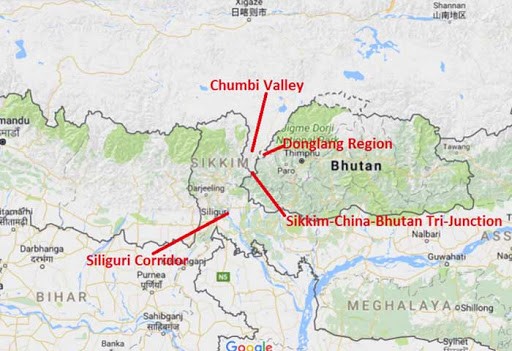
In 2017, India and China had the most dangerous bilateral confrontation since 1962 at the Doklam Plateau. Disengagement took place after a 73-day standoff. The face-off ended without a formal agreement or any resolution of the underlying territorial contest. Both sides claimed a measure of satisfaction. India had stopped the road. China had not been forced to concede anything publicly. Seven years later, the situation has taken an entirely different direction. From a temporary military standoff, it has become a permanent grey-zone contest in which the instruments of Chinese pressure are increasingly civilian, infrastructural, and juridical rather than uniformed and kinetic. Understanding what has happened at Doklam since 2017, what China is now doing in the Amo Chu Valley, and what India must do in response is not an exercise in historical analysis. It is the most pressing operational and strategic question facing India’s eastern defence architecture in 2026.
Indian Redline. A specific act at a specific location triggered the 2017 standoff. Chinese road construction at a point on the Doklam plateau where the road, if completed, would have given the People’s Liberation Army direct vehicular access to the Jampheri Ridge. That ridge is the dominant high ground overlooking the Siliguri Corridor. The corridor is a narrow strip of Indian territory, barely 22 kilometres wide at its narrowest, that constitutes the sole land link between the northeastern states and the Indian mainland. Control of the Jampheri Ridge does not merely threaten the Siliguri Corridor; it commands it. Artillery or missiles positioned there can interdict the Corridor without crossing into Indian territory.
Post 2017 Changes.
Alternate Road. What India stopped in 2017 was a road to a specific point via a specific route. What China has since done is build a different road to the same strategic destination. Satellite imagery analysed by multiple independent research organisations confirms that China has completed a road approximately 5 kilometres long through the Amo Chu Valley. The route has been redesigned to circumvent the specific location of India’s red line rather than to challenge it directly. This road allows PLA forces and vehicles to approach the Jampheri Ridge area without crossing the precise point where Indian troops halted Chinese construction in 2017. The strategic objective of access to the high ground above the Siliguri Corridor remains unchanged.
Demographic Alteration. The Amo Chu road is the kinetic component of a broader strategy, the most significant element of which is the construction of permanent settlements. China’s Xiaokang village programme has placed villages in strategically selected locations (previously uninhabited or seasonally used by Tibetan herders) across the Himalayan frontier. They have been created to establish a permanent Chinese presence. Continuous occupation supports territorial claims under international norms. These villages are not primarily civilian in purpose, irrespective of their formal designation. These settlements house border defence forces alongside civilian residents. They are connected by road infrastructure that provides the PLA with access and logistics. And they are designed to make any Indian military response to Chinese encroachment diplomatically and legally costly, because attacking or displacing a civilian settlement carries international consequences that interdicting a military road column does not. In the Doklam area, the village of Pangda, situated in the Amo Chu Valley, is the most significant of these.
Indian Options
The appropriate Indian response to the situation at Doklam is not a military operation. It is the construction of a comprehensive active deterrence architecture that operates across the same grey-zone spectrum that China is exploiting, while reinforcing the conventional deterrent that limits China’s escalatory options. This architecture has several components.
Military Bases to Hardening the Chicken’s Neck. The Siliguri Corridor’s strategic vulnerability is a serious problem. Still, it can be substantially mitigated through layered defensive depth. The completion of the Lachit Borphukan Military Station at Dhubri, combined with new military stations at Chopra and Kishanganj, would provide overlapping defensive coverage across the approaches to the Corridor from multiple directions simultaneously. These stations would create a defence-in-depth. The stations would also provide forward basing for the UAV, electronic warfare, and air defence assets that active deterrence in this theatre requires.
Military Technology Utilisation. China’s principal tactical advantage in the Chumbi Valley is logistical. The road network and infrastructure investment that gives the PLA the ability to position and sustain significant forces in terrain where India’s own logistics are comparatively constrained. The answer is making that logistics infrastructure a liability rather than an asset. The deployment of advanced surface-to-air missile systems (S-400), supplemented by the Rafale’s organic electronic warfare capability and the Su-30MKI’s air-to-air performance, would provide an asymmetric advantage. The A2AD architecture is not merely about shooting down aircraft; it is about denying China the confident expectation of air superiority that any escalation to conventional conflict would require.
Demographic Counter. The most direct counter to China’s Xiaokang village strategy is India’s own Vibrant Villages Programme. Chinese villages in border areas serve military functions precisely because they are permanently inhabited. India’s border hamlets in Sikkim and Arunachal Pradesh, many of which have experienced significant depopulation as residents migrate to urban centres for economic opportunity, present the opposite picture. The Vibrant Villages Programme aims to reverse the trend. A Combination of 5G connectivity, all-weather roads, economic incentives, and livelihood support is designed to reverse this depopulation. Permanently inhabited Indian villages along the Sikkim and Arunachal borders would assert Indian sovereignty and serve as a HUMINT asset. The pace of the programme’s implementation must be accelerated.
Tourism as Sovereignty. The relationship between civilian presence and territorial claim is well established in international practice, and India has underutilised the tourism instrument as a form of continuous sovereign assertion. Tourism is not merely an economic activity. Active promotion of border tourism (facilitated by improved road connectivity, accommodation infrastructure, and streamlined permit processes) would create a continuous civilian presence that directly challenges any claims of vacant territory. Tourism is also a form of territorial assertion that is simultaneously visible, documentable, and internationally legitimate.
Deepening the Bhutanese Engagement. The India-Bhutan relationship is crucial. In 2021, China proposed resolving the broader Bhutan boundary dispute through a “three-step roadmap”. It was Beijing’s strategy of using Bhutan-China bilateral negotiations to achieve favourable outcomes while circumventing Indian involvement. India’s response must go beyond security assurances and treaty obligations. A Bhutan that is economically prosperous and strategically confident is a far more resilient partner in resisting Chinese pressure than a Bhutan that perceives its security relationship with India as its only alternative to accommodation with Beijing.
AI-Driven ISR to Counter Grey-Zone Activities. The central operational weakness that grey-zone salami-slicing exploits is the gap between periodic observation and continuous surveillance. Patrolling schedules, satellite revisit intervals, and human intelligence collection cycles all create windows of unobserved time during which incremental changes can be made and completed before India’s intelligence system registers them. By the time the change is observed, it is a fact on the ground. Contesting it requires either the military action that grey-zone methodology is designed to deter or acceptance of the new reality. The answer lies in eliminating the observational gaps through AI-driven continuous monitoring. AI-assisted change-detection processing applied to the continuous imagery feed identifies variations in the physical landscape within hours of their occurrence, rather than days or weeks. This is the single most important capability investment India can make in this theatre.
Digital Border Ledger. China’s grey-zone methodology depends on narrative ambiguity. The counter to narrative ambiguity is documented transparency. The answer lies in a publicly accessible Digital Border Ledger. A regularly updated database of satellite evidence showing Chinese construction activity, vegetation clearance, road extension, and settlement development along the LAC and the Bhutan-China boundary, with time-stamped imagery and geographic coordinates, would transform the information environment in which Chinese grey-zone operations proceed. A systematic publication of such documents would counter Beijing’s deniability.
Concluding Thoughts
The Doklam plateau is a strategic red line for India, as it overlooks the Siliguri Corridor. Chinese activities in the Chumbi Valley, such as the making of Amo Chu Road and the establishment of Pangda Village, are not isolated actions. They are part of a deliberate strategy to incrementally improve China’s position on the high ground. India’s answer must be equally patient, persistent, and multi-dimensional.
The prevention that worked at Doklam in 2017 was the product of decisions made years before the standoff. Forward basing decisions, ISR investments, force posturing, and treaty relationships that were in place when the crisis arrived. The deterrence required at Doklam in the years ahead must be built now, before the next crisis defines the terms of the contest.
Please Add Value to the write-up with your views on the subject.
For regular updates, please register your email here:-
Information and data included in the blog are for educational & non-commercial purposes only and have been carefully adapted, excerpted, or edited from reliable and accurate sources. All copyrighted material belongs to the respective owners and is provided only for wider dissemination.
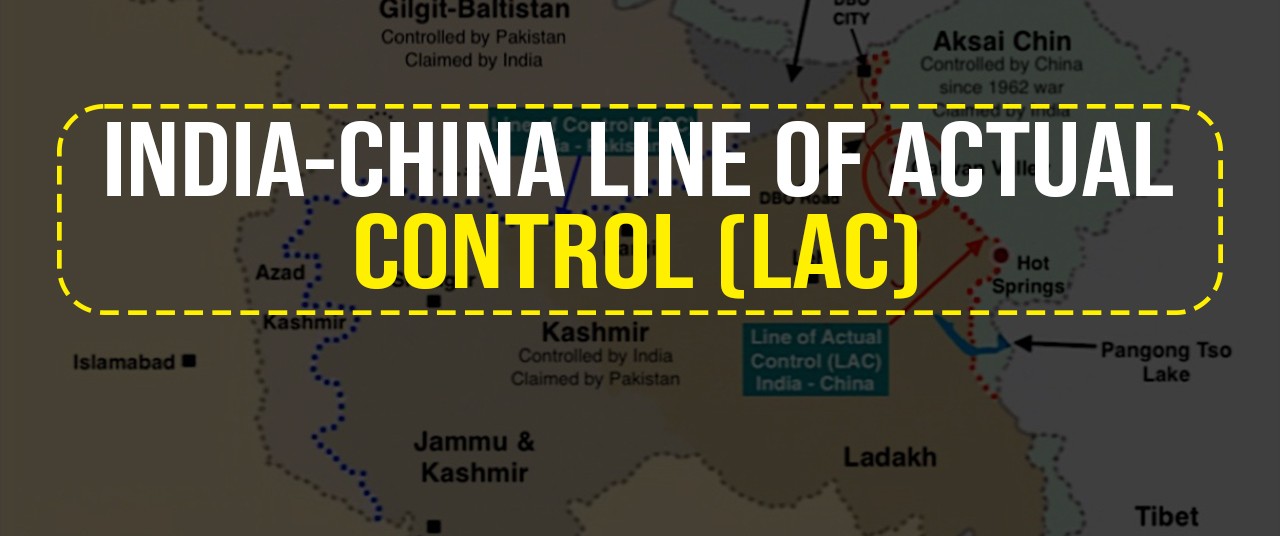
Stretching from the Karakoram ranges in the west to the forested hills of Arunachal Pradesh in the east (approximately 3,488 kilometres) is the boundary between India and China, which occupies Tibet. It is not a border that was drawn, agreed upon, demarcated, and then disputed. It is a frontier that was never fully settled in the first place. It is a line that exists, as a matter of competing cartographic assertions rooted in imperial history, post-colonial nationalism, and unresolved strategic calculation.
To understand why Indian and Chinese soldiers confronted each other with lethal consequences at Galwan in June 2020, one must go back not merely decades but centuries. The boundary dispute is, at its core, a collision between the territorial inheritance of the British Indian Empire, the historical assertions of Imperial China, the revolutionary confidence of the People’s Republic of China, and the aspirational sovereignty of independent India. All of these forces remain alive in the dispute today.
Genesis of the Problem
The problem did not exist till the nineteenth century. It became one as the British Empire pushed its frontiers toward the Himalayas. British India’s interest in the Himalayan frontier was driven primarily by the strategic competition with Tsarist Russia for influence over Central Asia. A clearly defined, defensible northern frontier was a British strategic imperative. From the 1860s onward, British surveyors, explorers, and political officers pushed into Ladakh, Sikkim, and the northeastern frontier with the dual purpose of mapping the terrain and establishing the reach of British Indian sovereignty.
The critical complication was Tibet. Britain’s preferred outcome was a Tibet autonomous enough to serve as a buffer against Russian or Chinese encroachment, but within a broad sphere of British influence. The 1904 Younghusband Expedition to Lhasa was an expression of this policy. It was an extraordinary and controversial mission that forced a treaty on the Tibetan government.
The Qing dynasty’s response was to reassert direct control over Tibet, sending military expeditions in 1910 that briefly occupied Lhasa and forced the Dalai Lama into exile in British India. The Qing’s collapse in 1911 reversed this, and Tibet declared independence (not recognised by China). The genesis of the boundary dispute lies in the status of Tibet. Tibet’s boundaries with British India were precisely the boundaries that India inherited in 1947, and that China refused to accept when it absorbed Tibet in 1950.
Colonial Cartographic Legacy
The Western Sector: Aksai Chin. Aksai Chin is a high-altitude desert plateau roughly the size of Switzerland, sitting at the intersection of Ladakh, Tibet, and Xinjiang. It is one of the most inhospitable places on earth. The boundary in this sector was never formally agreed upon between British India and either the Qing dynasty or, subsequently, the Republic of China. Different alignment proposals emerged from the British period, each reflecting different strategic priorities, none the product of bilateral agreement.
Johnson Line of 1865. Civil servant W.H. Johnson formulated it and was later modified by Major General John Ardagh. It placed the entire Aksai Chin plateau inside Jammu and Kashmir by extending the boundary northward to the Kunlun Mountains. It is the historical basis for India’s modern territorial claim.
Macartney-MacDonald Line of 1899. It was proposed to the Qing government by Sir Claude MacDonald. The British strategic priorities had shifted toward conciliating China against Russia. It proposed that the Karakoram range be used as the frontier and that most of Aksai Chin be placed under Chinese administration. The Qing government never formally responded to this proposal. China now asserts by it.
The Eastern Sector. The eastern sector’s origins lie in the Simla Convention of 1914, a tripartite conference among British India, Tibet, and the Republic of China. The British representative, Sir Henry McMahon, negotiated directly with Tibetan representatives and, through an exchange of notes, established a boundary between British India and Tibet running along the highest ridgeline of the eastern Himalayas. This alignment, known as the McMahon Line, ran approximately 890 kilometres from the Bhutan border eastward to the bend of the Brahmaputra and placed approximately 90,000 square kilometres of territory, now the state of Arunachal Pradesh, within British India. The Chinese representative at Simla initialled the convention but refused to formally ratify it, objecting both to the proposed internal division of Tibet into Inner and Outer zones and to the fundamental premise that Tibet possessed the sovereign authority to conclude treaties independently of China. China has consistently maintained that the McMahon Line is illegal as it was negotiated without the Chinese consent. China refers to Arunachal Pradesh as “South Tibet” or Zangnan, with particular emphasis on the town of Tawang, which carries deep religious and historical significance as a major centre of Tibetan Buddhism. India considers the McMahon Line as a valid international boundary.
Post-Colonial Differences (1947 to 1959)
India’s independence in 1947 and the establishment of the People’s Republic of China in 1949 initially produced not confrontation but an era of proclaimed Asian solidarity. India was among the first non-communist countries to recognise the People’s Republic. Hindi-Chini Bhai-Bhai was the slogan of the early 1950s. It reflected Jawaharlal Nehru’s genuine belief in Asian cooperation as the organising principle of post-colonial international relations.
The geopolitical cushion between the two countries vanished in 1950 when the Chinese People’s Liberation Army entered Tibet. India had historically viewed Tibet as an autonomous cultural buffer state with which it shared deep spiritual and trade connections. China’s absorption of Tibet transformed that buffer into a direct shared frontier of over 3,500 kilometres, and border ambiguity became a strategic security issue of the first order.
The Panchsheel agreement of 1954 between Nehru and Zhou Enlai embedded the Five Principles of Peaceful Coexistence. The two leaders jointly championed it as the framework for a new Asian order. What the agreement also did, critically, was recognise Chinese sovereignty over Tibet without resolving the boundary question. In retrospect, India traded its strongest diplomatic card (the legal ambiguity of Tibet’s status) for a set of principles without securing a boundary settlement in exchange.
Two developments then shattered the remaining foundations of the relationship. First was the 1957 discovery of the Chinese road through Aksai Chin. It was built entirely across territory India considered its own, and completed without India’s knowledge. Second, the Tibetan uprising of 1959 and the subsequent flight of the Dalai Lama to India, where he was granted political asylum, fundamentally fractured bilateral trust. Beijing interpreted India’s action as active interference in its internal sovereignty and as an attempt to subvert Chinese consolidation of Tibet. The period of brotherhood was over.
In 1959, Chinese Premier Zhou Enlai put forward a proposal that would prove a pivotal missed moment: China would recognise the McMahon Line in the east if India accepted Chinese claims over Aksai Chin in the west. Nehru rejected the offer. It was also in 1959 that Zhou Enlai first used the term “Line of Actual Control” in a letter to Nehru, defining it as the line up to which each side exercised actual control.
War Over the Dispute
In an attempt to check further Chinese advances without provoking all-out conflict, Prime Minister Nehru instituted the “Forward Policy” in late 1961. India established small military outposts in disputed areas. Beijing interpreted this not as a defensive manoeuvre but as a continuation of British-style forward expansionism into the Tibetan borderlands.
The Sino-Indian War of October to November 1962 is a significant event. On 20 October 1962, the People’s Liberation Army launched simultaneous offensives across both the Western and Eastern Sectors. The Indian forces were overwhelmed. In the east, Chinese forces advanced deep, nearly reaching the plains of Assam. In the west, they consolidated their hold over Aksai Chin.
On 21 November 1962, China declared a unilateral ceasefire and withdrew its troops twenty kilometres behind what it defined as the Line of Actual Control in the Eastern Sector, but maintained its positions in Aksai Chin. The war facts on the ground that persist to the present day are that China controls Aksai Chin, and India administers Arunachal Pradesh. Neither country has accepted the other’s position. The Line of Actual Control (the de facto boundary that emerged from the ceasefire) remains undefined, undemarcated, and contested in multiple sectors. Unlike the Line of Control with Pakistan, there is no formal agreement on its location.
Renewed Assertion
Sumdorong Chu standoff. The issue remained dormant for almost two and a half decades till 1986. The Sumdorong Chu standoff of 1986 to 1987 in the Tawang region of the Eastern Sector was a serious post-1962 confrontation. A Chinese detachment occupied a valley traditionally grazed by Indian herders, triggering a massive military build-up on both sides that brought the nations to the brink of another war before diplomatic intervention defused the situation.
The Protocol Architecture. The 2013 Border Defence Cooperation Agreement established institutionalised hotlines and joint mechanisms to manage face-offs and prevent their escalation. This architecture rested on a set of shared understandings. It encompassed that the boundary dispute would be kept separate from the overall relationship, that economic interdependence would create incentives for stability, and that neither side would seek to alter the status quo by force. For roughly two decades, the framework held. Standoffs occurred at Depsang in 2013 and Chumar in 2014, but were managed and defused within the established protocols.
Doklam Standoff. The framework began showing serious structural stress with the Doklam standoff of 2017, when Indian and Chinese troops confronted each other for 73 days on a plateau near the Bhutan-China-India trijunction. India intervened against Chinese road construction that it regarded as a direct threat to the strategic Siliguri Corridor, also called the Chicken’s Neck. The standoff ended without a clear resolution but signalled a new Chinese willingness to test Indian redlines and a meaningfully changed strategic posture.
Galwan Clash. On the night of 15 June 2020, Indian and Chinese soldiers clashed in the Galwan Valley in Eastern Ladakh. It caused fatalities on the Line of Actual Control in 45 years. The clash was not a spontaneous skirmish but the violent consequence of Chinese infrastructure construction across multiple friction points in Eastern Ladakh, systematically altering the status quo. Galwan shattered the diplomatic architecture built over three decades and triggered the gravest rupture in India-China relations since 1962.
Insolvability Drivers
The Tibet factor. This factor remains structurally central. India’s fundamental position is that it inherited a valid boundary from its colonial predecessor. The Tibetan government’s legal authority at the time of the Simla Convention had endorsed the Simla Convention. China’s fundamental anxiety is that international legitimisation of the McMahon Line would imply that Tibet possessed the sovereign authority to conclude treaties.
Dispute Asymmetry. means that the two sides are not exchanging equivalent concessions. China’s primary strategic interest is in Aksai Chin, which it already controls and which is essential for connecting Xinjiang to Tibet via the G219 highway. India’s primary claim is to Arunachal Pradesh, which India already administers. The logical resolution would require India to formally abandon its claim to Aksai Chin and China to formally renounce its claim to Arunachal Pradesh. Neither government has found the domestic political space to make that concession, and no leader on either side has been willing to bear the political cost of being seen as the one who gave territory away.
The Shifting Balance of Power. This reduces China’s incentive to settle on terms India could accept. In 1988, when the framework of managed competition was established, the two economies were roughly comparable in size. Today, China’s economy is approximately five times larger than India’s, and its military modernisation has outpaced India’s by a significant margin. From Beijing’s perspective, time and the correlation of forces are on its side. Settling now, on terms of rough equivalence, would mean forfeiting the strategic advantages.
Line Awaiting Resolution
The dispute has outlived the Bhai-Bhai idealism, the 1962 war, decades of diplomatic engagement/confrontation, the Cold War, and multiple generations of leaders on both sides. The line that was never agreed upon remains a source of danger, distrust, and unfinished history. It awaits a political moment when leaders are willing to trade the ambiguity of the present for the clarity that resolution alone can provide. That moment is still awaited more than six decades after the war that defined the modern shape of the dispute.
Please Add Value to the write-up with your views on the subject.
For regular updates, please register your email here:-
Information and data included in the blog are for educational & non-commercial purposes only and have been carefully adapted, excerpted, or edited from reliable and accurate sources. All copyrighted material belongs to the respective owners and is provided only for wider dissemination.
References:
Lamb, A. (1964). The China-India border: The origins of the disputed boundaries. Oxford University Press.
Lamb, A. (1973). The Sino-Indian border in Ladakh. Australian National University Press.
Garver, J. W. (2001). Protracted contest: Sino-Indian rivalry in the twentieth century. University of Washington Press.
Garver, J. W. (2011). The unresolved Sino-Indian border dispute: An interpretation. China Report, 47(2), 99–113.
Lintner, B. (2018). China’s India war: Collision course on the roof of the world. Oxford University Press.
Menon, S. (2016). Choices: Inside the making of India’s foreign policy. Brookings Institution Press.
Menon, S. (2021). India and Asian geopolitics: The past, present. Brookings Institution Press.
Raghavan, S. (2010). War and peace in modern India: A strategic history of the Nehru years. Permanent Black.
Hoffmann, S. A. (1990). India and the China crisis. University of California Press.
Shakya, T. (1999). The dragon in the land of snows: A history of modern Tibet since 1947. Columbia University Press.
Goldstein, M. C. (1989). A history of modern Tibet, 1913–1951: The demise of the Lamaist state. University of California Press.
Arpi, C. (2009). 1962 and the McMahon Line saga. Lancer Publishers.
Fravel, M. T. (2020). China’s changing approach to military coercion in territorial disputes. The Washington Quarterly, 42(3), 179–201.

How has the role of air power evolved in modern warfare, particularly in the context of rapid, high-precision operations?
When I was commissioned in 1979, air power was largely conceived as a force multiplier — something that supported ground operations, provided interdiction, and contested the skies above the battlefield. That mental model has been fundamentally overturned.
I often describe this evolution through three distinct eras. First came the Pilot Era, where individual skill was everything. Then the Platform Era, where multi-role systems defined capability. We are now entering what I call the Weapon Era — where the munition itself, and increasingly the autonomous system behind it, is the decisive element. In each transition, air power has moved further from the periphery and closer to the centre of strategic decision-making.
The IAF’s own doctrinal journey reflects this precisely. The 1995 doctrine focused on the basics of air power — offensive operations, C4I networks, and force multipliers. By 2012, the doctrine had expanded to connect air power with national security across the full spectrum, including counter-terrorism. The 2022 doctrine went further still — it unequivocally advocates the shift from air power to aerospace power, and identifies No War No Peace (NWNP) scenarios as a distinct operational category requiring both kinetic and non-kinetic responses. This evolution from tactical support to strategic aerospace power is not merely doctrinal — it reflects the operational reality that a strike today is simultaneously a cyber operation, a space-dependent operation, and an information operation.
The shift has been driven by two converging developments: precision and speed. The ability to place a munition within metres of its intended target — from standoff distances, in any weather, at any hour — has collapsed the old calculus of attrition warfare. You no longer need to destroy an entire column; you destroy its command node, its logistics, its will to function. And you can do it in hours rather than weeks. What this means strategically is that air power now operates at the intersection of the military and political realms — a strike is not just a tactical event; it is a signal, a message, sometimes a red line being drawn or crossed.
Do you believe air power is increasingly becoming the decisive arm in limited conflicts?
In limited conflicts — which is the dominant mode of contemporary warfare — yes, air power has become the decisive arm in most scenarios. The reasons are structural. Limited conflicts, by definition, operate under tight political constraints. There is usually an imperative to achieve effects quickly and visibly, without triggering uncontrolled escalation. Ground operations are slow, costly in lives, and difficult to control once initiated. Naval power projects presence but rarely delivers the kind of immediate, calibrated effect that a conflict demands.
As I have written, air power possesses significant offensive potential and is the most responsive arm of military action. It can be switched on and off. It can be precise. It can be deniable if necessary, and visible when you want it to be. These qualities make it the instrument of choice for governments that need to communicate resolve without opening an indefinite campaign.
That said, I would caution against treating this as an absolute. As John Warden’s body of work — which I have studied closely — rightly argues, jointness does not mean equal portions of action for all services. Sometimes air power should support land and sea forces; sometimes it should be supported by them; and sometimes, applied correctly against the right targets, it can be decisive independently. But this works only when air power is used within a coherent strategic framework. When employed without clarity of political purpose, it yields tactical results that fail to translate into strategic outcomes.
How should air forces adapt to a battlespace that now includes cyber, space, and electronic warfare domains?
The honest answer is that the adaptation is already overdue in most air forces, including our own. The battlespace has not merely expanded — it has become layered. What happens in the electromagnetic spectrum shapes what is possible in the air. What happens in space determines the quality of information available to every commander. What happens in the cyber domain can degrade or destroy systems before a single aircraft takes off.
The IAF’s 2022 doctrine explicitly recognises this by calling for a shift from air power to aerospace power — with space and cyber treated as integral domains rather than peripheral ones. The establishment of the Defence Space Agency and the Defence Cyber Agency reflects this institutional direction. But doctrine and structure are only the beginning. Air forces must stop thinking of these domains as managed by specialists in the rear. They need to be woven into operational planning from the outset.
One effect of advanced technology on air warfare is the increased pace and intensity of operations. In such a scenario, the decision-making process must keep up with the OODA cycle. The three most important contributing factors are high situational awareness, a robust and fast network for information sharing, and AI-based decision-support systems. Structurally, this requires investment in electronic warfare capabilities, hardened communications, and space-based ISR. But more than hardware, it requires a doctrinal shift — a willingness to plan and fight across domains simultaneously rather than sequentially. Air power is, at its core, indivisible: splitting it into domain silos destroys its greatest asset: flexibility.
Operational Experience & Lessons
You were closely associated with both Doklam and Balakot. What strategic lessons do these episodes offer for future conflict scenarios?
Both episodes were defining moments in how India thinks about the use of force, and they offer very different but complementary lessons.
Doklam was fundamentally about persuasive presence and persistence — and what I would call strategic patience. It underscored the importance of credible deterrence backing diplomacy. It also highlighted the importance of maintaining calm, holding your position steadfastly, demonstrating readiness, and refusing to be pressured. A combination of these factors forced a resolution. Air power played an important role in speedy deployment, sustenance of ground forces and signalling of resolve. Its availability as a credible option was part of what made the overall posture convincing.
Balakot was something categorically different. It was the first cross-border air strike by India since 1971 — conducted in a nuclear-armed environment, against a near-parity state. It demonstrated what I would describe as punitive deterrence — the ability to strike deep within adversary territory to deliver a political message while managing the escalation ladder with precision. The lesson was about the importance of the entire decision-action cycle: intelligence, planning, execution, and escalation control. Political resolve was intense; ISR fusion was critical; and messaging mattered as much as the physical effect.
Together, these episodes reinforce a single overarching lesson. In modern conflict, especially in our neighbourhood where China and Pakistan operate in close strategic collusion, you must be able to act quickly with precision and then manage the aftermath with equal skill. Future conflicts will be short and high-intensity, requiring 24/7 readiness.
What distinguishes a successful air operation in politically sensitive, escalation-prone environments?
Three things, above all.
First, clarity of objective — not in military terms alone, but in political terms. What message are you sending? What behaviour are you trying to change? Any ambiguity at the objective level results in confusion at the execution level. A successful operation requires complete synergy between military execution and political intent and resolve.
Second, proportionality and precision. In escalation-prone environments, the magnitude of the effect must match that of the political message. Over-strike and you hand over to the adversary a narrative. Under-strike and you signal weakness. The targeting process must be driven by strategic logic, not tactical preference — and collateral damage must be minimised to avoid losing the narrative war.
Third — and this is chronically underestimated — the ability to communicate. What happens after the strike matters as much as the strike itself. How you characterise it publicly, what back-channels convey, how de-escalation is signalled — all of this shapes whether the adversary escalates or stands down. Successful air operations in politically sensitive environments are as much information operations as kinetic ones.
How do air forces calibrate force projection without triggering uncontrolled escalation?
This is the central challenge of modern air power employment. The instinct of any military operator is to maximise effect. The instinct of strategic management is to control outcomes. These two instincts exist in constant tension.
Calibration begins with target selection. Striking military targets rather than civilian infrastructure, avoiding symbols of national sovereignty, choosing targets that punish without humiliating — these provide the adversary an off-ramp. Selecting munitions that limit collateral damage, managing timing and sequencing — all of these are tools of escalation management embedded in the targeting process.
One critical lesson from recent air campaigns is the growing importance of standoff precision weapons in a networked environment. Precision-guided standoff weapons and missiles have rendered traditional geographical barriers almost meaningless. The optimal basing posture for high-intensity operations is increasingly shifting toward depth, dispersion, and resilience — moving air assets, using expeditionary airfields, operating from unprepared landing grounds — rather than fixed forward basing, which presents lucrative targets. Calibration, therefore, is not only about what you strike, but how you position and present your force to the adversary.
The most effective force projection is often graduated — it begins at a level that hurts but does not humiliate, and it signals clearly that more is available if needed. The adversary must understand both the cost of continued provocation and the availability of a dignified way out.
What role does signalling play in air operations during crises?
Signalling is, in many ways, the primary function of air power in a crisis that has not yet crossed the threshold of open conflict. Air operations are, in the deepest sense, the language of the state. When you generate additional sorties, forward-deploy assets, or conduct exercises at conspicuous times, these are not just operational preparations. They are communications (Strategic/Coercive signalling) to the adversary, to allies, and to the international community simultaneously.
Signalling is inherently ambiguous. The adversary interprets your actions through their own lens. Your defensive posture may be perceived as offensive intent. Signalling must be carefully managed and accompanied by clear communication to remove the ambiguities.
The IAF’s own doctrine now explicitly addresses the No War No Peace environment — a recognition that the space between peace and war is itself a domain requiring active management. In this space, air power is uniquely effective. The appearance of fighters at a forward base, the conduct of a high-profile exercise, the demonstrable capability to generate surge sorties — these convey something that a diplomatic note simply cannot. Used wisely, that is enormous strategic leverage. Used carelessly, it can produce exactly the escalation you were trying to deter.
Jointness & Integrated Warfare
Having worked extensively with the Army and Navy, how would you assess India’s progress toward jointness?
We have made genuine progress, and I say that without qualification. There is far more institutional understanding among the services today than there was twenty years ago. Exercises are more integrated, communication is better, and there is at least a shared vocabulary around joint operations. The creation of the Chief of Defence Staff and the Department of Military Affairs represented a significant structural step forward. Recent exercises like Prachand Prahaar — conducted in the high-altitude terrain of Arunachal Pradesh in March 2025 — have validated integrated surveillance, command and control, and precision firepower across all three services in a genuinely multi-domain environment. That kind of exercise provides invaluable insights into how to improve inter-service coordination.
But I would be misleading you if I said the transformation is complete, or even that the hard part is behind us. India must move beyond what I would call de-conflicting — simply staying out of each other’s way — toward true integration, where services plan, train, and fight as a unified whole. That requires shared warfighting concepts, integrated planning staffs, and common C4I architectures. Above all, it requires a cultural shift — officers who think in joint terms from the beginning of their careers. That culture takes a generation to build, and we are still in the middle of that journey.
The formation of theatre commands is being vigorously advocated as a possible solution to integration. In my view, it is not a panacea for jointness, but rather one of the approaches, and, further, an idea whose time has not yet arrived in the Indian context. The timing and circumstances are unsuitable, and many other high-priority areas need urgent attention to meet future challenges.
What are the key challenges in integrating air power into joint operational doctrines?
The core challenge is operational: air power is inherently centralised, while the other services are inherently decentralised. A ground commander thinks about his sector, his axis of advance, and his immediate fire support requirements. An air commander thinks about the entire battlespace — air superiority, strategic interdiction, close support, logistics, and ISR — and must allocate finite, high-value assets across competing priorities simultaneously.
There is also a persistent tendency to treat air power as a support system for surface forces rather than as a coequal, central component of the joint force. Warden’s insight — that sometimes air power should support land and sea forces, sometimes it should be supported by them, and sometimes it can be decisive independently — has not yet fully penetrated joint doctrinal thinking in the Indian context. Employment of air power assets must be viewed holistically — as an overarching, comprehensive basis for planning that achieves synergy in warfighting rather than sub-optimised service allocation.
Does India need a fundamentally different approach to theatre commands to maximise air power effectiveness?
The theatre command concept is useful, especially in expeditionary operations. India needs a uniquely Indian model rather than a direct transplant of Western structures.
The concern I have — and I am not alone in this — is that any theatre command structure must preserve the ability to concentrate air power rapidly across theatres. Air power’s greatest advantage is its flexibility: the ability to mass effect at the decisive point regardless of geographic boundaries. If theatre commands create rigid geographic silos, we will have sacrificed the very quality that makes air power strategically valuable.
Air power must not be subordinated to a land-centric model that fragments its reach and reduces its mass below decisive levels. The model we need is one in which air assets are organically assigned to theatres for day-to-day operations and training, but with a clear, exercised mechanism for rapid reallocation when the situation demands it. The IAF’s doctrine advocates centralised command with decentralised execution — this principle must be preserved within whatever theatre structure India.
Technology, Capability & Future Warfare
How critical is technological superiority in maintaining credible air dominance?
Technological superiority is foundational. A technological edge (in sensors, stealth, networking, precision munitions, and BVR missiles) is now a prerequisite for credible air superiority. AI, Quantum, Robotics, Space technology, and Directed energy weapons are becoming essential parts of air war.
Technology creates the capability. Training, doctrine, and leadership determine how you utilise the capability to your advantage. Without a credible and indigenous technology base, you are outmatched in ways that training and tactics cannot fully compensate for. The Atmanirbhar Bharat imperative in defence is therefore not merely a nationalistic slogan but is an operational necessity.
What role will AI, autonomous systems, and unmanned platforms play in the future of air combat?
Transformative — we are already seeing the emergence of what I consider the defining concept of future air combat. The Loyal Wingman — unmanned platforms flying alongside manned aircraft, extending reach, absorbing risk, and multiplying mass with a reduction in human cost. Programmes like India’s CATS Warrior, the US Skyborg, and Boeing’s MQ-28 Ghost Bat indicate the future trajectory of air combat.
AI will fundamentally reshape the decision-making process. In 2020, DARPA’s AlphaDogfight Trials demonstrated that an AI-piloted simulator could outperform experienced human pilots in dogfighting scenarios. AI-controlled drone swarms are emerging as a game-changing technology — deploying multiple autonomous drones to overwhelm enemy defences with coordinated attacks, distributed ISR, and autonomous electronic jamming. Countries like the US, China, and India are actively researching this as a force multiplier.
The 2020 Nagorno-Karabakh war was a watershed. The title of John Antal’s seminal analysis — 7 Seconds to Die — refers to the average time Armenian soldiers had to react once a drone detected their position. That statistic encapsulates what AI-enabled unmanned systems mean in practice: the compression of the kill chain to a point that human reaction cannot match. The conflict demonstrated how drones systematically dismantled traditional air defences — Azerbaijani forces used Turkish and Israeli drones to destroy Armenian SAM sites, rendering the entire conventional air defence network ineffective.
For India, the imperative is to build indigenous capability in this space while also developing a counter-drone doctrine. We need to work diligently towards developing drone warfare capabilities. This gap must be addressed urgently, given the proliferation of armed UAVs in our immediate neighbourhood.
How should India approach capability building in an era of rapid technological disruption?
India must define a defence science and technology strategy with a vision to harness technology and convert it into a decisive capability. The focus areas I advocate are: AI-based situational awareness and decision-support systems; space-based ISR and assured communications; electronic warfare suites; advanced munitions, including standoff glide bombs and hypersonic systems; and autonomous platforms.
India must also embrace a hybrid model — leveraging foreign technology transfers and offsets while steadily building domestic R&D and production ecosystems. The goal is technology harvesting: extracting maximum learning from every foreign acquisition to accelerate the indigenous base. Civil-military fusion can accelerate this. And we must invest heavily in simulation and virtual training environments — areas where India’s software talent can rapidly and cost-effectively produce world-class capabilities.
Are legacy platforms becoming a liability, or do they still hold strategic relevance?
They remain relevant, maybe with reduced efficiency. A legacy platform upgraded with modern sensors, weapons, and datalinks — integrated into a broader system-of-systems architecture — can still perform effectively in many scenarios.
But the adversary’s capabilities are rapidly changing the calculus. China’s investment in advanced munitions, electronic warfare, and space-based systems gives it precision strike capability with increasing speed and depth. Pakistan’s collusive relationship with China means that technology flows across that border as well. In this environment, legacy aircraft face threats they were not designed to survive — particularly in the electromagnetic domain, where modern integrated air defence systems can engage and track platforms at ranges and in environments that older avionics cannot counter.
The answer is a phased, funded transition plan — maintaining sunset fleets for immediate operational needs while aggressively funding sunrise technologies. The transition must be managed carefully — you cannot create a capability gap — but it must be managed with urgency. Keeping platforms in service beyond their operational relevance for budgetary reasons is a false economy. The risk is not the maintenance cost. It is the operational liability in the conflict you may not have chosen, but cannot avoid.
Maritime & Multi-Domain Operations
With your experience in maritime air operations, how do you see the role of air power evolving in the Indian Ocean region?
The Indian Ocean has become the central arena of strategic competition in a way that would have been difficult to anticipate even two decades ago. China’s desire to dominate Asia — and eventually the world — has direct implications for India. China’s strategy in the IOR involves systematic investment in littoral states to achieve footholds and extend influence. The String of Pearls is not merely a geographic concept; it is an operational framework.
In this environment, air power is the long arm of maritime strategy. Long-range maritime patrol aircraft, carrier-based aviation, and land-based strike assets operating from our island territories enable India to monitor and contest approaches to the subcontinent over vast distances. The P-8I has been genuinely significant in the ISR dimension. Air power also provides the capability to secure sea lines of communication and to conduct anti-submarine warfare at ranges that surface assets alone cannot match. Most of the modern aircraft in the IAF inventory are now maritime-capable.
The priority now must be on persistent maritime domain awareness — knowing where adversary assets are before a crisis develops — and on developing the strike depth, including standoff and air-to-air refuelling capability, to match our surveillance reach.
How important is air-sea integration in countering emerging threats in the Indo-Pacific?
It is the central operational challenge of the Indo-Pacific security environment. Countering anti-access/area-denial systems and long-range missile-drone threats requires an integrated air-sea kill web. Maritime aviation needs to be tightly linked with naval surface and subsurface forces through shared networks, common targeting data, and joint doctrine.
An adversary submarine that evades a surface task group can still be located and prosecuted by maritime patrol aircraft. An adversary surface group that poses a threat beyond the range of naval strike assets can be engaged by land-based air assets. The integration of these capabilities into a coherent, exercised joint maritime operational concept is what turns individual service capabilities into genuine strategic leverage.
India’s engagement with partners — the United States, Japan, Australia, and other maritime powers — in exercises and interoperability initiatives is valuable precisely because it develops the habits, protocols, and mutual understanding that make real-time integration possible under stress. That work needs to continue and deepen, particularly as China’s naval presence in the IOR grows more persistent and capable.
Planning, Force Structure & Preparedness
You have been involved in war planning and force structuring. What are the biggest gaps India must address today?
I will identify three clearly.
First, the two-front scenario remains inadequately resourced. India faces a collusive threat from two nuclear-armed neighbours — and this is not a theoretical construct. Pakistan openly boasts of Chinese support in the event of a conflict with India. China’s philosophy of systems destruction warfare — disruption, paralysis, or destruction of enemy operational systems — is precisely tailored to the kind of fast, compressed conflict our neighbourhood could generate. Our current force structure, with the IAF’s sanctioned strength of 42 squadrons but an actual strength hovering around 30, is inadequate to handle simultaneous contingencies on both borders. Closing that gap — through the MRFA programme, accelerated AMCA development, and Tejas inductions — is the single most urgent capability priority—both quality and quantity matter. The fighter aircraft need to be complemented with combat enablers (strategic lift, aerial refuellers, AWACS and unmanned platforms).
Second, precision-guided munitions inventory and infrastructure resilience. Munitions stockpiles must cater for the frequent, short, intense exchanges amid prolonged hostility. Forward air bases, once the cornerstone of rapid reaction, are increasingly vulnerable to modern standoff weapons, cruise missiles, and armed drones. The optimal posture is shifting toward depth, dispersion, and resilience — the ability to operate from dispersed and expeditionary airfields, rotate assets, and avoid presenting fixed targets.
Third, technology absorption. China’s investment in space-based systems, quantum technology, and directed-energy weapons gives it surveillance and precision-strike capabilities at an increasing pace. Our institutional capacity in both offensive cyber and space-based ISR needs urgent strengthening. These are not niche capabilities anymore — they are foundational to everything else we do militarily. Project Kusha, India’s indigenous long-range air defence programme, represents exactly the kind of capability-based, self-reliant response needed across multiple domains.
How should air forces balance between immediate operational readiness and long-term capability development?
This is a genuine and permanent challenge, and no formula easily resolves it. What I would say is that operational readiness (Minimum deterrence value) cannot be sacrificed to long-term development. You must always be ready to fight with what you have today, while thinking long-term.
But development cannot be permanently deferred in favour of readiness, because the capability gap that accumulates will eventually become unbridgeable. A two-track approach is needed, i.e. maintain sufficient capacity now (enough modern platforms, trained crews, and robust logistics) while simultaneously pursuing long-term programmes (such as next-generation fighters, AI-enabled systems, and drone warfare doctrine).
What makes this possible is a clear, honest, multi-year capability roadmap that senior leadership has genuinely committed to — not a wish list, but a funded, sequenced plan with accountability attached and threat scenarios driving the prioritisation.
What lessons have recent global conflicts offered in terms of preparedness and force employment?
The conflict in Ukraine and the recent war in Iran are the most consequential recent laboratories for air power concepts. Air superiority — which most major powers assumed could be achieved rapidly — proved far more difficult and costly than anticipated against adversaries with a well-equipped air defence system and long-range standoff weapons.
The 2020 Nagorno-Karabakh conflict provided important lessons. Azerbaijan’s drones (Turkish and Israeli) systematically defeated the Armenian air defences. The loitering munitions destroyed SAM sites, creating conditions for conventional forces to advance with minimal opposition. It demonstrated how unmanned systems, when integrated with ISR and fires, can achieve effects that previously required far more expensive and risk-laden manned operations. The democratisation of warfare — the proliferation of military-grade capabilities to smaller nations and even non-state actors through cheap, commercially available drone technology — is perhaps the most consequential trend in modern conflict.
For India, the combined lesson is that we must be capable of employing drone swarms and loitering munitions at the required scale. At the same time, build an integrated air defence, EW, and counter-drone capabilities. And we must not take airbase survivability for granted — the ability to operate from dispersed, expeditionary locations is now a war-fighting imperative, not a contingency planning footnote.
Crisis Management & Decision-Making
How do military leaders make decisions under extreme time pressure and incomplete information?
The honest answer is that you make the best decision available given what you know at that moment, with the explicit understanding that you will refine it as information improves. The temptation to wait for certainty has to be resisted — certainty rarely arrives, and the cost of delay in a fast-moving situation is almost always higher than the cost of an imperfect decision made promptly.
I think of this in terms of the OODA loop — Observe, Orient, Decide, Act. One effect of advanced technology on air warfare is the dramatically increased pace and intensity of operations. In such a scenario, the decision-making process must keep up with the adversary’s OODA cycle — or preferably, get inside it. The three most important factors are high situational awareness, a robust, fast network for information sharing, and AI-based decision-support systems that compress the analytical phase without removing human judgment at critical points.
What training does is prepare one for decision-making, reducing the cognitive burden at the moment of crisis. In a crisis, you are not solving a novel problem from scratch, but applying a well-rehearsed framework to new variables. The leaders who perform well in genuine crises are invariably those who have navigated high-pressure, ambiguous situations throughout their careers and developed the resilience that comes from managing uncertainty before.
What distinguishes effective crisis leadership from reactive decision-making?
Intent — and anticipation. Effective crisis leadership is driven by a clear sense of what outcome you are trying to achieve — the political objective, the strategic end state — and every decision is evaluated against that intent. I would also describe it as anticipatory planning: having scenarios ready before the crisis hits, so that you are never purely reacting.
Reactive decision-making is driven by the immediate stimulus — what just happened, what the adversary just did — without the anchoring clarity of what you are ultimately trying to accomplish. The danger is that the adversary ends up setting your agenda. You respond to their moves rather than pursuing your own objectives. Over time, that cedes the initiative and almost always produces worse outcomes — including unnecessary escalation.
China’s systems destruction warfare philosophy is precisely designed to exploit reactive leadership — to disrupt, paralyse, and disorient the adversary’s operational systems before coherent responses can be organised. The counter to this is not just better systems; it is leadership that anticipates and maintains clarity of intent even as the operational environment degrades around it.
The other distinction is composure. Effective crisis leaders create calm around them — not by suppressing information, but by demonstrating, through their manner and decisions, that the situation, however serious, is being managed. That composure is contagious.
How important is inter-agency coordination during high-stakes operations?
Essential, and chronically underestimated in peacetime. Military operations of any significance today occur within a political, diplomatic, intelligence, and informational context that requires constant coordination across agencies. A strike that achieves its military objective but creates an intelligence problem, or triggers a diplomatic crisis the government was not prepared for, has not truly succeeded.
The investment in inter-agency relationships across the national security architecture pays dividends that are difficult to quantify but impossible to replace when the moment comes. Agencies that do not exercise together, that do not share information routinely, that do not develop personal relationships across institutional boundaries — they will not coordinate effectively in a crisis, regardless of how many coordination mechanisms exist on paper.
Safety, Training & Institutional Culture
As former DG (Inspection & Safety), how do you view the balance between operational urgency and safety protocols?
Safety is not the enemy of operational effectiveness — it is a prerequisite for it. An aircraft lost to an avoidable accident is one less aircraft available for war. A trained pilot lost to a preventable incident is an irreplaceable asset gone. I have always argued that safety is a subset of operational effectiveness, not a constraint imposed upon it.
The discipline of safety thinking (including rigorous procedures, honest incident reporting, systematic analysis of near-misses, a just culture where human errors are reported and learned from rather than punished) builds the institutional culture that produces operational excellence. Safety protocols conflict with operational efficiency if they become bureaucratic rather than substantive. It is necessary that safety thinking is intelligent, adaptive, and embedded in operational culture rather than imposed from the outside.
What role do training and simulation play in preparing pilots for modern conflict environments?
Training is everything. A modern combat aircraft is an extraordinarily capable system, but its combat effectiveness is almost entirely a function of the quality of the crew operating it.
We are in the Weapon Era, and simulation has become indispensable precisely because the scenarios we need to rehearse — dense electronic jamming environments, degraded navigation, multi-domain threats, AI-assisted engagement, drone swarm defence — cannot be safely or economically practised in live flying. High-fidelity simulators allow pilots to fly more complex tactical scenarios than could ever be safely replicated in actual flight training. The best training programmes integrate simulation and live flying, enabling pilots to achieve high levels of tactical proficiency in the simulator before they encounter those scenarios in the air.
Macro Strategic Perspective
Are we entering an era where short, high-intensity conflicts will replace prolonged wars — and what does that mean for air power?
The trend is clearly toward shorter, sharper conflicts with prolonged hostilities. It is also an era of grey zone confrontations and high-intensity shocks. This is driven by economic costs, nuclear thresholds, international scrutiny, and the speed at which modern military systems can generate and absorb effects. China’s systems destruction warfare philosophy, Pakistan’s strategy of proxy warfare backed by the nuclear card, and the proliferation of precision standoff weapons all point in the same direction: decisive effects in compressed timelines, or stalemate.
For air power, this trend is highly consequential — and highly favourable, if we are prepared for it. Air power’s speed, reach, lethality, and ability to apply force quickly make it the decisive instrument in the compressed windows of modern conflicts. The IAF’s own doctrine now explicitly addresses this through the No War No Peace framework — recognising that the threshold between peace and war is neither clean nor binary, and that air power must be postured and employed across the full spectrum from day one.
What this demands is a fundamentally different approach to readiness. There will be no extended mobilisation phase. The force you have at H-Hour is, in large measure, the force you will fight with. That places a premium on peacetime readiness levels, pre-positioned munitions, resilient basing, and plans that are already developed and exercised — not improvised under fire. The IAF must remain adaptive and agile to win wars on a network-centric battlefield, with conflicts spanning the full threat spectrum.
Optional Section: Iran & West Asia
How do you assess the evolving military balance in West Asia, particularly about Iran’s capabilities?
Iran has systematically invested in capabilities designed to offset conventional military disadvantages — mastering what I would call asymmetric air power. Its ballistic and cruise missile inventory is the largest in the region. Its drone programme has reached a level of sophistication that has surprised many countries. And its proxy network provides strategic depth that a conventional military cannot provide.
The democratisation of warfare is nowhere more visible than in the Iranian model. Dual-use commercial technologies are widely used in drones and missiles. Their off-the-shelf availability has given non-state actors access to capabilities once reserved for state militaries.
The direct attacks on Israel demonstrated both capability and intent. Presently, Israel and the Gulf states, with advanced air forces, integrated air defences, and strong intelligence networks, retain decisive advantages in conventional aerial confrontation. This balance, however, is dynamic rather than stable.
What role does air power play in deterrence and escalation management in the region?
Air power is the central instrument of both deterrence and escalation management in West Asia. Israel’s air dominance has been the cornerstone of its security architecture for decades. The ability to strike anywhere in the region with precision — and to gain air superiority within hours, as the IAF demonstrated in the 1967 Six-Day War with pre-emptive strikes that neutralised Arab air forces on the ground — remains the foundation of Israeli deterrence.
Iran cannot conventionally match Israeli or American air power. It has invested in missiles, drones, and proxies to offset this asymmetry. The region’s deterrence architecture is built on these mismatched capabilities. The thresholds and redlines that function in a symmetric competition do not translate cleanly to an asymmetric scenario. The mismatch is a persistent source of miscalculation risk and creates inherent instability.
How significant are missile and drone technologies in shaping modern conflict dynamics involving Iran?
They have been transformative — genuine game-changers. The proliferation of precision-guided rockets, cruise missiles, and armed drones — from Iran directly and through its proxies — has fundamentally changed the threat environment for every state in the region. The economics heavily favour the attacker: a relatively inexpensive drone absorbs an interceptor that costs many times as much. High-scale saturation attacks impose costs on even the most capable air defence architectures — in interceptors expended, in operational tempo, in economic disruption.
The Nagorno-Karabakh template — using loitering munitions to destroy air defence sites before conventional forces advance systematically — has clearly informed how Iran and its proxies think about the operational use of drones. Air defence has consequently evolved from point defence to what I would call offensive defence, with the spectrum now required to cater for threats ranging from sub-conventional drone swarms to long-range hypersonic weapons. Layered, AI-driven defence networks capable of simultaneously countering manned and unmanned threats are the only credible response.
What implications do tensions in the Gulf have for India’s strategic and energy security interests?
They are direct and significant. India’s energy security is substantially dependent on Gulf hydrocarbon supplies, and the sea lanes through which those supplies travel pass through some of the most contested waters in the world — the Strait of Hormuz, the Gulf of Aden, and the Red Sea approaches. Any conflict that disrupts these lanes, even temporarily, has immediate and severe economic consequences for India.
The Gulf has an Indian diaspora of some 8 million people. Their welfare and remittances are both economically and politically important. India, therefore, needs to maintain strong maritime and air surveillance capabilities in the IOR, secure logistics corridors, and engage in robust diplomatic engagement with all major players. The Indian Ocean Region is simultaneously India’s most vital economic artery and its most complex strategic environment.
India’s policy of deliberate strategic autonomy — maintaining strong relationships with all major players, avoiding alignment in regional disputes — is not indecisiveness. It is calibrated strategic prudence. But it must be backed by a credible military capability to protect Indian nationals and interests if diplomacy fails.
Do you see the risk of direct state-on-state conflict in the region increasing, or will proxy dynamics continue to dominate?
Proxy dynamics will continue to be the primary mode of competition — mutual deterrence and the high costs of direct war make sustained conventional conflict unattractive for all parties. But the direct state-on-state dimension has now been established as a real possibility in a way it simply was not before 2024. The threshold crossings over the past two years have created a new, more dangerous escalation ladder.
The democratisation of warfare — the proliferation of cheap drones, loitering munitions, and cyber capabilities to non-state actors — makes the management of escalation progressively harder. Proxy skirmishes, maritime incidents, drone-missile exchanges, and cyber operations are likely to remain the dominant mode. But any of these can escalate rapidly if the political and military guardrails are not firmly in place — and the guardrails in West Asia are under greater strain than at any point in recent memory.
For India, the implication is to maintain the deepest possible awareness of regional dynamics and to plan contingencies across a range of scenarios — not because India would be a party to such a conflict, but because the economic and security ripple effects would be unavoidable.
Please Add Value to the write-up with your views on the subject.
For regular updates, please register your email here:-
Information and data included in the blog are for educational & non-commercial purposes only and have been carefully adapted, excerpted, or edited from reliable and accurate sources. All copyrighted material belongs to the respective owners and is provided only for wider dissemination.