Information and data included in the blog are for educational & non-commercial purposes only and have been carefully adapted, excerpted, or edited from reliable and accurate sources. All copyrighted material belongs to respective owners and is provided only for wider dissemination.
Article published on the “Life Of Soldier” website on 02 Sep 25
Tibet, a land of ancient monasteries, rugged plateaus, and a deeply spiritual culture, has been under Chinese control since the 1950s, with the annexation solidified by 1959. For over six decades, Tibetans have endured what many describe as a systematic erosion of their identity, culture, and autonomy. Yet, the Tibetan people have demonstrated extraordinary resilience, keeping their cause alive through peaceful resistance, global advocacy, and an unwavering belief in the right to self-determination.
Historical Context: A Peaceful Nation Disrupted
Before the Chinese invasion, Tibet functioned as a sovereign entity with its government, army, language, religion, and distinct culture. Governed by Buddhist principles under the spiritual and political leadership of the Dalai Lama, Tibet was a theocratic society where religion was not only a personal belief but the cornerstone of national identity.
In 1950, the People’s Liberation Army entered eastern Tibet under the banner of “liberation.” The Chinese Communist Party (CCP) claimed historical sovereignty over Tibet dating back centuries, a claim widely disputed by Tibetan scholars and leaders. Regardless of the legitimacy of such claims, the fact remains that Tibet was functioning as a self-governing nation when Chinese troops crossed its borders.
In 1951, under immense military pressure, Tibetan representatives were coerced into signing the Seventeen-Point Agreement, which promised autonomy and respect for Tibetan religion and culture in exchange for accepting Chinese sovereignty. Beijing quickly violated many of these terms, accelerating troop deployments, political infiltration, and restrictions on religious practices.
By 1959, tensions reached a breaking point. Thousands of Tibetans gathered around the Norbulingka Palace in Lhasa, fearing that the Chinese military planned to kidnap the Dalai Lama. The protests escalated into a full-fledged uprising. The Chinese responded with overwhelming force, killing tens of thousands. On March 17, 1959, the Dalai Lama fled to India, where he established a government-in-exile in Dharamshala. His departure marked the beginning of mass exile and the scattering of the Tibetan diaspora.
Cultural Erosion: Sinification
China’s policies in Tibet aim to assimilate the region into the broader Han Chinese framework, a process known as Sinification. This is evident in several areas. First, the Tibetan language is marginalised. Mandarin is prioritised in schools, government, and public life, with Tibetan-medium education increasingly restricted. A 2020 Human Rights Watch report noted that Tibetan children are often separated from their families and sent to Mandarin-only boarding schools, disrupting cultural transmission.
Religious repression is another cornerstone of China’s strategy. Tibetan Buddhism, central to the region’s identity, faces severe restrictions. Monasteries are closely monitored, and monks are required to pledge loyalty to the Chinese Communist Party (CCP); images of the Dalai Lama are also banned. The 11th Panchen Lama, Gedhun Choekyi Nyima, recognised by the Dalai Lama in 1995, was abducted by Chinese authorities at age six and has not been seen since. China installed its own Panchen Lama, a move widely rejected by Tibetans.
Demographic changes further threaten Tibetan identity. The Chinese government encourages Han Chinese migration to Tibet, particularly to urban centers like Lhasa. This has shifted population dynamics, with Tibetans becoming minorities in their homeland. A 2015 estimate suggested that Han Chinese make up nearly 40% of Lhasa’s population, diluting Tibetan cultural influence.
The Human Cost
According to the International Campaign for Tibet, thousands of political prisoners are currently detained in Tibet, many of them monks, writers, and ordinary citizens. Reports from organisations like Amnesty International and Freedom House document widespread surveillance, arbitrary detentions, and torture of political prisoners. Tibetans face restrictions on movement, with checkpoints and a “grid management” system monitoring daily life. The CCP’s “social stability” policies have led to the imprisonment of thousands for expressing dissent or practising their religion.
Forced labour programs, similar to those reported in Xinjiang, have emerged in Tibet. A 2020 report by the Jamestown Foundation revealed that over 500,000 Tibetans were coerced into labour training programs, often under military-style supervision, to align them with Chinese economic goals. These programs disrupt traditional nomadic lifestyles and tie Tibetans to state-controlled industries.
Despite the extreme repression, Tibetans have not taken up arms. Their resistance has been rooted in nonviolence, inspired by the teachings of the Dalai Lama. This moral high ground has garnered Tibet worldwide sympathy and support.
Environmental Exploitation
Tibet, known as the “Third Pole” for its vast glaciers, is a critical ecological zone. Its rivers, including the Brahmaputra and Mekong, supply water to billions across Asia. Under Chinese control, Tibet’s environment has been exploited for resource extraction and infrastructure. Large-scale mining and damming projects pose a significant threat to ecosystems and downstream water security. A 2021 study estimated that 80% of Tibet’s glaciers are receding due to climate change and human activity, with Chinese projects exacerbating the damage.
Nomadic Tibetans, who have sustainably managed these lands for centuries, are forcibly relocated to urban centres under the guise of poverty alleviation. This disrupts traditional land stewardship and contributes to environmental degradation. Free Tibet, a UK-based advocacy group, reported in 2023 that over 900,000 nomads have been displaced since 2000, undermining both cultural and ecological balance.
The Case for Self-Determination: Struggle for Justice
The Tibetan cause is not merely about a strip of land in the Himalayas. It is a struggle for the survival of a civilisation, its language, religion, identity, and autonomy. Around the world, Tibetan exiles have established vibrant communities that continue to preserve their culture. The Central Tibetan Administration, based in India, operates like a government-in-waiting, promoting democratic values and advocating for meaningful autonomy rather than complete independence, a shift in strategy designed to garner broader international support.
The principle of self-determination, enshrined in the UN Charter, supports Tibet’s right to decide its future. Tibetans have consistently called for autonomy or independence, as evidenced by the Dalai Lama’s “Middle Way” approach, which seeks genuine autonomy within the People’s Republic of China. Yet, Beijing rejects even this moderate proposal, insisting on total control. The Tibetan government-in-exile, based in Dharamsala, India, continues to advocate for Tibetan rights; however, without international backing, its influence remains limited.
Geopolitically, a free or autonomous Tibet could stabilise the region. China’s control over Tibet gives it strategic leverage over South Asia, particularly India, through border disputes and water control. An autonomous Tibet could serve as a buffer state, reducing tensions. Moreover, supporting Tibetan freedom aligns with democratic values and challenges authoritarian overreach.
Future: A Vision for a Free Tibet
Beijing insists Tibet is now “peaceful, prosperous, and free.” But peace without freedom is silence, and prosperity without culture is hollow. Development projects in Tibet have often benefited Han Chinese migrants more than Tibetans, and infrastructure like the Qinghai-Tibet railway has served to accelerate demographic change and resource extraction.
A free Tibet does not mean reversing history to a pre-1950 state but restoring the right of Tibetans to govern themselves, practice their culture, and protect their environment. The Dalai Lama’s vision of autonomy offers a pragmatic path.
Yet the Tibetan spirit endures. From the high plateau to refugee camps in Nepal and classrooms in New York, young Tibetans are learning their language, studying their history, and carrying forward their people’s story. Technology, despite China’s censorship, offers new avenues for education and solidarity.
Conclusion
Tibet’s struggle is not over. It is not forgotten. It is the story of a people whose homeland was taken, whose religion was attacked, and whose culture was targeted for erasure, yet who refused to respond with hatred. In a world increasingly defined by authoritarianism and apathy, Tibetans offer a model of dignity, nonviolence, and perseverance. Tibet’s struggle serves as a litmus test for the global commitment to human rights and self-determination. If the world allows a culture as vibrant as Tibet’s to be erased, it sets a precedent for other authoritarian regimes to act with impunity. The time to act is now, before Tibet’s identity is entirely subsumed.
Please Add Value to the write-up with your views on the subject.
For regular updates, please register your email here:-
Information and data included in the blog are for educational & non-commercial purposes only and have been carefully adapted, excerpted, or edited from reliable and accurate sources. All copyrighted material belongs to respective owners and is provided only for wider dissemination.
References:-
Free Tibet. Forced Displacement of Tibetan Nomads. Free Tibet, 2023.
Tibetan Centre for Human Rights and Democracy. Self-Immolations in Tibet: A Chronology. TCHRD, 2023.
International Campaign for Tibet. Panchen Lama: The Disappeared Tibetan Child. International Campaign for Tibet, 2021.
World Wide Fund for Nature (WWF). The Third Pole: Understanding Asia’s Water Tower. WWF, 2021.
Human Rights Watch. China’s Bilingual Education Policy in Tibet: Tibetan-Medium Schooling Under Threat. Human Rights Watch, 2020.
The Jamestown Foundation. China’s “Poverty Alleviation” in Tibet: Coercive Labour Programs and the Destruction of Tibetan Rural Livelihoods. Jamestown Foundation, 2020.
Central Tibetan Administration. Tibet Was Never Part of China, but the Middle Way Approach Remains a Viable Solution. Central Tibetan Administration, 2018.
My Article was published on “The EurasianTimes” website
on 04 Aug 25.
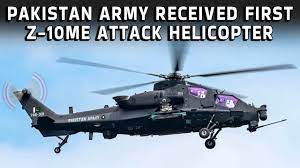
On August 2, 2025, the Pakistan Army inducted the Chinese-manufactured Z-10ME attack helicopter into its aviation wing. The induction ceremony was held at Multan Garrison and presided over by Chief of Army Staff Field Marshal Asim Munir. During the induction ceremony, a firepower demonstration at the Muzaffargarh Field Firing Ranges showcased the Z-10ME’s operational prowess. The helicopter executed precision strikes, demonstrating its ability to engage targets with accuracy and lethality. This event not only marks the first known export of the Z-10ME but also highlights Pakistan’s growing military-industrial ties with China.
Designed for high-altitude operations, precision strike missions, and enhanced survivability in contested environments, the Z-10ME is poised to become the cornerstone of Pakistan’s attack helicopter fleet, supplanting the ageing American-supplied AH-1F Cobra helicopters. The induction of the Z-10ME signifies a significant realignment in Pakistan’s defence procurement strategy, especially in light of the stalled agreements with Western suppliers.
The Z-10ME
The Z-10ME, an export-oriented variant of China’s Z-10 attack helicopter, is designed to deliver precision strikes in both day and night conditions, making it a versatile asset for modern battlefields. It is often referred to as China’s answer to the American AH-64 Apache and the Russian Mi-28 Havoc. Developed by the Changhe Aircraft Industries Corporation (CAIC), the Z-10ME is equipped with cutting-edge technology tailored to meet the demands of complex combat environments.
Pakistan’s variant comes equipped with twin uprated WZ-9G turboshaft engines, providing approximately 1,500 horsepower each, designed to deliver reliable performance in high-altitude, hot-and-dusty operational theaters, a crucial requirement given Pakistan’s mountainous terrain in areas like Khyber Pakhtunkhwa and Balochistan. The service ceiling exceeding 6,000 meters enables operations in regions where older platforms, such as the AH-1F, struggled with payload and manoeuvrability.
The Z-10ME is engineered with an emphasis on all-weather, day-night precision strike capabilities, integrating advanced sensor suites that include millimeter-wave (MMW) radar, electro-optical targeting systems (EOTS), and helmet-mounted displays (HMD) for pilots. Its six external hardpoints allow it to carry a versatile range of munitions, including AKD-10 anti-tank guided missiles (ATGMs), CM-502AG air-to-ground missiles, TY-90 air-to-air missiles, and precision-guided rockets. Additionally, the Z-10ME is compatible with CM-501XA loitering munitions and SW-6 launchable UAVs, offering Pakistan a multi-domain strike capability.
One of the helicopter’s standout survivability features is its infrared-suppressed exhaust system, designed to reduce heat signatures against MANPADS threats. Its sand-filtered engine intakes, composite armour plating, self-defence electronic warfare (EW) suite, and laser warning receivers further enhance its ability to survive in modern contested environments.
Analytical Perspective
Failed Acquisition Efforts: China to the Rescue. The induction of the Z-10ME coincides with Pakistan’s ongoing efforts to modernise its battlefield aviation assets, particularly following obstacles encountered in acquiring Western attack helicopters. Pakistan’s ageing fleet of Bell AH-1F Cobras, initially inducted in the 1980s, has become increasingly obsolete in the face of advanced air defence systems and technologically sophisticated enemy armour. An earlier attempt to procure the Turkish T-129 ATAK helicopters was unsuccessful after the United States withheld export licenses for the CTS800 engines, thereby effectively terminating the deal. Similarly, Pakistan’s persistent requests to acquire additional AH-1Z Viper helicopters from the United States have been impeded due to diplomatic tensions and export restrictions. In this context, China has emerged as a reliable defence partner, offering a capable and adaptable solution through the Z-10ME platform. For Pakistan, this development not only addresses a critical operational deficiency but also aligns with its broader strategic objectives of reducing dependence on Western suppliers, diversifying its defence arsenal, and strengthening defence-industrial collaboration with Beijing.
Pakistan-China Military Cooperation. The induction of the Z-10me signifies a milestone in Pakistan-China military collaboration, which has witnessed substantial growth in recent years. China has become Pakistan’s principal arms supplier, offering a diverse array of platforms, ranging from main battle tanks to naval vessels. The agreement concerning the Z-10ME fortifies this partnership, illustrating China’s confidence in Pakistan as a strategic ally and as a significant market for its defence exports. This collaboration transcends mere equipment procurement. The two nations have engaged in joint military exercises, technology transfers, and co-production agreements, thereby fostering interoperability and enhancing technical expertise. The China-Pakistan Economic Corridor (CPEC), a flagship initiative within China’s Belt and Road Initiative, has further solidified bilateral ties, with security cooperation playing an essential role in protecting CPEC infrastructure. The deployment of the Z-10me could augment Pakistan’s capacity to safeguard these economic assets, particularly in volatile regions such as Balochistan.
Fleet Size and Deployment Plans. While the exact number of helicopters in the initial batch remains undisclosed, defence analysts estimate that Pakistan has received an initial tranche of 4–8 units, with a long-term objective of inducting around 50–60 helicopters. These helicopters are expected to be deployed across strategically vital sectors, including the Eastern front facing India, counter-terrorism operations in the North-West, and rapid deployment roles in the South. Operational deployment is also expected to focus on integration with Pakistan’s Network-Centric Warfare (NCW) infrastructure, enabling seamless coordination with ground forces, surveillance drones, and air defence units.
Capability Enhancement. From a tactical standpoint, the Z-10ME significantly enhances Pakistan’s capability to conduct close air support (CAS), anti-armour missions, and precision strikes against high-value targets in complex terrains. The helicopter’s ability to integrate unmanned systems, loitering munitions, and advanced networked sensors offers the Pakistan Army a level of operational flexibility that its legacy platforms could not provide. With the Z-10ME in its arsenal, the Pakistan Army Aviation Corps can now:-
Deliver precise anti-armour strikes against adversary mechanised forces, particularly relevant in the context of India’s armoured strength along the eastern border.
Provide sustained air support and rapid troop deployment in insurgency-prone areas, enhancing the ability to counter hostile movements swiftly.
Conduct modern reconnaissance and battlefield management missions, thanks to digital communications, long-range optics, and robust sensor suites.
Project airpower into rugged mountainous terrains, where older helicopters struggled to operate at full effectiveness.
Challenges. While the Z-10ME signifies a significant advancement for Pakistan’s army aviation, its integration into the force encounters several challenges. Training pilots and maintenance personnel to operate and maintain this new platform will necessitate substantial investments of time and resources. The Pakistan Army must establish a comprehensive logistics and support infrastructure to guarantee the helicopter’s operational readiness. Furthermore, ensuring interoperability with existing systems and fostering coordination with other branches of the armed forces will be essential to maximising the Z-10ME’s operational effectiveness.
Future Prospects. Looking ahead, the induction of the Z-10me paves the way for enhanced collaboration with China, potentially involving technology transfers and joint development of future platforms. As Pakistan advances its military modernisation efforts, the Z-10ME is expected to play a pivotal role in shaping its army aviation strategy. Its success will depend on Pakistan’s capacity to capitalise on the helicopter’s capabilities while effectively addressing logistical and operational challenges.
Regional Implications. The deployment of the Z-10ME helicopter holds considerable significance for regional security dynamics, particularly within the context of Pakistan’s rivalry with India. The modernisation of the Indian military, exemplified by its procurement of Apache AH-64E attack helicopters from the United States, has incentivised Pakistan to pursue comparable capabilities. While the Z-10ME may not fully match the advanced systems of the Apache in every aspect, it offers a cost-effective alternative with comparable firepower and operational versatility. This acquisition underscores Pakistan’s intention to preserve a credible deterrent against potential adversaries. Furthermore, the deployment of the Z-10me could alter the power balance in South Asia, particularly in the realms of counterinsurgency and border operations. Its capacity to execute precision strikes against terrorist hideouts and to support ground forces in remote regions enhances Pakistan’s operational scope. Nevertheless, this development also raises concerns regarding an arms race in the region, as neighbouring states may respond by accelerating their military modernisation initiatives.
Conclusion
The induction of the Z-10ME attack helicopter into the Pakistan Army signifies a significant advancement in its military modernisation and strategic alliance with China. With its cutting-edge technology, precision strike capabilities, and reliable all-weather performance, the Z-10ME augments Pakistan’s capacity to confront a broad spectrum of security concerns, ranging from counterterrorism initiatives to conventional combat. As an emblem of Pakistan-China collaboration, the helicopter highlights the strengthening defence relations between the two nations. Although challenges persist, the integration of the Z-10me into the Pakistan Army Aviation Corps positions it as a vital asset in safeguarding the nation’s security and sovereignty amid an increasingly complex regional landscape.
Please Add Value to the write-up with your views on the subject.
For regular updates, please register your email here:-
Information and data included in the blog are for educational & non-commercial purposes only and have been carefully adapted, excerpted, or edited from reliable and accurate sources. All copyrighted material belongs to respective owners and is provided only for wider dissemination.
References:-
“Pakistan Army Inducts Chinese Z-10ME Attack Helicopter into Service.” The News International, August 3, 2025.
“Z-10ME Helicopter: Pakistan’s New Aerial Asset.” Dawn, August 3, 2025.
“China’s Z-10ME Makes Export Debut with Pakistan Army.” Global Times, August 2, 2025.
“Pakistan Bolsters Army Aviation with Z-10ME Induction.” Express Tribune, August 3, 2025.
“Technical Specifications and Capabilities of the Z-10ME Attack Helicopter.” Jane’s Defence Weekly, August 2025.
“Pakistan-China Military Cooperation: A Growing Partnership.” Asia-Pacific Defence Reporter, July 2025.
“Field Marshal Asim Munir Presides Over Z-10ME Induction Ceremony.” Pakistan Armed Forces News, August 2, 2025.
Pakistan Today, “COAS stresses civil-military synergy as Army inducts Z-10ME attack helicopters”, Published: August 3, 2025.
The Khyber Mail, “Pakistan Inducts China’s Z-10ME Gunship Helicopters”, Published: August 3, 2025.
Army Recognition, “Pakistan replaces US-made attack helicopters with Chinese Z-10ME to strike faster and farther”, Published: August 3, 2025.