
346: Evolution of IAF : Historic Perspective


Like the role of air power in the last century, the air strategy of the Indian Air Force (IAF) has evolved, reflecting changes in technology, doctrine, and strategic priorities. Some key milestones in the evolution of the air strategy of the IAF are:

Genesis & Early Years. The Indian Air Force was established in British India as an auxiliary air force of the Royal Air Force on 8 Oct 1932, with four Westland Wapiti biplanes and five Indian pilots. The then Royal IAF (RIAF) grew in size during World War II to eventually ten squadrons. In the early years of the IAF, the primary focus was on providing air support to British and Commonwealth ground forces. During World War II, the IAF played a significant role in the Burma campaign by halting the advance of the Japanese army, by providing air cover and support for ground troops. IAF evolved initially in a tactical role primarily to support surface and maritime wars.


Partition in 1947. Indian Air Force (IAF) of independent India came into being with seven squadrons (six fighter squadrons and one transport squadron). By then the IAF had a well-established professional ethos and a reputation to live up to.


The Indo-Pakistani War of 1947. Almost immediately after Independence, India, and Pakistan clashed over the future of Kashmir. On the first day itself on 27 October 1947, an infantry battalion was airlifted from Delhi to Srinagar. IAF thereafter carried out air operations (airlift of troops and supplies, photo-reconnaissance, bombing, strafing, and interdiction), in support of surface forces. The air power usage was tactical and reactionary to emerging situations.


Initial Growth. The decade of the 1950s saw the induction of aircraft and support systems, both in quantity and quality, into the IAF.  During this period, the IAF acquired its first jet fighters and transport aircraft and India began to develop its own indigenous aircraft and weapons systems. IAF began to shift its focus to defending India’s borders and air space, and its capabilities started developing beyond the limited scope of the support role.


1962 war. The ground reality in 1962 was that IAF had relatively potent air power with Western aircraft vis-a-vis old Russian aircraft with China. Despite a clear combat edge, the fighter component of the air force was not used during the Sino-Indian conflict of 1962. There has been a general reluctance to use air power due to the perceived fear of escalation of conflict, which was evident even up to the 1999 Kargil conflict and has changed since the Balakot strike in 2019. However, post-war it was decided to build up the IAF strength to 45 squadrons.


The Indo-Pakistani War of 1965. In 1965, the IAF gave a good account in the skies and in support of ground operations. Air superiority in specific terms was not contested by either side. IAF provided close air support to help the Army stem Pak armoured thrusts. Eventually, the Pakistan offensive was stopped, and the war ceased. After the war, the IAF continued to acquire modern combat aircraft and had 39 combat aircraft squadrons by 1971. It also improved tactics and techniques based on the lessons of the 1965 war. IAF decided the war priorities in sequence to be air defence, support to surface forces, and offensive action to counter or neutralise or counter the enemy air.


The Indo-Pakistani War of 1971. In 1971 the IAF was in much better shape in qualitative and quantitative terms than the PAF. This was the first time the IAF actively engaged the enemy air force. IAF achieved complete air superiority over the eastern wing of Pakistan within a few days. Air operations included close air support and air cover to the Indian Army, independent raid missions against Pakistani Air Force bases, assistance to Indian Navy in maritime operations, offensive attacks on enemy armour, and strategic bombing. IAF played a pivotal role in the victory, leading to the liberation of Bangladesh, and it was probably the high point for the IAF. In this war, IAF carried out all air campaigns in parallel.


Modernization and Expansion (1980-2000): To retain relevance in the evolving operational environment with the induction of modern aircraft and systems in the immediate neighbourhood, in the 1980s and 1990s, the IAF modernised itself with advanced aircraft, weapons, and sensors, and expanded its capabilities to include strategic airlift.


Power Projection Abroad. During 1987-90 IAF was involved with operations in Sri Lanka and Maldives. IAF established an “air bridge” between mainland India and Sri Lanka for the Indian Peace Keeping Force (IPKF). Although combat aircraft were not used, IAF helicopters provided fire support for the army. In 1988, IAF undertook Operation Cactus, wherein, it flew at least a battalion of paratroopers, more than 1000 Miles away to Maldives when rebels attempted to overthrow the government. In these operations, the IAF demonstrated its ability to project forces on short notice.


Kargil Operations 1999. Kargil operations demonstrated once again the impact of air power in the achievement of objectives. The IAF flew hundreds of strike missions supported by combat patrols and escorts. Air power was employed in a very innovative way in high altitudes. The Kargil War forced the IAF to rethink aerial strategies as it attempted to orchestrate an aerial campaign at altitudes of 14,000 to 18,000 feet against well-camouflaged targets.


Balakot Strike. A game-changer shift took place on 26 February 2019, when India decided to use offensive air power by carrying out deep strikes against targets in Pakistan even beyond the Pakistan-occupied Kashmir (PoK). The myth about the use of air power being escalatory in nature was broken.


Strategic Transformation. Originally the IAF had formed purely for the requirements of the British interests of its Empire, its roles and responsibilities were limited to tactical applications of air power. Post-independence also the application of air power continued to remain tactical in nature. It was only in 1971 that the IAF carried out strategic effect-based operations with air campaigns in parallel. In the first decade of this century, IAF inducted airborne early warning, and aerial refuelling capability leading to an increase in strategic reach along with conventional deterrence. The transformation of the Indian Air Force from a tactical air power to a strategic one had begun, and subsequently, the pace picked up for it to become a broad-spectrum air force in future.


Suggestions and value additions are most welcome


For regular updates, please register here

Subscribe


References and credits

To all the online sites and channels.


Disclaimer:

Information and data included in the blog are for educational & non-commercial purposes only and have been carefully adapted, excerpted, or edited from sources deemed reliable and accurate. All copyrighted material belongs to respective owners and is provided only for purposes of wider dissemination.
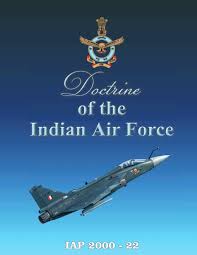
 

345: DOCTRINAL EVOLUTION: IAF


Doctrine. A doctrine is a body of principles, beliefs, statements of policy, and teachings. From a military standpoint, a doctrine defines what a Service is all about, from its structures, war-fighting principles, and the way it conducts business.


Strategy. Strategy refers to the overarching plan or approach that is developed to achieve a particular objective. It involves making decisions about how resources will be allocated, which objectives will be pursued, and what overall approach will be taken. Strategy is typically developed at the highest levels of command and is focused on achieving long-term goals.


Tactics. Tactics, on the other hand, are the specific actions that are taken to execute a strategy. Tactics involve the detailed planning and execution of specific operations or manoeuvres, such as the movement of troops, the use of weapons systems, or the deployment of specialized units. Tactics are typically developed by commanders at the operational or tactical level and are focused on achieving short-term goals.


Strategy vis-à-vis Tactics. In military operations, strategy and tactics are interdependent and must be carefully coordinated to achieve success. A good strategy must take into account the tactical realities on the ground, while effective tactics must be consistent with the overall strategic objectives. Effective coordination between strategic and tactical levels of command is essential for achieving success in military operations.


Continue reading “345: DOCTRINAL EVOLUTION: IAF”

342: IAF’s Fighter Squadron Drawdown And The Mitigation Plan


Article published on Chanakya Forum


“While the IAF has plans to steadily induct locally made fighter jets like Tejas Mk1, Mk2, and AMCA, the need for 114 jets under Multi-Role Fighter Aircraft (MRFA) will remain due to the planned retirement of fighter fleet types like Jaguar, Mirage-2000, and MiG-29 in the next few years.


IAF Chief Air Chief Marshal V R Chaudhari,

(while speaking at Agenda Aajak)


Introduction

The Parliamentary Standing Committee on Defence (SCOD) is a department-related standing committee (DRSC) of selected members of Parliament, constituted by the Parliament of India to provide legislative oversight of the defence policies and decision-making of the Ministry of Defence (MOD). The Committee recently carried out its yearly review and made public its thirty-sixth report. The issue of the dwindling Fighter squadron strength of the Indian Air Force finds a place in the report yet again, triggering a debate on social media and amongst the defence analysts’ community.

The drawdown did not happen overnight, and the issue has not been addressed earlier. The Indian Air Force always has two plans: one to carry out allotted tasks with existing resources, and another for future capability enhancement and development. Slippages in executing capability development mid-term/long-term plans have reduced fighter aircraft strength to around 30 squadrons, down from the authorised strength of about 42 squadrons. Several factors explain the current situation; however, prudence demands that the main focus be regaining the required strength as soon as possible rather than dwelling on past slip-ups.

Aspects Related to Drawdown Mitigation

Authorised Fighter Squadron Strength. It is a truism that an Air Force needs fighter aircraft in adequate numbers to be combat-ready. It is a concern that the Indian Air Force (IAF), the world’s fourth-largest, is deficient in fighter aircraft. Various calculations have been done in the past, and suggestions have been made about the number of fighter aircraft squadrons the IAF requires. Most of the analysts conclude that while the authorised strength is 42 squadrons, the minimum required is 45 squadrons. These figures may rise to 60 in the future as both adversaries continue to grow in operational capability.

Present Status & Future Outlook. Fighter Aircraft have a specified Total Technical Life (TTL) of about 25 years, extendable to perhaps 40 years with judicious mid-life upgrades. Since the acquisition process takes many years, replacements for each fleet must be initiated well before the anticipated phase-out. The IAF is down to about 30 fighter squadrons, and several frontline aircraft in the inventory (including the Jaguars, Mirage-2000, and MIG-29s) will begin phasing out by the end of the decade. A drawdown mitigation plan exists and is reviewed periodically; however, inductions are slower than phase-outs, reducing overall strength.  Two major factors are responsible for the IAF’s plight today: delays in procurement of the Medium Multi-Role Combat Aircraft (MMRCA) and delays in the development and operationalisation of the indigenous fighter aircraft Tejas.

Procurement Dilemma. Almost three decades ago, the proposal was put up for licensed production of Mirage 2000 aircraft by Hindustan Aeronautics Limited (HAL). In 2003, the Defence Acquisition Council (DAC) ruled in favour of a global tendering process. The process to procure 126 MMRCA, with 4.5-generation capabilities, was initiated with the stated intent of inducting the first aircraft by 2010. After inordinate delays, the Rafale aircraft was finally shortlisted in 2012, and in March 2014, HAL and Dassault signed an agreement for licensed production of the Rafale in India. However, protracted contract negotiations and wrangling over timelines and warranty liabilities dragged on interminably. In April 2015, the government decided to acquire 36 Rafale jets from France in a fly-away condition. This decision sounded the death knell of the 126 MMRCA deal. Two squadrons of Rafale aircraft have been inducted; however, the number is far short of the 126 aircraft shortfall perceived more than two decades ago, with the shortfall growing even more in the intervening years. The MoD released an RFI in April 2018 to acquire 114 Multi-Role Fighter Aircraft (MRFA). The procurement process is still in progress.


Indigenous Effort. The LCA program originated in 1983 with the goal of developing a new light combat aircraft to replace the ageing IAF MiG-21 fighter variants.  After much delay, and more than three decades later, the IAF inducted the first squadron in 2016. Of the 40 LCA Mk I aircraft initially ordered by the IAF, 20 are in Initial Operational Clearance (IOC) and 20 in Final Operational Clearance (FOC) status. IAF has also placed an order for  83 LCA Mk 1A aircraft. Work is in progress on the development of the LCA Mk2 and the 5th-generation Advanced Medium Combat Aircraft (AMCA).

Prevailing Challenges. A nation’s military aspirations must align with its socio-economic condition and likely threats. India is a major regional player, and due to its unique geographical location and geo-political environment, India faces a collusive threat (from its two nuclear-powered inimical neighbours) with significant chances of military conflict. Therefore, her national interest dictates that the country be able to deter both her inimical neighbours from any military misadventure, either singly or collusively. Although land borders would remain the main source of the dispute, the security of the IOR region would be a major necessity. The IAF would need to offer options to meet India’s domestic and regional security requirements.


The Air Threat. For a considerable time, the IAF enjoyed an edge in modern combat aircraft over its rivals – the Chinese People’s Liberation Army Air Force (PLAAF) and the Pakistan Air Force (PAF). That no longer holds true. The PLAAF is transforming rapidly, and China is investing heavily in aerospace Research and Development and aircraft manufacture. They have two home-grown stealth fighters (J-20 and J-31). They are also developing the H-20 stealth bomber, along with a host of attack helicopters and Unmanned Aerial Vehicles (UAVs). Pakistan continues to be in collusion with China. The PAF has inducted Chinese J-10 and JF-17 aircraft, and its strength is rising. In such a scenario, it is imperative that the IAF’s fighter squadron strength be quickly rebuilt to the authorised level.

Deterrence Value. The primary aim of defence forces is to provide the necessary deterrence. The minimum deterrence value depends on three major factors: the number of enemies, the enemy’s capabilities, and their attitude. Deterrence includes both military capability and the capacity to wage war. A demonstrated will to use the military as a tool of statecraft is another important factor. In our case, air capability has steadily increased over the years; however, we urgently need to enhance its deterrent value.

Balanced Force. Air Force is a technology-intensive service and requires a continuous infusion of modern cutting-edge equipment and technology. New state-of-the-art equipment is costly, and affordability is an important factor for consideration. IAF generally maintains a reasonable mix of new state-of-the-art, refurbished/upgraded, and old legacy platforms and equipment. IAF also needs to balance quality and quantity.


Multiple Inventories. IAF maintains a very diverse inventory of fighter aircraft and equipment, including Russian Su-30 MKI, MiG-21, and MiG-29; French Rafale and Mirage 2000; British Jaguar; and indigenous LCA. The sources increase further if you include fixed-wing combat support aircraft, helicopters, and unmanned platforms. So many fighter types create a training, logistics, and maintenance nightmare; however, they also offer advantages.

Self-Reliance. The recent Ukraine conflict has reinforced the lesson that self-reliance is an absolute necessity when it comes to military power. The Indian Air Force firmly believes that indigenisation reduces dependence on foreign sources, supports the nation’s economic growth, and has long encouraged and supported it. The IAF has operated indigenously built aircraft and aircraft built in India under license production, giving impetus to the indigenous industry. It includes the Induction of Ajeet and HF-24 Marut aircraft in the past, and support for and induction of indigenous LCA (Tejas) and its variants.

Mitigation Plan. The drawdown mitigation plan essentially includes indigenous aircraft induction and speedy procurement of MRFA aircraft. It includes 4 squadrons of Tejas Mk1A already on order (likely to be built by 2025-27), 6 squadrons of Tejas Mark 2 aircraft (likely to be built by 2032), 6 squadrons of AMCA (likely to be built by 2035-36), and 6 squadrons (114 aircraft) of MRCA.

Timelines.   The draw-down, arrest, and reversal of the trend depend essentially on the indigenous development and production timelines and urgency displayed in the procurement of MRFA. Based on past experience, the stipulated timelines seem highly optimistic unless various components of the ecosystem can coordinate and step up deliveries.

Way Ahead

The question being debated is when the IAF would reach its authorised fighter aircraft strength. Several estimates have been made, but one thing is certain: it won’t be possible by 2030, and at best there could be a reversal of the trend and a marginal increase in numbers. Later, around 2035, new inductions will start to be offset by the phase-out of older aircraft. Recommendations for the way ahead are as follows:-

  • The time for “Gun vs Butter” is over, and prevailing circumstances demand some hard decisions about military spending.
  • A wholehearted and all-around effort is required to meet the challenge.
  • While efforts are underway to meet the target of authorised strength, a detailed study is needed to determine actual, realistic requirements, taking present and future circumstances and challenges into account.
  • Self-reliance is an absolute necessity and needs to be supported and achieved.
  • The minimum deterrence value needs to be stipulated and maintained while supporting indigenisation (including procurement from abroad, if required).
  • A balance needs to be maintained between technology levels (a reasonable mix of new, upgraded, and old vintage) and the quality and quantity of platforms.
  • The development process of indigenous Tejas Mk2 and AMCA needs to be sped up.
  • HAL and DPSUs need to step up production capability.
  • The procurement of 114 MFRA needs to be hastened up.


References:–


  1. https://loksabhadocs.nic.in/lsscommittee/Defence/17_Defence_36.pdf.


  1. https://theprint.in/defence/even-after-rafale-and-other-inductions-iaf-will-have-only-half-of-42-squadron-target-by-2042/184020/


  1. https://airpowerasia.com/2020/04/27/iaf-growth-and-indigenization-challenges/


  1. https://www.financialexpress.com/defence/iaf-to-vault-multi-role-fighter-aircraft-program-under-buy-global-make-india-114-aircraft-in-the-pipeline-intact/2548146/


  1. https://carnegieendowment.org/2016/03/28/troubles-they-come-in-battalions-manifold-travails-of-indian-air-force-pub-63123


  1. https://idrw.org/indigenous-fighters-cant-fill-in-on-behalf-of-mrfa-iaf-chief/


  1. http://www.indiandefencereview.com/news/rebuilding-the-combat-fleet-of-the-iaf-to-42-squadrons/


  1. http://www.indiandefencereview.com/news/strength-lies-in-numbers-rebuilding-the-combat-fleet-of-the-iaf/


  1. https://www.thehindu.com/news/national/explained-the-dwindling-fighter-strength-of-the-iaf/article65711688.ece


  1. https://euro-sd.com/2023/03/articles/29983/the-indian-air-forces-falling-squadron-strength/


  1. http://www.indiandefencereview.com/idr-issues/?issue_id=236

Suggestions and value additions are most welcome


For regular updates, please register here

Subscribe


References and credits

To all the online sites and channels.


Disclaimer:

Information and data included in the blog are for educational & non-commercial purposes only and have been carefully adapted, excerpted, or edited from sources deemed reliable and accurate. All copyrighted material belongs to respective owners and is provided only for purposes of wider dissemination.

English हिंदी