Operation Sindoor was a multi-domain, mostly non-contact military operation India carried out in the early hours of 7 May 2025. In the first phase, India carried out attacks on nine terrorist facilities associated with groups including Lashkar-e-Taiba and Jaish-e-Mohammed in Pakistan and in illegal Pakistan-occupied Kashmir. When the situation escalated, phase two was carried out with strikes being launched at military targets in Pakistan. Hostilities continued for about 88 hours before a ceasefire agreement was reached on 10 May.
Former CDS Gen Anil Chauhan (retired) delivered a talk on “Operation Sindoor and its Aftermath” on 25 August 2026. This talk is significant from an analytical perspective.
Analytical Perspective and Takeaways
Military power serves as an instrument of political policy; the armed forces set their own military objectives based on the political aim. The military plans accordingly. This matters because it shows that Sindoor was designed as a limited, controlled operation rather than an open-ended war.
Political direction and freedom of action. The clear political directive was to send an unambiguous message that India will not tolerate cross-border terrorism. Therefore, the directive was that the action should be unthinkable, with no political pressure for immediate action, and carried out without failure and with suitable evidence. Clear intent and operational autonomy are ideal for the military.
Tactical Shift and evolution of India’s retaliatory doctrines (to preserve surprise and prevent operational predictability). Unlike the land route used post-Uri (2016) or the high-altitude/large-force air engagements used post-Pulwama/Balakot (2019), Operation Sindoor employed a “third option”: leveraging the lower airspace. Low-altitude operations kept the conflict threshold controlled, maximised surprise, and delivered high mission assurance without triggering immediate full-scale escalation. It was not about what weapons India possessed. It was about how those weapons were employed against the adversary’s surveillance and air-defence architecture. In military terms, this illustrates the importance of operational creativity over simply having superior hardware.
Redefining the area below the nuclear threshold. The operation has shown that India is capable of carrying out precise conventional strikes at targeted terrorist infrastructure within a carefully controlled time frame which remains below the nuclear escalation threshold, thus countering the ‘stability-instability paradox’ which adversaries rely upon.
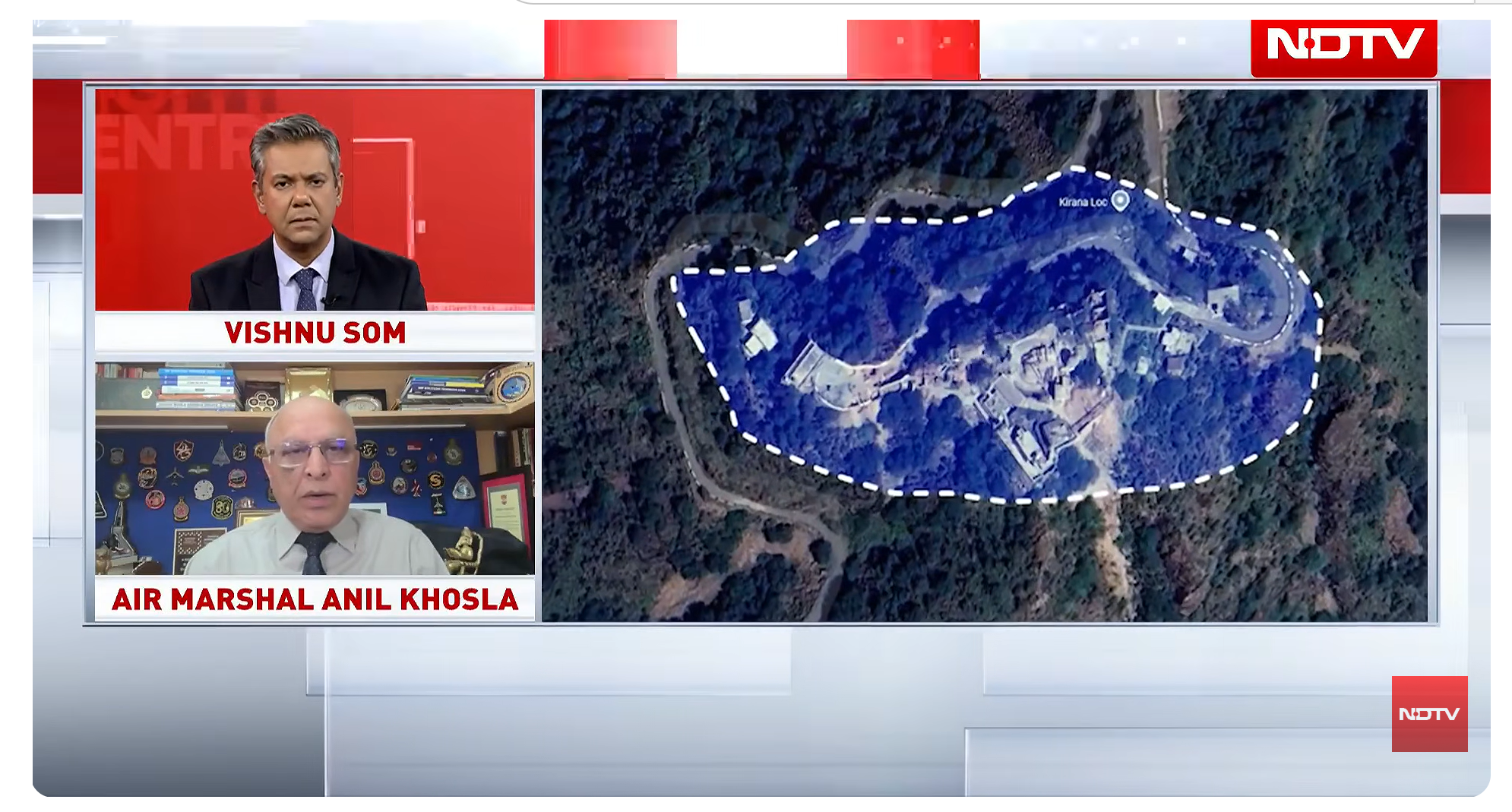
The fact that the strike hit the Kirana Hills has important strategic implications since it was not intended to target Pakistan’s nuclear infrastructure; if an intentional strike had been made on a nuclear-related facility, it might have been seen as an attempt to attack Pakistan’s strategic deterrent and would therefore have led to a very different escalation scenario.
Skardu as a possible target. Skardu was a possible target but had to be changed to Bholari due to weather constraints. This shows India had multiple military options, rather than a single predetermined strike package. It also demonstrates the resilience and flexibility of IAF capability and planning.
On 10 May 2025, Pakistan pleaded for a ceasefire. India responded in its own time. This indicates that the aim was not merely to retaliate and jump at the first diplomatic opportunity. Instead, India chose to achieve its military objectives before agreeing to end the operations. This is an ideal example of aligning the military end-state with the political objectives.
Preparedness creates political choices. Peacetime shapes the options available during a crisis. If a military lacks long-range precision weapons, drones, ISR, electronic warfare, air defence and integration, political leaders have fewer options when a crisis occurs. Therefore, Sindoor resulted from years of military modernisation and capability development.
Multi-Domain Operation. It was India’s genuine multi-domain operation, involving the Army, Navy, and Air Force, along with cyber and information-warfare elements. The integration achieved during the operation validated the direction India had taken toward jointness.
Operation Sindoor was a controlled demonstration of India’s ability to calibrate force and capability to punish aggression without necessarily allowing every confrontation to become a full-scale war. The major lesson is that modern warfare is increasingly about precision, information, speed, networking and decision superiority rather than simply manpower or territorial capture.
Pakistan’s post-operation adjustments include reorganising its military command (by setting up a new CDF post) and seeking security agreements (the Mecca joint defence agreement between Pakistan, Saudi Arabia and Turkey), showing it is changing its approach.
Strategic Implications
The above analysis underscores a permanent shift in India’s strategic doctrine. It indicates a pairing of firm political intent with evolving, technologically driven military execution. By adapting tactics every time (i.e. from ground raids to high-altitude strikes and now low-altitude/loitering assets), India maintains operational unpredictability while establishing clear redlines against cross-border terrorism.
Operation Sindoor is still going on. Although the official line since 10 May 2025 has been that a ceasefire or pause was agreed upon after Pakistan asked for it, the operation has not officially ended. By keeping it going in this way, India indicates that it sees its position following the Pahalgam incident (the “new red line”, the change from a policy of deterrence to one of declaring a willingness to take direct action) as a continuing stance, not as a single, one-off punitive operation which has now finished.
Discussed these aspects with Vishnu Som of NDTV on the Program “Left Right and Centre”.
Link to the discussion:-
Please Add Value to the write-up with your views on the subject.
For regular updates, please register your email here:-
Information and data included in the blog are for educational & non-commercial purposes only and have been carefully adapted, excerpted, or edited from reliable and accurate sources. All copyrighted material belongs to the respective owners and is provided only for wider dissemination.
My Article published on “The EurasianTimes” website on 17 Jun 25.
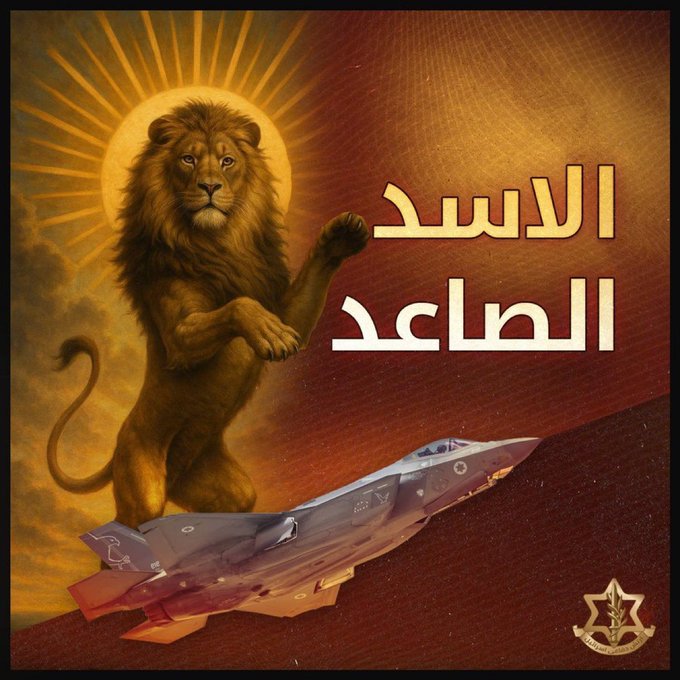
On June 13, 2025, Israel launched Operation Rising Lion, a bold and sophisticated military campaign targeting Iran’s nuclear facilities, missile bases, and key military personnel. The operation, which struck sites like Natanz, Fordow, and Arak, and killed high-ranking figures such as IRGC Commander-in-Chief Hossein Salami, was a direct application of the Begin Doctrine—Israel’s strategic policy of pre-emptively denying adversaries the ability to acquire nuclear weapons. Named after Prime Minister Menachem Begin, who authorised the 1981 strike on Iraq’s Osirak reactor, the doctrine has shaped Israel’s approach to regional threats for over four decades. This article examines Operation Rising Lion as a continuation of the Begin Doctrine, tracing its evolution from Osirak to Natanz, analysing its strategic execution, and exploring its implications for Israel’s security and regional stability.
The Begin Doctrine
The Begin Doctrine is a cornerstone of Israeli strategic policy, centered on the pre-emptive prevention of adversaries, particularly in the Middle East, from acquiring nuclear weapons that could pose an existential threat to Israel. Named after former Israeli Prime Minister Menachem Begin, the doctrine emerged following Israel’s airstrike on Iraq’s Osirak nuclear reactor on June 7, 1981, known as Operation Opera. It reflects Israel’s commitment to ensuring its survival in a region surrounded by hostile states, some of which have historically pursued nuclear capabilities.
Key Principles of the Begin Doctrine include the following:-
Pre-emptive Action. Israel reserves the right to use military force to prevent any hostile state or non-state actor from developing nuclear weapons.
Existential Threat Mitigation. The doctrine prioritises neutralising capabilities that could enable adversaries to produce weapons of mass destruction (WMDs), notably nuclear weapons.
Unilateral Action. Israel will act independently if necessary, even without international approval or coordination, to safeguard its security.
Deterrence and Regional Dominance. By demonstrating its willingness and ability to strike pre-emptively, Israel reinforces its military superiority and deters adversaries. Historical Context and Application.
Historical Precedents: Osirak and Orchard
Operation Opera (1981). On June 7, 1981, eight Israeli F-16s, escorted by F-15s, flew 1,100 kilometers to destroy Iraq’s Osirak reactor, a French-built facility suspected of producing plutonium for nuclear weapons. The strike was meticulously planned, relying on intelligence from Mossad and defectors. Despite international outrage, including a UN Security Council resolution condemning Israel, the operation delayed Iraq’s nuclear program significantly. It established the Begin Doctrine as a proactive strategy, emphasising Israel’s willingness to act alone to ensure its survival.
Operation Orchard (2007). On September 6, 2007, Israel struck Syria’s Al-Kibar nuclear reactor in Deir ez-Zor, believed to be a North Korean-designed plutonium facility. The operation, kept secret for months, involved precision airstrikes by F-16s and F-15s, supported by cyberwarfare and Mossad intelligence. Unlike Osirak, Orchard faced minimal international backlash, partly due to Syria’s secrecy and the operation’s surgical nature. It reinforced the Begin Doctrine’s adaptability, incorporating advanced technology and covert tactics to neutralise emerging threats.
Both operations demonstrated Israel’s ability to combine intelligence, air superiority, and strategic surprise, setting the stage for Operation Rising Lion’s complexity.
Operation Rising Lion: A Modern Application
Launched on June 13, 2025, Operation Rising Lion targeted Iran’s nuclear and military infrastructure, reflecting the Begin Doctrine’s evolution in scale, technology, and geopolitical context. Iran’s nuclear program, by 2025, posed an unprecedented challenge, with the International Atomic Energy Agency (IAEA) reporting enough enriched uranium for up to 15 nuclear bombs. Prime Minister Benjamin Netanyahu framed the operation as a “12th-hour” necessity to prevent a “nuclear holocaust,” echoing Begin’s rhetoric from 1981.
Strategic Execution. Operation Rising Lion was a multi-domain assault, integrating air, cyber, and covert operations. Over 200 Israeli aircraft, including F-35s, struck key nuclear sites, the Natanz Enrichment Complex, the Fordow Fuel Enrichment Plant, the Arak Heavy Water Facility and the Isfahan Uranium Conversion Facility. Missile bases like Asfajaabad, IRGC command centers, and air defence systems were hit. Mossad-activated drones and smuggled munitions neutralised launchers and radars, ensuring air superiority. The operation killed key figures, including IRGC leaders Hossein Salami, Mohammad Bagheri, and Amir Ali Hajizadeh, and nuclear scientists like Fereydoon Abbasi and Mohammad Mehdi Tehranchi, crippling Iran’s command and expertise. Mossad’s covert operations, including a secret drone base near Tehran and disinformation about diplomatic rifts, misled Iran’s leadership into underestimating the attack.
Scale and Impact. Operation Rising Lion was unprecedented in scope, targeting over 100 sites with 330 munitions. Iran reported 78–128 deaths, including 20 children, and over 320 injuries, particularly in Tehran’s residential areas, sparking international criticism. The IAEA confirmed no radiation leaks, indicating precise strikes. The operation delayed Iran’s nuclear program, damaged its military infrastructure, and disrupted its chain of command, reinforcing Israel’s regional dominance.
Iran’s Response: Operation True Promise III. Iran’s Supreme Leader Ayatollah Ali Khamenei vowed “severe punishment,” describing Israel’s actions as a “doomed aggression based on a grave miscalculation.” Iran retaliated with Operation True Promise III (Persian: Va’de-ye Sādeq III), which began on the evening of June 13, 2025, approximately 18 hours after Israel’s initial strikes. The Islamic Revolutionary Guard Corps (IRGC) led the operation, supported by Iran’s armed forces and possibly proxy groups like Hezbollah, the Houthis, and the Islamic Resistance in Iraq. Iran fired “dozens” to “hundreds” of ballistic missiles and drones, targeting Israeli military centres, airbases, and strategic sites, including the Kirya military headquarters in Tel Aviv. Specific targets included Nevatim, Hatzerim, and Tel Nof airbases, which house advanced Israeli fighter jets like F-35s and F-15s. The operation involved waves of attacks, with ballistic missiles and kamikaze drones aimed at overwhelming Israel’s multilayered air defences, including the Iron Dome and Arrow missile defence systems. While Israel’s Iron Dome and Arrow systems, aided by U.S., British, and French forces, intercepted most projectiles, some strikes caused damage in Tel Aviv, injuring 21–95 people. Iran’s Supreme Leader, Ayatollah Ali Khamenei, called the strikes a “crushing response”.
Analytical Perspectives
Continuity and Evolution of the Begin Doctrine. Operation Rising Lion reflects the Begin Doctrine’s continuity and evolution. Like Osirak and Orchard, Rising Lion was a unilateral, preemptive strike to deny an adversary nuclear capability. Israel acted without U.S. involvement, prioritising national security over international approval, and justified the operation as existential. The operation’s scale—over 200 aircraft and 100 targets—dwarfs previous strikes. It integrated advanced technologies (AI-assisted targeting, drones, cyberwarfare) and Mossad’s covert infrastructure, showcasing Israel’s technological edge. Unlike Osirak’s single-target focus or Orchard’s secrecy, Rising Lion was a broad assault on nuclear, military, and leadership targets, reflecting the complexity of Iran’s threat.
Strategic and Ethical Challenges. The Begin Doctrine’s application in Operation Rising Lion raises significant issues.
Strategic Success. The operation delayed Iran’s nuclear program, possibly by years, and weakened its military leadership and missile capabilities. It reinforced Israel’s deterrence, signalling to adversaries like Hezbollah and the Houthis that escalation would be costly.
Escalation Risks. Though limited, Iran’s Operation True Promise III underscores the potential for a broader conflict. The Houthis’ missile strike on Hebron and possible proxy involvement from Iraq and Syria highlight the regional ripple effects.
Ethical Concerns. Civilian casualties, including 20 children in Tehran, drew condemnation from the UN, Saudi Arabia, and Russia. Critics argue the doctrine’s preemptive nature risks disproportionate harm, complicating Israel’s international standing.
Limitations. Deeply buried facilities like Fordow remain resistant to conventional strikes, suggesting the doctrine’s reliance on airpower may need adaptation for future threats.
Geopolitical Impact. Operation Rising Lion has transformed the Middle East’s strategic landscape. By eliminating key Iranian leaders and damaging critical infrastructure, Israel has significantly weakened Iran’s regional influence, though its proxy groups, such as Hezbollah and the Houthis, remain active. Global oil prices have surged 8% amid fears of supply disruptions, sending ripples through international markets. The United States backed Israel’s defensive measures but called for restraint, while Russia offered to mediate and Saudi Arabia adopted a cautious approach, highlighting the region’s complex dynamics. The breakdown of scheduled U.S.-Iran nuclear talks in Oman underscores the diplomatic fallout of Israel’s Begin Doctrine.
Israel’s Strategic Blind Spot: Pakistan’s Nuclear Program. Israel’s Begin Doctrine prioritises pre-emptive strikes against adversaries developing nuclear weapons, yet Pakistan’s nuclear program, successful by 1998, never prompted Israeli action. This stems from geopolitical and strategic factors. Unlike Iraq, Syria, or Iran, Pakistan lies outside Israel’s immediate Middle Eastern sphere of influence, reducing its perceived threat. Pakistan’s nuclear ambitions were primarily driven by rivalry with India, not hostility toward Israel. Diplomatic relations, though limited, existed indirectly, and Pakistan’s leadership, including Zulfikar Ali Bhutto and Pervez Musharraf, avoided framing Israel as a primary enemy. Israel’s intelligence, via Mossad, likely assessed Pakistan’s program as India-focused, not aimed at Tel Aviv. Additionally, U.S. influence, a mutual ally, restrained escalation, as Pakistan’s nuclear development was tacitly accepted to counter India. Thus, Israel conserved resources for proximate threats like Iran, aligning with the Begin Doctrine’s focus on existential risks.
Conclusion
From Osirak to Natanz, the Begin Doctrine has guided Israel’s strategy to prevent nuclear proliferation among its adversaries. With its unprecedented scale and technological sophistication, Operation Rising Lion represents the doctrine’s most ambitious application yet. By targeting Iran’s nuclear facilities, missile bases, and leadership, Israel reaffirmed its commitment to existential security, even at the cost of regional escalation and international criticism. However, the operation’s success in delaying Iran’s nuclear ambitions comes with challenges: fortified sites like Fordow, retaliatory risks, and ethical questions about civilian casualties. As of this date, the Israel-Iran conflict remains volatile, with the Begin Doctrine both a shield for Israel’s survival and a catalyst for regional tensions. The doctrine’s future will depend on Israel’s ability to adapt its pre-emptive strategy to an increasingly complex geopolitical landscape.
Please Add Value to the write-up with your views on the subject.
Information and data included in the blog are for educational & non-commercial purposes only and have been carefully adapted, excerpted, or edited from reliable and accurate sources. All copyrighted material belongs to respective owners and is provided only for wider dissemination.
References:-
International Atomic Energy Agency. (2025, June 12). Report on Iran’s Nuclear Program Compliance. Vienna: IAEA.
United Nations. (2025, June 13). Statement by Secretary-General António Guterres on Israeli Airstrikes in Iran. New York: United Nations Press Office.
Al Jazeera. (2025, June 14). “Iran Vows ‘Harsh Response’ After Israeli Strikes on Nuclear Sites.” Al Jazeera English.
BBC News. (2025, June 13). “Israel Launches Operation Rising Lion: What We Know About the Strikes on Iran.” BBC World Service.
Reuters. (2025, June 15). “Oil Prices Surge as Israel-Iran Tensions Escalate After Operation Rising Lion.” Reuters.
The Jerusalem Post. (2025, June 13). “Netanyahu: Operation Rising Lion Prevented Nuclear Holocaust.” The Jerusalem Post.
The New York Times. (2025, June 14). “Mossad’s Covert Role in Israel’s Strike on Iran Revealed.” The New York Times.
Center for Strategic and International Studies. (2025, June 14). Operation Rising Lion: Assessing Israel’s Strike on Iran’s Nuclear Program. Washington, DC: CSIS.
Institute for National Security Studies. (2025, June 15). The Geopolitical Fallout of Operation Rising Lion. Tel Aviv: INSS.
Israel Defence Forces. (2025, June 13). Official Statement on Operation Rising Lion. Jerusalem: IDF Press Office.
U.S. Department of State. (2025, June 13). Press Briefing by Secretary of State Marco Rubio on Israel-Iran Conflict. Washington, DC: U.S. Department of State.
Bergman, Ronen. (2018). Rise and Kill First: The Secret History of Israel’s Targeted Assassinations. New York: Random House.
Pollack, Kenneth M. (2021). The Persian Puzzle: Iran’s Strategic Challenge. Washington, DC: Brookings Institution Press.
My article published on the EurasianTimes Website on 26 Dec 24.
PAKTIKA UNDER FIRE: PAKISTANI AIR STRIKES IN AFGHANISTAN
In a recent escalation of cross-border tensions, Pakistani air strikes in Afghanistan’s Paktika province have resulted in the deaths of 46 individuals, highlighting the ongoing volatility of the region. These strikes, which targeted areas suspected of harbouring militants, have sparked outrage and condemnation, both within Afghanistan and from the international community. The attack underscores the fragile security situation along the Afghanistan-Pakistan border and the broader geopolitical tensions between the two countries.
The situation is fraught with complexity, involving not only the two neighbouring states but also international actors such as the United States, China, and the Taliban, which has recently regained control of Afghanistan. The United States, a key player in the War on Terror, has a vested interest in the stability of the region. China also closely monitors the situation with its Belt and Road Initiative and economic investments in the region. The Taliban’s resurgence and its relationship with Pakistan further complicate the geopolitical landscape. Understanding the motivations behind these air strikes, the implications for regional security, and the broader geopolitical consequences is essential for assessing the future of Afghanistan-Pakistan relations and the overall stability of the South Asian region.
Historical Context of Afghan-Pakistani Tensions.
The history of Afghan-Pakistani relations, deeply rooted in the colonial past, has been marked by frequent tension, often arising from political, territorial, and security concerns. The division of Afghanistan and Pakistan following the partition of British India in 1947 created lasting complications, particularly concerning the Durand Line, the controversial border that separates the two nations. Afghanistan was the only country that initially refused to recognise this border, leading to disputes that have lingered ever since. These disputes have significantly shaped the region’s geopolitical dynamics and continue influencing contemporary events.
In recent decades, the issue of militancy and cross-border insurgency has exacerbated tensions. Pakistan has been accused of using its territory as a haven for Afghan militants, particularly during the Soviet-Afghan War (1979-1989), when Pakistan supported Afghan mujahideen factions in their fight against Soviet forces. This support led to the rise of groups such as the Taliban, which took control of Afghanistan in the 1990s and provided a safe haven for terrorist organisations, including al-Qaeda.
The post-9/11 era marked a shift in the relationship between Afghanistan and Pakistan. After the U.S. invasion of Afghanistan in 2001, Pakistan became a crucial ally in the War on Terror. Still, at the same time, it continued to support certain militant groups as part of its strategy to counter Indian influence in Afghanistan. This double-dealing led to accusations that Pakistan is playing a double game, supporting insurgent groups while pretending to be a partner in counterterrorism efforts.
Boomerang Effect. Pakistan’s Inter-Services Intelligence (ISI) supported the formation of the Taliban in the 1990s, seeing them as a potential ally to ensure a friendly government in Afghanistan, which would provide Pakistan with strategic depth against India. While the Taliban still maintains some ties with Pakistan, there have been periods of tension. Taliban-linked groups, such as the Tehrik-i-Taliban Pakistan (TTP), have turned against the Pakistani state, conducting attacks within Pakistan. The TTP aims to overthrow the Pakistani government and establish a stricter interpretation of Islamic law, which has led to significant violence and conflict within Pakistan itself.
The Geography and Strategic Importance of Paktika Province
Paktika is one of Afghanistan’s eastern provinces, bordering Pakistan’s Khyber Pakhtunkhwa and Balochistan provinces. This region has been a hotspot for insurgent activity for years, with various militant groups, including the Pakistani Taliban (Tehrik-i-Taliban Pakistan, or TTP), using the rugged terrain to hide from Afghan and Pakistani forces. The province is strategically important due to its proximity to the Durand Line, making it an ideal location for militants to cross between Afghanistan and Pakistan.
The geography of Paktika also makes it difficult for both the Afghan government and Pakistan to secure the region. The mountainous and forested landscape provides natural cover for insurgents, while the porous border allows for the easy movement of fighters and weapons between the two countries. Over the years, various militant groups have exploited these conditions to launch attacks across the border.
Pakistani Narrative and Possible Reasons.
Pakistan’s air strikes in Afghanistan, particularly in Paktika, are typically framed as responses to cross-border attacks by militants. These strikes are part of Pakistan’s broader counterterrorism strategy, aimed at dismantling militant groups operating in the border region. Pakistan has long accused Afghanistan of harbouring insurgents who use Afghan soil to launch attacks on Pakistani targets, particularly in the tribal areas and Khyber Pakhtunkhwa province. In response, Pakistan has argued that it has the right to conduct air strikes and military operations on Afghan territory to safeguard its national security.
Cross-Border Militancy. The presence of Pakistan-based militant groups in Afghanistan, especially the TTP, is one of the primary reasons for these air strikes. The TTP has been involved in numerous attacks on Pakistani military and civilian targets, leading Pakistan to launch retaliatory strikes against their hideouts in Paktika and other Afghan provinces. These groups are often blamed for destabilising the region, and Pakistan’s military views these air strikes as a necessary measure to contain the threat.
Out of Control Region. Afghanistan’s inability to fully control its territory, particularly in the eastern and southern regions, has been a significant factor in the escalation of violence. The Taliban’s resurgence in Afghanistan following the U.S. withdrawal in 2021 has further exacerbated the situation. Pakistan perceives the Afghan as incapable of effectively dealing with the cross-border insurgency, legitimising unilateral military action.
Pakistan’s Desire for Regional Influence. Pakistan’s military and intelligence agencies have long had a strategic interest in maintaining influence over Afghanistan. By launching air strikes, Pakistan aims to retain control over militant groups operating along the border and to prevent any spillover of instability that could undermine its security or its strategic objectives in the region.
Domestic Political Considerations. Pakistan’s military leadership is often under pressure from domestic constituencies, particularly in the Khyber Pakhtunkhwa and Balochistan regions, to take decisive action against militants. Air strikes in Afghanistan serve as a signal to domestic audiences that Pakistan is committed to protecting its sovereignty and securing its borders while also sending a message to Afghanistan and the international community about Pakistan’s resolve to fight terrorism.
Impact on Afghanistan and Regional Stability
Pakistani air strikes in Afghanistan, especially in Paktika, have had significant implications for both Afghan civilians and the broader regional stability. The loss of civilian lives and the disruption of daily life in the region due to these strikes cannot be overstated.
Civilian Casualties and Displacement. One of the most immediate consequences of air strikes is the toll on Afghan civilians. These strikes, while aimed at militant targets, often result in civilian casualties and the displacement of local populations. This exacerbates the already dire humanitarian situation in Afghanistan, which is dealing with the aftermath of decades of war, economic collapse, and the resurgence of the Taliban.
Sovereignty Concerns. Afghanistan has repeatedly protested Pakistani air strikes, viewing them as violations of its sovereignty. Afghanistan’s government (under both the previous Western-backed administration and the current Taliban regime) has argued that such strikes undermine the principle of territorial integrity and violate international law. The strikes further strain Afghanistan-Pakistan relations, which are already fraught with mistrust and historical grievances.
Taliban’s Response. The Taliban’s return to power in Afghanistan in 2021 has added a new dimension to the conflict. While the Taliban has historically maintained close ties with Pakistan, its control over Afghan territory has not led to a reduction in cross-border militancy. The Taliban’s reluctance or inability to clamp down on Pakistani militants operating from Afghan soil has prompted Pakistan to continue its air strikes. However, this has created a delicate situation where the Taliban must balance its relationship with Pakistan while dealing with growing public discontent over the air strikes.
Regional Security and Geopolitical Dynamics. The air strikes also have broader regional implications. Pakistan’s actions are viewed with concern by India, which has long been wary of Pakistan’s influence over Afghanistan and the destabilising effect of cross-border militancy. India has consistently accused Pakistan of using Afghan-based militant groups to advance its strategic interests in the region. Furthermore, the involvement of external actors such as the United States, which has interests in Afghanistan and is concerned about Pakistan’s role in the area, complicates the situation. These air strikes may lead to greater instability in an already volatile region, affecting the prospects for peace and development in both Afghanistan and Pakistan.
Conclusion. Pakistani air strikes in Afghanistan’s Paktika province represent a complex and multifaceted issue in South Asian geopolitics. These strikes are driven by security concerns, political motivations, and strategic interests, with significant implications for Afghanistan’s sovereignty, civilian population, and regional stability. While Pakistan justifies its actions as a necessary response to cross-border militancy, the long-term consequences of these strikes may not only strain Afghanistan-Pakistan relations further but also exacerbate the instability in the broader region.
BBC News. “Pakistan Air Strikes in Afghanistan Kill 46: A Critical Overview.” BBC, December 2023.
Al Jazeera. “Pakistan and Afghanistan’s Border Tensions: An Analysis of the 2023 Air Strikes.” Al Jazeera, December 2023.
Mansoor, Safdar. “The Durand Line: A Historical Perspective on Pakistan-Afghanistan Relations.” Asian Affairs, vol. 38, no. 3, 2007, pp. 405-421.
Johnson, Thomas H., and M. Chris Mason. “The Taliban’s War with Pakistan: A Strategic Overview.” Middle East Policy, vol. 17, no. 4, 2010, pp. 56-70.
Tanner, Stephen. “Pakistan’s Military Strategy and Its Afghan Frontier.” International Security Studies Review, vol. 32, no. 2, 2014, pp. 99-113.
Carnegie Endowment for International Peace. “Pakistan’s Afghan Policy: Challenges and Opportunities.” Carnegie Report, 2021.
Gul, Imtiaz. The Most Dangerous Place: Pakistan’s Lawless Frontier. Penguin Books, 2010.
Khan, Mehmood. Pakistan’s Counterterrorism Strategy: A Comprehensive Approach. Palgrave Macmillan, 2016.
United Nations Assistance Mission in Afghanistan (UNAMA). “Afghanistan: Protection of Civilians in Armed Conflict.” UNAMA Annual Report, 2023.
Disclaimer:
Information and data included in the blog are for educational & non-commercial purposes only and have been carefully adapted, excerpted, or edited from reliable and accurate sources. All copyrighted material belongs to respective owners and is provided only for wider dissemination.