
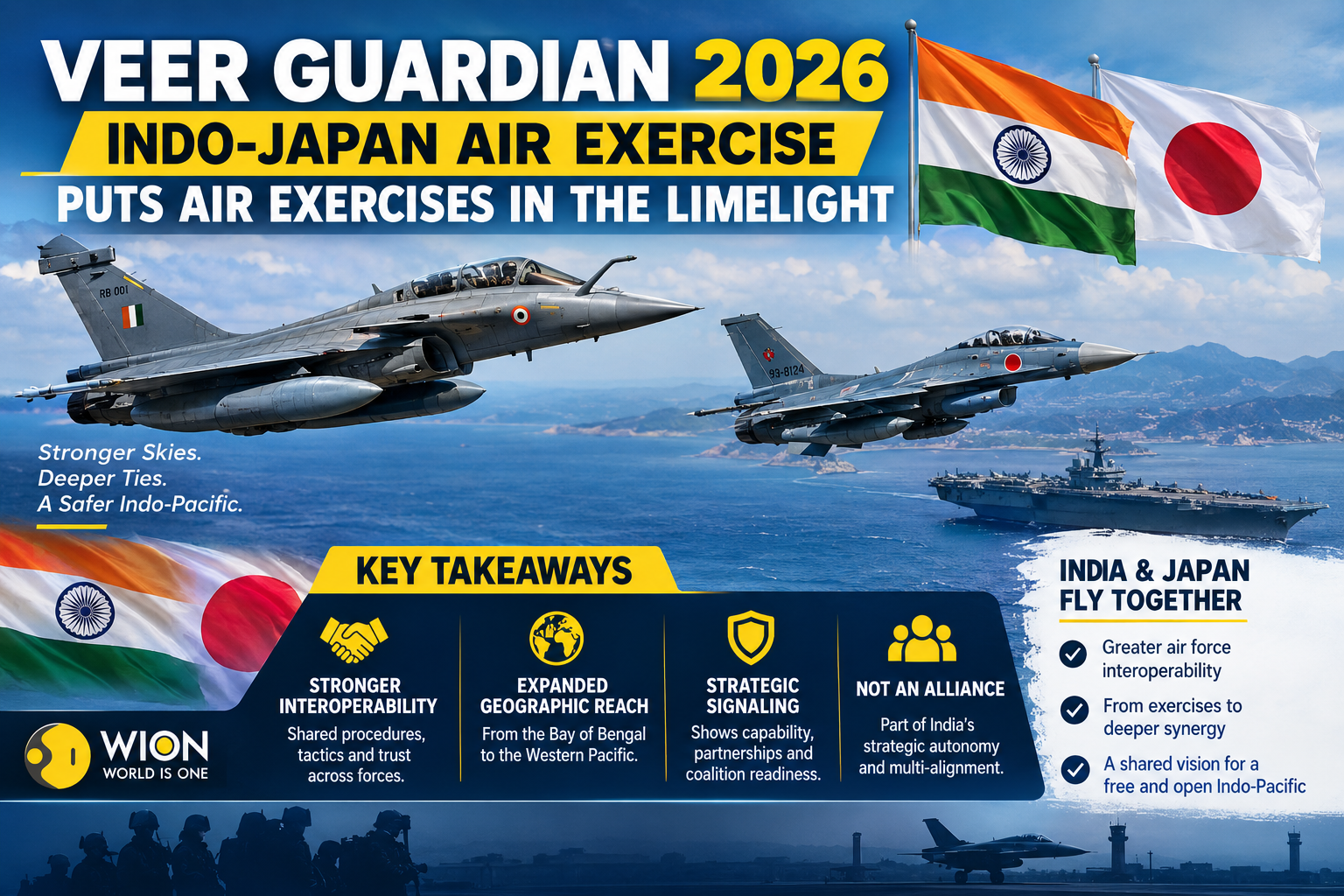
857: Veer Guardian 2026 Brings Air Exercises in the Limelight


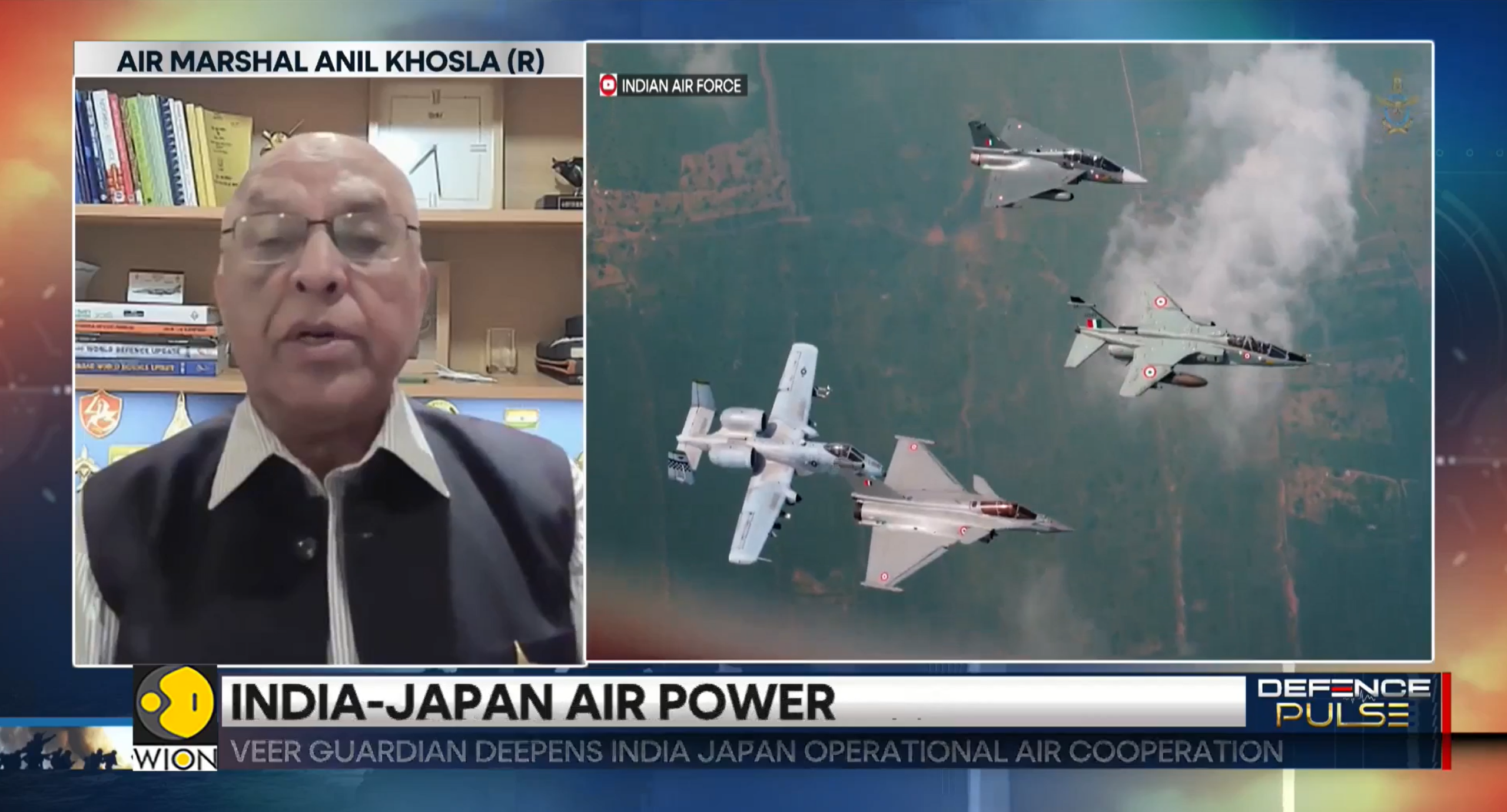
Discussion with Shivan Chanana on the “DefencePulse” program of WION TV  

Talked about  “Beyond Exercise Veer Guardian”:  Japanese fighter operates from Indian soil for the first time. Fighters fly together: India & Japan build greater air force interoperability. India and Japan are moving from air exercises to deeper synergy.


Link to the WION post:-


Inputs to the questionnaire from a journalist on exercise.


  1. What’s driving the jump in India’s exercise tempo in the last 12–18 months?

I don’t think there’s really a “jump” in the strict sense. India has been steadily engaging in bilateral and multilateral exercises with a wide range of countries as part of its defence cooperation and military diplomacy for years now. What has changed is media attention. These exercises are, in fact, a continuation of an established trajectory. India’s participation has also evolved and expanded in scope over time, a logical progression as its defence relationships and operational engagements grow.


  1. Given today’s volatile geopolitics, China’s assertiveness in the Indo-Pacific, Russia’s war in Ukraine, and persistent border/maritime tensions—is India’s surge in joint exercises about deterrence, asserting power, or both?

In my view, it would be difficult to characterise these exercises primarily as being about either deterrence or power projection. At its core, India’s participation is an evolving, natural progression, increasing in scope and complexity as our forces mature and our partnerships deepen.

That said, these exercises do carry strategic and political signalling value. Globally, partners and adversaries alike read into who exercises with whom, and how often.  Highly complex, multi-domain drills (such as Malabar, Tarang Shakti, or Yudh Abhyas) signal that India has both high-end capability and coalition interoperability. Expanding exercise zones into the Western Pacific, the South China Sea, and deep into the Southern IOR asserts India’s status as a power capable of out-of-area contingency responses.

The exercises should therefore be seen in the broader context of India’s growing engagement with different countries and armed forces, rather than being attributed to a single strategic objective.


  1. Apart from geopolitical benefits, what are the military benefits for a country conducting these many exercises?

Beyond diplomacy and geopolitics, these exercises yield critical military-technical advantages. Exercises provide several direct military benefits:

    • They increase interoperability between participating forces, including communications, procedures, command relationships and tactical coordination.
    • They allow each force to learn from the other’s operational practices, training methods, logistics systems and tactical experience.
    • They build military-to-military familiarity and trust, which are particularly valuable during a crisis.
    • They expose personnel to unfamiliar operating environments, doctrines and equipment.
    • They improve the ability to conduct coordinated humanitarian assistance, disaster relief, maritime-security and evacuation operations.
    • They strengthen military solidarity and professional relationships among participating forces.


  1. How do these exercises fit into India’s broader alliance calculus balancing Quad engagements, SCO ties with Russia/China, and deeper drills with France/UK without slipping into a NATO-style bloc?

India engages in joint bilateral and multilateral exercises across a wide spectrum of partners, but that participation does not signal a drift toward any military alliance. Strategic autonomy remains a cornerstone of Indian policy, and historically India has never been part of a formal military alliance. Exercising with multiple, even competing, blocs simultaneously is entirely consistent with that autonomy; it is not a contradiction.  India’s model is closer to strategic autonomy with selective interoperability rather than a collective security model.


  1. What’s one clear sign this high tempo of exercises will last, not just a short spike? For example, more back-to-back drills, new first-time exercises with partners, or procurement/MRO deals linked to the platforms used in these drills.

These exercises are not ad hoc events. The proposals are drawn up for three-to five-year horizons and put up for in-principle approval, followed by detailed annual planning. Naturally, execution of the planned calendar depends on several factors. The mix of exercise partners (old and new) changes with the geopolitical landscape. These exercises are not intended to secure defence procurement deals. Dedicated platforms like DefExpo or Aero India serve that function. However, they do advertise and showcase exportable equipment.


  1. Where do you see the clearest line from exercise outcomes to procurement/co-production in the next 12–24 months?

Exercises primarily have an operational and training purpose. They can improve understanding of each other’s capabilities and operating procedures, but that does not mean that participation will automatically lead to a procurement or co-production agreement. Those decisions are driven by separate strategic, operational, technological and commercial considerations. The two tracks, operational exercises and acquisition, are largely separate and run through different processes and forums.


  1. Is it smarter for India to keep connections and allies across groups—Quad, SCO, France/UK rather than locking into one bloc like NATO, and does this exercise-heavy approach fit India’s non-aligned strategy better?

India engages with countries across different blocs based on mutual interest and benefit, not bloc allegiance. This approach is consistent with India’s long-standing emphasis on strategic autonomy. Maintaining defence relationships across different groupings gives India greater flexibility to cooperate with individual countries on areas of common interest without necessarily joining a formal military bloc.


  1. With drills stretching from the Bay of Bengal to the Western Pacific and new activities with Japan, Mongolia, the Philippines and others, is India subtly pushing back on China’s “String of Pearls,” and how does this change the South Asian geopolitical game?

I would not characterise India’s exercise engagements as being directed at any particular adversary. They are part of India’s broader defence cooperation with partner countries.

That said, the interoperability and logistical familiarity built through these exercises do enable operations across diverse geographies.

Clearly, a common strategic concern or adversary can incentivise closer defence cooperation, including joint exercises, between two or more countries. But that does not mean that every exercise should be viewed through that lens.


  1. India is deepening economic and diplomatic ties with both the US and China, while simultaneously building military power through these exercises, does this “engage all, prepare for all” approach work, or does it risk overstretch and mixed signals?

The sound policy is to engage everyone, including potential adversaries. International relations have no permanent friends or enemies; national interests and the geopolitical environment are dynamic and can change over time. India therefore has an interest in maintaining relationships across different groupings while building the capabilities necessary to protect its own interests. The challenge is to maintain that flexibility while ensuring that defence engagements remain aligned with India’s broader strategic priorities.


  1. With India-Japan air drills and other IAF exercises, which air-domain capabilities and platforms are being stress-tested, and what does that mean for spares, engines, and MRO in India?

These exercises have significant training and learning value, particularly in terms of operational procedures, interoperability and exposure to different methods of conducting air operations.

However, I would not describe them as placing extraordinary additional stress on the aircraft or leading to exceptional spare consumption. The flying and maintenance requirements associated with exercises are generally factored into the annual spare and maintenance support planning.

Please Add Value to the write-up with your views on the subject.

2141
Default rating

Please give a thumbs up if you  like The Post?


For regular updates, please register your email here:-

Subscribe


References and credits

To all the online sites and channels.

Pics Courtesy: Internet

Disclaimer:

The information and data in this blog are for educational & non-commercial purposes only and have been carefully adapted, excerpted, or edited from reliable and accurate sources. All copyrighted material belongs to the respective owners and is provided only for wider dissemination.


634: EXERCISE INIOCHOS-25: IAF ON BOARD CHARIOTEER


My Article was Published on The EurasianTimes Website on 01 April 25.


The Indian Air Force (IAF) has steadily emerged as a formidable player in the global defence landscape, showcasing its capabilities through participation in multinational exercises worldwide. The Iniochos exercise, hosted annually by Greece’s Hellenic Air Force (HAF), is a prestigious and tactically significant event. The IAF’s involvement in this exercise, particularly in editions such as Iniochos-23 and the upcoming Iniochos-25, underscores India’s growing commitment to enhancing interoperability, refining combat skills, and strengthening military ties with friendly nations.


IAF in Iniochos – 25

The Indian Air Force (IAF) is participating in Exercise INIOCHOS-25, a prestigious multinational air exercise hosted by the Hellenic Air Force. The exercise is taking place at Andravida Air Base in Greece from March 31 to April 11, 2025. The IAF has deployed a contingent that includes Su-30 MKI fighter jets, IL-78 mid-air refuelers, and C-17 Globemaster transport aircraft.

INIOCHOS is a biennial event designed to enhance tactical skills, foster interoperability, and strengthen military ties among participating air forces. This year’s exercise involves air and surface assets from fifteen countries, simulating realistic combat scenarios that reflect modern air warfare challenges. Participating nations in INIOCHOS-25 include France, Israel, Italy, Montenegro, Poland, Qatar, Slovenia, Spain, the United Arab Emirates, the United States, Cyprus, Bahrain, and Slovakia.

The exercise encompasses various operations such as Offensive counter air Operations, Defensive counter air Operations, Strategic Air Operations, Air Power Contribution to Counter-Land and maritime operations, Reconnaissance Missions, Combat Search and Rescue, Time-Sensitive Targeting, and protection of High-Value Airborne Assets.

The IAF’s participation aims to provide an opportunity to train in planning and executing combined air operations in complex air warfare scenarios and gain insights into operational best practices. It also aims to improve operational readiness, refine tactics and enhance international cooperation, synergy, and interoperability with other participating air forces. This engagement underscores India’s commitment to global defence collaboration and its focus on operational excellence through joint operations with friendly countries.


The Iniochos Exercise: An Overview.

Exercise Iniochos, named after the ancient Greek term for “charioteer” or “rein-holder,” is an annual multinational air exercise conducted by the Hellenic Air Force. Originating in the late 1980s as a small-scale tactical drill, it has evolved into one of Europe’s most competitive and realistic air combat training platforms. Based on the “Single Base Concept,” the exercise operates entirely from the Andravida Air Base in northwestern Peloponnese, Greece, offering a unique operational environment that simulates modern air warfare challenges. The exercise integrates a variety of air and surface assets, creating complex scenarios that test participating forces in multi-dimensional combat operations.

Iniochos enhances international cooperation, synergy, and interoperability among participating air forces. It features realistic combat scenarios involving air superiority missions, anti-surface warfare, combat search and rescue, and operations against integrated air defence systems. The exercise’s dynamic nature and high-tempo rhythm provide a rigorous training ground for air forces to refine tactics, exchange operational knowledge, and build professional relationships. Over the years, it has attracted participants from NATO and non-NATO countries alike, including the United States, France, Italy, Israel, Saudi Arabia, and, more recently, India.


The IAF’s Entry into Iniochos.

The Indian Air Force first participated in Exercise Iniochos in 2023 (Iniochos-23), marking a significant milestone in its engagement with European air forces. This debut followed a series of overseas exercises that year, including Exercise Desert Flag in the UAE, Exercise Cobra Warrior in the UK, and Exercise Orion in France. The IAF’s participation in Iniochos-23, held from April 24 to May 4, 2023, at Andravida Air Base, involved a contingent of four Sukhoi Su-30 MKI multirole fighters and two C-17 Globemaster III strategic transport aircraft. This deployment showcased the IAF’s ability to project power over long distances and operate seamlessly in a multinational framework.

During Iniochos-23, the IAF contingent operated alongside aircraft such as French Rafales, U.S. F-16s, Italian Tornados, and Greek F-4Es and Mirage 2000s. The exercise involved a mix of air-to-air and air-to-ground missions, with participants facing simulated threats from surface-based air defences and adversary aircraft. The IAF’s Su-30 MKIs played a key role in offensive and defensive operations, leveraging their agility and firepower to contribute to mission success. The professional interactions facilitated by the exercise allowed IAF pilots and ground crews to share best practices with their counterparts, gaining insights into NATO-standard tactics and procedures.


Operational Contributions of the IAF

The IAF brings a unique blend of capabilities and experience to the Iniochos exercise, enhancing its value for all participants. The Sukhoi Su-30 MKI, a twinjet multirole fighter developed by Russia and license-built by India’s Hindustan Aeronautics Limited (HAL), is a cornerstone of the IAF’s contribution. With its advanced avionics, long-range radar, and ability to carry a diverse array of weapons, including air-to-air and air-to-ground munitions, the Su-30 MKI is well-suited for the complex scenarios of Iniochos. Its versatility allows the IAF to engage in air superiority missions, strike operations, and coordinated manoeuvres with other aircraft types.

Including C-17 Globemaster III aircraft in Iniochos-23 and Iniochos-25 demonstrates the IAF’s logistical prowess. Capable of transporting troops, equipment, and supplies over vast distances, the C-17 ensures that the IAF contingent remains self-sufficient during the exercise. In Iniochos-25, adding IL-78 refuellers further enhances operational flexibility, enabling extended missions and mid-air refuelling for the Su-30 MKIs. This capability is particularly valuable in simulating long-range strike operations and sustaining high-intensity combat scenarios, aligning with the exercise’s focus on realism.


Objectives and Benefits for the IAF

The IAF’s participation in Iniochos serves multiple strategic and operational objectives. The exercise enhances the IAF’s combat readiness by exposing its personnel to realistic, high-threat scenarios. The Hellenic Air Force’s use of advanced debriefing tools, such as GPS trackers, Link 16 data, and shot assessment software, provides detailed feedback on mission performance. This allows IAF pilots to refine their tactics, improve decision-making under pressure, and align their skills with international standards.

Interoperability is another key benefit. Operating alongside air forces with diverse equipment and doctrines—from U.S. F-15s and MQ-9 drones to French Rafales and Saudi F-15s—challenges the IAF to effectively integrate its platforms and procedures. This experience is invaluable for joint operations in potential future coalitions, whether in peacekeeping missions, disaster response, or regional security contingencies. The IAF’s exposure to NATO-aligned forces also bridges the gap between Eastern and Western military practices, enhancing its versatility.

Professionally, Iniochos fosters camaraderie and mutual learning. The exercise’s intensive schedule, which often spans from pre-dawn briefings to late-night debriefs, creates opportunities for IAF personnel to engage with their counterparts from Greece, the U.S., France, and other nations. These interactions provide insights into operational best practices, maintenance techniques, and mission planning strategies, enriching the IAF’s institutional knowledge.

Strategically, the IAF’s participation signals India’s commitment to global defence cooperation. India strengthens its military diplomacy by engaging in exercises like Iniochos and building trust and goodwill with Greece and other participating nations. This aligns with India’s broader foreign policy goals of fostering partnerships in the Mediterranean and European regions, complementing its traditional focus on the Indo-Pacific.


Broader Implications for India’s Defence Strategy

The IAF’s involvement in Iniochos reflects a broader shift in India’s defence strategy toward greater international engagement and operational excellence. Historically focused on regional security challenges, particularly along its borders with Pakistan and China, the IAF has increasingly sought to project power and build capabilities for global operations. Exercises like Iniochos, conducted thousands of kilometers from Indian soil, demonstrate the IAF’s ability to deploy and sustain forces overseas—a critical capability in an era of expanding geopolitical interests.

This participation also enhances India’s strategic partnerships. As a NATO member with a strategic location in the Mediterranean, Greece offers India a valuable ally in countering shared challenges such as terrorism, maritime security threats, and regional instability. The IAF’s presence in Iniochos strengthens bilateral defence ties, paving the way for potential collaborations in training, technology exchange, and joint exercises beyond the annual event.

Moreover, the IAF’s experience in Iniochos contributes to its modernisation efforts. Exposure to advanced aircraft, such as the French Rafale (which the IAF also operates) and U.S. F-15s, provides a benchmark for evaluating its platforms and tactics. Lessons learned from the exercise can inform the IAF’s ongoing acquisition programs, including integrating new fighters, unmanned systems, and network-centric warfare capabilities.


Conclusion

The Indian Air Force’s participation in the Iniochos exercise marks a significant chapter in its journey toward becoming a globally respected air power. Through its deployments in Iniochos-23 and the upcoming Iniochos-25, the IAF demonstrates its operational prowess, logistical reach, and commitment to international cooperation. The exercise hones the IAF’s combat skills and reinforces India’s strategic partnerships, aligning with its vision of a secure and interconnected world. As the IAF continues to soar in foreign skies, its role in exercises like Iniochos will remain a testament to its evolving capabilities and enduring resolve.


Please Do Comment.


2141
Default rating

Please give a thumbs up if you  like The Post?


Link to the article on the website:-

IAF Joins INIOCHOS-25 With Su-30 MKI Fighters; Here’s What Makes ‘Mediterranean Drills’ Vital For India


For regular updates, please register your email here:-

Subscribe


References and credits

To all the online sites and channels.

Pics Courtesy: Internet

Disclaimer:

Information and data included in the blog are for educational & non-commercial purposes only and have been carefully adapted, excerpted, or edited from reliable and accurate sources. All copyrighted material belongs to respective owners and is provided only for wider dissemination.


References:-​

  1. “Indian Air Force To Display Skills In Multinational Exercise In Greece”. NDTV, March 30, 2025.​
  1. “Indian Air Force to Participate in INIOCHOS-25: A Multi-Nation Air Exercise”. Adda247, March 31, 2025.​
  1. “IAF To Participate In Multi-Nation Iniochos Exercise On March 31”. StratNews Global, March 31, 2025.​
  1. “Indian Air Force’s Su-30 MKI fighters, IL-78 & C-17 aircraft in Greece for 15-nation war drill INIOCHOS-25”. The Week, March 31, 2025.​
  1. “IAF to participate in multinational air exercise in Greece”. The Statesman, March 30, 2025.​
  1. “Indian Air Force to participate in multi-nation air exercise INIOCHOS 25”. Ministry of Defence, Government of India, March 30, 2025.
English हिंदी