760: THE MUNIR DOCTRINE:  PAKISTAN’S PATH TO MILITANCY


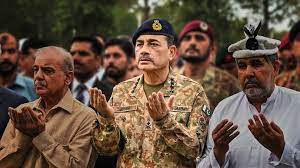
In the volatile aftermath of the May 2025 border conflict with India, Pakistan’s Chief of Army Staff, General Syed Asim Munir, elevated himself to Field Marshal. Amid economic malaise, political fragmentation, and heightened Indo-Pak tensions, Munir seized the crisis to present himself as the defender of Pakistan’s Islamic identity, echoing the authoritarian legacies of Generals Ayub Khan and Zia-ul-Haq. Munir has become the central figure in Pakistan’s governance, overshadowing the Prime Minister and the judiciary in decision-making.


Munir’s worldview blends military strategy with Islamic theology, reminiscent of General Zia-ul-Haq’s Islamisation policies in the 1970s and 1980s. He overtly infuses religious ideology into military affairs. In a speech to a grand jirga in Peshawar, Munir explicitly stated that the Pakistan Army operates under the principles of “imaan, taqwa, and jihad fi sabeelillah”, the Arabic phrase translates to “Faith, Piety, and Struggle in the path of God”.  Although these are core concepts in Islam, the phrase has been adopted as the official motto of the Pakistani Army. These statements are more in line with militant organisations than modern militaries. Munir’s rhetoric has emboldened radical groups and blurred the line between conventional military operations and religious militancy.


This “Munir Doctrine,” a hardline military and ideological framework, has redefined Pakistan’s strategic posture.  The doctrine signifies a regressive shift away from the geo-economic pragmatism of Munir’s predecessor, General Qamar Javed Bajwa, toward a fusion of religious fervour, proxy warfare, and unyielding military dominance. This regressive and incendiary worldview intensifies longstanding themes in the Pakistan Army’s ethos, positioning it as the guardian of both territorial borders and ideological frontiers.


Core Tenets of Munir Doctrine


Emphasis on Religious Ideology. At its heart, the doctrine invokes a narrow interpretation of the Two-Nation Theory, portraying India as an existential threat to Pakistan’s Islamic identity. Munir elevates religious scholars and clerics to influential roles, fusing military command with faith-based justification, a “militarisation of faith” that narrows pluralism. Speeches brim with symbolism, recasting soldiers as “martyrs of the faith” in state media and school curricula infused with jihadist vignettes. This exclusivist stance, critics argue, echoes Zia’s Islamisation but with 21st-century tools like fatwas endorsing preemption.


Shift from Geo-Economics to Jihadism. Reversing Bajwa’s focus on trade corridors, pragmatic diplomacy, and Gulf investments, Munir decries “economic surrender” as a “Zionist-Indian ploy.” A leaked June 2025 memo to corps commanders revives proxy warfare. At a Lahore rally, he quipped, “Jihad feeds the soul; dollars feed the enemy.” He has been redirecting external aid to madrasa expansions, border fortifications, and drone upgrades.


Military Dominance. Exploiting external threats, the doctrine justifies deeper military intervention in governance. Some of the enhancements to the military power include the reinstatement of military trials for civilians (the Pakistan Army Act permits the prosecution of civilians in military courts) and the expansion of preventive detention powers (military and civil armed forces can detain terror suspects for up to 3 months without charge).


Political Consolidation. Recent developments have increased the military’s influence over governance in Pakistan. This has been achieved through political manoeuvring and the erosion of democratic institutions. Military leaders have historically exerted control over key policies (including foreign policy) by manipulating civilian governments with the notion of “ideological threats” to justify their interventions in political and judicial affairs.

Aggressive Posture toward India. Asim Munir has adopted an aggressive posture toward India through provocative rhetoric and support to terrorist organisations. His fiery, inciting speeches are a testament to explicit brinkmanship against India.


Harsh Measures against Opposition. Munir’s repression mirrors Zia’s tactics. Opposition leaders like Imran Khan face sedition from Adiala jail. Women’s groups report a surge in honour killings, excused as “faith preservation.” Media is muzzled with shuttered outlets for “defeatist” coverage, weaponising “ideological purity” to delegitimise critics as “enemies of Islam” or Indian agents.


Analytical Perspective


Comparisons with Past Doctrines. The Munir Doctrine evokes General Zia-ul-Haq’s 1980s Islamisation, which used religion to legitimise authoritarianism and arm the Afghan mujahideen. Like Zia, Munir blends barracks and belief, but his explicit nuclear threats and economic abandonment heightens the peril. Unlike Ayub Khan or Pervez Musharraf, who balanced ideology with modernisation, Munir prioritises perpetual conflict to entrench military authority, risking the collapse of a fragile state under the weight of its own dogma.


Implications for Pakistan. The Munir Doctrine, with its emphasis on ideological militancy over pragmatic reform, is steering Pakistan into treacherous waters, exacerbating its already dire economic, social, and political crises. By prioritising religious fervour and military dominance, Field Marshal Asim Munir risks threatening its stability. IMF negotiations, critical for averting default, have stalled due to what analysts call “militarised budgeting”. Foreign reserves cannot sustain imports, while remittances are plummeting.


Radicalisation. The situation in Pakistan is compounded by social polarisation. The doctrine’s appeal prioritising Islamic identity delivers short-term unity by rallying the pious middle class and rural heartlands around a narrative of “faith under siege.” However, it masks a dangerous long-term trend, the radicalisation of public discourse and the marginalisation of moderate voices. By weaponising “ideological purity,” the military alienates secular intellectuals, urban professionals, and minority communities, pushing them to the fringes.


Regional Consequences. Regionally, the Munir Doctrine’s revival of proxy warfare inflames tensions in Kashmir and Afghanistan, destabilising South Asia. Renewed support for militant groups like Lashkar-e-Taiba, evidenced by a spike in arms flows, would escalate cross-border violence with India. In Afghanistan, Pakistan’s interference strains ties with the Taliban, once proxies but now rivals in jihadist branding, risking spillover into China’s Xinjiang region, where Uighur militancy could threaten Beijing’s interests. This jeopardises fears of a broader regional conflagration.


Conclusion

The Munir Doctrine marks a profoundly regressive turn, elevating jihadist statecraft, authoritarian control, and aggression toward India. While consolidating short-term power, it risks economic despair, isolation, and regional catastrophe. The Munir Doctrine, whether it forges a fortress or a funeral for Pakistan, remains South Asia’s most perilous risk.


Bottom Line

Stay Alert, Keep a lookout, Be ready and Keep the powder dry.


Please Add Value to the write-up with your views on the subject.


1938
Default rating

Please give a thumbs up if you  like The Post?


For regular updates, please register your email here:-

Subscribe


References and credits

To all the online sites and channels.

Pics Courtesy: Internet

Disclaimer:

Information and data included in the blog are for educational & non-commercial purposes only and have been carefully adapted, excerpted, or edited from reliable and accurate sources. All copyrighted material belongs to respective owners and is provided only for wider dissemination.


References:-

 Pande, Aparna. “Munir’s Dangerous Doctrine.” Observer Research Foundation, May 16, 2025.


  1. Shah, Aqil. “Pakistan’s Military and Foreign Policy under Gen. Asim Munir.” Middle East Institute, 2023.


  1. Bisaria, Ajay. “Asim Munir, Pakistan’s ‘Hafiz-e-Quran’ Army Chief Who Aimed for the Jugular Days Before Pahalgam.” The Print, May 20, 2025.


  1. Haqqani, Husain. “Munir’s Mad, Bad Doctrine.” The Times of India, May 8, 2025.


  1. Rizvi, Hasan-Askari. “The Asim Munir Doctrine: Redefining Civil-Military Dynamics in Pakistan.” Foreign Affairs Forum, June 1, 2025.


  1. Jalal, Ayesha. The State of Martial Rule: The Origins of Pakistan’s Political Economy of Defence. Cambridge: Cambridge University Press, 1990.


  1. Shaikh, Farzana. Making Sense of Pakistan. New York: Columbia University Press, 2009.


  1. Tankel, Stephen. “The Supporting Structures for Pakistan’s Proxy War in Jammu & Kashmir.” Strategic Analysis 25, no. 6 (2001): 769–788.


  1. Ganguly, Sumit. “Proxy War in Jammu & Kashmir: Jehad or State-Sponsored Terrorism?” Strategic Analysis 23, no. 10 (2000): 1693–1713.


  1. Paul, T. V. “Why Pakistan’s Proxy War Will Now Intensify.” The Tribune, May 8, 2020 (updated 2025 context).


  1. Husain, Ishrat. “Rescuing Pakistan’s Economy.” Atlantic Council, April 8, 2025.
  2. Cloughley, Brian. A History of the Pakistan Army: Wars and Insurrections. 5th ed. Oxford: Oxford University Press, 2016.


  1. Nawaz, Shuja. Crossed Swords: Pakistan, Its Army, and the Wars Within. New York: Oxford University Press, 2008.


  1. Cohen, Stephen P. The Idea of Pakistan. Washington, DC: Brookings Institution Press, 2004.



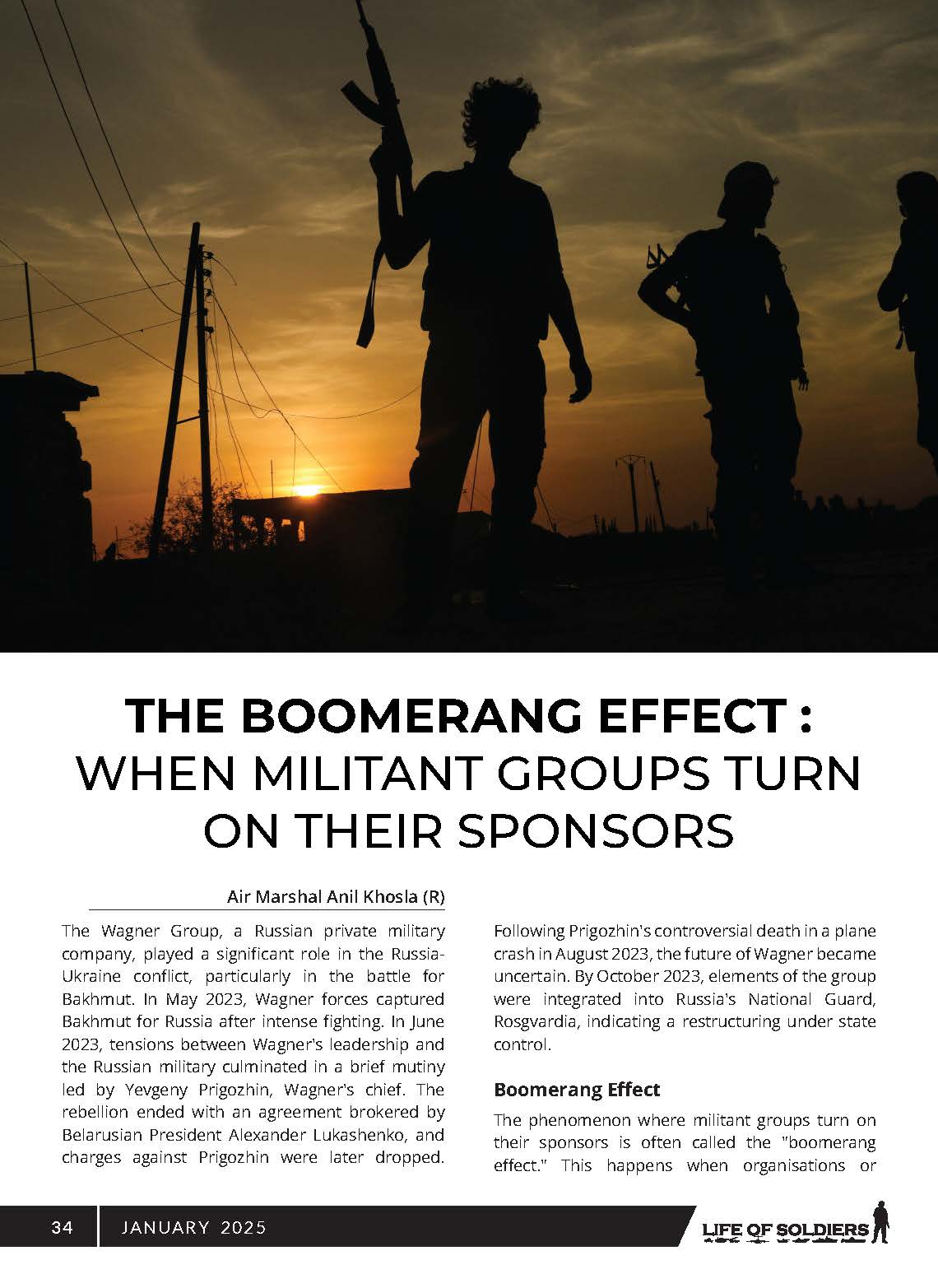
571: THE BOOMERANG EFFECT: WHEN MILITANT GROUPS TURN ON THEIR SPONSORS


Pic Courtesy Net


My Article Published in the Life of Soldiers (a premier monthly defence magazine) on 30 Dec 24.


The Wagner Group, a Russian private military company, played a significant role in the Russia-Ukraine conflict, particularly in the battle for Bakhmut. In May 2023, Wagner forces captured Bakhmut for Russia after intense fighting. In June 2023, tensions between Wagner’s leadership and the Russian military culminated in a brief mutiny led by Yevgeny Prigozhin, Wagner’s chief. The rebellion ended with an agreement brokered by Belarusian President Alexander Lukashenko, and charges against Prigozhin were later dropped. Following Prigozhin’s controversial death in a plane crash in August 2023, the future of Wagner became uncertain. By October 2023, elements of the group were integrated into Russia’s National Guard, Rosgvardia, indicating a restructuring under state control.


Boomerang Effect.


The phenomenon where militant groups turn on their sponsors is often called the “boomerang effect.” This happens when organisations or groups created, funded, or supported by a state or another actor shift their allegiances or use their skills and resources against their former backers. The reasons for this shift can be complex and multifaceted, involving ideological differences, changing power dynamics, or disillusionment with their sponsors’ objectives. Contributing factors are as follows:- 


Ideological Divergence. Initially, militant groups are often created with shared goals and objectives aligned with their sponsors. However, as they gain strength and experience, they may develop their agendas. Differences in ideology can lead to clashes, especially if the militants feel their sponsors are manipulating them for geopolitical gain.


Loss of Control. Sponsors often lose control over the militants they support. As these groups gain legitimacy and power, they may increasingly act independently, pursuing their objectives, which might not align with those of their sponsors. This can lead to a strategic shift where militants view their sponsors as obstacles rather than allies.


Disillusionment and Frustration. Sometimes, militants feel let down by their sponsors. They may believe that their resources or support are inadequate or misdirected. This frustration can lead to losing loyalty, with groups turning against their sponsors.


Changing Power Dynamics. As the geopolitical landscape changes, so too can militants’ strategic interests. They may switch sides in pursuit of more favourable conditions, especially when they see greater opportunities to achieve their goals with a different sponsor or on their own.


The Wagner Group Story


Wagner Group, a Russian private military contractor (PMC), provides a recent example of a sponsored organisation turning against its sponsor. Initially backed by the Russian government, Wagner became a powerful, semi-autonomous entity with ambitions and interests, ultimately leading to a public confrontation with the Russian state.


Background. The Wagner Group was founded around 2014 by Dmitry Utkin, a former Russian military officer, and Yevgeny Prigozhin, a businessman with close ties to the Kremlin. It served as a proxy force for Russian interests in global hotspots, allowing Russia to exert influence without direct military involvement or the political risk of deploying official troops. Wagner operated in Syria, Libya, the Central African Republic, and other countries, carrying out missions aligned with Russian geopolitical interests and reportedly receiving support and resources from the Russian state, including training facilities and equipment.


Tensions Leading to Conflict. As Wagner’s activities grew, so did its autonomy and influence. Wagner played a significant role in the 2022 invasion of Ukraine, taking on critical combat roles. However, Prigozhin became increasingly outspoken about the Russian military’s failings, explicitly criticising the Ministry of Defence’s handling of the war. Wagner’s leadership grew resentful, accusing Russian military officials of incompetence, neglecting logistical support, and underestimating Wagner’s sacrifices on the front lines.


The Wagner Rebellion of 2023. This tension culminated in a dramatic turn in June 2023, when Wagner launched an armed rebellion against the Russian military leadership. Prigozhin led his forces into the Russian city of Rostov-on-Don, seizing an army headquarters, and then began an advance toward Moscow. Prigozhin demanded changes in the Russian military leadership, mainly targeting Defence Minister Sergei Shoigu and General Valery Gerasimov. Although it was ultimately short-lived, this direct challenge to the Kremlin marked a sharp break with their previous sponsor, the Russian state. The rebellion ended after negotiations, reportedly brokered by Belarusian President Alexander Lukashenko. Prigozhin agreed to stand down in exchange for a safe passage to Belarus, and Wagner’s forces withdrew. However, the incident exposed significant rifts between Wagner and the Russian government, highlighting how sponsorship of militant or paramilitary organisations can backfire when these groups gain enough power to pursue their agendas.


Aftermath and Fallout. The fallout from the rebellion was significant. Prigozhin’s death in a plane crash in August 2023 was widely speculated to have been orchestrated by elements within the Russian state. Wagner’s operations were subsequently restructured, with many members reportedly re-assigned or integrated into other units more directly controlled by the Russian government.


Lessons and Analysis. The Wagner Group’s rebellion is a cautionary tale about the risks of using paramilitary organisations for state purposes. Once such groups gain power, resources, and a sense of autonomy, they can become difficult to control, and their interests may diverge from those of their original sponsor. In Wagner’s case, the group’s loyalty to Prigozhin and its operational independence contributed to a volatile situation where, ultimately, Wagner’s ambitions turned against the very state that enabled its rise.


Boomerang Effect: Notable Instances


Several historical examples exist of militant organisations that initially received sponsorship from governments or other entities but later turned against their sponsors. This phenomenon often results from shifting political dynamics, ideological conflicts, or changes. in militant groups’ objectives.


Al-Qaeda and the United States. During the 1980s, the United States, along with Pakistan and Saudi Arabia, provided financial and military support to Afghan mujahideen fighters to combat the Soviet Union’s invasion of Afghanistan. Many of these fighters, including Osama bin Laden, received resources and training indirectly through the CIA’s Operation Cyclone. After the Soviet withdrawal, some of these fighters, including bin Laden, formed Al-Qaeda. Al-Qaeda grew increasingly antagonistic toward the United States, particularly due to its military presence in the Middle East and its support for governments seen as oppressive or contrary to Islamic principles. This hostility culminated in the September 11, 2001 attacks, marking a complete break from their former indirect sponsor.


The Taliban and Pakistan. Pakistan’s Inter-Services Intelligence (ISI) supported the formation of the Taliban in the 1990s, seeing them as a potential ally to ensure a friendly government in Afghanistan, which would provide Pakistan with strategic depth against India. While the Taliban still maintains some ties with Pakistan, there have been periods of tension. Taliban-linked groups, such as the Tehrik-i-Taliban Pakistan (TTP), have turned against the Pakistani state, conducting attacks within Pakistan. The TTP aims to overthrow the Pakistani government and establish a stricter interpretation of Islamic law, which has led to significant violence and conflict within Pakistan itself.


Hamas and Israel. During the early years of the Palestinian resistance, Israel indirectly supported groups that would later form Hamas, aiming to create a counterbalance to the secular Palestinian Liberation Organization (PLO) led by Yasser Arafat. This was based on the notion that Islamist movements could divide the Palestinian resistance, making it easier to manage. Hamas eventually became a formidable opponent to Israel, adopting a hardline stance and engaging in numerous conflicts with the Israeli state. Today, Hamas is a prominent political and militant force in Gaza and has carried out attacks against Israeli targets, becoming one of Israel’s most persistent adversaries.


The Islamic State (ISIS) and the Gulf States. During the Syrian Civil War, several Gulf States, including Qatar and Saudi Arabia, provided funding and weapons to Sunni rebel groups to oppose the Assad regime in Syria. Some of these groups either merged with or evolved into extremist groups like ISIS. Although Gulf States may not have directly funded ISIS, their support for anti-Assad rebels indirectly bolstered ISIS’s power. Once ISIS gained control of territory and declared a caliphate, it posed a threat to all governments in the region, including those in the Gulf. ISIS targeted these governments rhetorically and sometimes directly, seeing them as illegitimate and corrupt.


M23 Rebels and Rwanda. The M23 rebel group in the Democratic Republic of the Congo (DRC) was reportedly supported by neighbouring Rwanda, which viewed them as a means to secure influence in the DRC and counter the presence of anti-Rwandan Hutu militias. Over time, M23 developed its political ambitions, creating sporadic tensions with Rwanda. Although the relationship between Rwanda and M23 is complex and fluctuates, there have been instances where M23 acted independently, with a leadership not fully aligned with Rwanda’s objectives.


Fatah al-Islam and Syria. Syria was alleged to have supported Fatah al-Islam, a militant group in Lebanon, to destabilise the Lebanese government, particularly during times of political tension between Syria and Lebanon. Fatah al-Islam later became a problem for Syria and the broader region. The group’s activities and increasing autonomy led to clashes with the Lebanese government and other regional actors, pushing them further away from Syrian influence.


Conclusion

These examples illustrate how sponsorship of militant groups is fraught with inherent risks and unintended consequences. Such alliances with unpredictable partners often backfire as these organisations evolve ideologically, gain independence, or shift their focus based on changing political landscapes.  The short-term gains can lead to long-term instability, undermining the sponsor’s original goals and threatening regional and global security. They are stark reminders of the dangers of using militancy as a proxy for power, underscoring the need for more sustainable and ethical approaches to conflict resolution and statecraft.


Your valuable comments are most welcome.


1938
Default rating

Please give a thumbs up if you  like The Post?


Link to the Article on the website:-

The Boomerang Effect: When Militant Groups Turn On Their Sponsors

For regular updates, please register your email here:-

Subscribe

References and credits

To all the online sites and channels.

References:

  1. Byman, Daniel. “Friends Like These: Counterinsurgency and the War on Terrorism.” International Security, vol. 31, no. 2, 2006, pp. 79–115.
  1. Crenshaw, Martha. “The Causes of Terrorism.” Comparative Politics, vol. 13, no. 4, 1981, pp. 379–399.
  1. Weinberg, Leonard, and William L. Eubank. “State-Sponsored Terrorism: A Reassessment.” Terrorism and Political Violence, vol. 2, no. 1, 1990, pp. 287–302.
  1. Piazza, James A. “Incubators of Terror: Do Failed and Failing States Promote Transnational Terrorism?” International Studies Quarterly, vol. 52, no. 3, 2008, pp. 469–488.
  1. Coll, Steve. Ghost Wars: The Secret History of the CIA, Afghanistan, and Bin Laden, from the Soviet Invasion to September 10, 2001. New York: Penguin Press, 2004.
  1. Mamdani, Mahmood. Good Muslim, Bad Muslim: America, the Cold War, and the Roots of Terror. New York: Pantheon Books, 2004.
  1. Gerges, Fawaz A. The Far Enemy: Why Jihad Went Global. Cambridge: Cambridge University Press, 2005.
  1. Kepel, Gilles. Jihad: The Trail of Political Islam. Cambridge, MA: Harvard University Press, 2002.
  1. Rashid, Ahmed. Taliban: Militant Islam, Oil, and Fundamentalism in Central Asia. New Haven, CT: Yale University Press, 2000.
  1. Gunaratna, Rohan. Inside Al Qaeda: Global Network of Terror. New York: Columbia University Press, 2002.
  1. Katzman, Kenneth. Afghanistan: Post-Taliban Governance, Security, and U.S. Policy. Congressional Research Service Report, 2021.
  1. Jones, Seth G. In the Graveyard of Empires: America’s War in Afghanistan. New York: W.W. Norton & Company, 2009.
  1. Norton, Augustus R. Hezbollah: A Short History. Princeton: Princeton University Press, 2007.
  1. Fair, C. Christine. In Their Own Words: Understanding Lashkar-e-Taiba. New York: Oxford University Press, 2018.
  1. Galeotti, Mark. Putin’s Wars: From Chechnya to Ukraine. London: Bloomsbury Publishing, 2022.
  1. Nixey, James. The Weaponisation of Everything: Russia’s Hybrid Warfare in the 21st Century. London: Royal Institute of International Affairs, 2021.
  1. Marten, Kimberly. Warlords and Coalition Politics in Post-Soviet States. Ithaca, NY: Cornell University Press, 2012.
  1. Marten, Kimberly. “The Puzzle of Russian Behavior in Deir Al-Zour.” War on the Rocks, 2018.
  1. Galeotti, Mark. “Russia’s Private Military Companies: The Example of Wagner.” RUSI Journal, vol. 164, no. 1, 2019, pp. 20–28.
  1. MacFarquhar, Neil, and Eric Schmitt. “Inside the Wagner Group’s Mutiny Against the Kremlin.” The New York Times, June 2023.
  1. Seddon, Max. “The Wagner Group Mutiny: What It Tells Us About Putin’s Russia.” Financial Times, July 2023.
  1. Galeotti, Mark. “The Russian Way of War: From Chechnya to Ukraine.” Foreign Affairs, 2022.

Disclaimer:

Information and data included in the blog are for educational & non-commercial purposes only and have been carefully adapted, excerpted, or edited from reliable and accurate sources. All copyrighted material belongs to respective owners and is provided only for wider dissemination.

564: PAKTIKA UNDER FIRE: PAKISTANI AIR STRIKES IN AFGHANISTAN


My article published on the EurasianTimes Website on 26 Dec 24.


PAKTIKA UNDER FIRE: PAKISTANI AIR STRIKES IN AFGHANISTAN


In a recent escalation of cross-border tensions, Pakistani air strikes in Afghanistan’s Paktika province have resulted in the deaths of 46 individuals, highlighting the ongoing volatility of the region. These strikes, which targeted areas suspected of harbouring militants, have sparked outrage and condemnation, both within Afghanistan and from the international community. The attack underscores the fragile security situation along the Afghanistan-Pakistan border and the broader geopolitical tensions between the two countries.


The situation is fraught with complexity, involving not only the two neighbouring states but also international actors such as the United States, China, and the Taliban, which has recently regained control of Afghanistan. The United States, a key player in the War on Terror, has a vested interest in the stability of the region. China also closely monitors the situation with its Belt and Road Initiative and economic investments in the region. The Taliban’s resurgence and its relationship with Pakistan further complicate the geopolitical landscape. Understanding the motivations behind these air strikes, the implications for regional security, and the broader geopolitical consequences is essential for assessing the future of Afghanistan-Pakistan relations and the overall stability of the South Asian region.


Historical Context of Afghan-Pakistani Tensions.


The history of Afghan-Pakistani relations, deeply rooted in the colonial past, has been marked by frequent tension, often arising from political, territorial, and security concerns. The division of Afghanistan and Pakistan following the partition of British India in 1947 created lasting complications, particularly concerning the Durand Line, the controversial border that separates the two nations. Afghanistan was the only country that initially refused to recognise this border, leading to disputes that have lingered ever since. These disputes have significantly shaped the region’s geopolitical dynamics and continue influencing contemporary events.


In recent decades, the issue of militancy and cross-border insurgency has exacerbated tensions. Pakistan has been accused of using its territory as a haven for Afghan militants, particularly during the Soviet-Afghan War (1979-1989), when Pakistan supported Afghan mujahideen factions in their fight against Soviet forces. This support led to the rise of groups such as the Taliban, which took control of Afghanistan in the 1990s and provided a safe haven for terrorist organisations, including al-Qaeda.


The post-9/11 era marked a shift in the relationship between Afghanistan and Pakistan. After the U.S. invasion of Afghanistan in 2001, Pakistan became a crucial ally in the War on Terror. Still, at the same time, it continued to support certain militant groups as part of its strategy to counter Indian influence in Afghanistan. This double-dealing led to accusations that Pakistan is playing a double game, supporting insurgent groups while pretending to be a partner in counterterrorism efforts.


Boomerang Effect. Pakistan’s Inter-Services Intelligence (ISI) supported the formation of the Taliban in the 1990s, seeing them as a potential ally to ensure a friendly government in Afghanistan, which would provide Pakistan with strategic depth against India. While the Taliban still maintains some ties with Pakistan, there have been periods of tension. Taliban-linked groups, such as the Tehrik-i-Taliban Pakistan (TTP), have turned against the Pakistani state, conducting attacks within Pakistan. The TTP aims to overthrow the Pakistani government and establish a stricter interpretation of Islamic law, which has led to significant violence and conflict within Pakistan itself.


The Geography and Strategic Importance of Paktika Province


Paktika is one of Afghanistan’s eastern provinces, bordering Pakistan’s Khyber Pakhtunkhwa and Balochistan provinces. This region has been a hotspot for insurgent activity for years, with various militant groups, including the Pakistani Taliban (Tehrik-i-Taliban Pakistan, or TTP), using the rugged terrain to hide from Afghan and Pakistani forces. The province is strategically important due to its proximity to the Durand Line, making it an ideal location for militants to cross between Afghanistan and Pakistan.


The geography of Paktika also makes it difficult for both the Afghan government and Pakistan to secure the region. The mountainous and forested landscape provides natural cover for insurgents, while the porous border allows for the easy movement of fighters and weapons between the two countries. Over the years, various militant groups have exploited these conditions to launch attacks across the border.


Pakistani Narrative and Possible Reasons.


Pakistan’s air strikes in Afghanistan, particularly in Paktika, are typically framed as responses to cross-border attacks by militants. These strikes are part of Pakistan’s broader counterterrorism strategy, aimed at dismantling militant groups operating in the border region. Pakistan has long accused Afghanistan of harbouring insurgents who use Afghan soil to launch attacks on Pakistani targets, particularly in the tribal areas and Khyber Pakhtunkhwa province. In response, Pakistan has argued that it has the right to conduct air strikes and military operations on Afghan territory to safeguard its national security.


Cross-Border Militancy. The presence of Pakistan-based militant groups in Afghanistan, especially the TTP, is one of the primary reasons for these air strikes. The TTP has been involved in numerous attacks on Pakistani military and civilian targets, leading Pakistan to launch retaliatory strikes against their hideouts in Paktika and other Afghan provinces. These groups are often blamed for destabilising the region, and Pakistan’s military views these air strikes as a necessary measure to contain the threat.


Out of Control Region.  Afghanistan’s inability to fully control its territory, particularly in the eastern and southern regions, has been a significant factor in the escalation of violence. The Taliban’s resurgence in Afghanistan following the U.S. withdrawal in 2021 has further exacerbated the situation. Pakistan perceives the Afghan as incapable of effectively dealing with the cross-border insurgency, legitimising unilateral military action.


Pakistan’s Desire for Regional Influence. Pakistan’s military and intelligence agencies have long had a strategic interest in maintaining influence over Afghanistan. By launching air strikes, Pakistan aims to retain control over militant groups operating along the border and to prevent any spillover of instability that could undermine its security or its strategic objectives in the region.


Domestic Political Considerations. Pakistan’s military leadership is often under pressure from domestic constituencies, particularly in the Khyber Pakhtunkhwa and Balochistan regions, to take decisive action against militants. Air strikes in Afghanistan serve as a signal to domestic audiences that Pakistan is committed to protecting its sovereignty and securing its borders while also sending a message to Afghanistan and the international community about Pakistan’s resolve to fight terrorism.


Impact on Afghanistan and Regional Stability


Pakistani air strikes in Afghanistan, especially in Paktika, have had significant implications for both Afghan civilians and the broader regional stability. The loss of civilian lives and the disruption of daily life in the region due to these strikes cannot be overstated.


Civilian Casualties and Displacement. One of the most immediate consequences of air strikes is the toll on Afghan civilians. These strikes, while aimed at militant targets, often result in civilian casualties and the displacement of local populations. This exacerbates the already dire humanitarian situation in Afghanistan, which is dealing with the aftermath of decades of war, economic collapse, and the resurgence of the Taliban.


Sovereignty Concerns. Afghanistan has repeatedly protested Pakistani air strikes, viewing them as violations of its sovereignty. Afghanistan’s government (under both the previous Western-backed administration and the current Taliban regime) has argued that such strikes undermine the principle of territorial integrity and violate international law. The strikes further strain Afghanistan-Pakistan relations, which are already fraught with mistrust and historical grievances.


Taliban’s Response. The Taliban’s return to power in Afghanistan in 2021 has added a new dimension to the conflict. While the Taliban has historically maintained close ties with Pakistan, its control over Afghan territory has not led to a reduction in cross-border militancy. The Taliban’s reluctance or inability to clamp down on Pakistani militants operating from Afghan soil has prompted Pakistan to continue its air strikes. However, this has created a delicate situation where the Taliban must balance its relationship with Pakistan while dealing with growing public discontent over the air strikes.


Regional Security and Geopolitical Dynamics. The air strikes also have broader regional implications. Pakistan’s actions are viewed with concern by India, which has long been wary of Pakistan’s influence over Afghanistan and the destabilising effect of cross-border militancy. India has consistently accused Pakistan of using Afghan-based militant groups to advance its strategic interests in the region. Furthermore, the involvement of external actors such as the United States, which has interests in Afghanistan and is concerned about Pakistan’s role in the area, complicates the situation. These air strikes may lead to greater instability in an already volatile region, affecting the prospects for peace and development in both Afghanistan and Pakistan.


Conclusion. Pakistani air strikes in Afghanistan’s Paktika province represent a complex and multifaceted issue in South Asian geopolitics. These strikes are driven by security concerns, political motivations, and strategic interests, with significant implications for Afghanistan’s sovereignty, civilian population, and regional stability. While Pakistan justifies its actions as a necessary response to cross-border militancy, the long-term consequences of these strikes may not only strain Afghanistan-Pakistan relations further but also exacerbate the instability in the broader region.


Your valuable comments are most welcome.


Link to the article on the website:-

https://www.eurasiantimes.com/pakistan-conducts-2nd-air-strikes-on-afghanistans/


1938
Default rating

Please give a thumbs up if you  like The Post?


For regular updates, please register your email here:-

Subscribe


References and credits

To all the online sites and channels.

References:-

  1. BBC News. “Pakistan Air Strikes in Afghanistan Kill 46: A Critical Overview.” BBC, December 2023.
  1. Al Jazeera. “Pakistan and Afghanistan’s Border Tensions: An Analysis of the 2023 Air Strikes.” Al Jazeera, December 2023.
  1. Mansoor, Safdar. “The Durand Line: A Historical Perspective on Pakistan-Afghanistan Relations.” Asian Affairs, vol. 38, no. 3, 2007, pp. 405-421.
  1. Johnson, Thomas H., and M. Chris Mason. “The Taliban’s War with Pakistan: A Strategic Overview.” Middle East Policy, vol. 17, no. 4, 2010, pp. 56-70.
  1. Tanner, Stephen. “Pakistan’s Military Strategy and Its Afghan Frontier.” International Security Studies Review, vol. 32, no. 2, 2014, pp. 99-113.
  1. Carnegie Endowment for International Peace. “Pakistan’s Afghan Policy: Challenges and Opportunities.” Carnegie Report, 2021.
  1. Gul, Imtiaz. The Most Dangerous Place: Pakistan’s Lawless Frontier. Penguin Books, 2010.
  1. Khan, Mehmood. Pakistan’s Counterterrorism Strategy: A Comprehensive Approach. Palgrave Macmillan, 2016.
  1. United Nations Assistance Mission in Afghanistan (UNAMA). “Afghanistan: Protection of Civilians in Armed Conflict.” UNAMA Annual Report, 2023.


Disclaimer:

Information and data included in the blog are for educational & non-commercial purposes only and have been carefully adapted, excerpted, or edited from reliable and accurate sources. All copyrighted material belongs to respective owners and is provided only for wider dissemination.


English हिंदी