770: BAGRAM AIRBASE: REIGNITED GEOPOLITICAL FLASHPOINT


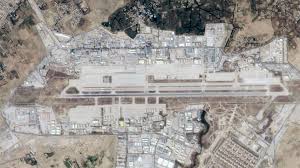
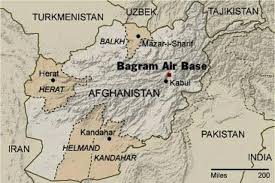
Bagram airbase is situated about 50 kilometers north of Kabul in Afghanistan’s Parwan Province. The fortified base has two runways and a vast support infrastructure.  It has been a nerve center for every significant foreign military power to occupy the country since the Cold War. It was constructed in the 1950s and expanded significantly during the Soviet era. It became the main hub for Soviet military operations in Afghanistan during their 1979–1989 occupation.

Following the events of 9/11, the airfield was transformed into the centerpiece of the U.S.-led coalition’s operations in Afghanistan. At its peak, the facility featured runways capable of handling large transport and bomber aircraft, more than one hundred revetments, massive logistical and support infrastructures, and housed thousands of troops and aircraft. It was the launchpad for drone strikes, intelligence missions, and air support operations.

On 2 July 2021, after almost twenty years of continuous U.S. control of Bagram Airfield, the control was handed over to the Afghan authorities, marking a key moment in the coalition’s withdrawal from Afghanistan. Bagram became a symbol of the chaotic U.S. withdrawal from Afghanistan.

Four years later, the airbase has again attracted global attention. But this time, the debate isn’t about counterterrorism. It’s about geopolitical competition, regional sovereignty, and a changing balance of power in Asia.


A Strategic Asset. Bagram’s strategic appeal is noticeable. Located less than an hour’s flight from China’s western Xinjiang province and within reach of Iran, Pakistan, and Central Asia, it offers unparalleled access to some of the most contested airspace in the world. The base has two runways capable of hosting heavy bombers and long-range reconnaissance aircraft, along with hardened hangars, and infrastructure enough to house thousands of personnel. For the United States, regaining access to such a facility could restore a foothold in Central Asia. The region is now dominated by Chinese and Russian influence. For the Taliban, retaining control over it is both a matter of pride and sovereignty. For neighbouring countries, Bagram represents a potential spark that could reignite competition and instability.


Bagram’s Symbolic Power. Besides military significance, Bagram airbase has become a symbolic battlefield in the narrative wars. For the Taliban, it is a monument to victory. It symbolises foreign retreat and the restoration of national control. Military parades featuring captured U.S. hardware have been staged there annually since 2022, turning the base into both a propaganda tool and a training hub. For Western observers, Bagram remains a haunting reminder of how two decades of war ended with little enduring infrastructure or political legacy.


Renewed US Interest. In September 2025, former U.S. President Donald Trump reignited the debate over Bagram by declaring that the U.S. is “trying to get it back.”  Trump, while speaking at a joint press conference (with UK Prime Minister Keir Starmer), contended that the vital airbase was “given up for nothing”. His subsequent post on his social media escalated the rhetoric. He claimed that the base needs to be reclaimed. Otherwise, the “enemies of freedom” would consolidate power across the region. The Taliban called these comments delusional. Afghanistan spokesperson Zabihullah Mujahid stated that Bagram belongs to Afghanistan and not a meter of our land will return to foreign occupation.” However, the US president’s statement rekindled speculation about Washington’s interest in regaining influence in Afghanistan. Analysts feel that any U.S. attempt to retake the base would be an undertaking politically and strategically implausible in the current climate.


The Regional Chessboard. Bagram’s fate is not just a bilateral issue between Washington and Kabul. It sits at the intersection of larger geopolitical currents.

    • China views any U.S. return as a potential surveillance threat to its Belt and Road investments and its sensitive Xinjiang region.
    • Russia, seeking to expand its influence across Central Asia, has made clear that it will not tolerate new Western military outposts in the region.
    • Iran shares similar concerns and has strengthened its ties with the Taliban, providing limited economic and diplomatic backing.
    • Pakistan is caught between its complex relationship with the Taliban and with Washington.
    • For India, interest in the airbase is governed by factors such as location & connectivity, regional competition, and Afghanistan’s sovereignty & stability.


Regional Powers Push Back. The strongest rebuke came from Afghanistan’s neighbours. On October 7–8, 2025 (at the 7th Moscow Format Consultations on Afghanistan), Russia, China, Iran, India, Pakistan, and the Central Asian republics issued a joint declaration. They collectively rejected the idea of any foreign military presence on Afghan soil. The statement was obviously directed at Trump’s remarks and potential U.S. ambitions. The declaration reflected a fear about upsetting the stability in Afghanistan.  Moscow and Beijing view any American return as a strategic encroachment. Islamabad is concerned about the growing influence of domestic insurgents. India publicly supported Afghanistan’s sovereignty and rejected the idea of foreign bases. Indian officials emphasised the need for “regional solutions” over external interventions.


Disinformation Drive.   Rumours of U.S. (even Indian) control of Bagram airbase are circulating online. A social media post purported that the Taliban had transferred limited control of Bagram to US Special Forces. The report was debunked by both Taliban and U.S. officials. Similar speculation suggested that India might be using the base.  The Afghan Foreign Ministry dismissed the rumours as a disinformation campaign and reaffirmed that there is no foreign presence.


Firm Taliban Control. All official reports indicate that Bagram Airbase is firmly under Taliban control.  No confirmed signs of U.S., Indian, or any other foreign presence have emerged. In official statements, Taliban leaders have pledged to maintain the base for Afghanistan’s defence forces and reject “any form of shared control.” This stance enjoys regional support, even among nations that remain wary of Taliban governance.


Spotlight Remains. The Bagram issue captures the Afghan post-war era dilemma.  It is a clash between its sovereignty and strategic interest. The airbase has become a measuring stick for regional order. As of now, no U.S. re-involvement appears imminent. But the rhetoric surrounding Bagram indicates how Afghanistan continues to serve as both a symbol and a stage in the contest for influence between the world powers (Washington, Beijing, and Moscow). For Afghans, it also serves as a reminder that even during a supposed state of peace, the fight for control in Afghanistan is not yet over.


Please Add Value to the write-up with your views on the subject.


1879
Default rating

Please give a thumbs up if you  like The Post?


For regular updates, please register your email here:-

Subscribe


References and credits

To all the online sites and channels.

Pics Courtesy: Internet

Disclaimer:

Information and data included in the blog are for educational & non-commercial purposes only and have been carefully adapted, excerpted, or edited from reliable and accurate sources. All copyrighted material belongs to respective owners and is provided only for wider dissemination.


References:-

  1. Grau, Lester W, and Michael A, “The Soviet-Afghan War: How a Superpower Fought and Lost”, University Press of Kansas, 2002.
  1. Jones, Seth G, “In the Graveyard of Empires: America’s War in Afghanistan”, New York: W.W. Norton & Company, 2009.
  1. Department of Defence. “Bagram Airfield Infrastructure Overview”, Washington, DC: U.S. Government Printing Office, 2010.
  1. Gul, Imran, “The Fall of Bagram: Symbol of a Chaotic Exit”, Foreign Affairs, August 15, 2021.
  1. Wilder, Andrew, and Stuart Gordon, “Money Can’t Buy America Love: US Aid to Afghanistan and Its Unintended Consequences”, Afghanistan Analysts Network, 2021.
  1. Trump, Donald J, “Remarks on Afghanistan and Regional Security”, Joint Press Conference (with UK Prime Minister), Sep 2025.
  1. Cordesman, and Anthony H, “Reassessing US Options in Afghanistan: The Bagram Enigma”, Center for Strategic and International Studies (CSIS), Policy Brief, Oct 2025.
  1. Pant, Harsh V, “India’s Stake in Afghan Stability: Bagram as a Regional Litmus Test”, The Diplomat, Nov 2025.
  1. Moscow Format Consultations, “Joint Declaration on Afghanistan: Rejecting Foreign Military Presence”, Official Communiqué, Oct 2025.
  1. Fair, C Christine, “Pakistan’s Taliban Dilemma: Balancing Washington and Kabul Over Bagram”, Global Politics and Strategy 67, no. 5 (2025): 123–145.
  1. Afghan Ministry of Foreign Affairs, “Debunking Rumours of Foreign Control at Bagram Airfield”, Official Statement, Oct 2025.

762: AZM-E-ISTHEKAM: PAKISTAN AND AFGHANISTAN AT WAR


In October 2025, the volatile border between Pakistan and Taliban-ruled Afghanistan once again erupted into violence, marking the sharpest escalation seen since the fall of Kabul in 2021. Years of mutual suspicion, militant activity, and punitive cross-border actions have culminated in a conflict that threatens to redraw the region’s security landscape and deepen humanitarian tragedy. At the heart of the crisis lies Pakistan’s longstanding grievance over militant sanctuaries in Afghanistan, alongside the Afghan Taliban’s fury at perceived violations of sovereignty. What started with airstrikes and border raids has grown into a war of retaliation.


Genesis. Beyond the militant issue lies a deeper, century-old source of tension, the Durand Line, the 2,600-kilometer boundary drawn by British colonial authorities in 1893. Afghanistan has never formally recognised it as an international border, arguing that it unjustly divides ethnic Pashtun communities between the two countries. Pakistan, on the other hand, insists that the border is internationally recognised and non-negotiable. This disagreement frequently sparks clashes, especially when Pakistan attempts to fence or fortify sections of the frontier. In recent years, Islamabad has built extensive fencing and new security posts, moves that the Afghan Taliban view as unilateral and illegitimate. For local tribes who straddle the border, these disputes have disrupted trade, travel, and traditional social networks, fuelling resentment on both sides.


A Legacy of Mistrust. The irony of the current conflict is striking: for years, Pakistan was seen as one of the Taliban’s key supporters. Islamabad maintained close ties with the group during the U.S. war in Afghanistan, providing political and logistical backing while officially denying direct involvement. Many in Pakistan’s security establishment believed a Taliban-run Afghanistan would ensure a friendly, stable neighbour, one that would curb Indian influence and maintain strategic depth. Yet since 2021, the opposite has occurred. The Taliban’s rise to power has not translated into reliable cooperation. Instead, the Afghan government’s reluctance to act against the TTP has deepened Islamabad’s insecurity. Meanwhile, Taliban leaders have accused Pakistan of bowing to Western pressure and violating Afghan sovereignty with repeated cross-border strikes.


The Refugee and Humanitarian Dimension. Another flashpoint is the treatment of Afghan refugees in Pakistan. For over four decades, Pakistan has hosted millions of Afghans who fled war and instability. However, as domestic economic challenges mount and security incidents rise, Islamabad has hardened its stance. In 2023 and again in 2025, Pakistan announced mass deportations of undocumented Afghans, citing concerns that militants were using refugee camps for cover. Kabul condemned the policy as collective punishment, arguing that most refugees are innocent civilians. The crackdown has strained relations further, with human rights groups warning of humanitarian crises as thousands of Afghans are forced to return to an unstable homeland.


Aggressive Pakistan Strategy. Pakistan’s “Azm-e-Isthekam” campaign, launched in mid-2025, signalled a shift: no longer would Pakistan rely solely on defensive border policing. Instead, Islamabad adopted a new deterrence framework, crossing into Afghanistan with targeted military operations aimed at chronic safe havens. This bold approach antagonised the Taliban, who see themselves as sovereign rulers rather than proxies for Pakistani interests.


Escalation: From Airstrikes to Border War. The immediate trigger for this round of fighting was a series of Pakistani airstrikes on October 9, 2025, targeting Pakistani Taliban (Tehreek-e-Taliban Pakistan, or TTP) leaders, including Noor Wali Mehsud, in Kabul and several Afghan provinces. Islamabad cited security concerns, claiming TTP was using Afghan territory as a staging ground for attacks inside Pakistan. The Afghan Taliban called these actions unprovoked aggression, denouncing civilian deaths and promising retribution. Days later, Taliban fighters shelled Pakistani outposts along the Durand Line, with both sides exchanging heavy fire, drone strikes, and artillery barrages, resulting in dozens of military and civilian casualties on both sides.​


The Battles. Clashes have centered on traditional flashpoints: Spin Boldak and Chaman, major crossings on the Afghanistan-Pakistan border, and Kurram and Khyber districts further north. Taliban fighters shelled Pakistani posts, killing soldiers and reportedly seizing weaponry. Islamabad responded with precision airstrikes, claiming to destroy Taliban military compounds and inflict significant casualties. Afghan sources, however, report large-scale civilian deaths and widespread displacement, including in Kandahar and Paktika, triggering renewed calls for restraint by international agencies.​ The scale and intensity of the fighting surpassed previous border skirmishes. Both sides deployed drones, tanks, and heavy artillery in what some analysts described as “border war” conditions, closing major trade crossings and halting cross-border movement. Satellite images confirmed destroyed military infrastructure and burning market stalls; hospital reports cited dozens of injured women and children.​


Ceasefire Attempts. Amid mounting casualties and economic paralysis along the border, international actors intervened. Saudi Arabia and Qatar, both regional stakeholders, urged restraint and pushed for a diplomatic ceasefire. On October 15–16, a temporary 48-hour truce was announced, brokered with back-channel Pakistani and Afghan talks. Yet, even as fighting subsided briefly, mutual distrust simmered. Both parties continued to exchange accusations over border violations and destabilisation, threatening to reignite hostilities.​ Diplomatic channels remain open, with China, Qatar, and the Organisation of Islamic Cooperation (OIC) playing potential mediating roles.


Humanitarian and Economic Impacts. The militarisation of the border is causing a profound humanitarian crisis. Trade has collapsed at major crossings, disrupting food and fuel supplies throughout southern Afghanistan and Balochistan, Pakistan. Tens of thousands have been displaced; hospitals report surging casualties amidst shortages of medical supplies. Businesses suffer as markets fall under shellfire, and civilians fear raids and bombings. The economic cost, layered on political instability and poverty, further erodes any prospect for peace.​

Geopolitical Ripples. The escalation has regional consequences. India, long marginalised by the Taliban, is signalling renewed diplomatic interest in Afghanistan, such as the reopening of its Kabul embassy. The Taliban government’s recent diplomatic outreach to New Delhi, including trade talks and security meetings, has made Islamabad uneasy. China, a major investor in Pakistan through the China-Pakistan Economic Corridor (CPEC), is worried that instability could threaten its infrastructure projects and trade routes. Beijing has quietly urged both sides to restore calm. The evolving security equation, characterised by shrinking American influence and rising intra-regional rivalries, makes the crisis especially combustible.​


Future Outlook. For the Taliban, maintaining sovereignty and legitimacy means resisting external control, whether from Pakistan, the U.S., or others. For Pakistan, ensuring border security and suppressing militant threats are non-negotiable national interests. The clash between these priorities makes compromise difficult. If the violence continues, the consequences could be severe: destabilisation of border regions, humanitarian crises from refugee flows, and the potential for militant groups to exploit chaos on both sides. While the recent truce offers a temporary pause, most analysts believe it is unlikely to hold unless both sides address the root causes. Pakistan wants concrete action against the TTP and assurances that Afghan soil will not be used for attacks. Afghanistan demands an end to cross-border strikes and respect for its sovereignty.


Conclusion. As the fragile ceasefire holds, there is little optimism for a durable peace. The deep mistrust over terrorism, sovereignty, and historic grievances remains unresolved. Pakistan faces an emboldened TTP, increasingly sheltered by Kabul, while Afghanistan bristles at cross-border airstrikes and civilian deaths. Diplomats warn that only sustained dialogue, regional mediation, and genuine efforts to address militant sanctuaries can halt the drift toward wider war. Ultimately, the Pakistan-Afghanistan conflict is not just a border dispute or a fight against militancy; it is a test of whether two neighbouring Islamic republics, each grappling with its own legitimacy and governance crises, can find a path toward coexistence in one of the world’s most volatile regions. Developments indicate that old alliances and new doctrines are insufficient in the face of deep-rooted mistrust and shifting power. The need for comprehensive security solutions and humanitarian support grows ever more urgent, as the fate of the region hangs in the balance.


Please Add Value to the write-up with your views on the subject.

1879
Default rating

Please give a thumbs up if you  like The Post?


For regular updates, please register your email here:-

Subscribe


References and credits

To all the online sites and channels.

Pics Courtesy: Internet

Disclaimer:

Information and data included in the blog are for educational & non-commercial purposes only and have been carefully adapted, excerpted, or edited from reliable and accurate sources. All copyrighted material belongs to respective owners and is provided only for wider dissemination.


References:-

  1. Durani, Mohammad Usman, and Asad Khan. “Pakistan-Afghan Relations: Historic Mirror.” Journal of the Pakistan Historical Society, vol. 63, no. 4, 2023, pp. 1–35.
  2. Johnson, Thomas H., and M. Christine Fair. “The Durand Line: History and Problems of the Afghan-Pakistan Border.” Asian Affairs, vol. 40, no. 2, 2009, pp. 177–195. (A historical survey of border negotiations and ongoing disputes.)
  3. Usman, Muhammad, and Muhammad Khan. “Dynamics of Trust and Mistrust in the Afghanistan–Pakistan Relationship.” Asian Perspective, vol. 45, no. 2, 2021, pp. 295–317.
  4. Gul, Imtiaz. “Heavy Clashes Erupt Along Pakistan-Afghanistan Border.” The Guardian, 11 October 2025.
  5. “Border Clash Between Afghanistan and Pakistan Threatens a Wider Conflict.” The New York Times, 12 October 2025.
  6. Shah, Syed Akhtar Ali, et al. “Pakistan, Afghanistan Agree to Temporary Truce After Fresh Fighting, Airstrikes.” Reuters, 15 October 2025.
  7. “‘New Normal’: Is Pakistan Trying to Set New Red Lines with Afghan Taliban?” Al Jazeera, 15 October 2025.
  8. “Uncertainty Torments Afghan Refugees Facing Deportation From Pakistan.” The New York Times, 31 March 2025.
  9. “Pakistan Accelerates Deportation of Afghans: UN.” Al Jazeera, 15 April 2025.
  10. Rashid, Ahmed. Taliban: Militant Islam, Oil and Fundamentalism in Central Asia. 2nd ed., Yale University Press, 2010.
  11. Yousaf, Mohammad, and Mark Adkin. The Bear Trap: Afghanistan’s Untold Story. Leo Cooper, 1992.
  12. Khan, Shahnaz. Afghanistan and Pakistan: Conflict, Extremism, and Resistance to Modernity. Rowman & Littlefield, 2011.

760: THE MUNIR DOCTRINE:  PAKISTAN’S PATH TO MILITANCY


In the volatile aftermath of the May 2025 border conflict with India, Pakistan’s Chief of Army Staff, General Syed Asim Munir, elevated himself to Field Marshal. Amid economic malaise, political fragmentation, and heightened Indo-Pak tensions, Munir seized the crisis to present himself as the defender of Pakistan’s Islamic identity, echoing the authoritarian legacies of Generals Ayub Khan and Zia-ul-Haq. Munir has become the central figure in Pakistan’s governance, overshadowing the Prime Minister and the judiciary in decision-making.


Munir’s worldview blends military strategy with Islamic theology, reminiscent of General Zia-ul-Haq’s Islamisation policies in the 1970s and 1980s. He overtly infuses religious ideology into military affairs. In a speech to a grand jirga in Peshawar, Munir explicitly stated that the Pakistan Army operates under the principles of “imaan, taqwa, and jihad fi sabeelillah”, the Arabic phrase translates to “Faith, Piety, and Struggle in the path of God”.  Although these are core concepts in Islam, the phrase has been adopted as the official motto of the Pakistani Army. These statements are more in line with militant organisations than modern militaries. Munir’s rhetoric has emboldened radical groups and blurred the line between conventional military operations and religious militancy.


This “Munir Doctrine,” a hardline military and ideological framework, has redefined Pakistan’s strategic posture.  The doctrine signifies a regressive shift away from the geo-economic pragmatism of Munir’s predecessor, General Qamar Javed Bajwa, toward a fusion of religious fervour, proxy warfare, and unyielding military dominance. This regressive and incendiary worldview intensifies longstanding themes in the Pakistan Army’s ethos, positioning it as the guardian of both territorial borders and ideological frontiers.


Core Tenets of Munir Doctrine


Emphasis on Religious Ideology. At its heart, the doctrine invokes a narrow interpretation of the Two-Nation Theory, portraying India as an existential threat to Pakistan’s Islamic identity. Munir elevates religious scholars and clerics to influential roles, fusing military command with faith-based justification, a “militarisation of faith” that narrows pluralism. Speeches brim with symbolism, recasting soldiers as “martyrs of the faith” in state media and school curricula infused with jihadist vignettes. This exclusivist stance, critics argue, echoes Zia’s Islamisation but with 21st-century tools like fatwas endorsing preemption.


Shift from Geo-Economics to Jihadism. Reversing Bajwa’s focus on trade corridors, pragmatic diplomacy, and Gulf investments, Munir decries “economic surrender” as a “Zionist-Indian ploy.” A leaked June 2025 memo to corps commanders revives proxy warfare. At a Lahore rally, he quipped, “Jihad feeds the soul; dollars feed the enemy.” He has been redirecting external aid to madrasa expansions, border fortifications, and drone upgrades.


Military Dominance. Exploiting external threats, the doctrine justifies deeper military intervention in governance. Some of the enhancements to the military power include the reinstatement of military trials for civilians (the Pakistan Army Act permits the prosecution of civilians in military courts) and the expansion of preventive detention powers (military and civil armed forces can detain terror suspects for up to 3 months without charge).


Political Consolidation. Recent developments have increased the military’s influence over governance in Pakistan. This has been achieved through political manoeuvring and the erosion of democratic institutions. Military leaders have historically exerted control over key policies (including foreign policy) by manipulating civilian governments with the notion of “ideological threats” to justify their interventions in political and judicial affairs.

Aggressive Posture toward India. Asim Munir has adopted an aggressive posture toward India through provocative rhetoric and support to terrorist organisations. His fiery, inciting speeches are a testament to explicit brinkmanship against India.


Harsh Measures against Opposition. Munir’s repression mirrors Zia’s tactics. Opposition leaders like Imran Khan face sedition from Adiala jail. Women’s groups report a surge in honour killings, excused as “faith preservation.” Media is muzzled with shuttered outlets for “defeatist” coverage, weaponising “ideological purity” to delegitimise critics as “enemies of Islam” or Indian agents.


Analytical Perspective


Comparisons with Past Doctrines. The Munir Doctrine evokes General Zia-ul-Haq’s 1980s Islamisation, which used religion to legitimise authoritarianism and arm the Afghan mujahideen. Like Zia, Munir blends barracks and belief, but his explicit nuclear threats and economic abandonment heightens the peril. Unlike Ayub Khan or Pervez Musharraf, who balanced ideology with modernisation, Munir prioritises perpetual conflict to entrench military authority, risking the collapse of a fragile state under the weight of its own dogma.


Implications for Pakistan. The Munir Doctrine, with its emphasis on ideological militancy over pragmatic reform, is steering Pakistan into treacherous waters, exacerbating its already dire economic, social, and political crises. By prioritising religious fervour and military dominance, Field Marshal Asim Munir risks threatening its stability. IMF negotiations, critical for averting default, have stalled due to what analysts call “militarised budgeting”. Foreign reserves cannot sustain imports, while remittances are plummeting.


Radicalisation. The situation in Pakistan is compounded by social polarisation. The doctrine’s appeal prioritising Islamic identity delivers short-term unity by rallying the pious middle class and rural heartlands around a narrative of “faith under siege.” However, it masks a dangerous long-term trend, the radicalisation of public discourse and the marginalisation of moderate voices. By weaponising “ideological purity,” the military alienates secular intellectuals, urban professionals, and minority communities, pushing them to the fringes.


Regional Consequences. Regionally, the Munir Doctrine’s revival of proxy warfare inflames tensions in Kashmir and Afghanistan, destabilising South Asia. Renewed support for militant groups like Lashkar-e-Taiba, evidenced by a spike in arms flows, would escalate cross-border violence with India. In Afghanistan, Pakistan’s interference strains ties with the Taliban, once proxies but now rivals in jihadist branding, risking spillover into China’s Xinjiang region, where Uighur militancy could threaten Beijing’s interests. This jeopardises fears of a broader regional conflagration.


Conclusion

The Munir Doctrine marks a profoundly regressive turn, elevating jihadist statecraft, authoritarian control, and aggression toward India. While consolidating short-term power, it risks economic despair, isolation, and regional catastrophe. The Munir Doctrine, whether it forges a fortress or a funeral for Pakistan, remains South Asia’s most perilous risk.


Bottom Line

Stay Alert, Keep a lookout, Be ready and Keep the powder dry.


Please Add Value to the write-up with your views on the subject.


1879
Default rating

Please give a thumbs up if you  like The Post?


For regular updates, please register your email here:-

Subscribe


References and credits

To all the online sites and channels.

Pics Courtesy: Internet

Disclaimer:

Information and data included in the blog are for educational & non-commercial purposes only and have been carefully adapted, excerpted, or edited from reliable and accurate sources. All copyrighted material belongs to respective owners and is provided only for wider dissemination.


References:-

 Pande, Aparna. “Munir’s Dangerous Doctrine.” Observer Research Foundation, May 16, 2025.


  1. Shah, Aqil. “Pakistan’s Military and Foreign Policy under Gen. Asim Munir.” Middle East Institute, 2023.


  1. Bisaria, Ajay. “Asim Munir, Pakistan’s ‘Hafiz-e-Quran’ Army Chief Who Aimed for the Jugular Days Before Pahalgam.” The Print, May 20, 2025.


  1. Haqqani, Husain. “Munir’s Mad, Bad Doctrine.” The Times of India, May 8, 2025.


  1. Rizvi, Hasan-Askari. “The Asim Munir Doctrine: Redefining Civil-Military Dynamics in Pakistan.” Foreign Affairs Forum, June 1, 2025.


  1. Jalal, Ayesha. The State of Martial Rule: The Origins of Pakistan’s Political Economy of Defence. Cambridge: Cambridge University Press, 1990.


  1. Shaikh, Farzana. Making Sense of Pakistan. New York: Columbia University Press, 2009.


  1. Tankel, Stephen. “The Supporting Structures for Pakistan’s Proxy War in Jammu & Kashmir.” Strategic Analysis 25, no. 6 (2001): 769–788.


  1. Ganguly, Sumit. “Proxy War in Jammu & Kashmir: Jehad or State-Sponsored Terrorism?” Strategic Analysis 23, no. 10 (2000): 1693–1713.


  1. Paul, T. V. “Why Pakistan’s Proxy War Will Now Intensify.” The Tribune, May 8, 2020 (updated 2025 context).


  1. Husain, Ishrat. “Rescuing Pakistan’s Economy.” Atlantic Council, April 8, 2025.
  2. Cloughley, Brian. A History of the Pakistan Army: Wars and Insurrections. 5th ed. Oxford: Oxford University Press, 2016.


  1. Nawaz, Shuja. Crossed Swords: Pakistan, Its Army, and the Wars Within. New York: Oxford University Press, 2008.


  1. Cohen, Stephen P. The Idea of Pakistan. Washington, DC: Brookings Institution Press, 2004.


English हिंदी