641: FEAR OF HONEY TRAPS: U.S. BANS ITS DIPLOMATS FROM GETTING IN ANY ‘RELATIONSHIPS’ WITH CHINESE NATIONALS


My Article was published on The EurasianTimes Website

on 05 Apr 25.


The U.S. has implemented a policy prohibiting its diplomats, their families, and security-cleared contractors in China from engaging in romantic or sexual relationships with Chinese nationals. This directive, enacted in January 2025 by former U.S. Ambassador Nicholas Burns, applies to personnel at the U.S. embassy in Beijing and consulates in Guangzhou, Shanghai, Shenyang, Wuhan, and Hong Kong. The policy stems from heightened concerns over espionage, particularly fears of Chinese intelligence using personal relationships, often referred to as “honeypot” tactics, to access sensitive information.

In the US, concerns about Chinese intelligence using honey traps surfaced when Axios reported in 2020 that a suspected Chinese operative, Fang Fang (aka Christine Fang), cultivated relationships with American politicians, including then-Congressman Eric Swalwell. While no evidence of espionage was confirmed, Fang’s fundraising and networking efforts raised alarms about potential honey trap tactics targeting rising political figures.

Previously, U.S. personnel were required to report intimate contacts with Chinese citizens, and some agencies had restrictions, but a blanket ban like this hasn’t been seen since Cold War-era policies targeting Soviet and Chinese nationals. A more limited version of the rule, introduced last summer, barred relationships with Chinese citizens working as support staff, like guards, at U.S. missions. The new policy expands this to all Chinese nationals in China, though exemptions can be requested for pre-existing relationships. If denied, individuals must end the relationship or leave their post. Violators face immediate expulsion from China, which could disrupt diplomatic operations and strain U.S.-China relations.

The policy reflects broader U.S.-China tensions, with Washington citing national security risks, while some critics argue it infringes on personal freedoms. China’s foreign ministry has declined to comment directly, referring to the U.S. The State Department has not publicly detailed the policy’s enforcement or exact definitions of prohibited relationships, which has sparked debate about its scope and implications. The ban could strain U.S.-China relations and complicate diplomatic efforts, particularly if Chinese officials view it as infringing on their sovereignty.


Honey Trap Tactics: Deception Through Seduction

Honey trap tactics, often called “honeypot” operations in espionage and intelligence circles, involve using romantic or sexual allure to manipulate, compromise, or extract information from a target. This age-old strategy exploits human vulnerabilities, desire, loneliness, or trust to achieve objectives ranging from espionage to personal gain. While commonly associated with intelligence agencies, honey traps are also used in corporate espionage, criminal schemes, and interpersonal conflicts.

Honey Trap. A honey trap is a form of social engineering in which an operative, often referred to as a “swallow” (female) or “raven” (male) in espionage terminology, uses charm, flirtation, or romantic promises to ensnare a target. The goal is typically to extract sensitive information, compromise the target’s reputation, or manipulate their actions. The tactic relies on creating an emotional or physical connection that clouds the target’s judgment, making them more likely to divulge secrets or act against their interests. Honey traps are effective because they exploit universal human emotions. A target may lower their guard in the presence of someone they find attractive or trustworthy, especially if they feel isolated or undervalued. The operative often tailors their approach to the target’s personality, preferences, or vulnerabilities, making the deception highly personalised. This personalisation can make the betrayal even more devastating, as the target may feel a deep sense of loss and betrayal once they realise they have been manipulated.


Mechanics of a Honey Trap. A successful honey trap requires careful planning and execution. Technology has modernised honey traps, with operatives using social media, dating apps, and encrypted messaging to lure targets. Online honey traps can be conducted remotely, reducing the need for physical meetings while maintaining anonymity. The process typically involves the following steps:-

  • Target Selection. Operatives identify a target with access to valuable information or influence. This could be a government official, corporate executive, or even a low-level employee with insider knowledge.
  • Profiling. The operative gathers intelligence on the target’s personality, habits, and weaknesses. Are they lonely? Susceptible to flattery? Drawn to a specific type of person? This information shapes the approach.
  • Initial Contact. The operative engineers a seemingly chance encounter, such as meeting at a social event, conference, or online platform. The interaction feels natural to avoid suspicion.
  • Building Rapport. Over time, the operative builds trust through shared interests, flattery, or romantic overtures. This phase may involve multiple meetings to deepen the emotional connection.
  • Exploitation. Once trust is established, the operative extracts information, manipulates the target’s decisions, or creates a compromising situation (e.g., recording intimate moments for blackmail).
  • Exit Strategy. The operative disengages without arousing suspicion, often leaving the target unaware they were manipulated.


Historical Context of Honey Traps

Honey traps have been used for centuries, with roots in ancient warfare and diplomacy. In biblical accounts, figures like Delilah used seduction to extract secrets from Samson, illustrating an early example of the tactic. During the 20th century, honey traps became a staple of espionage, particularly during the Cold War, when intelligence agencies like the KGB, CIA, and MI6 employed operatives to target diplomats, scientists, and military personnel. This historical context helps us understand the honey trap’s evolution and continued relevance in modern espionage.

The KGB was notorious for its use of honey traps, often deploying female agents to seduce Western officials. These operatives were trained in charm, psychology, and manipulation, and their missions frequently took place in carefully controlled environments like hotels or embassies. The goal was to gather intelligence and blackmail targets into becoming double agents by threatening to expose compromising behaviour.

Mata Hari (World War I). Perhaps the most famous alleged honey trap operative, Margaretha Zelle, known as Mata Hari, was an exotic dancer accused of spying for Germany during World War I. While her role as a spy remains debated, French authorities claimed she seduced military officers to gather intelligence. She was executed in 1917, cementing her legend as a femme fatale.

The Profumo Affair (1963). In the UK, Christine Keeler, a model, became entangled in a scandal involving John Profumo, the British Secretary of State for War, and a Soviet naval attaché, Yevgeny Ivanov. Keeler’s romantic relationships with both men raised fears of a honey trap orchestrated by Soviet intelligence. Profumo’s affair led to his resignation and damaged the British government’s credibility.

Markus Wolf’s Romeo Spies (Cold War). The East German Stasi, under spymaster Markus Wolf, deployed male operatives known as “Romeo spies” to seduce lonely West German women, particularly secretaries in government offices. These relationships yielded sensitive NATO and West German intelligence. One such case involved Gabriele Kliem, a secretary who passed documents to her Stasi lover for years before being arrested.


Modern Methods of Honey Traps: Adapting to the Digital Age

Corporate Espionage. In the private sector, honey traps are used to steal trade secrets. In one case, a tech executive was targeted at a conference by an attractive individual who engaged him in conversation and later extracted details about proprietary software during a private meeting. Such tactics are often more brutal to detect than state-sponsored espionage.

Online Catfishing Scams. Criminals use honey trap tactics in romance scams, posing as attractive individuals on dating platforms to defraud victims. For example, in 2021, the FBI reported that romance scams cost Americans over $600 million annually, with perpetrators often building months-long relationships to extract money or personal information,


Indian Cases.

Defence and Espionage: The BrahMos Missile Leak (2010s). Between 2015 and 2018, Indian Army and Air Force personnel were targeted by a Pakistani operative using the alias “Sejal Kapoor” on Facebook. The operative engaged targets with flirtatious messages to hack their systems and sent provocative content embedded with malware, such as the Whisper and GravityRAT viruses. The malware allowed the operative to mask their identity while extracting sensitive data. Indian authorities identified the breach, arrested involved personnel, and issued advisories restricting social media use among military personnel to prevent further incidents.

Diplomatic Espionage: Madhuri Gupta Case (2010). Madhuri Gupta, a second secretary at the Indian High Commission in Islamabad, was arrested in 2010 for allegedly passing classified information to Pakistan’s Inter-Services Intelligence (ISI). Gupta was reportedly cultivated through a romantic relationship with a Pakistani operative named Jamshed, who posed as a divorcee and proposed marriage. Jamshed and his superior manipulated her into sharing sensitive diplomatic and defence-related information. Her case highlighted vulnerabilities in diplomatic postings in high-risk regions.

Corporate Espionage: 2015 Scandal. In 2015, a corporate espionage scandal exposed how female operatives posing as employees or consultants targeted executives in Indian companies. These women used honey trap tactics to build relationships, often meeting targets at conferences or social events. Once trust was established, they coerced executives into sharing trade secrets, sometimes recording compromising situations for blackmail. The scandal, uncovered in Delhi, involved leaks of sensitive documents from ministries and corporations, prompting companies to strengthen employee training on social engineering risks.

Military Personnel and Online Traps: Operation Dolphin Nose (2019-2020). The Indian Navy’s Operation Dolphin Nose, conducted in 2019 and 2020, uncovered honey trap attempts targeting naval personnel. Operatives posing as attractive women contacted sailors via Facebook and WhatsApp, liking posts or sending flattering messages to initiate contact. Conversations moved to private chats, where operatives requested photos of naval bases or equipment, later using blackmail to extract operational details. Several sailors were arrested for leaking sensitive information. The Navy responded by banning personnel from using specific apps, including Facebook and dating platforms, and enhancing counterintelligence measures.

DRDO Scientist Case (2023). In 2023, Pradeep Kurulkar, a senior scientist at the Defence Research and Development Organisation (DRDO), was arrested by Maharashtra’s Anti-Terrorism Squad for allegedly sharing sensitive information with a suspected Pakistani operative. Using the alias “Zara Dasgupta” and posing as a UK-based software engineer, the operative contacted Kurulkar through social media. Over several months, she sent provocative images and engaged in video calls, convincing him to download malicious software that compromised his device. He was charged under the Official Secrets Act, underscoring the threat of digital honey traps in India’s defence sector.


Defending Against Honey Traps

These cases demonstrate the diverse applications of honey traps, from state-sponsored espionage to political vendettas and financial scams. Social media has amplified the threat, enabling operatives to create fake profiles and deploy malware remotely. Indian authorities have responded with social media bans for military personnel, mandatory cyber security training, and public advisories. For instance, the Indian Military issued guidelines in 2018 urging personnel to avoid unknown social media contacts. In political and corporate spheres, enhanced security protocols and scrutiny of personal conduct aim to mitigate risks. Culturally, honey traps exploit societal pressures, such as expectations of masculinity or ambition, and victims often face stigma, discouraging reporting. Public awareness and stricter legal enforcement are critical to countering this evolving threat.

Awareness is the first line of defence. Organisations must train employees to recognise suspicious behaviour, such as overly personal questions or rapid romantic advances. Governments and corporations should also conduct background checks and monitor unusual activity. Individually, scepticism toward unsolicited attention, especially in high-stakes environments, can prevent falling prey to a honey trap.


Conclusion

Honey trap tactics remain potent in espionage, crime, and personal deception, leveraging human emotions to achieve strategic goals. From Mata Hari’s alleged seductions to modern catfishing scams, the tactic has evolved while retaining its core principle: exploiting trust through allure. As technology reshapes these operations, understanding their mechanics and historical context is crucial for recognising and countering their use. In an interconnected world, the honey trap’s blend of charm and deceit continues to captivate and compromise those who fall under its spell.


Please Add Value to the write-up with your views on the subject.


1976
Default rating

Please give a thumbs up if you  like The Post?


For regular updates, please register your email here:-

Subscribe


Link to the Article on the website:-

Fear Of Chinese Espionage Prompts U.S. To Impose “Blanket Ban” On Its Diplomats In China; What’s Cooking?

References and credits

To all the online sites and channels.

Pics Courtesy: Internet

Disclaimer:

Information and data included in the blog are for educational & non-commercial purposes only and have been carefully adapted, excerpted, or edited from reliable and accurate sources. All copyrighted material belongs to respective owners and is provided only for wider dissemination.


References:-

  1. Kumar, D. (2018, July 29). “ISI uses honey trap to hack Indian Army, Air Force personnel’s phones.” The Times of India.
  1. Pandit, R. (2010, April 28). “Indian diplomat arrested for spying for Pakistan.” The Times of India.
  1. Bagchi, I. (2010, May 2). “Madhuri Gupta felt ignored, sought recognition.” The Indian Express.
  1. PTI. (2015, February 20). “Corporate espionage: Five arrested, documents leaked from Petroleum Ministry.” The Hindu.
  1. Sethi, N. (2015, February 21). “Corporate espionage scandal rocks Delhi.” Business Standard.
  1. DHNS. (2021, March 3). “Karnataka Minister Ramesh Jarkiholi resigns over sex tape controversy.” Deccan Herald.
  1. PTI. (2025, January 15). “Karnataka Minister KN Rajanna claims honey trap attempt.” The New Indian Express.
  1. ANI. (2019, December 30). “Indian Navy busts Pakistan’s honey trap racket, arrests seven sailors.” The Economic Times.
  1. Philip, S. (2020, January 5). “Operation Dolphin Nose: How Navy foiled ISI’s honey trap.” The Indian Express.
  1. PTI. (2023, May 4). “DRDO scientist arrested for sharing missile details with Pakistani agent.” The Times of India.
  1. Shrivastava, R. (2023, May 5). “Honey trap: How DRDO scientist was lured by fake profile.” India Today.
  1. TNN. (2020, August 15). “Hapur farmer duped of Rs 30 lakh in online honey trap.” The Times of India.
  1. Helderman, R. S., & Hamburger, T. (2019, April 18). “Maria Butina, Russian who infiltrated NRA and GOP circles, sentenced to 18 months.” The Washington Post.
  1. Macintyre, B. (2015). A Spy Among Friends: Kim Philby and the Great Betrayal. Bloomsbury Publishing.
  1. Nakashima, E. (2015, October 30). “Chinese national charged with stealing trade secrets from U.S. firm.” The Washington Post.
  1. Shipman, P. (2007). Femme Fatale: Love, Lies, and the Unknown Life of Mata Hari. William Morrow.
  1. Warrick, J. (2011, July 14). “Iranian scientist’s return raises questions about CIA tactics.” The Washington Post.
  1. Weaver, M. (2018). The Art of Deception: Espionage Tactics in the Modern Age. Journal of Intelligence Studies, 12(3), 45-60.
  1. Wolf, M. (1997). Man Without a Face: The Autobiography of Communism’s Greatest Spymaster. PublicAffairs.

640: NATO’S RELEVANCE IN TODAY’S WORLD ORDER


The North Atlantic Treaty Organization (NATO) was established in 1949 as a direct response to the Soviet threat during the Cold War. Built upon the principle of collective defence, enshrined in Article 5 of its founding treaty, NATO played a pivotal role in maintaining transatlantic security during the second half of the 20th century. However, in the post-Cold War era, NATO’s relevance has been increasingly questioned due to shifting global power dynamics, emerging security threats, and internal divisions among member states. While NATO remains a significant military alliance, its ability to adapt to contemporary security challenges will determine its continued importance in the evolving world order.


The Cold War’s End and the Loss of a Defined Adversary. NATO was created primarily to counter the Soviet Union and its communist bloc. With the collapse of the USSR in 1991, the alliance lost its primary adversary, creating uncertainty about its purpose. The following decades saw NATO struggling to redefine its role as the global security landscape shifted away from Cold War-style confrontations. While NATO expanded its membership and engaged in various global missions, critics argue that the absence of a direct military threat comparable to the Soviet Union has undermined its necessity.


Reduced Military Engagements and Shifting Priorities. In the post-Cold War era, NATO took on out-of-area missions, notably in the Balkans, Afghanistan, and Libya, demonstrating its role in global security. However, its military engagements have become more restrained in recent years. The withdrawal from Afghanistan in 2021 and the reluctance of many European nations to involve themselves in conflicts beyond their immediate borders signal a decreasing appetite for large-scale NATO-led interventions. This shift has raised questions about NATO’s continued role as an active military force or whether it is becoming more of a political and diplomatic entity.


Evolving Threats: Cyber Warfare, Terrorism, and Hybrid Conflicts. Modern security threats have evolved beyond conventional military conflicts. Cyber warfare, terrorism, pandemics, and economic crises increasingly define global security concerns. NATO has attempted to adapt by enhancing its cyber defence capabilities and counter-terrorism strategies. However, critics argue that these new threats often require diplomatic, economic, and technological responses rather than purely military solutions, making other organisations such as the United Nations (UN) and the European Union (EU) more relevant in addressing such challenges.


Multipolarity and the Shift toward Asia. The global power structure is transitioning from a unipolar world dominated by the United States to a multipolar system in which China, Russia, and other regional actors exert significant influence. This shift challenges NATO’s traditional dominance. The rise of China and its increasing military modernisation, alongside new security alliances like AUKUS (Australia, UK, US) and the Quad (US, India, Japan, Australia), suggest that the Indo-Pacific region is becoming a greater priority for NATO’s key member, the United States (Brookings Institution, 2024). As a result, NATO’s Euro-Atlantic focus risks diminishing in importance, particularly as Washington recalibrates its strategic priorities toward the Indo-Pacific.


Divergent Security Interests among NATO Members. NATO members increasingly have divergent security concerns. While Eastern European countries prioritise the threat from Russia, Western European nations emphasise diplomatic solutions and strategic autonomy. Meanwhile, Turkey pursues its regional agenda in the Middle East, often clashing with broader NATO objectives. These competing interests create friction within the alliance and raise doubts about its long-term cohesion.


Burden-Sharing and Defence Spending Disputes. One of NATO’s most persistent internal challenges is burden-sharing. The 2014 NATO Summit set a target for member states to spend at least 2% of their GDP on defence, yet as of 2023, only 11 out of 31 members met this goal (The Economist, 2024). The United States, which contributes disproportionately to NATO’s military budget, has repeatedly criticised its European allies for failing to uphold their financial commitments. These disparities fuel tensions and questions about NATO’s sustainability if burden-sharing remains unbalanced.


NATO’s Provocative Expansion. Since 1999, NATO has added 14 former Soviet or Warsaw Pact states to its membership, exacerbating tensions with Russia. Critics argue that NATO’s eastward expansion has contributed to geopolitical conflicts, particularly in Ukraine. Russia perceives NATO’s enlargement as a direct security threat, and the 2022 invasion of Ukraine can, in part, be seen as Moscow’s pushback against NATO’s growing footprint in Eastern Europe. While NATO insists on its open-door policy, some analysts caution that continued expansion risks further escalating tensions with Russia without necessarily increasing European security.


The Rise of Alternative Security Frameworks. As NATO grapples with internal divisions, other international alliances emerge as alternative security structures. Organisations like BRICS (Brazil, Russia, India, China, South Africa) and the Shanghai Cooperation Organization (SCO) present non-Western frameworks for economic and security cooperation. The European Union (EU) has also pursued greater military autonomy through initiatives like PESCO (Permanent Structured Cooperation), signalling a potential shift away from US-led security arrangements. If Europe continues to develop independent defence capabilities, NATO’s role as the continent’s primary security guarantor could diminish.


NATO’s Strength: Adaptation and Collective Defence. Despite these challenges, NATO remains the world’s most powerful military alliance, providing collective security and deterrence. Article 5 states that an attack on one member is an attack on all and remains a core pillar of transatlantic security. NATO has also adapted to modern threats by creating rapid response forces, strengthening its cyber defence strategies, and increasing cooperation in hybrid warfare tactics. These adaptations ensure that NATO remains relevant in key areas, even as its global dominance faces competition.


NATO’s Future in an Evolving Global Order. NATO’s relevance in the modern world order is contested. On one hand, the alliance remains a critical security framework for Western democracies, deterring aggression and maintaining transatlantic cohesion. On the other hand, shifting geopolitical priorities, internal divisions, and the rise of alternative security alliances present significant challenges to its continued dominance.


Conclusion. Ultimately, NATO’s future will depend on its ability to adapt to new security threats and navigate internal fractures while remaining a key player in global stability. Whether NATO will evolve to meet the challenges of the 21st century or gradually cede influence to emerging security frameworks remains one of the most pressing questions in contemporary international relations.


Please Enhance the content further with value addition.


1976
Default rating

Please give a thumbs up if you  like The Post?


For regular updates, please register your email here:-

Subscribe


References and credits

To all the online sites and channels.

Pics Courtesy: Internet

Disclaimer:

Information and data included in the blog are for educational & non-commercial purposes only and have been carefully adapted, excerpted, or edited from reliable and accurate sources. All copyrighted material belongs to respective owners and is provided only for wider dissemination.


References:-

  1. Andersen, L. R. (2021). The challenges of NATO burden-sharing. Global Affairs, 7(2), 185-202.
  1. BBC News. (2023). NATO expansion: What it means for global security. Retrieved from [URL]
  1. Brookings Institution. (2024). NATO and the rise of China: A strategic outlook.
  1. Chatham House. (2021). The future of NATO: Adapting to a multipolar world.
  1. European Parliament. (2022). The EU and NATO: Cooperation and challenges.
  1. NATO. (2023). Cyber security and hybrid warfare initiatives.
  1. Walt, S. M. (2022). NATO’s role in a changing global order. Foreign Affairs, 101(3), 45–58.

639: STEALTH VS. COUNTER-STEALTH: THE EVOLVING BATTLE IN SIXTH-GENERATION AIR WARFARE


My Article was published on The EurasianTimes website

on 04 Apr 25.


In March 2025, Boeing’s F-47, the U.S. Air Force’s highly secretive Next-Generation Air Dominance fighter, was unveiled. It showcased advanced stealth capabilities and the ability to collaborate with drones. ​Simultaneously, the U.S. Navy is on the verge of selecting a contractor for its next-generation carrier-based stealth fighter program, the F/A-XX, which could potentially shift the global military balance.

In December 2024, China unveiled the J-36, a tailless, sixth-generation fighter jet characterised by its ultra-stealth capabilities. This design enhances stealth and aerodynamic efficiency for long-range missions, signifying a significant shift in aerial dominance towards China. ​

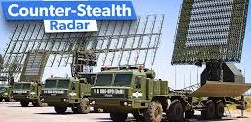
China has also demonstrated significant progress in counter-stealth technologies. Satellite imagery from late 2024 indicates China is constructing a counter-stealth radar system on Triton Island in the South China Sea. This system is expected to enhance China’s surveillance capabilities, potentially challenging the operational effectiveness of stealth aircraft in the region. ​

Reportedly, Chinese military scientists have developed a novel stealth material capable of defeating anti-stealth radars. Laboratory tests reveal that this ultra-thin coating can effectively absorb low-frequency electromagnetic waves from multiple angles, a feat previously considered unattainable.

These developments underscore a global emphasis on advancing stealth capabilities and counter-stealth measures, reflecting the urgent and competitive nature of modern military technology.

Stealth technology has transformed air warfare, enabling aircraft to evade detection by radar, infrared, and other sensors, thus allowing them to operate deep within contested airspace. Since its introduction, stealth has provided a significant tactical advantage, reshaping military strategies and doctrines. However, this advantage has not gone unchallenged. Counter-stealth technologies have emerged to detect and neutralise stealth aircraft, creating a dynamic, ongoing competition. With the advent of sixth-generation air warfare, this battle is poised to escalate, driven by cutting-edge innovations on both sides.


Evolution of Stealth Technology.

Stealth technology, often termed “low observable technology,” minimises an aircraft’s detectability by reducing its radar cross-section (RCS), infrared signature, and acoustic emissions. Its origins trace back to World War II with rudimentary efforts like camouflage, but it gained prominence in the late 20th century. The Lockheed F-117 Nighthawk marked a breakthrough. Its angular, faceted design scattered radar waves, while radar-absorbent materials (RAM) absorbed them, significantly reducing its RCS. The F-117’s success during the 1991 Gulf War underscored stealth’s potential, penetrating Iraqi defences undetected to deliver precision strikes.

Subsequent advancements refined stealth capabilities. The Northrop Grumman B-2 Spirit, a flying wing design, eliminated sharp edges and incorporated advanced RAM, achieving an even smaller RCS. By the early 2000s, fifth-generation fighters like the Lockheed Martin F-22 Raptor and F-35 Lightning II integrated stealth with combat versatility. The F-22 features a sleek, aerodynamic shape, internal weapon bays to avoid protrusions, and coatings that dampen radar returns. The F-35 enhances this with sensor fusion, networking capabilities, and reduced infrared signatures through engine design. These aircraft exemplify stealth’s evolution from a specialised feature to a core attribute of modern fighters, blending low observability with supercruise, advanced avionics, and multirole functionality.

The technology hinges on several principles: shaping to deflect radar waves, materials like RAM or composites to absorb energy, and electronic countermeasures to mask emissions. However, stealth is not invisibility; its effectiveness depends on the opponent’s detection capabilities, setting the stage for counter-stealth advancements.


Current Counter-Stealth Measures

As stealth technology matured, adversaries developed methods to detect these elusive aircraft, exploiting their residual signatures. One prominent approach is using low-frequency radars like VHF or UHF bands. Unlike the high-frequency radars (X-band) that stealth designs counter, low-frequency systems detect larger structural shapes, bypassing some stealth optimisations. Russia’s Nebo-M radar, for instance, operates in these bands, potentially spotting stealth aircraft at longer ranges. However, their lower resolution limits targeting accuracy, requiring integration with other systems.

Infrared Search and Track (IRST) systems offer another countermeasure, detecting heat signatures from engines or airframe friction. Modern fighters like Russia’s Su-35 employ IRST to track stealth aircraft, especially during afterburner use when infrared emissions spike. Stealth designs mitigate this with exhaust shielding and cooling, but complete suppression remains challenging.

Passive radar systems represent a third avenue. These use ambient electromagnetic signals to detect disturbances caused by an aircraft’s passage. Systems like China’s DWL002 exploit this principle, offering a stealth-resistant, hard-to-jam alternative to active radar. Networked sensors enhance this capability, combining data from multiple sources to pinpoint anomalies.

Despite these advances, counter-stealth faces hurdles. Low-frequency radars struggle with clutter and precision, IRST is range-limited and weather-dependent, and passive systems require sophisticated processing to filter noise. For now, false positives and integration challenges further complicate their deployment, ensuring that stealth retains an edge.


The Stealth vs. Counter-Stealth Dynamics

Sixth-generation fighters, currently under development, promise to elevate this contest. Programs like the U.S. Next Generation Air Dominance (NGAD), Europe’s Future Combat Air System (FCAS), and the UK’s Tempest aim to redefine air warfare with advanced stealth and counter-stealth innovations.

Stealth Advancements. Sixth-generation stealth may transcend current designs. Metamaterials, engineered structures with unique electromagnetic properties, could dynamically adapt to incoming radar waves, reducing RCS beyond what static RAM achieves. Research into adaptive camouflage might minimise visual and acoustic signatures, blending aircraft into their surroundings. Enhanced infrared suppression, possibly through novel cooling systems or exhaust shaping, could further mask heat emissions.

Integration with Other Technologies.  Other emerging technologies amplify stealth’s role. Optionally manned or unmanned configurations, as envisioned in NGAD, allow riskier missions without pilot exposure. “Loyal wingman” drones, networked with manned fighters, could extend sensor reach or act as decoys, preserving stealth by misdirecting detection efforts. Directed energy weapons, like lasers, might replace traditional munitions, reducing protrusions and maintaining a low profile. These advancements aim to keep stealth aircraft ahead of evolving threats.

Counter-Stealth Advancements. Counter-stealth technologies are equally ambitious. Quantum radar, leveraging quantum entanglement, could detect stealth aircraft by analysing subtle disturbances unreadable by conventional systems. Though experimental, its theoretical range and precision threaten current stealth paradigms. Using dispersed transmitters and receivers, multi-static radar networks exploit reflections that monostatic radars miss, challenging shape-based stealth designs. Artificial intelligence (AI) and machine learning enhance detection by analysing vast sensor data, radar, infrared, and acoustic signals to identify patterns indicative of stealth aircraft. China’s advancements in networked sensors, integrating space-based platforms and ground systems, exemplify this approach. High-altitude drones or satellites could also monitor large areas, reducing the stealth’s ability to hide in clutter. These developments suggest a future where no aircraft remains truly undetectable.

Strategic Dynamic in Context. Specific programs illustrate this duality. The U.S. NGAD emphasises stealth supremacy, pairing manned fighters with autonomous drones. Europe’s FCAS prioritises system-of-systems integration, potentially balancing stealth with counter-detection capabilities. China’s approach hints at advanced stealth and quantum-based counters, reflecting a dual-track strategy. This global race ensures that sixth-generation warfare will hinge on the stealth-counter-stealth balance.


Strategic Implications and Future Trends

The interplay between stealth and counter-stealth reshapes military strategy. If counter-stealth gains parity, stealth’s cost, billions per aircraft, may outweigh its benefits, prompting a pivot to speed, electronic warfare, or expendable drones. The F-35, costing over $100 million per unit, exemplifies this investment; effective detection could render such platforms vulnerable, shifting budgets toward countermeasures or alternative systems.

Tactically, a robust counter-stealth environment might force reliance on stand-off weapons, beyond-visual-range engagements, or networked operations with unmanned assets. Electronic warfare, jamming enemy sensors, could complement stealth, maintaining an edge even as detection improves. Conversely, if stealth outpaces counters, air superiority will favour nations with advanced fighters, reinforcing doctrines built around penetration and surprise.

Geopolitically, the U.S. seeks to preserve stealth dominance, while China and Russia invest in counter-stealth to challenge it. This rivalry drives innovation but risks escalation, as each side counters the other’s advances. Future trends may see cyber warfare targeting stealth and counter-stealth systems, exploiting their reliance on software. Space-based sensors could tilt the balance toward detection, while AI-driven autonomy might redefine engagement rules. The battlefield will grow more complex, with stealth and counter-stealth as pivotal elements in a networked, multi-domain conflict.


Conclusion

The contest between stealth and counter-stealth is a cornerstone of air warfare’s evolution. From the F-117’s debut to the sixth-generation horizon, stealth has driven tactical innovation, countered by increasingly sophisticated detection methods. As programs like NGAD and FCAS take flight, this battle will intensify, blending advanced materials, AI, and quantum technologies. Its outcome will dictate air combat’s future, shaping strategies, budgets, and global power. Neither side will claim absolute victory soon; their mutual advancement ensures a perpetual race, defining sixth-generation warfare and beyond.


Please Do Comment.


1976
Default rating

Please give a thumbs up if you  like The Post?


Link to the article on the website:-

Stealth Vs Anti-Stealth! Can China’s Cutting-Edge Radar ‘Trap’ U.S. F-47 As Next-Gen Warfare Heats-Up; Who Will Win The Race?


For regular updates, please register your email here:-

Subscribe


References and credits

To all the online sites and channels.

Pics Courtesy: Internet

Disclaimer:

Information and data included in the blog are for educational & non-commercial purposes only and have been carefully adapted, excerpted, or edited from reliable and accurate sources. All copyrighted material belongs to respective owners and is provided only for wider dissemination.


References:-

  1. Kopp, Carlo. “Evolving Radar Technologies and Their Impact on Stealth.” Air Power Australia Analysis, 2010.
  1. Trager, Jason. “Stealth Fighter Evolution: Signature Reduction vs. Sensor Improvements.” MIT Lincoln Laboratory Report, 2019.
  1. Raska, Michael. “The Sixth-Generation Air Combat System: Stealth, AI, and Network-Centric Warfare.” RSIS Working Paper Series, 2022.
  1. Goure, Daniel. “Penetrating Counter-Air: The Future of Air Superiority.” Lexington Institute Report, 2021.
  1. Sukhankin, Sergey. “Russian Advances in Radar and Electronic Warfare: A Challenge to Western Stealth?” Journal of Strategic Studies, 2020.
  1. Axe, David. “Stealth Is Dying—And the U.S. Military Knows It.” Forbes, 2023.
  1. Tirpak, John A. “Next-Gen Air Dominance: The Road to 2035.” Air & Space Forces Magazine, 2021.
  1. The War Zone. “USAF’s Secretive Sixth-Generation Fighter Could Render Current Stealth Fighters Obsolete.” The Drive, 2022.
  1. RUSI (Royal United Services Institute). “The Future of Stealth: Counter-Stealth Threats and Military Balances.” RUSI Analysis Report, 2023.
  1. U.S. Congressional Research Service. “Fighter Aircraft Development: Trends in Stealth and Counter-Stealth.” CRS Report R46953, 2022.
  1. Chinese Academy of Military Science. “The Future of Air Combat: 2030-2050.” Beijing, 2023.
  1. NATO Science & Technology Organization. “Emerging Radar Technologies and Their Impact on Air Superiority.” STO-TR-AVT-321, 2023.
English हिंदी