
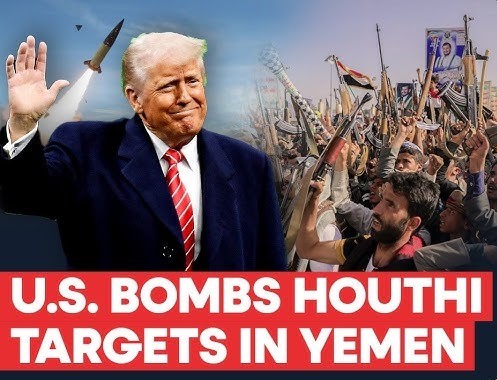
644: TRUMP’S AGGRESSIVE STANCE ON THE HOUTHIS: DEEPENING OF CONFLICT


The conflict in Yemen, marked by the rise of the Iran-backed Houthi movement, has been a persistent source of regional instability. Since late 2023, the United States has been engaged in a series of military strikes against Houthi rebels in Yemen, a campaign that has escalated sharply under the Trump administration. The Houthis, an Iran-backed Shia militia controlling much of western Yemen, including the capital Sanaa, have disrupted global trade by attacking commercial shipping in the Red Sea and Gulf of Aden with missiles and drones. These actions, initially framed as solidarity with Palestinians amid the Israel-Hamas conflict, have drawn the ire of the U.S., which seeks to secure vital maritime routes and counter Iran’s regional influence. The strikes represent one of the most significant U.S. military engagements in the Middle East in recent years, raising questions about their strategic efficacy, humanitarian toll, and long-term implications for Yemen’s decade-long civil war.


Background.

The Houthis, officially known as Ansar Allah, emerged in the 1990s as a Zaidi Shia resistance group in northern Yemen. They opposed Saudi influence and the Yemeni government’s perceived corruption and mismanagement. Over time, the Houthis gained strength, eventually seizing control of the capital, Sanaa, in 2014. Their expansion led to a Saudi-led military intervention in 2015, resulting in a protracted war that has devastated Yemen. Backed by Iran with weapons, training, and financing, the group has since consolidated control over Yemen’s northwest, including the strategic port city of Hodeida.

Their attacks on Red Sea shipping, which carries 10-15% of global trade, began in earnest in November 2023, ostensibly targeting vessels linked to Israel in response to the Gaza conflict. However, the Houthis’ targeting has often been indiscriminate, hitting ships from various nations, including those with no clear Israeli ties. By early 2025, the Houthis had conducted over 100 maritime attacks, sinking several vessels, killing crew members, and forcing shipping companies to reroute around Africa’s Cape of Good Hope, adding billions in costs. Their arsenal—ballistic missiles, cruise missiles, and explosive-laden drones—has proven surprisingly resilient despite years of Saudi-led and U.S. airstrikes. The group’s ability to strike at range, coupled with their defiance of international pressure, prompted the U.S. to act decisively, viewing the Houthis as both a regional security threat and a proxy for Iran’s ambitions.


Aggressive U.S. Response: From Restraint to Escalation

Under President Biden, U.S. strikes on the Houthis, which began in January 2024 as part of Operation Prosperity Guardian, focused on degrading their ability to launch attacks. These operations targeted missile launch sites, radar systems, and drone storage facilities, often in coordination with the United Kingdom and with tacit support from Saudi Arabia and the UAE. The goal was to limit civilian casualties while signalling resolve, but the strikes failed to deter Houthi aggression. By mid-2024, maritime attacks continued unabated, and the Houthis began targeting U.S. and allied naval assets directly.

The Trump administration, taking office in March 2025, has adopted a more aggressive posture. Drawing on lessons from prior campaigns, the U.S. shifted its focus to Houthi leadership, command-and-control nodes, and critical infrastructure, including sites in urban areas like Sanaa. The Pentagon deployed a robust array of assets: the USS Harry S. Truman carrier strike group, F-22 and F-35 jets, and B-2 stealth bombers operating from Diego Garcia. Over 30 targets were struck in mid-March alone, including Sanaa International Airport—used for both civilian and military purposes—military bases in Saada, and communication networks in Hodeida. Described as one of the largest bombing missions in Yemen in years, these strikes marked a clear escalation.

The U.S. deployment of B-2 Spirit stealth bombers to Diego Garcia, a strategic base in the Indian Ocean, appears to be part of a broader military response to ongoing Houthi attacks in Yemen and escalating tensions with Iran, which backs the Houthis. While the Pentagon hasn’t explicitly confirmed the deployment is solely in response to Houthi actions, the timing aligns with intensified U.S. airstrikes against Houthi targets. Diego Garcia’s significance lies in its distance from Houthi and Iranian missile ranges—about 2,400 miles from Iran and over 2,200 miles from Yemen—making it a secure staging point compared to bases in the Gulf. The B-2s, capable of carrying massive payloads like the 30,000-pound GBU-57/B Massive Ordnance Penetrator, were used in October 2024 to strike Houthi bunkers, signaling their role in precision strikes against fortified targets. Recent satellite imagery and open-source intelligence indicate at least six B-2s, supported by C-17 cargo planes and KC-135 tankers, are now at Diego Garcia, a notable buildup given the U.S. has only 20 B-2s in its fleet.

This move likely serves multiple purposes: deterring further Houthi attacks, signaling to Iran amid stalled nuclear talks, and preparing for potential escalation. The deployment could also be a response to Houthi resilience despite U.S. and UK strikes, which have killed dozens but haven’t stopped their attacks. However, the scale of the B-2 presence suggests aims beyond just the Houthis, who lack sophisticated air defences. Analysts point to Iran’s nuclear facilities or regional proxies as potential targets, especially after warnings from the current administration about holding Iran accountable for Houthi’s actions.


The Houthi Response: Defiance and Adaptation

Far from capitulating, the Houthis have vowed to escalate their campaign. In March 2025, they declared all U.S. and Israeli-linked ships “legitimate targets,” expanding their scope to include any vessel transiting the Red Sea. They’ve also targeted U.S. drones and warships, though with limited success. Their rhetoric, amplified by state media, frames the U.S. strikes as imperialist aggression, rallying domestic support. On X, posts from Houthi-aligned accounts boast of resilience, though they lack specifics and reflect the group’s propaganda efforts.

Operationally, the Houthis have adapted by dispersing weapons, using civilian infrastructure as cover, and accelerating Iranian resupply via smuggling routes. Their ability to absorb losses while maintaining attacks underscores the limits of airpower against a battle-hardened insurgency. Some experts suggest a ground component or special operations could more effectively disrupt Houthi leadership, but this carries immense risks and lacks political appetite in Washington.


US Objectives and Challenges

The U.S. campaign has three primary objectives: neutralise the Houthi threat to Red Sea shipping, weaken their military capabilities, and send a message to Iran about the costs of supporting proxies. The strikes have disrupted Houthi operations, destroying key weapons stockpiles and delaying some attacks. However, their broader success is uncertain.  Their decentralised structure, local support, and Iranian resupply make them a difficult target for airpower alone.

Analysts argue that airstrikes, while tactically effective, are unlikely to achieve strategic victory without complementary efforts. The Houthis’ maritime attacks require relatively few resources—cheap drones and missiles launched from mobile sites—making it hard to degrade their capabilities fully. Moreover, their control over Yemen’s rugged terrain and urban centers complicates targeting without risking civilian lives. The U.S. faces a delicate balancing act: projecting strength while avoiding a quagmire in a conflict with no clear endgame.

Politically, the campaign risks domestic backlash if civilian casualties mount or if it appears to entangle the U.S. in another protracted war. Internationally, allies like Saudi Arabia and the UAE, wary of Houthi retaliation and seeking a détente with Iran, have distanced themselves from the strikes, leaving the U.S. to act essentially alone.


Geopolitical Implications

Humanitarian Implications. Yemen, already the site of the world’s worst humanitarian crisis, faces further strain from the U.S. campaign. Over 24 million Yemenis—80% of the population—require aid, with millions facing famine. Strikes on infrastructure like Sanaa’s airport and Hodeida’s port, a lifeline for food and fuel imports, threaten to exacerbate shortages. While the U.S. insists it avoids purely civilian targets, the Houthis’ integration of military assets into urban areas increases the risk of collateral damage.

Regional Escalation Risks. There is a real possibility that the conflict could spill over into neighbouring countries. The Houthis have demonstrated their capability to strike deep into Saudi and UAE territory. If the U.S. strikes continue, the Houthis might expand their attacks, targeting American military installations in the Middle East.

U.S.-Iran Tensions. The Houthis are widely regarded as an Iranian proxy. While Iran denies direct involvement in Houthi attacks, it provides significant financial, logistical, and military support. The U.S. strikes sent a clear message to Tehran that its regional influence will be countered. However, this escalation also raises the risk of a broader U.S.-Iran confrontation, particularly if Iran chooses to retaliate by increasing support for the Houthis or other regional proxies.

Impact on Red Sea Trade. The Red Sea is a crucial global shipping route, and the ongoing conflict threatens vital trade flows. The U.S. military operations aim to secure these waters, but prolonged hostilities could deter commercial shipping, increase insurance costs, and disrupt global supply chains, particularly for oil and consumer goods.


Looking Ahead: A Path to Resolution

As of April 2025, the U.S. shows no signs of relenting, with Pentagon officials promising “overwhelming lethal force” until the Houthi threat subsides. Yet the campaign’s long-term prospects remain murky. Historical parallels suggest air campaigns alone rarely defeat entrenched militias. A diplomatic track, potentially involving UN-led talks to address Houthi grievances like Gaza aid blockages, could reduce maritime attacks but would require concessions the U.S. and its allies are loath to make.

The broader Yemen conflict, pitting the Houthis against the exiled government and its Gulf backers, complicates matters. Without progress toward a ceasefire or power-sharing deal, U.S. strikes risk becoming a sideshow in a larger war. The Red Sea remains a flashpoint, with global trade and regional stability hanging in the balance. The Houthis, battered but unbowed, continue to defy the world’s sole superpower, ensuring Yemen’s tragedy endures.


Conclusion

The U.S. strikes against the Houthis mark a significant escalation in Yemen’s ongoing war and the broader struggle for influence in the Middle East. While these operations aim to protect global trade and deter aggression, they also carry the risk of unintended consequences, including regional escalation and civilian casualties. The challenge for the U.S. will be to balance military action with diplomatic efforts to prevent the conflict from spiralling out of control. Without a comprehensive strategy that addresses both the military and political dimensions of the crisis, Yemen’s war will likely persist.


Please Add Value to the write-up with your views on the subject.


1943
Default rating

Please give a thumbs up if you  like The Post?


For regular updates, please register your email here:-

Subscribe


References and credits

To all the online sites and channels.

Pics Courtesy: Internet

Disclaimer:

Information and data included in the blog are for educational & non-commercial purposes only and have been carefully adapted, excerpted, or edited from reliable and accurate sources. All copyrighted material belongs to respective owners and is provided only for wider dissemination.


References:-

  1. RAND Corporation. The Future of U.S. Policy in Yemen: Challenges and Opportunities. Rand.org, 2024.
  1. Brookings Institution. “The Houthis’ Long War: How U.S. Strikes Might Change the Conflict.” Brookings.edu, 2024.
  1. Carnegie Endowment for International Peace. “Gulf Security and the Yemen War: How Regional Powers Are Shaping the Battlefield.” CarnegieEndowment.org, 2024.
  1. Chatham House. “Red Sea Tensions and Global Trade Security: The Houthi Factor.” ChathamHouse.org, 2024.
  1. The Soufan Center. “Maritime Security in the Red Sea: The Growing Threat from Non-State Actors.” SoufanGroup.com, 2024.
  1. United Nations Security Council Reports on Yemen. UNSC Resolutions and Reports on the Situation in Yemen. Un.org, 2024.
  1. The Washington Post. “U.S. Military Strikes Houthis as Red Sea Attacks Intensify.” The Washington Post, 2024.
  1. Al Jazeera. “Houthi Retaliation: What’s Next After U.S. and UK Strikes?” AlJazeera.com, 2024.
  1. The Guardian. “Red Sea Crisis: How Houthi Attacks on Shipping Disrupt Global Trade.” TheGuardian.com, 2024.
  1. The New York Times. “Biden’s Yemen Dilemma: Fighting the Houthis Without Escalating War.” NYTimes.com, 2024.
  1. International Crisis Group. Yemen’s War and Its Regional Implications. CrisisGroup.org, 2024.

643: Bangladesh Playing with Fire


Bangladesh invites  China to build an airbase at Lalmonirhat and execute the Teesta river project.


Yunus Making Provocative Statements.


Discussion on the subject with Gaurav Sawant on India Today.

(07 Min and 15 Sec onwards)


Please Add Value to the post with your views on the subject.


1943
Default rating

Please give a thumbs up if you  like The Post?


For regular updates, please register your email here:-

Subscribe


References and credits

To all the online sites and channels.

Pics Courtesy: Internet

Disclaimer:

Information and data included in the blog are for educational & non-commercial purposes only and have been carefully adapted, excerpted, or edited from reliable and accurate sources. All copyrighted material belongs to respective owners and is provided only for wider dissemination.


642: GLOBAL CITIZENSHIP IN THE 21ST CENTURY


Globalisation has transformed the way individuals perceive their role in the world. In the 21st century, global citizenship has gained significant traction, emphasising that people are citizens of their respective nations and members of a broader global community. This shift is driven by technological advancements, increased global interconnectivity, and pressing transnational challenges such as climate change, economic inequality, and geopolitical conflicts.

Defining Global Citizenship. Global citizenship refers to recognising that one’s responsibilities and rights extend beyond national borders. It encompasses an awareness of global issues, a commitment to cross-cultural understanding, and active participation in shaping a just, sustainable, and peaceful world. Global citizenship does not mean renouncing one’s national identity; it is about embracing a broader perspective that acknowledges all people’s shared humanity and interdependence. A global citizen values inclusivity, embraces diversity, and seeks to contribute positively to humanity.


Role of Global Citizenship in Addressing Global Challenges

Global challenges such as climate change, economic inequality, pandemics, and geopolitical conflicts require collective action in an increasingly interconnected world. Global citizenship addresses these issues by fostering awareness, ethical responsibility, and collaborative solutions that transcend national boundaries.

Interconnectivity & Digital Revolution. The digital revolution has transformed global citizenship by fostering instant communication and real-time engagement with global issues. Social media platforms connect people across borders, amplifying voices and mobilising movements like #BlackLivesMatter and #MeToo, which address systemic injustices internationally. Digital activism allows individuals to participate in global discussions, sign petitions, and support humanitarian causes from anywhere in the world. However, this interconnectivity also presents challenges like misinformation and cyber threats. Responsible global citizenship in the digital era requires critical thinking, ethical media consumption, and leveraging technology to promote awareness, advocacy, and positive social change.

Climate Change and Environmental Sustainability. Global citizens are crucial in addressing climate change by advocating for sustainable practices, strong climate policies, and environmental protection. Movements like Fridays for Future, led by youth activists, highlight the power of collective action in demanding policy change. International agreements such as the Paris Climate Accord demonstrate the importance of global cooperation in reducing carbon emissions. Individuals contribute by promoting renewable energy, reducing waste, and holding corporations accountable for environmental damage. Through conscious consumption and advocacy for green policies, global citizens help drive the transition toward a more sustainable future and combat environmental degradation.

Education & Cultural Exchange. Education and cultural exchange are fundamental to global citizenship, fostering understanding, cooperation, and empathy among diverse societies. Programs like Erasmus, Fulbright, and Model United Nations provide students with international exposure, broadening their perspectives on global issues. Learning multiple languages and engaging in cultural immersion experiences help individuals appreciate different worldviews, reduce stereotypes and promote intercultural dialogue. Exposure to diverse traditions and histories cultivates respect and adaptability, essential qualities in an interconnected world. By encouraging inclusive education and international collaboration, global citizens contribute to a more informed, tolerant, and unified global community, strengthening cross-cultural relationships and cooperation.

Human Rights & Social Justice. Global citizenship is rooted in the commitment to human rights and social justice, ensuring that every individual has access to dignity, freedom, and equality. Activists and organisations like Amnesty International and Human Rights Watch work to expose human rights violations and advocate for marginalised communities. Issues such as gender equality, LGBTQ+ rights, and refugee protection require global solidarity, as discrimination and oppression persist in many societies. Digital platforms amplify these efforts, allowing activists to rally international support. Global citizens play a crucial role in creating a more equitable world by actively promoting human rights, challenging injustices, and supporting humanitarian initiatives.

Economic Inequality and Sustainable Development. Global citizens contribute to reducing economic inequality by supporting fair trade, ethical labour practices, and poverty alleviation initiatives. The United Nations’ Sustainable Development Goals (SDGs) provide a framework for addressing global disparities in wealth, education, and employment. Microfinance programs, social entrepreneurship, and impact investing empower underprivileged communities by providing financial resources and business opportunities. Additionally, advocating for corporate responsibility and policies that promote economic justice helps ensure more equitable wealth distribution. By making informed consumer choices and supporting sustainable development efforts, global citizens help create a more inclusive global economy that benefits people across all socioeconomic backgrounds.

Global Health and Pandemic Response. The COVID-19 pandemic underscored the need for global cooperation in healthcare, vaccine distribution, and crisis management. International organisations such as the World Health Organization (WHO), Red Cross, and Doctors Without Borders rely on global solidarity to address health crises and provide medical aid in vulnerable regions. Public awareness campaigns help combat misinformation, promote vaccination, and encourage responsible health behaviours. Additionally, scientific collaboration and data-sharing between countries accelerate medical advancements. By supporting global health initiatives and advocating for equitable access to healthcare resources, global citizens help strengthen international preparedness for future pandemics and health emergencies.

Conflict Resolution and Peacebuilding. Promoting diplomacy, cultural exchange, and international cooperation is essential in preventing and resolving conflicts. Organisations like the United Nations, peacekeeping forces, and humanitarian NGOs work to mediate disputes and provide aid in war-torn regions. Global citizens support these efforts by fostering intercultural understanding and advocating for nonviolent solutions. Education in peace studies and conflict resolution helps individuals develop negotiation skills and a deeper appreciation for diverse perspectives. By promoting dialogue, tolerance, and cooperation, global citizens help prevent violence, address the root causes of conflicts, and contribute to long-term peace and stability worldwide.


Policy Approaches for Global Citizenship

Global Citizenship Education (GCED) Policies. Many countries have embraced UNESCO’s Global Citizenship Education (GCED) framework, incorporating global issues into national curricula. Governments can mandate climate change, human rights, and intercultural dialogue to equip students with the knowledge and critical thinking skills necessary for responsible global engagement. Funding international exchange programs, like Erasmus+, Fulbright, and United Nations Youth Delegates, fosters cross-cultural understanding and cooperation. By integrating global perspectives into education, policymakers help cultivate informed, empathetic individuals who can address global challenges. Strengthening GCED policies ensures that future generations develop the skills and values needed for meaningful international collaboration and problem-solving.

 Sustainability and Climate Action Policies. Strong government policies are essential for addressing climate change and promoting sustainability. Legislation supporting renewable energy, waste reduction, and carbon neutrality can significantly reduce environmental damage. Aligning national policies with the United Nations’ Sustainable Development Goals (SDGs) ensures a holistic approach to education, economic growth, and environmental sustainability. Governments can incentivise businesses to adopt green practices, enforce environmental regulations, and promote public awareness campaigns on climate responsibility. By implementing sustainability-focused policies, nations can contribute to global efforts to mitigate climate change while fostering economic and social systems supporting long-term environmental resilience and resource conservation.

 Digital Governance and Cyber Ethics. In an increasingly digital world, policies that ensure equitable internet access and responsible online behaviour are crucial for global citizenship. Internet accessibility laws help bridge the digital divide by expanding technological infrastructure and providing affordable connectivity in underserved regions. Governments and tech companies must also regulate misinformation, promoting media literacy initiatives to counter fake news and propaganda. Addressing online hate speech, ensuring data privacy protections, and enforcing international cyber laws create safer digital spaces while upholding free speech. By developing comprehensive digital governance policies, societies can foster an inclusive, ethical, and well-regulated digital environment that benefits all users.

 Migration and Human Rights Protections. Effective migration policies are essential for protecting the rights of displaced individuals and fostering inclusive societies. Fair immigration laws, asylum protections, and integration programs ensure that refugees and migrants can access education, healthcare, and employment opportunities. International labour rights policies must safeguard workers from exploitation, providing fair wages and safe working conditions across borders. In collaboration with organisations like the International Labour Organization (ILO) and the United Nations, governments must uphold human rights standards and advocate for policies that promote dignity and equality for all. Strengthening migration policies fosters social cohesion and upholds global humanitarian commitments.Bottom of Form


Practical Implementation Strategies

Educational Institutions. Schools and universities play a vital role in fostering global citizenship through structured programs and initiatives. Implementing mandatory global citizenship modules ensures students engage with sustainability, human rights, and international relations. Study-abroad scholarships and cultural exchange programs enable students to experience diverse perspectives firsthand, promoting intercultural understanding. Additionally, expanding digital learning platforms allows students worldwide to collaborate on global issues, breaking down geographical barriers. Universities can also partner with international organisations to provide experiential learning opportunities, empowering students to apply their knowledge in real-world global contexts and preparing them to contribute meaningfully to society.

 Corporate Social Responsibility (CSR). Businesses have a significant role in promoting global citizenship by integrating ethical and sustainable practices into their operations. Companies can adopt fair trade policies, commit to carbon neutrality, and implement diversity and inclusion initiatives to ensure responsible corporate behaviour. Public-private partnerships between corporations, NGOs, and governments can drive large-scale social impact projects, such as renewable energy programs, education funding, and global health initiatives. By prioritising corporate social responsibility (CSR), businesses can contribute to solving global challenges while fostering economic growth. Ethical business leadership encourages accountability and inspires consumers to support companies that align with sustainable and equitable values.

 Community and Grassroots Movements. Grassroots activism and community initiatives are essential in translating global citizenship ideals into local action. Encouraging volunteerism in sustainability projects, refugee assistance programs, and human rights campaigns empowers individuals to make a tangible impact. Citizen diplomacy strengthens cross-cultural understanding and global cooperation through cultural exchanges, interfaith dialogues, and local advocacy efforts. These movements rely on collective action, fostering civic responsibility and social change from the ground up. Individuals can bridge the gap between global issues and community-level solutions by supporting local organisations and advocating, creating a more interconnected and compassionate world.

Technology and Media Engagement. The digital space offers powerful tools for promoting global citizenship, but responsible engagement is necessary. Fact-checking initiatives, responsible journalism, and user-based content moderation help combat misinformation and ensure accurate reporting on global issues. Social media campaigns raise awareness about climate change, human rights, and public health, mobilising global audiences for collective action. Platforms like Twitter, Instagram, and TikTok enable activists to amplify their voices, engage in discussions, and influence policy changes. By harnessing technology and media responsibly, individuals and organisations can educate, inspire, and advocate for a more informed, ethical, and connected global society.


Challenges to Global Citizenship

Nationalism and Political Resistance. A significant challenge for global citizenship is the rise of nationalism and political resistance to international cooperation. Some governments prioritise national interests over global collaboration, rejecting policies related to climate action, migration, or human rights. Populist movements often frame global initiatives as threats to national sovereignty, discouraging participation in international agreements. This resistance can hinder efforts to address global issues collectively. Striking a balance between national identity and global responsibility remains challenging, as political divisions and protectionist policies limit cross-border cooperation and create tensions between global and national priorities.

Economic Disparities and Inequality. Global citizenship emphasises inclusivity and equal opportunities, but economic disparities prevent millions from engaging fully in global initiatives. Low-income communities, particularly in developing nations, often lack access to quality education, technology, and international mobility. Wealth gaps between countries affect participation in global decision-making, as poorer nations may struggle to implement policies aligned with global goals like sustainability or digital inclusion. Without addressing structural inequalities, the benefits of globalisation remain concentrated among wealthier nations and individuals, leaving marginalised communities excluded from the advantages and responsibilities of global citizenship.

Cultural and Ideological Differences. While global citizenship promotes cross-cultural understanding, deep-rooted cultural and ideological differences can create barriers. Conflicting values on gender equality, LGBTQ+ rights, and freedom of speech may hinder global cooperation. Some societies resist adopting universal human rights frameworks due to religious or traditional beliefs. Language barriers and lack of cultural awareness can also lead to misunderstandings and misrepresentations. Overcoming these differences requires open dialogue, education, and a commitment to mutual respect, but entrenched cultural divisions continue to challenge the development of a unified global identity.

Misinformation and Digital Manipulation. The internet plays a crucial role in global citizenship, but misinformation, propaganda, and cyber manipulation threaten informed participation. Fake news, deepfakes, and biased media distort public perception of global issues, leading to polarisation and distrust. Some governments and organisations exploit digital platforms to spread false narratives, undermining efforts to promote truth, transparency, and global cooperation. Individuals may struggle distinguishing credible information from misleading content without strong media literacy and fact-checking initiatives. This digital challenge limits the ability of global citizens to engage meaningfully with international issues and advocate for positive change.

Limited Access to Education and Technology. Global citizenship thrives on education and digital connectivity, yet millions lack access to both. In many developing regions, inadequate schooling, lack of internet access, and technological illiteracy prevent individuals from participating in global discourse. Without educational policies promoting global awareness, many people remain unaware of pressing international issues and their role in addressing them. Bridging the digital and educational divide is essential for fostering a more inclusive global citizenry. Still, the high costs of technology and infrastructure development continue to pose challenges, particularly in underserved communities.

Weak International Governance and Enforcement. Global governance structures, such as the United Nations and international courts, promote global citizenship values. However, political conflicts, lack of enforcement power, and differing national interests often limit their effectiveness. Countries may sign international agreements, such as the Paris Climate Accord or human rights treaties, but fail to implement them due to economic or political constraints. Without strong mechanisms for accountability and cooperation, global citizenship remains an aspirational concept rather than a fully realised practice. Strengthening global institutions and ensuring compliance with international commitments is a significant challenge.

Environmental and Climate Barriers. Climate change presents a challenge and a call to action for global citizenship. Rising sea levels, natural disasters, and resource shortages disproportionately impact vulnerable populations, increasing displacement and deepening inequalities. Global responses to climate change often face resistance due to economic interests, reliance on fossil fuels, and inadequate policy enforcement. While sustainability is a key component of global citizenship, the slow pace of international action threatens environmental stability. This challenge requires stronger global leadership, financial investments in green technologies, and greater public awareness to drive behavioural and policy changes.

Ethical Dilemmas and Conflicting Priorities. Global citizenship encourages collective responsibility, but ethical dilemmas and competing interests often complicate decision-making. For example, balancing economic development with environmental sustainability presents conflicts for both governments and corporations. Similarly, addressing human rights violations may require sanctions or intervention, but these actions can create diplomatic tensions. Nations, businesses, and individuals frequently face difficult choices between profit, national security, and ethical considerations. Finding common ground and creating fair policies that align with global citizenship principles remains an ongoing challenge, particularly when immediate economic or political gains conflict with long-term global well-being.


Conclusion

Global citizenship is more relevant than ever in the 21st century. Global citizenship is essential for tackling complex global challenges that no single nation can solve alone. By fostering a sense of shared responsibility, encouraging cross-border collaboration, and promoting ethical engagement, global citizens help create a more just, sustainable, and peaceful world. For global citizenship to be meaningful, it must be backed by strong policies and practical implementation strategies. Governments, educators, corporations, and digital platforms must collaborate to foster inclusive, informed, and action-oriented global citizens. Addressing challenges such as digital inequality, misinformation, and political resistance will ensure that global citizenship leads to real-world impact. While challenges exist, fostering a sense of shared responsibility and ethical engagement can lead to a more just and sustainable world. The balance between national identity and global solidarity will define the future of humanity’s collective progress.


Please Do Comment.


1943
Default rating

Please give a thumbs up if you  like The Post?

For regular updates, please register your email here:-

Subscribe


References and credits

To all the online sites and channels.

Pics Courtesy: Internet

Disclaimer:

Information and data included in the blog are for educational & non-commercial purposes only and have been carefully adapted, excerpted, or edited from reliable and accurate sources. All copyrighted material belongs to respective owners and is provided only for wider dissemination.


References:-

  1. Appiah, Kwame Anthony. Cosmopolitanism: Ethics in a World of Strangers. New York: W.W. Norton & Company, 2006.
  1. Falk, Richard. The Declining World Order: America’s Imperial Geopolitics. New York: Routledge, 2004.
  1. Sen, Amartya. The Idea of Justice. Cambridge: Harvard University Press, 2009.
  1. Archibugi, Daniele. “Cosmopolitan Democracy and its Critics: A Review.” European Journal of International Relations, vol. 10, no. 3, 2004, pp. 437-473.
  2. Benhabib, Seyla. “The End of Sovereignty? Global Citizenship and Democratic Attachments.” Public Culture, vol. 19, no. 3, 2007, pp. 27-39.
  1. Delanty, Gerard. “The Cosmopolitan Imagination: The Renewal of Critical Social Theory.” The British Journal of Sociology, vol. 57, no. 1, 2006, pp. 25-47.
  1. Torres, Carlos Alberto. “Global Citizenship and Global Universities: The Age of Global Interdependence and Cosmopolitanism.” Journal of Global Ethics, vol. 4, no. 1, 2008, pp. 45-56.
  1. Soysal, Yasemin Nuhoglu. “Postnational Citizenship: Reconfiguring the Familiar Terrain.” International Migration Review, vol. 22, no. 4, 1994, pp. 28-51.
  1. United Nations Educational, Scientific and Cultural Organization (UNESCO). Global Citizenship Education: Preparing Learners for the Challenges of the 21st Century. Paris: UNESCO, 2015.
  1. United Nations Development Programme (UNDP). Human Development Report 2020: The Next Frontier – Human Development and the Anthropocene. New York: UNDP, 2020.
  1. World Economic Forum. Shaping the Future of Global Education: The Role of Technology in Global Citizenship. Geneva: WEF, 2021.
  1. Amnesty International. Annual Report on Human Rights and Global Justice 2022. London: Amnesty International, 2022.
  1. Carnegie Endowment for International Peace. Global Order 2025: The Future of International Cooperation. Washington, D.C.: Carnegie Endowment, 2018.
  2. United Nations Sustainable Development Goals (SDGs). The Role of Global Citizenship in Achieving the SDGs. United Nations, 2023.
  1. Global Peace Index 2023. Measuring Peace in a Complex World. Institute for Economics & Peace, 2023.
  1. The Elders. “A Call for Ethical Leadership in Global Governance.” The Elders, 2022.
  1. World Bank. The Future of Global Citizenship in an Age of Digital Transformation. Washington, D.C.: World Bank, 2022.
English हिंदी