Article published on the “Life Of Soldier” website on 02 Sep 25
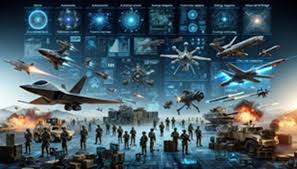
In an era marked by rapid shifts in global security dynamics, the armed forces face unprecedented challenges that necessitate a transformative approach to maintain their effectiveness and relevance. The emergence of cyber warfare, autonomous weapon systems, hybrid threats, and the militarisation of space has fundamentally altered the nature of conflict. These developments, combined with geopolitical uncertainties such as great power competition and climate-driven conflicts, necessitate that militaries be agile, forward-thinking, and capable of operating in complex and ambiguous environments. At the heart of this transformation lie two interdependent competencies: strategic leadership and innovative adaptability. These symbiotic forces form the backbone of a modern military, enabling it to anticipate, shape, and dominate the evolving battlespace while ensuring national security and sovereignty.
Strategic Leadership in the Armed Forces
Strategic leadership, the cornerstone of guiding complex military institutions through uncertainty, is both an art and a science. It requires leaders to envision the military’s role within a broader geopolitical and technological context while aligning resources with long-term objectives. Unlike tactical leadership, which focuses on immediate operational goals, strategic leadership operates at a higher level, anticipating future threats, setting clear priorities, and fostering a culture of collaboration across diverse domains. This holistic approach ensures that the armed forces remain prepared for both current and emerging challenges.
Strategic leaders, whose influence extends across all levels of the military, play a pivotal role in shaping its culture, priorities, and readiness. They must possess foresight to anticipate disruptions, emotional intelligence to navigate complex human dynamics, and the ability to make high-stakes decisions under pressure. By fostering a culture of anticipation and calculated risk-taking, strategic leaders lay the groundwork for future force structures, doctrines, and capabilities that can adapt to an unpredictable world.
Key Attributes of Strategic Leadership
Vision and Foresight. The strategic leaders of our armed forces possess a unique ability to look beyond current conflicts and capabilities, anticipating emerging threats such as cyber warfare, space militarisation, asymmetric insurgencies, and the rise of new global powers. This forward-looking approach informs decisions about developmental programs, technological investments, and international partnerships that will shape military readiness for decades to come. Their strategic foresight reassures us that our armed forces are prepared for the challenges of the future.
Complex Decision-Making. Operating in environments characterised by ambiguity and constant change, strategic leaders must navigate competing interests and nuanced geopolitical contexts. Decisions made at this level—whether to invest in next-generation fighter jets or bolster cyber defence capabilities—carry significant consequences for national security. Leaders must balance immediate needs with long-term goals, often under intense scrutiny and with incomplete information.
Clear Prioritisation. Defence resources, including budgets, personnel, and equipment, are inherently limited. Our strategic leaders must make difficult trade-offs to align resources with the most critical objectives, ensuring maximum preparedness and impact. This may involve prioritising investments in artificial intelligence over traditional platforms or reallocating personnel to specialised cyber units. Their clear prioritisation instils confidence in the effectiveness of our armed forces.
Promoting Jointness. Modern conflicts demand integrated responses across multiple domains—land, sea, air, cyber, and space—as well as coordination with government agencies, industries, and allied forces. Strategic leaders foster interoperability and collaboration, breaking down silos and overcoming inter-service rivalries to create a unified defence posture that leverages diverse capabilities.
Innovative Adaptability
While strategic leadership provides the vision and direction, innovative adaptability ensures that this vision is translated into operational success. This dynamic capability enables our armed forces to maintain a competitive edge by continuously evolving tactics, technologies, and organisational structures to meet the demands of 21st-century warfare. Innovative adaptability is not just about adopting new technologies; it’s about rethinking doctrines, streamlining decision-making processes, and embracing unconventional approaches. This approach ensures that our forces remain agile, resilient, and prepared for unexpected challenges, giving us confidence in the position of our armed forces.
The rapid evolution of warfare, exemplified by drone swarms reshaping air defence or cyber operations blurring the lines between peace and conflict, underscores the need for adaptability. Success depends not only on acquiring cutting-edge technologies but also on integrating them effectively into operational frameworks, ensuring that forces remain agile, resilient, and prepared for unexpected challenges.
Key Traits of Innovative Adaptability
-
- Indigenous Defence Technologies. Developing domestic capabilities in areas such as weapons systems, surveillance, and cyber defence reduces reliance on foreign suppliers and enables tailored solutions to meet specific national security needs. For instance, indigenous drone programs or cyber defence platforms can be customised and upgraded rapidly to address evolving threats.
-
- Evolving Combat Doctrines. Lessons from recent conflicts, simulations, and technological advancements continually reshape the principles of warfare. Leading militaries integrate these insights to refine doctrines governing troop deployment, cyber operations, and multi-domain engagements, ensuring responsiveness to dynamic threats.
-
- Modernised Training. Advances such as AI-powered war gaming, virtual reality simulators, and joint multinational exercises enhance force preparedness. These tools enable personnel to test new tactics, simulate complex scenarios, and develop adaptive thinking essential for multifaceted operational theatres.
-
- Agile Procurement. Traditional military acquisition processes are often slow, which can lead to technological obsolescence. Innovative adaptability requires streamlined procurement cycles that accelerate the development and deployment of new capabilities, enabling rapid responses to emerging threats and opportunities.
Institutionalising Adaptive Innovation. To embed innovative adaptability within military culture, several enablers are critical:-
-
- Decentralised Decision-Making. Empowering junior leaders to make swift decisions without awaiting top-down directives fosters initiative and accelerates innovation. This is particularly vital in fast-paced, dynamic battlefields where delays can be costly.
-
- Failure-Tolerant Ecosystems. Innovation thrives on experimentation, and not all experiments succeed. Militaries must cultivate a mindset where calculated risks and initial failures are seen as learning opportunities, encouraging bold ideas without fear of undue repercussions.
-
- Collaborative Networks. Partnerships with academia, private sector innovators, startups, and think tanks create a vibrant defence innovation ecosystem. These collaborations accelerate the translation of cutting-edge research into field-ready capabilities, enhancing overall readiness.
-
- Continuous Learning. Feedback loops from exercises, operations, and even failures must inform doctrine development and strategic planning. A responsive learning architecture ensures that the military evolves proactively rather than reactively.
Symbiotic Relationship
The strength of modern armed forces lies in the seamless integration of strategic leadership and innovative adaptability. Strategic leadership defines the “why” and “what” of military preparedness, setting objectives and priorities that drive the organisation’s direction. Innovative adaptability provides the “how,” equipping forces with the tools, technologies, and flexibility to execute that vision. Without leadership, innovation risks becoming unfocused, wasting resources on misaligned efforts. Without adaptability, strategies stagnate, unable to address evolving threats. Together, they create a dynamic cycle of planning, execution, and refinement, enabling militaries to shape the battlespace proactively.
For example, achieving self-reliance in defence manufacturing requires strategic leadership to prioritise reduced foreign dependency, coupled with adaptive institutions to drive innovation, foster industry partnerships, and reform procurement policies. Similarly, modern doctrines like Multi-Domain Operations (MDO) depend on leadership to set priorities and adaptability to execute through advanced training, simulations, and joint exercises.
Challenges
Balancing strategic leadership and innovative adaptability presents significant hurdles:-
-
- Resistance to Change. The hierarchical, tradition-bound nature of military institutions often resists innovations that challenge established norms. Modernising legacy systems, for instance, may face pushback from traditionalists who favour proven methods over untested technologies.
-
- Resource Constraints. Limited budgets force leaders to prioritise carefully, balancing visionary projects with immediate operational needs. Rapid procurement of cutting-edge technologies often competes with maintaining existing capabilities.
-
- Complex Coordination. Aligning services, government agencies, industries, and allies demands exceptional leadership and transparency to overcome rivalries and ensure cohesive collaboration.
-
- Human Capital Development. Building a future-ready force requires personnel who are technologically proficient, cognitively agile, emotionally resilient, and ethically grounded. Leaders must invest in education and foster an innovative mindset to counter bureaucratic inertia and drive progress.
Opportunities and Way Ahead
The evolving security landscape, driven by technologies like quantum computing, directed-energy weapons, and biotechnology, alongside geopolitical challenges like great power competition, presents opportunities for transformation. Armed forces must prioritise leadership development and innovation ecosystems, cultivating strategic and collaborative leaders and frameworks for rapid technology adoption. Partnerships with academia, industry, and allies can enhance agility and resilience.
Leaders should champion adaptability as a core value, leveraging initiatives like hackathons, innovation labs, and programs such as India’s iDEX, which engages startups to address defence challenges. Embedding adaptability, strategic thinking, and technological proficiency into training programs will develop visionary, pragmatic leaders equipped for modern complexities.
Conclusion
Strategic leadership and innovative adaptability are the twin pillars of a future-ready military. Leadership provides the vision and cultural foundation to navigate uncertainty, while adaptability delivers the tools and agility to execute it. Together, they empower armed forces to anticipate and shape the battle space, rather than merely react to it. In a world of constant change, fostering this synergy is a national priority. By cultivating visionary leaders and embracing innovation, militaries will remain proactive, resilient, and prepared, ensuring peace, stability, and sovereignty for decades to come.
Please Add Value to the write-up with your views on the subject.
For regular updates, please register your email here:-
Link to the article on the website:-
References and credits
To all the online sites and channels.
Pics Courtesy: Internet
Disclaimer:
Information and data included in the blog are for educational & non-commercial purposes only and have been carefully adapted, excerpted, or edited from reliable and accurate sources. All copyrighted material belongs to respective owners and is provided only for wider dissemination.
References:-
- Cohen, E. A. (2017). The Big Stick: The Limits of Soft Power and the Necessity of Military Force. Basic Books.
- Murray, W., & Millett, A. R. (Eds.). (2006). Military Innovation in the Interwar Period. Cambridge University Press.
- Innovations for Defence Excellence (iDEX). (2023). iDEX: Fostering Innovation for Defence
- Mintzberg, H. (2005). Strategy Bites Back: It Is Far More, and Less, Than You Ever Imagined. Pearson Education.
- Gerras, S. J., & Wong, L. (2016). Moving Beyond the Rhetoric of Adaptability. U.S. Army War College Strategic Studies Institute.
- Defense Innovation Unit (DIU), U.S. Department of Defense (2023). Annual Report.
- Betts, R. K. (2017). Military Readiness: Concepts, Choices, Consequences. Brookings Institution Press.
- Binnendijk, A., & Marler, T. (2019). A Framework for Understanding Military Adaptation and Innovation. RAND Corporation.
- Leonard, R. (2021). Principles of War and Military Innovation. Parameters, U.S. Army War College Quarterly, Vol. 51, No. 2.
- The Economist Intelligence Unit (2023). Global Defence Technology Trends: Innovation at the Frontline.