Military decision-making under stress is an intricate dance of cognitive, psychological, and environmental dynamics that determine consequences in high-stakes situations. Under the combat scenario, commanders, under intense pressure of time, obscured situation awareness, and cognitive overload, must make decisions in a matter of seconds that can make or break mission success or herald catastrophic failure. The challenges of being unique—spanning from the fog of war to sleep deprivation and environmental disarray—require adaptive approaches balancing speed, accuracy, and resilience. It is necessary to examine military decision-making under stress dynamics, scrutinising the psychological and technological aspects that impact performance. Explore frameworks such as the OODA Loop, Recognition-Primed Decision-Making, and decentralised command, and training practices including stress inoculation and scenario-based wargaming.
Frameworks for Effective Decision-Making
Military operations rely on tried templates to make decisions under stress easier:-
OODA Loop (Observe, Orient, Decide, Act). Colonel John Boyd developed the model based on rapid cycling through the processes of observation (information gathering), orientation (assessing the environment), decision, and action to surpass the foe.
Recognition-Primed Decision-Making (RPD). Good leaders draw on prior experience to recognise patterns and react automatically.
Decentralised Command. By giving authority to subordinates, units are able to stay flexible.
Military Decision-Making Challenges
Military operations create a crucible for decision-making, characterised by unique challenges that test human limits:-
Time Pressure. Combat decisions are usually made in seconds or minutes. For example, a commander of a unit will have to make a decision to engage an approaching force or not, without sufficient time for detailed examination. Under time pressure, this could lead to premature decisions, as had been the case in simulated combat manoeuvres where subjects under time pressure had lower adaptability.
High Stakes. Errors have catastrophic consequences, including death, mission failure, or tactical losses. The weight of such consequences magnifies stress, which feeds on itself in a self-reinforcing spiral in which concern further disables cognition. Research on combat stress suggests that it impairs memory, attention, and reasoning, which has a direct consequence on tactical decisions.
Ambiguity and Incomplete Information. Commanders rarely have the entire picture of the battlefield. Fog of war—ignorance regarding enemy positions, terrain, or intentions—mandates reliance on incomplete information. It is exacerbated in high-risk incidents, where systematic examinations reveal how uncertainty creates dynamic, evolving decisional environments.
Cognitive Load. Pressure overloads working memory, narrowing attention and causing tunnel vision, with people focusing on immediate threats at the expense of overall situational awareness. Psychological research indicates that under pressure, decision-makers are bound to experience decision conflict, which has negative consequences for agility and adaptability. In military commanders, it can happen in the form of indecision at critical moments.
Environmental Turmoil. Disastrous weather, noise, fatigue, and unknown situations worsen cognitive and affective stress, making rational thinking difficult. Sleep deprivation, common in extended operations, degrades performance even further and causes major impairments in decision-making ability.
Information Overload. Sensor, drone, and intelligence data can swamp decision-makers. Battlefield management systems help sort out this data, but the untrained user might be swamped; hence, the need for balanced dependence. Stress decision-making is improved by how the overload is handled to facilitate clear thinking.
Military Strategies in Decision-Making under Pressure
The military responds to these needs using disciplined practices that develop effectiveness and resilience:-
Standard Operating Procedures (SOPs). SOP-based organised responses reduce mental load by automating critical processes. For example, pilots employ pre-standardised processes to handle emergencies so that rapid response in battle is possible.
Mission Command Philosophy. This philosophy encourages junior leaders so that they can make rapid, adaptable decisions without needing orders from their superiors. It encourages flexibility in dynamic environments, such as in counterinsurgency warfare.
Stress Inoculation Training. Simulations, either live (e.g., live-fire training) or virtual (e.g., virtual reality), mimic the stress of battle. Training for combat prepares combatants to recognise physiological responses (e.g., heart rate increase) and utilise coping strategies to stay focused. Techniques such as controlled stressor exposure build resilience and improve tactical performance under stress.
Wargaming and Scenario-Based Training. These discussions aim to build mental sharpness and pattern recognition. A good example is tabletop exercises that simulate the strategy of likely enemies in anticipation of uncertainty in actual situations. Cognitive resilience research supports this, with an example of how training raises adaptation in tactical athletes.
After-Action Reviews (AARs)/Debriefs. Debriefing following every mission deconstructs failure and success, fostering group knowledge. AARs ensure that lessons from one operation are utilised to drive future decisions.
Technology Integration. Support systems, including real-time battlefield management software, filter enormous amounts of data from sensors and drones. Too much dependency can be too much for users, and training is required to achieve a balance between human judgment and technology.
Key Takeaways for Effective Stress Decision-Making
Prior Preparation is Key. Stress-like training builds toughness and ability, enabling troops to perform when under pressure. Mindfulness and breathing exercises as part of mental resilience training contribute towards clearer decision-making.
Streamline Decisions. SOPs and frameworks like OODA reduce cognitive load, allowing faster, more accurate decisions.
Enable Decentralised Leadership. Delegating authority provides flexibility because junior leaders can respond to changing situations in real time.
Foster Psychological Safety and Confidence. Resilient people, with high self-efficacy, produce higher-quality decisions in uncertain situations.
Balance Instinct with Analysis. Stress combat prefers intuitive choices, but training makes instincts reliable, moderated by experience and pattern recognition. Combat stress studies shed light on the interaction with decision-making processes, suggesting integrated coping strategies.
Conclusion
Stress decision-making in military operations depends on preparation, toughness of mind, and a formalised process. Through training, frameworks like OODA and RPD, and effective team structures, members of the military work in chaotic environments effectively. Historical examples highlight flexibility, trust, and open communication. These rules—concerned with clarity, agility, and preparedness—are not confined to the battlefield but offer solutions for any high-stress scenario. Pilots utilise OODA-loop approaches in crisis situations in aviation; surgeons are aided by stress inoculation in medicine. The military remedy demonstrates that stress cannot be eliminated, but can be channelled via systems and training to allow for sound judgment, assuring success under pressure. In the end, comprehension of these dynamics promotes improved results across the board, transforming potential weaknesses into strengths.
Please Add Value to the write-up with your views on the subject.
For regular updates, please register your email here:-
Information and data included in the blog are for educational & non-commercial purposes only and have been carefully adapted, excerpted, or edited from reliable and accurate sources. All copyrighted material belongs to respective owners and is provided only for wider dissemination.
References:-
Cannon-Bowers, J. A., & Salas, E. (1998). Making Decisions Under Stress: Implications for Individual and Team Training. American Psychological Association.
Endsley, M. R. (1995). Toward a Theory of Situation Awareness in Dynamic Systems. Human Factors: The Journal of the Human Factors and Ergonomics Society, 37(1), 32–64.
Klein, G. A. (1993). A Recognition-Primed Decision (RPD) Model of Rapid Decision Making. In G. A. Klein, J. Orasanu, R. Calderwood, & C. E. Zsambok (Eds.), Decision Making in Action: Models and Methods (pp. 138–147). Ablex Publishing.
Matthews, M. D. (2014). Head Strong: How Psychology is Revolutionising War. Oxford University Press.
Salas, E., Driskell, J. E., & Hughes, S. (1996). The Study of Stress and Human Performance. In J. E. Driskell & E. Salas (Eds.), Stress and Human Performance (pp. 1–45). Lawrence Erlbaum Associates.
Zsambok, C. E., & Klein, G. (Eds.). (1997). Naturalistic Decision Making. Lawrence Erlbaum Associates.
Driskell, J. E., & Johnston, J. H. (1998). Stress exposure training. In J. A. Cannon-Bowers & E. Salas (Eds.), Making decisions under stress: Implications for individual and team training (pp. 191–217). American Psychological Association.
Staal, M. A. (2004). Stress, cognition, and human performance: A literature review and conceptual framework (NASA/TM-2004-212824). NASA Ames Research Centre.
In the world of Israeli military strategy, terms like “mowing the grass” or “mowing the lawn” Vividly illustrate how they handle prolonged asymmetric warfare. These phrases paint a picture of regular military actions that are similar to keeping overgrown grass in check- meant more for containment than complete elimination. The idea is to keep threats under control, preventing them from spiralling out of hand, even though regrowth is expected. The term was introduced by Israeli scholars Efraim Inbar and Eitan Shamir in a 2014 paper, marking a practical shift away from the desire for decisive victories against state enemies. Instead, the focus has moved towards managing groups like Hamas through strategies of attrition and deterrence. This concept emerged in the early 2000s following the Second Intifada (2000–2005), reflecting the ongoing difficulty in resolving the Israeli-Palestinian conflict, where political solutions seem hard to reach amid deep-seated ideological differences.
At its core, the strategy reflects Israel’s defensive stance in a challenging regional environment. Instead of aiming for complete elimination—which might require a costly reoccupation of Gaza—Israel prefers to carry out cyclical operations to weaken militant capabilities and create moments of relative calm. This approach resonates with conflicts involving groups like Hamas, who took control of Gaza in 2007 and have since built a complex network of tunnels, rockets, and fighters. The metaphor highlights a sense of resigned acceptance: there’s no permanent resolution without tackling underlying issues like occupation, settlements, and blockades, which both sides see as non-negotiable.
Mow the Grass Strategy
Concept. The “mowing the grass” doctrine operates on the principle of limited warfare in asymmetric settings. Its objective is to limit Hamas’s ability to launch rockets, construct tunnels, or escalate attacks, thereby protecting Israeli civilians without committing to full-scale conquest. Means include airstrikes, targeted assassinations of leaders, and the destruction of weapon stockpiles and command centres. These actions aim for temporary threat reduction, often yielding years of reduced hostilities. Unlike traditional military strategies seeking an endgame, this one assumes endless cycles, calibrated to manage risks while avoiding the political and human costs of prolonged occupation.
Operational Logic. Operationally, it draws from the “Dahiya Doctrine,” which advocates disproportionate force to deter future aggression, as seen in the 2006 Lebanon War. This involves a “force/casualty tradeoff,” prioritising Israeli lives by accepting higher enemy losses, including civilians in densely populated areas. Proponents argue this is necessary against an implacable foe ideologically committed to Israel’s destruction, where pure deterrence fails. By imposing costs and delaying rearmament, the strategy reduces attack frequency and scale, allowing Israel to focus on economic growth and alliances.
Key Features. Key features include periodic operations triggered by escalations, such as rocket barrages from Gaza. These are short and sharp, designed to debilitate without toppling regimes that could spawn worse chaos. Escalation is controlled: powerful enough to erode capabilities but limited to minimise international backlash. The strategy reflects broader Israeli security philosophy, conflict management over conflict resolution, until a viable political settlement emerges.
Historical Implementation. Israel’s “mow the grass” strategy has been implemented through several significant military operations in Gaza since Hamas’s 2007 takeover. These operations, characterised by periodic and limited interventions, aim to degrade militant capabilities and achieve temporary deterrence. Below is a detailed overview of the significant operations, their key actions, and their outcomes.
Operation Cast Lead (2008–2009). Israel launched a combined air and ground assault on Hamas targets, coupled with the stringent enforcement of the Gaza blockade. The 22 days operation targeted militant infrastructure, including rocket launch sites and command centers. Approximately 1,400 Palestinians were killed, including around 300 militants, while 13 Israelis lost their lives. The operation achieved a temporary reduction in rocket attacks, but Hamas quickly rebuilt its capabilities, underscoring the cyclical nature of the strategy.
Operation Pillar of Defence (2012). Focused on airstrikes targeting rocket launch sites and assassinations of key Hamas operatives, this operation aimed to curb escalating rocket fire from Gaza. The 8-day conflict resulted in about 170 Palestinian deaths and 6 Israeli fatalities. An Egypt-mediated ceasefire led to roughly one year of reduced hostilities, demonstrating short-term deterrence but no lasting resolution.
Operation Protective Edge (2014). This 50-day operation involved a ground invasion alongside extensive airstrikes, with a focus on destroying Hamas’s tunnel network and weapons stockpiles. Approximately 2,200 Palestinians, mostly civilians, and 73 Israelis were killed. Israel’s Iron Dome system effectively intercepted rockets, but the high civilian toll in Gaza drew significant international criticism, eroding global support despite tactical successes.
Operation Guardian of the Walls (2021). Israel conducted airstrikes targeting high-rise buildings and tunnel systems used by Hamas in response to rocket barrages and regional tensions. Around 260 Palestinians and 13 Israelis were killed. The 11-day operation secured a brief period of calm but contributed to deepened radicalisation among Palestinians, highlighting the strategy’s limitations in fostering long-term stability.
Operation Breaking Dawn (2022). Targeted strikes were carried out against Palestinian Islamic Jihad, focusing on preemptive disruption of rocket capabilities and leadership. The 3-day operation resulted in 49 Palestinian deaths, including civilians, with no Israeli fatalities due to the Iron Dome’s 97% interception rate. It achieved short-term deterrence but did not alter the broader conflict dynamics.
Operation Iron Swords (2023–Ongoing). Triggered by the October 7, 2023, Hamas attack, this operation escalated into a full-scale invasion targeting Hamas’s regime and infrastructure, with unprecedented intensity. Reportedly, approximately 65,000 Palestinians and 2000 Israelis have been killed, with massive displacement in Gaza. This operation marks a shift from containment to an attempt at regime change, with ongoing regional ramifications and no clear resolution.
Views and Criticisms.
Divergent Views. Advocates see it as realistic for an unwinnable war. Hamas’s charter calls for Israel’s elimination, rendering diplomacy futile; thus, periodic mowing imposes costs, delays threats, and maintains deterrence. Israeli officials argue it’s the only viable option absent a partner for peace, preventing adversaries from gaining decisive edges like advanced weaponry. In think tanks, it’s praised for buying time until broader changes, such as regional normalisation deals.
Criticisms. Critics, including Palestinian voices and international observers, decry it as unsustainable and morally flawed. It treats symptoms (militant attacks) without addressing causes like the blockade’s humanitarian crisis, fostering poverty and radicalisation. The human cost is staggering: casualty disparities (thousands of Palestinians vs. dozens of Israelis) invite accusations of collective punishment and war crimes. The metaphor itself is dehumanising, equating people to “weeds” in a “lawn” to be mowed, and perpetuating a cycle of violence that boosts Hamas recruitment.
Palestinian Stand. From a Palestinian perspective, it’s seen as a tool of oppression, making Gaza unlivable through periodic “mowing” that destroys infrastructure and lives. Al Jazeera and others label it genocidal anatomy, arguing it normalises asymmetrical warfare where Israel “mows” without accountability. Human rights groups condemn the lack of proportionality, eroding Israel’s international legitimacy amid growing global criticism. Strategically, Hamas adapts with drones and longer-range rockets, exposing the approach’s hubris. Western analysts contrast it with counterinsurgency models emphasising governance, not just force.
Change in Strategy
The Hamas-led attack on October 7, 2023, killing 1,200 Israelis and taking 250 hostages, shattered the strategy’s assumptions, revealing deterrence failures. Israel’s response, Operation Iron Swords, marked a pivot from mowing to “uprooting” Hamas via regime change and demilitarisation. As of now, the campaign has killed thousands of Palestinians, displaced millions, and expanded to confront Hezbollah and Iran proxies. Some of the Israeli strategists, including Efraim Inbar, now advocate for a “complete victory” approach, arguing that periodic containment operations are inadequate to counter existential threats posed by groups like Hamas. This shift emphasises decisive regime change and demilitarisation to achieve lasting security.
This shift risks quagmire and regional war, with critics warning of self-perpetuating escalation without diplomacy. Palestinian analysts see it as an intensification of genocide, while Israeli doves lament the abandonment of management for maximalism. Stalled ceasefires underscore the impasse, with no clear endgame.
Conclusion
In a broader context, “mow the grass” encapsulates Israel’s adaptation to non-state threats, prioritising survival over resolution. Yet, post-October 7, it highlights the limits of management: delayed catastrophe but not prevention. Debates rage on whether bolder diplomacy or force offers a path forward, substantiated by decades of cycles. As Gaza’s humanitarian crisis deepens, the strategy’s evolution tests Israel’s resilience and global standing. Ultimately, without addressing underlying grievances, mowing or uprooting may only sow seeds for future conflict.
Please Add Value to the write-up with your views on the subject.
For regular updates, please register your email here:-
Information and data included in the blog are for educational & non-commercial purposes only and have been carefully adapted, excerpted, or edited from reliable and accurate sources. All copyrighted material belongs to respective owners and is provided only for wider dissemination.
References:-
MeHr News Agency. 2024. “Israel Shifts Strategy: From ‘Mowing the Grass’ to ‘Victory.’” October 24, 2022.
Abu Amer, Adnan. 2024. “Is Israel Using Gaza’s ‘Mowing the Lawn’ Strategy in the West Bank?” The New Arab, September 5.
Cohen, Raphael S. 2023. “The Inevitable, Ongoing Failure of Israel’s Gaza Strategy.” RAND Commentary, October 18.
Gibilisco, Michael. 2023. “Mowing the Grass: A Theory of Conflict and Counterinsurgency.” Working Paper.
Shamir, Eitan. 2023. “The End of Mowing the Grass: If Israel Wants to Continue to Exist, It Must Uproot Hamas from Gaza.” BESA Center Perspectives Paper. Ramat Gan, Israel: Begin-Sadat Center for Strategic Studies. October 22.
Taylor, Adam. 2021. “The History of Israel ‘Mowing the Grass’ in Gaza.” Washington Post, May 14.
Reiff, Ben. 2018. “‘Mowing the Grass’ and the Force/Casualty Tradeoff: Israel’s Predictable Response to the Gaza Protests.” Middle East Centre Blog, London School of Economics and Political Science, May 10.
Cohen, Raphael S., David E. Johnson, David E. Thaler, Brenna Allen, Elizabeth M. Bartels, James Cahill, and Shira Efron. 2017. From Cast Lead to Protective Edge: Lessons from Israel’s Wars in Gaza. Research Report RR-1888. Santa Monica, CA: RAND Corporation.
Inbar, Efraim, and Eitan Shamir. 2014. “‘Mowing the Grass’: Israel’s Strategy for Protracted Intractable Conflict.” Journal of Strategic Studies 37 (1): 65–90.
Sherman, Martin, and Daniel Byman. 2014. “Mowing the Grass and Taking Out the Trash.” Foreign Policy, August 25.
Henriksen, Thomas H. 2014. “Mowing the Grass: Why Half-Measures Won’t Solve the Israeli-Palestinian Conflict.” Strategika (Hoover Institution Podcast), September 1.
Council for Arab-British Understanding (Caabu). 2012. “Humanitarian Factsheet: From ‘Cast Lead’ to ‘Pillar of Defence.’” London: Caabu.
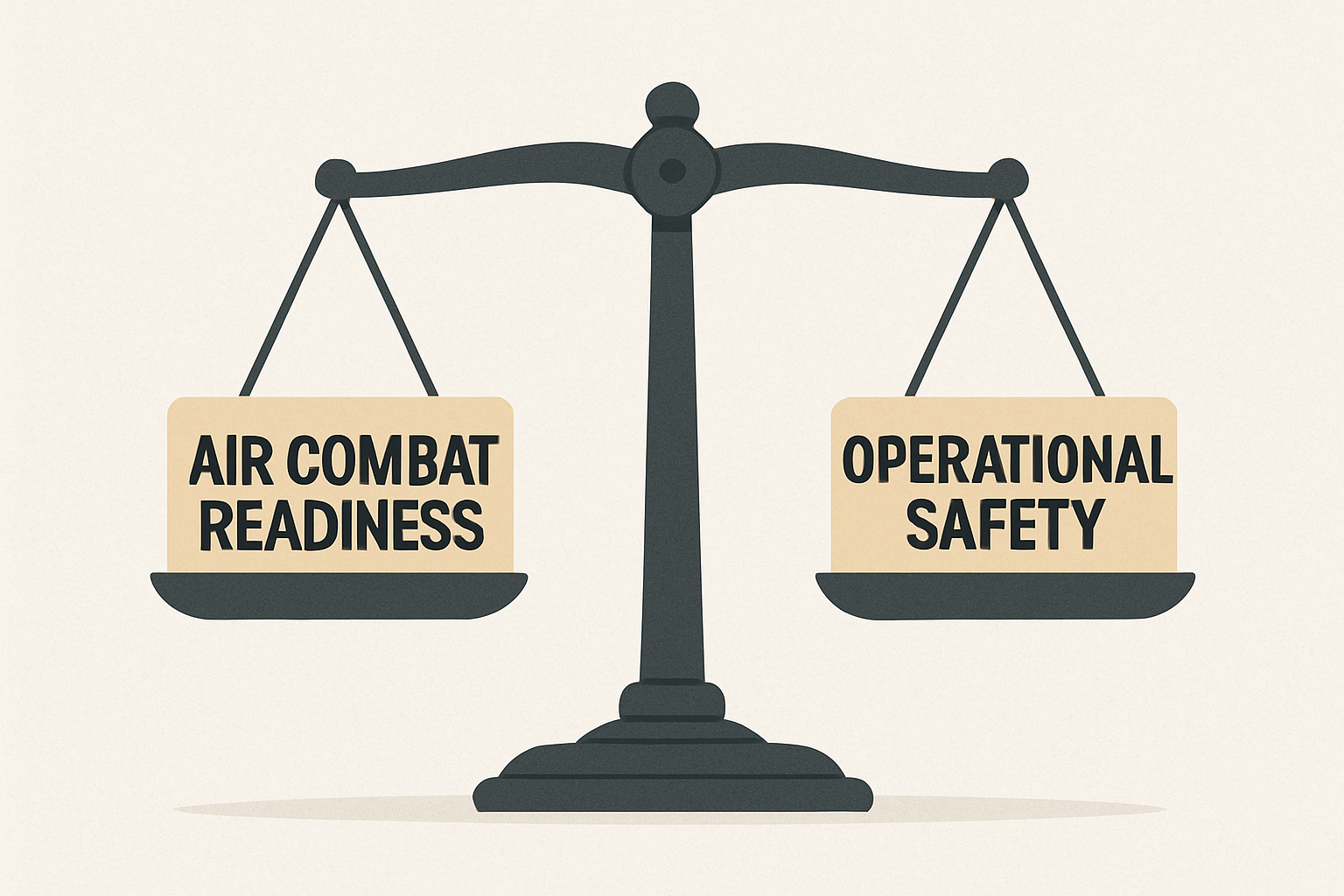
The fast-changing warfare environment in the 21st Century is characterised by heightened levels of technical complexity, multi-domain operations, and an increasing complexity of threats. Air forces now need to appropriately balance maintaining preparedness for air combat while also maintaining operational safety and security to meet a rapidly evolving future. Being able to navigate correct posture between these competing demands is vital for successful 21st Century air forces to be operationally effective, survivable and strategically resilient.
Air combat capability demands forces to deploy, survive, and fight successfully over the entire range of conflict at short notice. This necessitates continuous pilot training, strong aircraft maintenance, in-depth logistical support, and rapid incorporation of disruptive technologies like artificial intelligence (AI), precision-guided weapons, and network-centric systems. Operational safety, on the other hand, seeks to carefully manage risk during training, during deployment and, obviously, during combat. In fact, in the case of combat, the difference between tactical and operational safety is primarily intent: in combat, operational safety is still going to manage risk and reduce accidents, system failures, human error, and cyber threats to reliability and sustainment into the future.
The readiness-safety paradox is touchy: stressing too much safety results in undue caution in training and negates readiness for peer conflict, whereas focusing on readiness without adequate checks and balances raises mishap rates, attrition, and long-term vulnerability. With modern warfare becoming increasingly multi-domain, utilising unmanned platforms, hypersonics, and AI-enabled decision-making, this balance is complicated, and a holistic approach to both lethality and resilience will be needed.
There is a need to discuss the necessities of air combat preparedness, the value of operational safety, the dilemma of readiness versus safety, and solutions toward a sustainable equilibrium. Air forces need to be both razor-sharp spears, positioned to seize air superiority, and impenetrable shields, defending personnel, equipment, and networks from kinetic and non-kinetic threats. This balance is not an administrative issue per se—it is the foundation of deterrence credibility, mission survivability, and strategic resilience in contemporary conflict.
Air Combat Readiness Imperatives
Air combat readiness is the foundation of air power, providing air forces with the capability to deter aggression, project dominance, and shift instantly from peacetime to high-intensity conflict in contested multi-domain environments. It is a strategic resource characterised by the combination of human, technical, and organisational readiness encompassing four interconnected pillars:-
Crew Proficiency and Training Continuity. Airfighting readiness is predicated on Crew proficiency in mastering air-to-air, air-to-ground, electronic warfare, and beyond-visual-range (BVR) techniques. Sustained, realistic training, live-fire exercises, and simulated contested environments form combat reflexes and hone decision-making under duress. This promotes mental acuity and muscle memory for dynamic battlefields, essential to fighting against peer adversaries.
Aircraft Availability and Maintenance. High sortie production rates are reliant on sound maintenance programs and effective supply chains. Predictive diagnostics and new sustainment practices. Older fleets, especially in emerging air forces, are challenged by attrition and servicing complexity, highlighting the necessity for sophisticated maintenance doctrines to ensure operational availability.
Logistics and Dispersed Basing Resilience. Contemporary conflicts require tough basing and logistics that can weather enemy attacks, cyber interruptions, or disputed supply lines. A combat employment doctrine that is agile, like dispersing assets in several locations, improves survivability. Intra-theater dispersal and mobile support bases ensure prolonged operations, maintaining high sortie rates even in hostile environments.
Integration of Modern Technologies. Combat credibility is dependent on the smooth integration of networked sensors, stealth, hypersonics, AI-assisted decision support, unmanned teaming, and precision-guided munitions. These technologies speed response time, increase targeting precision, and increase the lethality envelope. Their non-adoption jeopardises delayed decision-making and decreased effectiveness against newer, high-end threats such as hypersonic weapons.
Importance of Operational Safety
Operational safety is important for air forces to be able to maintain combat readiness, while not suffering personnel or asset losses, or remaining resilient. Not only is it the prevention of accidents, but resource protection, human capital protection, and providing resilience to air forces’ operations in high-tempo, high-risk environments. Safety systems improve morale, credibility, and combat capability over lengthy and protracted conflicts, while weighing lethality against sustainability.
Safety is not some timidness, but is an enabler to assist readiness, both replicable and resilient. Operational safety ensures that readiness is doable and maintains efficacy over time, without suffering losses that cannot be sustained, that erode combat capabilities. Historically, the loss of aircraft during peacetime accidents has outstripped hostile action, illustrating that there needs to be systematic (professional) risk reduction. Important aspects of operational safety to meet our objectives include: –
Protection of Human Capital. Pilots and aircrews are the product of years of training and investment and, as such, are unique assets. Safety procedures like Crew Resource Management (CRM) reduce the risk associated with fatigue, stress, and mental overload, which are prime causes of aviation accidents. Survival systems guarantee crew safety in training and combat, and maintain a healthy workforce that can sustain long battles.
Asset Preservation. Contemporary aerospace platforms, such as stealth aircraft or AWACS, are expensive national investments. Avoidable accidents degrade force structure, erode deterrence credibility, and have major strategic and psychological consequences. Stringent inspections, predictive modelling, and maintenance procedures ensure high mission-capable rates, keeping platforms online and available.
Cyber and Information Resilience. Safety really goes beyond just mechanical parts- it also means protecting the digital world through cybersecurity and electronic safeguards. With threats like hostile cyber attacks, spoofing, and supply chain issues, the flight controls, navigation systems, and command networks face real risks. Strong cyber defences and resilient systems are important to keep everything running smoothly, even in challenging environments.
The Readiness–Safety Dilemma and Key Challenges
The confrontation between combat readiness and safety is a core dilemma for contemporary air forces. Readiness necessitates stretching boundaries in order to anticipate high-intensity, multi-domain conflict, and safety necessitates risk mitigation in order to provide sustainability. Exaggerating safety breeds caution that can blunt readiness, but unbridled readiness stimulates attrition, weakening enduring credibility. This dilemma is compounded by changing threats and dwindling resources, with a number of key challenges influencing the balance. Key challenges include:-
Training Realism versus Risk Mitigation. Realistic training like low-level manoeuvres, low-altitude operations, night operations, and live-fire is similar in intensity to peer-level combat but increases the risk of accidents. Excessive safety measures like restricted flight envelopes minimise accidents but can render the crew ill-prepared for unencumbered war. Balancing realism with risk mitigation is essential to bridge training and combat realities without putting crews at risk.
Sustainment and Maintenance Challenges. Operational tempos that are high speed up the wear-and-tear of aircraft, and higher risks of mechanical failures arise. Quick repairs improve short-term availability but degrade safety if done hastily. Ageing fleets aggravate this problem. Data analytics predictive maintenance can anticipate failures, but resource shortages tend to compel trade-offs that handicap fleet readiness or long-term reliability.
Resource Shortages and Indigenisation. Most air forces suffer from part shortages, skilled technical manpower, and contemporary platforms due to over-dependence on foreign sources or sanctions. Indigenisation attempts at building indigenous systems minimise dependence but threaten to incorporate untested technologies that undermine safety. On the other hand, excessive dependence on legacy platforms or rationing limited spares compromises readiness with a flimsy trade-off of innovation with reliability.
Crew Exposure. Combat preparedness demands that the crew accumulate considerable experience on platforms and mission tasks through high rates of flying hours. Greater exposure increases fatigue, accident potential, and mental overload, especially for smaller air forces with low crew reservoirs. Creating training regimens that induce realistic stress without ruinous risk is critical in order to keep pilots qualified and retained.
Navigating the Dilemma. The readiness–safety dilemma requires adaptive responses to maintain air forces as lethal and sustainable. Excessive caution threatens to create forces not hardened for combat’s harshness, while unrestrained aggression causes unsustainable losses. Through addressing these challenges by innovative sustainment, balanced training, and resource stewardship, air forces can balance readiness and safety to maintain credible combat power in dynamic, high-stakes environments.
Means of Establishing the Balance
A state of harmony between operational safety and air combat readiness can only be attained through cohesive, systemic approaches that integrate technology, training, doctrine, and organisational culture. Integrated strategies make air forces lethal, effective, and resilient without affecting sustainability, thus resolving the readiness-safety challenge through synergistic priorities. Key strategies include:-
Integration of Risk Management. Integrating risk management into operational planning meets realism with safety. Calibrating risk, for instance, by limiting risky manoeuvres to trainees but permitting them for veteran crews, air forces prevent combat-relevant training with disastrous consequences. Automated systems need to be introduced that recognise and counter vulnerabilities through statistical readiness indicators.
Technological Integration and Predictive Maintenance. AI-based predictive maintenance, digital twins, and aircraft health monitoring systems predict mechanical failure, cutting downtime and accident rates. On modern platforms, these capabilities maintain high mission-capable rates while improving safety, enabling readiness and reliability without compromise.
Advanced Simulation and Hybrid Training. Cutting-edge simulators, such as virtual and augmented reality, mimic sophisticated combat situations such as BVR engagements, electronic warfare, and hypersonic threats at low physical hazard. Hybrid models, combining simulated and live missions, cross the realism-safety divide, providing combat exposure with decreased mishap probabilities.
Training and Crew Resource Management (CRM). Improved CRM systems promote teamwork, communication, and awareness in situ among pilots, ground staff, and command centres. In integrating safety culture into readiness exercises, CRM minimises human-factor mistakes while preserving operational aggressiveness, building a workforce that excels at operating in high-stress environments.
Network-Centric and Beyond Visual Range (BVR) Focus. Contemporary warfare focuses on network-centric operations and BVR engagements. Expertise in AWACS integration, datalink coordination, and multi-asset synchronisation raises lethality while lowering dependence on close-in, high-risk manoeuvres. Cyber safety procedures also guarantee robustness in contested digital environments.
Doctrinal Flexibility and Comprehensive Workforce Development. Doctrinal Flexibility and Comprehensive Workforce Development. Flexible doctrines vary training intensity, balancing geopolitical environments and conditions of forces, understanding that readiness for peer-level confrontation comes at a cost of safety in lower intensity operations. Comprehensive workforce development—from aircrew to engineers to data professionals to AI professionals—involves shared accountabilities for readiness and safety within the entire enterprise, improving flexibility and resilience.
Joint Doctrine Development. In operations across multiple domains, joint doctrine aligns air, space, cyber, and land operations, providing interoperability and minimising accidents with common standards of safety. Deconflicting air routes, safeguarding data networks, and adding unmanned systems increases readiness and security collectively in a coalition war.
Holistic Integration. These approaches cumulatively close the readiness-safety gap by capitalising on technology, innovative training, and flexible doctrines. Through treating readiness and safety as complementary, air forces can maintain combat credibility, reduce losses, and guarantee resilience in dynamic, high-stakes environments, reconciling lethality with long-term operational sustainability.
The Future Landscape
The safety-readiness balance will become increasingly dynamic with the evolution of air combat through multi-domain operations (MDO), unmanned systems, hypersonic systems, and artificial intelligence (AI)-based decision-making. These emerging dynamics create new vulnerabilities and safety issues while augmenting combat effectiveness, necessitating air forces to establish a dynamic equilibrium that regularly rebalances readiness and safety. Key emerging dynamics include:-
Multi-Domain Operations (MDO). Air power will converge with cyber, space, EW and info domains to tap into C5ISR ecosystems for greater situational awareness and near-real-time responses. While this enhances lethality, it also heightens systemic vulnerabilities, which require strong safety measures to safeguard interdependent networks and ensure operational resilience across domains.
Unmanned and Autonomous Systems. Drones and AI systems can perform high-risk operations with limited pilot exposure. Manned-unmanned teaming and swarming technologies facilitate adaptive decentralised operations, but pose dangers such as biases in AI, cyberattacks, and autonomous-crewed asset collisions. New safety paradigms are needed to provide reliability and ethical responsibility.
Hypersonic and Directed Energy Weapons. Hypersonic weapons shorten decision cycles, necessitating readiness for extremely rapid engagements and innovative C5ISR integration. These vehicles and weapons place extreme stress on aircrew and system resources, necessitating advanced safety features to control risk while preserving combat effectiveness against transient engagement opportunity sets.
AI-Based Decision-Making. AI speeds up decision loops, increasing readiness in uncertain situations. But dependence on algorithms threatens transparency, adversary tampering, and misperceptions in targeting or sensor data interpretation. Strong safety nets must balance AI-lethality with operational dependability.
Navigating the Future. The future beckons for a dynamic, readiness-safety balance theme, supported by software-enabled, swift updating and agile doctrines. Air forces should invest in AI-enabled autonomous systems, establish unmanned safety frameworks, and continue to integrate multi-domain sensors to inhibit anti-access and area-denial adversaries. By developing air force capabilities to solve ethical, safety, and reliability questions, an air force can achieve resilience and lethality in a rapidly more complex battlespace.
Conclusion
Operational safety is closely tied to air combat readiness and preparedness. Safety will always come first, as ensuring the safety of flight operations for personnel and equipment ensures sustainability and survivability over the long term. Readiness and preparedness do not take a backseat, though; they are vital when the air forces find themselves required to operate in a contested environment and have to compete in a high-stakes environment. Finding the correct balance between operational safety, innovation, some availability of the aircraft, and training that is realistic while not lax, burnout, or unreliable is the balance the air forces want to strike for their personnel and aircraft. This is achieved through combinations of predictive maintenance, better crew resource management, improved simulation, getting better at integrating risk management and training pilots around flexible joint doctrine. The amount of risk with air power is increasingly mitigated with the input of AI, hypersonic strikes, and autonomous systems. However, operational safety and operational readiness have become even more insidious and complex than before, as they are intertwined. Too much focus on readiness equals unnecessary accidents and exposure to fatigue and technical issues, and too much caution equals an untested force with no capability for peer-level fight. Operational safety must balance preclusion of risk with credibility to deter enemy forces. Air forces must configure their technologies and risk management to be conducive to preserving our people and our assets and operational commitments and deterrence while rapidly adapting to change by technology, threats and geopolitics. Ultimately, air power needs to be focused on the safe conduct of operations, but air forces must treat readiness and safety as two vital and interconnected pillars.
Please Add Value to the write-up with your views on the subject.
For regular updates, please register your email here:-
Information and data included in the blog are for educational & non-commercial purposes only and have been carefully adapted, excerpted, or edited from reliable and accurate sources. All copyrighted material belongs to respective owners and is provided only for wider dissemination.
References:-
“Advances in Human Factors and Simulation”, Proceedings of the International Conference on Human Factors and Simulation, July 24-28, 2019.
Deptula, D. A., “Air Power in the Age of Multi-Domain Operations”, Mitchell Institute for Aerospace Studies, 2020.
Johnson, J. S., “Artificial Intelligence and the Future of Warfare: The Impact of AI on Military Operations”, Manchester University Press, 2021.
Reason, J. “Managing the Risks of Organisational Accidents”. Ashgate Publishing, 2018.
Bommakanti, K., & Mohan, S. (2024). Emerging Technologies and India’s Defence Preparedness. Observer Research Foundation.
Pant, H. V., & Bommakanti, K. (2023). Towards the Integration of Emerging Technologies in India’s Armed Forces. ORF Occasional Paper No. 392, Observer Research Foundation.