
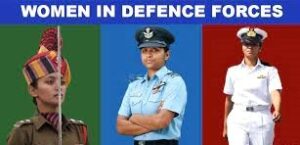
Women’s participation in the armed forces has evolved significantly over the years worldwide, with a growing recognition of their valuable contributions to the defence and security of the country.
Many countries now allow women to serve in the armed forces in numerous roles. The extent of participation and roles vary from country to country, depending on cultural norms, legal frameworks, and military policies.
Traditionally, Indian armed forces have also been predominantly male-dominated however, the inclusion of women was inevitable with changes in the societal norms and perceptions.
The roles and opportunities for women have expanded over the years with associated changes in military policies, preceding or succeeding these decisions.
While the inclusion of women in the armed forces brings several benefits, certain challenges and barriers still exist.
Related Aspects: Analysis
Benefits of Inclusion. The inclusion of women broadens the pool of selection. It not only improves the quality of intake but also offsets the falling recruitment and retention rates. Women who have served in the services find themselves to have a high degree of self-confidence. They become self-reliant and are better equipped to cope with or face difficult situations in life.
Performance. Studies and observations from countries that have integrated women into combat roles suggest that their performance is generally consistent with the standards set for those roles. Many women have achieved high ranks and distinctions within defence services, proving their competence and dedication.
Cultural and Societal Factors. Cultural and societal norms play a significant role in determining the extent to which women are integrated into the armed services. Some countries including India have more traditional gender roles and do face resistance to women’s participation. In Indian society generally, the protection of women from external aggressors is considered important. Prospects of women falling prey to an enemy as a prisoner of war or a hostage, and the threat of physical abuse and torture create an apprehensive about the induction of women in combat units involved in direct contact combat with the enemy. (Current example – treatment of Israeli women by HAMAS).
Legal Interventions. Like many countries in the world, even in India, Women in defence services have knocked on the judicial doors to redress their grievances related to gender equality and opportunities. In 2010, the Delhi High Court gave a decision, granting permanent commissions to women serving as short service commission (SSC) officers in the Army and Air Force. The Supreme Court on February 17, 2020, said that women SSC officers are also eligible to get permanent commission in the Army, which till now was only granted to male officers. In the following judgment on March 17, 2020, the Supreme Court said that women SSC officers of the Navy can be granted permanent commission. This judgment also entails that all officers and soldiers have to go through the same selection criteria – toughness schedule, promotion exams, command criteria assignments, and appointments with no concessions. The Supreme Court has unequivocally stated that women officers who volunteer for combat action must comply with the standards ensured and that the standards should in no way be lowered just to make room for women officers; or else this will compromise the “Operational Effectiveness” of the force.
Policies and Regulations. Countries have different policies and regulations regarding the participation of women in defence services. Some countries, like the United States, have gradually expanded the roles women can serve in, including combat roles, while others have more restrictive policies. The Indian government has been working on policy changes and reforms to address various challenges and concerns related to the deployment and accommodation of women in defence services. Over the years, there have been significant legal and policy changes aimed at promoting gender equality and enhancing the role of women in India’s defence services. These changes have opened up more opportunities for women to serve in diverse capacities across various branches.
Women in Combat Role. Many countries allow women in combat roles. The United States, Israel, North Korea, France, Germany, Netherlands, Australia, Norway and Canada are among the global militaries that employ women in front-line combat positions. The United States allowed women to serve in combat roles in 2013. Some countries now allow women to serve in infantry, artillery, armoured, and even Special Forces units. Globally the number of women in combat roles is low due to an inadequate number of volunteers and secondly, their inability to meet the selection criteria. Combat role in the Indian Armed has for long been an exclusive domain for men. In recent years, India has started opening up combat and operational roles to women. In 2015, the Indian Air Force for the first time decided to induct women into the fighter wing. The Indian Navy followed suit with the first naval women being commissioned as pilots of the Maritime Reconnaissance Aircraft in the year 2016. As of now, there are 18 women who are flying fighters like MiG-21s, MiG-29s, Sukhois, and new Rafales in the IAF, and there are also over 145 women helicopter and transport aircraft pilots. Indian Navy has deployed 30 women officers on frontline warships and plans to give them more opportunities to serve on warships. Indian Army has enabled women to operate helicopters and earlier this year, the first five women officers were also commissioned into the artillery regiments and are now being trained to handle howitzers and rocket systems.
Special Forces. Special Forces (Para-SF of the Indian army, Marine Commandos of the Navy, and Garud Commando Force of IAF) are specially trained units, equipped with specialised weapons, deployed for clandestine warfare or special operations like counter-terrorism, anti-hijack, hostage rescue, intelligence-gathering, surgical strikes, and covert operations behind enemy lines. The voluntary force undergoes extremely arduous physical and mental training. Women in the armed forces are eligible to volunteer for induction into the Special Forces without any gender bias, provided they meet selection qualitative requirements (QRs) and successfully complete the training. A few women have volunteered to join the Special Forces, with some of them being selected to undergo the training. So far none have succeeded in completing the training.
Challenges. Women in the armed forces have made significant progress in many countries. Despite these advancements, women in armed forces can face unique challenges, due to prevailing societal norms, and gender biases. Although the number of occurrences may be rare, unfortunately, such incidents get wide publicity influencing public opinion adversely.
Acceptance, Gender Bias and Stereotypes. Acceptance of women in the military has not been smooth in any country. Every country had to mould the attitude of its society at large and male soldiers in particular to enhance the acceptability of women in the military.
Physical Fitness Standards. Physical attributes have played a major role in denying women an active role in combat over the years. Some argue that physical fitness (strength and stamina) standards for certain roles, may disadvantage women due to physiological differences. Striking a balance between maintaining necessary standards and accommodating gender differences is a matter of debate.
Work-Life Balance. The demanding nature of work in the armed forces, including long deployments and frequent relocations, can make it challenging for women to balance their military duties with family responsibilities.
Harassment and Discrimination. Women in the armed forces, like in any other organisation may experience sexual harassment, gender-based discrimination, or bullying. All Defence services have adequate checks and balances, procedures, and systems (backed by legal provisions) to curb these occurrences. The Indian armed forces follow a policy of zero tolerance for such acts and award severe punishment to the defaulters.
Lack of Support Services. Access to gender-specific support services and infrastructure is another challenge. While it is easy to address this issue at so-called peace locations, it may be a challenge at forward bases with harsh conditions like Siachin, or a submarine in the Navy etc.
Way Ahead
“My personal experience has been that the (principles) of leadership and team building apply equally to women as to men. As long as you protect qualification standards and give no impression that anyone is getting a free ride, integration, while not without bumps, will be much less dramatic than people envision.”
– Major Eleanor Taylor
Canadian Military
(The first woman to lead an infantry company in combat).
Women have become a part of the defence services in India. Most of the teething problems have been addressed to a large extent however, their integration is an evolutionary process. The related policy changes need to take into account the changing nature of warfare and the role of technology. It needs to be an evolutionary process while maintaining a balance between personal and organisational aspirations, growth, necessities, and concerns. Some suggestions are as follows:-
-
- Lessons could be drawn from the policies and experience of foreign militaries for female enlistment, training, terms and conditions, and management.
-
- The policy decisions should be made based on facts and realities rather than presumptions and preconceptions.
-
- The rules and standards should be absolutely gender-neutral without any fixed quota or reservation.
-
- Women officers should be adequately trained to prepare them for combat and command roles and to lead men in peace and war.
-
- Gender-specific or gender-neutral physical fitness standards for men and women should be based on scientific realities. Operational preparedness should not be compromised at the cost of relaxed medical standards.
-
- Aspects related to women in defence services should not be politicised as a vote bank tactic.
-
- Disciplinary standards should not be compromised at any cost. The defaulters should be dealt with appropriately with equal severity.
-
- The work-life balance issues should be accommodated subject to service exigencies.
With future warfighting becoming more sophisticated and technologically advanced, there is a growing need to tap into the large pool of human resources including women. While women have been inducted into the Indian defence services, their full integration is a slow and evolutionary process. The future prospects of women in the defence services will depend on continued policy reforms, social change, and the commitment of the defence establishment to provide equal opportunities to both men and women.
Coming Up – A detailed & comprehensive article on the subject
Suggestions and value additions are most welcome
For regular updates, please register here
References and credits
To all the online sites and channels.
- COMBAT AVIATION: Flight Path 1968-2018, by Gp Capt Kishore Khera (Retd).Valuable inputs from senior officers from the Indian armed forces and foreign defence services.
Disclaimer:
Information and data included in the blog are for educational & non-commercial purposes only and have been carefully adapted, excerpted, or edited from sources deemed reliable and accurate. All copyrighted material belongs to respective owners and is provided only for purposes of wider dissemination.
