Cognitive warfare is not only an attack on what we think.
It is an attack on our way of thinking.
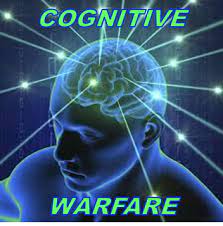
Pic: Courtesy Internet
The human mind is the paramount battleground in modern warfare and cognitive warfare has emerged as an unparalleled domain.
Defining Cognitive Warfare. Cognitive Warfare is a psychological strategy that focuses on altering how a target population thinks and through that how it acts. This strategy intends to gradually influence the targeted public’s beliefs, opinions, and perceptions about a subject, such as an event, a politician, a government, or an ideology in general. It is the weaponisation of public opinion, by an external entity, to influence public and governmental policy and destabilise public institutions.
Genesis. Cognitive warfare is a development that has emerged from prior related non-kinetic forms of warfare, such as PsyOps operations and Information Warfare. Information warfare is aimed at manipulating what people believe to be true and thereby swaying public perceptions. A more organised and advanced form of information warfare is cognitive warfare.
Catalysts. Cognitive warfare relies heavily on new communication and information technologies, notably AI.
Key features
-
- Cognitive warfare targets the entire population (as opposed to merely military ones in wartime).
-
- Its focus is on changing a population’s behaviour by way of changing its way of thinking rather than merely the provision of discrete bits of false or misinformation in respect of specific issues.
-
- It relies on sophisticated psychological techniques of manipulation by harnessing the new channels of public communication, such as social media, upon which populations have become increasingly reliant.
-
- It aims to destabilise institutions, especially governments, though often indirectly by way of initially destabilising cognitive institutions, such as news media organisations.
-
- Cyber warfare categories including cyber conflict short of war, cyber terrorism, cybercrime, and cyber espionage, etc can be classified as covert cognitive warfare.
-
- Cognitive warfare so far consists of activity that is more aptly characterised as short of war.
-
- One problem with cognitive warfare is the problem of attribution and deniability.
-
- Covert cognitive warfare is (more or less) by definition unlawful (at least in the nation-state against which it is directed).
-
- Cognitive warfare is likely to be more successful in certain prevailing circumstances like destabilising effects of war, economic depression, pandemics, and other disasters or a pre-existing polarised society.
Countering Cognitive warfare
-
- Legislation to hold mass social media platforms, such as Facebook and Twitter, legally liable for illegal content, such as incitement and hate speech, on their platforms.
-
- Mandatory licensing of mass social media platforms.
-
- Licences to be conditional on the content on their platforms being compliant with the minimum epistemic and moral standards determined and adjudicated by an independent statutory authority established by the government.
-
- Lawful content which, nevertheless, fails to meet these minimum epistemic and moral standards, to be liable to removal by social media platforms, under the adjudications of the above-mentioned independent statutory authority.
-
- Communicators of politically significant content on mass media channels of public communication who have very large audiences, e.g., greater than 100,000 followers, to be legally and publicly identified.
The People’s Republic of China has incorporated cognitive warfare and related strategies into their operations.
What is our status?
Coming up: A detailed article on the subject
Suggestions and value additions are most welcome
For regular updates, please register here:-
References and credits
To all the online sites and channels.
Disclaimer:
Information and data included in the blog are for educational & non-commercial purposes only and have been carefully adapted, excerpted, or edited from sources deemed reliable and accurate. All copyrighted material belongs to respective owners and is provided only for purposes of wider dissemination.