399: US REPORT ON CHINA 2023: EXCERPTS DEF POLICY & MIL STRATEGY

strategy


DEFENSE POLICY AND MILITARY STRATEGY


  • In 2022, the PRC’s stated defense policy remained oriented toward safeguarding its sovereignty, security, and development interests, while emphasizing a greater global role for itself. The PRC’s military strategy remains based on the concept of “active defense” (积极防御).


  • PRC leaders stress the imperative of strengthening the PLA into a “world-class” military by the end of 2049 as an essential element of its strategy to rejuvenate the PRC into a “great modern socialist country.”


  • In October 2022, Xi secured his third term as the general secretary of CCP at the Party Congress and his appointment of loyalists to top positions in the CMC probably will enable Xi to expand upon military modernization and operational goals during his next 5-year term.


  • During his October 2022 speech at the opening ceremony of the 20th Party Congress, Xi reaffirmed his commitment to the PLA’s 2027 milestone for modernization to accelerate the integrated development of mechanization, informatization, and intelligentization of the PRC’s armed forces. If realized, this capability milestone could give the PLA the capacity to be a more credible military tool for the CCP’s Taiwan unification efforts.


  • In 2022, the PLA continued discussing a new “core operational concept,” called “Multi- Domain Precision Warfare (多域精确战)” (MDPW). MDPW is intended to leverage a C4ISR network that incorporates advances in big data and artificial intelligence to rapidly identify key vulnerabilities in the S. operational system and then combine joint forces across domains to launch precision strikes against those vulnerabilities.


  • COVID-19 mitigation measures and multiple outbreaks throughout 2022 probably did not significantly impact PLA combat readiness.


FORCES, CAPABILITIES, AND POWER PROJECTION


  • The PLA has sought to modernize its capabilities and improve its proficiencies across all warfare domains so that, as a joint force, it can conduct the full range of land, air, and maritime as well as nuclear, space, counterspace, electronic warfare (EW), and cyberspace operations.


  • The PLA’s evolving capabilities and concepts continue to strengthen the PRC’s ability to “fight and win wars” against a “strong enemy (强敌)” (a likely euphemism for the United States), counter an intervention by a third party in a conflict along the PRC’s periphery, and project power globally.


  • People’s Liberation Army Army (PLAA). The PLAA continues to modernize equipment and focus on combined arms and joint training in effort to meet the goal of becoming a world class military. The PLAA demonstrated a new long-range fire capability in the PLA military response to the August 2022 U.S. Congressional Delegation (CODEL) visit to Taiwan. The PLAA continues to incorporate a twice a year conscript intake. The long-term effects of the policy are not clear.


  • People’s Liberation Army Navy (PLAN). The PRC has numerically the largest navy in the world with an overall battle force of over 370 ships and submarines, including more than 140 major surface The PLAN is largely composed of modern multi-mission ships and submarines. In 2022, the PLAN launched its third aircraft carrier, CV-18 Fujian.


‒  It also commissioned its third YUSHEN class Amphibious Assault Ships (LHA) and has likely begun construction on a fourth as of early 2023. In the near-term, the PLAN will have the ability to conduct long-range precision strikes against land targets from its submarine and surface combatants using land-attack cruise missiles, notably enhancing the PRC’s power projection capability.


‒  The PRC continues to challenge foreign military activities in its exclusive economic zone (EEZ) in a manner that is inconsistent with the rules of customary international law as reflected in the United Nations Convention on the Law of the Sea. At the same time, the PLAN conducts activities in the EEZs of other countries, including the United States, Australia, Philippines, Vietnam, and Malaysia.


  • People’s Liberation Army Air Force (PLAAF) and PLAN Aviation. The PLAAF and PLAN aviation together constitute the largest aviation force in the Indo-Pacific region. The PLAAF is rapidly catching up to western air The PLAAF continues to modernize with the delivery of domestically built aircraft and a wide range of UASs. In October 2019, the PLAAF signaled the return of the airborne leg of its nuclear triad after the PLAAF publicly revealed the H-6N as its first nuclear-capable air-to-air refuelable bomber.


  • People’s Liberation Army Rocket Force (PLARF). The PLARF is advancing its long-term modernization plans to enhance its “strategic deterrence” The PRC is developing new ICBMs that will significantly improve its nuclear-capable missile forces and will require increased nuclear warhead production, partially due to the introduction of multiple independently targetable reentry vehicle (MIRV) capabilities.


The PRC may be exploring development of conventionally-armed intercontinental range missile systems. If developed and fielded, such capabilities would allow the PRC to threaten conventional strikes against targets in the continental United States, Hawaii, and Alaska.


  • Strategic Support Force (SSF). The SSF is a theater command-level organization established to centralize the PLA’s strategic space, cyberspace, electronic, information, communications, and psychological warfare missions and The SSF’s Network Systems Department (NSD), sometimes referred to as the Cyberspace Force (CSF; 网络空间部队), is responsible for information warfare with an integrated mission set that includes cyberspace warfare, technical reconnaissance, electronic warfare, and psychological warfare. The PLA SSF’s Space Systems Department (SSD), sometimes referred to as the Aerospace Force (ASF; 航天部队), is responsible for military space operations. The PRC continues to develop counterspace capabilities—including direct-ascent anti-satellite missiles, co-orbital satellites, electronic warfare, and directed-energy systems—that can contest or deny an adversary’s access to and operations in the space domain.


  • Joint Logistic Support Force. The JLSF is concentrating its efforts on improving joint strategic and campaign-level logistic efficiencies through training and integrating civilian products and services. The JLSF supports multimodal transportation methods to facilitate the movement of PLA forces and equipment for training.


  • Special Operations Forces (SOF). Despite unilateral and multilateral training, all of China’s SOF units lack real-world combat experience. China’s SOF does not have a national-level special operations command to oversee all of China’s SOF activities. Despite an emphasis to conduct joint training, theater commanders have no authority over PAP units, making it difficult to incorporate PAP SOF into PLA training exercises.


JOINT CAPABILITIES IN DEVELOPMENT


  • The PLA is aggressively developing capabilities to provide options for the PRC to dissuade, deter, or, if ordered, defeat third-party intervention in the Indo-Pacific region, and to conduct military operations deeper into the Indo-Pacific region and globally.


  • The PLA has undertaken important structural reforms and introduced new military doctrine to strengthen joint operations and is testing joint capabilities in and beyond the First Island Chain (FIC).


JOINT CAPABILITIES FOR COUNTERINTERVENTION


  • The PRC’s counter-intervention strategy aims to restrict the United States from having a presence in the East and South China Sea regions—within the FIC—and increasingly to hold at risk U.S. access in the broader Indo-Pacific region.


  • Long-Range Precision Strike and Supporting ISR. PLA texts state that precision attack in all warfare domains is critical in modern war. PLA writings state that precision weapons are not only force multipliers, but also a means of “war control” to prevent escalation.


  • Integrated Air Defense System (IADS). The PRC has a robust and redundant IADS architecture over land areas and within 300 nm (556 km) of its coast that relies on an extensive early warning radar network, fighter aircraft, and a variety of SAM The PRC has also placed radars and air defense weapons on outposts in the SCS, further extending the range of its IADS.


  • Hypersonic Weapons. The PRC’s deployment of the DF-17 HGV-armed MRBM will continue to transform the PLA’s missile The system is possibly intended to replace some older SRBM units and is intended to strike foreign military bases and fleets in the Western Pacific, according to a PRC-based military expert.


COMING UP: DETAILED ANALYSIS WITH INDIAN PERSPECTIVE


Suggestions and value additions are most welcome


For regular updates, please register here

Subscribe


References and credits

To all the online sites and channels.


Disclaimer:

Information and data included in the blog are for educational & non-commercial purposes only and have been carefully adapted, excerpted, or edited from sources deemed reliable and accurate. All copyrighted material belongs to respective owners and is provided only for purposes of wider dissemination.

 

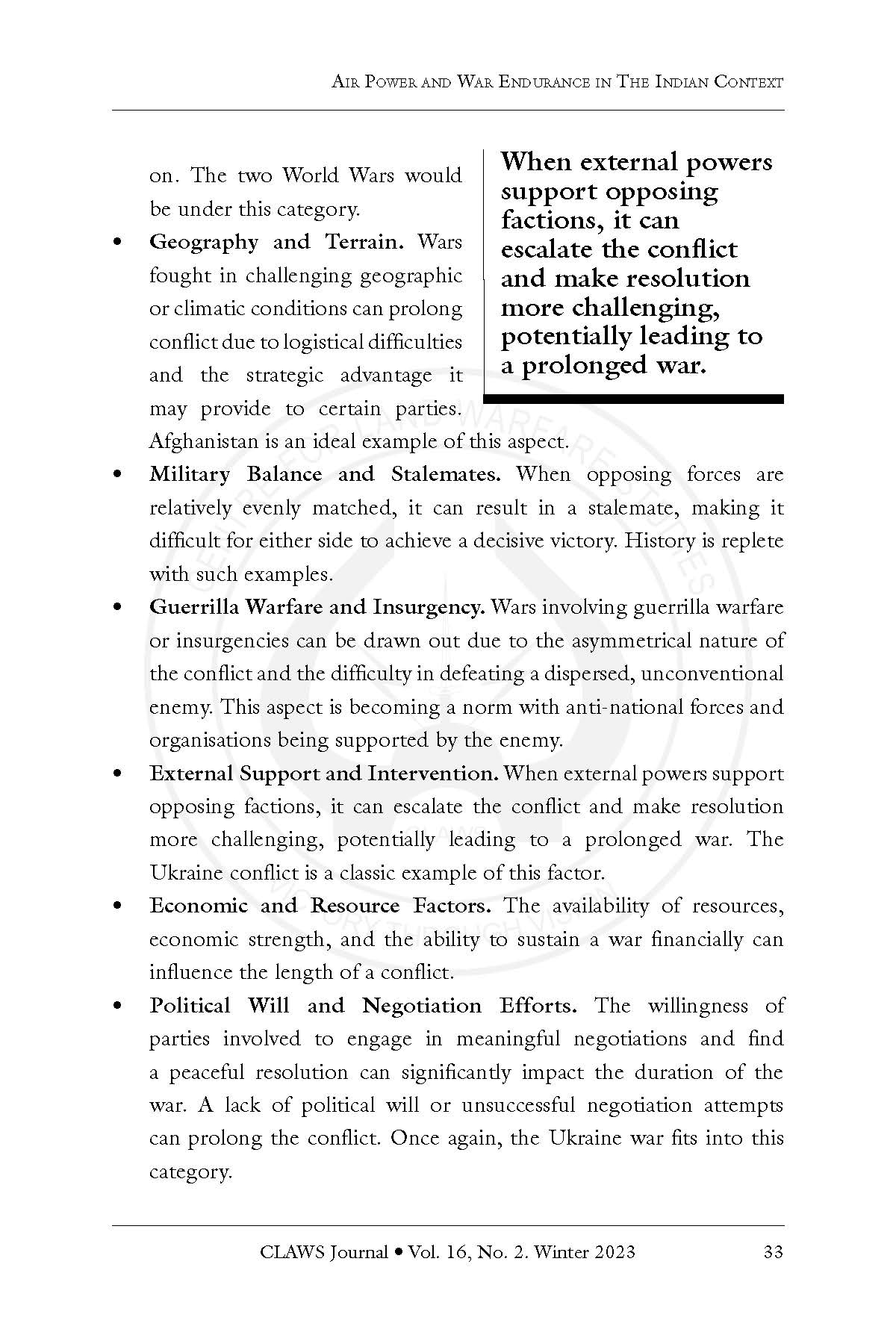
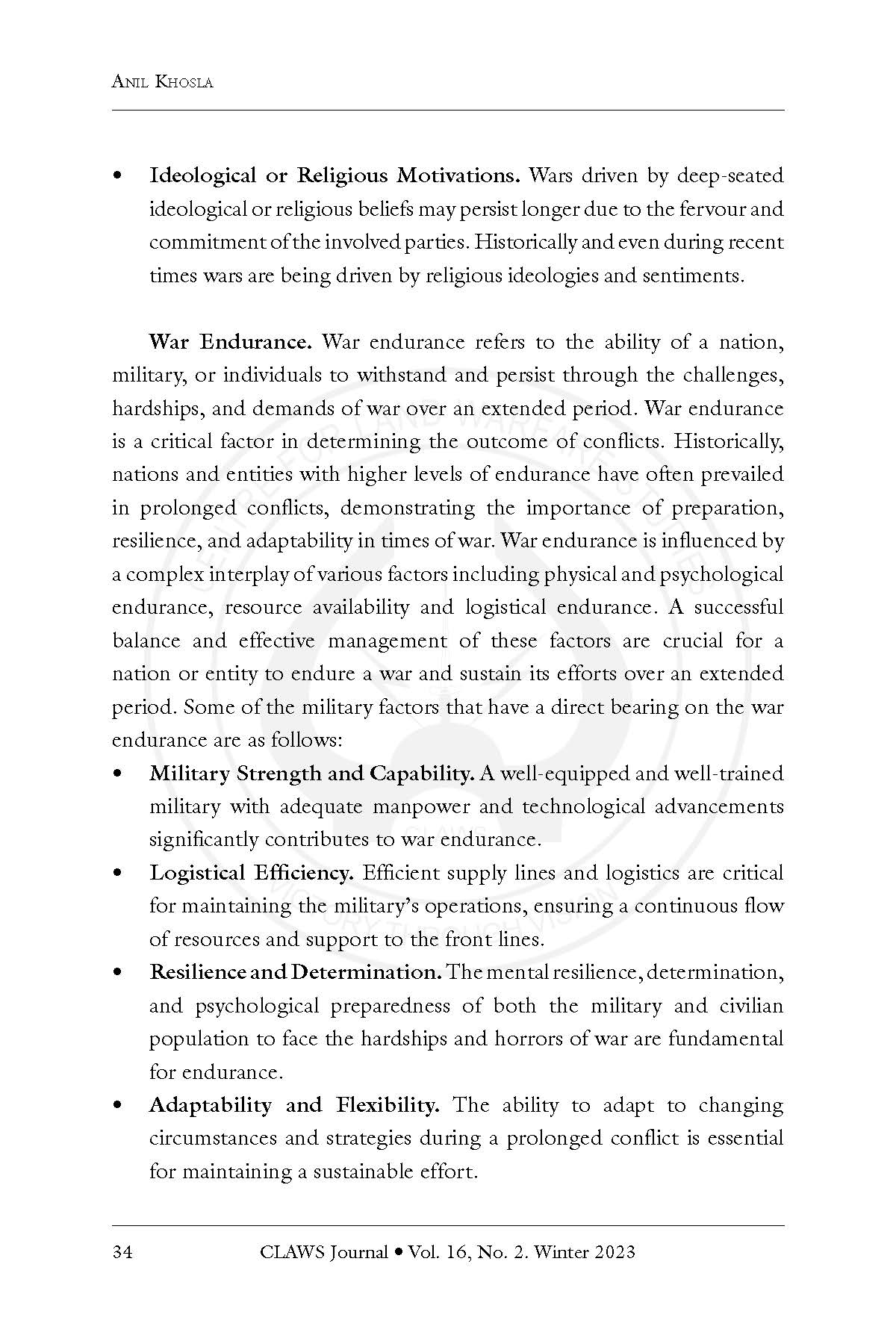
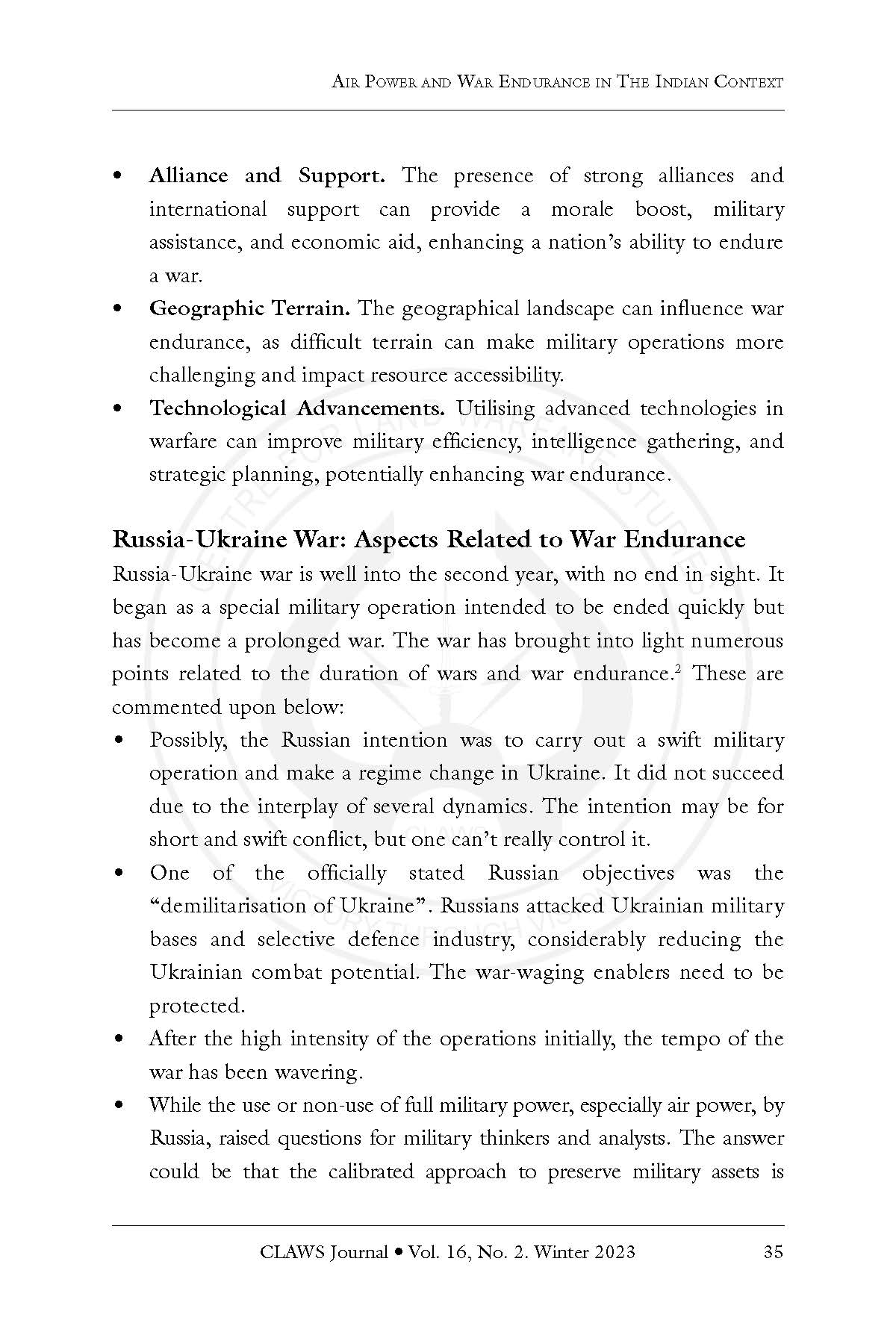
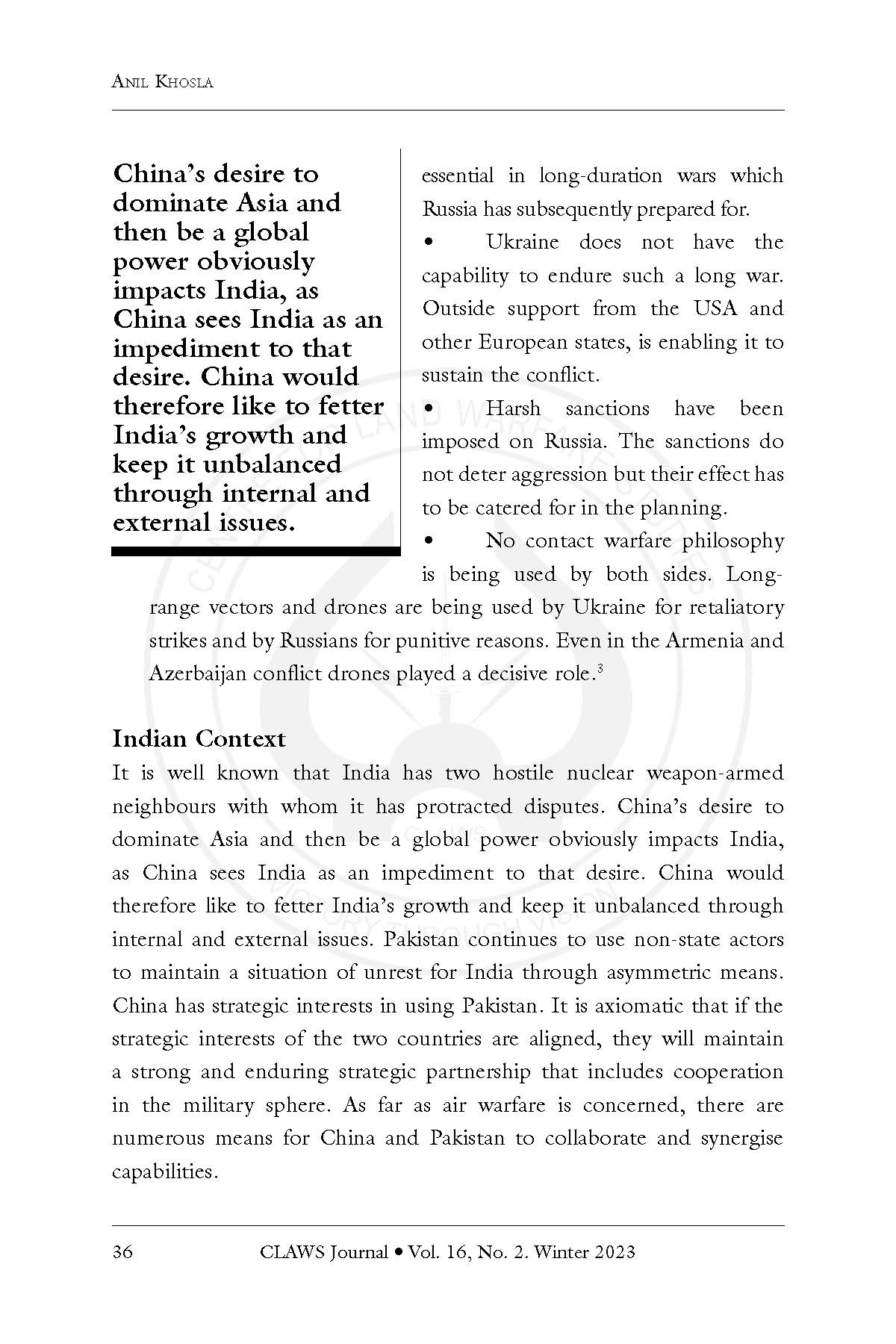
394: WARS: LONG DRAWN AFFAIRS


Wars can last anywhere from a few days to several decades. A long-drawn war refers to a protracted conflict that extends over an extended period, often lasting for several years or even decades. These wars are characterized by their prolonged duration, continued engagement of military forces, and significant human, economic, and societal costs.


The duration of a war can vary significantly depending on various factors such as the nature of the conflict, the parties involved, the goals and objectives of the war, external interventions, and the overall strategy and tactics employed by the warring parties. Several factors can contribute to a war becoming a long-drawn are as follows:-


    • Complexity of the Conflict. Wars with intricate causes, multiple stakeholders, and deeply entrenched issues are more likely to drag on. Resolving complex issues takes time and effort. The two world wars would be under this category.


    • Geography and Terrain. Wars fought in challenging geographic or climatic conditions can prolong conflict due to logistical difficulties and the strategic advantage it may provide to certain parties. Afghanistan is an ideal example of this aspect.


    • Military Balance and Stalemates. When opposing forces are relatively evenly matched, it can result in a stalemate, making it difficult for either side to achieve a decisive victory. History is replete with such examples.


    • Guerrilla Warfare and Insurgency. Wars involving guerrilla warfare or insurgencies can be drawn out due to the asymmetrical nature of the conflict and the difficulty in defeating a dispersed, non-conventional enemy. This aspect is becoming a norm with anti-national forces and organisations being supported by the enemy.


    • External Support and Intervention. When external powers support opposing factions, it can escalate the conflict and make resolution more challenging, potentially leading to a prolonged war. The Ukraine conflict is a classic example of this factor.


    • Economic and Resource Factors. The availability of resources, economic strength, and the ability to sustain a war financially can influence the length of a conflict. This aspect is evident in the recent skirmishes between India and Pakistan.


    • Political Will and Negotiation Efforts. The willingness of parties involved to engage in meaningful negotiations and find a peaceful resolution can significantly impact the duration of the war. A lack of political will or unsuccessful negotiation attempts can prolong the conflict. Once again Ukraine war fits into this category.


    • Ideological or Religious Motivations. Wars driven by deep-seated ideological or religious beliefs may persist longer due to the fervour and commitment of the involved parties. Historically and even during recent times wars are been driven by Islam versus rest religious ideology.


Efforts to end a long-drawn war often involve a combination of military, diplomatic, and humanitarian approaches. These may include peace negotiations, international mediation, sanctions, humanitarian aid, and efforts to address the root causes of the conflict. Reaching a sustainable resolution often requires addressing the underlying grievances and building a framework for long-term peace and stability. Some examples of wars with varying durations are as follows:-


    • World War I (1914-1918). Lasted approximately four years, involving many major world powers and resulting in significant loss of life and widespread devastation.


    • World War II (1939-1945). Lasted approximately six years, involving a vast number of countries and resulting in immense destruction and loss of life.


    • Korean War (1950-1953). Lasted for three years, involving North Korea (with the support of China and the Soviet Union) against South Korea (with support from the United Nations and primarily the United States).


    • Vietnam War (1955-1975). Lasted approximately 20 years, with the primary belligerents being North Vietnam (supported by the Soviet Union and China) and South Vietnam (supported by the United States and other anti-communist allies).


    • Gulf War (1990-1991). Lasted about a year, involving a coalition of countries, primarily led by the United States, to liberate Kuwait from Iraqi occupation.


    • Afghanistan War (2001-2021). Initially launched as a response to the 9/11 terrorist attacks, this conflict lasted for nearly 20 years before the withdrawal of U.S. and allied forces from Afghanistan in 2021.


    • Syrian Civil War (2011-ongoing). This conflict had been ongoing for over a decade, with various factions and external powers involved.


It’s essential to note that conflicts are complex, and the durations represent the broad spans of active hostilities. Additionally, some conflicts may continue in different forms even after the cessation of major combat operations.


Suggestions and value additions are most welcome


For regular updates, please register here

Subscribe


References and credits

To all the online sites and channels.


Disclaimer:

Information and data included in the blog are for educational & non-commercial purposes only and have been carefully adapted, excerpted, or edited from sources deemed reliable and accurate. All copyrighted material belongs to respective owners and is provided only for purposes of wider dissemination.


393: ISRAEL CONFLICT: SPECULATIONS & NEWS Vis-à-vis ANALYSIS & VIEWS


(In random order)


Speculation: It is a failure of Israeli intelligence.

# Have they intentionally allowed it to happen?

      • To gain legitimacy to crush HAMAS.
      • Reunite Israelis, as fault lines had started appearing in Israel (Since January 2023, large-scale protests have been taking place across Israel in response to the government’s push for a wide-ranging judicial overhaul).

# Doesn’t seem to be true as the human cost is too high.


News: A barrage of rockets (more than 2,000 rockets) slammed into southern and central Israel.

# All operations start with LR Vectors to create disruption, destruction, and chaos, followed by attack of surface forces.


News: Infiltration initially was through tunnels, powered hang gliders, followed by a land route after the demolition of the fence. Even infiltration was attempted from the sea route.

# These methods would be picked up even by terrorist outfits for sub-con activities.

# Tunnels and drones are already being used by terror groups on the India-Pakistan border.


News: Dozens of fighter jets and other aircraft of the IDF targeted 17 military facilities and four operational headquarters of the Hamas terrorist organisation throughout the Gaza Strip.

# Fighter aircraft strikes are still a preferred option in non-contested airspace with no AD weapons.

# Drawing lessons from the Ukraine war, The IDF operations, and the HAMAS actions would take a different turn If countries sympathetic to Palestinians, armed them with shoulder-fired AD weapons.


View: Israeli Retaliation will be fierce and ruthless.

# It will cause high levels of casualties and collateral damage. The common man suffers in this cycle of hate.

# The chance of peace coming to the region will diminish further.


Speculation: Hamas must be banking on support (financial, military and diplomatic) from the Islamic states (primarily Iran, Turkey, Saudi Arabia, other Gulf States, and Egypt).

# Hamas does not have the military capability to take on IDF on its own.

# The conflict could spread in some or the other form to other states.

# On one hand the conflict is between the East and the West (eg Ukraine) and on the other hand, on religious divide (Islam vs rest).

# China has a reason to rejoice in either case.


Observation: The Hamas attack commenced on the day of the Sabbath.

# Military history is replete with wars commencing on dates when the enemy is likely to be off guard.

# In hostile and tense circumstances, the alertness level needs to be increased on such dates and occasions.


Speculation: What would be the response of Arab countries?

# It would be interesting to wait and watch in view of the fact that some of them have improved their relations with Israel recently.


Thought: How will it affect the Ukraine war?

# US attention will get divided.


Thinking Point: Impact on India and appropriate response.

# Another tightrope walk for India to not join any camp.

# Military supplies from Israel and cooperation would slow down.

# Take off of the India-Middle East-Europe Economic Corridor (IMEE-EC) would get delayed if not derailed.


Comparison: Whose narrative has greater acceptance and credibility?

# Israel is losing credibility due to recent actions leading up to this stage.

# Hamas is losing credibility due to the way they are killing and treating Israeli citizens.


View: This was bound to happen as the IDF was killing protesting Palestinian youth over the last few months. Palestinians reached their limits of forbearance.

# It is quite possible, with Palestinians surrounded and boxed in the Gaza Strip and West Bank, with no freedom, no control over basic necessities like food,  water, and electricity, and constant harassment and encroachment.

# Although not advocated, Israel could learn from China the art of keeping the pot boiling, maintaining below a certain threshold, and making gradual gains.


Lesson: Role of media is important for influencing opinions.


Coming up: Detailed Analysis.


Suggestions and value additions are most welcome


For regular updates, please register here:

Subscribe


References and credits

To all the online sites and channels.


Disclaimer:

Information and data included in the blog are for educational & non-commercial purposes only and have been carefully adapted, excerpted, or edited from sources deemed reliable and accurate. All copyrighted material belongs to respective owners and is provided only for purposes of wider dissemination.
 

English हिंदी