588: DIFFERENCE BETWEEN LOITERING MUNITIONS AND KAMIKAZE DRONES


Pic Courtesy Net


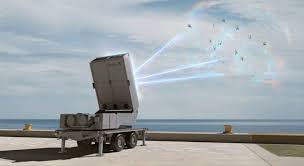
The terms “loitering munition” and “kamikaze drone” are often used interchangeably, but they have subtle differences in their connotations and technical applications.


Loitering Munitions


  • Definition. A type of weapon system that can loiter (remain airborne) over an area for an extended period before striking a target.


  • Purpose. Designed to provide flexibility in targeting, allowing operators to surveil the battlefield and strike high-value or time-sensitive targets once identified.


  • Characteristics. 
    • Equipped with advanced sensors (e.g., electro-optical/infrared cameras) for reconnaissance and target acquisition.
    • Can abort missions and return to a safe area if a suitable target is not found.
    • Often used for precision strikes against high-value targets with minimal collateral damage.
    • It may be recoverable in some cases if a strike is not executed.


  • Examples.
    • IAI Harop (Israel)
    • Switchblade 300/600 (U.S.)
    • Warmate (Poland)


Kamikaze Drone


  • Definition. A colloquial term derived from WWII-era Japanese “Kamikaze” pilots refers to drones intended for one-way missions to crash into their targets.


  • Purpose. Typically associated with direct attack missions rather than reconnaissance.


  • Characteristics.
    • Primarily used for suicide attacks with no intent to return.
    • Often simpler in design compared to sophisticated loitering munitions.
    • It can be pre-programmed to attack specific targets or manually guided to the target.
    • Usually more expendable and cost-effective compared to loitering munitions.


  • Examples.
    • Shahed-136 (Iran)
    • Lancet (Russia)
    • Zala KYB (Russia)


Key Differences

Feature Loitering Munition Kamikaze Drone
Primary Function Surveillance & attack Direct attack
Operational Flexibility Can loiter and abort One-way attack mission
Target Selection Dynamic, real-time selection Pre-selected or guided
Technological Sophistication Often advanced sensors, AI Generally simpler design
Intended Use Tactical & strategic Tactical or psychological warfare


Loitering munitions provide greater operational flexibility, functioning as an ISR (Intelligence, Surveillance, Reconnaissance) and strike asset. On the other hand, Kamikaze drones are more focused on cost-effective, one-time attack missions with minimal operator control once launched.


Please do Comment.


1943
Default rating

Please give a thumbs up if you  like The Post?


For regular updates, please register your email here:-

Subscribe


References and credits

To all the online sites and channels.


Disclaimer:

Information and data included in the blog are for educational & non-commercial purposes only and have been carefully adapted, excerpted, or edited from reliable and accurate sources. All copyrighted material belongs to respective owners and is provided only for wider dissemination.


587:CHINESE FIGHTER AIRCRAFT FOR BANGLADESH: COMPARATIVE ANALYSIS


Pic Courtesy Net


Bangladesh has shown a growing interest in modernising its air force as part of its broader military modernisation under the “Forces Goal 2030” initiative. The BAF currently operates older platforms. These ageing aircraft are increasingly inadequate against modern threats and require replacement with advanced platforms. The BAF has recently considered acquiring new-generation multirole fighter jets, including Chinese aircraft.


Interest in J-10C. The Chinese J-10C, a fourth-generation-plus multi-role fighter jet boasting advanced avionics, weapon systems, and cost efficiency, had featured on Bangladesh’s wish list. This news about the possible acquisition of J-10C aircraft followed Air Chief Marshal Hasan Mahmood Khan’s visit to China in Nov 2024. He reportedly expressed Bangladesh’s desire to acquire about 16 J-10C multi-role combat aircraft from China.


Interest in JF-17. A high-level defence delegation from Bangladesh showed interest in JF-17 Thunders during a visit to Pakistan in January 2025. The delegation, led by Lieutenant General SM Qamarul Hassan, Principal Staff Officer, Armed Forces Division, Bangladesh, met with Pakistan Air Force (PAF) Chief Air Chief Marshal Zaheer Ahmad Babar Sidhu at the Air Headquarters in Islamabad. According to the report, Lieutenant General Hassan explicitly expressed interest in the JF-17 Thunder aircraft, sparking rumours about a possible purchase. This was the first time Bangladesh had expressed its interest in the JF-17. Earlier reports suggested that Bangladesh heavily favoured the Chinese J-10C 4.5th-generation aircraft.


The J-10C Aircraft. The J-10C, known as the ‘Vigorous Dragon’, is claimed to be a fourth-generation multirole combat aircraft equipped with the Chinese-manufactured WS-10B engine. China’s Chengdu Aircraft Corporation has developed it. J-10C represents an evolutionary version of the J-10 series.  The J-10C was first unveiled to the Chinese public in July 2017 and has been operational since 2018. It features significant advancements over earlier variants. It is capable of both air-to-air and air-to-ground missions and is well-suited for diverse operational scenarios. With a delta wing-canard configuration and an optional thrust-vectoring engine, the J-10C claims excellent manoeuvrability and agility in combat. The J-10C is equipped with an Active Electronically Scanned Array (AESA) radar, which offers enhanced detection, tracking, and targeting capabilities in all weather conditions. Advanced avionics and integrated electronic warfare systems for jamming enemy radar and countering electronic threats enhance survivability. The jet can carry various armaments, including the PL-15 beyond Visual Range Air-to-Air Missile (BVR-AAM), which has a range of over 200 km.


JF-17 aircraft. The JF-17 Thunder is a single-engine, lightweight, multi-role combat aircraft. With a maximum speed of approximately 1,200 mph and a service ceiling of 50,000 feet, the JF-17 can carry out various tasks. It is designed to carry Chinese weaponry on its seven hardpoints, including the LS-6 GPS-guided glide bombs, the PL-5 short-range air-to-air missile, and the YJ-12 supersonic and YJ-83 subsonic anti-shipping missiles. Although not directly integrated, the JF-17 can also be equipped with external pods that carry self-defence jammers and electro-optical/infrared sensors. Since its induction in the PAF in 2007, the JF-17 has been upgraded several times. If Bangladesh decides to go for the JF-17, it will likely purchase the Block III variant with superior manoeuvrability, extended range, and enhanced combat capabilities.


Comparative Analysis: JF-17 Thunder vs. J-10C


The JF-17 Thunder and the J-10C are modern fighter jets developed by China. The former was a collaborative effort between China and Pakistan. They are designed for different roles, customers, and operational needs.


Development Background. The JF-17 Thunder was developed jointly by China’s Chengdu Aircraft Corporation (CAC) and Pakistan Aeronautical Complex (PAC). It is designed as a cost-effective, lightweight, multirole fighter for export markets and Pakistan’s Air Force (PAF).  The aircraft is projected for its affordability and ease of maintenance. On the other hand, the J-10C was developed solely by the CAC for the Chinese People’s Liberation Army Air Force (PLAAF). It is a more advanced, multirole, fourth-generation-plus fighter designed for high-end performance and greater sophistication.


Roles and Missions. The JF-17 Thunder is a lightweight multirole fighter suited for air defence, close air support, and precision strike roles. It targets countries with limited defence budgets. In comparison, the J-10C is designed as a medium-weight multirole fighter capable of air superiority, ground attack, and advanced electronic warfare. It operates in high-threat environments against sophisticated adversaries.


Airframe and Design. The JF-17 Thunder is lightweight (approximately 12.7 tons max take-off weight), with a conventional layout and a focus on simplicity and agility. It uses composite materials to reduce weight and cost. Being small and lighter, it is easier to deploy from forward airbases. In contrast, the J-10C is medium-weight (approximately 19 tons max take-off weight), with a canard-delta wing configuration for superior manoeuvrability and aerodynamics—higher use of advanced composites for reduced radar cross-section. The larger size offers a better payload and range.


Avionics and Sensors. The newer JF-17 Thunder variant has the KLJ-7 or NRIET KLJ-7A active electronically scanned array (AESA) radar. It has a decent avionics suite, including a glass cockpit and helmet-mounted display (HMD). On the other hand, the J-10C has an advanced AESA radar with superior range and tracking capability, highly advanced fully digital flight systems and integrated HMD, and a robust EW suite capable of countering high-end threats.


Engines and Performance. The Russian RD-93 or Chinese WS-13 engine powers the JF-17 Thunder. The engine has an 85 kN thrust, enabling the aircraft to attain a speed of Mach 1.6, a combat radius of 1,352 km, and a service ceiling of 55,000 feet. Comparatively, the J-10C initially had an AL-31FN (Russian) engine. The newer variants use China’s WS-10B Taihang engine with a 132 kN thrust. The aircraft can attain a speed of Mach 2.2, has a combat radius of 1,700 km, and a service ceiling of 59,055 feet.


Weapons Systems. The JF-17 Thunder can carry PL-5, PL-9, PL-10, or PL-15 beyond-visual-range (BVR) missiles, precision-guided munitions like laser-guided bombs and cruise missiles (Ra’ad), and CM-400AKG Anti-ship missile. Its total payload is 3,600 kg. The J-10C has a total payload of 6,000 kg, including advanced PL-10 (IR-guided) and PL-15 (BVR) Air to air missiles with longer ranges, precision-strike capability with advanced guided munitions, and advanced anti-ship missiles for maritime strike roles.


Stealth and Survivability. The JF-17 Thunder has limited stealth features and focuses on reduced radar cross-section (RCS) using composites. By contrast, the J-10C possesses a semi-stealth design with reduced RCS due to airframe shaping and the use of RAM (Radar-Absorbing Material). It is more survivable in contested environments.


Cost. The JF-17 Thunder reportedly costs approximately $30-40 million per unit (depending on the variant), whereas the J-10C costs roughly $60-70 million per unit.


The JF-17 Thunder is projected as an affordable and versatile fighter, ideal for nations needing a cheaper and reliable multirole platform. In contrast, the J-10C is a more capable and sophisticated aircraft, suitable for nations looking for high-end performance and advanced technology.


Key Dynamics

Bangladesh is considering acquiring the Chinese JF-17 Thunder and possibly the J-10C for its next-generation fighter program. While the JF-17 Thunder offers a cost-effective, multirole platform with decent air-to-air and air-to-ground capabilities, the J-10C aircraft, with its advanced capabilities, including AESA radar, stealth features, and modern weaponry, aligns with Bangladesh’s ambitions to bolster regional deterrence. However, the final decision will depend upon numerous factors, such as balancing operational requirements, geopolitical considerations, and financial viability.


Strategic Ties with China. Bangladesh maintains strong defence and economic ties with China, its largest military hardware supplier. Bangladesh is China’s second-largest arms buyer after Pakistan. China has previously supplied naval ships, tanks, and other defence systems to Bangladesh, making Chinese aircraft a logical choice for continuity.


Dependence on China. A heavy reliance on Chinese defence equipment could limit Bangladesh’s strategic autonomy and expose it to geopolitical pressure from Beijing.


Affordability and Financing. Chinese fighter jets are significantly cheaper than Western counterparts like the Eurofighter Typhoon, Dassault Rafale, or Lockheed Martin F-16. China offers flexible financing options, which would appeal to Bangladesh.


Operational Costs. While the upfront costs are low, operational and maintenance costs can accumulate over time, especially if Bangladesh opts for higher-end platforms like the J-10C. Financing through Chinese loans might deepen Bangladesh’s economic reliance on Beijing, potentially leading to broader strategic vulnerabilities.


Challenges and Concerns. Although Chinese aircraft like the JF-17 and J-10C are advanced, they may lag behind Western jets in reliability, engine performance, and software integration. Critics argue that the aircraft relies heavily on older technologies and reverse-engineered components.


Geopolitics. Geopolitical tension in the Indo-Pacific is rising, with China and the United States wanting Bangladesh in their camp. Bangladesh’s shift towards China could strain its relationship with the United States.


Balancing Foreign Policy. The U.S. and Western nations might view Bangladesh’s deepening defence ties with China as a shift away from a balanced foreign policy. This alignment might affect Bangladesh’s ability to balance relationships with other major powers. It could also impact Bangladesh’s access to Western defence technology and economic support.


Indian Concern. Bangladesh’s acquisition of Chinese jets would deepen its defence ties with Beijing, aligning with China’s broader strategy of counterbalancing India’s regional influence. This could shift the balance of power in South Asia. Acquiring Chinese jets and aligning with China would complicate Dhaka’s relationship with New Delhi.


Conclusion


Likely Scenario. Bangladesh’s need to rapidly upgrade its air force, budget constraints, strategic ties with China, and other geopolitical considerations make a deal to procure the JF-17 Thunder Block III comparatively more likely.


Bangladesh’s potential acquisition of Chinese fighter jets represents both an opportunity and a risk. On one hand, they would enhance the Bangladesh Air Force’s capabilities, improving its deterrence and operational flexibility. On the other hand, the move comes with substantial financial, operational, and geopolitical challenges that could outweigh the benefits if not carefully managed. The decision also carries significant implications for Bangladesh’s strategic autonomy. Bangladesh must carefully weigh its strategic, operational, and economic priorities to make an informed decision that enhances its national security while maintaining a balanced foreign policy approach.


Please do Comment.


1943
Default rating

Please give a thumbs up if you  like The Post?


Link to the Article on the website:-

https://www.eurasiantimes.com/j-10c-vs-jf-17-two-chinese-fighter-jets-battle/


For regular updates, please register your email here:-

Subscribe


References and credits

To all the online sites and channels.

References:-

  1. Farhana, S. “Bangladesh’s Defence Modernisation: The Role of Chinese Military Hardware.” Journal of South Asian Defence Studies, vol. 18, no. 4, 2023, pp. 97-116.
  1. Sayed Ahmed, “The Role of Chinese Fighter Jets in Bangladesh’s Air Force Modernisation”, Bangladesh Defence Journal, 2022.
  1. Muhammad Tariq, “Assessing the Performance of the JF-17 Thunder in the South Asian Context”, Defence Studies Quarterly, 2020.
  1. Chowdhury, A. “J-10C Jets for Bangladesh: Boosting Capabilities or a Risky Gamble?” Strategic Studies Quarterly, vol. 9, no. 2, 2024, pp. 72-89.
  1. Beijing Insight. “Bangladesh’s Potential Purchase of Chinese J-10C Jets: Analysing Strategic Choices.” The Diplomat, 15 December 2023.
  1. “The Strategic Consequences of Bangladesh Acquiring Chinese Fighter Jets.” South Asian Voices, 10 December 2023.
  1. Tanvir A. Siddique, “Bangladesh’s Balancing Act: Military Procurement from China and the West”, Asian Security Review, 2023.
  1. Shahab Enam Khan, “Bangladesh Defence Policy and Strategic Outlook”, BIISS, 2019.

Disclaimer:

Information and data included in the blog are for educational & non-commercial purposes only and have been carefully adapted, excerpted, or edited from reliable and accurate sources. All copyrighted material belongs to respective owners and is provided only for wider dissemination.

584: CONTEMPORARY WARS THROUGH THE LENS OF GALTUNG’S THEORY


Pics Courtesy Net


My Article published on the Life of Soldier website on 17 Jan 25


In the 21st century, war and conflict have evolved significantly. From interstate wars to protracted civil conflicts, the causes and consequences of contemporary violence are deeply complex. Johan Galtung, a peace and conflict studies pioneer, provides a theoretical framework uniquely suited to analyse these modern wars. His conflict theory, encompassing the conflict triangle, structural and cultural violence, and distinctions between negative and positive peace, offers hope for a comprehensive understanding of conflicts and pathways to resolution. This article explores how Galtung’s theory can be applied to analyse and address contemporary wars, focusing on cases such as the Russia-Ukraine war and the Israel-Hamas conflict.


Galtung’s Conflict Theory


Johan Galtung’s Conflict Theory is foundational peace and conflict studies framework. Galtung, a Norwegian sociologist and the discipline’s founder, developed theories to understand conflict dynamics and pathways to sustainable peace. His most influential contributions include the conflict triangle, the concepts of structural violence, and distinctions between negative peace and positive peace.


Galtung’s Conflict Triangle. Galtung describes conflict as having three interrelated components, often visualised as a triangle. The first component, the Attitudes (A), includes the perceptions, emotions, and assumptions that parties hold about each other, usually shaped by prejudice, fear, or hatred. The second Behaviour (B) is the actions taken by parties, such as violence, protests, or negotiations. The third segment is the Contradictions (C), i.e. the underlying incompatibilities or structural issues, such as resource disputes or unequal power distributions. For sustainable peace, all three corners of the triangle must be addressed. Resolving the structural root causes (contradictions) without addressing hostile attitudes or violent behaviour might lead to a fragile and temporary resolution.


Types of Violence. Galtung expanded the concept of violence beyond direct physical harm. He categorised violence as direct, structural, and cultural. Direct violence is observable physical or verbal aggression, such as war, assault, or terrorism. Structural violence is indirect harm embedded in societal structures, such as poverty, discrimination, and inequality, which systematically disadvantage certain groups. Lastly, cultural violence is the result of cultural norms and values that justify or legitimise violence, such as ideologies, religions, or traditions that perpetuate oppression. Structural and cultural violence often underpin direct violence. Addressing these forms of violence is essential for creating lasting peace.


Negative Peace vis-a-vis Positive Peace. Negative peace is the absence of direct violence (e.g., a ceasefire or truce). While it stops immediate harm, underlying issues may remain unresolved. On the other hand, positive peace is a holistic state where structural and cultural violence is also eliminated, leading to a just and equitable society. Peace-building efforts should aim for positive peace by transforming societal systems and relationships rather than ending immediate hostilities. Achieving positive peace not only stops violence but also addresses the root causes of conflict, creating a more stable and just society.


Conflict Transformation. Unlike conflict resolution (which seeks to end conflict) or conflict management (which seeks to control it), Galtung emphasises conflict transformation, which involves addressing the root causes and creating conditions for long-term peace and harmony. At the heart of Galtung’s theory, this approach is crucial for understanding and resolving contemporary wars, enlightening us about the importance of addressing the underlying issues and keeping us informed about the complexities of peace and conflict studies.


Multilateral organisations like the UN can use Galtung’s theory to design peace processes and post-conflict rebuilding efforts. Analysing Inequalities can help identify systemic injustices that contribute to conflicts. Education and advocacy can provide a lens to critique cultural norms and challenge violent structures.


Understanding Russia-Ukraine War through Galton’s Conflict Theory


Analysing the Russia-Ukraine war through Johan Galtung’s Conflict Theory offers a structured way to understand the root causes, dynamics, and potential pathways to resolution. We can dissect this complex conflict by using Galtung’s conflict triangle, concepts of violence, and distinctions between negative and positive peace.


Galtung’s Conflict Triangle. The three components—contradictions, attitudes, and behaviour—highlight the interplay between the conflict’s structural roots and immediate manifestations.


    • Contradictions (Structural Causes). Historically and geopolitically, Ukraine’s position as a buffer zone between Russia and the West (NATO/EU) has created long-standing tensions. Russia perceives NATO expansion as a threat to its security, particularly with Ukraine’s aspirations for NATO/EU membership. Russia’s annexation of Crimea in 2014 and the conflict in Donbas (eastern Ukraine) reflect disputes over territorial sovereignty and self-determination. Control over natural resources, pipelines, and strategic ports, particularly in Crimea and the Black Sea, adds to the structural causes.


    • Attitudes (Perceptions and Narratives). The Russian perspective is a historical closeness to Ukraine influenced and shaped by shared cultural, linguistic, and religious ties. Its nationalist rhetoric frames Ukraine’s Western alignment as a betrayal and existential threat. The Ukrainian perspective points to a strong drive for independence and self-determination, with resistance to Russian domination. It sees growing alignment with Western values and institutions as a pathway to sovereignty and development.


    • Behaviour (Observable Actions). Observable actions include Russia’s military invasion of Ukraine and Ukraine’s resistance through armed defence. They also include international diplomacy, appeals for Western support, sanctions on Russia, military aid to Ukraine, and diplomatic efforts to de-escalate the conflict.


Types of Violence. Galtung’s framework identifies direct, structural, and cultural violence in the war.


    • Direct Violence. This includes military aggression, missile strikes, sieges, and combat operations resulting in civilian and military casualties. It resulted in the displacement of millions of Ukrainians due to attacks on civilian areas.


    • Structural Violence. Economic disparity between regions (e.g., eastern Ukraine vs. the rest of the country) exacerbates local grievances. Russian control of occupied areas imposes governance that marginalises Ukrainian identity and rights. Western sanctions against Russia, while aimed at reducing aggression, create hardships for ordinary Russians, particularly marginalised groups.


    • Cultural Violence. Both sides use propaganda and rhetoric in the form of nationalist narratives that justify violence or delegitimise the opponent’s position. Competing narratives about Ukraine’s identity and sovereignty deepen the divisions.


Negative Peace vs. Positive Peace. Negative Peace (Ceasefire/Absence of war), i.e. a cessation of direct violence, might be achieved through ceasefires or peace agreements, but without addressing underlying causes, hostilities could reignite (e.g., post-2015 Minsk Agreements). Positive peace (Structural Transformation) would be achieved by acknowledging Ukraine’s sovereignty while addressing security concerns for Russia. An inclusive framework would have to be created to address ethnic and linguistic diversity in Ukraine (e.g., the rights of Russian-speaking minorities). Trust must be rebuilt through cultural and educational exchanges to counter divisive narratives. Institutional reforms would ensure economic and political stability in Ukraine, reducing vulnerabilities to external manipulation.


Conflict Transformation Strategies. Galtung’s emphasis on conflict transformation rather than resolution suggests a need for holistic approaches.


    • Multi-Level Dialogue. Engaging Russia, Ukraine, NATO, and other stakeholders in genuine negotiations prioritising long-term stability over short-term gains. Including civil society and regional actors in peace-building efforts.


    • Rebuilding Trust and Cooperation. Addressing Russian fears of NATO expansion with security guarantees. Establishing international frameworks for shared governance of contested areas like Crimea or Donbas.


    • Economic and Social Reconstruction. International support is needed to rebuild Ukraine post-war and ensure equitable development. Addressing energy dependency and economic grievances that fuel tensions.


    • Countering Cultural Violence. Challenging nationalist and antagonistic narratives through media, education, and cultural initiatives. Promoting shared historical understanding and reconciliation efforts.


Through Galtung’s lens, the Russia-Ukraine war is not just about military aggression but a deep-rooted conflict shaped by structural inequalities, hostile attitudes, and geopolitical contradictions. Achieving sustainable peace requires moving beyond negative peace (ceasefire) to positive peace (addressing root causes). This would involve transforming systems of inequality, reframing narratives, and fostering cooperative international relations.


Understanding Israel-Hamas War through Galtung’s Conflict Theory


Understanding the Israel-Hamas conflict through Johan Galtung’s Conflict Theory allows one to analyse the underlying causes, ongoing dynamics, and potential paths toward resolution. This protracted and deeply rooted conflict can be delved into by applying Galtung’s conflict triangle, concepts of violence, and distinctions between negative and positive peace.


Galtung’s Conflict Triangle. Its three components—contradictions, attitudes, and behaviours—offer a framework for examining this conflict.


    • Contradictions (Structural Causes). The conflict over land, particularly Israel’s occupation of Palestinian territories (West Bank, Gaza), is a core issue. The blockade on Gaza and disputes over East Jerusalem exacerbate tensions. Differing claims to the same land are based on historical, religious, and political narratives. Palestinians in Gaza face significant restrictions under the Israeli blockade, including limited access to resources, employment, and healthcare. Ongoing settlement expansions in the West Bank undermine the viability of a two-state solution. Divisions within Palestinian leadership (e.g., Hamas in Gaza and the Palestinian Authority in the West Bank) hinder cohesive representation in negotiations.


    • Attitudes (Perceptions and Narratives). Israeli perspective highlights the fear of existential threats, given Hamas’s stated aim of opposing Israel’s existence and history of attacks on civilians. A perception that security measures, including the blockade and military actions, are necessary for survival. Palestinian perspective includes resentment over dispossession, systemic inequality, and perceived denial of their national and human rights—narratives of resistance against occupation and framing Israeli actions as colonial and oppressive. Decades of violence, asymmetric power dynamics, and failed negotiations have entrenched mistrust and hostility on both sides.


    • Behaviour (Observable Actions). This includes Israeli military operations, airstrikes, and ground incursions in Gaza. Hamas rocket attacks on Israeli cities and other forms of armed resistance. Cycles of escalation and de-escalation are often influenced by external actors (e.g., the U.S., Egypt, and Iran).


Types of Violence. Galtung’s classification of violence highlights the multifaceted nature of the conflict.


    • Direct Violence. Examples of direct violence are physical attacks and bombings by both sides, resulting in civilian and combatant casualties. Indiscriminate rocket fire from Gaza targeting Israeli cities. Military operations destroyed in Gaza and loss of life.


    • Structural Violence. The blockade on Gaza restricts freedom of movement, trade, and access to essential services, contributing to widespread poverty and humanitarian crises. Settlement expansions in the West Bank create conditions of displacement and inequality—unequal access to legal rights, resources, and political representation for Palestinians.


    • Cultural Violence. Religious and nationalist narratives that justify actions on both sides. For example, it claims that divine rights grant exclusive control over the land—narratives framing the “other” as inherently violent or illegitimate. Educational materials and media perpetuate stereotypes and deepen divisions.


Negative Peace vs. Positive Peace.  Negative Peace (Absence of Direct Violence), i.e. temporary ceasefires or truces, has been achieved through external mediation but failed to address root causes. Examples include the 2021 ceasefire and previous agreements mediated by Egypt or Qatar.  Whereas Positive Peace (Structural and Cultural Transformation) would involve addressing underlying issues, such as Lifting the blockade on Gaza, enabling economic and social development, halting settlement expansion, ensuring equitable access to resources and establishing mechanisms for coexistence, justice, and reconciliation.


Conflict Transformation Strategies. Galtung’s emphasis on conflict transformation suggests a need for systemic and relational changes.


    • Addressing Structural Causes: Internationally mediated solutions to establish a fair and sustainable framework for coexistence, such as a two-state or one-state solution; economic initiatives to improve living conditions in Gaza and the West Bank.


    • Rebuilding Trust and Addressing Narratives. Promoting dialogue initiatives between Israeli and Palestinian communities. Countering hate speech and fostering narratives highlighting shared humanity and potential for coexistence.


    • Inclusive Negotiations. Engaging all stakeholders, including Hamas, despite its controversial designation as a terrorist organisation by many countries, to ensure meaningful representation. External Mediators: Leveraging the influence of regional powers (e.g., Egypt, Turkey) and international actors (e.g., the U.S., UN) to facilitate equitable negotiations.


Through Galtung’s lens, the Israel-Hamas conflict highlights a deeply rooted struggle involving structural inequalities, hostile attitudes, and cyclical violence. Sustainable peace requires addressing direct, structural, and cultural violence and transforming the systems and narratives perpetuating the conflict. Moving toward positive peace would involve creating conditions for justice, equity, and mutual recognition.


Conclusion


Johan Galtung’s conflict theory provides a valuable framework for analysing and addressing contemporary wars. By examining contradictions, attitudes, and behaviours and addressing direct, structural, and cultural violence, pathways to sustainable peace can be imagined. While challenges remain significant, a focus on positive peace can transform cycles of violence into opportunities for reconciliation and coexistence. These contemporary war studies illustrate the urgency and relevance of applying Galtung’s insights to modern conflicts, offering hope for a more peaceful future.


Please do Comment.


1943
Default rating

Please give a thumbs up if you  like The Post?


Link to the article on the website:-

Contemporary Wars Through The Lens Of Galtung’s Theory


For regular updates, please register your email here:-

Subscribe


References and credits

To all the online sites and channels.

References:-

  1. Galtung, Johan, and Dietrich Fischer. Constructive Conflict: From Escalation to Resolution. Lanham: Rowman & Littlefield, 2013.
  1. Galtung, Johan. Peace by Peaceful Means: Peace and Conflict, Development and Civilization. Oslo: PRIO, 1996.
  1. Barash, David P., and Charles P. Webel. Peace and Conflict Studies. Thousand Oaks: Sage Publications, 2018.
  1. Ramsbotham, Oliver, Tom Woodhouse, and Hugh Miall. Contemporary Conflict Resolution: The Prevention, Management and Transformation of Deadly Conflicts. Cambridge: Polity Press, 2016.
  1. Menon, Rajan. Conflict in Ukraine: The Unwinding of the Post-Cold War Order. Cambridge, MA: MIT Press, 2015.
  1. International Crisis Group. Russia and Ukraine: Preventing Further Escalation. Crisis Group Europe Report No. 260, 2022.
  1. Khalidi, Rashid. The Hundred Years’ War on Palestine: A History of Settler Colonialism and Resistance, 1917–2017. New York: Metropolitan Books, 2020.
  1. Human Rights Watch. Israel-Palestine: Events of 2022. Human Rights Watch Annual Report, 2023.
  1. Stockholm International Peace Research Institute (SIPRI). Global Conflict Trends and Analysis. Accessed December 2024. https://www.sipri.org.

Disclaimer:

Information and data included in the blog are for educational & non-commercial purposes only and have been carefully adapted, excerpted, or edited from reliable and accurate sources. All copyrighted material belongs to respective owners and is provided only for wider dissemination.

English हिंदी