
388: Q & A SERIES: IAF – AI POWERED UNMANNED PLATFORMS, SPACE OPS AND FUTURE CHALLENGES


? Response to Questionnaire ?


  1. In your opinion, how do advancements in AI Pilots have the potential to transform future aerial operations and impact Unmanned Aerial Vehicles (UAVs)?


  • AI, Quantum Computing, and Miniaturisation are technologies with maximum impact on air warfare. The combination of these increases the computing power of the aerial systems while reducing their weight and size.


  • AI-powered UAVs are the future of the air warfare.


  • The combination of unmanned aerial platforms and long-range vectors is changing warfare into “No Contact Warfare”.


  • Future air warfare will see the next generation of aerial platforms wherein a combination of manned and unmanned platforms will work as a team. The concept is being called the “Loyal Wing Man Concept” (I call it the “Mother Goose Concept”). Work is going on toward it worldwide including India.


  • The second future trend is Swarm Technology, wherein, several small (Some as small as insects) drones would work in unison towards a defined task.


  • Anti-drone systems will also develop. These systems will contain multi-sensors and an assortment of weapons for hard or soft kill. They will be AI-powered to process the large amounts of information being generated.


  1. Regarding the critical aspect of securing Air Superiority, particularly in the context of the Sino-Indian Arena and the Indo-Pak scenario, do you believe the Indian Air Force (IAF) is adequately prepared for the challenges of the future? What, in your view, are the essential requirements for the IAF to meet these challenges effectively?


  • IAF always works on plans. The first one is to fight with whatever it has and the second is for capability development for future challenges.


  • Over the last nine decades (especially in the last four decades) air warfare capabilities (like strategic airlift, precision, Standoff, all-weather round-the-clock operation, high altitude ops, etc.) of the IAF have improved significantly.


  • At present IAF still can make the difference and provide the asymmetry while dealing with current challenges. However, its war-fighting endurance (numerical strength of fighter and combat support aircraft) needs to be boosted.


  • Capability and capacity development is a continuous process. The future trajectory should cater to future challenges. Some of the essential requirements to deal with future challenges would require:-


      • Enhancement of War Endurance.


      • Infusion of Technology (Quantum, AI, Hypersonic, Stealth, etc.)


      • Reorientation & reorganisation to deal with Grey Zone operations and warfare in domains of warfare like Cyber, Space, Information, and Electronics.


      • Integration with surface forces and government agencies for the whole of government response.


      • Self-reliant defence industry.


  1. Recognizing the strategic significance of Space in Future Air Warfare, how imperative do you believe it is for India to make the necessary considerations and investments in this domain?


  • Space has permeated into every aspect of life (communications, surveys, education, banking, traffic management, health care disaster management, etc.).


  • It has also become an essential domain in warfare (for communications, surveillance, navigation targeting, etc.).


  • The long-range vectors Including Hypersonic) and new-generation platforms are using the medium of space.


  • In such a scenario of high dependence on space-based systems, space warfare (i.e. denial of space operations to the enemy and freedom of own forces to use the medium of space) both offensive and defensive becomes very important.


  • India’s space program is progressing well, however, the space-based technologies and systems are developed first for civilian use and then for the military. This work needs to go on in parallel.


  • Private participation besides public R&D and industry is essential.


  • An appropriate organisation needs to be set up to harness space and deal with space warfare. Advanced Air Forces like The USAF have a space command. China has gone a step further by making a separate service (Joint Strategic Support Force) to deal with all four domains (Cyber, Space, Information, and Electronic).


Suggestions and value additions are most welcome


For regular updates, please register here

Subscribe


References and credits

To all the online sites and channels.


Disclaimer:

Information and data included in the blog are for educational & non-commercial purposes only and have been carefully adapted, excerpted, or edited from sources deemed reliable and accurate. All copyrighted material belongs to respective owners and is provided only for purposes of wider dissemination.
 

384: C-294 AC: IAF CAPABILITY ENHANCEMENT AND ADVANTAGES


Article published at Chanakya Forum.


The Indian Air Force (IAF) on 13 Sep 23 took delivery of its first C-295 transport aircraft from Airbus Defence and Space, at Seville in Spain. The aircraft is the first of the 56 such planes ordered by the IAF under a ₹21,935-crore project to replace its ageing Avro fleet. The aircraft is expected to fly to India soon, followed by a formal induction ceremony later this month.

CASA C-295 (now Airbus C295) is a new-generation, twin-turboprop tactical transport aircraft. The manufacturer claims it is the world’s most robust, reliable, versatile, and efficient multi-role tactical airlift aircraft. The prototype flew on 28 Nov 97, and production began shortly thereafter. In April 1999, the Spanish Air Force became its first customer, ordering nine military-configured C-295s, and two years later (Nov 2001), it was declared operational with the service.

Reports indicate that about 300 C-295 aircraft have been ordered and operated by 30-odd customers worldwide. The aircraft is reported to be combat-proven, having been successfully used during long deployments in remote areas, in hot and humid conditions, in dusty and hot deserts, and in extremely cold areas.

Performance Characteristics: The aircraft has a flight endurance of up to 11 -13 hours and a maximum range of 5,630km. The maximum cruise speed of the aircraft is 260 knots; however, it is capable of low-level flight for tactical missions at speeds down to 110 knots. The C-295 can cruise at altitudes up to 30,000 ft.

Roles and Tasks: The aircraft is designed to move personnel and cargo in military conditions. It is also designed to support multi-role operations and has been produced in a wide range of configurations, as desired by customers. Beyond its use as a tactical transporter, the C-295 is capable of performing a wide variety of missions effectively, which include:

  • Parachute and cargo dropping
    • Electronic signals intelligence (ELINT).
    • Medical evacuation (MEDEVAC).
    • Maritime patrol.
    • Intelligence, surveillance, and reconnaissance (ISR) operations.
    • As a gunship to provide air support to ground forces.
    • Can be outfitted for use as a VIP transport, aerial refuelling tanker, and water bomber for firefighting.

(Some equipment for adapting the aircraft to perform various roles is mounted on pallets, allowing rapid installation and removal).

Capabilities: The aircraft is well suited to special operations, with a characteristic high-wing, rear-loader design. The aircraft can carry up to nine tonnes (9,250kg) of payload, or as many as 71 troops or 45 paratroopers, at a maximum cruise speed of 260 knots. The aircraft has a rear ramp door for quick reaction and para dropping of troops and cargo. The aircraft can be operated from austere (short or unprepared) airstrips with minimal reliance on ground support infrastructure. It can reportedly operate on soft ground without major issues, even when heavily loaded. It has auto-reverse capability, allowing it to turn 180º on runways as narrow as 12 meters wide. It has remarkable short take-off and landing (STOL) performance (a landing and take-off run of just 320m and 670m) from unpaved, soft, and sandy/grass airstrips.

Boost to IAF Capability: IAF will be the world’s largest operator of the C-295. The aircraft is a replacement for the IAF’s fleet of aging Avro-748 planes that entered service in the early 1960s. The induction will enhance the IAF capability in the following ways:

  • Fill the medium-lift capability gap.
  • Further boost to the special operation capability.
    • Enhance high-altitude operation capability.
    • Improve much-needed military aerial connectivity to ANC.
    • Improve capability to sustain ground forces.
    • Enhance HADR capability.
    • Improve flexibility of air operations by providing a choice of palletised payloads.

Indian Contract

India signed a contract (₹21,935-crore project) with Airbus Defence and Space for an order of 56 C 295s in Sep 2021. The first 16 aircraft will be delivered in fly-away condition over four years from the date the contract is implemented. Airbus will assemble these aircraft at its facility in Seville, Spain. Tata Advanced Systems will manufacture and assemble the remaining 40 aircraft in India under an industrial partnership with Airbus.

Delivery Schedule

The first aircraft has been delivered on 13th Sep 2023. The second aircraft is in final assembly at Airbus’s Seville facility and will be delivered in May 2024. The last of the 16 flyaway aircraft will be delivered to IAF by August 2025, while the first “made in India” C-295 will roll out of the Vadodara facility in September 2026 and the remaining 39 by August 2031.

Maintainability
The C-295 contract covers performance-based logistics support for five years, ensuring a fleet availability rate of 85%. The contract for the supply of spares is for 10 years and covers 10 operating bases. It also includes ground support equipment, test equipment, technical publications, training devices, and training.

Manufacture in India

The C-295 will be the first military aircraft to be manufactured in India by a private consortium. The aircraft manufacturing will take place at the Main Constituent Assembly (MCA) at Hyderabad and the Final Assembly Line (FAL) at Vadodara. The MCA in Hyderabad is already functional with domestic production of the parts, including the fuselage. The final assembly line in Vadodara (the first one outside Spain) is being built on the lines of the Seville facility and will be operational in November 2024. It will have a capacity for 12 aircraft per year.

Indigenisation
As part of the C-295 India project, the country will manufacture about 14,000 parts, 4,600 sub-assemblies, and all major component assemblies. The TATA Group is already indigenising these parts at a rate of about 4,000 every year. Non-Airbus parts like engines (two Pratt & Whitney PW127G turboprop engines), landing gear, and avionics will be provided by Airbus and integrated into the aircraft. All 56 aircraft will be fitted with an indigenous electronic warfare suite developed by Bharat Electronics Ltd and Bharat Dynamics Limited. While BEL is supplying the radar warning receiver and the missile approach warning system, BDL is providing the countermeasure dispensing system. These have already been certified and installed on the first aircraft.

Advantages of the Contract

The Indian Ministry of Defence and Airbus have signed a ‘Make-in-India’ and offset contract (the deal includes 30% offset obligations) under which Airbus is obligated to purchase eligible products and services from local partners in India. The deal between Airbus and TATA will include nearly 90 per cent technology transfer.

The project will create 15,000 direct jobs and 10,000 indirect jobs over the coming 10 years. Airbus currently employs over 2,750 full-time employees in India, and its supply-chain exports are $750 million per year in components and services.

The program will provide a major boost to the ‘Atmanirbhar Bharat Abhiyan’ of the Government as it offers a unique opportunity for the Indian Private Sector to enter into a technology-intensive and highly competitive aviation Industry. The project will boost India’s aerospace ecosystem, with several MSMEs across the country involved in manufacturing aircraft parts. It will boost domestic aviation manufacturing, reducing import dependence and increasing exports.

Future Prospects

The Defence Research and Development Organisation is considering procurement of 15 more C-295s to be converted into a maritime role for the Navy and Coast Guard. India is also in talks with Airbus to set up a maintenance, repair, and overhaul (MRO) hub for this aircraft, which is operated by several countries in the region, including the UAE, the Philippines, Thailand, Uzbekistan, and Indonesia. In the future, this aircraft or its variant may replace the aging AN-32 aircraft of the IAF.


Suggestions and value additions are most welcome


For regular updates, please register here:-

Subscribe


References and credits

To all the online sites and channels.


Disclaimer:

Information and data included in the blog are for educational & non-commercial purposes only and have been carefully adapted, excerpted, or edited from sources deemed reliable and accurate. All copyrighted material belongs to respective owners and is provided only for purposes of wider dissemination.


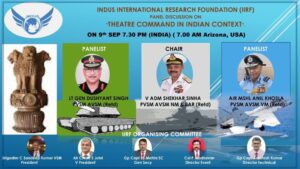
382: THEATRE COMMAND IN INDIAN CONTEXT


Had an interesting panel discussion on the topic

“Theatre Command in the Indian Context”


Link to the Recording:-


For selective viewing please click on the links below:-

  1. Introductions.
  2. My Views and recommendations.


Q&A Session:-

  1. 1:18:26 to 1:23:14 – NCW, Network integration, availability of composite situation picture, DCN, recommendations for way ahead etc.
  2.  1:38:52 to 1:45:59 – China in maritime domain and importance of ANC, DMA functioning.
  3.  1:47:15 IAF and joint operations specially in maritime domain.


Suggestions and value additions are most welcome


For regular updates, please register here

Subscribe


References and credits

To all the online sites and channels.


Disclaimer:

Information and data included in the blog are for educational & non-commercial purposes only and have been carefully adapted, excerpted, or edited from sources deemed reliable and accurate. All copyrighted material belongs to respective owners and is provided only for purposes of wider dissemination.


English हिंदी