Information and data included in the blog are for educational & non-commercial purposes only and have been carefully adapted, excerpted, or edited from reliable and accurate sources. All copyrighted material belongs to respective owners and is provided only for wider dissemination.
My article was published in the May edition of the “Life of Soldier” journal.
Balancing affordability and capability in fighter acquisition programs is a complex and intellectually stimulating challenge in defence procurement. Modern fighter jets, with their advanced avionics, stealth technology, and weapons systems, are not just engineering marvels but also strategic assets that can dominate the air, land, and sea. However, these capabilities come at a steep cost, and governments must grapple with budgetary constraints while ensuring their air forces remain capable of addressing current and future threats. There is a need to explore the intricate trade-offs between affordability and capability, examine past successful and unsuccessful programs, and derive best practices for achieving an optimal balance.
Key Factors Influencing Fighter Acquisition Costs
Acquiring modern fighter aircraft is a complex and costly endeavour influenced by a myriad of factors, ranging from technological advancements to geopolitical considerations. Understanding these key factors is essential to comprehending the significant cost variations across different programs and nations.
Research and Development (R&D) Costs. One of the most significant cost drivers in fighter acquisition is R&D. Developing a new generation of aircraft requires extensive research, prototyping, and testing. Stealth technology, advanced avionics, and next-generation propulsion systems demand substantial investment.
Technology and Performance Requirements. The complexity of the technology integrated into a fighter jet directly influences its cost. High-end capabilities such as low observability (stealth), supercruise, advanced radar systems, and electronic warfare (EW) suites add to development and production expenses. The F-22 Raptor, known for its superior air dominance capabilities, became one of the most expensive fighters due to its cutting-edge technology.
Production Scale and Economies of Scale. The number of units produced significantly affects per-unit costs. Larger production runs allow for economies of scale, reducing the per-aircraft cost due to bulk purchasing of materials and more efficient manufacturing. For instance, the US fighter aircraft benefit from a large international procurement base, lowering their unit cost compared to limited-production fighters like the Eurofighter Typhoon or the Dassault Rafale.
Supply Chain and Material Costs. Raw materials, especially those used in composite structures and stealth coatings, impact the cost of fighter jets. Specialised alloys, titanium, and radar-absorbent materials are expensive and often difficult to source. Additionally, supply chain disruptions can inflate costs, as seen during the COVID-19 pandemic and the ongoing Russia-Ukraine and Israel-Hamas wars.
Workforce and Manufacturing Expertise. Highly skilled labour is required to assemble sophisticated aircraft. Countries with a well-established aerospace industry, such as the United States, France, and Russia, have the necessary expertise, but labour costs can vary. As seen in the F-35 production process, advanced automation and AI-driven manufacturing techniques can help reduce labour expenses over time.
Customisation and Export Modifications. Export variants of fighter aircraft often undergo modifications to meet the specific needs of the purchasing nation. These modifications can increase costs, such as different avionics, weapons compatibility, or structural changes. The Rafale, for example, had many India-specific features, leading to increased costs.
Lifecycle and Maintenance Costs. Beyond the initial acquisition, the total cost of ownership includes maintenance, spare parts, and upgrades over the aircraft’s lifespan. High-maintenance aircraft like the F-22, which require specialised maintenance for stealth coatings, can have significant long-term costs. On the other hand, modular designs and open-system architectures aim to keep maintenance costs lower.
Geopolitical and Strategic Considerations. Strategic alliances and political considerations often influence defence procurement. Countries that purchase fighters from allies may receive discounts or financing assistance as part of broader defence agreements. Conversely, embargoes or restrictions on technology transfers can drive up costs if alternative solutions are required. This underscores the need for foresight and strategic planning in defence procurement.
Trade-Offs in Fighter Acquisition Programs
Managing the intricacies of fighter aircraft procurement is vital to defence planning. Military leaders and policymakers must meticulously weigh performance, cost, operational requirements, and strategic objectives to maximise capabilities while staying within budgetary limits.
Balancing Cost and Performance. Acquiring fighter aircraft requires a delicate balance between cost and capability. While advanced fifth-generation fighters provide unmatched performance, they have high acquisition and operational expenses. More affordable alternatives may lack cutting-edge features but offer viable options for air forces with budget constraints. Governments must determine whether to invest in cutting-edge technology or build a more extensive fleet with slightly reduced capabilities.
Multirole Efficiency vs. Specialised Superiority. Modern fighters like the F-35 and Rafale are designed as multirole platforms capable of handling air-to-air combat, ground attacks, and electronic warfare. This reduces fleet diversity but may lead to trade-offs in specialised missions. Decision-makers must evaluate whether a single versatile platform meets their operational needs or if specialised aircraft are necessary for optimal effectiveness.
Domestic Production vs. Foreign Procurement. Nations must choose between developing indigenous fighter programs and purchasing aircraft from foreign suppliers. Domestic programs, such as India’s Tejas and South Korea’s KF-21, foster self-reliance but require extensive research and industrial infrastructure investment. In contrast, buying foreign aircraft ensures immediate capability but may create dependency on external suppliers for maintenance and upgrades.
Short-Term Gains vs. Long-Term Development. Some countries prioritise acquiring ready-made fighter jets to achieve immediate operational capability, while others invest in long-term development programs. Purchasing off-the-shelf platforms minimises short-term risks but may lead to obsolescence. On the other hand, long-term investments in projects like the Tempest and NGAD aim to ensure future technological superiority, albeit with higher financial and developmental risks.
Expanding Fleet vs. Cutting-Edge Technology. Budgetary constraints force militaries to choose between maintaining a more extensive fleet of less advanced aircraft or acquiring fewer high-tech fighters. A more comprehensive fleet provides excellent operational coverage, while fewer advanced jets offer superior combat capabilities. Many air forces supplement their expensive stealth fighters with more affordable fourth-generation aircraft to maintain a balance between numbers and technology.
Quantity vs. Capability Trade-offs. Nations must decide between acquiring a limited number of highly advanced fighters or a more extensive fleet of less sophisticated aircraft. For example, the U.S. supplemented its elite F-22 fleet with the more affordable F-35, while countries like China and Russia prioritise quantity to ensure strategic depth. This decision impacts force projection and overall combat effectiveness.
Case Studies
Various nations have adopted different strategies to achieve balance, ensuring operational effectiveness while managing costs.
F-16 Fighting Falcon (USA): Cost-Effective Multirole Performance. The F-16, developed in the 1970s, exemplifies how an affordable fighter can remain relevant through continuous upgrades. Originally designed as a lightweight, cost-effective platform, the F-16 has evolved with advanced avionics, radar, and weapon systems. By leveraging modular upgrades, nations operating the F-16 have extended their service life and capability without incurring the costs of entirely new aircraft programs. Its global success—operated by over 25 countries—demonstrates the financial benefits of export-oriented design.
JAS 39 Gripen (Sweden): Affordability through Smart Design. Sweden’s Saab JAS 39 Gripen was designed with cost efficiency in mind. Unlike competitors, the Gripen integrates an open-architecture system that allows easy upgrades, reducing long-term costs. Its reliance on off-the-shelf components, including an American engine and European avionics, lowers development expenses while maintaining high performance. The Gripen’s ability to operate from austere airfields and use cost-efficient maintenance procedures further enhances affordability. Its export success in countries like Brazil and South Africa has helped distribute costs across multiple buyers.
Eurofighter Typhoon (Europe): Multinational Cost Sharing. The Eurofighter Typhoon demonstrates how multinational collaboration can spread development costs while delivering a high-performance aircraft. Shared investment among Germany, the UK, Italy, and Spain allowed the Typhoon to integrate advanced capabilities while mitigating financial burdens on individual nations. Although initially expensive, its long-term sustainment plan ensures affordability through incremental modernisation.
Chengdu J-10 (China): Indigenous Development with Cost Control. China’s Chengdu J-10 was developed as an affordable, indigenous alternative to foreign fighters. China minimised costs by relying on domestic production and technology transfer from Russian sources while achieving a capable multirole aircraft. Continuous upgrades, including the J-10C variant with AESA radar and advanced avionics, have kept the platform competitive without excessive investment in entirely new designs.
Sukhoi Su-30 (Russia): Adaptability and Cost Efficiency. The Su-30 series is a prime example of how Russia balances affordability with performance. Initially derived from the Su-27, the Su-30 has been continuously upgraded to include advanced avionics, thrust-vectoring engines, and long-range strike capabilities. Its affordability and strong export potential have made it a staple in air forces worldwide, including India, Algeria, and Vietnam.
HAL Tejas (India): Indigenous Fighter Development for Cost-Effectiveness. India’s HAL Tejas was developed to reduce reliance on foreign fighters while maintaining affordability. Designed with modular upgrades in mind, the Tejas has gradually improved with better radar, weapons integration, and avionics. Despite delays in development, its affordability compared to Western counterparts has made it an attractive option for India’s long-term air power strategy.
KAI FA-50 (South Korea): Light Fighter for Affordability and Export Success. South Korea’s KAI FA-50, based on the T-50 trainer, is a cost-effective light fighter designed for domestic and export markets. With modern avionics and weapons compatibility, the FA-50 offers a budget-friendly solution for nations requiring a capable yet affordable jet. Its success in markets like the Philippines and Poland highlights its balance of affordability and capability.
Best Practices for Balancing Affordability and Capability
Balancing affordability and capability in fighter acquisition programs is a complex but essential task for modern air forces. Governments must ensure that their aircraft provide operational effectiveness without exceeding budgetary constraints. The following best practices help achieve this balance.
Lifecycle Cost Management. The total cost of a fighter aircraft extends beyond its initial purchase price. Governments must factor in long-term expenses such as maintenance, upgrades, and eventual disposal. A comprehensive lifecycle cost analysis prevents budget overruns and ensures the financial sustainability of an air force over decades of service.
Continuous Modernisation Strategies. Modern fighter aircraft benefit from modular systems and open architectures that enable incremental upgrades. The F-16 Fighting Falcon, for instance, has remained operational since the 1970s due to continuous improvements in avionics, radar, and weapons. This strategy extends an aircraft’s service life while spreading costs over time, reducing the need for costly replacements.
Leveraging Partnerships. Multinational collaborations in fighter development and production help distribute costs among participating nations. Programs like the F-35 Joint Strike Fighter and the Eurofighter Typhoon demonstrate shared investment’s financial and technological benefits. By pooling resources, nations reduce individual financial burdens while gaining access to cutting-edge technology.
Maximising Multi-Role Capabilities. Multi-role fighters enhance operational flexibility by performing diverse missions within a single platform. The Dassault Rafale exemplifies this approach, excelling in air combat, ground attack, and reconnaissance. Such versatility allows air forces to reduce reliance on multiple aircraft types, simplify logistics, and lower maintenance costs.
Enhancing Export Potential. Designing fighters with exportability in mind helps amortise development costs and lower per-unit expenses. Countries that successfully market their fighter jets internationally can reinvest revenues into further technological advancements, strengthening their domestic defence industry.
Robust Program Management. Effective oversight and clear program objectives are crucial to avoiding cost overruns and scope creep. Strong governance, transparent communication, and disciplined financial management ensure that fighter programs stay within budget while meeting operational requirements. The U.S. Air Force’s Next Generation Air Dominance (NGAD) program has emphasised digital engineering to streamline development and prevent cost escalation.
Embracing Emerging Technologies. Advancements in technology are reshaping how air forces balance affordability and capability. The following innovations are improving cost efficiency while enhancing combat effectiveness.
The Role of Unmanned Systems. Unmanned aerial vehicles (UAVs) and “loyal wingman” drones complement traditional fighter jets by undertaking high-risk missions at a lower cost. These systems enhance reconnaissance, electronic warfare, and combat operations, reducing pilot exposure to danger. Programs like the Boeing MQ-28 Ghost Bat highlight the increasing integration of UAVs into modern air combat strategies.
Digital Engineering. Digital twins and model-based systems engineering accelerate fighter development and reduce costs. Digital prototypes allow designers to test and refine aircraft designs in virtual environments before physical production begins.
Additive Manufacturing. 3D printing, or additive manufacturing, streamlines the production of complex aircraft components, reducing material waste and manufacturing time. This technology enables rapid part replacement, minimising downtime and sustainment costs. Fighter manufacturers increasingly use 3D printing to enhance affordability without sacrificing performance.
AI-Driven Warfare. Artificial intelligence (AI) transforms modern fighter capabilities by improving decision-making, enhancing situational awareness, and reducing pilot workload. AI-powered mission planning and adaptive combat algorithms enable greater efficiency and operational effectiveness, potentially lowering training costs and increasing mission success rates.
Conclusion
Balancing affordability and capability in fighter acquisition programs is a complex but essential endeavour. As nations face evolving threats and fiscal constraints, the ability to make strategic trade-offs will determine the effectiveness of their air power. By embracing innovative technologies, fostering international collaboration, and adopting robust program management practices, governments can achieve an optimal balance that ensures operational readiness and financial sustainability. The lessons from past programs and emerging trends guide navigating this challenging landscape.
Please Add Value to the write-up with your views on the subject.
For regular updates, please register your email here:-
Information and data included in the blog are for educational & non-commercial purposes only and have been carefully adapted, excerpted, or edited from reliable and accurate sources. All copyrighted material belongs to respective owners and is provided only for wider dissemination.
References:-
Arena, M. V., Blickstein, I., Younossi, O., & Grammich, C. (2008). Why Has the Cost of Fixed-Wing Aircraft Risen? RAND Corporation.
Lorell, M. A. (2003). Going Global? U.S. Government Policy and the Defence Aerospace Industry. RAND Corporation.
Tirpak, J. A. (2020). “How Much Should a Fighter Cost?” Air Force Magazine.
Trimble, S. (2018). “F-15EX vs. F-35A: The Debate Over Air Superiority Affordability.” FlightGlobal.
Shalal, A. (2021). “Cost vs. Capability: U.S. Air Force Considers Future Fighter Mix.” Reuters.
Majumdar, D. (2017). “Why Stealth Fighters Are So Expensive (And What Can Be Done About It).” The National Interest.
Laird, R. F., & Timperlake, E. (2013). Rebuilding American Military Power in the Pacific: A 21st-Century Strategy. ABC-CLIO.
Heginbotham, E., Nixon, M., Morgan, F. E., Heim, J. L., Hagen, J., & Engstrom, J. (2015). The U.S.-China Military Scorecard: Forces, Geography, and the Evolving Balance of Power, 1996–2017. RAND Corporation.
Sweetman, B. (2014). The F-35 Lightning II: From Concept to Cockpit. Zenith Press.
Johnson, J. M. (2019). The Cost of Air Superiority: The Economics of the F-22 Raptor. Air & Space Power Journal.
European Defence Agency (EDA). (2022). European Combat Aircraft: Multinational Cooperation and Industrial Sustainability.
Congressional Budget Office (CBO). (2020). The Cost of Replacing Today’s Air Force Fleet.
Kausal, V. (2003). Arming the Indian Arsenal: Challenges and Policy Options for India’s Defence Industrialisation. Routledge.
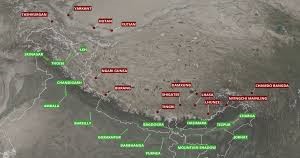
China has been expanding its aviation infrastructure near the India-China border, constructing new airfields in strategic locations. These airfields are primarily located in the Tibet Autonomous Region (TAR) and Xinjiang Uyghur Autonomous Region (XUAR), with strategic significance due to their proximity to sensitive border areas, including India, Nepal, and Pakistan-occupied Kashmir (PoK).
Detailed overview of the new Chinese airfields at Tingri, Lhunze, Burang, Yutian, and Yarkantir (based on available open source information) is as follows:-
Shigatse Tingri Airport (Tingri, Tibet)
Location: Tingri County, Shigatse Prefecture, Tibet Autonomous Region, China.
Opened: December 24, 2022
Type: Dual-use (civilian and military)
Elevation: Approximately 4,300 meters (14,108 feet) above sea level.
Runway: 4,500 meters
Proximity to India: Approximately 60 km from the Indian border
Infra: Supports dual-use (military and civilian) operations, potentially for troop deployment and logistics near the Line of Actual Control (LAC) with India. Designed to handle high-altitude operations, likely with a runway suitable for small to medium aircraft and helicopters.
Strategic Significance: Supports China’s broader strategy to bolster infrastructure near disputed borders. Located across the Himalayas from Kathmandu, Nepal, and near the Indian border. Part of China’s “3+1” airport construction plan aimed to boost air connectivity in the region, enhancing civilian access and military logistics near the Line of Actual Control (LAC). Fills a gap between Burang (west) and Shigatse (east), enhancing China’s military and civilian aviation network in southern Tibet.
Lhunze Airport/Shannan Longzi Airport(Lhunze County, Tibet).
Location: Longzi County, Shannan (Lhokha) Prefecture, Tibet Autonomous Region, China.
Features a 4,500-meter (14,800-foot) Class 4C runway with seven parking stands.
Operational since January 12, 2023, following construction that began in April 2021.
Type: Planned as a dual-use facility.
Designed to handle 180,000 passengers annually by 2030.
Equipped for high-altitude operations, likely supporting fighter jets and transport aircraft.
Proximity to India: Close to Arunachal Pradesh, India
Strategic Significance: Dual-use military and civilian airport, enhancing China’s ability to project power near the LAC. Aims to improve connectivity in remote border areas, facilitating civilian travel and military operations. Located approximately 45 km from the disputed border with Arunachal Pradesh, India, and opposite the Upper Subansiri district. Lhunze’s airfield strengthens China’s military presence in a contested region, with the potential to support operations against India. Part of a broader network of airfields and SAM (surface-to-air missile) emplacements near Arunachal Pradesh.
Ngari Burang Airport/ Ali Pulan Airport (Burang County, Tibet)
Location: Burang County, Ngari Prefecture, Tibet Autonomous Region, China.
Status: Operational since December 27, 2023, with construction approved in April 2021.
Designed for 150,000 passengers and 600 tons of cargo annually.
Runway and facilities support dual-use operations, including military aircraft and helicopters.
Proximity to India: Near the India-Tibet-Nepal tri-junction.
Strategic Significance: It enhances China’s ability to project power and provide logistical support in the western sector of the LAC. It is located near the trijunction of Tibet, Nepal, and India’s Uttarakhand state, approximately 400 km from New Delhi. It is positioned close to Mount Kailash and Lake Manasarovar and is touted as a feeder strip for pilgrims, but has clear military applications. It supports the Ngari-Gunsa airfield, located 220 km away, and enhances China’s control over the southwestern border.
Yutian Wanfang Airport (Yutian County, Xinjiang)
Location: Yutian County, Hotan Prefecture, Xinjiang Uyghur Autonomous Region, China.
Elevation: Approximately 1,400 meters (4,600 feet) above sea level (lower than Tibetan airfields).
Runway: 3,200 meters, capable of handling medium-sized commercial and military transport aircraft.
Opened: December 26, 2020
Type: Primarily a civilian airport but with potential dual-use capabilities.
Annual Capacity: Designed to handle 180,000 passengers and 400 tons of cargo
Strategic Significance: This will improve connectivity in southern Xinjiang, which is strategically important due to its proximity to the western sector of the LAC. Situated in south Xinjiang, between Hotan and Qiemo airbases, along the Karakoram Highway. Enhances connectivity in Xinjiang, supporting China’s Belt and Road Initiative and military logistics near the borders with Pakistan and India. Strategically located near the Aksai Chin region, a disputed area with India. Yutian’s airfield supports China’s control over Xinjiang and its borders with India and Pakistan-occupied Kashmir. Likely used for surveillance and logistics, given its proximity to sensitive regions.
Yarkantir/Yarkant/ShacheAirport (Xinjiang)
Location: Likely refers to Shache (Yarkant) County, Kashgar Prefecture, Xinjiang Uyghur Autonomous Region, China.
Elevation: Approximately 1,200–1,500 meters (3,900–4,900 feet) above sea level.
Shache Airport has a runway suitable for small to medium aircraft, with facilities for civilian and potential military use.
Status: Specific details about a new airfield in Yarkand are limited. However, the region has seen infrastructure enhancements, including upgrades to airbases like Hotan, approximately 240 km from the LAC.
Strategic Significance: Shache Airport (IATA: QSZ, ICAO: ZWSC) is an existing dual-use airport in Yarkant County. It is operational for civilian flights but has military potential. Located in a restive part of Xinjiang, near the Tajik Autonomous County and the Wakhan Corridor, it is close to Pakistan-occupied Kashmir and Afghanistan. It supports China’s internal security operations in Xinjiang and external defence along its western borders. Enhances China’s ability to project power in Central Asia and monitor borders with Pakistan, Afghanistan, and Tajikistan. Part of a broader network of airfields in Xinjiang, including Tashkurgan, which is under construction and strategically located near PoK.
Chinese Aviation Infrastructure Strategy.
Regional Strategy. The airfields in Tingri, Lhunze, and Burang are part of China’s efforts to strengthen its military presence along the LAC with India, particularly after the 2020 Galwan clash. Yutian and Shache (Yarkant) airfields support China’s control over Xinjiang, securing its western borders and facilitating connectivity with Central Asia.
Chinese Narrative. Official Chinese sources often frame these airfields as civilian projects to boost tourism (e.g., Burang for Mount Kailash pilgrims) or regional development. However, their proximity to sensitive borders and dual-use capabilities suggests a primary military purpose, which is downplayed in state media.
Geopolitical Implications. These airfields enhance China’s ability to rapidly deploy troops, conduct surveillance, and support air operations in contested regions, posing a challenge to India, Nepal, and other neighbours.
Inputs to the Queries on Chinese Bases
(Based on the open sources on the net)
Q1. As reflected in the imagery, does the construction and upgrade of new Chinese airbases represent a serious threat to India?
The construction and upgrade of Chinese airbases in Tibet and adjacent areas do represent a serious strategic threat to India, mainly when analysed in the context of recent geopolitical tensions, evolving Chinese military capabilities, and infrastructural patterns since the 2020 Galwan clashes.
Airbases like Tingri, Lhunze, and Burang are located close to the Line of Actual Control (LAC), within 50–150 km. This proximity allows for the quick deployment of PLA Air Force (PLAAF) assets to forward positions and shorter response times in case of a border escalation. These airfields enable coverage of Indian positions in Arunachal Pradesh, Sikkim, Uttarakhand, and Ladakh.
Upgrades to dual-use airfields include extended and hardened runways to support heavier fighters and transport aircraft, and new hardened aircraft shelters (HAS) to protect valuable assets. Advanced radar stations and SAM sites will provide protection. Fuel and ammunition storage facilities reflect a long-term war readiness. These changes reflect a move from rudimentary forward airstrips to permanent, fully capable air combat hubs.
These bases offer greater depth, logistics, and density. The PLAAF can now rotate fighter squadrons and drones rapidly into forward bases.
The network of airbases (e.g., Burang supporting Ngari Gunsa, Tingri filling gaps between Shigatse and Burang) creates strike capability, mutual support, and redundancy.
Bases like Burang (near Nepal) and Tingri (near Bhutan) could pressure India’s neighbours, complicating India’s regional influence. The proximity to the Siliguri Corridor amplifies strategic risks.
Bases like Yutian and Yarkantir in Xinjiang would complement Western Theater Command operations and are positioned to project power toward India. This reflects China’s “strategic envelopment” doctrine, which increases pressure on India along a much broader front.
These Chinese airbases’ construction and systematic upgrading represent a serious and growing threat to India’s strategic posture, particularly by reducing warning time, enabling force concentration, and improving the PLA’s offensive and defensive air operations.
While it does not signal imminent war, it tilts the regional balance and compels India to accelerate military infrastructure development, deepen surveillance, and maintain credible deterrence across the Himalayas.
Q2. Do these new airbases and the consolidation and upgrade of existing ones in Tibet substantially balance out the IAF’s traditional advantage along the India-China frontier?
China’s construction of new airbases and the systematic upgrading of existing ones in Tibet and Xinjiang significantly narrows down, though not entirely erases, the traditional airpower advantage long held by the Indian Air Force (IAF) along the India-China frontier.
The establishment/modernisation of Tingri, Lhunze, Burang (near central and eastern sectors) and Yutian, Yarkantir (in Xinjiang) allows PLAAF aircraft to deploy closer to the LAC, reducing response time and extending their ability to hold Indian targets at risk.
While Tibet’s altitude still limits PLAAF aircraft (lower payloads, reduced engine efficiency), China is trying to mitigate this with more powerful engines and heavy reliance on drones, loitering munitions, airborne early warning aircraft (KJ-500), tankers, and ECM assets based in the rear (e.g., Hotan) but linked with forward bases.
China’s concept of “airbase clusters” means that even if one is targeted (say Lhasa-Gonggar), others nearby (e.g., Shigatse, Pangta) can support operations, enhancing tactical flexibility, survivability, and redundancy.
China’s new and upgraded airbases improve PLAAF’s forward reach, resilience, and responsiveness, mitigating the payload disadvantage of high-altitude operations. Bases like Lhunze and Tingri challenge the IAF’s dominance in the eastern LAC sector by enabling faster, more credible PLAAF operations.
While the IAF continues to enjoy certain operational advantages, China’s new airbases and upgrades in Tibet now provide the PLAAF with a more credible and resilient offensive and defensive posture along the LAC. The earlier asymmetry that favoured India is now more balanced, especially in terms of response time, reach, and multi-layered defences.
Q3. Does the construction of the Burang airbase represent a new and specific threat to airspace over Uttarakhand?
The central sector of the Line of Actual Control (LAC) has historically seen less militarisation compared to the eastern and western sectors (partly due to the rugged terrain and lower perceived threat).
However, the construction of the Burang airbase represents a new and specific potential threat to Uttarakhand’s airspace due to its proximity to the LAC (~60 km), ability to host fighters and drones, and support from nearby SAM systems.
It enhances China’s surveillance, deterrence, and limited power projection over Pithoragarh and Chamoli, particularly near the Lipulekh Pass and Barahoti.
Burang is located near the tri-junction of India, Nepal, and Tibet, directly facing India’s Uttarakhand sector, especially Barahoti, which has witnessed Chinese transgressions in recent years.
The base is less than 100 km from the Indian border, giving PLAAF aircraft and drones a very short flight time to Indian airspace, especially toward sensitive regions like Joshimath, Dharchula, the Kailash-Mansarovar route, and the central Sector’s critical valleys and passes (e.g., Lipulekh, Niti, Mana).
Establishing a permanent airbase at Burang shifts that balance, opening up the possibility of tactical surprise or probing manoeuvres and providing quick-reaction air support for PLA ground units, surveillance, and drones. Deploying long-range air Defence systems could threaten IAF aircraft operating from bases like Bareilly or Gorakhpur.
While the altitude (4250 mtrs) limits the payload of fighters at Burang (as with other Tibetan airbases), the proximity compensates by enabling shorter-range missions with lighter payloads, persistent ISR coverage through drones, and strike options with long-range PGMs even from short-runway-capable aircraft.
Burang can also serve as a forward operating base (FOB) or logistics/surveillance hub, rotating aircraft from rear bases like Shigatse or Lhasa.
This airfield increases airspace monitoring pressure on India, especially as it tries to improve the region’s border infrastructure and patrol routes.
It also forces India to extend air defence coverage into the central sector, possibly stretching resources from already active eastern and western sectors.
Please Add Value to the write-up with your views on the subject.
For regular updates, please register your email here:-
Information and data included in the blog are for educational & non-commercial purposes only and have been carefully adapted, excerpted, or edited from reliable and accurate sources. All copyrighted material belongs to respective owners and is provided only for wider dissemination.
References:-
Lin, Christina. “China’s Strategic Airfields and the BRI: The New Logistics Backbone”, Asia Times / Comparative Strategy, 2023.
Chellaney, Brahma. “China’s Infrastructure Strategy in Tibet and the Implications for India”, Indian Defence Review, 2022.
Centre for Strategic and International Studies (CSIS), Report example: “PLA Air Force Operations in Tibet and Xinjiang”.
Institute for Defence Studies and Analyses (IDSA), New Delhi, Reports on border infrastructure and PLA’s posture across the LAC.
South China Morning Post (SCMP), Occasional reporting on PLA activities and airport developments in Tibet/Xinjiang.
India Today / ANI / Times Now, Reports on satellite imagery and Indian assessments of Chinese activity post-Galwan.
Air Power Asia, an Indian think tank with detailed airbase and aerial warfare assessments.
Military Balance 2024, by the International Institute for Strategic Studies (IISS), Technical information on PLAAF deployment capacities and base hierarchy.
Civil Aviation Administration of China (CAAC), official press releases on new airports and infrastructure development in Tibet and Xinjiang.