(The line that was never agreed upon)
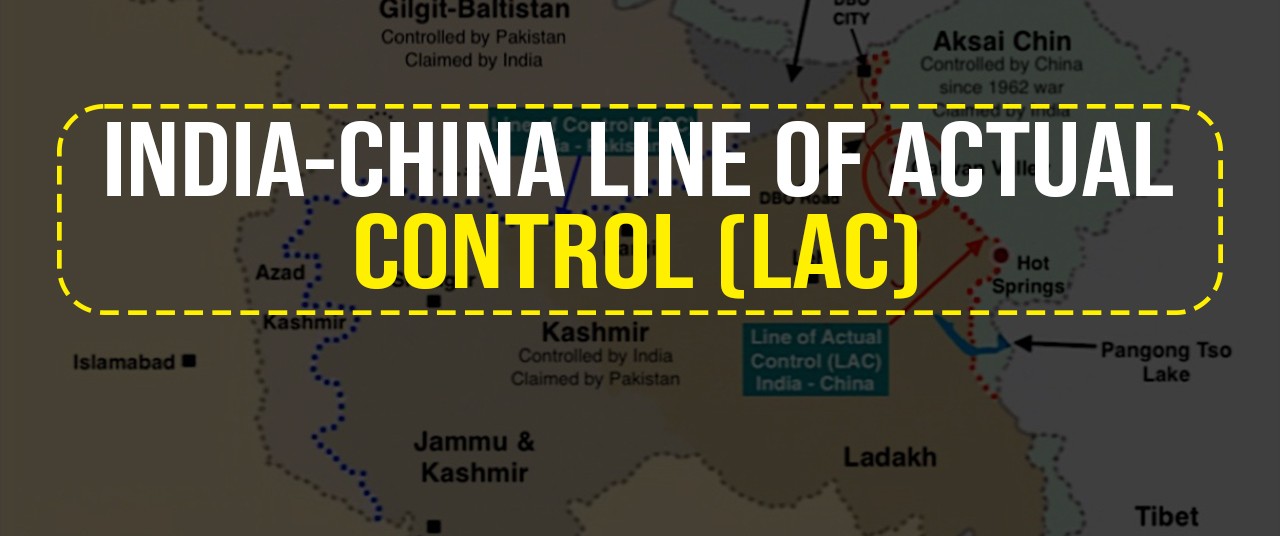
Stretching from the Karakoram ranges in the west to the forested hills of Arunachal Pradesh in the east (approximately 3,488 kilometres) is the boundary between India and China, which occupies Tibet. It is not a border that was drawn, agreed upon, demarcated, and then disputed. It is a frontier that was never fully settled in the first place. It is a line that exists, as a matter of competing cartographic assertions rooted in imperial history, post-colonial nationalism, and unresolved strategic calculation.
To understand why Indian and Chinese soldiers confronted each other with lethal consequences at Galwan in June 2020, one must go back not merely decades but centuries. The boundary dispute is, at its core, a collision between the territorial inheritance of the British Indian Empire, the historical assertions of Imperial China, the revolutionary confidence of the People’s Republic of China, and the aspirational sovereignty of independent India. All of these forces remain alive in the dispute today.
Genesis of the Problem
The problem did not exist till the nineteenth century. It became one as the British Empire pushed its frontiers toward the Himalayas. British India’s interest in the Himalayan frontier was driven primarily by the strategic competition with Tsarist Russia for influence over Central Asia. A clearly defined, defensible northern frontier was a British strategic imperative. From the 1860s onward, British surveyors, explorers, and political officers pushed into Ladakh, Sikkim, and the northeastern frontier with the dual purpose of mapping the terrain and establishing the reach of British Indian sovereignty.
The critical complication was Tibet. Britain’s preferred outcome was a Tibet autonomous enough to serve as a buffer against Russian or Chinese encroachment, but within a broad sphere of British influence. The 1904 Younghusband Expedition to Lhasa was an expression of this policy. It was an extraordinary and controversial mission that forced a treaty on the Tibetan government.
The Qing dynasty’s response was to reassert direct control over Tibet, sending military expeditions in 1910 that briefly occupied Lhasa and forced the Dalai Lama into exile in British India. The Qing’s collapse in 1911 reversed this, and Tibet declared independence (not recognised by China). The genesis of the boundary dispute lies in the status of Tibet. Tibet’s boundaries with British India were precisely the boundaries that India inherited in 1947, and that China refused to accept when it absorbed Tibet in 1950.
Colonial Cartographic Legacy
The Western Sector: Aksai Chin. Aksai Chin is a high-altitude desert plateau roughly the size of Switzerland, sitting at the intersection of Ladakh, Tibet, and Xinjiang. It is one of the most inhospitable places on earth. The boundary in this sector was never formally agreed upon between British India and either the Qing dynasty or, subsequently, the Republic of China. Different alignment proposals emerged from the British period, each reflecting different strategic priorities, none the product of bilateral agreement.
-
- Johnson Line of 1865. Civil servant W.H. Johnson formulated it and was later modified by Major General John Ardagh. It placed the entire Aksai Chin plateau inside Jammu and Kashmir by extending the boundary northward to the Kunlun Mountains. It is the historical basis for India’s modern territorial claim.
-
- Macartney-MacDonald Line of 1899. It was proposed to the Qing government by Sir Claude MacDonald. The British strategic priorities had shifted toward conciliating China against Russia. It proposed that the Karakoram range be used as the frontier and that most of Aksai Chin be placed under Chinese administration. The Qing government never formally responded to this proposal. China now asserts by it.
The Eastern Sector. The eastern sector’s origins lie in the Simla Convention of 1914, a tripartite conference among British India, Tibet, and the Republic of China. The British representative, Sir Henry McMahon, negotiated directly with Tibetan representatives and, through an exchange of notes, established a boundary between British India and Tibet running along the highest ridgeline of the eastern Himalayas. This alignment, known as the McMahon Line, ran approximately 890 kilometres from the Bhutan border eastward to the bend of the Brahmaputra and placed approximately 90,000 square kilometres of territory, now the state of Arunachal Pradesh, within British India. The Chinese representative at Simla initialled the convention but refused to formally ratify it, objecting both to the proposed internal division of Tibet into Inner and Outer zones and to the fundamental premise that Tibet possessed the sovereign authority to conclude treaties independently of China. China has consistently maintained that the McMahon Line is illegal as it was negotiated without the Chinese consent. China refers to Arunachal Pradesh as “South Tibet” or Zangnan, with particular emphasis on the town of Tawang, which carries deep religious and historical significance as a major centre of Tibetan Buddhism. India considers the McMahon Line as a valid international boundary.
Post-Colonial Differences (1947 to 1959)
India’s independence in 1947 and the establishment of the People’s Republic of China in 1949 initially produced not confrontation but an era of proclaimed Asian solidarity. India was among the first non-communist countries to recognise the People’s Republic. Hindi-Chini Bhai-Bhai was the slogan of the early 1950s. It reflected Jawaharlal Nehru’s genuine belief in Asian cooperation as the organising principle of post-colonial international relations.
The geopolitical cushion between the two countries vanished in 1950 when the Chinese People’s Liberation Army entered Tibet. India had historically viewed Tibet as an autonomous cultural buffer state with which it shared deep spiritual and trade connections. China’s absorption of Tibet transformed that buffer into a direct shared frontier of over 3,500 kilometres, and border ambiguity became a strategic security issue of the first order.
The Panchsheel agreement of 1954 between Nehru and Zhou Enlai embedded the Five Principles of Peaceful Coexistence. The two leaders jointly championed it as the framework for a new Asian order. What the agreement also did, critically, was recognise Chinese sovereignty over Tibet without resolving the boundary question. In retrospect, India traded its strongest diplomatic card (the legal ambiguity of Tibet’s status) for a set of principles without securing a boundary settlement in exchange.
Two developments then shattered the remaining foundations of the relationship. First was the 1957 discovery of the Chinese road through Aksai Chin. It was built entirely across territory India considered its own, and completed without India’s knowledge. Second, the Tibetan uprising of 1959 and the subsequent flight of the Dalai Lama to India, where he was granted political asylum, fundamentally fractured bilateral trust. Beijing interpreted India’s action as active interference in its internal sovereignty and as an attempt to subvert Chinese consolidation of Tibet. The period of brotherhood was over.
In 1959, Chinese Premier Zhou Enlai put forward a proposal that would prove a pivotal missed moment: China would recognise the McMahon Line in the east if India accepted Chinese claims over Aksai Chin in the west. Nehru rejected the offer. It was also in 1959 that Zhou Enlai first used the term “Line of Actual Control” in a letter to Nehru, defining it as the line up to which each side exercised actual control.
War Over the Dispute
In an attempt to check further Chinese advances without provoking all-out conflict, Prime Minister Nehru instituted the “Forward Policy” in late 1961. India established small military outposts in disputed areas. Beijing interpreted this not as a defensive manoeuvre but as a continuation of British-style forward expansionism into the Tibetan borderlands.
The Sino-Indian War of October to November 1962 is a significant event. On 20 October 1962, the People’s Liberation Army launched simultaneous offensives across both the Western and Eastern Sectors. The Indian forces were overwhelmed. In the east, Chinese forces advanced deep, nearly reaching the plains of Assam. In the west, they consolidated their hold over Aksai Chin.
On 21 November 1962, China declared a unilateral ceasefire and withdrew its troops twenty kilometres behind what it defined as the Line of Actual Control in the Eastern Sector, but maintained its positions in Aksai Chin. The war facts on the ground that persist to the present day are that China controls Aksai Chin, and India administers Arunachal Pradesh. Neither country has accepted the other’s position. The Line of Actual Control (the de facto boundary that emerged from the ceasefire) remains undefined, undemarcated, and contested in multiple sectors. Unlike the Line of Control with Pakistan, there is no formal agreement on its location.
Renewed Assertion
Sumdorong Chu standoff. The issue remained dormant for almost two and a half decades till 1986. The Sumdorong Chu standoff of 1986 to 1987 in the Tawang region of the Eastern Sector was a serious post-1962 confrontation. A Chinese detachment occupied a valley traditionally grazed by Indian herders, triggering a massive military build-up on both sides that brought the nations to the brink of another war before diplomatic intervention defused the situation.
The Protocol Architecture. The 2013 Border Defence Cooperation Agreement established institutionalised hotlines and joint mechanisms to manage face-offs and prevent their escalation. This architecture rested on a set of shared understandings. It encompassed that the boundary dispute would be kept separate from the overall relationship, that economic interdependence would create incentives for stability, and that neither side would seek to alter the status quo by force. For roughly two decades, the framework held. Standoffs occurred at Depsang in 2013 and Chumar in 2014, but were managed and defused within the established protocols.
Doklam Standoff. The framework began showing serious structural stress with the Doklam standoff of 2017, when Indian and Chinese troops confronted each other for 73 days on a plateau near the Bhutan-China-India trijunction. India intervened against Chinese road construction that it regarded as a direct threat to the strategic Siliguri Corridor, also called the Chicken’s Neck. The standoff ended without a clear resolution but signalled a new Chinese willingness to test Indian redlines and a meaningfully changed strategic posture.
Galwan Clash. On the night of 15 June 2020, Indian and Chinese soldiers clashed in the Galwan Valley in Eastern Ladakh. It caused fatalities on the Line of Actual Control in 45 years. The clash was not a spontaneous skirmish but the violent consequence of Chinese infrastructure construction across multiple friction points in Eastern Ladakh, systematically altering the status quo. Galwan shattered the diplomatic architecture built over three decades and triggered the gravest rupture in India-China relations since 1962.
Insolvability Drivers
The Tibet factor. This factor remains structurally central. India’s fundamental position is that it inherited a valid boundary from its colonial predecessor. The Tibetan government’s legal authority at the time of the Simla Convention had endorsed the Simla Convention. China’s fundamental anxiety is that international legitimisation of the McMahon Line would imply that Tibet possessed the sovereign authority to conclude treaties.
Dispute Asymmetry. means that the two sides are not exchanging equivalent concessions. China’s primary strategic interest is in Aksai Chin, which it already controls and which is essential for connecting Xinjiang to Tibet via the G219 highway. India’s primary claim is to Arunachal Pradesh, which India already administers. The logical resolution would require India to formally abandon its claim to Aksai Chin and China to formally renounce its claim to Arunachal Pradesh. Neither government has found the domestic political space to make that concession, and no leader on either side has been willing to bear the political cost of being seen as the one who gave territory away.
The Shifting Balance of Power. This reduces China’s incentive to settle on terms India could accept. In 1988, when the framework of managed competition was established, the two economies were roughly comparable in size. Today, China’s economy is approximately five times larger than India’s, and its military modernisation has outpaced India’s by a significant margin. From Beijing’s perspective, time and the correlation of forces are on its side. Settling now, on terms of rough equivalence, would mean forfeiting the strategic advantages.
Line Awaiting Resolution
The dispute has outlived the Bhai-Bhai idealism, the 1962 war, decades of diplomatic engagement/confrontation, the Cold War, and multiple generations of leaders on both sides. The line that was never agreed upon remains a source of danger, distrust, and unfinished history. It awaits a political moment when leaders are willing to trade the ambiguity of the present for the clarity that resolution alone can provide. That moment is still awaited more than six decades after the war that defined the modern shape of the dispute.
Please Add Value to the write-up with your views on the subject.
For regular updates, please register your email here:-
References and credits
To all the online sites and channels.
Pics Courtesy: Internet
Disclaimer:
Information and data included in the blog are for educational & non-commercial purposes only and have been carefully adapted, excerpted, or edited from reliable and accurate sources. All copyrighted material belongs to the respective owners and is provided only for wider dissemination.
References:
Lamb, A. (1964). The China-India border: The origins of the disputed boundaries. Oxford University Press.
Lamb, A. (1973). The Sino-Indian border in Ladakh. Australian National University Press.
Garver, J. W. (2001). Protracted contest: Sino-Indian rivalry in the twentieth century. University of Washington Press.
Garver, J. W. (2011). The unresolved Sino-Indian border dispute: An interpretation. China Report, 47(2), 99–113.
Lintner, B. (2018). China’s India war: Collision course on the roof of the world. Oxford University Press.
Menon, S. (2016). Choices: Inside the making of India’s foreign policy. Brookings Institution Press.
Menon, S. (2021). India and Asian geopolitics: The past, present. Brookings Institution Press.
Raghavan, S. (2010). War and peace in modern India: A strategic history of the Nehru years. Permanent Black.
Hoffmann, S. A. (1990). India and the China crisis. University of California Press.
Shakya, T. (1999). The dragon in the land of snows: A history of modern Tibet since 1947. Columbia University Press.
Goldstein, M. C. (1989). A history of modern Tibet, 1913–1951: The demise of the Lamaist state. University of California Press.
Arpi, C. (2009). 1962 and the McMahon Line saga. Lancer Publishers.
Fravel, M. T. (2020). China’s changing approach to military coercion in territorial disputes. The Washington Quarterly, 42(3), 179–201.