Inputs shared with journalists on the joint Indo-Japan air exercise “Veer Guardian 2026”
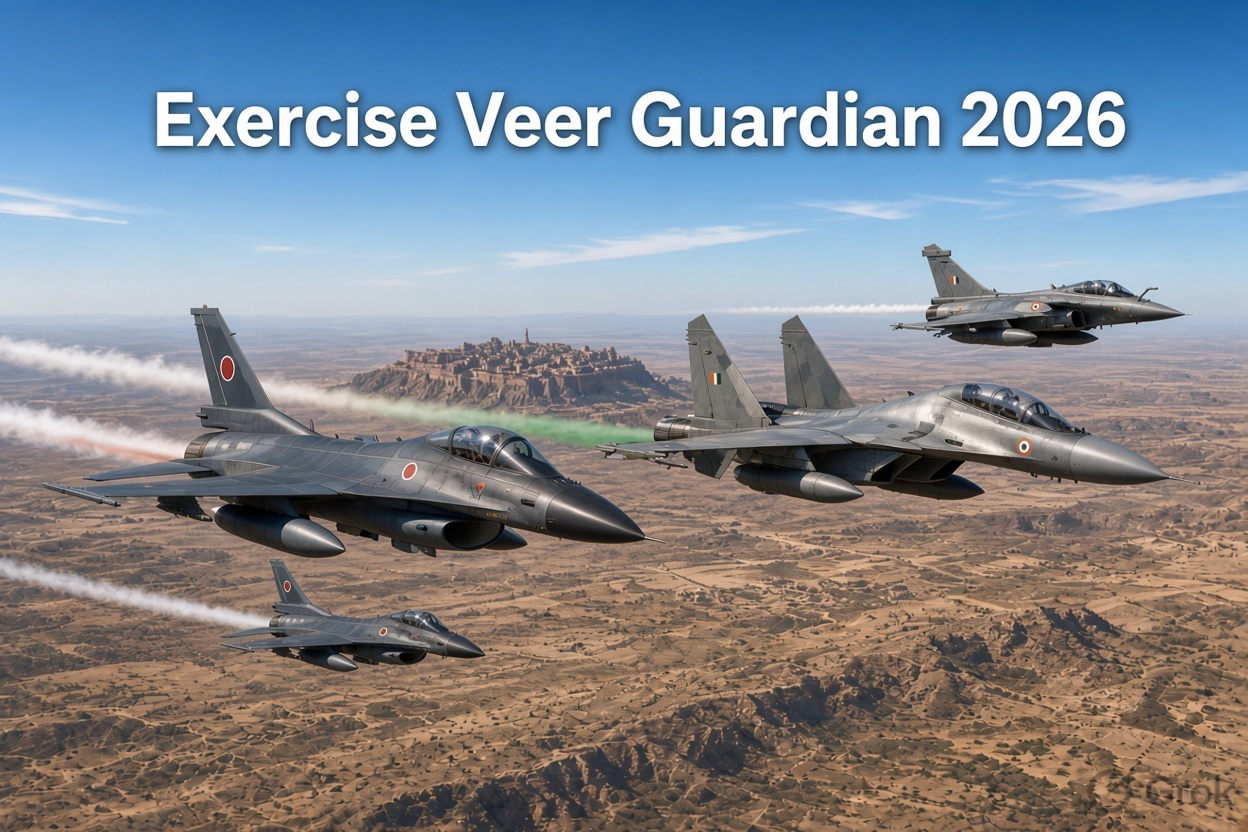
India and Japan’s air forces will conduct a joint training exercise, Veer Guardian 26, from September 9 to 21 in the Jodhpur area of Rajasthan, western India. As part of the joint training, Tokyo will deploy three F-2 fighter jets to India, as well as about 110 personnel from the Eighth Air Wing stationed at Tsuiki Airbase in southwestern Japan’s Fukuoka prefecture.
The first-time deployment of Japan’s fighter aircraft for Exercise Veer Guardian 26 is an important milestone in India–Japan air cooperation. High-end air combat training on each other’s soil signals a major increment in the partnership and defence cooperation.
Air Exercise
Veer Guardian introduces cooperation at the sharp end of air power: fighter operations, mission planning, air-combat training, communications, deconfliction and the practical problems of deploying and sustaining aircraft on a foreign airbase. The larger objective is therefore not platform-versus-platform competition, but gradually building a more interoperable air ecosystem.
The exercise provides both sides with an opportunity to understand different operating philosophies and equipment ecosystems. The JASDF operates predominantly US-origin or US-derived platforms, while the IAF fields a much more diverse inventory combining Russian, French, Israeli, indigenous and other technologies. Training across these differences matters because interoperability cannot be created through political agreements alone. It has to be built through repeated operational contact.
Strategic and Geopolitical Importance
For years, Indo-Japan bilateral security cooperation has been centred on diplomatic consultations, senior-level exchanges, logistics arrangements and broader Indo-Pacific initiatives. That relationship is now acquiring a more operational character.
The agreements reached during the India-Japan defence ministerial meeting (in August 2026) confirm this trend. The two countries agreed to conduct more complex exercises at short notice. They also agreed to expand cooperation in operational activities, intelligence, equipment, technology, and the defence industry.
That makes Veer Guardian 2026 less an isolated fighter exercise than one component of an increasingly institutionalised defence relationship under the India-Japan “Special Strategic and Global Partnership.”
The exercise aligns with other tracks of a more resilient partnership, namely defence industry cooperation, maritime domain awareness, and economic security.
For Japan, this is part of a broader shift from “defence only” postures to expeditionary, coalition-capable air operations, including long-range deployments and integration with non-US partners.
Indo-Pacific context
Exercise Veer Guardian 26 also fits well within the larger Indo-Pacific framework. It follows the India–Japan agreement on Maritime Security Cooperation, signed at the defence ministers’ meeting on 20 Aug 26. The agreement stresses interoperability, security of the sea lanes of communication, and a ‘stable Indo-Pacific order’.
It dovetails with other bilateral/multilateral drills: Malabar (navies), Dharma Guardian (armies), JAIMEX (special forces), and the expanding US–Japan–India–Australia web of exercises.
Strategically, this is a sort of minilateralism. Defence ties and cooperation without a formal alliance. It should be viewed as one component of a much larger India-Japan military relationship that is becoming increasingly operational.
Upset China
India maintains defence and strategic relationships with a wide range of countries (including the United States, Japan, France, Russia and Southeast Asian partners. Its objective is to expand strategic options rather than subordinate its security policy to any single bloc.
India conducts joint exercises with numerous nations to learn best practices and improve interoperability. These engagements do not mean that India is joining a military bloc. This is best understood as alignment without alliance. India’s participation should therefore not be interpreted as a decision to join an anti-China coalition. Veer Guardian fits that model, and not every event should be viewed through a China lens.
Japan and India confront different manifestations of the same broad strategic challenge. Japan is increasingly concerned about China’s military power and its activities in the East China Sea, around the Senkaku/Diaoyu Islands and across the western Pacific. India faces China along the Line of Actual Control and is increasingly attentive to China’s maritime presence in the Indian Ocean.
India and Japan are Special Strategic and Global Partners with converging interests in the Indo-Pacific. Both countries have disagreements and clash of interest with China. They view China’s military modernisation, grey-zone activities and territorial assertiveness as challenges. Such joint military events naturally make China wary and uncomfortable.
Future Trajectory
Veer Guardian 26 can be seen as an early building block of a much deeper India-Japan security relationship. Such frequent, routine deployments reduce political and logistical barriers. Future exercises could involve larger participation and scope. Deployments could include more fighter aircraft, support aircraft, unmanned systems, and electronic-warfare elements. They could expand to include more complex fighter training, stronger logistics cooperation, and increasingly rapid or short-notice deployments.
Concluding Thoughts
The scale of Japanese participation (with three fighters and about 110 personnel) is modest. Veer Guardian 26 is therefore best understood as a milestone rather than a military game-changer. Its immediate combat value may be limited, but its interoperability dividend is significant. Its political signalling value is even greater.
The exercise demonstrates that:
Japan can deploy combat aircraft to India and sustain them there;
the two air forces are willing to deepen tactical interoperability;
Japan is gaining experience operating militarily farther from its immediate home environment;
the bilateral relationship is becoming increasingly connected to the wider Indo-Pacific security architecture.
The future iterations are likely to grow in complexity if the political relationship and defence cooperation continue on their current trajectory.
Bottom Line
India and Japan are not creating an alliance. They are creating the interoperable capacity to act together.
Information and data included in the blog are for educational & non-commercial purposes only and have been carefully adapted, excerpted, or edited from reliable and accurate sources. All copyrighted material belongs to the respective owners and is provided only for wider dissemination.
References: –
Japan Ministry of Defence, “Japan-India joint press statement”, Japan Ministry of Defence, 20 Aug 26.
Japan Ministry of Defence, “Extraordinary press conference by Defence Minister Koizumi on Thursday, August 20, 2026, at 3:02 PM”, Japan Ministry of Defence, 20 Aug 26.
Ministry of Defence, Government of India, “IAF & Japan Air Self Defence Force set to exercise jointly in Japan”, Press Information Bureau. 07 Jan 26.
Ministry of Defence, Government of India, “IAF’s joint air defence exercise with Japan, ‘Veer Guardian 2023’ concludes”, Press Information Bureau. 27 Jan 26.
Embassy of India, Tokyo, “Veer Guardian 2023”, Embassy of India, Tokyo, 2026.
Embassy of India, Tokyo, “India-Japan defence cooperation”, Embassy of India, Tokyo, 2026.
The Diplomat, “JASDF fighter jets to visit India for first time”, The Diplomat, Aug 26.
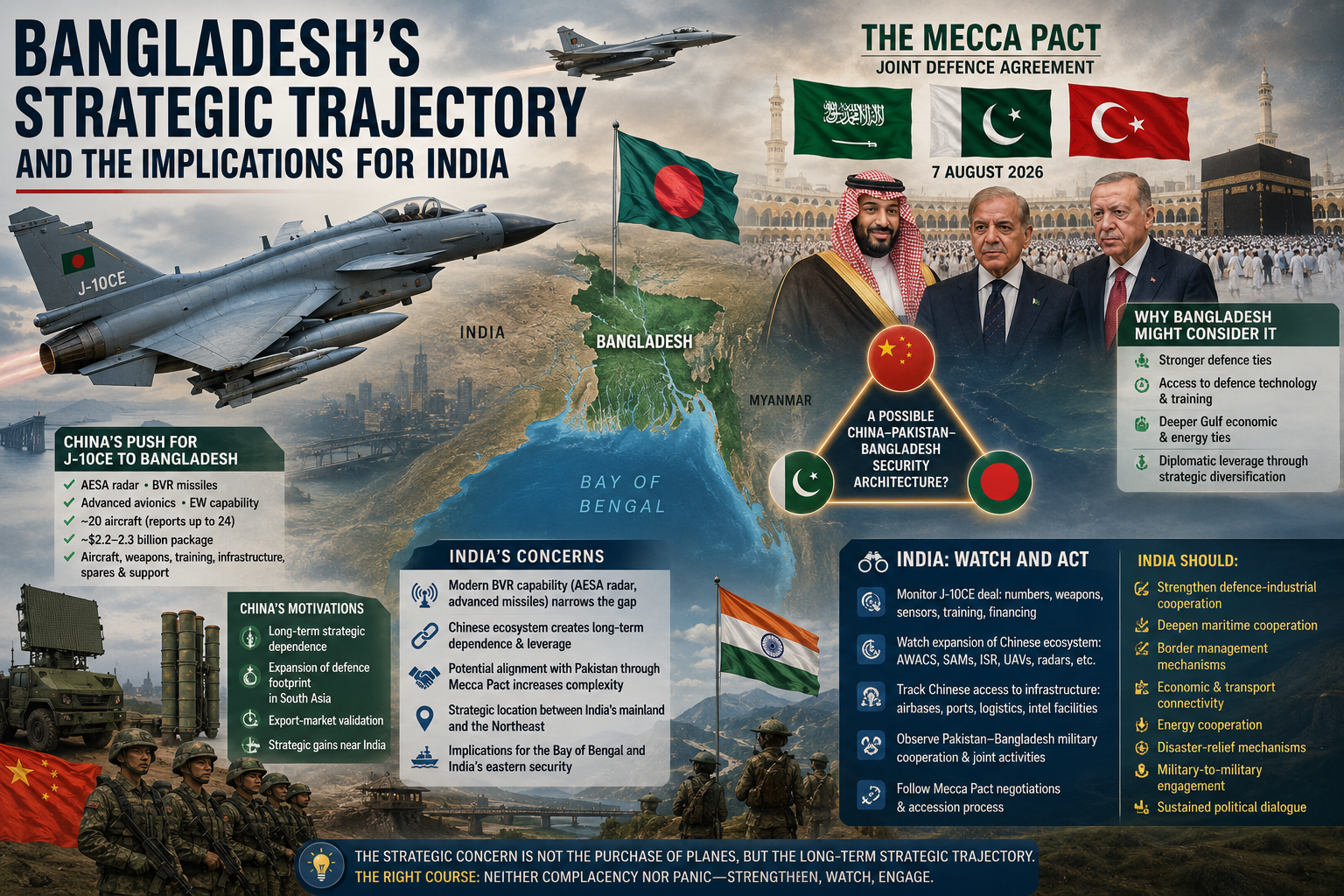
Taken together, Bangladesh’s move toward acquiring Chinese J-10CE fighters and its stated willingness to consider joining the Mecca Pact are strategically significant for India. However, neither development alone means Bangladesh has become a Chinese or Pakistani military ally. The more important issue is the direction of Bangladesh’s strategic relationships and whether these moves eventually develop into a broader China-Pakistan-Bangladesh security architecture.
China’s Push for the J-10CE to Bangladesh
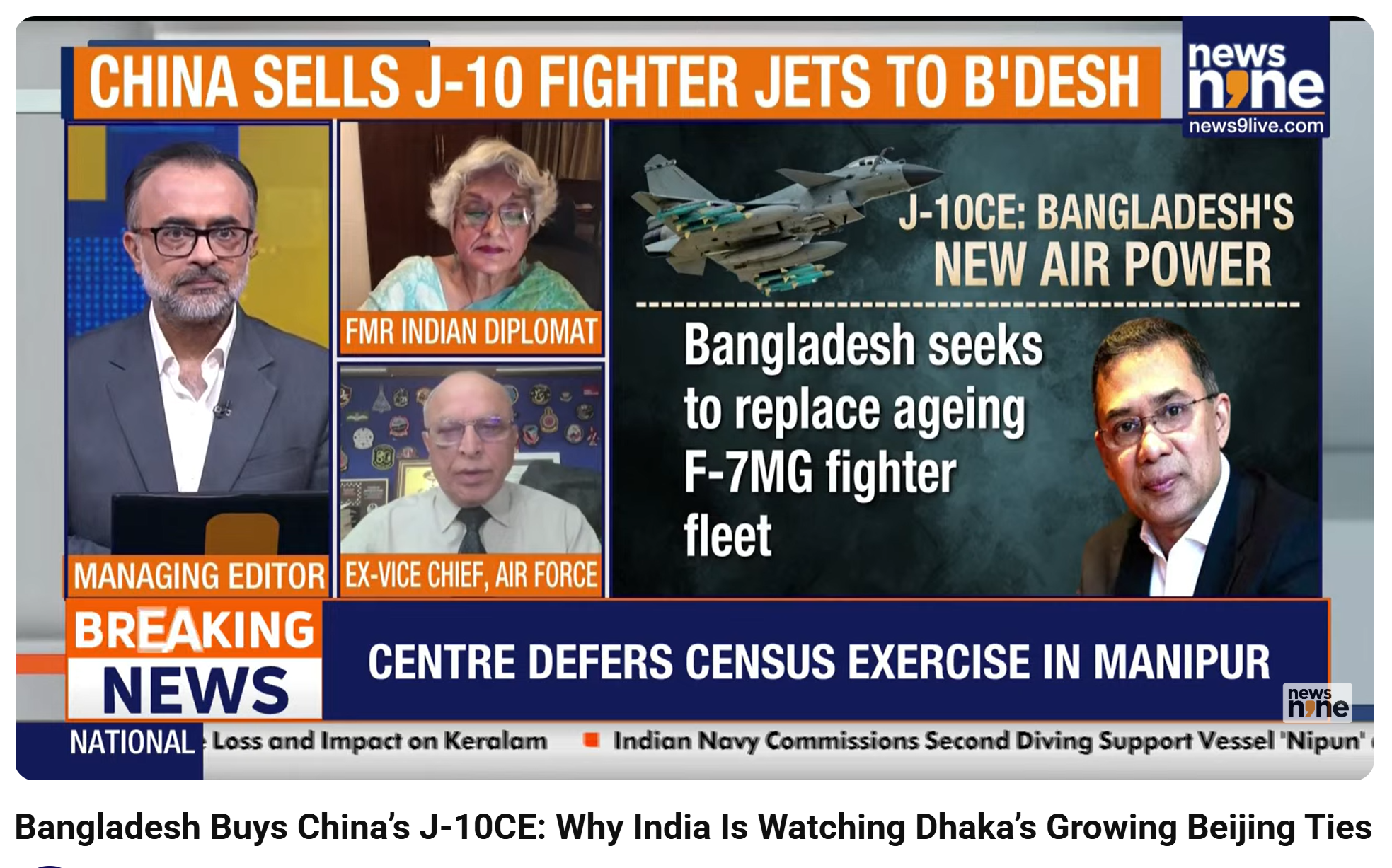
China is not simply “giving” Bangladesh fighter jets. Dhaka is moving toward purchasing Chinese J-10CE multirole fighters, with reports of a draft arrangement for roughly 20 aircraft, though earlier reports mentioned up to 24. The overall package has been reported at around $2.2–2.3 billion, including aircraft, weapons, training, infrastructure, spares and support. The agreement is not yet a completed, delivered contract, so final numbers, price and delivery schedules remain subject to approval. The deal serves both Bangladeshi and Chinese interests.
Bangladesh’s Motivations.
Fleet Modernisation: Bangladesh needs to replace or augment an ageing fighter fleet, particularly its F-7s and other legacy aircraft.
Capability at a Manageable Cost: The J-10CE offers a substantial jump in capability, including AESA radar, modern beyond-visual-range (BVR) weapons, networked avionics and electronic-warfare capabilities, at a lower acquisition and operating cost than many Western alternatives.
Existing Chinese Ecosystem: China is already Bangladesh’s dominant defence supplier, with Chinese-origin aircraft, ships, tanks, missiles and other systems in service. A new Chinese fighter therefore fits relatively easily into an existing logistics, training and maintenance ecosystem.
Strategic Diversification: The acquisition also fits Dhaka’s broader “Bangladesh First” approach, in which it seeks to maximise strategic autonomy by maintaining relationships with China, India, Pakistan, Turkey, the Gulf and Western markets rather than relying exclusively on one partner.
China’s Motivations
For Beijing, the deal is about more than selling airframes.
Long-term Strategic Dependence: A fighter fleet creates a relationship that can last decades. Aircraft, missiles, spare parts, simulators, training, maintenance, upgrades and technical support can progressively tie Bangladesh’s air force to Chinese systems and standards.
Expansion of China’s Defence Footprint: Bangladesh would become another important Chinese defence customer in South Asia, strengthening Beijing’s military-industrial presence around the Bay of Bengal and along India’s eastern periphery.
Export-Market Validation: Pakistan is currently the principal established foreign operator of the J-10 family. A Bangladeshi purchase would provide China with another reference customer and strengthen its pitch to other prospective buyers.
Strategic Gains: A friendly state operating Chinese equipment near India can complicate Indian planning and give Beijing greater influence.
The key point is therefore that the strategic value of the J-10CE deal lies not only in the aircraft’s combat capability but in the long-term Chinese military ecosystem that could develop around it.
Bangladesh and the Mecca Pact
The Mecca Joint Defence Agreement, signed on 7 August 2026 by Saudi Arabia, Pakistan and Turkey, establishes a collective-defence framework under which an armed attack on one member is treated as an attack on all. It has consequently been compared with NATO-style collective defence, although publicly available information on its precise command structure, accession procedures and operational obligations remains limited.
Bangladeshi officials have said Dhaka would consider joining if formally invited. Politically and diplomatically, it appears possible, but it is not yet an imminent or settled decision. Bangladesh has expressed openness to the idea, but it has not committed to accession.
The Mecca Pact has greater potential political significance because it would move Bangladesh beyond defence procurement into a formal security relationship involving Pakistan. For Dhaka, potential benefits of joining the pact could include:
Stronger defence and security relationships with Saudi Arabia, Pakistan and Turkey.
Possible access to Turkish defence technology and training.
Deeper Gulf economic and energy relationships.
Additional diplomatic leverage through strategic diversification.
However, membership would also create complications. Bangladesh has traditionally pursued a non-aligned or balancing foreign policy and depends simultaneously on India for geography, connectivity and trade; China for defence and investment; Gulf countries for employment and remittances; and Western markets for exports.
Joining a mutual-defence framework that includes Pakistan would therefore represent a much more consequential foreign-policy decision than purchasing Chinese aircraft.
Most importantly, the Mecca Pact should not automatically be interpreted as a Bangladesh-Pakistan military alliance directed against India. Dhaka would retain its own interests, and actual obligations would depend on the final terms of membership and the circumstances of any future conflict.
India’s Concerns
The J-10CE would give the Bangladesh Air Force a modern BVR air-combat capability, including AESA radar and advanced air-to-air missiles. This would narrow the qualitative gap between Bangladesh and India in specific areas, particularly along India’s eastern approaches.
The J-10CE purchase alone does not fundamentally change the India-Bangladesh military balance. A fleet of roughly 20–24 aircraft would still leave Bangladesh’s overall air power considerably smaller than India’s, and combat effectiveness depends on much more than the aircraft themselves: pilot training, sortie generation, airborne early-warning and control, air defence, tankers, C4ISR and supporting infrastructure all matter.
The concern grows when the fighter purchase is considered alongside Bangladesh’s potential political alignment with a Pakistan-inclusive defence framework, and China’s growing hold on Bangladesh through the supply of defence equipment. The combination, not any single development, matters.
However, the more important issue is Bangladesh’s dependence on China. A future combination of J-10CE, Chinese missiles, Chinese radars, UAVs, air-defence systems, naval systems, training, and maintenance would increase China’s institutional and technological influence over the Bangladesh Armed Forces.
Operating the same aircraft family as Pakistan could also make future technical cooperation, training or interoperability easier. However, this should not be assumed to mean that Bangladesh and Pakistan will automatically operate as a unified military force.
Bangladesh occupies a strategically important position between much of India’s mainland and the Northeast. Joining the Mecca Pact could be more consequential for India. This could represent an evolution from the traditional China-Pakistan strategic axis toward a looser, more complicated regional network, with Bangladesh as an additional node.
The consequence to the Bay of Bengal and India’s Northeast would be particularly relevant. Such an arrangement could complicate India’s eastern security environment. Deep defence relationships, technical dependence, intelligence cooperation, infrastructure access and military interoperability can themselves create strategic leverage for China.
India: Watch and Act
Several indicators will reveal whether these developments remain limited to procurement and diplomatic diversification or become strategically more serious. India should keep a close watch on: –
Final J-10CE contract, number of aircraft, delivery schedule, weapons package, sensors, data links, training arrangements and financing.
Expansion of the Chinese ecosystem with particular attention to Chinese AWACS, SAMs, ISR systems, UAVs, radar networks and other supporting capabilities. These could matter more strategically than the fighters themselves.
Chinese access to Bangladeshi infrastructure. Any future arrangements involving airbases, ports, logistics facilities, intelligence installations or sustained Chinese military access would represent a substantially more serious development.
Pakistan-Bangladesh military cooperation. Joint exercises, intelligence sharing, training arrangements or institutional defence agreements would indicate whether the political relationship is translating into operational cooperation.
Mecca Pact negotiations, accession process or a formal memorandum.
India’s response matters because excessive pressure on Dhaka could become counterproductive. A better approach would be to compete without confrontation. India should focus on: –
At the same time, India should strengthen its own eastern capabilities rather than assume Bangladesh will remain strategically neutral indefinitely. This means continued attention to the Eastern sector.
Concluding Thoughts
The strategic concern is not whether Bangladesh acquires Chinese fighter aircraft. It is whether the agreement sets the stage for greater Chinese involvement. The situation grows more complicated if Bangladesh joins a security agreement that also includes Pakistan. If both happen, the consequences for India would be much more serious.
These developments should be seen as part of a strategic trend, not as an urgent military crisis. The right course of action is neither complacency nor panic. New Delhi should strengthen its military position in the east, watch how China and Pakistan cooperate on defence matters, and remain politically and economically engaged with Bangladesh.
Information and data included in the blog are for educational & non-commercial purposes only and have been carefully adapted, excerpted, or edited from reliable and accurate sources. All copyrighted material belongs to the respective owners and is provided only for wider dissemination.
References: –
Ahmed, I. (2026, July 23). Recalibrating foreign policy: Implications of Tarique Rahman’s China visit. Institute of South Asian Studies, National University of Singapore.
(2026, August 7). Saudi Arabia, Turkey and Pakistan pledge mutual defence. Reuters.
com, Draft deal takes shape for Bangladesh’s potential purchase of Chinese J-10CE jets. bdnews24.com. (2026).
Ministry of Foreign Affairs, Government of Pakistan. Message to the nation by the Deputy Prime Minister/Foreign Minister on the signing of the Makkah Joint Defence Agreement. (2026b, August 10).
Rehman, I. (2021). China’s influence in South Asia: Vulnerabilities and resilience in four countries. Carnegie Endowment for International Peace.
(2026a, August 7). Saudi Arabia, Turkey and Pakistan pledge mutual defence. Reuters.
(2026b, August 25). Bangladesh could consider joining Mecca pact, testing foreign ties. Reuters.
(2026c, August 25). Bangladesh in talks to buy Chinese J-10CE fighter jets. Reuters.
Stockholm International Peace Research Institute. (n.d.). SIPRI arms transfers database.
10. The Business Standard. (2026). Bangladesh set to buy 20 Chinese J-10CE fighter jets for $2.3b—The Business Standard.
The review was published in the IIRF Strategic Yearbook 2026
Co-authored with Rishi Athreya
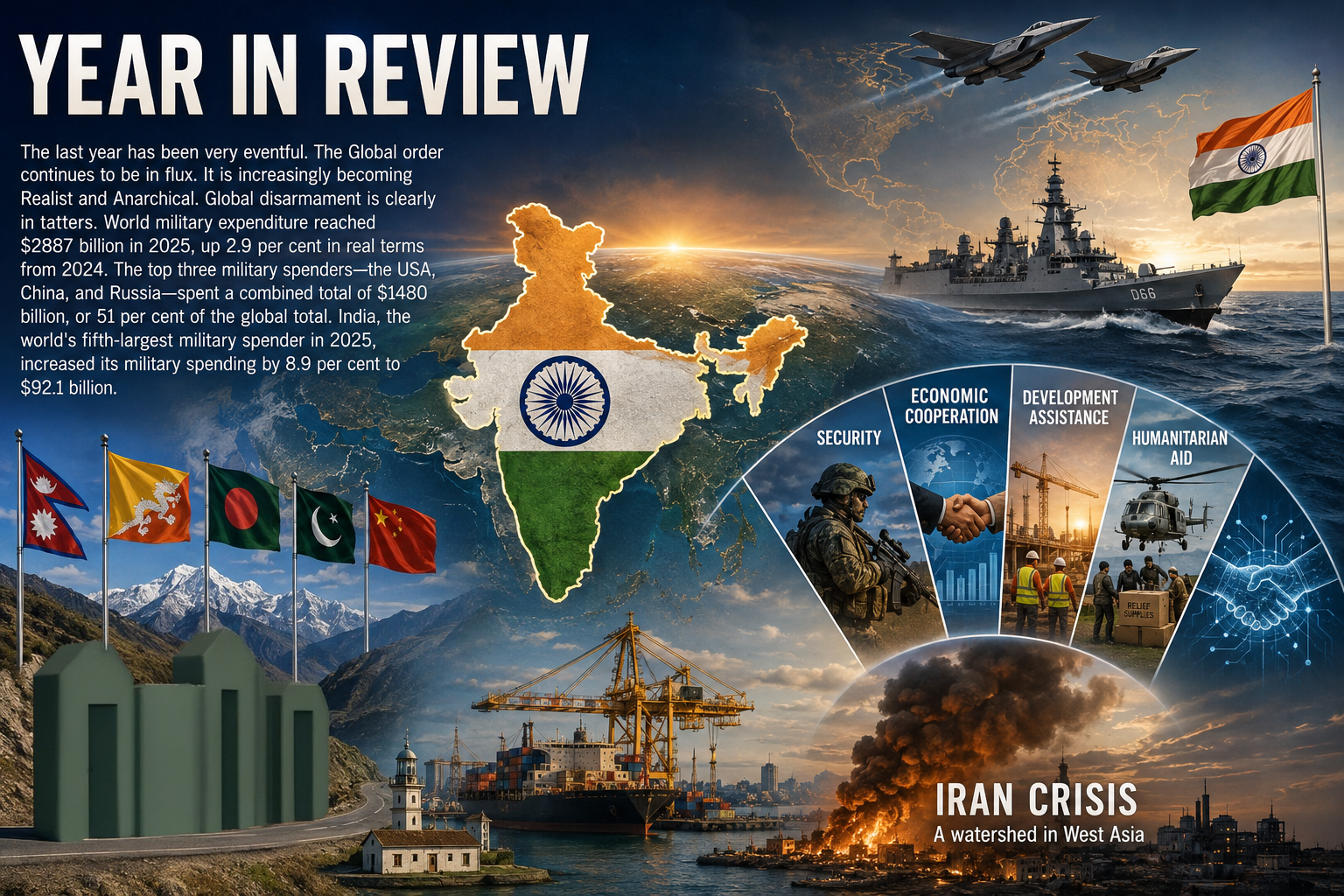
The last year has been very eventful. The Global order continues to be in flux. It is increasingly becoming Realist and Anarchical. Global disarmament is clearly in tatters. World military expenditure reached $2887 billion in 2025, up 2.9 per cent in real terms from 2024. The top three military spenders—the USA, China, and Russia—spent a combined total of $1480 billion, or 51 per cent of the global total. India, the world’s fifth-largest military spender in 2025, increased its military spending by 8.9 per cent to $92.1 billion[1].
Immediate Neighbours
Continental neighbours are of relevance to India.
Nepal: Nepal has a new government. This is a change to the entire political order. India continues to provide development assistance to Nepal[2]. India has resumed land trade with China through the Lipulekh Pass in Uttarakhand, Shipki La Pass in Himachal Pradesh, and Nathu La Pass in Sikkim[3]. India continues to have close ties with Bhutan[4].
Bangladesh: Bangladesh elections have restored an elected government. The current Prime Minister, Tarique Rehman of the Bangladesh National Party, represents a change from the Awami League. This government creates an opportunity for India to restore ties that had dipped during the Yunus caretaker government[5]. Here too India continues to assist in the political, security, economic and cultural domains[6].
Pakistan: OP SINDOOR has changed the entire South Asian scenario. One result is Pakistan’s rapid military modernisation. Pakistan’s military spending increased by 11 per cent to $11.9 billion[7]. Further, Pakistan is acquiring advanced military hardware that brings it nearly on par with India. However, this is largely driven by borrowing and overseas support. Moreover, Pakistan is integrated into collective security with Saudi Arabia[8]. Pakistan continues to be a global hub of terror. Pakistan is a base of operations and/or target for numerous armed, non-state militant groups, some of which have existed since the 1980s. The Lashkar-e-Taiba, Jaish-e-Mohammed, Harakat-ul Jihad Islami, Harakat ul-Mujahidin, and Hizbul Mujahideen are the main anti-India groups[9]. Pakistan has a unique ability to chase with the hounds and run with the hares[10].
China: China remains active along its borders with India and neighbouring countries. China’s establishment of new administrative counties near the tri-junction of Xinjiang, Afghanistan, and Pakistan-Occupied Kashmir (POK) must be understood not merely as an internal adjustment but as part of a geopolitical strategy with significant implications for India’s territorial sovereignty and regional security[11]. China is engaging in the Sinicisation of Tibet to reduce the legitimacy of the Tibetan Government in exile in India. Further, it is building dams on the rivers in Tibet to restrict water flow to India and increase the danger of flooding. These create threats that India would need to address[12].
Maritime Scenario: As a largely maritime nation, India faces vital challenges in this sphere[13]. India’s ‘Neighbourhood First’ policy and Vision MAHASAGAR, i.e. Mutual and Holistic Advancement for Security and Growth Across Regions[14]. The entire Indian Ocean Region remains important to India[15]. As part of its global strategy, China has been developing ports and other infrastructure in littoral countries of the Indian Ocean Region for many years. It has a maritime presence in the Indian Ocean Region, including anti-piracy escort missions, port calls, and the deployment of research and survey vessels. India’s relations with regional countries are distinct from those with other countries[16]. India continues to have security links with several littoral states. It also has links in economic, developmental, humanitarian, and technological spheres[17]. The recent crisis in Iran has disrupted maritime security[18].
Iran Crisis
The attacks by the US on Iran commencing 28 Feb 2026, titled OP EPIC FURY, are a mark of the greatest watershed in the West Asia region in several decades. These attacks are the culmination of several decades of effort by the US, Europe, Oman, and the IAEA to curtail Iran’s nuclear programme. Notwithstanding various efforts, Iran remained nuclear-capable. The US and Israel claim to have attacked because they feared an Iranian strike[19]. Israel launched OP ROARING LION on Iran alongside the US. Besides removing nuclear installations, the objective was the overall degradation of Iran’s missile capability. Both the US and Israel expected a short operation of around 72 Hrs. Israel has, for over a year, been targeting Iran[20]. This has clearly been a miscalculation. There are fears of long-term strategic overreach by the US[21]. In response, Iran claims to have never started a war. It claims that starting with the coup in 1953, and later support for Iraq in the war, the US has been hostile to Iran. Iran claims that US bases in the region pose a threat to it. Iran condemns the destruction of their infrastructure. Further, it claims a legitimate right to defend itself[22]. Iran continues to claim readiness to respond to attacks, even as mediation continues[23].
Doubtful Planning: As pointed out in a RUSI Commentary, there has been poor planning by the US in anticipating the implications for maritime security, especially in the Strait of Hormuz. While the US and Israel deployed aerial power, they provided little maritime support. Iran enjoys a geographic advantage and operational readiness in the region[24]. As highlighted in an NMF Commentary, the maritime aspect is a serious casualty of the US-Iran conflict. The US has apparently damaged parts of the Iranian Navy assets using land-based air power. However, the IRGC Navy (Sepah), a distinct entity, has not been damaged. The US has assets through CENTCOM. However, these may not be deployable in the narrow waters of the Strait of Hormuz and the Gulf of Oman[25]. Any US naval asset deployed in the region becomes a soft target[26].
Hormuz Strait: Iran has blocked the Strait of Hormuz. While a few ships are selectively allowed, any ship deemed affiliated with the USA or Israel is not permitted. In response, the USA has blockaded the Strait and is stopping ships bound for Iranian ports[27]. Saudi Arabia has reportedly expressed concern to the US administration that its action may encourage the Iran-backed Houthis to attack and disrupt Red Sea shipping routes, as was the case from 2023 to 2025. Iran has said that it would threaten trade in the Persian Gulf, Red Sea and Gulf of Oman if the US “create[s] insecurity for Iran’s commercial vessels”, describing the US action as a “prelude to a violation of the ceasefire”[28]. Irrespective of a ceasefire being announced, the US claims that it is serving as a deterrent to Iran[29]. The Strait of Hormuz remains a flashpoint. The USA claims to be enforcing a blockade on Iranian ships[30]. However, Iran claims that its ships are crossing the Hormuz Strait[31]. At another level, Iran is treating US actions as piracy and terrorism[32].
Negotiations: Pertinently, the USA has released a statement claiming that there is ample legal justification for the attack on Iran. They claim that even after June 2025, hostilities between Iran, Israel and the USA continued. They also assert that negotiations with Iran failed[33]. Conversely, Iran claims that the attack was launched amid negotiations[34]. A day before the commencement of OP EPIC FURY, Iran released a statement that claimed that negotiations were going well[35].
Israel Factor: Iran considers the US a proxy for Israel[36]. A noteworthy point is that the USA has openly supported Israel[37]. In some ways, Israel is a major factor in the West Asian scenario. Israel and the US said that Pakistan’s agreement did not include Lebanon. Iran said any negotiations with the US would be “unreasonable” if the Israel–Hezbollah conflict were to continue[38].
GCC Countries: Iran’s strategy to cause a rift between the Arab states and their US and Israeli allies appears to have failed; rather, it had an opposite effect of unifying them in their opposition to Iran and improving their security bond with America and possibly with Israel further. At the High-level GCC summit in Jeddah on 28 April 2026, the six GCC members Bahrain, Kuwait, Oman, Qatar, Saudi Arabia and the United Arab Emirates supported American action. Emphasising the need to secure the Strait of Hormuz’s opening, which impedes the flow of one-fifth of the world’s oil and liquefied natural gas supplies, the US must caution that any finalised deal must result in a permanent, long-term arrangement[39]. At a deeper level, the GCC Countries have a larger oil supply than Iran. Moreover, they have invested in Artificial Intelligence and technology. This gives them a clear edge over Iran, as well as China and the USA[40].
Russian Stance: Russia remains a major player in the region and globally. It is an active party in the war in Ukraine. It is also present geographically in the West Asian context. Russia is a continental neighbour of Iran. Their relationship has long been troubled, driven by pragmatic considerations. The Comprehensive Strategic Partnership was signed in 2025[41]. It is not a mutual defence agreement. Russia was quick to condemn the attacks on Iran. A key point was that these attacks occurred while Iran was engaged in negotiations, including on the nuclear issue. Russia claims this attack is akin to the 2003 attack on Iran, based on false claims of weapons of mass destruction[42]. Most recently, the Iranian Foreign Minister Abbas Araghchi visited Russia and met President Vladimir Putin. Russia commended Iran for facing the American aggression[43]. Russia appreciates India’s multi-pronged foreign policy and respects it unconditionally. However, it believes in the particularly privileged strategic partnership with Russia[44].
Sanctions: The USA has applied sanctions on China for buying and refining Iranian Oil[45]. These target independent “teapot” oil refineries in China, primarily in Shandong Province, because they continue to import and refine Iranian crude oil[46].
Talks and Mediation: Pakistan is mediating talks between the US and Iran, and issues under discussion include freedom of navigation through the Strait of Hormuz, Iran’s nuclear and ballistic programme, reconstruction and sanctions, and a long-term peace agreement. On 11 April, talks were held in Islamabad, Pakistan’s capital. Both sides reported progress, but they reached no agreement. No further talks have been confirmed[47]. Pakistan has been facilitating talks between the USA and Iran. This is an example of Pakistan’s effective Perception Management. It has long been very effective in the Cognitive and Information domains.
Challenges for India: The recent crisis in Iran has once again posed a maritime challenge[48]. There is the targeting of civilians, of infrastructure and of commercial shipping. It also raises economic concerns, including energy, fertilisers, and food security[49]. The sinking of IRIS Dena by the US is a diplomatic incident with extensive consequences[50]. From India’s perspective, the issue has raised questions about whether the entire Indian Ocean could be seen as India’s sphere of influence. While India is not expansionist, deeper strategic challenges remain[51].
Multilateral Reactions. The current situation in the Strait of Hormuz has drawn the attention of multilateral organisations, especially the International Maritime Organisation, and the United Nations Security Council.
IMO Task Force: A major concern has centred on the safety of merchant mariners. The International Maritime Organisation has raised this issue[52]. France and the UK chaired a conference on the Strait of Hormuz Maritime Navigation Initiative. The conference brought together around fifty non-belligerent states[53]. The meeting underlined the international community’s determination to support freedom of navigation, uphold international law, and safeguard global economic stability and energy security. France and the United Kingdom confirmed that they are establishing an independent, strictly defensive multinational mission. It would protect merchant vessels, reassure commercial shipping operators, and conduct mine-clearance operations. Further planning is underway to implement this multinational force[54].
United Nations Resolution: the SC Resolution of 11 March 2026, which demanded that Iran stop the attacks on its neighbours[55]. The UN Security Council has failed to adopt a resolution aiming to boost security in the Strait of Hormuz as the critical shipping corridor remains largely closed to global trade and the transport of humanitarian aid, with war continuing to rage across the region. Bahrain submitted the text alongside Jordan, Kuwait, Qatar, Saudi Arabia, and the United Arab Emirates. Eleven countries voted in favour of the draft, which the permanent members vetoed. China and Russia voted in favour, while Colombia and Pakistan abstained. One concern of China and Russia was that the resolution was biased against Iran and failed to mention the role of the USA and Israel in initiating the attack[56].
UN Open Debate: The United Nations Security Council held a High-Level Open Debate on the Safety and Protection of Waterways in the Maritime Domain[57]. The Secretary-General highlighted the current disruption to global shipping caused by the blockade of the Strait of Hormuz. He mentioned the humanitarian effects, including in energy and food security. The SG also mentioned the dangers faced by seafarers and commercial vessels. Other issues raised were piracy, terrorism, and damage to critical maritime infrastructure. The Black Sea Initiative is cited as a successful example of a humanitarian navigational agreement, even during a war[58]. Several member nations raised broader concerns about commercial vessels, seafarers, economics, piracy, and shadow fleets[59]. China made a statement condemning the attack by Israel and the USA on Iran. China commended Pakistan’s mediation efforts. Further, China raised issues of UNCLOS, Piracy, and Ocean Governance[60]. China also expressed concern about the situation in Gaza and the humanitarian fallout. They believe that Israel is unnecessarily attacking Gaza, and the two-state solution is non-negotiable[61]. Russia continues to hold the USA and Israel responsible for the war in Iran. Further, they hold that in times of war, a coastal State under attack may limit navigation in its territorial waters for security purposes. Russia also raised concerns about energy, the economy, fertilisers, and food security[62]. The USA also lamented China and Russia vetoing the aforementioned resolution. The USA also mentioned the blockade of the Strait of Hormuz. The support by Iran of the Houthis in the Red Sea and the Gulf of Aden is also condemned. They highlighted the issue of nuclear non-proliferation. A concern raised was around sea mines supposedly planted by Iran. Finally, the USA called for commercial shipping, maritime finance and insurance, humanitarian aid agencies, and militaries to come together to address this situation. The USA mentioned the need for an anti-piracy force in the Strait of Hormuz[63]. The Baltic states also share concerns about navigation in the Strait of Hormuz[64]. The UK condemned the veto on the UN resolution. They stressed the need to open the Strait of Hormuz and highlighted their joint efforts with France[65]. In this context, the IMO mentioned freedom of navigation without tariffs. They also said seafarers are being evacuated[66].
Ukraine War
The war in Ukraine continues unabated, with several consequences.
Military Spending: The main contributor to the global increase in military spending in 2025 was a 14 per cent rise in Europe to $864 billion. Spending by Russia and Ukraine continued to grow in the fourth year of the war in Ukraine. At the same time, ongoing rearmament by European NATO members drove the sharpest annual growth in spending in Central and Western Europe since the end of the Cold War. Russia’s military spending grew by 5.9 per cent in 2025 to $190 billion, bringing its military burden to 7.5 per cent of GDP. Ukraine, the seventh-largest spender in 2025, increased spending by 20 per cent to $84.1 billion, or 40 per cent of GDP. The USA made no new allocation for Ukraine in 2025[67].
Changing US Stance: The USA has reduced assistance to Ukraine. The European Union, the UK and NATO are picking up the tab[68]. Some argue Europe should emerge as a military bloc independent of the USA[69]. There are calls to use the European Defence Industrial Programme to build more weapons within Europe. Europe is described as a sleeping giant[70]. Ukraine, for its part, calls for more support from Europe and NATO. It links the broader European safety from Russia to the Ukrainian front. There is even a view that the USA is appeasing Russia to the detriment of Ukraine and even Europe[71].
Maritime Aspects: Russia, at another level, accuses Ukraine of armed attacks on civilian vessels flying the Russian flag or transporting Russian energy resources in different waterways around the globe. These concerns affect seafarers, energy, the environment, and trade. Russia claims that attacks are occurring on the coasts of countries supporting Ukraine, which raises questions about their complicity in these attacks. The Black and Mediterranean Seas, and the Bosphorus Strait, are mentioned as sites of these attacks. Russia suggests upholding UNCLOS 1982 to prevent future incidents[72]. On the other hand, the EU is concerned that Shadow Fleets support the Russian war economy[73]. Nordic countries also worry about Russia’s interference with the satellite navigation system in the Baltic Sea[74].
Minerals Deal: The US and Ukraine signed a deal granting the US access to Ukraine’s vast mineral wealth, including Critical Minerals[75]. This is supposed to give the US access to mining while recognising Ukraine’s ownership. This pact would make it difficult for the USA to recognise Russian sovereignty over Ukrainian territory and deter further territorial claims[76].
China Factor: Some view China as supporting Russia in the war in Ukraine. China has supplied military supplies, including Drones. China is also buying oil from Russia[77].
Sanctions: The USA has applied sanctions on both Iran and Russia. These are in response to Iran’s support for Russia in the Ukraine War[78].
Global Energy Scenario
Both wars are affecting the global supply of natural resources and their prices[79].
Oil: A major consequence of this crisis is the need to use alternative, often more expensive, sea routes[80]. Around 20% of global petroleum and 20% of liquefied natural gas traverse the strait each year. Pre-conflict, around 3,000 vessels used the strait each month. Their numbers now stand at around 5% of this level. This has pushed up global oil and gas prices (benefiting both Russia and, temporarily, Iran). Several Arab states were forced to cut or suspend oil production due to Iranian attacks[81]. Russia remains India’s leading supplier of Hydrocarbons[82].
Effect on Fertiliser: The sustained reduction in LNG production and/or shipments from the Gulf (Qatar supplies around 10% of globally traded natural gas) will affect worldwide nitrogen fertiliser production. Natural gas is both a key feedstock and the primary energy source for producing ammonia, the building block for all nitrogen fertilisers. Other ingredients include urea, Phosphate, and Sulphur. India is particularly affected by these shortages[83]. Fertiliser shortages also threaten major global food insecurity[84].
Alternative Energy Routes: Only Saudi Arabia and the UAE have operational crude oil pipelines that could reroute flows to bypass the Strait of Hormuz. While additional capacity may exist in major pipelines to bypass the Strait, the logistics and supply chains needed to reroute and export substantial flows have not been tested under stress[85].
Maritime Insurance: Opening the Strait of Hormuz remains a grave issue. A deeper problem is whether commercial underwriters will insure vessels at reasonable rates. This would essentially need a political solution[86]. One suggestion is for India to have national Protection and Indemnity Clubs[87]. Most recently, the Government of India has approved this in principle[88].
Indian Energy Situation. India has made significant strides in energy and climate change.
Power Generation: India is successfully balancing the twin goals of meeting rising electricity demand and promoting sustainability. According to the International Energy Agency, 85% of the increase in global electricity demand over the next three years will come from emerging and developing economies. As one of the fastest-growing major economies, India plays a central role in the global energy transition. India’s share in global primary energy consumption is projected to double by 2035. Electricity generation has increased from 1,168 billion units (BU) in 2015–16 to an estimated 1,824 BU in 2024–25. Similarly, total installed capacity has grown from 305 gigawatts (GW) in 2015–16 to a projected 475 GW in 2024–25[89].
Multiple Energy Sources: India’s energy journey is no longer defined by a single source; it’s now drawing strength from solar parks, rooftop panels, hydrogen pilots, modernised nuclear frameworks, smart meters, and digital platforms. Milestones such as expanding renewable capacity, advancing the National Green Hydrogen Mission, strengthening DISCOMs, and building the India Energy Stack reflect a structured, forward-looking transition. Policy reform, infrastructure investment, technological innovation, and global cooperation support this transformation. As India moves toward its Net Zero 2070 commitment, the evolving energy mix shows that growth and sustainability can go hand in hand. India is redesigning how power is produced, delivered, and shared for a future that is secure, sustainable, and self-reliant[90]. India is increasing its use of renewable energy, and the country now ranks third globally[91].
Emerging Trends
Events over the past year point to a few emerging trends to watch in the coming years. The war in Ukraine remains a stalemate. The West Asia scenario got more complicated with the US-Israel attacks on Iran. This is also an asymmetric conflict and remains inconclusive. Both these conflicts show the chasm in NATO. While continental Europe is fighting against Russia in the Ukraine War, the USA has reduced its support. While the EU and even the UK offer diplomatic support to the USA in West Asia, this does not translate into military backing. Russia is the active party in the war in Ukraine. Iran has been supporting Russia. The USA sanctioned this. China has also been supporting Russia. Currently, both Russia and China are providing diplomatic support to Iran against the USA. The partnership agreement, while not necessarily military, has political objectives. While it may not be obvious, there are currently two powers, namely the USA and Russia, at war, where the other supports the adversary. China, while not a party to either war, is on the opposite side to the USA.
Both wars are linked in the maritime sphere. Discussing one leads to the other. There are concerns about maritime aggression by both the USA and Russia. Russia, for its part, accuses Ukraine of maritime hostility. China, while apparently concerned about the USA’s maritime belligerence in the Iran War, is itself confrontational in the South China Sea. The concerns of the UN and the IMO, supported by France and the UK, show that the Hormuz Strait has morphed from a military issue to a constabulary one. The IMO is taking positive steps to address humanitarian issues.
The Iran War is also in the Cognitive domain, with both sides making claims and counterclaims. While specific battles and incidents are a matter of detail, the underlying issue is around the legitimacy of the USA and Israel invading Iran. Moreover, there is the whole issue of whether Iran is justified or not in building up an arsenal, including nuclear weapons.
Please Add Value to the write-up with your views on the subject.
For regular updates, please register your email here:-
Information and data included in the blog are for educational & non-commercial purposes only and have been carefully adapted, excerpted, or edited from reliable and accurate sources. All copyrighted material belongs to the respective owners and is provided only for wider dissemination.
[22] Government of the Islamic Republic of Iran, (02 April 2026), President Pezeshkian says Iran has never initiated war, https://irangov.ir/detail/479346
[32] Ministry of Foreign Affairs, Iran, (21 April 2026), Statement by the Ministry of Foreign Affairs regarding the US attack on an Iranian commercial vessel and the hostage-taking of Its crew and their families, https://en.mfa.gov.ir/portal/newsview/786655
[34] Government of the Islamic Republic of Iran, (02 April 2026), President Pezeshkian says Iran has never initiated war, https://irangov.ir/detail/479346
[35] Government of the Islamic Republic of Iran, (27 Feb 2026), Significant Progress Made in Third Round of Iran–U.S. Talks in Geneva, FM Says, https://irangov.ir/detail/478575
[36] Government of the Islamic Republic of Iran, (02 April 2026), Ibid
[37] US Department of State, (21 April 2026), Ibid
[41] Ministry of Foreign Affairs of the Russian Federation, (02 Oct 2025), Foreign Ministry statement in connection with the entry into force of the Treaty on Comprehensive Strategic Partnership between the Russian Federation and the Islamic Republic of Iran, https://mid.ru/en/foreign_policy/news/2050909/
[42] Permanent Mission of the Russian Federation to the UN, (28 Feb 2026), Statement by Permanent Representative Vassily Nebenzia at UNSC Briefing in connection with US and Israeli Strikes against Iran, https://russiaun.ru/en/news/28022026
[44] The Ministry of Foreign Affairs of the Russian Federation, (25 April 2026), Foreign Ministry Spokeswoman Maria Zakharova interview with an Indian news website Firstpost, April 25, 2026, https://mid.ru/ru/detail-material-page/2100214/?lang=en
[59] United Nations, (27 April 2026), Immediately Restore Freedom of Navigation through Strait of Hormuz, Speakers Urge in Security Council Condemning Critical Waterway’s Use as ‘Bargaining Chip’, SC/16349, https://press.un.org/en/2026/sc16349.doc.htm
[62] Permanent Mission of the Russian Federation to the UN, (27 April 2026), Statement by Permanent Representative Vassily Nebenzia at a UNSC Briefing on the Safety and Protection of Waterways in the Maritime Domain, https://russiaun.ru/en/news/27042026
[64] Permanent Mission of Iceland to the UN Statements, (27 April 2026), N5 Statement at the Security Council Open Debate on the Safety and Protection of Waterways in the Maritime Domain
[70] European Commission, (10 Feb 2026), Speech by Commissioner Kubilius at the Plenary Session of the European Parliament “Building a stronger European defence in light of an increasingly volatile international environment”, https://ec.europa.eu/commission/presscorner/detail/en/speech_26_367
[72] Permanent Mission of the Russian Federation to the UN, (27 April 2026), Ibid
[73] Delegation of the European Union to the United Nations, (27 April 2026), EU Statement – UN Security Council: The Safety and Protection of Maritime Waterways
[82] The Ministry of Foreign Affairs of the Russian Federation, (25 April 2026), Foreign Ministry Spokeswoman Maria Zakharova interview with an Indian news website Firstpost, April 25, 2026, https://mid.ru/ru/detail-material-page/2100214/?lang=en