348: Q&A: IMPACT OF PLASSF

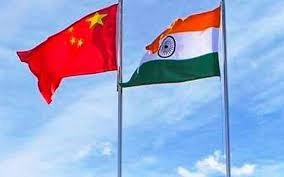
Pic courtesy: strategicstudyindia.blogspot.com.webp


Q 1.  Does bringing together the capabilities in space, cyber, electronic and information domains under PLASSF, provide an edge to China through greater civil-military integration?


  • It is a good concept and, it gives an advantage to China for the conduct of operations in these four new and important domains (Cyber, Space, Electronic and Information).


  • These domains are intrinsically interconnected and should not be dealt with in isolation.


  • It enhances the capability even for grey zone warfare (China has mastered the art and uses anything and everything as a weapon).


  • Even USA is studying this model for its reorganisation.


  • The Chinese model gives us a preview of future warfare challenges.


  • More than Civil-Military fusion it streamlines defensive and offensive operations in these domains.


  • It ensures seamless operations in the overlapping areas of these domains.


  • It has both support and active function.


  • It provides support to the service HQs and the theatre commands.


Q2.   What are your views about the formation of JSSF and its progress?


  • It was formed in 2015 and work is still in progress.


  • A Building block methodology has been adopted for it.


  • Initially, existing structures were reorganised, giving some new charters to them.


  • Thereafter, new structures were added.


  • Besides, the military and even some of the civil organisational structures were included in it.


  • Operating in expeditionary mode is still a challenge.


  • It still has lots of challenges that are being dealt with and the whole concept is evolving.


  • It is being exercised during training and live situations, and the lessons learnt are being implemented to make it a viable and efficient service.


Q3.   How would the service (JSSF) be used during hostilities?


  • Intelligence and information gathering and analysis is a continuous process.


  • It would also be used during peacetime for grey zone covert operations with some degree of deniability.


  • It would also be used during tense situations for strategic coercion.


  • During hostilities, the trend these days is to initiate war with disruptive operations to create chaos. This is followed by attacks by long-range precision vectors to disrupt command, control and communications, adding to the chaos. Kinetic contact force is applied in the prevailing chaotic environment.


  • The targets for offensive action in these domains would include ISR capabilities (especially space-based surveillance), military command and control centres and networks, and networks of national importance in sectors like railways, power, banking, health, maritime domain, transportation etc.


  • Information warfare would be used to influence the minds of decision-makers in particular and the general public at large.


  • The extent of effect (degradation) would depend upon several factors like defensive capability and measures, existing architecture providing alternatives and redundancy, and ability to recoup etc.


  • JSSF will provide support (Intelligence and information) and carry out offensive and defensive actions in all four domains, throughout the period of hostilities.


Q4.   Do you think China will succeed in building a credible narrative against India, using JSSF and media campaigns (print, electronic, social media), and will such propaganda affect the morale of our defence forces and the civilian population?


  • China believes in and follows the three-war theory.


  • Media and info war to create a false narrative is a very common practice and China would try.


  • It also believes in twisting history to its advantage and creating doctored documents to support its narrative.


  • China generally creates two narratives, one for domestic consumption and the other for international use.


  • Three major factors in our favour are the high morale of our forces, the high degree of legitimacy of actions by India, and the high nationalistic/patriotic feelings of the general public and citizens.


  • Due to the reasons, covered above, the effect will be minimal.


  • Even the civilian population can see through the Chinese design and would not get waylaid.


  • At the moment the credibility of China in the world is low, and in my opinion, China may not succeed in its endeavour.


  • However, it would be prudent to be ready for it and take some proactive steps.


  • International opinion is another area to look at.


Q5.   What remedial measures need to be implemented to mitigate the threats emerging from this service (JSSF) of PLA?


  • The threat of offensive action exists in all four domains.


  • Not only the military but a whole government approach (All the stakeholders) would be required.


  • It would have to be dealt with at three levels, individual service and stakeholder, at the tri-service level and sector/zone level and the national level.


  • Besides fortification of our systems and networks by firewalls and other security features, a Multi-pronged approach is required.


  • A multi-layered defence system is required.


  • It is not a one-time fix but requires continuous monitoring and upgrades.


  • A multi-domain monitoring system is needed.


  • A round-the-clock operating, operations room would have to be set up.


  • In addition, a Quick Reaction Team concept is required at different levels to contain the effects of any attack.


  • An audit and research structure would help in identifying weak areas, vulnerabilities, new developments, and future challenges.


  • A Proactive Approach (using electronic, print and cyber media) to counter adverse propaganda.


  • Development of counter-offensive capabilities.


Bottom Line

The nature of warfare is changing at a very fast pace.

Adapt or Perish


Question

Are our proposed changes future looking?


Suggestions and value additions are most welcome

For regular updates, please register here

Subscribe

References and credits

To all the online sites and channels.

Disclaimer:

Information and data included in the blog are for educational & non-commercial purposes only and have been carefully adapted, excerpted, or edited from sources deemed reliable and accurate. All copyrighted material belongs to respective owners and is provided only for purposes of wider dissemination.

343: News and Views: China (Salami & Cabbage Strategy)

News:

China is employing the strategy of salami-slicing in the South China Sea, and it limits the options of the peripheral countries by baffling their plans, making it problematic for them to develop a response.


Views:

  • Salami slicing, rather than overt aggression, is China’s preferred strategy in a well-planned and methodical manner to gain strategic advantage through a steady progression of small actions.
  • The term ‘salami slicing’ was coined by Nobel laureate Thomas Schelling.
  • It describes a strategy in the military that oversteps boundaries and offers an attractive option for expansionist powers.
  • The basic notion is to gain ground slice by slice rather than all at once.  These slices over a period of time lead cumulatively to a strategic transformation in China’s favour.


News:

There has been an incremental expansion of China’s footprint and control in the South China Sea.


Views:

  • China has been following the “cabbage strategy”, to take over control over contested islands.
  • This strategy entailed surrounding a contested island with concentric layers of Chinese fishing boats, fishing administration ships, maritime enforcement ships, and warships such that the island is wrapped layer by layer like a cabbage.


News:

On March 10, 2023, the 14th National People’s Congress (NPC) unanimously elected ‘Xi Jinping’ as the President of the People’s Republic of China (PRC) and the Chairman of the Central Military Commission (CMC) for an unprecedented third term. President Xi appointed ‘Li Qiang’ as China’s new Premier.


Views:

  • The development is as expected.
  • Will Xi be more aggressive or cool down temporarily?
  • My take is that temporary cooling down would be followed by aggressive behaviour towards the end of the third term i.e. 2027-28.


News:

President Xi, in his address to the NPC, stressed upon coordinating development and security for building China into a great modern socialist country in all respects. Xi also called for adhering to the one-China principle by resolutely opposing Taiwan’s independence separatist forces.


Views:

  • The focus continues to be the pursuit of achieving number one status in the world.
  • Expansionist “One China policy” continues to be followed.
  • Taiwan is the next agenda.
  • Frequency and intensity of “military muscle flexing and strategic coercion exercises”  is increasing.
  • When and how will China achieve it?
  • After Taiwan what next?


News:

President Xi proposed “Global Civilization Initiative” calling for respecting the diversity of civilizations, advocating common values of humanity, valuing civilizational inheritance and innovations, and jointly advocating robust international people-to-people exchanges.


Views:

  • Announcing China’s big role in world affairs.
  • Big words (respect, common values, humanity, values, and jointly, etc) which China doesn’t care about.


News:

On March 5, 2023, Li Keqiang delivered a “Report on The Work of the Government” to the NPC. China targeted GDP growth of around 5 percent for 2023, and announced a defence budget of CNY 1.55 trillion (USD 224.79 billion) for 2023, an increase of 7.2 percent over 2022.


Views:

  • China’s figures have to be taken with a pinch of salt.
  • Will decoupling slow down China’s growth?
  • Military spending is much more than projected.
  • Military modernisation is progressing according to timelines.


News:

On March 7, 2023, in his first major foreign policy statement, Foreign Minister Qin Gang highlighted China’s firm opposition to hegemonism and power politics including the US Indo-Pacific Strategy seeking to create an Asia-Pacific version of NATO.


Views:

  • Two axes are emerging.
  • Cold War 2.0 coming up.
  • China is crying wolf about QUAD calling it an Asian NATO.


News:

President Xi Jinping visited Moscow from March 20-22, 2023. In a joint statement, the two sides stressed “deepening the comprehensive strategic partnership between the two countries for a new era”.


Views:

  • China-Russia relations are a marriage of convenience.
  • China is happy to be the stronger partner in the relationship with Russia.


News:

H.H. The Dalai Lama has named a US-born Mongolian boy the ‘10th Khalkha Jetsun Dhampa Rinpoche’ – the third highest rank in Tibetan Buddhism, reigniting the larger question of the 14th Dalai Lama’s own reincarnation. China maintains that it will only recognise Buddhist leaders of its own choosing.


Views

  • The entire world is waiting for how things will pan out post-Dalai lama.
  • Tibetan activities would continue from exile.
  • China is carrying out the systemic demographic change in Tibet.


News:

Six years after the Doklam standoff, Bhutanese Prime Minister Lotay Tshering’s statement that Beijing has an equal say in finding a resolution to the dispute is troubling for New Delhi. India is opposed to China extending its footprint in Doklam as the plateau lies close to the sensitive Siliguri corridor.


Views:

  • China has resolved border issues with all except India and Bhutan.
  • It is offering Bhutan a comprehensive package to resolve issues.
  • The package gives them a back door entry into Bhutan.
  • The older generation in Bhutan is very sceptical about China’s intentions, however, the younger generation is willing to experiment, ignoring the plight of other countries that have engaged with China.


Your opinion matters

Please share your views and opinion about the following questions:

  • Will Xi be more aggressive or cool down temporarily?
  • When and how will China take control of Taiwan?
  • After Taiwan what next?
  • Will decoupling slow down China’s growth?
  • Future of Tibet post Dalai Lama?


For regular updates, please register here

Subscribe

References and credits

To all the online sites and channels.

Disclaimer:

Information and data included in the blog are for educational & non-commercial purposes only and have been carefully adapted, excerpted, or edited from sources deemed reliable and accurate. All copyrighted material belongs to respective owners and is provided only for purposes of wider dissemination.
335: UNDERSTANDING DRAGON’S PSYCHE


Factors  Affecting  China’s Psyche


Some of the factors that influence China’s thinking are:-


    • History and Culture: China has a long history and rich culture that shapes its worldview and values.


    • Political System: The Chinese government is a one-party socialist state with strong central control over the country’s political, economic, and social systems.


    • Economic Interests: China’s rapid economic growth and development have made it a major player in global trade and investment. The government’s policies and decisions are often influenced by economic considerations.


    • Domestic Concerns: Maintaining social stability, promoting national unity, and addressing social and economic inequalities are significant priorities for the Chinese government.


    • International Environment: China’s relations with other countries, especially with the United States and other major powers, have a significant impact on its strategic thinking.


    • Military Capabilities: As China continues to modernize its military, its defence strategy and posture are likely to be influenced by its evolving military capabilities.


    • Ideological Factors: China’s ideology, including its commitment to socialism with Chinese characteristics, nationalism, and Confucianism, also plays a role in shaping its thinking.


Chinese Value System


China’s value system has profound impact on their thought process. Chinese values are shaped by a combination of traditional cultural values, Confucianism, socialism, and nationalism. These values play an important role in shaping Chinese society and are reflected in everything from personal relationships to government policies.


    • Family: Family is considered to be the most important unit in Chinese society, and family relationships are highly valued. Respect for elders, filial piety, and the concept of collectivism are important aspects of Chinese family values.


    • Education: Education is highly valued in Chinese culture, and academic achievement is often seen as a pathway to success and social mobility.


    • Harmony: The concept of a “harmonious society” is emphasized in Chinese culture, and is also promoted by the Chinese government, emphasizing the importance of social stability, economic development, and environmental protection. This concept is based on the idea that a harmonious society can only be achieved through social, economic, and political reforms that benefit all members of society.


    • Hard work: Hard work and perseverance are seen as important virtues in Chinese culture, and individuals are encouraged to work diligently to achieve their goals.


    • Saving face: Saving face is an important concept in Chinese culture, with a focus on preserving one’s reputation and avoiding embarrassment.


    • Respect for authority: Respect for authority, including government officials and teachers, is an important value in Chinese culture.


    • Patriotism: Chinese people are taught to love their country and take pride in its accomplishments and history. Chinese nationalism is an important ideology in China, reflecting a strong sense of pride and identity among the Chinese people.


China’s Ideology


China’s ideology is a complex, multifaceted and evolving concept that is shaped by a combination of various factors, including history, culture, political system, and economic interests.


The Chinese Communist Party (CCP), which has been in power since 1949, has historically been guided by Marxist-Leninist ideology and Maoism, which emphasized the importance of revolutionary mass movements and the role of peasants in the socialist revolution.


In recent years, the CCP has adopted a new term, “Socialism with Chinese Characteristics,” to describe its political and economic system. This ideology combines socialist ideology with market-oriented reforms and emphasises the importance of maintaining social stability, promoting economic development, and advancing the interests of the Chinese people.


Confucianism


Confucianism, a traditional Chinese philosophy that emphasizes the importance of family, social order, and morality, has also played a significant role in shaping Chinese culture and values.


Confucianism is a philosophy that originated in China during the 5th century BCE and has played a significant role in shaping Chinese culture and values. The philosophy is based on the teachings of Confucius, a Chinese philosopher and politician who emphasized the importance of morality, family values, and social order.


Confucianism emphasizes the importance of five key relationships: ruler and subject, father and son, elder brother and younger brother, husband and wife, and friend and friend. Confucianism also emphasizes the importance of education and self-cultivation, and holds that individuals should strive to be virtuous and compassionate in their interactions with others.


Confucianism has had a profound influence on Chinese society, shaping everything from family relationships to government policies. The philosophy has been incorporated into the legal and educational systems in China, and has influenced other East Asian cultures such as Japan and Korea. Confucianism continues to play an important role in contemporary Chinese society, with many Chinese people continuing to follow Confucian principles in their personal and professional lives.


Century of Humiliation


The “Century of Humiliation” refers to the period of time between the mid-19th century and the mid-20th century, during which China was repeatedly invaded, exploited, and humiliated by foreign powers.


The Century of Humiliation left deep scars on the Chinese psyche, with many Chinese people feeling a sense of shame and resentment towards foreign powers. The period also contributed to the rise of Chinese nationalism, as Chinese people sought to restore their country’s dignity and status on the global stage.


This period had a profound impact on China’s national identity, its political and economic systems, and its relations with the rest of the world. The Chinese Communist Party, which came to power in 1949, sought to create a strong, centralized state that could defend China’s sovereignty and protect its people from foreign aggression. The Party also implemented policies aimed at promoting economic development and modernization, with the goal of making China a strong and prosperous nation that could stand up to foreign powers.


Overall, the Century of Humiliation has had a profound impact on China’s national identity, its political and economic systems, and its relations with the rest of the world. It continues to shape China’s approach to foreign policy and international relations.


National Rejuvenation


China seeks to reclaim its position as a great power and defend its interests in an increasingly complex global environment. In recent years, the Chinese government has increasingly emphasized the importance of national rejuvenation, reflecting a desire to restore China to its historical position of power and influence. This has been accompanied by a more assertive foreign policy, as China seeks to assert its interests and defend its sovereignty in the face of perceived external threats.


To Be Continued……….


Bottom Line

 You have to know the Dragon,

to engage the Dragon.

(More Coming Up)


Question

Is India’s China policy flawed?


Suggestions and value additions are most welcome


For regular updates, please register here

Subscribe


References and credits

To all the online sites and channels. 

Pic Courtesy: Aminoapps on net.

Disclaimer:

Information and data included in the blog are for educational & non-commercial purposes only and have been carefully adapted, excerpted, or edited from sources deemed reliable and accurate. All copyrighted material belongs to respective owners and is provided only for purposes of wider dissemination.

English हिंदी