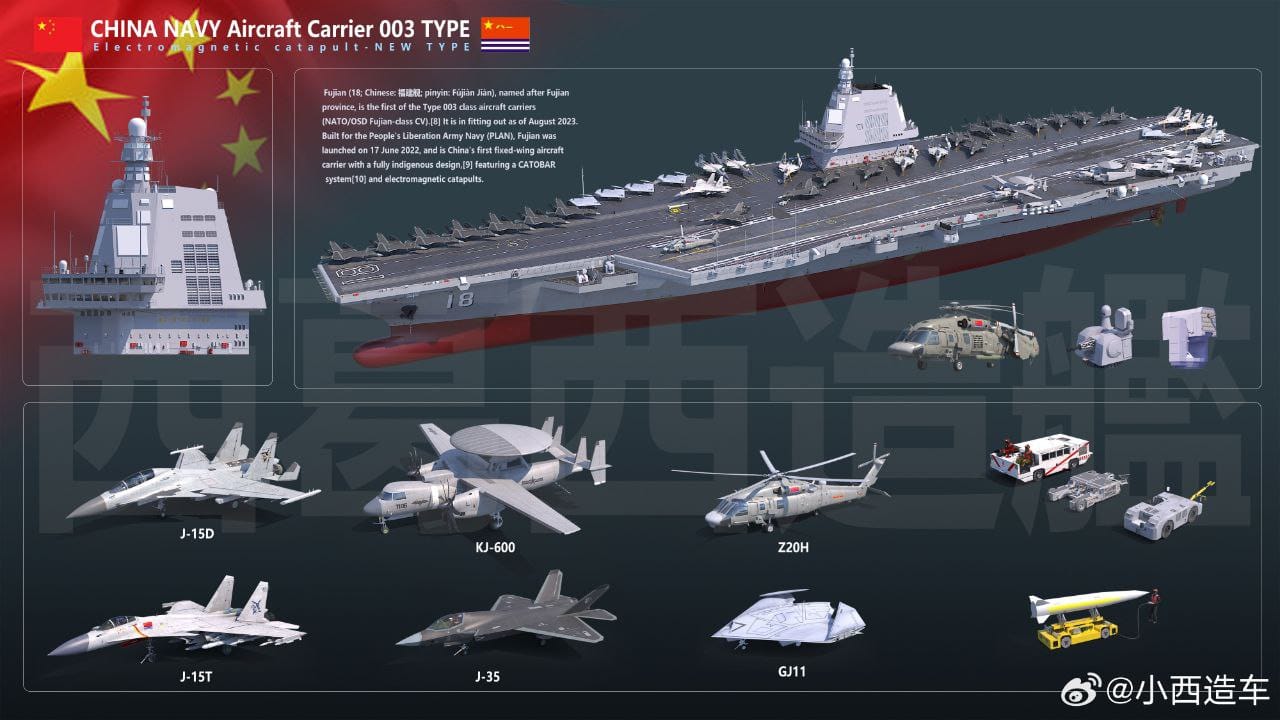
It is rapidly developing its fleet of aircraft carriers.
Its third carrier (Most advanced so far) has commenced water trials.
It is developing the capability in holistic manner.
Simultaneously looking at fighter aircraft and combat support aircraft for carrier operations.
It is also addressing the issue of training, doctrine and tactics.
It is developing support bases world over.
It has a number of support bases in the IOR region.
Chinese naval presence in the IOR has increased manifold in the last decade.
In times to come it is likely to have three carrier groups.
2.
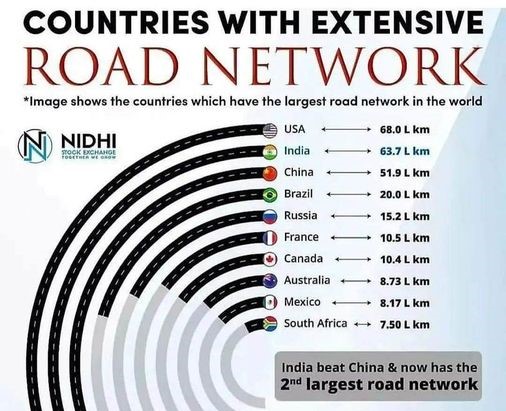
It is an proud achievement.
The road connectivity has improved considerably in the last two decades.
The quality of expressways and highways is good.
There is still lots to be done.
City Road infrastructure needs special attention.
Other area of concern is the border road infrastructure.
Although fresh impetus has been given to it and is progressing rapidly.
However it is still lagging as compared to the adversaries in terms of reach.
While we are catching up on the reach the adversary is concentrating on speed by further improvements.
3.
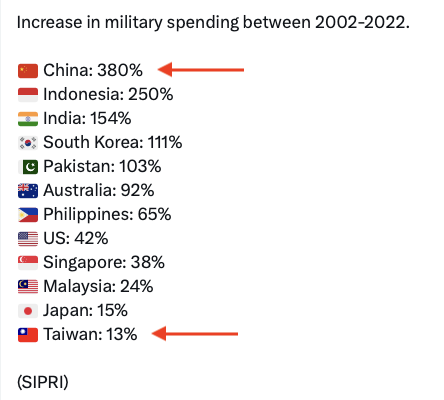
China’s increase in her military spending indicates her aspiration to be number one world power.
China’s military spending and her aggressive attitude is spurring a arms race in the region.
The military expenditure of the threatened countries is also showing a upward trend.
The Russia – Ukraine war is acting as a catalyst to military spending by NATO and European countries.
Israel-HAMAS (Iran) war will stimulate military spending in the middle east region.
4.
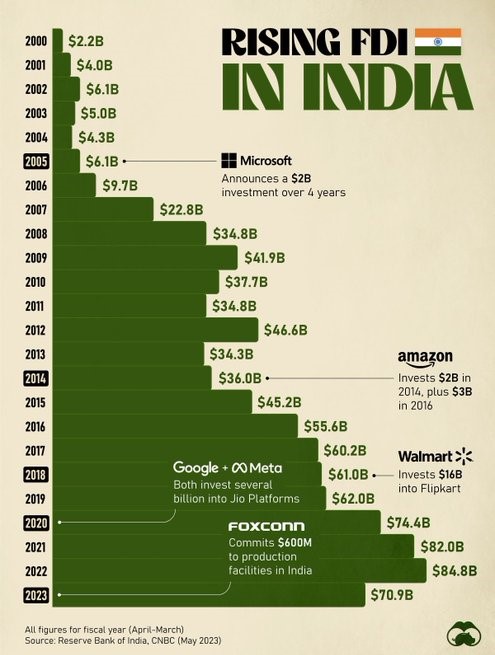
FDI inflows have increased 40 times in the last two decades.
The parameter is a part of the country’s growth story.
The changes in FDI Policy and offering incentives and concessions to foreign investors has promoted the FDI inflows.
These incentives include tax exemptions, duty-free imports for certain sectors, and special economic zones (SEZs) with preferential treatment regarding taxation, customs, and regulatory compliance etc.
The advantages of high FDI inflow include enhanced economic growth, technology transfer, employment generation, and infrastructure development.
In 2022, India ranked 10th in top destinations for foreign direct investment (FDI).
There is a scope for further enhancement.
Some of the major impediments are political instability, lack of infrastructure, confusing tax and tariff policies, strict regulations and labor laws, and corruption.
5.
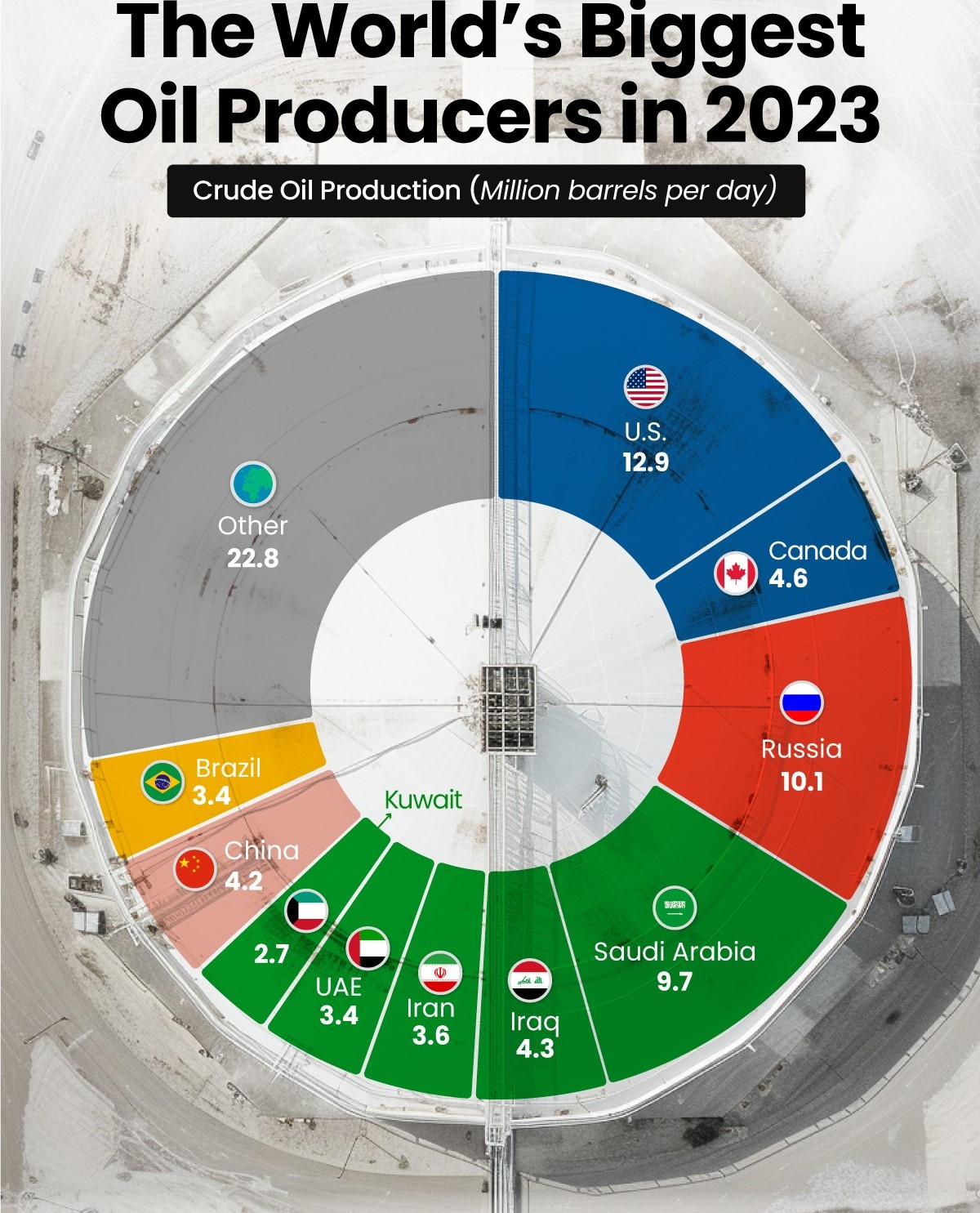
Oil is in great demand, and its price primarily a function of market (supply and demand).
Some other variables also affect oil prices.
The IEA Oil Market Report (OMR) is one of the world’s most authoritative and timely sources of data, forecasts and analysis on the global oil market – including detailed statistics and commentary on oil supply, demand, inventories, prices and refining activity, as well as oil trade for IEA and selected non-IEA countries.
The production of oil in India amounted to 737 thousand barrels a day in 2022, with a decreasing trend.
A holistic approach is required towards addressing the energy security.
Some of the areas include enhancement of domestic production, diversification of procurement sources, storage capacity, investment in alternative energy sources and energy conservation measures.
Information and data included in the blog are for educational & non-commercial purposes only and have been carefully adapted, excerpted, or edited from sources deemed reliable and accurate. All copyrighted material belongs to respective owners and is provided only for purposes of wider dissemination.
Airpower is a decisive factor and a game-changer in the art of warfare. The application of airpower, although it looks simple is a complex process. During a war, the major roles of airpower include shaping the environment, offensive force application, and synergising operations with surface forces. It also plays a vital role during peace and the transition from peace to war. Airpower in the Indian context has evolved since its genesis, reflecting changes in technology, doctrine, and strategic priorities. Some key aspects of the evolutionary process including the past, present and future are deliberated in the succeeding paragraphs.
Genesis & Early Years. The Indian Air Force was established in British India as an auxiliary air force of the Royal Air Force on 8 Oct 1932, with four Westland Wapiti biplanes and five Indian pilots. The then Royal IAF (RIAF) grew in size during World War II to ten squadrons. In the early years of the IAF, the primary focus was on providing air support to British and Commonwealth ground forces. During World War II, the IAF played a significant role in the Burma campaign in halting the advance of the Japanese army, by providing air cover and support for ground troops. IAF evolved initially in a tactical role primarily to support surface and maritime wars. Indian Air Force (IAF) of independent India came into being with meagre resources of seven squadrons (six fighter squadrons and one transport squadron).
Participation in the Wars. Post-Independence Four wars took place in the first two and half decades. Almost immediately after Independence, India, and Pakistan clashed over the future of Kashmir. IAF carried out air operations including airlift of troops and supplies, photo-reconnaissance, bombing, strafing, and interdiction. The air power usage was tactical and reactionary to the emerging situations. In the 1962 War with China, despite a clear combat edge, the fighter component of the Indian Air Force was not used. There was a general reluctance to use offensive air power due to the perceived fear of escalation of conflict. In the 1965 war with Pakistan, air superiority in specific terms was not contested by either side. IAF gave a good account in the skies and in support of surface forces, to help them stop the Pakistani offensive. In the Indo-Pakistani War of 1971, IAF actively engaged the enemy air force achieving complete air superiority over the eastern wing of Pakistan. IAF carried out all air campaigns in parallel, including close air support and air cover to the Indian Army, attacks against Pakistani Air Force bases, assistance to the Indian Navy in maritime operations, offensive attacks on enemy armour, and strategic bombing. IAF played a pivotal role in the victory, leading to the liberation of Bangladesh. Kargil Operations in 1999, demonstrated once again the impact of air power in achieving objectives. Air power was employed in a very innovative way at high altitudes. A game-changer shift took place on 26 February 2019, when India decided to use offensive air power by carrying out deep strikes against terrorist targets in Pakistan, beyond the Pakistan-occupied Kashmir (PoK). The myth about the use of air power being escalatory in nature was broken.
Power Projection Abroad. During 1987-90 IAF was involved with operations in Sri Lanka and Maldives. IAF established an “air bridge” between mainland India and Sri Lanka for the Indian Peace Keeping Force (IPKF). Although combat aircraft were not used, IAF helicopters provided fire support for the army. In 1988, IAF undertook Operation Cactus, wherein, it flew at least a battalion of paratroopers, more than 1000 Miles away to Maldives when rebels attempted to overthrow the government. In these operations, the IAF demonstrated its ability to project forces on short notice.
Growth, Modernisation and Expansion. The decade of the 1950s saw the induction of aircraft and support systems, both in quantity and quality, into the IAF. During this period, the IAF acquired its first jet fighters and transport aircraft and India began to develop its own indigenous aircraft and weapons systems. IAF shifted its focus to defending India’s borders and air space, and its capabilities started developing beyond the limited scope of the support role. In the period from 1980 to 2000, the IAF modernised itself with advanced aircraft, weapons, and sensors, and expanded its capabilities to include strategic airlift.
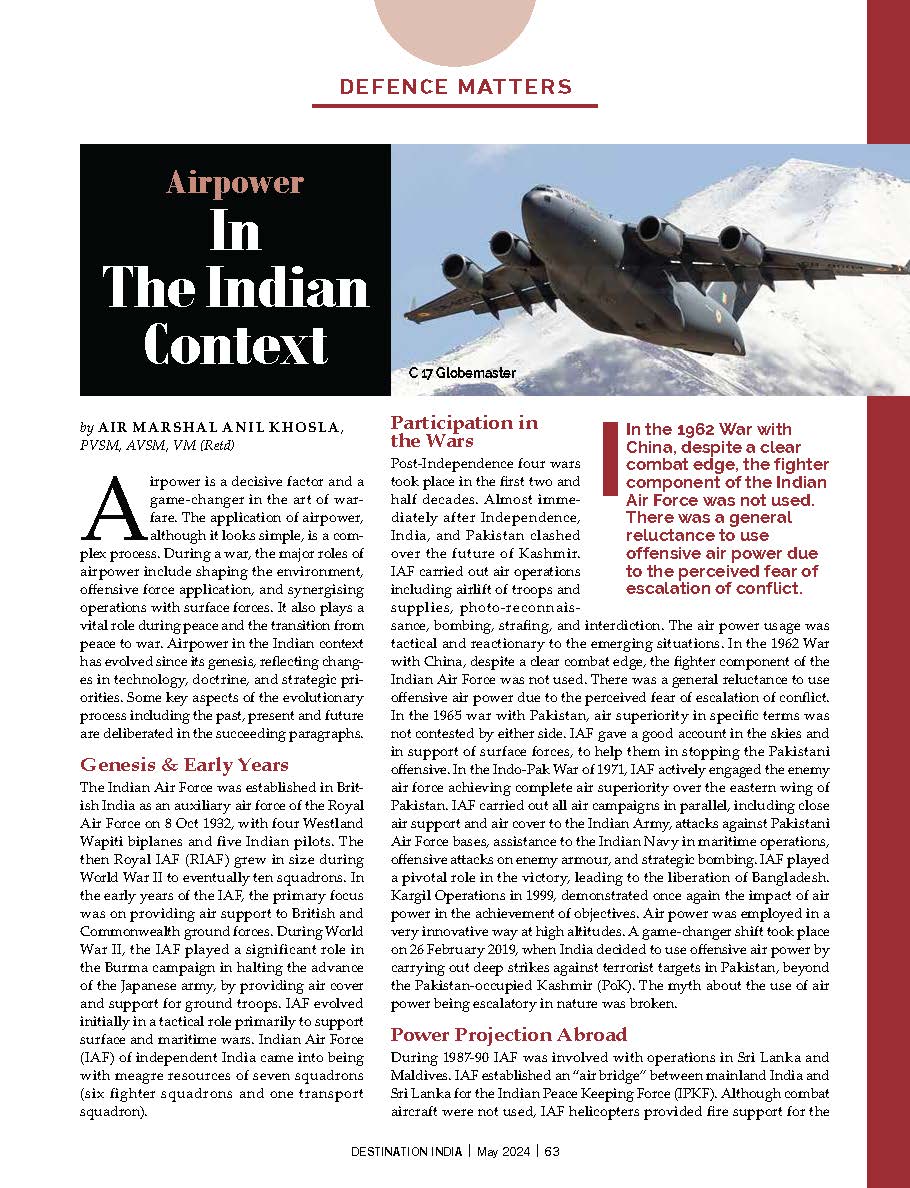
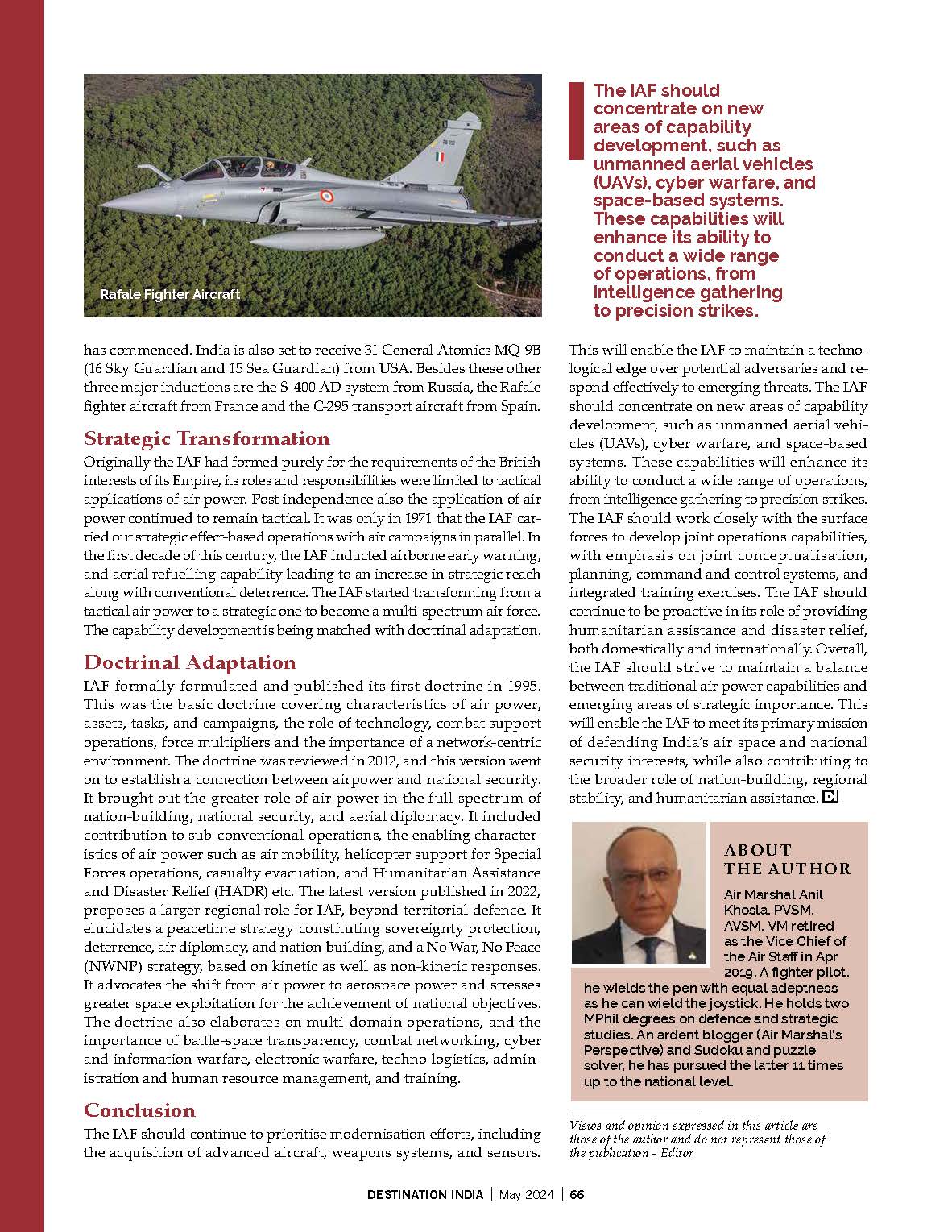
Current Modernisation. The present decade is witnessing an all-around capability development of IAF with new platforms, weapons and systems. This is being spurred by the combination of rapid capability enhancement and the belligerent attitude of our adversaries. A Multi-pronged approach is being adopted to deal with the current and future challenges. Self-reliance is being encouraged and supported while maintaining the minimum deterrence value, by procurement from abroad. The inventory is also being diversified with inductions from the USA, France and Israel, besides Russia. India has become the largest defence market for the USA with the recent inductions of C-17 aircraft and C-130 transport aircraft, P-8i maritime recce aircraft, Apache attack helicopters, and Chinook heavy lift aircraft, UAVs and weapons. Besides these other two major inductions are the S-400 AD system from Russia and the Rafale fighter aircraft from France.
Strategic Transformation. Originally the IAF had formed purely for the requirements of the British interests of its Empire, its roles and responsibilities were limited to tactical applications of air power. Post-independence also the application of air power continued to remain tactical. It was only in 1971 that the IAF carried out strategic effect-based operations with air campaigns in parallel. In the first decade of this century, the IAF inducted airborne early warning, and aerial refuelling capability leading to an increase in strategic reach along with conventional deterrence. The IAF started transforming from a tactical air power to a strategic one to become a multi-spectrum air force. The capability development is being matched with doctrinal adaptation.
Doctrinal Adaptation. IAF formally formulated and published its first doctrine in 1995. This was the basic doctrine covering characteristics of air power, assets, tasks, and campaigns, the role of technology, combat support operations, force multipliers and the importance of a network-centric environment. The doctrine was reviewed in 2012, and this version went on to establish a connection between airpower and national security. It brought out the greater role of air power in the full spectrum of nation-building, national security, and aerial diplomacy. IT included contribution to sub-conventional operations, the enabling characteristics of air power such as air mobility, helicopter support for Special Forces operations, casualty evacuation, and Humanitarian Assistance and Disaster Relief (HADR) etc. The latest version published in 2022, proposes a larger regional role for IAF, beyond territorial defence. It elucidates a peacetime strategy constituting sovereignty protection, deterrence, air diplomacy, and nation-building, and a No War, No Peace (NWNP) strategy, based on kinetic as well as non-kinetic responses. It advocates the shift from air power to aerospace power and stresses greater space exploitation for the achievement of national objectives. The doctrine also elaborates on multi-domain operations, and the importance of battle-space transparency, combat networking, cyber and information warfare, electronic warfare, techno-logistics, administration and human resource management, and training.
Future Focus / Trajectory
Investment in Technology. Air Force is a technology-intensive service and converting technology into capability is a time-consuming process. To stay on top of the challenges, there is a need to invest in emerging technologies and ideate about their utilisation in warfare. Some of the future technologies that are impacting the air war include Quantum computing, Hypersonic weapon systems, Artificial Intelligence., Robotics, Nanotechnology, Unmanned platforms, Drones and swarm technology, Network-centric environment / Internet of things/system of systems etc.
Unmanned Platforms. The use of unmanned platforms and systems is growing in warfare. This shift is expected to continue as technology advances and the capabilities of unmanned systems improve further. Drones of various sizes and capabilities are taking over the tasks of conventional platforms. Their utilisation is spread across the entire spectrum of threats ranging from sub-conventional, and conventional to long-range attacks. Investment in drones and anti-drone systems is also a need of the hour.
Loyal Wing Man Concept. Both man and unmanned platforms have their respective advantages and disadvantages. The thought process for the next generation of platforms is to harness the advantages of both and develop networked systems, wherein, both can work in an integrated manner. Research is going on in many countries on the “Loyal wingman” concept. HAL in India is also working on the CATS (Combat Air Team System) program on similar lines.
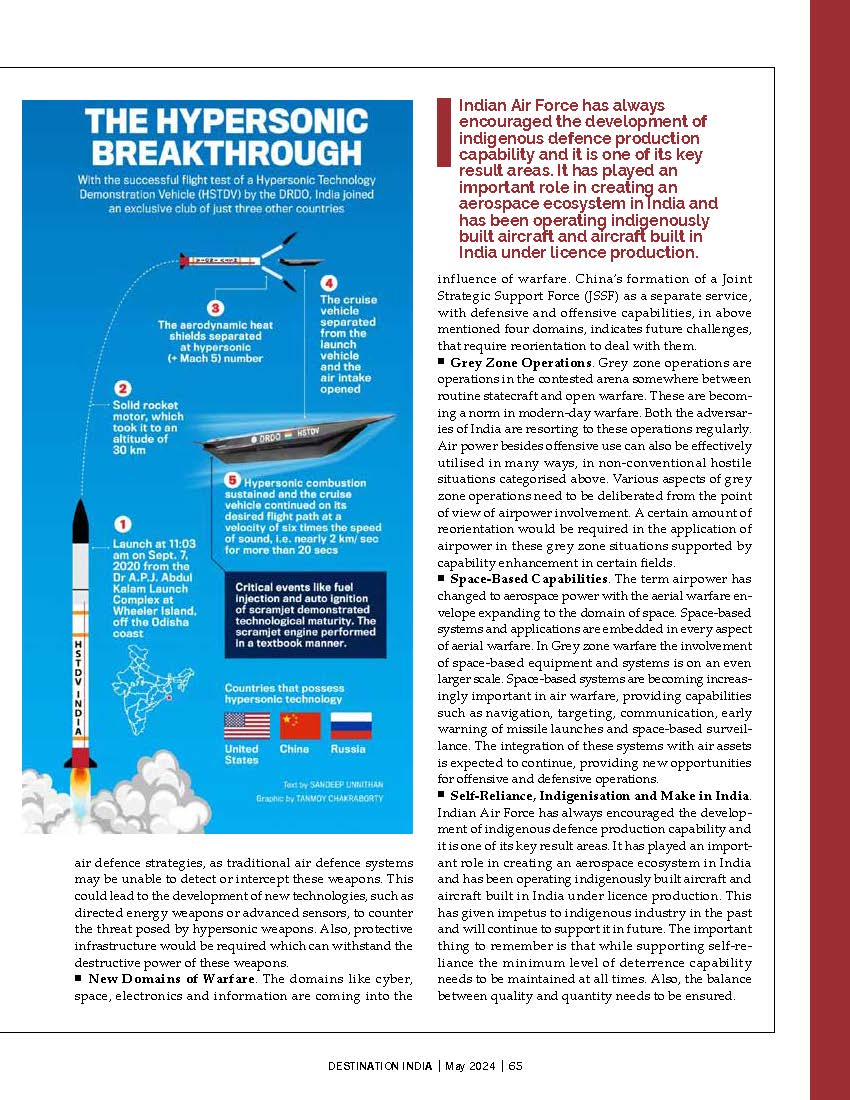
Hypersonic Weapons. The development of hypersonic weapons is likely to have a significant impact on air strategy. Hypersonic weapons provide new opportunities for rapid response and long-range strike capabilities with precision. They also pose new challenges in terms of protection and air defence. The high speed and unpredictability of hypersonic weapons will require the development of new air defence strategies, as traditional air defence systems may be unable to detect or intercept these weapons. This could lead to the development of new technologies, such as directed energy weapons or advanced sensors, to counter the threat posed by hypersonic weapons. Also, protective infrastructure would be required which can withstand the destructive power of these weapons.
New Domains of Warfare. The domains like cyber, space, electronics and information are coming into the influence of warfare. China’s formation of a Joint Strategic Support Force (JSSF) as a separate service, with defensive and offensive capabilities, in above mentioned four domains, indicates future challenges, that require reorientation to deal with them.
Grey Zone Operations. Grey zone operations are operations in the contested arena somewhere between routine statecraft and open warfare. These are becoming a norm in modern-day warfare. Both the adversaries of India are resorting to these operations regularly. Air power besides offensive use can also be effectively utilised in many ways, in non-conventional hostile situations categorised above. Various aspects of grey zone operations need to be deliberated from the point of view of airpower involvement. A certain amount of reorientation would be required in the application of airpower in these grey zone situations supported by capability enhancement in certain fields.
Space-Based Capabilities. The term airpower has changed to aerospace power with the aerial warfare envelope expanding to the domain of space. Space-based systems and applications are embedded in every aspect of aerial warfare. In Grey zone warfare the involvement of space-based equipment and systems is on an even larger scale. Space-based systems are becoming increasingly important in air warfare, providing capabilities such as navigation, targeting, communication, early warning of missile launches and space-based surveillance. The integration of these systems with air assets is expected to continue, providing new opportunities for offensive and defensive operations.
Self-Reliance, Indigenisation and Make in India. Indian Air Force has always encouraged the development of indigenous defence production capability and it is one of its key result areas. It has played an important role in creating an aerospace ecosystem in India and has been operating indigenously built aircraft and also aircraft built in India under licence production. This has given impetus to indigenous industry in the past and will continue to support it in future. The important thing to remember is that while supporting self-reliance the minimum level of deterrence capability needs to be maintained at all times. Also, the balance between quality and quantity needs to be ensured.
The IAF should continue to prioritise modernisation efforts, including the acquisition of advanced aircraft, weapons systems, and sensors. This will enable the IAF to maintain a technological edge over potential adversaries and respond effectively to emerging threats. The IAF should concentrate on new areas of capability development, such as unmanned aerial vehicles (UAVs), cyber warfare, and space-based systems. These capabilities will enhance its ability to conduct a wide range of operations, from intelligence gathering to precision strikes. The IAF should work closely with the surface forces to develop joint operations capabilities, with emphasis on joint conceptualisation, planning, command and control systems, and integrated training exercises. The IAF should continue to be proactive in its role of providing humanitarian assistance and disaster relief, both domestically and internationally. Overall, the IAF should strive to maintain a balance between traditional air power capabilities and emerging areas of strategic importance. This will enable the IAF to meet its primary mission of defending India’s air space and national security interests, while also contributing to the broader role of nation-building, regional stability and humanitarian assistance.
Suggestions and value additions are most welcome
(The views and suggestions included in the paper are of the author)
Information and data included in the blog are for educational & non-commercial purposes only and have been carefully adapted, excerpted, or edited from sources deemed reliable and accurate. All copyrighted material belongs to respective owners and is provided only for purposes of wider dissemination.
The Stockholm International Peace Research Institute (SIPRI), has published data on global military spending for the year 2023. The Gist of it is as follows.
Total global military expenditure reached $2443 billion in 2023, an increase of 6.8 per cent in real terms from 2022. This is the steepest increase since 2009.
The top three largest spenders in 2023 are the United States, China and Russia. Particularly large increases were recorded in Europe, Asia, Oceania and the Middle East.
Four catalysts that encouraged military spending are:-
Russia’s war against Ukraine (supported by the USA, Europe and NATO).
China’s military rise and belligerent attitude.
Israel’s war against HAMAS and Iran.
Organised crimes.
Russia Ukraine War
Russia. Russia’s military spending increased by 24 per cent to an estimated $109 billion in 2023, marking a 57 per cent rise since 2014. In 2023 Russia’s military spending made up 16 per cent of total government spending and its military burden (military spending as a share of gross domestic product, GDP) was 5.9 per cent.
Ukraine. Ukraine was the eighth largest spender in 2023, after a spending surge of 51 per cent to reach $64.8 billion. This gave Ukraine a military burden of 37 per cent, representing 58 per cent of total government spending. Ukraine’s military spending in 2023 was 59 per cent of that of Russia’s. However, Ukraine received at least $35 billion in military aid during the year, including $25.4 billion from the USA. Combined, this aid and Ukraine’s military spending were equivalent to about 91 per cent of Russian spending.
USA & NATO. The USA remains NATO’s major spender but European members increased their share In 2023 the 31 NATO members accounted for $1341 billion, equal to 55 per cent of the world’s military expenditure. In 2023 most European NATO members increased their military expenditure. Their combined share of the NATO total was 28 per cent, the highest in a decade. Military spending by the USA rose by 2.3 per cent to reach $916 billion in 2023, representing 68 per cent of total NATO military spending.
China’s Rise & Belligerent Attitude
China. China, the world’s second-largest military spender, allocated an estimated $296 billion to the military in 2023, an increase of 6.0 per cent from 2022. This was the 29th consecutive year-on-year rise in China’s military expenditure. China accounted for half of total military spending across the Asia and Oceania region.
Japan & Taiwan. Japan allocated $50.2 billion to its military in 2023, which was 11 per cent more than in 2022. Taiwan’s military expenditure also grew by 11 per cent in 2023, reaching $16.6 billion.
India. India was the fourth largest military spender globally in 2023. At $83.6 billion, its military expenditure was 4.2 per cent higher than in 2022.
Israel & Hamas / Iran War
Middle East. Estimated military expenditure in the Middle East increased by 9.0 per cent to $200 billion in 2023. This was the highest annual growth rate in the region seen in the past decade.
Israel. Israel’s military spending—the second largest in the region after Saudi Arabia—grew by 24 per cent to reach $27.5 billion in 2023.
Iran. Iran was the fourth largest military spender in the Middle East in 2023 with $10.3 billion. According to available data, the share of military spending allocated to the Islamic Revolutionary Guard Corps grew from 27 per cent to 37 per cent between 2019 and 2023.
Organised Crime
Central America and the Caribbean. Military spending in Central America and the Caribbean in 2023 was 54 per cent higher than in 2014. Escalating crime levels have led to the increased use of military forces against criminal gangs in several countries in the sub-region.
Dominican Republic. Military spending by the Dominican Republic rose by 14 per cent in 2023 in response to worsening gang violence in neighbouring Haiti. The Dominican Republic’s military spending has risen steeply since 2021 when the assassination of Haitian President Jovenel Moïse threw Haiti into crisis.
Mexico. In Mexico, military expenditure reached $11.8 billion in 2023, a 55 per cent increase from 2014 (but a 1.5 per cent decrease from 2022). Allocations to the Guardia Nacional (National Guard)—a militarised force used to curb criminal activity—rose from 0.7 per cent of Mexico’s total military expenditure in 2019, when the force was created, to 11 per cent in 2023.
The largest percentage increase in military spending by any country in 2023 was seen in the Democratic Republic of the Congo (+105 per cent), where there has been protracted conflict between the government and non-state armed groups. South Sudan recorded the second largest percentage increase (+78 per cent) amid internal violence and spillover from the Sudanese civil war.
Comments
The unprecedented rise in military spending is attributed to the global deterioration in peace and security.
Russia’s increase in military spending is the cost associated with the digestion of Crimea in 2014 and Ukrainian regions now.
Ukraian’s spending (a high amount of 58% of total govt spending) is difficult to sustain without foreign aid. Further, it will need money for the reconstruction of the country.
Two years of war in Ukraine has fundamentally changed the security outlook in European NATO states. The change in threat perception is reflected in growing shares of their GDP being directed towards military spending.
China is directing much of its growing military budget to boost the combat readiness of the People’s Liberation Army. This has prompted the governments of Japan, Taiwan and others to significantly build up their military capabilities. China’s growing military power is driving up the expenditure of its neighbours and threatened states.
War and tensions in the Middle East have fuelled the biggest spending increase of the past decade. The spending has increased mainly driven by Israel’s large-scale offensive in Gaza in response to the attack on southern Israel by Hamas in October 2023.
In recent years, diplomatic relations between Israel and several Arab countries have been warming up. The outbreak of a major war in Gaza has created fears of a region-wide conflict.
Military action against organised crime to suppress gang violence has been a growing trend. It also pushes up spending, as the governments are unable to address the problem using conventional means.
Bottom Line
Ultimately the common man suffers the ills of war.
Moreover, this money could be used constructively for development and improvement of quality of life.
Information and data included in the blog are for educational & non-commercial purposes only and have been carefully adapted, excerpted, or edited from sources deemed reliable and accurate. All copyrighted material belongs to respective owners and is provided only for purposes of wider dissemination.