Pics Courtesy Net
Presented my Paper during the National Conference on Cold War 2.0 at Reva University 0n 14 Dec 24.
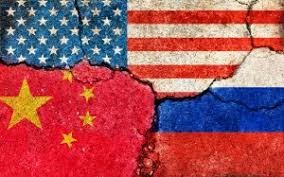
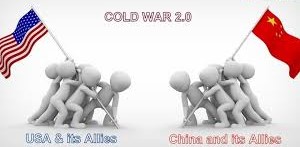
“Cold War 2.0” refers to the resurgence of strategic competition, primarily between the United States and China, but also involving Russia and other global players. The military repercussions of Cold War 2.0 are profound, impacting global security, defence strategies, alliances, and the development of cutting-edge technologies. As the U.S., China, Russia, and other nations adjust to this renewed strategic competition. This modern geopolitical rivalry differs from the original Cold War but still shares significant military aspects.
Cold War 2.0
While ‘Cold War 2.0’ resembles the original Cold War, it is a distinct and modern iteration marked by new issues and complexities. This contemporary version shares some similarities with its predecessor but also differs in crucial ways, reflecting the evolution of global dynamics.
Key Drivers of Cold War 2.0
-
- Technological and Economic Rivalry. Unlike the ideological battle of capitalism vs. communism during the original Cold War, today’s competition revolves around technological dominance and economic power. The U.S. and China compete fiercely over technologies like AI, quantum computing, semiconductors, and 5G networks, considered strategic assets.
-
- Military Posturing. While direct military confrontation is unlikely, the U.S. and China (and, to some extent, Russia) are investing heavily in modernising their militaries. This includes advancements in cyber capabilities, nuclear arms, space defence, and hypersonic weapons.
-
- Influence and Alliances. The U.S. is strengthening alliances through initiatives like AUKUS (Australia-UK-U.S. security pact) and Quad (U.S., Japan, India, and Australia), which focus on countering China’s influence in the Indo-Pacific. China, in turn, builds influence through projects like the Belt and Road Initiative (BRI), aiming to expand economic influence in Asia, Africa, and Europe.
-
- Cyber Warfare and Information Manipulation. Cyber attacks, espionage, and misinformation campaigns are central to Cold War 2.0. Often attributed to state-backed actors, these efforts target critical infrastructure, government agencies, and private enterprises to gain a strategic advantage.
-
- Space Race. Space is now a potential battleground, with the U.S. and China investing in capabilities to assert dominance in outer space. This includes satellite technology, anti-satellite weapons, and plans for potential lunar exploration bases.
Differences from the Original Cold War
-
- Interconnected Economies. Unlike the U.S. and Soviet Union, which had limited economic ties, the U.S. and China are deeply interwoven economically. Trade dependencies complicate outright antagonism and make the situation more complex.
-
- Ideological Tension. While ideology still plays a role (with China promoting an authoritarian governance model), the rivalry is not purely ideological. The focus is more on pragmatic control over global norms, standards, and resources rather than on spreading a single political ideology worldwide.
-
- Multipolar World. The Cold War had two superpowers, but today’s world is multipolar. Other major players, including the European Union, India, and Brazil, add nuance to global power dynamics and complicate the binary nature of the U.S.-China rivalry.
Implications
-
- If this Cold War 2.0 continues, it could have wide-ranging and potentially destabilising consequences.
-
- Global Supply Chain Decoupling. Increased tariffs, restrictions on technology transfers, and efforts to localise supply chains might lead to a more bifurcated global economy.
-
- Fragmented Technology Ecosystems. Competing standards for technologies (like internet governance or 5G) could lead to incompatible systems in different parts of the world, affecting everything from telecommunications to digital commerce.
-
- Increased Regional Tensions. Areas like Taiwan, the South China Sea, and Ukraine (regarding U.S.-Russia relations) may become flashpoints as major powers assert control in contested regions.
Military Aspects of Cold War 2.0

Key military aspects of Cold War 2.0 include an intensified arms race in hypersonic weapons, cyber warfare capabilities, and space militarisation. Additionally, the rise of proxy conflicts, strategic military alliances, and an emphasis on grey-zone tactics—such as economic coercion and information warfare—underscore the multidimensional nature of this renewed standoff. These dynamics are reshaping global security frameworks with far-reaching implications for international stability.
Heightened Risk of Military Confrontations. China’s militarisation of the South China Sea and its increased pressure on Taiwan have elevated the risk of confrontations with the U.S. and its allies, who patrol these regions to uphold freedom of navigation. The Russia-Ukraine war has spurred NATO to reinforce Eastern European defences, increasing the chances of miscalculations and escalations. Countries like Japan, South Korea, and Germany are enhancing their military capabilities in response to major powers, creating more densely armed regions. As nations become more intertwined through complex alliances and forward deployments, the potential for crises to escalate quickly grows. Miscalculations or misunderstandings could lead to rapid military responses, increasing the risk of conflict.
Expansion of Alliances and Security Pacts. The war in Ukraine reinvigorated NATO, leading countries like Finland and Sweden to join or seek membership. It has also increased defence spending, especially among European NATO members. The U.S. is strengthening alliances with countries like Japan, Australia, South Korea, and India to counterbalance China’s growing influence in the South China Sea and Indian Ocean. Initiatives like AUKUS (Australia, U.K., and U.S.) exemplify new defence partnerships focused on technology sharing, particularly in nuclear-powered submarines and cyber warfare. China, meanwhile, has increased its military presence in the region and conducted joint drills with Russia.
Proxy Conflicts and Regional Instabilities. Cold War 2.0 has revived proxy conflicts, with the U.S., Russia, and China supporting opposite sides in conflicts in the Middle East, Africa, and Southeast Asia. This increases regional instability as these powers compete for influence. Similar to Cold War-era proxy wars, there are areas where indirect conflicts play out, such as arms support in Yemen, Syria, and parts of Africa. Techniques like information warfare, economic pressure, and covert operations are increasingly used, allowing states to destabilise rivals without conventional conflict.
Increased Military Spending and Arms Development. Heightened tensions are prompting nations to boost defence budgets. The U.S. and China lead in military spending, while Russia, Japan, India, and several European countries also increase expenditures. The modernisation of Military-Industrial Complexes (MICs) reflects a race to develop next-generation weaponry, cyber-security capabilities, and space-based technologies. The strategic objectives include staying technologically ahead, ensuring supply security, and reinforcing national defence ecosystems. Defence sectors in the U.S., China, and Russia are seeing significant investment, but high spending can strain national budgets and lead to economic vulnerabilities, particularly in countries with weaker economies.
Securing Rare Earth Elements and Critical Minerals. Rare earth elements (REEs) are essential for producing advanced military technology, including missile guidance systems and radar. China currently dominates the production and processing of REEs, which has prompted the U.S., EU, and Japan to invest in alternative sources and develop domestic processing capabilities. The U.S. has signed agreements with Canada and Australia, significant allies with REE deposits, to establish REE supply chains outside Chinese control. The EU has also launched initiatives to develop rare earth mining and processing within its borders.
Supply Chain Dependencies and Resilience. The globalised defence industry, especially for high-tech components, may become vulnerable to disruptions and sabotage, impacting military readiness. Global supply chains are increasingly segmented and politicised, driven by the need to reduce reliance on potentially hostile or unstable sources. Supply chain security now plays a central role in defence strategy, and there’s a trend toward “friend-shoring,” where critical industries are moved closer to allied or domestic markets. Countries increasingly pursue joint development and production initiatives to strengthen defence supply chains, combining resources, technological expertise, and market access to reinforce allied military capacities. Western countries are working to reduce dependence on Chinese manufacturing for critical goods, particularly in areas like semiconductors, healthcare, telecommunications, and defence equipment. The U.S.-led Indo-Pacific Economic Framework (IPEF) and other initiatives aim to build alternative trade and supply networks, encouraging countries like India, Vietnam, and Mexico to take on more prominent roles in global supply chains.
Challenges to Arms Control and Non-Proliferation Efforts. Non-state actors and smaller nations could acquire technologies like drones, cyber tools, and precision-guided munitions, amplifying threats to global security. With the INF Treaty and Open Skies Agreement no longer in force and New START potentially at risk, the arms control framework is fragmenting. This may encourage additional nations to pursue nuclear capabilities.
Emerging Technologies in Warfare. The U.S. and China invest heavily in hypersonic missiles, artificial intelligence (AI), autonomous weapon systems, quantum computing, and advanced cyber-security. The U.S. aims to stay technologically superior, while China is rapidly advancing, aiming to match or exceed Western capabilities in these critical areas. Artificial intelligence, autonomous drones, and robotics are core technologies with applications for surveillance, targeting, and combat scenarios. China and Russia have tested hypersonic missiles, which can reach speeds above Mach 5 and evade conventional missile defence systems, reshaping strategic calculations. Autonomous drones, unmanned submarines, and AI-driven decision-making tools are also reshaping military tactics. AI is transforming intelligence analysis, logistics, and even combat operations. These technologies offer asymmetrical advantages and can reduce crisis response times, raising the possibility of automated escalation.
Nuclear Arms Race and Deterrence. Both China and the U.S. have expanded and modernised their nuclear arsenals. China has built hundreds of new missile silos and enhanced delivery systems, while the U.S. is investing in new nuclear-capable missiles, bombers, and submarines. Like the original Cold War, nuclear powers are re-emphasizing deterrence and signalling capability, with periodic tests of intercontinental ballistic missiles (ICBMs) and hypersonic weapons. Existing treaties, like New START, have faltered or faced resistance in extending to all major powers, leading to a less regulated nuclear landscape.
Cyber Warfare and Information Warfare Escalation. Modern warfare increasingly includes cyber and information warfare. Cyber capabilities are critical, with cyber espionage, network sabotage, and data theft frequently targeting government and military systems. Countries are building offensive and defensive cyber forces, with China, Russia, and the U.S. leading in cyber warfare capabilities. NATO has invested in its Cyber Operations Canter and collaborates on cyber defence with private cyber-security firms, reflecting the changing nature of warfare where digital and information domains are as crucial as traditional military strength.
Space Militarisation. Space has become a critical defence frontier. All major powers are developing space-based assets. The U.S., China, and Russia have established space-focused military agencies that manage satellite communications, space-based sensors, and potentially space-based weapons. The U.S. Space Force and similar programs in China and Russia signify the militarisation of space. Countries are investing in anti-satellite (ASAT) weapons and systems to ensure secure and competitive space-based communication, navigation, and intelligence capabilities. This militarisation of space requires sophisticated technology and collaboration across traditional defence contractors and tech innovators.
Maritime and Air Control. China has militarised artificial islands and increased its naval presence, heightening tensions with neighbouring countries and the U.S. Military assets like bombers, fighter jets, and aircraft carriers are being used to display power, as seen in increased air and naval operations in contested regions.
Impact of Cold War 2.0 on India’s Security
India finds itself uniquely amid the ongoing geopolitical tensions of “Cold War 2.0.” As one of the world’s emerging powers, India faces opportunities and security challenges from this evolving U.S.-China rivalry and the reassertion of Russian influence.
Tensions with China. Cold War 2.0 has escalated tensions between India and China, particularly along their disputed border in the Himalayas, where standoffs and skirmishes have become increasingly common (e.g., the 2020 Galwan Valley clash). China has expanded its military presence along the Line of Actual Control (LAC), forcing India to respond by enhancing its military infrastructure and deploying additional troops to secure the region. With cyber warfare a vital tool in Cold War 2.0, India must be prepared for cyber attacks from China that target critical infrastructure, government systems, and private companies.
Strategic Partnerships and Alliances. The U.S.-China rivalry has led India to deepen its engagement with the Quadrilateral Security Dialogue (Quad) alongside the U.S., Japan, and Australia. This non-military alliance is a significant strategic move that would help India counterbalance China’s influence, particularly in the Indo-Pacific region, while benefiting from intelligence sharing, joint military exercises, and defence technology transfers. India’s growing defence partnership with the U.S. is evident in agreements like the Communications Compatibility and Security Agreement (COMCASA) and Basic Exchange and Cooperation Agreement (BECA), which enhance interoperability and intelligence-sharing between the two countries.
Naval and Maritime Security Concerns. China’s expanding naval presence in the Indian Ocean and initiatives like the Belt and Road Initiative (BRI), primarily through ports in Pakistan, Sri Lanka, and Myanmar, present urgent strategic challenges for India. China’s military presence in these regions could jeopardise India’s control over critical sea lanes, affecting its trade and energy security. In response, India has to invest heavily in bolstering its naval capabilities and forging partnerships with countries such as the U.S., Australia, and Japan to ensure a Free and Open Indo-Pacific.
Technology and Cyber-security Vulnerabilities. India faces the challenge of securing its technology infrastructure, mainly as it develops its 5G networks. Given U.S.-China tensions over companies like Huawei, India must carefully navigate its partnerships to secure technology free from foreign influence or vulnerabilities. With cyber warfare playing a central role in Cold War 2.0, India has to heighten efforts to enhance its cyber-security framework. Partnerships with the U.S. and other allies focus on intelligence-sharing and cyber defence strategies to protect critical national infrastructure from Chinese and other state-sponsored cyber threats.
Nuclear Deterrence and Security. As U.S.-China tensions spur advancements in nuclear and hypersonic weapons, there’s increased pressure on India to maintain credible nuclear deterrence, especially given its proximity to China and its longstanding rivalry with Pakistan, a Chinese ally. India’s nuclear policy may face adjustments to account for these growing regional threats. The “No First Use” policy could be revisited to enhance deterrence, while advanced missile and early warning systems are likely priorities.
Economic and Trade Implications. Amid efforts to reduce dependencies on China, Cold War 2.0 could open opportunities for India to become a manufacturing hub. The “China plus One” strategy followed by many multinational corporations has increased foreign investment in India, providing economic benefits that indirectly strengthen India’s security capabilities. India’s “strategic autonomy” policy—balancing relations with the U.S. and Russia — is increasingly difficult to maintain. The U.S. expects alignment with its policies toward China, while Russia’s growing alignment with China complicates India’s traditional ties with Moscow, especially in defence procurement.
Regional Security and Stability in South Asia. China’s economic and military investments in Nepal, Bangladesh, Sri Lanka, and Myanmar challenge India’s influence in its neighbourhood. These developments pose potential security risks as China could gain leverage over India’s neighbouring countries, potentially encircling it in a “string of pearls” strategy. U.S.-China rivalry has left a security vacuum in Afghanistan that complicates India’s security calculus, with Pakistan and China seeking to increase their regional influence. India is concerned that increased Chinese and Pakistani influence in Afghanistan could lead to heightened terrorism risks along its borders.
Modern technology and multipolar dynamics define this Cold War-like rivalry, making it less ideological but more complex than its 20th-century counterpart. The focus on non-traditional warfare and regional tensions underscores the evolving nature of military competition in the 21st century. The Cold War 2.0 has prompted a comprehensive transformation of military-industrial complexes and a strategic diversification of supply chains. The current MICs are more integrated with advanced technology sectors, collaborating with private companies to maintain a competitive edge in AI, cyber-security, and space capabilities. Simultaneously, the need for secure, resilient supply chains has led to efforts toward friend-shoring and regional production, reducing dependencies on China and minimising vulnerabilities to disruptions. These shifts indicate a move toward greater self-reliance and alliance-based defence economies, underscoring how interconnected MICs and supply chains have become integral to economic security and national defence in a highly competitive global landscape. These Cold War 2.0 repercussions are shaping a more uncertain and contested world, with direct consequences for international security, diplomacy, and the stability of global power structures.
Think it Over
Are we in the midst of Cold War 2.0
or in the beginning of World War 3.0?
Your valuable comments are most welcome.
For regular updates, please register your email here:-
References and credits
To all the online sites and channels.
References:
- Allison, G. (2015). The Thucydides trap: Are the U.S. and China headed for war? The Atlantic.
- Gaddis, J. L. (2005). The Cold War: A new history. Penguin Books.
- Kaplan, R. D. (2018). The return of Marco Polo’s world: War, strategy, and American interests in the twenty-first century. Random House.
- Mearsheimer, J. J. (2014). The Tragedy of Great Power Politics (Updated Ed.). W.W. Norton.
- Nye, J. S. (2012). The future of power in the 21st century. Foreign Affairs, 91(2), 90–104.
- U.S. Department of Defence. (2022). Summary of the 2022 National Defence Strategy of the United States of America. Washington, DC.
- SIPRI (Stockholm International Peace Research Institute). “World Military Spending Reaches All-Time High.” Press Release, 2023. https://www.sipri.org.
- NATO. NATO 2030: United for a New Era. NATO Reflection Group, 2020.
- Friedberg, Aaron. “The Growing Cold War with China.” Foreign Policy, 18 June 2021.
- Economist. “The New Cold War.” The Economist, 22 March 2023.
- Council on Foreign Relations. “China’s Military Modernization.” CFR Backgrounder, updated July 2023. https://www.cfr.org.
Disclaimer:
Information and data included in the blog are for educational & non-commercial purposes only and have been carefully adapted, excerpted, or edited from reliable and accurate sources. All copyrighted material belongs to respective owners and is provided only for wider dissemination.