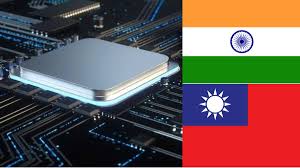
1: How important are semiconductors between the India-Taiwan bilateral ties?
Taiwan dominates semiconductor manufacturing, and India aspires to initially become self-reliant and a semiconductor hub in the long run.
Semiconductor cooperation can be a key element in India-Taiwan’s bilateral relations.
Taiwan is home to TSMC (Taiwan Semiconductor Manufacturing Company), the world’s leading contract chip manufacturer, and other key semiconductor firms like UMC and MediaTek.
Taiwan accounts for over 60% of global semiconductor production, making it indispensable in the global semiconductor supply chain.
India strives to become a major semiconductor manufacturing and design player with government initiatives like the Semiconductor Mission and incentives under the PLI (Production-Linked Incentive) scheme.
However, India lacks advanced fabrication facilities and relies on imports for its semiconductor needs.
Taiwanese firms, including TSMC and UMC, have been in discussions about establishing semiconductor plants in India.
India and Taiwan have explored partnerships to set up semiconductor packaging and testing facilities.
The most prominent initiative in the past was Foxconn’s joint venture with Vedanta to set up a semiconductor fab in India. However, this project faced setbacks, and Foxconn later withdrew.
Taiwan’s MediaTek has R&D operations in India, and more companies are eyeing design and software collaborations.
Taiwan faces increasing pressure from China, while India has border tensions with Beijing. Strengthening semiconductor ties helps both nations reduce reliance on China.
Amid U.S.-China tech tensions, India is a potential alternative for Taiwan to de-risk its semiconductor supply chains. However, due to pressure from China, Taiwan’s firms may hesitate to invest heavily in India.
Semiconductor cooperation offers mutual benefits in economic growth, technological advancement, and strategic realignment.
2a: How’s the development of an AI-technology innovation ecosystem linked to semiconductors?
This relationship between AI and Semiconductors is symbiotic.
Developing an AI-technology innovation ecosystem depends on robust, specialised chips for computation. On the other hand, advances in AI drive semiconductor innovation.
AI is revolutionising the semiconductor industry.
AI workloads like machine learning (ML), deep learning, and generative AI require enormous computational capacity, which is powered by advanced semiconductor technologies like Graphics Processing Units (GPUs).
Application-Specific Integrated Circuits (ASICs) and custom chips (e.g., Google’s TPUs) are optimised for AI workloads, enhancing performance and efficiency.
Future AI applications would demand breakthroughs in semiconductor design (Neuromorphic & Quantum Chips), mimicking brain-like processing or leveraging quantum computing.
AI-enabled devices (smartphones, IoT, autonomous systems) require power-efficient chips for real-time AI inference.
A thriving AI ecosystem requires cutting-edge semiconductor technology, while AI drives semiconductor innovations.
Countries investing in AI are also focusing on semiconductor self-sufficiency.
To stay competitive, nations aiming to lead in AI must also invest in advanced semiconductor capabilities.
2b How’s Taiwan important for Indian AI?
Taiwan is Important for Indian AI development, and it can play a critical role in India’s AI ambitions due to its dominance in semiconductor manufacturing, expertise in AI hardware, and potential for technological collaboration.
Taiwan is home to TSMC, MediaTek, and other key players; India’s AI growth is closely linked to its semiconductor partnerships with Taiwan.
Taiwan’s MediaTek supplies AI-driven smartphone processors, the key to India’s mobile AI market.
Taiwan’s semiconductor firms could help India build chip fabrication and packaging infrastructure, supporting India’s AI industry.
Taiwan’s expertise in embedded AI, 5G chips, and smart sensors can enhance India’s AI-driven IoT industry.
Taiwan has top research institutions (e.g., Academia Sinica, ITRI) specialising in AI-chip co-development, with which India can collaborate.
India’s AI Software Strength – India excels in AI/ML software development, while Taiwan specialises in hardware. This complementary relationship can lead to co-innovation in AI applications.
Taiwan and India can expand cooperation in AI-powered automation, fintech, and healthcare solutions.
India relies on Taiwan for high-end GPUs and AI chips, which are essential for AI supercomputing and cloud AI services.
Taiwan is vital for India’s AI ecosystem due to its semiconductor leadership, AI hardware expertise, and potential investment in India’s chip industry.
2c Is ‘AI bias’ one sphere in which India and Taiwan should collaborate? I think AI bias will be used in narrative warfare by China. So, it sounds logical that India will look towards Taiwan for it. That’s why this question.
Yes, AI bias is a critical area where India and Taiwan should collaborate, especially considering how China could leverage AI for narrative warfare, disinformation, and ideological control.
Given Taiwan’s experience in countering Chinese propaganda and cognitive warfare and India’s strength in AI software development, a partnership between the two could be mutually beneficial.
AI models learn from data, and if this data is manipulated, it can shape narratives in ways that serve geopolitical agendas. China has a history of AI-enabled information control.
Chinese AI firms develop models that filter, distort, or suppress certain narratives (e.g., Tiananmen Square and Uyghur issues).
AI-driven bot networks and deepfakes help China push state-controlled narratives globally.
AI-powered language models can spread biased historical or political perspectives on global platforms.
Given these threats, India and Taiwan must proactively develop AI systems that resist bias and manipulation to safeguard their information sovereignty.
India (with its AI research institutions like IITs, IIITs, and NITI Aayog) and Taiwan (via Academia Sinica, ITRI) can create joint frameworks for identifying and countering AI bias.
Instead of relying on U.S. or China-dominated AI models (GPT, ERNIE), India and Taiwan can work on regional AI models trained on neutral or diverse datasets.
Taiwan is already a leader in countering Chinese misinformation; India can integrate these capabilities into its AI-driven news verification systems.
India and Taiwan should limit dependency on Chinese AI tools, chips, and cloud services to avoid hidden biases and surveillance risks.
China can manipulate AI models. India and Taiwan must ensure independent, bias-resistant AI tools.
Both countries face Chinese psy-ops through TikTok clones, AI-driven chatbots, and misinformation on global platforms. Collaboration on AI-driven digital hygiene strategies is essential.
AI bias is not just a technical issue but a geopolitical weapon. Given China’s advancements in AI-enabled narrative control, India and Taiwan must collaborate to develop AI models that are transparent, unbiased, and resilient to manipulation.
3: Do you think Taiwan will determine the QUAD’s Indo-Pacific policy? Do you think Taiwan will be included in QUAD Plus?
Taiwan is strategically important for the Indo-Pacific.
Its inclusion in QUAD+ or any official QUAD policy is highly sensitive due to geopolitical constraints, primarily the One-China policy followed by QUAD members.
However, Taiwan is already a de facto part of the Indo-Pacific security architecture, and its role may increase informally without direct QUAD membership.
Taiwan plays a key role in significant aspects of the Indo-Pacific strategy.
India, Japan, and Australia have quietly increased economic, diplomatic, and military engagement with Taiwan.
The U.S. openly supports Taiwan’s defence and maintains strong military ties with Taiwan (e.g., arms sales, intelligence-sharing).
Joint statements focus on ‘peace and stability in the Taiwan Strait’, a veiled warning to China.
This suggests Taiwan is a silent but critical factor in QUAD’s Indo-Pacific strategy.
The idea of QUAD+ (expanded QUAD partnerships) includes countries like South Korea, Vietnam, the Philippines, and European allies. Taiwan’s inclusion is politically tricky but possible in indirect ways.
QUAD could integrate Taiwan into its semiconductor, AI, and cyber initiatives without direct military ties.
Taiwan is already working with the U.S. and Japan on cyber defence against China.
QUAD’s Indo-Pacific Economic Framework (IPEF) could involve Taiwan in trade and investment deals.
Taiwan’s inclusion could provoke Chinese military aggression, making regional stability harder to maintain.
India’s stance on Taiwan is cautious but evolving, with no diplomatic recognition (it follows the One-China policy but doesn’t reaffirm it actively), expanding economic & tech ties, and a measured stance on security issues (India doesn’t directly engage on Taiwan’s defence but is watching U.S.-China tensions closely).
Taiwan will likely play a more significant role in QUAD’s Indo-Pacific policy, but formal membership in QUAD+ is unlikely in the near future due to China’s geopolitical sensitivities.
4. Do you think, that Taiwanese TSMC’s $100 billion investment in the US has any lessons for India-Taiwan bilateral ties?
Taiwan Semiconductor Manufacturing Company’s (TSMC) $100 billion investment in the U.S. offers several lessons for India-Taiwan bilateral ties, particularly in the semiconductor sector.
TSMC’s investment in the U.S. is not merely a business move but a strategic decision driven by geopolitical concerns, primarily supply chain resilience and U.S.-China tensions. Similarly, India must recognise the strategic value of deepening semiconductor cooperation with Taiwan, not just as an economic initiative but as a crucial aspect of national security and self-reliance (Atmanirbhar Bharat).
Taiwan seeks to diversify its semiconductor production due to concerns about a potential Chinese invasion. The U.S. has emerged as one alternative, and India could position itself as another. New Delhi can present itself as a stable and growing economy with skilled labour and a commitment to semiconductor self-sufficiency.
The U.S. successfully attracted TSMC by offering massive incentives under the CHIPS Act, including subsidies, tax breaks, and infrastructure support. Under its Semiconductor Mission, India is offering similar incentives, but the challenge is ensuring a competitive ecosystem, covering land acquisition, power supply, and water availability (all crucial for fabs). If India wants Taiwanese firms like TSMC or UMC to invest, it must streamline regulatory processes and enhance the ease of doing business.
Please Do Comment.
For regular updates, please register your email here:-
Information and data included in the blog are for educational & non-commercial purposes only and have been carefully adapted, excerpted, or edited from reliable and accurate sources. All copyrighted material belongs to respective owners and is provided only for wider dissemination.
My Article was Published in the Chanakya Diaries, Issue 2, Spring 2025.
The world of military aviation has witnessed a significant leap in technological advancements, particularly in developing fifth-generation fighter aircraft (5GFA). These next-generation fighter jets are equipped with stealth technology, advanced avionics, and superior weaponry, allowing them to operate in highly contested airspaces. As global military technologies advance, so does the need for air forces to adopt cutting-edge systems capable of responding to emerging threats. Acquisition of such advanced technologies is crucial for maintaining air superiority and securing national interests. However, India’s path to acquiring fifth-generation fighters has been filled with challenges, forcing the country into a quandary about securing these crucial assets for its Air Force. This article delves into India’s dilemma regarding 5th-gen fighter jets, exploring the complexities of the decision-making process, the challenges posed by current defence procurements, and the country’s broader defence and geopolitical considerations.
Fifth-Generation Fighter Aircraft
Fifth-generation fighter aircraft represent the pinnacle of modern military aviation, incorporating cutting-edge stealth, advanced avionics, superior manoeuvrability, and network-centric warfare capabilities. These aircraft are designed to achieve air superiority while minimising detection through radar-evading features such as internal weapons bays, composite materials, and aerodynamic shaping. Notable examples include the U.S. F-22 Raptor and F-35 Lightning II, China’s J-20, and Russia’s Su-57. Unlike previous generations, fifth-generation fighters rely on sensor fusion, artificial intelligence-assisted decision-making, and high-capacity data links to dominate the battle-space. Their integrated avionics provide pilots with unparalleled situational awareness, allowing seamless coordination with other forces and unmanned systems. High-thrust engines with supercruise capability enable sustained supersonic speeds without afterburners, enhancing operational range and fuel efficiency. Furthermore, their electronic warfare and cyber capabilities allow them to disrupt enemy communications and radar systems. While these aircraft offer unmatched lethality and survivability, their complexity and cost present production, maintenance, and procurement challenges. Nations investing in fifth-generation fighters seek battlefield dominance and strategic deterrence, as control of the skies remains a decisive factor in modern warfare. As military technology advances, these fighters continue to evolve, shaping the future of aerial combat.
IAF Challenges and Necessities
Prevailing Challenges. India is a major regional player, and due to its unique geographical location and geo-political environment, it faces a collusive threat (from its two nuclear-powered unfriendly neighbours) with significant chances of military conflict. This unique position dictates that the country be able to deter her hostile neighbours from any military misadventure singly or collusively. Besides land borders being the main reason for the dispute, the security of the IOR region would also be a major security necessity. IAF would be required to offer options to meet India’s domestic and regional security requirements.
Air Threat. For a considerable time, the IAF enjoyed an edge in modern combat aircraft over its rivals – the Chinese People’s Liberation Army Air Force (PLAAF) and the Pakistan Air Force (PAF). This situation is changing with the PLAAF transformation, China’s investment in aerospace research and development, and aircraft manufacturing. China has inducted its two home-grown stealth fighters (J-20 and J-31) in large numbers and has already flown sixth-generation prototypes. Pakistan continues to be in collusion with China. PAF has inducted Chinese J-10 and JF-17 aircraft and has desired to induct Chinese fifth-generation aircraft.
Urgent Necessity. The Indian Air Force’s current strength is significantly below its sanctioned level. Its indigenous development of fourth—and fifth-generation aircraft faces technological hurdles and time delays. In the face of prevailing challenges, India cannot afford to lag in its military capability. The impending air threat from China and Pakistan has made the acquisition of fifth-generation fighters an urgent and necessary priority to enhance the IAF’s deterrence value.
Acquisition Efforts
Collaborative Effort. India’s journey toward acquiring fifth-generation fighter aircraft began with an ambitious collaboration with Russia. In 2007, India partnered with Russia to co-develop the Su-57, also known as the T-50 or PAK-FA. This project was expected to yield a fifth-generation fighter with advanced stealth capabilities and cutting-edge avionics, making it a crucial addition to India’s fleet. While India’s collaboration with Russia began with great optimism, several issues soon emerged related to cost overruns, development delays, and technological shortcomings, leading to re-evaluating the program. 2018, after years of joint research and development, India decided to pull out of the Su-57 program, marking a pivotal moment in its fifth-generation fighter aspirations. The decision left India searching for alternative solutions.
MRFA Acquisition. The history of India’s Multi-Role Fighter Aircraft (MRFA) acquisition effort is marked by ambitious plans and evolving defence strategies to modernise the IAF’s fighter fleet. The origins of the MRFA initiative can be traced back to the Medium Multi-Role Combat Aircraft (MMRCA) tender issued in 2007, which sought to acquire 126 fighter jets to replace the ageing MiG-21 fleet. After extensive evaluations and trials, the Dassault Rafale emerged as the preferred choice in 2012; however, contractual disagreements and cost escalations led to the eventual scrapping of the deal in 2015. In its place, the Indian government opted for a government-to-government deal to procure 36 Rafale jets in 2016 to meet urgent operational needs. The failure of the MMRCA tender to materialise in its original form highlighted the complexities involved in large-scale defence procurements, including cost considerations, technology transfer requirements, and offset agreements. In response to these challenges, the IAF redefined its requirements and reinitiated the procurement process under the MRFA program in 2019. The renewed effort sought to leverage lessons learned from the previous tender while emphasising indigenisation and the development of India’s defence manufacturing capabilities under the ‘Make in India’ initiative. Unlike its predecessor, the MRFA acquisition focuses more on domestic production, requiring foreign vendors to collaborate with Indian defence firms to establish local assembly lines and facilitate technology transfers.
Overview of the MRFA Acquisition Program. The MRFA acquisition program is a critical initiative by the Indian Air Force to acquire 114 advanced multi-role fighter jets to enhance its operational capabilities and replace its ageing fleet of legacy aircraft. Under MRFA, the IAF aims to procure state-of-the-art fighters that can undertake various combat roles, including air superiority, ground attack, reconnaissance, and electronic warfare, ensuring dominance in modern warfare scenarios. The MRFA acquisition process is structured under the ‘Make in India’ initiative, emphasising indigenous production and technology transfer to boost the domestic defence industry. The IAF issued a global Request for Information (RFI) in 2019, inviting proposals from major aircraft manufacturers worldwide. The procurement is expected under the Strategic Partnership (SP) model, which involves collaboration between foreign Original Equipment Manufacturers (OEMs) and Indian defence firms. This collaboration required establishing production lines within the country and transferring critical technologies, reducing import dependency and promoting self-reliance in the defence sector. One of the essential requirements outlined by the IAF in the MRFA tender is the transfer of technology (ToT), which will allow Indian defence companies to gain technical expertise in aircraft manufacturing, maintenance, and future upgrades. The current situation stresses the inclusion of fifth-generation aircraft in the acquisition plans.
Domestic Solution: AMCA. India has pursued an indigenous solution to its 5th-gen fighter needs through the Advanced Medium Combat Aircraft (AMCA). The AMCA is being developed by the Aeronautical Development Agency (ADA) under the Indian Ministry of Defence. It is intended to be a 5th-gen fighter with advanced stealth technology, super-cruise capabilities, and cutting-edge avionics. While the AMCA represents a step toward self-reliance and is seen as a critical component of India’s long-term military strategy, several challenges are associated with its development. The development of the AMCA has faced numerous delays. Initially slated for entry into service by the mid-2020s, it is now expected to enter service closer to the late 2030s. The project also faces significant technological challenges in developing a fighter of this sophistication. While progress is being made, achieving the same level of performance and stealth as the F-35 or Su-57 remains a formidable task.
Choices and Possibilities. Both the U.S. and Russia are aggressively pitching their fifth-generation aircraft. Besides outright purchase, India may explore collaboration and joint development programs or technology transfers (Stealth, Aero-engines and advanced avionics) that accelerate AMCA’s timeline. Limited acquisitions of F-35s or Su-57s focusing on training and operational familiarity while ensuring that AMCA remains the primary focus are also possible options.
The Foreign Procurement Dilemma
Given the delays and challenges of Indigenous development, India has to explore foreign procurement options for fifth-generation fighter jets. The United States, with its F-35 Lightning II and the Russian SU-57, has emerged as a potential source of these advanced aircraft. However, several geopolitical, diplomatic, and technical barriers complicate purchasing these aircraft.
U.S. Signals: F-35 Lightning II. The U.S. has been subtly signalling a potential offer of the F-35 to India. The aircraft first appeared in the Indian skies in the previous aero India 2023. Although Washington has not officially proposed a deal, diplomatic engagements and increasing defence cooperation between the two nations suggest that such a move could be on the horizon. Some analysts believe the U.S. could propose the F-35 as a deterrent against China, leveraging India’s growing security concerns to break its traditional reluctance toward American fighter jets. The F-35, developed by Lockheed Martin, represents the epitome of 5th-gen fighter capabilities. It is a highly advanced stealth fighter, but its suitability for the Indian Air Force (IAF) is debatable due to operational, geopolitical, and logistical factors. While the F-35 offers cutting-edge stealth, sensor fusion, and electronic warfare capabilities, making it a formidable asset against threats, its integration into India’s diverse fleet (Su-30MKI, Rafale, Tejas) would be complex and costly. The aircraft’s high maintenance burden, reliance on U.S. software and spare parts support, and logistical challenges in high-altitude operations raise concerns. Additionally, India’s deep defence ties with Russia and its commitment to strategic autonomy could complicate an F-35 deal. The U.S. has been selective about F-35 exports, prioritising NATO allies and key Pacific partners, making approval for India uncertain. With unit costs exceeding $80 million and long-term sustainment expenses, the F-35 may not be the most cost-effective option compared to expanding Rafale squadrons or accelerating the indigenous AMCA program.
Russia’s Pitch: The Su-57 Felon. Russia is presenting the Su-57 Felon as a possible solution for India’s air power needs. The offer is sugar quoted with an offer to reduce price, Integration of hypersonic weapons, ToT and easy payment options. The Su-57, initially designated the PAK FA (Prospective Airborne Complex of Frontline Aviation), began development in the early 2000s under the Russian Ministry of Defence. The aircraft was conceived as a multirole stealth fighter capable of air superiority and ground attack missions. Given India’s deep-rooted defence ties with Russia and its existing fleet of Su-30MKI fighters, Moscow sees this as a natural extension of its strategic partnership. However, India has been cautious about procuring the Su-57 due to previous setbacks in the Indo-Russian Fifth Generation Fighter Aircraft (FGFA) project. While the Su-57 has promising features, the program has faced several challenges that have slowed its development and deployment. The aircraft has faced delays related to engine development and avionics integration. Moreover, there have been questions about the production rate and the number of aircraft that will be built in the coming years. The Russian Air Force has been slow to field the aircraft, and it remains unclear how many Su-57s will ultimately be deployed, particularly as Russia faces significant budgetary constraints and competing priorities.
Comparative Analysis. The Su-57’s development and operational capabilities are often compared to the U.S. F-22 Raptor and F-35 Lightning II, representing American stealth technology’s pinnacle. While the Su-57 has similar features, such as stealth and advanced avionics, it lags in some performance areas. For example, the F-22 is generally considered superior regarding stealth and overall aerodynamics, while the F-35 is unrivalled in sensor fusion and multirole capabilities. However, the Su-57 holds unique advantages that could make it a formidable platform in specific scenarios. Its super manoeuvrability and advanced sensor capabilities make it highly suited for air-to-air combat and could give it an edge over Western fighters in certain situations. Moreover, its weapons capacity and the potential future integration of hypersonic weapons give it a longer-range and more potent offensive capability than current Western fighters.
Indigenous Effort.
Push for Indigenous Development: The AMCA Program. India’s exit from the Su-57 program signalled a renewed focus on indigenous development. Under pressure to modernise and enhance its capabilities, India pushed to develop its fifth-generation fighter. The Advanced Medium Combat Aircraft (AMCA) program was born out of this necessity. The AMCA was conceived as India’s first fully indigenous fifth-generation fighter. The project envisions incorporating stealth, advanced avionics, supercruise and multi-role capabilities. While the AMCA represents a significant leap forward for India’s indigenous defence capabilities, its development has not been without challenges. The program has faced technological hurdles, financial constraints, and inordinate delays. The prototype of the AMCA is expected to take flight in the late 2020s, with full-scale production not anticipated until the early 2040s. The AMCA is crucial to India’s long-term defence strategy. Its delayed timeline and high costs mean the country must consider alternatives soon to fill the capability gap.
Effect on the AMCA Development. India’s procurement of foreign fifth-generation fighter aircraft could positively or negatively affect the development of its Advanced Medium Combat Aircraft (AMCA) program. On the one hand, it could gain valuable insights into the design and technology of a fifth-generation fighter aircraft, including stealth capabilities, advanced avionics, and engine performance. This could accelerate the learning curve for Indian engineers and help improve AMCA’s design. On the other hand, foreign procurement could divert attention and resources from the AMCA project, as both programs require significant investment and focus. This could delay AMCA’s development as funding and manpower may be reallocated. While foreign procurement might provide a short-term solution, procuring it would reinforce India’s dependency on foreign technology, which contradicts the AMCA’s goal of achieving greater self-reliance in defence technology. It might also delay the domestic innovation necessary to produce the AMCA independently.
Procurement Considerations: A Tight Rope Walk.
India’s pursuit of fifth-generation fighter aircraft (FGFA) is a complex balancing act, requiring careful evaluation of strategic, operational, and geopolitical factors. Despite the aggressive pitches from Russia and the U.S., India remains steadfast in its commitment to self-reliance. The country has several valid concerns about acquiring stealth fighters from external sources. The procurement decision must balance national security imperatives with long-term self-reliance goals.
Financial Constraints. While the need for advanced fighter aircraft is pressing, India’s defence budget remains constrained. The costs of acquiring 5th-gen fighters—whether through foreign procurement or domestic development—are substantial.
Strategic Autonomy. India has historically maintained strategic autonomy in defence procurement. Outright procurement of fifth-generation fighters would increase dependency on foreign suppliers for maintenance, spares, and software updates. However, developing an indigenous FGFA is time-intensive and costly, necessitating interim solutions such as collaborations or selective acquisitions. Balancing these factors ensures India can act independently in future conflicts without external constraints.
Operational Sovereignty. Fifth-generation fighters rely heavily on integrated software, sensor fusion, and artificial intelligence, requiring continuous updates and security oversight. Procuring an FGFA from the U.S. or Russia may come with software black boxes, limiting India’s ability to modify or customise the aircraft to suit its operational needs. In contrast, an indigenous program like the AMCA would ensure complete control over mission configurations, electronic warfare systems, and weapons integration. India risks operational constraints without complete control in scenarios where its strategic interests diverge from supplier nations.
Transfer of Technology (ToT). India has consistently demanded significant technology transfer as part of its defence procurements. One of the most crucial considerations in FGFA procurement is access to critical technologies such as stealth coatings, advanced radar systems, and aero engines. Nations that export fifth-generation fighters typically impose strict restrictions on technology transfers to protect proprietary designs and maintain their competitive edge. India must negotiate deals that ensure meaningful technology absorption, aiding AMCA’s long-term development.
Interoperability Issues. India operates a diverse fleet comprising Russian, French, Israeli, and indigenous aircraft, leading to interoperability challenges. Integrating an FGFA with existing platforms is critical, especially for network-centric warfare. American platforms, such as the F-35, rely on proprietary Link 16 data-sharing protocols, which may not be compatible with India’s indigenous combat management systems. On the other hand, Russian fighters align with existing IAF infrastructure but lack the networking capabilities of Western aircraft. Any FGFA procurement must ensure seamless integration with India’s Integrated Air Command and Control System (IACCS) while avoiding security vulnerabilities tied to foreign command structures.
Reliance and Reliability Concerns. Fifth-generation fighters require a robust supply chain for spare parts, software updates, and maintenance. India’s experience with Russian platforms, such as the Su-30MKI, has shown that supply bottlenecks can impact fleet availability. Similarly, reliance on the U.S. for F-35 components could expose India to geopolitical leverage, where supply disruptions may occur due to policy shifts. An indigenous FGFA would mitigate these risks. However, India must bridge the gap in manufacturing critical components, such as high-thrust jet engines and low-observable coatings, to ensure long-term sustainability.
Geopolitical Pressures. India’s FGFA decision is deeply entangled in global power dynamics. Acquiring an American fighter would enhance ties with QUAD allies (U.S., Japan, Australia) but could strain India’s strategic partnership with Russia. Conversely, a Russian FGFA might provoke U.S. sanctions under CAATSA (Countering America’s Adversaries Through Sanctions Act), complicating India’s defence cooperation with Western nations. Thus, any procurement choice must navigate these external influences without compromising national security.
Way Ahead
India’s quest for fifth-generation fighter aircraft is emblematic of the broader challenges emerging powers face in the 21st century. While the country has made significant strides in developing Indigenous defence capabilities, the path to acquiring fifth-generation fighters remains fraught with challenges. The choices India makes in the coming years will shape its defence posture and air superiority in the decades ahead. While the AMCA holds promise for India’s long-term goals, the immediate need for advanced fighter aircraft means that foreign options, including the F-35 or SU-57, will likely remain in play despite the geopolitical and financial challenges they present.
India’s success in this endeavour will depend on its ability to integrate technology, manage its defence budget, and forge strategic partnerships that advance its security interests in a rapidly evolving global landscape. Given the complexity of fifth-generation fighter procurement, India must focus on accelerating the AMCA program while exploring selective technology partnerships. A dedicated task force with a top-down approach could ensure timely execution. Increased funding, private sector involvement, and strategic technology acquisitions could further bolster the program.
India must balance Indigenous development with the need for foreign procurement while navigating a complex geopolitical landscape. While India will likely continue seeking a combination of foreign procurements and domestic development, the path forward will require careful navigation of technological and strategic challenges. Ultimately, India’s ability to field a fleet of 5th-gen fighters will depend on its ability to balance these competing demands while securing the necessary resources and partnerships to maintain its regional and global standing.
Conclusion
The stealth fighter war is not just about aircraft but about India’s position in the global defence landscape. The choices made in the coming years will define India’s air power for decades. While Aero India 2025 will serve as a grand stage for the U.S. and Russia to showcase their best fighters, India must navigate this battle carefully. Whether it chooses a limited acquisition, a joint development initiative, or a complete rejection of external options, one thing is clear: India’s future in stealth aviation will be determined by its ability to balance strategic autonomy with practical air power needs.
Please Do Comment.
For regular updates, please register your email here:-
Information and data included in the blog are for educational & non-commercial purposes only and have been carefully adapted, excerpted, or edited from reliable and accurate sources. All copyrighted material belongs to respective owners and is provided only for wider dissemination.
References:-
Dyer, G. (2017). India’s Role in Global Security: An Assessment of Its Military and Strategic Options. Oxford University Press. Covers India’s military strategies and defence procurement policies, giving context to its fifth-generation fighter aircraft decisions.
Tiwari, R. (2020). India’s Aviation Power: The Development of India’s Military Aviation. Routledge. This book focuses on India’s aviation capabilities, history, and future trajectory, including the fifth-generation fighter aircraft.
Sarma, B. (2021). Fifth-Generation Aircraft and the Changing Nature of Air Combat: A Global Perspective. Springer. This book analyses the technologies and capabilities defining fifth-generation aircraft and how different countries adopt them.
Pant, H. V. (2018). India’s Strategic Culture and Military Modernisation: A Cross-Disciplinary Approach. Routledge. Offers insight into India’s military modernisation strategies and how they affect decisions about future aircraft acquisitions.
Bansal, S. (2022). “Fifth-Generation Fighter Aircraft: The India Dilemma”, Strategic Affairs Journal, 14(3), pp. 245-268. This article addresses India’s balancing act between domestic capabilities, foreign partnerships, and defence priorities regarding fifth-generation fighters.
Chaudhury, S. (2020). “India’s Ambitious Fighter Program and the Quest for the AMCA”, The Military Review, 102(4), pp. 60-75. A detailed analysis of India’s AMCA project and the prospects of its success in the context of competing international options.
Indian Ministry of Defence (2021). India’s Future Aircraft Procurement Strategy: A Vision for the Next Decade. Government of India. Government-published paper detailing India’s strategic requirements and procurement strategy, including pursuing fifth-generation fighters.
RAND Corporation (2021). “Fifth-Generation Fighter Aircraft: A Global Overview”. RAND Corporation. A comprehensive analysis of the global fifth-generation fighter market, including India’s potential partners and competitors.
IHS Jane’s Defence Weekly (2019). “The Future of Combat Aircraft: A Comparative Study”, 56(8), pp. 32-45. This report compares the capabilities of fifth-generation fighters, focusing on the Su-57, F-35, and AMCA, with a section on India’s defence procurement options.
Shukla, A. (2021). “India’s Fighter Jet Dilemma: Will AMCA Be the Answer?” Livefist Defence. https://www.livefistdefence.com. A detailed exploration of the AMCA program and India’s obstacles in developing its fifth-generation aircraft.
My article was published on the Life of Soldier website on 20 Feb 25 and in the Mar 25 issue of the e-magazine.
The Digital Silk Road (DSR) is a crucial component of China’s Belt and Road Initiative (BRI), focusing on expanding digital connectivity, infrastructure, and technological cooperation across the globe. Launched in 2015, the DSR aims to establish China as a global leader in digital innovation, telecommunications, artificial intelligence (AI), cloud computing, and e-commerce. China is reshaping global digital landscapes by investing in undersea cables, data centers, 5G networks, and satellite systems, particularly in developing nations.
While the DSR offers economic opportunities, it raises significant concerns about cyber security, digital sovereignty, geopolitical leverage, and the global balance of power. This article explores the implications of China’s techno-political strategy through the Digital Silk Road, highlighting its impact on international relations, digital governance, and technological standards.
Objectives and Scope of China’s Digital Silk Road
China’s Digital Silk Road (DSR) is an extension of the Belt and Road Initiative (BRI) to build a global digital infrastructure and strengthen China’s role as a technological and cyber power. The DSR focuses on expanding global digital infrastructure, enhancing technological dominance, promoting a state-centric internet governance model, fostering economic and financial integration, and leveraging cyber security for geopolitical influence. These objectives position China as a leader in the digital economy while shaping the global technology landscape.
Expanding Global Digital Infrastructure. One of the primary objectives of the DSR is to build and broaden digital infrastructure across Asia, Africa, Latin America, and parts of Europe. China invests heavily in 5G networks, fibre-optic cables, satellite communication, cloud computing, and data centers in partner countries. Companies like Huawei, ZTE, and China Mobile are key in setting up next-generation telecommunications networks. By providing affordable digital solutions, China enhances digital connectivity in developing economies while ensuring long-term dependence on its technology.
Enhancing Technological Dominance. China’s DSR is a strategic initiative to establish global leadership in emerging technologies such as artificial intelligence (AI), quantum computing, blockchain, and smart cities. Through investments in research and development, China aims to surpass Western competitors in critical technological domains. The DSR facilitates technology transfer to BRI nations, strengthening China’s influence in digital economies worldwide. By setting standards for 5G, digital currencies, and AI governance, China aspires to shape the future technological order in its favour.
Promoting a State-Centric Internet Governance Model. A significant aspect of the DSR is to promote China’s vision of cyber sovereignty, where individual nations exert greater control over their internet spaces. Unlike the Western model of an open and decentralised internet, China’s approach advocates for government-regulated digital spaces. By exporting its Great Firewall-inspired surveillance technology, China helps partner countries implement censorship, content control, and cyber monitoring. This model appeals to authoritarian and semi-authoritarian regimes seeking to maintain strict control over digital platforms.
Economic and Financial Integration. The DSR aligns with China’s broader goal of deepening economic integration with partner countries. This initiative’s key components are digital payment systems, e-commerce platforms, and fintech solutions. Platforms like WeChat Pay and Alipay are expanding their global reach, offering alternative financial ecosystems independent of Western-controlled networks like Visa and Mastercard. Additionally, China is promoting the digital yuan (e-CNY) as a potential global currency, challenging the dominance of the US dollar in international trade and finance.
Cyber security and Geopolitical Leverage. China’s control over global digital infrastructure provides it with significant cyber security and geopolitical leverage. Deploying 5G networks and undersea cables raises concerns about potential espionage and data security risks. Many Western nations have raised alarms about the influence China could exert through its digital infrastructure, particularly in strategic sectors. By establishing cyber security partnerships with DSR nations, China strengthens its digital defence capabilities while expanding its cyber footprint globally.
Geopolitical Dimensions.
Strengthening China’s Global Influence. The DSR allows China to position itself as a leader in digital infrastructure and emerging technologies. China cultivates long-term dependencies among participating nations by providing affordable, high-quality digital solutions.
Challenging Western Technological Hegemony. Western nations, led by the U.S. and the European Union, dominate global technology standards and infrastructure. The DSR challenges this dominance by offering alternative systems for 5G networks, cloud computing, and AI governance. Chinese companies like Huawei, ZTE, and Alibaba Cloud are expanding their presence, often undercutting Western competition in price and accessibility.
Digital Authoritarianism and Cyber Sovereignty. China’s model of digital governance favours state control over the Internet. Through DSR partnerships, China exports its Great Firewall approach, influencing governments to adopt stricter cyber regulations, internet censorship, and surveillance technologies. Countries with integrated Chinese digital infrastructure are more likely to follow Beijing’s lead in cyber regulations, shifting global norms toward a state-centric internet rather than a decentralised, open model.
Strategic Control over Critical Digital Infrastructure. Control over global digital infrastructure grants China significant geopolitical leverage. Fibre-optic cables, satellite navigation systems (BeiDou), and cloud computing networks enable China to influence data flows, monitor foreign governments, and potentially disrupt communication channels in conflict.
Economic and Technological Implications
Digital Yuan and Financial Influence. China’s introduction of the Digital Yuan (e-CNY) under the DSR strategy represents a direct challenge to the U.S. dollar’s dominance in international trade. By promoting digital currency adoption in Belt and Road Initiative nations, China reduces reliance on SWIFT transactions, mitigating the impact of Western financial sanctions.
E-Commerce and Digital Payments Expansion. Alibaba, Tencent, and other Chinese tech giants are expanding e-commerce and fintech ecosystems across Africa, Southeast Asia, and Latin America. This expansion integrates developing economies into China’s digital sphere, creating economic dependencies favouring Beijing’s trade policies.
AI, Big Data, and Surveillance Technologies. China’s leadership in artificial intelligence and big data analytics has implications for both governance and security. Many countries that embrace Chinese-built smart cities, AI-driven surveillance, and facial recognition systems risk becoming more aligned with China’s authoritarian digital model.
5G and Telecommunications Control. Huawei and ZTE dominate global 5G infrastructure projects, particularly in developing nations. The reliance on Chinese telecom networks raises concerns over data privacy, potential backdoor access, and espionage risks. This leads to Western pushback and bans on Huawei equipment in the U.S., UK, and Australia.
Cyber Security Threats and Espionage Concerns
China’s involvement in building and managing digital infrastructure raises fears of hidden backdoors, allowing for cyber espionage and data exfiltration. Many Chinese technology firms, such as Huawei and ZTE, have been accused of having close ties with the Chinese government, which could potentially use these networks for intelligence gathering. Nations relying on Chinese-built digital infrastructure risk compromising their communications, governmental data, and critical security operations.
Espionage and Data Harvesting. One of the DSR’s primary concerns is the large-scale data collection from participating countries. Chinese firms involved in cloud computing, smart city technologies, and undersea cables could gain access to vast amounts of sensitive information, including personal data, financial transactions, and military communications. This data could be exploited for economic advantage, intelligence gathering, or coercion, enhancing China’s strategic leverage over nations.
Cyber Attacks and Infrastructure Disruption. Nations’ dependence on Chinese-built digital infrastructure increases their vulnerability to cyber-attacks. There is a risk that in times of geopolitical tensions, Beijing could leverage access to these systems to disrupt critical services such as power grids, financial networks, and telecommunications. Concerns persist regarding Chinese-manufactured hardware containing software vulnerabilities that could be exploited for state-sponsored cyber operations.
AI and Disinformation Campaigns. China’s advancements in AI and big data analytics enable sophisticated disinformation campaigns. By influencing narratives through social media manipulation, AI-generated content, and state-backed media, China could shape public opinion and political outcomes in target countries. Such interference could destabilise democratic institutions, promote pro-China sentiment, and undermine opposition to Beijing’s global ambitions.
Digital Sovereignty and Dependency Risks. Many developing nations, enticed by China’s affordable technology and financial assistance, risk becoming overly reliant on Beijing for digital infrastructure. This dependency undermines their digital sovereignty, limiting their ability to control data, cyber security policies, and technological standards. Once deeply integrated into China’s digital ecosystem, countries may struggle to transition to alternative suppliers without significant economic and operational disruptions.
Global Responses and Countermeasures
In response to the security risks posed by China’s Digital Silk Route (DSR), many nations and alliances have implemented countermeasures to safeguard their digital infrastructure and reduce reliance on Chinese technology. The United States, European Union, and key Indo-Pacific allies have tightened regulations on Chinese firms like Huawei and ZTE, citing concerns over espionage and cyber security threats. The U.S. has led initiatives such as the Clean Network Program, restricting the use of Chinese telecommunications equipment in critical infrastructure. Similarly, the EU’s 5G Toolbox provides guidelines to mitigate high-risk vendors’ influence on European digital networks. Additionally, alternative global initiatives such as the Blue Dot Network and the Partnership for Global Infrastructure and Investment (PGII), spearheaded by the G7, aim to provide transparent and secure alternatives to Chinese digital infrastructure projects. Nations also invest in cyber security frameworks, supply chain diversification, and AI-driven disinformation countermeasures to reduce Beijing’s digital influence. While China’s DSR continues to expand, international efforts are increasingly focused on promoting secure, resilient, and independent digital ecosystems to counter the strategic risks associated with Chinese technological dominance.
India’s Strategic Response. India has adopted a multi-faceted approach to counter China’s Digital Silk Route (DSR) by enhancing cyber security, restricting Chinese tech investments, and promoting domestic digital initiatives. New Delhi has banned numerous Chinese apps over data security concerns and imposed stricter scrutiny on Chinese telecom firms like Huawei and ZTE in its 5G rollout. India is also expanding its digital partnerships with the U.S., Japan, and the EU to develop secure alternatives. Initiatives like Digital India and Made in India aim to boost indigenous tech capabilities, reducing dependence on Chinese infrastructure while strengthening national cybersecurity and data sovereignty.
Emerging Digital Alliances
In response to China’s Digital Silk Route (DSR), global powers are forming strategic digital alliances to promote secure and transparent alternatives. The Quad (U.S., India, Japan, Australia) is enhancing collaboration on 5G, AI, and cyber security. The EU-U.S. Trade and Technology Council (TTC) focuses on setting global tech standards. The Blue Dot Network and Partnership for Global Infrastructure and Investment (PGII), led by G7 nations, offer financing for secure digital infrastructure in developing countries. These alliances aim to counter China’s technological dominance by fostering worldwide resilient, open, and trustworthy digital ecosystems.
Conclusion
The Digital Silk Road is more than just an economic initiative. It is a strategic instrument of techno-political influence that enhances China’s global standing. While it offers significant opportunities for digital development, it raises concerns about cyber security, digital authoritarianism, and geopolitical dependence. As nations seek to balance economic engagement with China against strategic vulnerabilities, the future of the DSR will shape the global digital order, cyber security norms, and geopolitical alignments in the coming decades. The world is at a crossroads where the battle for digital supremacy will define 21st-century geopolitics.
Eurasia Group. “The Geopolitical Consequences of the Digital Silk Road: China’s Emerging Technology Influence.” Strategic Studies Quarterly, vol. 15, no. 3, 2021, pp. 12–34.
Feldstein, Steven. “The Rise of Digital Authoritarianism: China, AI, and Repressive Governance.” Foreign Affairs, vol. 99, no. 3, 2020, pp. 56–72.
Chen, Dingding, and Wang, Xiaojun. “AI, Big Data, and China’s Quest for Global Digital Supremacy.” Asian Security, vol. 16, no. 4, 2022, pp. 431–452.
Segal, Adam. “China’s Vision for Cyber Sovereignty and Implications for Global Internet Governance.” International Security, vol. 45, no. 2, 2021, pp. 65–91.
Creemers, Rogier. “China’s Cyber Governance Model: Between Control and Connectivity.” Journal of Cyber Policy, vol. 3, no. 1, 2018, pp. 40–57.
Brookings Institution. Beijing’s Digital Strategy: The Global Expansion of the Digital Silk Road. Brookings, 2022.
Mozur, Paul. “How China is Exporting Digital Authoritarianism.” The New York Times, October 15, 2022.
McLaughlin, Timothy. “The Digital Silk Road and the New Internet Order.” The Atlantic, March 22, 2023.
Strumpf, Dan. “Beijing’s Big Tech Play: The Digital Silk Road and the Fight for Global Networks.” The Wall Street Journal, May 3, 2023.
Denyer, Simon. “China’s Surveillance Tech Goes Global.” The Washington Post, August 27, 2022.
The Economist. “China’s Digital Silk Road: Exporting the Future or a Dystopian Vision?” The Economist, September 12, 2023.
U.S.-China Economic and Security Review Commission. China’s Digital Silk Road and Its Implications for U.S. Interests. Washington, D.C., 2023.
Center for a New American Security (CNAS). China’s Tech Expansion and the Global Competition for Digital Supremacy. CNAS Report, 2023.
European Parliament. The EU Response to China’s Digital Silk Road: Strategic Risks and Opportunities. Brussels, 2022.
Council on Foreign Relations (CFR). “How China’s Digital Silk Road is Reshaping Global Technology Governance.” www.cfr.org
Center for Strategic and International Studies (CSIS). “The Digital Silk Road: Expanding Chinese Influence in Global Tech.” www.csis.org
Mercator Institute for China Studies (MERICS). “China’s Tech Diplomacy and the Digital Silk Road.” www.merics.org
RAND Corporation. “The Digital Silk Road: Security and Economic Implications for the West.” www.rand.org
Disclaimer:
Information and data included in the blog are for educational & non-commercial purposes only and have been carefully adapted, excerpted, or edited from reliable and accurate sources. All copyrighted material belongs to respective owners and is provided only for wider dissemination.