
373: TECHNOLOGY AND THE FUTURE OF AIRCRAFT MAINTENANCE


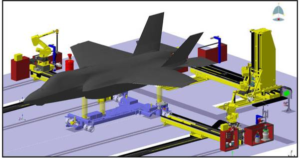
Pic Courtesy: Aerobotix


Aviation is technology intensive. As technologies continue to advance, embracing emerging technologies can help save time, increase safety, and reduce costs.


Some of the technologies that can be useful in aircraft maintenance are:


Artificial Intelligence (AI)


The aviation industry is rapidly changing, and one of the most significant advancements is the implementation of artificial intelligence in maintenance practices. AI has the potential to revolutionise how aircraft are maintained by improving efficiency, reducing costs, and increasing safety.


AI-powered systems can be used for predictive maintenance processes by continuously monitoring aircraft performance and predicting when components need servicing or replacing based on their usage history or environmental conditions.


AI-driven robots are increasingly being employed for inspections and repairs in hard-to-reach areas such as wings or engine nacelles etc.


AI Utilisation and advantages:-


Continue reading “373: TECHNOLOGY AND THE FUTURE OF AIRCRAFT MAINTENANCE”

372: CELEBRATING THREE YEARS OF BLOGGING: AIR MARSHAL’S PERSPECTIVE


Hello Readers,


It has been three years since the blog “Air Marshal’s Perspective” was launched. The idea of the blog is to share the gained knowledge and new learnings.


The tagline of the blog “Candid and to the point / काम की बात”, explains the style adopted. In the times of quick fix (Twenty 20 cricket), everyone wants to know the gist of the issue (as one of my gurus used to say “Just tell me the निचोड़”). The written posts cover the topic in bullet form (two to three pages), with a reading time of 5-7 minutes. The lengthier video bytes have a selective viewing option.


First and foremost thanks to all the readers who read the blog and provide the necessary encouragement to continue blogging.


 This celebratory post has three parts:


    • Present Status.
    • Future trajectory.
    • Genesis of the blog and acknowledgement to Col S Muralidharan.


Present Status.


    • The blog has 370 + posts on a variety of topics (a list of topics covered is attached).


    • The blog keeps featuring in the top twenty Indian blogs under the category of defence and security.


Future Trajectory.


    • The blog is being migrated to a new host domain. The process will start on 01 Sep 23, and a new avatar of the blog will evolve.


    • A new YouTube channel has been launched in conjunction with the blog.


    • A podcasting section is being added (starting with a series of podcasts on IAF life, consisting of interesting anecdotes and occurrences).


Genesis of the Blog and Acknowledgement to Col S Muralidharan.


  • Col S Muralidharan, my Course mate is a digital world wizard with a golden heart.


  • He saw some of my post-retirement interview videos and articles on social media (hosted by engaging organisations) and suggested putting the content on our NDA course website (55 NDA).


  • Murali is doing a wonderful job of administering our course website. Not only has he conceptualised and designed the website, but he has also hosted it on his personal domain space. He is administering and maintaining it (which is an arduous and time-consuming task).


  • He provided the necessary space for the blog and guided me through the entire process.


  • Now also, when faced with any problem or challenge he is the one who deals with it in a proactive manner. A case in point is the recent crash of the blog was resolved by him overnight.


  • I am grateful to him for his encouragement and support. The future plan for the Blog has been made in consultation with him.


Topics Covered (So Far)


Leadership, Motivation and Management
Decision making
Mental toughness
Earning respect
Good  leadership qualities and values
Science of Karma
Good working culture and environment
Listening Skills
Be good feel good
Healthy working environment
importance of Tolerance
Lessons from Buddha
Difference between strength and courage
Lessons from rich and famous
Leadership lessons from Hollywood movies.
Shark in the tank theory of management
Car wheel theory of management
Aya Ram Gaya Ram syndrome – yes men.
Calculated Risks
Practical Leadership and Management
Communication skills and body language
Lessons from Nanak
Being Responsible and Tolerant
Growth Mind-set
Transferable Skills
Advice to the young generation
Motivational Talks
Importance of self-discipline
Words of Wisdom
Convocation Address – lessons from life in IAF
 

China

China’s Brain differently wired
China’s strategic thought
China’s military modernisation
China’s Defence industry
China – Pakistan Collusion
China – Art of deception
China: Kill Pigs List
China: Social score System
China: Active Defence Policy
China’s Joint Strategic support force (JSSF)
China – Joint Strategic Support Force.
Dealing with the Dragon
China’s grey zone operations
China: Flavours of military Reform
China: Pillars of Military Reform
China new diplomacy – drawing red lines in sand.
China – demographic analysis.
China through US Prism
China in South China Sea
China’s Military – Civil Fusion
PLAAF Analysis Strengths and weaknesses
Book review on China Airpower
Dealing with Dragon
Knowing China Better: lie flat and let it rot
Knowing China Better social life and customs
China in IOR
 

Geopolitics

China
Pakistan – National security Policy, Turmoil
Afghanistan
India’s foreign policy
India’s neighbourhood
Quad
Indo – Russian relations
State of Airpower Assets in Afghanistan
Indo – US relations
Afghanistan: Taliban run over
US-China shadow boxing over Taiwan
China spoiling Bhutan’s GNH.
South China sea
Gini Index and implications.
Multilateralism: Flexible Security Cooperation.
China Pak Collusivity
Collective Security
SCO Shanghai Cooperation Organisation: Relevance  and future trajectory
Sri Lanka Economic crisis: lessons and opportunity
Ukraine Conflict
Bangladeshi tango with China
Economic Sanctions
Djibouti: Tug of war between USA and China
The Future of Conflict in Asian Context
India Pakistan China Asian triangle
Indo-Vietnam Cooperation
 

Air Power

Airpower in Grey zone operations
Airpower in no war no peace situation
Air Power & Non-Kinetic warfare
Air Power in Multi-Domain warfare
Airpower in HADR ops and aid to civil authorities
Drone Threat the big picture
Fighter aircraft classifications by generations
Emerging Technologies and Air Defence
Air Power in Modern Day Warfare
S-400 SAM AD System
Combat Aviation
Changing nature of warfare
Air Defence operations
Air power strategies: multiple threats and limited resources
Air power in maritime domain
Air Power and effect-based operations
Air power concepts: Command / control the air, air supremacy, Air superiority & Favourable air situation.
Contemporary airpower thought
How does an aeroplane fly
 

Technology

Hypersonic Weapons
Technology and airpower
Future Trajectory of AI
Artificial intelligence
Future of conflict in new domains (Space, Cyber and deep sea)
Unmanned Platforms and Swarms, Loyal wingman concept
AI and Fake News
AI: Digital twins and Surrogate models
Military application of quantum technology.
 

Cyber Safety and Security

Cyber warfare
Digital addiction
Economic Cyber Frauds
Future of conflict in new domains (Space, Cyber and deep sea)
 

Space

Space operations
Space warfare and organisation in India
Space-based ISR
Future of conflict in new domains (Space, Cyber and deep sea)
 

Indian Air Force

Capability development
Tejas and AMCA project
IAF’s role in HADR and aid to civil and other agencies
Network-centric operations
PLAAF and IAF comparative analysis
IAF Modernisation
Balakot Operations
Maritime air operations in future
Rafale induction and capability enhancement
S-400 Induction
Fire Power Demo: Ex Vayu Shakti
IAF fighter strength drawdown and mitigation plan
IAF Strategies: past present and future.
Life in IAF
IAF multi-national exercises
Journey through IAF
 

War and Warfare

Types of war
Decoys and deception
Afghanistan Air Assets
Future Wars
warfare
Grey Zone Warfare
Classification of warfare into generations (Russian Thoughts)
Domains of warfare
C4ISR
Military Balance in the region
Ukraine War: Air Power aspects, a case of dog and the bone, Air superiority aspects, decoding Ukraine war. Lessons.
Operational Logistics
Lesser known facts about 1971the  War
Review of book on 1962 war
Review of the book on the 1965 war
India’s two-front challenge
Douhet theories
Duration of Conflict
Jasjit Singh on Airpower
Galwan standoff
Asymmetric Threat
Nuclear aspects revisited
Accelerating the Paradigm Shift
National Security / Military Strategy
Urgent Need for National Security Policy
Multilateralism: Relevance and changes
National Security Strategy
Integrated deterrence
 

Military

Military diplomacy
Military spending: trends and analysis.
Collusive threat and Deterrence: Air and Space Aspects
Integrated Capability Development.
Joint war game training systems
Fighter Pilot: Traits
Agni veer and Agnipath / Tour of duty / making best of the scheme
Andaman and Nicobar Command and Islands
Joint Operations and Joint man ship
 

Higher Defence Organisation

Department of military affairs
Theaterisation
Air defence command
Civil-military fusion
Reorganisation of HDO in India
 

Flight Safety

Golden rules of safety
Importance of SOPs
A proactive approach to safety
Damage due to Bird Hits and Foreign Objects
Safety and aviation
Good safety Culture
Safety aspects of short landings.
 

Defence Industry

Indigenous defence industry
HAL and DPSUs
Role of the private sector in defence production
Arms Transfer to Afghanistan
Defence Budget issues
Atmanirbharta
Exportability of LCA and Brahmos combined package
IAF and indigenisation
Indian Initiatives to promote self-reliance
Tejas export options
Russia – India Defence contracts past, present and future.
Aero India 2021 & 2023
Arms trade: Trends and Concerns
Arms trade: flow Vis-a-Vis hot spots
Decoding US presence at Aero India 2023
 

India

Understanding Manipur Dynamics
Meghalaya Dynamics
 

Book Reviews and Endorsements

1962 Border War Sino-India: Territorial Dispute and Beyond by Ismail Vergasseri
The Politics of South China Sea Disputes By Nehginpao Kipgen
1965 A Western Sunrise: India’s War With Pakistan By Shiv Kunal Verma
The Game Behind Saffron Terror by Kanwar Khatana
Peer  Review-  ” China-The Rising Aerospace Power: Implications for India”
Book Endorsement – “Greatest Air Aces of all time” by Air Marshal Anil Chopra
Book Endorsement – The 1971 Indo-Pak Air War: Reflections and Projections
 

Life Stories

My tryst with HT-2 aircraft: The day god flew with me
The day I flew my dad’s car
Malse Lake: Tale of two course mates
Flying Tales

Please Note: There are no hyperlinks to these topics on this post. However, search option on the blog can be used to access them.


Suggestions and value additions are most welcome


For regular updates, please register here

Subscribe

References and credits

To all the online sites and channels.

Disclaimer:

Information and data included in the blog are for educational & non-commercial purposes only and have been carefully adapted, excerpted, or edited from sources deemed reliable and accurate. All copyrighted material belongs to respective owners and is provided only for purposes of wider dissemination.

371: BANGLADESHI TANGO WITH CHINA


Pic Courtesy: Internet


Over the past five years, a significant improvement in areas of economic and defence cooperation has been observed between Bangladesh and China.


China has been following the policy of generous economic assistance, gaining considerable support within Bangladesh, both politically and among the general public.


Bangladesh is tending to become more authoritarian in recent times. China’s unwavering support for the government has also played a pivotal role in fostering this alignment. On the other hand emphasis on democratic values by the USA has strained their relations to some extent.


Deepening Economic Cooperation


Trade. Since 2017, Bangladesh has deepened its engagement with China. China has become Bangladesh’s largest trading partner.


Infrastructure. China has already invested around USD $9.75 billion in transportation projects in Bangladesh (including ongoing initiatives such as the Padma Bridge Rail Link, Bangabandhu Tunnel, and Dasher Kandi Sewerage Treatment Plant, etc).


FDI. China has also emerged as the largest source of foreign direct investment (FDI) in Bangladesh. It has also ranked as the top foreign investor in Bangladesh in 2022, with 104 investors operating in eight export-processing zones.


Duty-Free Access. From July 2020, China has granted duty-free access to 97 per cent (later increased further) of Bangladeshi products entering its market. This proved to be a significant development in bilateral trade relations.


Stronger Defence Ties


Arms Import. Bangladesh’s military partnership with China has also grown significantly and it has become China’s second-largest arms customer, after Pakistan.


Defence Cooperation. Defence cooperation between the two countries also includes military personnel training in China and collaboration in defence production.


Naval Capability Enhancement. In 2016, Bangladesh acquired submarines from China. In March 2023, Bangladesh’s Prime Minister unveiled the country’s submarine base (Constructed by China), named BNS Sheikh Hasina, in Cox’s Bazar. The facility has the capacity to accommodate six submarines and several warships. Currently, two Chinese-made submarines are stationed at the base, representing a significant development in Bangladesh’s naval capabilities.


Air Force Contract. China has recently signed a contract to supply 23 Hongdu K-8W intermediate training jets to the Bangladesh Air Force, further bolstering their military cooperation.


Geopolitical Aspects


Tug of war. In the post-COVID period and during the Russia-Ukraine war, geopolitical tension in the Indo-Pacific has also increased. Both China and the United States want Bangladesh in their camp.


Push and Pull. The United States had invited Bangladesh to join its Indo-Pacific Strategy, as a partner in the Indo-Pacific region. In response, China had warned that Bangladesh’s relations with China would be damaged if it joins the Quad, while also seeking Bangladesh’s participation in its Global Development Initiative and Global Security Initiative.


Strains. Bangladesh’s shift towards China, coupled with concerns over its dismissal of democratic values and human rights, has strained its relationship with the United States.


Drifting Apart. The international community has criticized the conduct of the 2014 and 2018 elections under the Awami League government. In response to human rights violations, the United States has imposed sanctions and implemented visa restrictions on individuals undermining democratic processes. Exclusion from the Biden Democracy Summit indicates a change in U.S. policy towards Bangladesh.


Pains and Gains. While the United States distances itself from the Awami League government, China is extending financial support and strengthening ties with Bangladesh.


Russian Angle. Russia is with China to counter the US influence in Bangladesh. Bangladesh and Russia have reached an agreement to use the Chinese yuan for payment in a nuclear power plant project (objected to by the USA).


Rohingya Crisis. The Rohingya crisis in Bangladesh poses a significant challenge to China’s geopolitical interests in the region. A peaceful resolution to this crisis, led by China, could further solidify its influence and foothold in Bangladesh. On the other hand, the United States has also taken steps to address the crisis, with the likelihood of an increase in its presence and influence in Bangladesh. The resolution of the Rohingya crisis holds implications for the geopolitical dynamics in the region, impacting the interests of both China and the United States.


Analytical Implications.


All key stakeholders in the Indo-Pacific such as the United States, China, Russia, Japan, and India are major development partners for Bangladesh.


Bangladesh’s shift towards China strained relations with the United States, and interests from India and Russia highlight the complex geo-political dynamics.


The choices made by Bangladesh in its alliances will have significant implications for its development and security. It will also have a far-reaching effect on the geopolitical dynamics of the region.


Through cooperation with Bangladesh, Beijing is also expanding its footprint in the Indo-Pacific.


Bangladesh’s increasing military partnership with China is encouraging anti-India sentiment in Bangladesh and will also put pressure on India.


Learning from Chinese engagement and its adverse effects, on other countries, Bangladesh will have to play with fire with caution.


Bottom Line

India should not lose Bangladesh to China (like Nepal).


Question

Are we enough in this regard?


Suggestions and value additions are most welcome


For regular updates, please register here

Subscribe

References and credits

To all the online sites and channels.

China in south Asia:  Bangladesh tilting towards China by Shafi Mostafa on Southy Asian Voices.

Disclaimer:

Information and data included in the blog are for educational & non-commercial purposes only and have been carefully adapted, excerpted, or edited from sources deemed reliable and accurate. All copyrighted material belongs to respective owners and is provided only for purposes of wider dissemination.

English हिंदी