
Pic courtesy Net
My Article published on The EurasianTimes website on 21 Nov 24
Pic courtesy Net
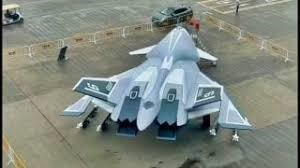
At the 2024 Zhuhai Airshow, China made a significant leap forward in its military aerospace capabilities by unveiling a prototype of its sixth-generation fighter jet, “Baidi B-Type,” also known as the “White Emperor.” This advanced fighter is part of China’s Project Nantiamen, a research initiative to develop next-generation aviation technologies. The unveiling of this aircraft highlights China’s commitment to staying at the forefront of aerospace innovation, positioning itself to compete with global leaders in the field.
Project Nantiamen. Project Nantianmen is an advanced Chinese aerospace initiative responsible for developing the “White Emperor,” a conceptual sixth-generation fighter aircraft. The project, overseen by the state-owned Aviation Industry Corporation of China (AVIC), aims to push the boundaries of aviation technology. Unveiled as a mockup at the 2024 Zhuhai Airshow, the White Emperor has been described as an “integrated space-air fighter” with potential capabilities to operate in Earth’s atmosphere and beyond.
White Emperor: Design Features.
While many details remain speculative due to the project’s classified nature, images and mock-ups at the Zhuhai Airshow emphasise sleek, angular designs that blend modern stealth with futuristic elements. The design of the White Emperor claims to incorporate several advanced features that aim to set it apart from existing aircraft.
Integrated Space-Air Operations. The White Emperor is described as an “integrated space-air fighter,” indicating an ambition to function in atmospheric and near-space environments. This includes potential space capabilities like engaging satellites or other orbital assets. Its design may incorporate propulsion and structural features suited for operating at extreme altitudes, though these capabilities remain unverified.
AI and Data Fusion Technologies. The White Emperor is claimed to be a dual-role aircraft designed for air superiority and strike missions. The inclusion of artificial intelligence (AI) and data fusion technologies indicates its future role as a networked combat system, integrating seamlessly with unmanned systems. This would allow the aircraft to process and disseminate real-time information on the battlefield, increasing situational awareness and enhancing combat effectiveness.
Stealth and Aerodynamics. The fighter has advanced stealth capabilities, including reduced radar cross-sections and infrared signatures. The cockpit design minimises reflective surfaces, a common feature in next-generation stealth aircraft. The design includes canards, which are debated for their potential impact on stealth. While they enhance manoeuvrability, they might increase radar detectability, raising questions about the trade-offs in the design.
Payload and Armament. Its design maximises internal space for advanced munitions, suggesting it could carry a diverse range of air-to-ground weapons. The White Emperor reportedly features expanded internal bays capable of carrying larger and heavier munitions, allowing it to fulfil multi-role missions (air-to-air and air-to-ground) while maintaining stealth. The emphasis on heavier payloads suggests adaptability for precision strikes, indicating a focus on versatility and operational readiness.
Flexibility and Versatility. Regarding operational flexibility, the fighter’s modular construction is intended to streamline maintenance, ensuring it remains battle-ready for quick deployments. The fighter’s landing gear is designed for operation on rough runways, unusual for stealth aircraft that traditionally require specialised infrastructure. This feature enhances its deployment flexibility in diverse environments.
Avionics and Systems. The aircraft’s design also incorporates significant upgrades to avionics and cockpit ergonomics, enhancing the pilot’s operational experience and improving the aircraft’s maintenance cycle. Enhancements to the fighter’s avionics likely include AI-assisted systems for situational awareness and target acquisition. These features are designed to streamline operations and reduce pilot workload, a hallmark of sixth-generation designs. Improvements focus on protecting the pilot from infrared and laser targeting systems and enhancing operational efficiency.
Speculative Features. The claim of space-operational capability introduces technical challenges, including propulsion systems capable of transitioning between atmospheric and space flight and robust life-support systems. China’s history of challenges with advanced jet engines (e.g., those used in the J-20) casts doubt on its ability to achieve these ambitious design goals soon.
Strategic Implications and Global Context
The strategic implications of China’s Nantianmen Project and its White Emperor fighter highlight significant global military power dynamics shifts, particularly in aerospace technology and space militarisation. Introducing the Baidi B-Type underscores China’s growing ambition to challenge global powers like the United States and Russia in aerospace. With tensions between Washington and Beijing continuing to escalate, particularly in the context of military competition in the Pacific, developing such an advanced fighter is a clear signal of China’s intention to gain air superiority in traditional air combat and the new frontier of space.
Militarisation of Space. The White Emperor’s reported “space-air integration” capability aligns with China’s broader efforts to dominate near-Earth space, potentially enabling the disruption of enemy satellites and GPS systems. This could alter future battlefronts, where controlling space-based assets becomes critical for communications, navigation, and surveillance.
Global Competition. The U.S. and China are racing to perfect technologies such as hypersonic flight, space access, and integrated network-centric warfare, with each country aiming to deploy its next-generation fighters by the 2030s. This unveiling underscores China’s efforts to challenge the United States and European nations, which are also heavily invested in sixth-generation fighter technology. For instance, the U.S. is advancing its Next Generation Air Dominance (NGAD) program, while the European Union is working on the Future Combat Air System (FCAS) with its allies. China’s push into this domain is part of a broader trend to modernise its military and assert technological superiority. The White Emperor will likely be vital to the People’s Liberation Army Air Force’s (PLAAF) future lineup. This move could accelerate development timelines for next-generation fighters globally.
A shift in Power Dynamics in the Indo-Pacific. The White Emperor, alongside China’s other advanced fighters like the Chengdu J-20 and Shenyang J-35, positions the People’s Liberation Army Air Force (PLAAF) to assert dominance in the Indo-Pacific. This could impact the balance of power, particularly concerning Taiwan, the South China Sea, and China’s broader strategic ambitions.
Innovation in Aerospace and Domestic Self-Reliance. Project Nantianmen reflects China’s drive for self-sufficiency in high-tech military sectors, reducing reliance on foreign suppliers. This initiative demonstrates China’s ambition to lead in aerospace innovation, potentially influencing the global defence industry’s focus and technological benchmarks.
Geopolitical Messaging. The White Emperor’s unveiling serves as a strategic message to global powers about China’s readiness to compete in advanced military technology. The timing, coinciding with the 75th anniversary of the PLAAF, underscores its importance as a symbol of China’s rising military prowess and technological capabilities.
Implications for India. The Baidi B-Type, alongside other advanced Chinese military assets, would enhance the People’s Liberation Army Air Force’s (PLAAF) capabilities, posing a challenge to India in the region. With potential deployment along contentious areas like the Line of Actual Control (LAC), these advanced jets may provide China with enhanced reconnaissance and strike capabilities, pressuring India’s defensive postures. India must accelerate its development or acquisition of sixth-generation technologies to maintain a competitive edge. This highlights the urgency for India to further its Indigenous defence programs, such as the Advanced Medium Combat Aircraft (AMCA).
Despite the White Emperor’s excitement, analysts remain cautious about the aircraft’s true capabilities and future development. The model on display at the airshow is still considered a concept, and its operational status remains unconfirmed. The prototype’s potential remains speculative, and it is unclear how long it will take for such advanced technologies to be fully realised and integrated into the Chinese military. Whether the White Emperor will live up to its promises in the coming years will be critical in determining China’s future role in global military affairs.
While the Baidi B-Type remains a concept at this stage, it’s unveiling at the Zhuhai Airshow showcases China’s rapid advancements in military technology and its vision for the future of warfare. As global defence analysts continue to monitor the development of both U.S. and Chinese sixth-generation fighters, the competition is set to shape the future balance of power in both the air and space domains.
Your valuable comments are most welcome
For regular updates, please register your email here:-
References and credits
To all the online sites and channels.
Disclaimer:
Information and data included in the blog are for educational & non-commercial purposes only and have been carefully adapted, excerpted, or edited from reliable and accurate sources. All copyrighted material belongs to respective owners and is provided only for wider dissemination.