579: INDIA’S JOURNEY IN FIGHTER AIRCRAFT DESIGN & MANUFACTURE: CHALLENGES AND SUCCESSES


Pic Courtesy Net


My Article published on the Chanakya Forum Website on 10 Jan 25


India’s fighter aircraft production journey reflects a blend of significant achievements and persistent challenges. The licensed production of platforms like the Mig-21, Sukhoi Su-30MKI and SEPECAT Jaguar has strengthened the Indian Air Force (IAF) while providing invaluable experience in manufacturing and technology integration. Significant success includes the past development of the Indigenous HF-24 Marut and the recent Tejas aircraft with state-of-the-art avionics, composite materials, and a delta-wing design. Tejas has become a symbol of India’s aerospace ambitions. Additionally, the Advanced Medium Combat Aircraft (AMCA) project, aimed at producing a fifth-generation stealth fighter, underscores India’s aspirations to join global defence leaders. However, India’s fighter production has faced notable failures. Early efforts, such as the HF-24 Marut, were limited by underpowered engines and technological constraints. Delays in indigenous projects like Tejas Mk2 and AMCA and dependency on imported engines and critical systems have hampered timelines. Additionally, quality control and production scalability remain areas of concern. Despite these challenges, initiatives like “Make in India”, a government initiative to encourage manufacturing in India, and increased private sector participation foster a robust defence manufacturing ecosystem. By addressing these issues, India has the potential to emerge as a global player in fighter aircraft production and exports.


Journey So Far


India’s journey in fighter aircraft production, spanning several decades, began in the post-independence era. The timeline of this journey is marked by key milestones, from the initial reliance on imports to the transition towards licensed production and indigenous development. Below is a chronological overview of India’s significant achievements and persistent challenges in fighter aircraft production:-


In the 1950s, India’s first steps in aircraft production were through licensed manufacturing agreements with foreign companies. The De Havilland Vampire, a British jet fighter, was the first jet aircraft inducted into the Indian Air Force (IAF). Hindustan Aeronautics Limited (HAL) assembled the Vampire under license, marking India’s entry into jet aircraft production. In addition, HAL produced the Hawker Hunter under the UK’s license. The Hunter served as a versatile fighter-bomber during the 1965 and 1971 wars. HAL also produced Folland Gnat under license. Gnat was known as the “Sabre Slayer” for its success against the Pakistani Air Force in 1965. India later developed an improved version called Ajeet in the 1970s.


During the 1970s–1980s, India began exploring indigenous fighter aircraft development while continuing licensed production. The HF-24 Marut was India’s first indigenously developed jet fighter. Although it had limited operational success due to underpowered engines, it was a milestone in India’s aerospace development. During the same period, India entered into a series of agreements with the Soviet Union to produce MiG-21 fighters under license. HAL manufactured over 600 MiG-21 aircraft, which became the backbone of the IAF for decades. These projects helped HAL acquire critical knowledge in jet manufacturing.


In the 1990s, India procured the Anglo-French SEPECAT Jaguar for deep strike roles and began producing it under license at HAL. This period saw India modernise its air force with more advanced fighters. The Mirage 2000, a French multirole fighter, was inducted to address India’s capability gaps. While HAL did not produce this aircraft, it supported its maintenance and upgrades. India signed a deal with Russia for the licensed production of the Su-30MKI, a highly advanced multirole fighter. HAL has produced over 270 Su-30MKIs, which remain a critical component of the IAF.


In the last two decades, India’s focus has shifted towards indigenous fighter aircraft production, particularly with the Light Combat Aircraft (LCA) program. Designed by the Aeronautical Development Agency (ADA) and produced by HAL, the Tejas program marks a significant milestone in India’s return to indigenous fighter development. Despite delays, the Tejas program eventually achieved operational clearance, with the Mk1 variant in service and Mk1A and Mk2 under development. Work is underway to develop Advanced Medium Combat Aircraft (AMCA), a fifth-generation fighter under development by DRDO and HAL, aiming to equip the IAF with stealth capabilities.


Leapfrog Strategy


India’s leapfrog strategy for fighter aircraft development and production is a strategic imperative, aiming to bypass incremental progress and achieve advanced capabilities in a shorter timeframe. It focuses on cutting-edge technologies rather than following a linear development path. The need for strategic autonomy and rapid modernisation of the Indian Air Force drives this approach. India’s leapfrog strategy has shown promise but faces mixed results. The strategy tries to leverage foreign collaboration for critical technologies, private sector involvement, and government initiatives like “Make in India.” On the one hand, developing advanced platforms like the HAL Tejas demonstrates progress. Despite initial delays, the Tejas program has evolved into a modern, capable aircraft. However, challenges persist, raising questions about its effectiveness. Persistent project delays, reliance on imported engines and key technologies, and research and development capabilities gaps have hindered progress. Furthermore, scaling up production to meet the Indian Air Force’s demands remains challenging. The approach’s success depends on addressing these systemic issues, accelerating timelines, and building a stronger domestic defence ecosystem. It’s a work in progress with tangible but incomplete results.


Development and Production Ecosystem


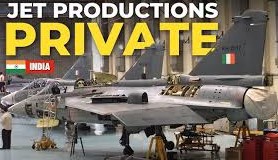
India’s fighter aircraft development and production ecosystem is a collaborative effort, combining users, public and private sector research and development and manufacturing agencies, and government-led initiatives to achieve self-reliance and reduce import dependency. Hindustan Aeronautics Limited (HAL) and the Defence Research and Development Organisation (DRDO) are at the forefront of this ecosystem, driving R&D and production. However, the private sector, with companies like Tata Advanced Systems, Larsen & Toubro, and Adani Defence, is increasingly pivotal in manufacturing components, subsystems, and assemblies. Government initiatives such as “Make in India” and establishing defence industrial corridors in Tamil Nadu and Uttar Pradesh have further bolstered the ecosystem by encouraging innovation, attracting foreign investment, and creating a favourable environment for defence manufacturing. These corridors are designed to streamline production and reduce costs, making India a competitive global player. Despite these advancements, challenges remain. Nonetheless, the ecosystem is evolving steadily with sustained policy support, greater private sector involvement, and a focus on innovation.


Challenges


Fighter aircraft production in India faces technical, financial, operational, and policy challenges. Addressing these challenges is crucial to achieving self-reliance in defence manufacturing.


Designing and producing 5th-generation fighters involves cutting-edge technology in stealth, advanced materials, and electronics, where India is still catching up. Critical technologies are primarily imported. India’s indigenous engine development program, such as the Kaveri engine, has faced setbacks, forcing reliance on foreign engines like the General Electric F404 and F414 for the Tejas. A significant portion of critical components, including avionics, engines, and weapons systems, are imported, which increases costs and reduces self-reliance. Dependence on foreign suppliers creates vulnerabilities in geopolitical tensions, as witnessed by delays in acquiring components during global conflicts or supply chain disruptions.


The aerospace industry ecosystem in India, including tier-2 and tier-3 suppliers, is underdeveloped compared to global standards. There are limited domestic facilities for high-end research, testing, and simulation. HAL dominates military aircraft production, leaving limited scope for private sector participation, which could otherwise bring efficiency, innovation, and competition.


Programs like the Light Combat Aircraft (LCA) Tejas have taken decades to move from concept to operational deployment, leading to the obsolescence of certain features. Delays often lead to significant cost overruns, which put additional pressure on defence budgets and make indigenous programs less competitive than foreign options. Excessive bureaucracy usually slows down India’s defence procurement and manufacturing processes, causing delays in decision-making and execution. Fighter aircraft production requires massive investments in R&D, infrastructure, and production lines, straining defence budgets. Adequate budget needs to be allocated for these.


Designing and manufacturing advanced fighter jets require highly specialised skills, which are still developing in India. Many skilled engineers and scientists prefer opportunities abroad due to better resources and working conditions. Issues with consistency and quality control in manufacturing have occasionally plagued indigenous projects. Indigenous aircraft often face concerns regarding reliability and maintenance, which can impact their adoption by the armed forces and export potential.


Competing in the international market is challenging, as buyers often prefer aircraft from established manufacturers with long track records. Indian indigenous fighters compete against proven and readily available foreign options, which usually have superior capabilities. Due to intense competition, foreign collaborators often hesitate to share cutting-edge technologies, limiting the depth of technology transfer agreements. India’s defence offset policy, aimed at boosting domestic production through foreign collaborations, has seen mixed success.


Way Ahead


India has made significant strides in indigenous fighter aircraft production but faces challenges in achieving global competitiveness and self-reliance. The future of fighter aircraft production in India lies in addressing these challenges with a focused, multi-pronged strategy.


Leverage lessons learned from the Tejas program to avoid delays and cost overruns. Support and prioritise the Advanced Medium Combat Aircraft (AMCA) program, ensuring adequate funding, streamlined processes, and timely execution. Focus on Core Technologies. Accelerate the development of indigenous critical technologies like jet engines (e.g., Kaveri engine), AESA radars, stealth coatings, and advanced avionics.


Build a Robust Defence Manufacturing Ecosystem. Strengthen Indigenous R&D and technology development. Encourage tier-2 and tier-3 suppliers to build capabilities in aerospace components, materials, and electronics to develop reliable supply chains. Provide financial incentives and technical support to MSMEs involved in defence manufacturing. Promote private sector participation. Encourage private players to take on larger roles in aircraft production, from components to complete systems. Establish dedicated aerospace clusters in states to promote innovation and manufacturing at scale.


Enhancing Policy Frameworks and Governance. Simplify bureaucratic procedures to streamline the approval process for defence projects, ensuring faster approvals and reduced project timelines. Revise offset Policies to maximise technology transfer and industrial participation from foreign firms.


Collaborate with global aerospace firms to gain access to advanced research while ensuring knowledge transfer. Expand international collaborations and technology partnerships by pursuing joint development programs with global defence manufacturers, ensuring equitable technology and intellectual property sharing. Collaborate with friendly nations to co-develop fighter platforms suited to their requirements, such as light combat aircraft for smaller countries.


Provide diplomatic and financial support for promoting Indian fighter aircraft to foreign buyers, particularly in Asia, Africa, and South America. Ensure Indian platforms meet international quality and reliability standards to boost global confidence.


Leverage emerging technologies like AI and machine learning. Integrate AI for autonomous systems, combat decision-making, and predictive maintenance in fighter aircraft. Invest in hypersonic platforms to prepare for next-generation warfare. Adopt advanced manufacturing techniques like 3D printing and digital twins to reduce costs and improve precision.


Collaborate with academic institutions to create specialised programs in aerospace engineering and design. Establish dedicated training centers for skill development in aircraft production. Offer competitive incentives and research opportunities to prevent brain drain to other countries.


Establish a unified long-term vision for the users and defence manufacturing sectors to align production capabilities with future requirements. Ensure the production ecosystem is scalable to meet both domestic and export demands. Strengthen indigenous MRO facilities to reduce dependence on foreign firms to service advanced platforms.


Conclusion


India’s fighter aircraft production is at a critical juncture, with opportunities to emerge as a global aerospace hub. The way forward requires a balanced approach, combining indigenous innovation with strategic international collaborations. By fostering a strong industrial base, streamlining policies, and embracing emerging technologies, India can achieve its vision of self-reliance while contributing significantly to global defence markets.


Please do Comment.

1924
Default rating

Please give a thumbs up if you  like The Post?


Link to the article on the website:-

INDIA’S JOURNEY IN FIGHTER AIRCRAFT DESIGN & MANUFACTURE: CHALLENGES AND SUCCESSES

For regular updates, please register your email here:-

Subscribe


References and credits

To all the online sites and channels.

References:-

  1. “HAL and India’s Aerospace Journey” – HAL Publication. Documents HAL’s contributions to fighter aircraft production, including licensed and indigenous projects.
  1. Stephen P. Cohen and Sunil Dasgupta, “Arming without Aiming: India’s Military Modernisation”. Discusses India’s strategic approach to defence modernisation and its implications for Indigenous aircraft development.
  1. “Leapfrogging to Fifth-Generation Fighters: India’s AMCA Project”, Defence and Technology Review. Explains India’s leapfrog strategy in developing fifth-generation fighter aircraft.
  1. “Building India’s Aerospace Ecosystem”, Brookings India. It focuses on the opportunities and challenges of creating a self-reliant aerospace industry.
  1. Laxman Kumar Behera, “India’s Defence Industrial Base: The Role of Defence PSUs and Private Sector”. Explores the role of state-owned enterprises like HAL and private industry in defence manufacturing. Highlights challenges in India’s defence production ecosystem.
  1. “Private Sector Participation in India’s Defence Production”, Vivekananda International Foundation. Explores the growing role of private companies in defence manufacturing.
  1. “India’s Defence Industrial Corridors: A Game-Changer?” The Hindu. Evaluate the impact of Tamil Nadu and Uttar Pradesh defence corridors on production capabilities.
  1. “Make in India: Defence Manufacturing Sector”, Government of India. Overview of policies promoting Indigenous fighter aircraft production and other defence systems.
  1. Kanti Bajpai, Harsh Pant, “India’s Defence and Security: Challenges and Strategies”. Provides insights into India’s defence production strategies, including fighter aircraft, and evaluates systemic challenges.
  1. “Challenges in India’s Fighter Aircraft Development”, LiveMint. Discusses delays, quality control issues, and reliance on imports.
  1. “Collaborations in Defence Manufacturing”, FICCI defence and Aerospace Division. Industry perspective on joint ventures and foreign collaborations in fighter aircraft development.
  1. “Technology Transfers in Defence: A Case Study of India’s Fighter Jet Programs”, Stockholm International Peace Research Institute (SIPRI). Examines India’s reliance on foreign technology and the scope for indigenisation.
  1. “India’s Fighter Jet Ambitions: Lessons from Global Aerospace,” RAND Corporation. Compares India’s efforts with global benchmarks, offering insights into overcoming systemic challenges.
  1. “India’s Defense Industrial Complex: Time for Reform”, Observer Research Foundation. Analyses India’s defence manufacturing ecosystem and recommendations for improvement.

Disclaimer:

Information and data included in the blog are for educational & non-commercial purposes only and have been carefully adapted, excerpted, or edited from reliable and accurate sources. All copyrighted material belongs to respective owners and is provided only for wider dissemination.

576: WINGS OF THE ARMY: THE ROLE OF THE AIR ARM IN GROUND OPERATIONS


My article published in the News Analytics Journal in the Jan 25 issue.


The air arm of ground forces plays a pivotal role in modern military operations, blending speed, precision, and versatility to support soldiers on the battlefield. This specialised component acts as the army’s eyes, ears, and extended arms in the skies, transforming the dynamics of ground warfare.


Roles and Functions.

One of the air arm’s primary functions is reconnaissance and surveillance. Aerial platforms, including helicopters and unmanned aerial vehicles (UAVs), scout enemy positions, map terrain, and monitor troop movements, providing commanders with critical, real-time intelligence. This enables informed decision-making and swift strategy adjustment.


Battlefield air support (BAS) is another indispensable function. Attack helicopters, like the AH-64 Apache, deliver devastating firepower to suppress enemy forces and protect ground troops during engagements. The air arm’s ability to provide precision strikes ensures minimal collateral damage while maximising effectiveness against enemy targets.


Logistical support is equally vital. Transport helicopters, such as the CH-47 Chinook, and utility aircraft ensure rapid troop deployment, evacuation of casualties, and delivery of supplies to remote or contested areas. This mobility is particularly crucial in fast-moving or rugged battle environments.


Additionally, the air arm facilitates aerial assault operations, allowing soldiers to penetrate deep behind enemy lines. Airborne units, often deployed via helicopters or paratroopers, execute high-risk missions quickly.


Evolution of the Army Aviation Corps: From Observation Balloons to Modern-Day UAVs


The Army Aviation Corps has transformed remarkably, from humble beginnings with observation balloons to the sophisticated use of unmanned aerial vehicles (UAVs) in modern warfare. The journey began in the late 19th century when armies employed tethered observation balloons for reconnaissance. These early platforms provided a bird’s-eye view of enemy positions, revolutionising battlefield intelligence during conflicts like the American Civil War. Though rudimentary, they laid the groundwork for integrating air assets into military strategy.


The advent of fixed-wing aircraft during World War I marked the next leap. Early planes were primarily used for reconnaissance, but their roles expanded to include artillery spotting, aerial photography, and limited combat capabilities. By World War II, technological advances saw the introduction of transport planes and gliders, enabling airborne troops and rapid logistics support. The post-war era witnessed the rise of helicopters, which became a defining feature of the Army Aviation Corps. Their ability to hover, land in tight spaces, and provide mobility in rugged terrain revolutionised ground-air coordination.


In recent decades, the focus has shifted to Unmanned Aerial Vehicles (UAVs). These platforms provide real-time surveillance, precision strikes, and electronic warfare capabilities. UAVs represent the pinnacle of automation and efficiency, operating in high-risk environments without endangering human lives.


Air Mobility in Warzones: The Key to Quick Reaction Forces


Air mobility has emerged as a critical enabler for Quick Reaction Forces (QRF) in modern warfare, providing speed, flexibility, and reach in rapidly evolving conflict zones. The ability to deploy troops, equipment, and supplies swiftly via aircraft ensures that military operations can respond effectively to threats or seize opportunities on the battlefield.


Helicopters are at the heart of air mobility in war zones. Aircraft like the UH-60 Black Hawk and CH-47 Chinook enable the rapid transport of soldiers and cargo to areas inaccessible by land due to rugged terrain, enemy activity, or time constraints. Their versatility allows QRFs to respond to emergencies such as ambushes, breakthroughs, or sudden escalations with minimal delay.


Another vital function of air mobility is medical evacuation (MEDEVAC), a role that underscores the life-saving impact of the air arm’s operations. In warzones, helicopters equipped with medical facilities extract wounded personnel from the battlefield, often saving lives by providing care within the critical ‘golden hour.’ Additionally, fixed-wing aircraft contribute to air mobility by transporting larger payloads over longer distances, facilitating the movement of reinforcements, heavy equipment, and critical supplies to support ongoing operations.


Helicopters in Combat: The Backbone of the Army’s Air Arm


Helicopters have revolutionised modern warfare. They serve as the backbone of the army’s air arm and offer unparalleled mobility, versatility, and firepower. Their adaptability allows them to serve in various roles, from swift troop deployments to battlefield air support, ensuring operational success in dynamic combat environments.


Air mobility is one of their most significant contributions, allowing forces to bypass terrain obstacles and reach otherwise inaccessible areas. Their ability to insert and extract units in active combat zones is pivotal for rapid response and maintaining the momentum of operations.


In combat, attack helicopters have redefined battlefield tactics. Armed with precision-guided missiles, rockets, and advanced targeting systems, these helicopters provide close air support by neutralising enemy tanks, vehicles, and fortified positions. Their agility and firepower make them indispensable for suppressing threats and protecting ground forces.


Modern technological advancements have further enhanced combat helicopters’ capabilities. Night vision systems, stealth features, and advanced avionics allow them to operate effectively in diverse conditions, from deserts to dense urban landscapes.


Unmanned Aerial Systems (UAS): Expanding the Army’s Air Arm


Unmanned Aerial Systems (UAS), commonly known as drones, have revolutionised modern warfare, becoming an indispensable part of the army’s air arm. Their ability to operate without a human pilot on board, combined with advanced technology, has significantly expanded the army’s operational capabilities.


One of the most prominent roles of UAS is reconnaissance and surveillance. Equipped with high-resolution cameras and sensors, drones provide real-time intelligence to ground forces. They monitor enemy movements, map terrain, and identify threats, enabling commanders to make informed decisions quickly and accurately. UAS also excel in precision strikes, delivering munitions with remarkable accuracy. Armed drones have become a game-changer in counterterrorism and asymmetric warfare, allowing the army to target adversaries with minimal risk to soldiers and reduced collateral damage.


In addition to combat roles, drones support logistics and resupply missions, particularly in contested or remote areas. Lightweight delivery drones are increasingly used to transport critical supplies like ammunition and medical equipment directly to frontline units. The versatility of UAS extends to communication and electronic warfare. Some drones act as airborne relays, maintaining communication between dispersed units, while others are equipped for electronic jamming or cyber operations.


The armies worldwide are exploring new capabilities as technology advances, including autonomous swarming drones that can overwhelm enemy defences and AI-powered UAS for independent mission execution. These innovations promise to enhance battlefield efficiency further.


Airborne Forces: From Paratroopers to Aerial Assault Units


Airborne forces remain a critical component of military strategy. They have long been a symbol of speed, surprise, and tactical precision in military operations. These elite units, deployed via aircraft, have evolved from traditional paratroopers to versatile aerial assault units capable of executing complex missions in modern warfare.


The origins of airborne forces date back to World War II when paratroopers were first used to disrupt enemy defences by landing behind their lines. Iconic operations like D-Day and the Battle of Arnhem showcased the effectiveness of this approach. Dropped from transport planes, paratroopers brought the element of surprise, cutting off reinforcements and capturing key objectives.


As warfare evolved, so did the role of airborne forces. Modern aerial assault units, often deployed via helicopters, now complement traditional parachute operations. Helicopters like the UH-60 Black Hawk and CH-47 Chinook have transformed these units into highly mobile and adaptable forces. Unlike static parachute drops, helicopters provide precision insertion, allowing soldiers to land precisely where needed, even in hostile or rugged terrain.


Airborne forces excel in executing high-risk missions, such as seizing enemy strongholds, conducting raids, and rescuing hostages. Their ability to deploy rapidly and strike deep behind enemy lines makes them a valuable asset in asymmetric warfare. Advances in technology, such as improved navigation systems and night vision equipment, have further enhanced their effectiveness.


Integrated Air-Ground Operations: A New Era in Combined Arms Tactics


Modern warfare has entered a new era where the integration of air and ground forces is redefining battlefield tactics. Known as integrated air-ground operations, this approach emphasises the seamless coordination of assets in the air and on the ground to achieve strategic objectives with precision and efficiency.


The foundation of this synergy lies in real-time communication and intelligence sharing. Advanced systems enable ground commanders to direct air assets, such as fighter jets, attack helicopters, and drones, to provide battlefield air support (BAS), reconnaissance, and logistical aid. Simultaneously, aerial platforms transmit critical data about enemy positions and terrain, giving ground forces a tactical advantage.


The success of these operations depends on joint planning, extensive training, interoperable equipment, and shared strategic objectives. Integrated air-ground tactics have transformed warfare, ensuring that armies can operate as unified, adaptive forces capable of dominating complex and dynamic battlefields.


Air Arm of the Indian Army


The Air Arm of the Indian Army, officially known as the Army Aviation Corps (AAC), plays a vital role in enhancing the Indian Army’s operational capabilities. It was established in 1986 to provide specialised aviation support to ground forces, operating helicopters and other aircraft to support various military and logistical operations. Over the years, the Army Aviation Corps has become indispensable to the Indian Army’s combat and support operations.


The Indian Army’s aviation capabilities are especially significant given India’s diverse geography, including the Himalayas, dense forests, and vast border regions. The ability to swiftly deploy troops and supplies via air ensures that the army can maintain high operational readiness, even in areas with limited infrastructure.


The future of the Indian Army’s air arm involves integrating advanced technologies, such as UAVs (unmanned aerial vehicles) for surveillance and reconnaissance, next-generation helicopters like the Apache AH-64E attack helicopters, and a fleet of indigenous helicopters.


The Army Aviation Corps remains a key component as India modernises its military forces. It ensures rapid reaction and mobility for ground forces and significantly enhances India’s strategic defence capabilities.


The Future of the Army’s Air Arm: Emerging Technologies and Strategic Challenges


The future of the Army’s air arm is poised for a transformation driven by emerging technologies that promise to redefine the way ground forces conduct operations and engage in warfare. The air arm’s capabilities will expand from autonomous systems to advanced weaponry, bringing new opportunities and strategic challenges for military planners and decision-makers.


One of the most significant technological advancements on the horizon is the growing use of unmanned aerial vehicles (UAVs). These systems offer several advantages, including reduced risk to personnel, long endurance surveillance, and the ability to strike targets with precision. Future UAVs are expected to become more autonomous and capable of performing missions without direct human intervention. This shift could lead to the development of swarming drones, where multiple UAVs operate in unison, overwhelming enemy defences and providing real-time intelligence to ground forces.


Artificial intelligence (AI) will further enhance the operational efficiency of the Army’s air arm. AI-powered drones and helicopters can make real-time decisions based on battlefield data, optimising flight paths, targeting, and coordination with ground forces. This increased automation will allow air assets to act faster and more decisively, potentially reducing the reliance on human operators and increasing battlefield agility.


Another key focus area is the development of next-generation helicopters and vertical lift aircraft. Newer platforms with tilt-rotor design promise to deliver unprecedented speed, range, and agility, enabling faster troop insertion, mobility in complex terrains, and effective response to emerging threats.


Innovation and adaptation will shape the future of the Army’s air arm. As technology evolves, so must the strategies for effectively utilising air assets in combat, humanitarian missions, and national defence. The integration of advanced technologies and the challenges of modern warfare will determine how the air arm continues to shape the outcome of military operations in the years to come.


Conclusion. The air arm is not just a support element but a force multiplier, bridging the gap between land and air operations. Its unmatched ability to provide reconnaissance, firepower, and mobility ensures ground forces maintain their tactical edge, making it an indispensable component of today’s armies. As modern warfare increasingly relies on hybrid strategies, integrating air-ground coordination and joint operations between air forces and ground units continues to be a strategic focus for armies globally. In modern warfare, air and ground forces integration has become increasingly seamless. Advanced communication systems enable real-time coordination, ensuring air assets complement ground manoeuvres effectively. The future of army aviation will likely see further advancements in combat helicopter design, drone warfare, and next-generation vertical lift aircraft to enhance mobility, lethality, and precision in ground operations.


Your valuable comments are most welcome.


1924
Default rating

Please give a thumbs up if you  like The Post?


For regular updates, please register your email here:-

Subscribe


References and credits

To all the online sites and channels.

References:-

    1. Chhina, Rana T.S. The Indian Army: An Illustrated Overview. Centre for Armed Forces Historical Research, 2005.
    1. Singh, Bikramjeet. “Army Aviation Corps: A Key Element in India’s Operational Strategy.” Indian Defence Review, Vol. 30, Issue 4, 2020.
    1. Joshi, Rajesh. “Transforming Army Aviation: Challenges and Opportunities.” Force Magazine, June 2019.
    1. Nambiar, A.G. “Indian Army Aviation: The Role and Future Prospects.” South Asia Defence and Strategic Review, Vol. 12, Issue 2, 2021.
    1. Indian Army Official Website. “Army Aviation Corps.” https://indianarmy.nic.in.
    1. Press Information Bureau (PIB). “Strengthening Army Aviation with Indigenous Platforms.” Government of India, 2023.
    1. Bharat Rakshak. “History and Evolution of Indian Army Aviation Corps.” http://bharat-rakshak.com.
    1. Pubby, Manu. “Army Aviation Corps Modernization: Induction of ALH Dhruv and Rudra.” Economic Times, 2022.

9. Chant, Christopher. Warfare and the Third Dimension: Aircraft, Rockets, and Missiles. Hamlyn, 1990.

    1. Zaloga, Steven J. Airborne: A Combat History of American Airborne Forces. Stackpole Books, 2010.

11 Singer, P.W. Wired for War: The Robotics Revolution and Conflict in the 21st Century. Penguin Press, 2009.

    1. Gertler, Jeremiah. U.S. Unmanned Aerial Systems. Congressional Research Service, 2012.
    1. Freedman, Lawrence. The Future of War: A History. Public Affairs, 2017.
    1. Kallenborn, Zachary. “The Era of Drone Swarms: What to Expect and How to Counter.” The Modern War Institute at West Point, 2020.

Disclaimer:

Information and data included in the blog are for educational & non-commercial purposes only and have been carefully adapted, excerpted, or edited from reliable and accurate sources. All copyrighted material belongs to respective owners and is provided only for wider dissemination.


575: BOOK REVIEW: 7 SECONDS TO DIE


BOOK REVIEW: 7 SECONDS TO DIE


BY JOHN C. ANTAL


Review by: Air Marshal Anil Khosla (Retd) PVSM, AVSM, VM

Former Vice Chief of Air Staff, Indian Air Force.


John C. Antal’s 7 Seconds to Die offers a compelling and detailed analysis of the Second Nagorno-Karabakh War (2020), a conflict that showcased the decisive role of modern military technologies, particularly drones and artificial intelligence. This book transcends being a mere war chronicle; it is a profound exploration of how technological advancements reshape 21st-century military strategies. Antal’s approach, combining vivid storytelling with rigorous military analysis, makes this work indispensable for military professionals, strategists, and anyone interested in the future of warfare.


The Second Nagorno-Karabakh War erupted between Armenia and Azerbaijan over the disputed region of Nagorno-Karabakh. Though deeply rooted in historical and ethnic tensions, this war became a showcase for implementing cutting-edge technologies in combat. Azerbaijan, backed by Turkish military technology and Israeli-made drones, demonstrated a level of precision, speed, and lethality that overwhelmed Armenian forces. Antal contextualises the war within the broader framework of global military trends, emphasising that this was not just a regional conflict but a harbinger of future warfare. The title, 7 Seconds to Die, refers to the average time Armenian soldiers had to react once a drone detected their position. This chilling statistic underscores the deadly efficiency of unmanned systems.


Antal positions the Second Nagorno-Karabakh War as a critical case study in the ongoing Revolution in Military Affairs. He argues that integrating unmanned aerial vehicles (UAVs), loitering munitions, and advanced surveillance systems signifies a paradigm shift in combat operations. The book methodically details how Azerbaijan utilised these technologies to achieve information dominance, disrupt enemy supply lines, and conduct precision strikes with minimal human risk. Antal’s narrative is filled with examples of this technological edge. For instance, Azerbaijan’s use of Turkish Bayraktar TB2 drones and Israeli Harop loitering munitions not only neutralised Armenian air defences but also demoralised their troops. These systems enabled Azerbaijan to conduct a “kill chain”—identifying, targeting, and neutralising enemies—in seconds.


One of the book’s most striking insights is how technology levelled the playing field between two unevenly matched nations. Despite its superior terrain and entrenched positions, Armenia was unable to counter Azerbaijan’s technological superiority. Antal describes this as a shift from traditional measures of military strength—numbers, firepower, and fortifications—to a new era where speed, data, and adaptability are decisive. The author provides a nuanced analysis of the asymmetry created by drones. He explains that these technologies are not merely force multipliers; they are force disruptors. Traditional tactics, such as the use of trenches, tanks, and static artillery, became liabilities under constant drone surveillance.


Another profound theme in 7 Seconds to Die is the psychological toll of drone warfare. Antal vividly describes how Armenian soldiers, constantly under threat from an invisible and omnipresent enemy, experienced fear, confusion, and helplessness. This psychological dimension, he argues, is as significant as the physical destruction caused by drones. Antal also explores the implications of this psychological warfare for global militaries. The fear of being watched and targeted in real-time may fundamentally change the nature of combat, making it more about outwitting algorithms and less about confrontation.


Antal’s analysis extends beyond the Second Nagorno-Karabakh War to extract lessons for militaries worldwide. He emphasises the need for nations to adapt to this new reality, where traditional doctrines may no longer apply. His key recommendations include investing in counter-drone technologies, training soldiers to operate in environments dominated by UAVs, and developing doctrines prioritising speed, flexibility, and decentralisation. The book also raises critical ethical and strategic questions. How do nations balance using autonomous systems with the principles of humanitarian law? What happens when such technologies fall into the hands of non-state actors or rogue states? These are challenges that the global military community must address as the era of drone warfare matures.


Antal’s writing is both accessible and authoritative. He balances technical detail and engaging prose, making complex military concepts understandable to a broad audience. The book is well-structured, with each chapter building logically on the previous one. Antal’s use of maps, diagrams, and first-hand accounts enhances the reader’s understanding of the conflict’s dynamics. Moreover, the book’s pacing mirrors the rapid tempo of the war itself. Antal captures the urgency and unpredictability of modern combat, immersing the reader in the battlefield’s chaos while maintaining analytical clarity.


While 7 Seconds to Die is a ground-breaking analysis, it has shortcomings. The book is heavily focused on Azerbaijan’s success, sometimes at the expense of a more balanced view of Armenia’s strategies and failures. A deeper exploration of Armenia’s countermeasures (or lack thereof) would have provided a fuller picture of the conflict. Additionally, while the book excels in describing the tactical and operational implications of drone warfare, its treatment of the broader geopolitical consequences is relatively brief. For instance, how might the proliferation of such technologies affect regional stability in the South Caucasus? These questions deserve more attention.


Beyond its analysis of the Second Nagorno-Karabakh War, 7Seconds to Die is a wake-up call for nations and militaries worldwide. The book highlights the growing accessibility of advanced military technologies, raising concerns about democratising lethality. As Antal notes, the cost of entry for drone warfare is relatively low, meaning that even smaller nations or non-state actors can achieve disproportionate effects. The book also underscores the need for robust international norms and agreements to regulate the use of such technologies. Without clear rules, the risk of escalation, misuse, and collateral damage increases significantly.


7 Seconds to Die is a landmark work that captures the essence of 21st-century warfare. John C. Antal’s meticulous analysis of the Second Nagorno-Karabakh War offers valuable lessons for military professionals, policymakers, and scholars. The book is a sobering reminder that the future of warfare will be dominated by speed, precision, and technological ingenuity. While some gaps remain in its geopolitical analysis, Antal’s work is a testament to technology’s transformative power in shaping the battlefield. 7 Seconds to Die is an essential read for anyone seeking to understand the future of military conflict.


Your valuable comments are most welcome.


1924
Default rating

Please give a thumbs up if you  like The Post?


For regular updates, please register your email here:-

Subscribe


References and credits

To all the online sites and channels.


Disclaimer:

Information and data included in the blog are for educational & non-commercial purposes only and have been carefully adapted, excerpted, or edited from reliable and accurate sources. All copyrighted material belongs to respective owners and is provided only for wider dissemination.


English हिंदी