849: ENGINEERING TRUST IN THE DIGITAL AEROSPACE ERA


Shared my views on the subject at the DSCI Summit

on 09 Sep 26


Aerospace is undergoing the deepest transformation since the shift from piston to jet propulsion, except that this one is digital rather than mechanical. Aerospace systems are becoming software-defined, networked, and AI-enabled.

Flight control laws, mission systems, maintenance procedures, and command networks are increasingly mediated by software, sensors, and, increasingly, machine learning models.  These models can make decisions or influence them at a speed no human operator can independently verify in real time.

In an era where aerospace systems are defined as much by lines of code as by laws of aerodynamics. A compromise of software, data or communications can have consequences comparable to physical damage. In this environment, the “Engineering Trust” is taking on a new connotation.


Transformation of the Definition of “Engineering Trust”.

Engineering trust means designing, testing, and building systems so predictably safe and transparent that humans and regulators can rely on them without hesitation. The digital aerospace era has transformed the scope of “engineering trust”. Beyond the stated definition, it now also includes “having complete confidence that digital tools, data networks, and artificial intelligence (AI) systems are safe, secure, and fully verified”.

Trust must therefore extend from the physical platform to code, data, identity, networks, AI and the supply chain. It is no longer merely a peripheral technical concern. Engineering trust has become a central focus. Engineering digital trust requires validating each link, including hardware, flight software, network communications, and operational execution. It must be demonstrated, verified, and maintained throughout the system lifecycle.

The challenges relate to both the software code and the Data.

    • Code-related matters emphasise the importance of trust, Verification, authentic updates, and isolating compromised software to enhance resilience.
    • Data-related matters include data poisoning, Model manipulation, Adversarial inputs, AI Hallucination, unreliable outputs, and supply-chain digital compromises.


Core Pillars of Digital Aerospace Trust

Safety, Reliability, and Airworthiness. Safety, reliability, and airworthiness require that digital systems (such as flight controls, mission systems, avionics, MRO platforms, and autonomous functions) act predictably in normal, failed, and off-nominal situations without compromising platform or mission safety.

Cybersecurity and Cyber Resilience. The term cybersecurity, with an expanding scope, has been transformed into “digital mission assurance”. Aircraft, satellites, ground systems, and supporting infrastructure must be protected against cyber threats. Protective systems must prevent, detect, contain, withstand, and recover from attacks. This protection is required across the product lifecycle and supply chain.

Software Assurance and Verification. The development, verification, and certification of flight-critical software must be thorough and should follow the certification procedures adopted by aviation regulatory bodies such as the FAA and EASA. Formal methods and mathematical verification can complement testing and provide greater assurance of correctness, especially for functions that require a high level of assurance. Assurance must also extend to software updates, digital twins, and the growing number of adaptive systems.

Data Integrity and Sovereignty. Ensuring data integrity and sovereignty means that navigation, telemetry, sensor, maintenance, and operational data must be accurate, genuine, and readily available. It must also be protected against manipulation or spoofing.  Solid data pipelines, anti-spoofing methods, and sensor integration (for example, combining GNSS, INS, and optical tracking) can increase resilience. Regarding data sovereignty, it is also necessary to control where the data is stored, who can access it, and which legal or regulatory system applies, especially for multinational and classified programs.

AI Trustworthiness and Bounded Autonomy. AI/ML is used in predictive maintenance, decision support, pilot assistance, and autonomous systems. In these cases, evidence of robustness, transparency, accountability, and suitable human oversight is required. Autonomous features must operate within clearly defined and verifiable safety limits; deterministic safety mechanisms or “wrappers” (protective software boundaries or guardrails that surround an adaptive AI algorithm to restrict its behaviour and ensure safety) should keep adaptive algorithms within their certified operational envelopes.

Human–Machine Trust. The trust humans place in automation requires that pilots, engineers, and operators have enough insight into the system’s status, limitations, uncertainty, and decision-making logic to know when to rely on the automation and when to intervene or take over.

Supply-Chain and Firmware Integrity. Trust must extend throughout the entire manufacturing process, from component sourcing to software development, integration, deployment, and maintenance.

Continuous Lifecycle Assurance.  Trust cannot be established once and then assumed; it must be maintained through configuration control, monitoring, vulnerability management, software updates, supplier changes, operational data, and evidence provided throughout the entire system lifecycle.


Policy Framework for Engineering Trust in the Digital Era

Appropriate measures are required to ensure that India’s digital ecosystem for the aerospace and defence sector is secure, sovereign, traceable, certifiable and internationally trusted. The framework should contribute to national security, speed up the adoption of digital engineering and AI, improve supply chain resilience, support certification and exports, and, at the same time, increase confidence in India’s expanding indigenous aerospace and defence industrial base.

Make Digital Engineering Safe and Trustworthy. Set up a reliable digital engineering framework for the aerospace and defence sectors to guarantee the safety, reliability, security, and integrity of digital models, software, hardware, and digital twins. Adopt internationally recognised aerospace standards where appropriate and create end-to-end digital traceability covering the entire process from requirements, through design, implementation, verification, to certification. At the same time, maximise the automation of verification and testing and incorporate cybersecurity throughout the entire engineering lifecycle.

Protect Manufacturing and MRO from Cyber Attacks. Build robust and cyber-secure manufacturing, maintenance, repair and overhaul (MRO), testing, and operating environments using zero-trust principles. Ensure strong identity management, multi-factor authentication, least-privilege access, network segmentation, continuous monitoring, and strict third-party controls are in place. Cybersecurity requirements must cover the entire supply chain, including measures to ensure production and maintenance can continue during a cyber incident.

Make AI Safe and Trustworthy. We should establish a governance and assurance framework so that AI may be safely introduced into the aviation and defence sectors. Clear boundaries must be set regarding the level of autonomy of AI, and there must be adequate human supervision for any decisions which are of safety or mission importance. AI systems must be thoroughly tested under normal, abnormal, and failure conditions, monitored throughout their operational life, and supported by appropriate measures for accountability, data provenance, transparency, security, and auditability.

Create Digital Traceability for Parts and Products. Set up a complete digital traceability system for important aerospace and defence parts and components. Give each item a unique digital identity and keep reliable records relating to its origin, certification, configuration, inspections, repairs, modifications, and full lifecycle history. Apply tamper-evident technologies and digital product passports, as appropriate, in order to enhance authenticity, prevent the use of counterfeit components, and meet regulatory and customer assurance requirements.

Control Sensitive Data and use the Sovereign Cloud. Establish a national framework which covers the classification, protection, storage, processing, and controlled sharing of sensitive, classified, proprietary and export-controlled information. Sensitive aerospace and defence data should remain under the proper control of the nation and the organisation. For important programmes, use sovereign or controlled cloud environments, while allowing secure international cooperation without jeopardising sensitive data or intellectual property.

Develop Certifiable Digital Engineering Capability. Build national and industrial capabilities in the areas of model-based engineering, model-based systems engineering, and digital twins. Ensure digital engineering practices conform to international aerospace standards and automate verification where possible. Create definitive digital evidence to support airworthiness certification, obtain regulatory approval, and gain international customer acceptance.

Set up a Zero-Trust Defence Industrial Base. Introduce a zero-trust approach to cybersecurity in all defence organisations and within their industry ecosystem. Protect critical networks and systems by implementing robust identity management, using multi-factor authentication, applying segmentation, applying the principle of least privilege, and maintaining continuous monitoring. Make cybersecurity assurance a fundamental requirement of defence procurement and supplier management, backed by a common framework for managing cyber risk across the defence industrial base.

Develop sovereign AI and Cloud Capabilities. Create sovereign AI and cloud infrastructure for sensitive aerospace and defence applications, ensuring the nation maintains control over critical data, models, infrastructure, and intellectual property. Develop secure AI capabilities for areas including UAVs, predictive maintenance, mission support, simulation, and other defence applications, while allowing controlled collaboration with international partners.

Establish Governance for AI in Safety-Critical Systems. A governance protocol is required for using AI in safety-critical systems.  It should contain clearly defined sector-specific rules.  It should also include requirements for human supervision, intervention, testing, monitoring, accountability, and assurance throughout the system lifecycle. The governance framework must align with established principles of trustworthy AI, including safety, security, transparency, privacy, fairness, robustness, and accountability.


Concluding Thoughts

A digital platform, network, or system that you do not trust should not be considered a capability but rather a liability. The principle in question—that trust is essential—has not changed with digitalisation; in fact, digitalisation has made it harder and more urgent to engineer trust.

Trust in the digital aerospace era should not be treated as a secondary issue or as a compliance item to be dealt with after the project has been completed; instead, it must be built into the system from the very first line of code, the very first component, and the very first hour of operator training. It must be maintained throughout the system’s entire lifecycle.

Engineering trust in the digital era is therefore not merely about aerospace system reliability. It is about ensuring that their safety and security are continuously demonstrable, auditable, and verifiable.


Please Add Value to the write-up with your views on the subject.


2137
Default rating

Please give a thumbs up if you  like The Post?


For regular updates, please register your email here:-

Subscribe


References and credits

To all the online sites and channels.

Pics Courtesy: Internet

Disclaimer:

Information and data included in the blog are for educational & non-commercial purposes only and have been carefully adapted, excerpted, or edited from reliable and accurate sources. All copyrighted material belongs to the respective owners and is provided only for wider dissemination.


References: –

  1. SAE International. “Guidelines for development of civil aircraft and systems”, SAE Aerospace Recommended Practices ARP4754B, 2023.
  1. International Civil Aviation Organisation. “Cybersecurity action plan”, 2022.
  1. Rose, S., Borchert, O., Mitchell, S., & Connelly, S., “Zero trust architecture”. Special Publication 800-207, National Institute of Standards and Technology, 2020.
  1. Boyens, J., Smith, A., Bartol, N., Winkler, K., Holbrook, A., & Fallon, M. “Cybersecurity supply chain risk management practices for systems and organisations”. Special Publication 800-161 Rev. 1, Update 1, National Institute of Standards and Technology, 2024.
  1. National Institute of Standards and Technology. “Secure software development practices for generative AI and dual-use foundation models”, NIST AI 600-1, supplementary guidance, 2024.
  1. Tabassi, E., “Artificial intelligence risk management framework (AI RMF 1.0)” (NIST AI 100-1), National Institute of Standards and Technology, 2023.
  1. Autio, C., Schwartz, R., Dunietz, J., Jain, S., Stanley, M., Tabassi, E., Hall, P., & Roberts, K., “Artificial intelligence risk management framework: Generative artificial intelligence profile”, NIST AI 600-1, National Institute of Standards and Technology, 2024.
  1. Lee, J. D., & See, K. A. “Trust in automation: Designing for appropriate reliance”, Human Factors, 46 (1), 50–80, 2004.
  1. Indian Computer Emergency Response Team. “Blueprint for reducing exposure and defending against AI-assisted vulnerabilities exploitation in digital infrastructure”, 2026.
  1. Ministry of Defence, Government of India. *Security manual for licensed defence industries, 2025.

847: DETERRENCE IN THE AUTONOMOUS WARFARE SCENARIO


Article published in the Sep 26 edition of “News Analytics” magazine


The character of warfare evolves alongside technological innovation. Today, another transformative revolution is reshaping global security.  The integration of artificial intelligence (AI), autonomous weapons systems, and human-machine teaming into military operations is underway.

Deterrence has traditionally depended on a human adversary believing that the costs of aggression will outweigh its expected benefits. Nuclear weapons made this logic especially powerful by creating the prospect of unacceptable retaliation.

Autonomous warfare, however, is altering the speed, visibility and psychology of military competition. Artificial intelligence-enabled systems can detect, classify, track and engage targets with limited human intervention. In contrast, autonomous drones, loitering munitions, cyber tools, underwater vehicles and defensive systems may operate across several domains simultaneously. The central question is whether autonomous systems will replace conventional or nuclear deterrence or alter its dynamics.


The Transformative Effects on Deterrence

At the core of this transformation is the integration of AI across the full spectrum of military functions, including intelligence, surveillance, and reconnaissance (ISR), targeting, command and control, logistics, and, increasingly, the application of force. Autonomous platforms (ranging from loitering munitions and drone swarms to AI-enabled decision-support systems) operate with varying degrees of independence once activated. Human-machine teaming seeks to combine the strengths of both.

Autonomous systems are particularly suited to denial because they can support persistent sensing, distributed defence, and rapid disruption. Unmanned aerial vehicles can monitor approaches to military installations; autonomous underwater systems can observe maritime activity; ground robots can support border surveillance; and AI-enabled command systems can fuse information from multiple sensors. A networked force may complicate an adversary’s effort to achieve surprise, suppress defences or destroy high-value targets.

Autonomy can enhance capability by allowing military systems to process enormous quantities of data and act faster than human operators. An AI-enabled surveillance network may identify changes in an adversary’s deployment patterns before traditional intelligence systems do. Autonomous platforms can then maintain continuous patrols, coordinate with one another and respond to selected threats without waiting for detailed instructions. Such capabilities may strengthen deterrence by denial.

The importance of denial will increase as military forces become more dispersed. Instead of protecting a small number of vulnerable platforms, states may deploy large numbers of mobile, concealed and networked systems. An adversary would then face a difficult targeting problem: destroying some autonomous platforms would not necessarily turn off the entire force. This resilience can reduce the attractiveness of a first strike.

Autonomy can influence credibility. A state with resilient, dispersed, and relatively inexpensive autonomous systems may be able to respond to aggression even after suffering damage to its command centres, air bases, or naval facilities. Swarms and unmanned systems can generate operational effects without exposing large numbers of personnel to danger. This may make retaliation more politically acceptable and therefore more credible.

Autonomy can also impose operational costs. Defensive systems may use algorithms to detect incoming missiles, drones or aircraft and recommend or initiate responses. If these systems are reliable and their employment conditions are clearly defined, they can reduce the prospect that an adversary will achieve a quick victory. The strategic message becomes: aggression will encounter a persistent, adaptive and difficult-to-suppress defence.


Escalation Dynamics

The most serious challenge is compressed decision time. Autonomous systems can identify and respond to threats faster than human institutions can verify information, consult political leaders or establish whether an incident was deliberate. In a crisis, this may generate a “use-or-lose” mentality. Commanders may fear that delaying action will allow an adversary’s autonomous systems to destroy their own sensors, communications or retaliatory forces.

Machine-speed operations can therefore create pressure for pre-delegation. Political and military leaders may authorise automated responses in advance because human approval would be too slow. Yet pre-delegation carries significant risks. An algorithm may misinterpret a civilian aircraft, a training exercise or a cyber intrusion as an attack. A technical malfunction could trigger a chain of responses that neither side intended.

Autonomous warfare also creates the possibility of machine-to-machine interaction. One state’s defensive algorithm may classify the activation of another state’s autonomous system as hostile. The second state may then respond automatically, producing reciprocal escalation. Unlike human decision-makers, algorithms do not possess political intuition, historical memory or an inherent preference for restraint. They optimise according to programmed objectives and available data. If the data are incomplete or manipulated, the resulting decision may be technically rational but strategically disastrous.


Strategic Stability

Autonomous warfare will have its most consequential impact on strategic stability when it interacts with nuclear forces. AI-enabled systems may improve early warning, intelligence analysis and the protection of nuclear assets. They could help identify suspicious activity and strengthen command-and-control resilience. In this respect, autonomy may reduce uncertainty and support more informed decisions.

The opposite is also possible. AI-enabled surveillance and autonomous strike systems could threaten mobile missiles, submarines, command centres and communications networks. If one state believes that its nuclear deterrent is becoming vulnerable, it may adopt more aggressive readiness postures or delegate greater authority to military commanders. The combination of improved detection, persistent tracking and rapid attack could generate fears of a disarming first strike.

This danger is not limited to actual technical capability. Perception also does matter. A state may respond to what it believes an adversary can do, even if the adversary’s systems are not as effective as assumed. Strategic competition could consequently become unstable through exaggerated assessments of AI-enabled counterforce capabilities. The combination of advanced intelligence, strike systems and missile defence may challenge the traditional assumption that retaliation remains assured after a first strike.

Autonomous systems may also blur the boundary between conventional and nuclear operations. An attack on dual-use command-and-control infrastructure by conventional autonomous weapons could be interpreted as preparation for a nuclear attack. If a state cannot distinguish between an anti-conventional operation and an anti-nuclear operation, it may escalate rapidly. Maintaining clear separation between nuclear and conventional assets, preserving human decision authority and establishing crisis communication channels will therefore become increasingly important.


Implications for India and Regional Security

For India, autonomous warfare is directly relevant to a security environment characterised by contested borders, maritime competition, terrorism, cyber threats, and the possibility of simultaneous pressure from multiple directions. Autonomous systems can enhance surveillance along difficult terrain, improve maritime domain awareness and support the protection of critical infrastructure. They can also strengthen deterrence by denial by making surprise incursions, drone attacks and limited aggression more difficult to execute successfully.

However, technology alone cannot provide deterrence. India would require an integrated architecture combining sensors, secure communications, electronic warfare, cyber resilience, air defence, space-based support and trained human operators. Autonomous platforms must remain connected to a wider command-and-control system that can function even when communications are degraded, or networks are attacked.


Concluding Thoughts

The transition to algorithm-assisted autonomous warfare will not change the basic concept of strategic deterrence. It will mandate a more controlled version of it. One that accounts for machine-speed decision cycles and distributed, ambiguous chains of responsibility. It will also have to cater for an adversary whose calculations are also based on software architectures. Autonomy will create an additional layer of deterrence, one based on persistent surveillance, rapid response, distributed force structures, denial of objectives and the ability to impose costs at machine speed.

As autonomous capabilities continue to grow, policymakers will have the important task of adapting and finding balance during this transition. In autonomous warfare, deterrence will depend not just on cutting-edge technologies but also on ensuring these systems operate within clear, transparent guidelines, robust command structures, well-rounded legal frameworks, and internationally accepted norms. The goal isn’t to slow technological progress, but to ensure that humans, who are ultimately responsible for warfare, still have the power to choose peace.


Please Add Value to the write-up with your views on the subject.


2137
Default rating

Please give a thumbs up if you  like The Post?


For regular updates, please register your email here:-

Subscribe


References and credits

To all the online sites and channels.

Pics Courtesy: Internet

Disclaimer:

Information and data included in the blog are for educational & non-commercial purposes only and have been carefully adapted, excerpted, or edited from reliable and accurate sources. All copyrighted material belongs to the respective owners and is provided only for wider dissemination.


References: –

  1. Institute for Defence Studies and Analyses. (2019). Artificial intelligence and national security: Indian perspectives. Manohar Parrikar Institute for Defence Studies and Analyses.
  1. Rajaraman, V. (2014). Robot soldiers: Artificial intelligence and the future of warfare. Resonance, 19(11), 1037–1048.
  1. Horowitz, M. C. (2016). The ethics & morality of robotic warfare: Assessing the debate over autonomous weapons. Political Science Quarterly, 131(2), 331–351.
  1. Boulanin, V., Saalman, L., Topychkanov, P., Su, F., & Peldán Carlsson, M. (2020). Artificial intelligence, strategic stability and nuclear risk. Stockholm International Peace Research Institute.
  1. Su, F., Wan, W., Saalman, L., & Chernavskikh, V. (2025). Pragmatic approaches to governance at the artificial intelligence–nuclear nexus. Stockholm International Peace Research Institute.
  1. Boulanin, V., Saalman, L., Topychkanov, P., Su, F., & Peldán Carlsson, M. (2020). Artificial intelligence, strategic stability and nuclear risk. Stockholm International Peace Research Institute.
  1. Johnson, J. (2020). Artificial intelligence, drone swarming and deterrence. Journal of Strategic Studies, 43(5), 1–24.
  2. Horowitz, M. C. (2019). When speed kills: Lethal autonomous weapons, deterrence, and stability. Journal of Strategic Studies, 42(5), 764–788.

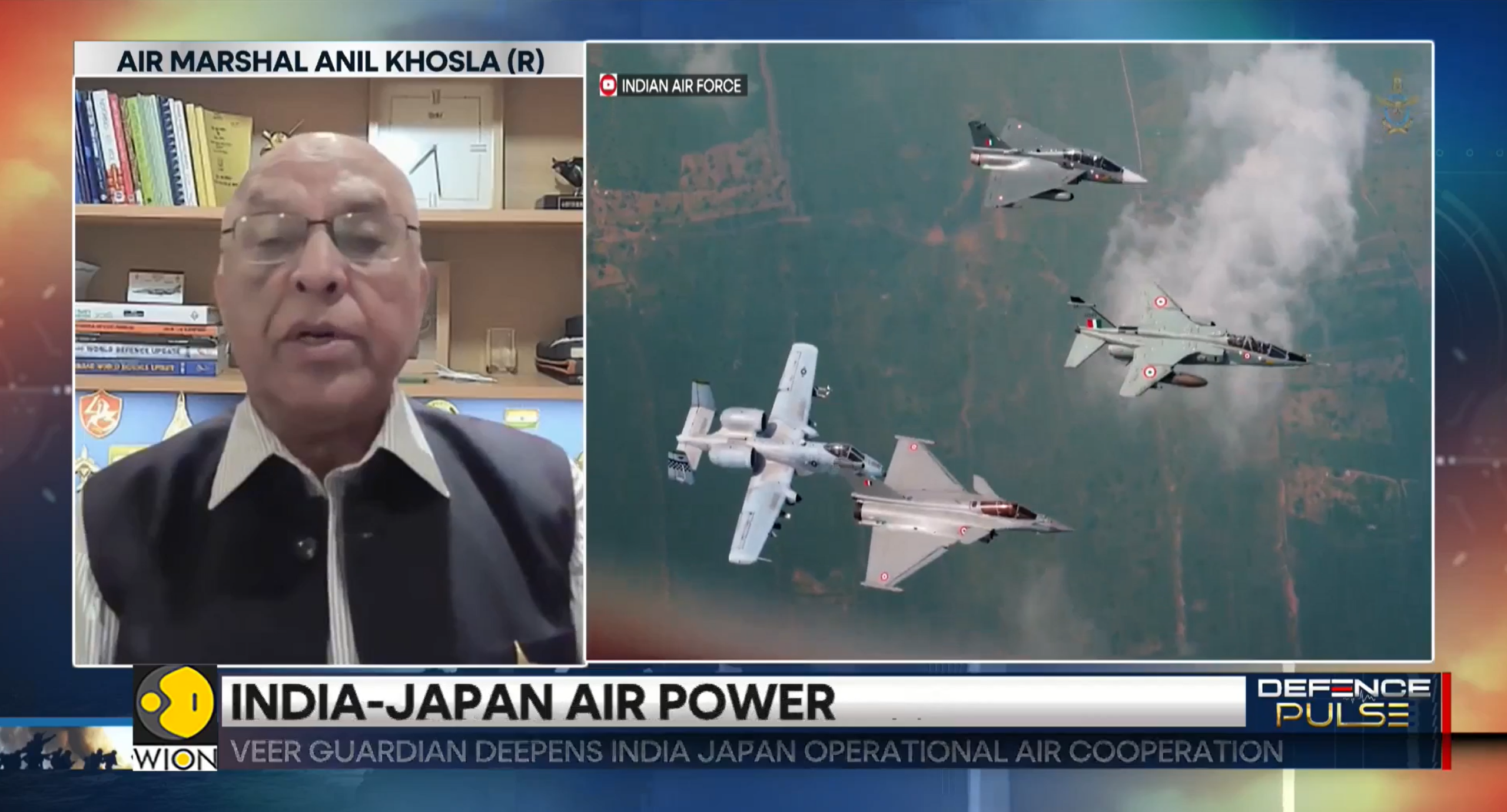
846: VEER GUARDIAN 2026: SMALL EXERCISE WITH LARGER STRATEGIC IMPLICATIONS


Inputs shared with journalists on the joint Indo-Japan air exercise “Veer Guardian 2026”


India and Japan’s air forces will conduct a joint training exercise, Veer Guardian 26, from September 9 to 21 in the Jodhpur area of Rajasthan, western India. As part of the joint training, Tokyo will deploy three F-2 fighter jets to India, as well as about 110 personnel from the Eighth Air Wing stationed at Tsuiki Airbase in southwestern Japan’s Fukuoka prefecture.

The first-time deployment of Japan’s fighter aircraft for Exercise Veer Guardian 26 is an important milestone in India–Japan air cooperation. High-end air combat training on each other’s soil signals a major increment in the partnership and defence cooperation.


Air Exercise

Veer Guardian introduces cooperation at the sharp end of air power: fighter operations, mission planning, air-combat training, communications, deconfliction and the practical problems of deploying and sustaining aircraft on a foreign airbase. The larger objective is therefore not platform-versus-platform competition, but gradually building a more interoperable air ecosystem.

The exercise provides both sides with an opportunity to understand different operating philosophies and equipment ecosystems. The JASDF operates predominantly US-origin or US-derived platforms, while the IAF fields a much more diverse inventory combining Russian, French, Israeli, indigenous and other technologies. Training across these differences matters because interoperability cannot be created through political agreements alone. It has to be built through repeated operational contact.

Strategic and Geopolitical Importance

For years, Indo-Japan bilateral security cooperation has been centred on diplomatic consultations, senior-level exchanges, logistics arrangements and broader Indo-Pacific initiatives. That relationship is now acquiring a more operational character.

The agreements reached during the India-Japan defence ministerial meeting (in August 2026) confirm this trend. The two countries agreed to conduct more complex exercises at short notice. They also agreed to expand cooperation in operational activities, intelligence, equipment, technology, and the defence industry.

That makes Veer Guardian 2026 less an isolated fighter exercise than one component of an increasingly institutionalised defence relationship under the India-Japan “Special Strategic and Global Partnership.”

The exercise aligns with other tracks of a more resilient partnership, namely defence industry cooperation, maritime domain awareness, and economic security.

For Japan, this is part of a broader shift from “defence only” postures to expeditionary, coalition-capable air operations, including long-range deployments and integration with non-US partners.


Indo-Pacific context

Exercise Veer Guardian 26 also fits well within the larger Indo-Pacific framework. It follows the India–Japan agreement on Maritime Security Cooperation, signed at the defence ministers’ meeting on 20 Aug 26. The agreement stresses interoperability, security of the sea lanes of communication, and a ‘stable Indo-Pacific order’.

It dovetails with other bilateral/multilateral drills: Malabar (navies), Dharma Guardian (armies), JAIMEX (special forces), and the expanding US–Japan–India–Australia web of exercises.

Strategically, this is a sort of minilateralism. Defence ties and cooperation without a formal alliance. It should be viewed as one component of a much larger India-Japan military relationship that is becoming increasingly operational.


Upset China

India maintains defence and strategic relationships with a wide range of countries (including the United States, Japan, France, Russia and Southeast Asian partners. Its objective is to expand strategic options rather than subordinate its security policy to any single bloc.

India conducts joint exercises with numerous nations to learn best practices and improve interoperability. These engagements do not mean that India is joining a military bloc. This is best understood as alignment without alliance. India’s participation should therefore not be interpreted as a decision to join an anti-China coalition. Veer Guardian fits that model, and not every event should be viewed through a China lens.

Japan and India confront different manifestations of the same broad strategic challenge. Japan is increasingly concerned about China’s military power and its activities in the East China Sea, around the Senkaku/Diaoyu Islands and across the western Pacific. India faces China along the Line of Actual Control and is increasingly attentive to China’s maritime presence in the Indian Ocean.

India and Japan are Special Strategic and Global Partners with converging interests in the Indo-Pacific. Both countries have disagreements and clash of interest with China. They view China’s military modernisation, grey-zone activities and territorial assertiveness as challenges. Such joint military events naturally make China wary and uncomfortable.


Future Trajectory

Veer Guardian 26 can be seen as an early building block of a much deeper India-Japan security relationship. Such frequent, routine deployments reduce political and logistical barriers. Future exercises could involve larger participation and scope. Deployments could include more fighter aircraft, support aircraft, unmanned systems, and electronic-warfare elements. They could expand to include more complex fighter training, stronger logistics cooperation, and increasingly rapid or short-notice deployments.


Concluding Thoughts

The scale of Japanese participation (with three fighters and about 110 personnel) is modest.  Veer Guardian 26 is therefore best understood as a milestone rather than a military game-changer. Its immediate combat value may be limited, but its interoperability dividend is significant. Its political signalling value is even greater.

The exercise demonstrates that:

    • Japan can deploy combat aircraft to India and sustain them there;
    • the two air forces are willing to deepen tactical interoperability;
    • Japan is gaining experience operating militarily farther from its immediate home environment;
    • the bilateral relationship is becoming increasingly connected to the wider Indo-Pacific security architecture.

The future iterations are likely to grow in complexity if the political relationship and defence cooperation continue on their current trajectory.


Bottom Line

India and Japan are not creating an alliance. They are creating the interoperable capacity to act together.


Link to the quoted article on the subject:-

https://www.visiontimes.com/2026/09/04/japan-sends-fighter-jets-to-india-as-tokyo-and-new-delhi-eye-china.html


Please Add Value to the write-up with your views on the subject.


2137
Default rating

Please give a thumbs up if you  like The Post?


For regular updates, please register your email here:-

Subscribe


References and credits

To all the online sites and channels.

Pics Courtesy: Internet

Disclaimer:

Information and data included in the blog are for educational & non-commercial purposes only and have been carefully adapted, excerpted, or edited from reliable and accurate sources. All copyrighted material belongs to the respective owners and is provided only for wider dissemination.


References: –

  1. Japan Ministry of Defence, “Japan-India joint press statement”, Japan Ministry of Defence, 20 Aug 26.
  1. Japan Ministry of Defence, “Extraordinary press conference by Defence Minister Koizumi on Thursday, August 20, 2026, at 3:02 PM”, Japan Ministry of Defence, 20 Aug 26.
  1. Ministry of Defence, Government of India, “IAF & Japan Air Self Defence Force set to exercise jointly in Japan”, Press Information Bureau. 07 Jan 26.
  1. Ministry of Defence, Government of India, “IAF’s joint air defence exercise with Japan, ‘Veer Guardian 2023’ concludes”, Press Information Bureau. 27 Jan 26.
  1. Embassy of India, Tokyo, “Veer Guardian 2023”, Embassy of India, Tokyo, 2026.
  1. Embassy of India, Tokyo, “India-Japan defence cooperation”, Embassy of India, Tokyo, 2026.
  1. The Diplomat, “JASDF fighter jets to visit India for first time”, The Diplomat, Aug 26.
English हिंदी