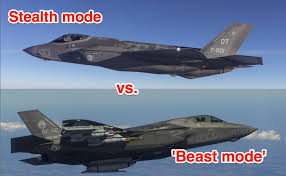
Israel’s recent revelation about deploying the F-35 in beast mode, carrying weapons externally during aerial strikes, prompts a deeper exploration. This strategic decision, while compromising the aircraft’s stealth, is a calculated move. The understanding of going beast mode over Gaza, with its negligible air defence, is clear. However, the prospect of employing this mode in Lebanon or Iran, with their formidable air defences, presents a complex operational challenge. This raises the question: what are the operational intricacies of using the beast mode in such scenarios?
The F-35, in its ‘stealth mode,’ carries weapons internally, effectively reducing its radar signature. However, when it transitions to ‘beast mode,’ carrying weapons externally, it sacrifices this stealth advantage for increased firepower. This Trade-off is a crucial consideration in military operations.
In “beast mode,” it carries additional munitions on external pylons. This configuration increases the aircraft’s radar cross-section (RCS), making it more detectable by enemy radar.
Beast mode increases the F-35’s firepower by allowing it to carry more ordnance, maximising strike efficiency against numerous ground targets.
However, Israel’s use of the F-35 in beast mode likely depends on the specific operational environment and objectives.
The Beast Mode can be used in the following operational scenarios:-
The enemy has no air defence capability or weapons.
SEAD (Suppression of Enemy Air Defences) missions have degraded the enemy’s radar and SAM capabilities.
One way to mitigate the risks of flying in beast mode is by staying out of the enemy’s air defence weapons range. This can be achieved through intelligence-supported operational planning and/or stand-off attacks. The role of intelligence and meticulous planning in these operations cannot be overstated.
Using escort and suppression support from electronic warfare platforms to mitigate the risks of flying in beast mode.
Low Threat Environment (Gaza Strikes). Against Hamas and other militant groups in Gaza, stealth is unnecessary since they lack sophisticated radar-guided air defences. Beast mode can be used in a risk environment to maximise firepower.
Lebanon (Hezbollah) Strikes. Hezbollah has comparatively more advanced air defence capabilities than Hamas, including Iranian-made radars and some older Russian SAMs. Beast mode can be used in a medium-risk environment by avoiding enemy air defences.
Iran Strikes—A Different Challenge. Iran operates a more sophisticated air defence network. Using beast mode over Iran would be risky because the F-35 would be much more visible on Iranian radar, and Iran’s long-range SAMs could engage the aircraft before it reaches the target. Beast mode can be used in a high-risk environment after neutralising enemy air defences.
Information and data included in the blog are for educational & non-commercial purposes only and have been carefully adapted, excerpted, or edited from reliable and accurate sources. All copyrighted material belongs to respective owners and is provided only for wider dissemination.
My Article was Published in the Chanakya Diaries, Issue 2, Spring 2025.
The world of military aviation has witnessed a significant leap in technological advancements, particularly in developing fifth-generation fighter aircraft (5GFA). These next-generation fighter jets are equipped with stealth technology, advanced avionics, and superior weaponry, allowing them to operate in highly contested airspaces. As global military technologies advance, so does the need for air forces to adopt cutting-edge systems capable of responding to emerging threats. Acquisition of such advanced technologies is crucial for maintaining air superiority and securing national interests. However, India’s path to acquiring fifth-generation fighters has been filled with challenges, forcing the country into a quandary about securing these crucial assets for its Air Force. This article delves into India’s dilemma regarding 5th-gen fighter jets, exploring the complexities of the decision-making process, the challenges posed by current defence procurements, and the country’s broader defence and geopolitical considerations.
Fifth-Generation Fighter Aircraft
Fifth-generation fighter aircraft represent the pinnacle of modern military aviation, incorporating cutting-edge stealth, advanced avionics, superior manoeuvrability, and network-centric warfare capabilities. These aircraft are designed to achieve air superiority while minimising detection through radar-evading features such as internal weapons bays, composite materials, and aerodynamic shaping. Notable examples include the U.S. F-22 Raptor and F-35 Lightning II, China’s J-20, and Russia’s Su-57. Unlike previous generations, fifth-generation fighters rely on sensor fusion, artificial intelligence-assisted decision-making, and high-capacity data links to dominate the battle-space. Their integrated avionics provide pilots with unparalleled situational awareness, allowing seamless coordination with other forces and unmanned systems. High-thrust engines with supercruise capability enable sustained supersonic speeds without afterburners, enhancing operational range and fuel efficiency. Furthermore, their electronic warfare and cyber capabilities allow them to disrupt enemy communications and radar systems. While these aircraft offer unmatched lethality and survivability, their complexity and cost present production, maintenance, and procurement challenges. Nations investing in fifth-generation fighters seek battlefield dominance and strategic deterrence, as control of the skies remains a decisive factor in modern warfare. As military technology advances, these fighters continue to evolve, shaping the future of aerial combat.
IAF Challenges and Necessities
Prevailing Challenges. India is a major regional player, and due to its unique geographical location and geo-political environment, it faces a collusive threat (from its two nuclear-powered unfriendly neighbours) with significant chances of military conflict. This unique position dictates that the country be able to deter her hostile neighbours from any military misadventure singly or collusively. Besides land borders being the main reason for the dispute, the security of the IOR region would also be a major security necessity. IAF would be required to offer options to meet India’s domestic and regional security requirements.
Air Threat. For a considerable time, the IAF enjoyed an edge in modern combat aircraft over its rivals – the Chinese People’s Liberation Army Air Force (PLAAF) and the Pakistan Air Force (PAF). This situation is changing with the PLAAF transformation, China’s investment in aerospace research and development, and aircraft manufacturing. China has inducted its two home-grown stealth fighters (J-20 and J-31) in large numbers and has already flown sixth-generation prototypes. Pakistan continues to be in collusion with China. PAF has inducted Chinese J-10 and JF-17 aircraft and has desired to induct Chinese fifth-generation aircraft.
Urgent Necessity. The Indian Air Force’s current strength is significantly below its sanctioned level. Its indigenous development of fourth—and fifth-generation aircraft faces technological hurdles and time delays. In the face of prevailing challenges, India cannot afford to lag in its military capability. The impending air threat from China and Pakistan has made the acquisition of fifth-generation fighters an urgent and necessary priority to enhance the IAF’s deterrence value.
Acquisition Efforts
Collaborative Effort. India’s journey toward acquiring fifth-generation fighter aircraft began with an ambitious collaboration with Russia. In 2007, India partnered with Russia to co-develop the Su-57, also known as the T-50 or PAK-FA. This project was expected to yield a fifth-generation fighter with advanced stealth capabilities and cutting-edge avionics, making it a crucial addition to India’s fleet. While India’s collaboration with Russia began with great optimism, several issues soon emerged related to cost overruns, development delays, and technological shortcomings, leading to re-evaluating the program. 2018, after years of joint research and development, India decided to pull out of the Su-57 program, marking a pivotal moment in its fifth-generation fighter aspirations. The decision left India searching for alternative solutions.
MRFA Acquisition. The history of India’s Multi-Role Fighter Aircraft (MRFA) acquisition effort is marked by ambitious plans and evolving defence strategies to modernise the IAF’s fighter fleet. The origins of the MRFA initiative can be traced back to the Medium Multi-Role Combat Aircraft (MMRCA) tender issued in 2007, which sought to acquire 126 fighter jets to replace the ageing MiG-21 fleet. After extensive evaluations and trials, the Dassault Rafale emerged as the preferred choice in 2012; however, contractual disagreements and cost escalations led to the eventual scrapping of the deal in 2015. In its place, the Indian government opted for a government-to-government deal to procure 36 Rafale jets in 2016 to meet urgent operational needs. The failure of the MMRCA tender to materialise in its original form highlighted the complexities involved in large-scale defence procurements, including cost considerations, technology transfer requirements, and offset agreements. In response to these challenges, the IAF redefined its requirements and reinitiated the procurement process under the MRFA program in 2019. The renewed effort sought to leverage lessons learned from the previous tender while emphasising indigenisation and the development of India’s defence manufacturing capabilities under the ‘Make in India’ initiative. Unlike its predecessor, the MRFA acquisition focuses more on domestic production, requiring foreign vendors to collaborate with Indian defence firms to establish local assembly lines and facilitate technology transfers.
Overview of the MRFA Acquisition Program. The MRFA acquisition program is a critical initiative by the Indian Air Force to acquire 114 advanced multi-role fighter jets to enhance its operational capabilities and replace its ageing fleet of legacy aircraft. Under MRFA, the IAF aims to procure state-of-the-art fighters that can undertake various combat roles, including air superiority, ground attack, reconnaissance, and electronic warfare, ensuring dominance in modern warfare scenarios. The MRFA acquisition process is structured under the ‘Make in India’ initiative, emphasising indigenous production and technology transfer to boost the domestic defence industry. The IAF issued a global Request for Information (RFI) in 2019, inviting proposals from major aircraft manufacturers worldwide. The procurement is expected under the Strategic Partnership (SP) model, which involves collaboration between foreign Original Equipment Manufacturers (OEMs) and Indian defence firms. This collaboration required establishing production lines within the country and transferring critical technologies, reducing import dependency and promoting self-reliance in the defence sector. One of the essential requirements outlined by the IAF in the MRFA tender is the transfer of technology (ToT), which will allow Indian defence companies to gain technical expertise in aircraft manufacturing, maintenance, and future upgrades. The current situation stresses the inclusion of fifth-generation aircraft in the acquisition plans.
Domestic Solution: AMCA. India has pursued an indigenous solution to its 5th-gen fighter needs through the Advanced Medium Combat Aircraft (AMCA). The AMCA is being developed by the Aeronautical Development Agency (ADA) under the Indian Ministry of Defence. It is intended to be a 5th-gen fighter with advanced stealth technology, super-cruise capabilities, and cutting-edge avionics. While the AMCA represents a step toward self-reliance and is seen as a critical component of India’s long-term military strategy, several challenges are associated with its development. The development of the AMCA has faced numerous delays. Initially slated for entry into service by the mid-2020s, it is now expected to enter service closer to the late 2030s. The project also faces significant technological challenges in developing a fighter of this sophistication. While progress is being made, achieving the same level of performance and stealth as the F-35 or Su-57 remains a formidable task.
Choices and Possibilities. Both the U.S. and Russia are aggressively pitching their fifth-generation aircraft. Besides outright purchase, India may explore collaboration and joint development programs or technology transfers (Stealth, Aero-engines and advanced avionics) that accelerate AMCA’s timeline. Limited acquisitions of F-35s or Su-57s focusing on training and operational familiarity while ensuring that AMCA remains the primary focus are also possible options.
The Foreign Procurement Dilemma
Given the delays and challenges of Indigenous development, India has to explore foreign procurement options for fifth-generation fighter jets. The United States, with its F-35 Lightning II and the Russian SU-57, has emerged as a potential source of these advanced aircraft. However, several geopolitical, diplomatic, and technical barriers complicate purchasing these aircraft.
U.S. Signals: F-35 Lightning II. The U.S. has been subtly signalling a potential offer of the F-35 to India. The aircraft first appeared in the Indian skies in the previous aero India 2023. Although Washington has not officially proposed a deal, diplomatic engagements and increasing defence cooperation between the two nations suggest that such a move could be on the horizon. Some analysts believe the U.S. could propose the F-35 as a deterrent against China, leveraging India’s growing security concerns to break its traditional reluctance toward American fighter jets. The F-35, developed by Lockheed Martin, represents the epitome of 5th-gen fighter capabilities. It is a highly advanced stealth fighter, but its suitability for the Indian Air Force (IAF) is debatable due to operational, geopolitical, and logistical factors. While the F-35 offers cutting-edge stealth, sensor fusion, and electronic warfare capabilities, making it a formidable asset against threats, its integration into India’s diverse fleet (Su-30MKI, Rafale, Tejas) would be complex and costly. The aircraft’s high maintenance burden, reliance on U.S. software and spare parts support, and logistical challenges in high-altitude operations raise concerns. Additionally, India’s deep defence ties with Russia and its commitment to strategic autonomy could complicate an F-35 deal. The U.S. has been selective about F-35 exports, prioritising NATO allies and key Pacific partners, making approval for India uncertain. With unit costs exceeding $80 million and long-term sustainment expenses, the F-35 may not be the most cost-effective option compared to expanding Rafale squadrons or accelerating the indigenous AMCA program.
Russia’s Pitch: The Su-57 Felon. Russia is presenting the Su-57 Felon as a possible solution for India’s air power needs. The offer is sugar quoted with an offer to reduce price, Integration of hypersonic weapons, ToT and easy payment options. The Su-57, initially designated the PAK FA (Prospective Airborne Complex of Frontline Aviation), began development in the early 2000s under the Russian Ministry of Defence. The aircraft was conceived as a multirole stealth fighter capable of air superiority and ground attack missions. Given India’s deep-rooted defence ties with Russia and its existing fleet of Su-30MKI fighters, Moscow sees this as a natural extension of its strategic partnership. However, India has been cautious about procuring the Su-57 due to previous setbacks in the Indo-Russian Fifth Generation Fighter Aircraft (FGFA) project. While the Su-57 has promising features, the program has faced several challenges that have slowed its development and deployment. The aircraft has faced delays related to engine development and avionics integration. Moreover, there have been questions about the production rate and the number of aircraft that will be built in the coming years. The Russian Air Force has been slow to field the aircraft, and it remains unclear how many Su-57s will ultimately be deployed, particularly as Russia faces significant budgetary constraints and competing priorities.
Comparative Analysis. The Su-57’s development and operational capabilities are often compared to the U.S. F-22 Raptor and F-35 Lightning II, representing American stealth technology’s pinnacle. While the Su-57 has similar features, such as stealth and advanced avionics, it lags in some performance areas. For example, the F-22 is generally considered superior regarding stealth and overall aerodynamics, while the F-35 is unrivalled in sensor fusion and multirole capabilities. However, the Su-57 holds unique advantages that could make it a formidable platform in specific scenarios. Its super manoeuvrability and advanced sensor capabilities make it highly suited for air-to-air combat and could give it an edge over Western fighters in certain situations. Moreover, its weapons capacity and the potential future integration of hypersonic weapons give it a longer-range and more potent offensive capability than current Western fighters.
Indigenous Effort.
Push for Indigenous Development: The AMCA Program. India’s exit from the Su-57 program signalled a renewed focus on indigenous development. Under pressure to modernise and enhance its capabilities, India pushed to develop its fifth-generation fighter. The Advanced Medium Combat Aircraft (AMCA) program was born out of this necessity. The AMCA was conceived as India’s first fully indigenous fifth-generation fighter. The project envisions incorporating stealth, advanced avionics, supercruise and multi-role capabilities. While the AMCA represents a significant leap forward for India’s indigenous defence capabilities, its development has not been without challenges. The program has faced technological hurdles, financial constraints, and inordinate delays. The prototype of the AMCA is expected to take flight in the late 2020s, with full-scale production not anticipated until the early 2040s. The AMCA is crucial to India’s long-term defence strategy. Its delayed timeline and high costs mean the country must consider alternatives soon to fill the capability gap.
Effect on the AMCA Development. India’s procurement of foreign fifth-generation fighter aircraft could positively or negatively affect the development of its Advanced Medium Combat Aircraft (AMCA) program. On the one hand, it could gain valuable insights into the design and technology of a fifth-generation fighter aircraft, including stealth capabilities, advanced avionics, and engine performance. This could accelerate the learning curve for Indian engineers and help improve AMCA’s design. On the other hand, foreign procurement could divert attention and resources from the AMCA project, as both programs require significant investment and focus. This could delay AMCA’s development as funding and manpower may be reallocated. While foreign procurement might provide a short-term solution, procuring it would reinforce India’s dependency on foreign technology, which contradicts the AMCA’s goal of achieving greater self-reliance in defence technology. It might also delay the domestic innovation necessary to produce the AMCA independently.
Procurement Considerations: A Tight Rope Walk.
India’s pursuit of fifth-generation fighter aircraft (FGFA) is a complex balancing act, requiring careful evaluation of strategic, operational, and geopolitical factors. Despite the aggressive pitches from Russia and the U.S., India remains steadfast in its commitment to self-reliance. The country has several valid concerns about acquiring stealth fighters from external sources. The procurement decision must balance national security imperatives with long-term self-reliance goals.
Financial Constraints. While the need for advanced fighter aircraft is pressing, India’s defence budget remains constrained. The costs of acquiring 5th-gen fighters—whether through foreign procurement or domestic development—are substantial.
Strategic Autonomy. India has historically maintained strategic autonomy in defence procurement. Outright procurement of fifth-generation fighters would increase dependency on foreign suppliers for maintenance, spares, and software updates. However, developing an indigenous FGFA is time-intensive and costly, necessitating interim solutions such as collaborations or selective acquisitions. Balancing these factors ensures India can act independently in future conflicts without external constraints.
Operational Sovereignty. Fifth-generation fighters rely heavily on integrated software, sensor fusion, and artificial intelligence, requiring continuous updates and security oversight. Procuring an FGFA from the U.S. or Russia may come with software black boxes, limiting India’s ability to modify or customise the aircraft to suit its operational needs. In contrast, an indigenous program like the AMCA would ensure complete control over mission configurations, electronic warfare systems, and weapons integration. India risks operational constraints without complete control in scenarios where its strategic interests diverge from supplier nations.
Transfer of Technology (ToT). India has consistently demanded significant technology transfer as part of its defence procurements. One of the most crucial considerations in FGFA procurement is access to critical technologies such as stealth coatings, advanced radar systems, and aero engines. Nations that export fifth-generation fighters typically impose strict restrictions on technology transfers to protect proprietary designs and maintain their competitive edge. India must negotiate deals that ensure meaningful technology absorption, aiding AMCA’s long-term development.
Interoperability Issues. India operates a diverse fleet comprising Russian, French, Israeli, and indigenous aircraft, leading to interoperability challenges. Integrating an FGFA with existing platforms is critical, especially for network-centric warfare. American platforms, such as the F-35, rely on proprietary Link 16 data-sharing protocols, which may not be compatible with India’s indigenous combat management systems. On the other hand, Russian fighters align with existing IAF infrastructure but lack the networking capabilities of Western aircraft. Any FGFA procurement must ensure seamless integration with India’s Integrated Air Command and Control System (IACCS) while avoiding security vulnerabilities tied to foreign command structures.
Reliance and Reliability Concerns. Fifth-generation fighters require a robust supply chain for spare parts, software updates, and maintenance. India’s experience with Russian platforms, such as the Su-30MKI, has shown that supply bottlenecks can impact fleet availability. Similarly, reliance on the U.S. for F-35 components could expose India to geopolitical leverage, where supply disruptions may occur due to policy shifts. An indigenous FGFA would mitigate these risks. However, India must bridge the gap in manufacturing critical components, such as high-thrust jet engines and low-observable coatings, to ensure long-term sustainability.
Geopolitical Pressures. India’s FGFA decision is deeply entangled in global power dynamics. Acquiring an American fighter would enhance ties with QUAD allies (U.S., Japan, Australia) but could strain India’s strategic partnership with Russia. Conversely, a Russian FGFA might provoke U.S. sanctions under CAATSA (Countering America’s Adversaries Through Sanctions Act), complicating India’s defence cooperation with Western nations. Thus, any procurement choice must navigate these external influences without compromising national security.
Way Ahead
India’s quest for fifth-generation fighter aircraft is emblematic of the broader challenges emerging powers face in the 21st century. While the country has made significant strides in developing Indigenous defence capabilities, the path to acquiring fifth-generation fighters remains fraught with challenges. The choices India makes in the coming years will shape its defence posture and air superiority in the decades ahead. While the AMCA holds promise for India’s long-term goals, the immediate need for advanced fighter aircraft means that foreign options, including the F-35 or SU-57, will likely remain in play despite the geopolitical and financial challenges they present.
India’s success in this endeavour will depend on its ability to integrate technology, manage its defence budget, and forge strategic partnerships that advance its security interests in a rapidly evolving global landscape. Given the complexity of fifth-generation fighter procurement, India must focus on accelerating the AMCA program while exploring selective technology partnerships. A dedicated task force with a top-down approach could ensure timely execution. Increased funding, private sector involvement, and strategic technology acquisitions could further bolster the program.
India must balance Indigenous development with the need for foreign procurement while navigating a complex geopolitical landscape. While India will likely continue seeking a combination of foreign procurements and domestic development, the path forward will require careful navigation of technological and strategic challenges. Ultimately, India’s ability to field a fleet of 5th-gen fighters will depend on its ability to balance these competing demands while securing the necessary resources and partnerships to maintain its regional and global standing.
Conclusion
The stealth fighter war is not just about aircraft but about India’s position in the global defence landscape. The choices made in the coming years will define India’s air power for decades. While Aero India 2025 will serve as a grand stage for the U.S. and Russia to showcase their best fighters, India must navigate this battle carefully. Whether it chooses a limited acquisition, a joint development initiative, or a complete rejection of external options, one thing is clear: India’s future in stealth aviation will be determined by its ability to balance strategic autonomy with practical air power needs.
Please Do Comment.
For regular updates, please register your email here:-
Information and data included in the blog are for educational & non-commercial purposes only and have been carefully adapted, excerpted, or edited from reliable and accurate sources. All copyrighted material belongs to respective owners and is provided only for wider dissemination.
References:-
Dyer, G. (2017). India’s Role in Global Security: An Assessment of Its Military and Strategic Options. Oxford University Press. Covers India’s military strategies and defence procurement policies, giving context to its fifth-generation fighter aircraft decisions.
Tiwari, R. (2020). India’s Aviation Power: The Development of India’s Military Aviation. Routledge. This book focuses on India’s aviation capabilities, history, and future trajectory, including the fifth-generation fighter aircraft.
Sarma, B. (2021). Fifth-Generation Aircraft and the Changing Nature of Air Combat: A Global Perspective. Springer. This book analyses the technologies and capabilities defining fifth-generation aircraft and how different countries adopt them.
Pant, H. V. (2018). India’s Strategic Culture and Military Modernisation: A Cross-Disciplinary Approach. Routledge. Offers insight into India’s military modernisation strategies and how they affect decisions about future aircraft acquisitions.
Bansal, S. (2022). “Fifth-Generation Fighter Aircraft: The India Dilemma”, Strategic Affairs Journal, 14(3), pp. 245-268. This article addresses India’s balancing act between domestic capabilities, foreign partnerships, and defence priorities regarding fifth-generation fighters.
Chaudhury, S. (2020). “India’s Ambitious Fighter Program and the Quest for the AMCA”, The Military Review, 102(4), pp. 60-75. A detailed analysis of India’s AMCA project and the prospects of its success in the context of competing international options.
Indian Ministry of Defence (2021). India’s Future Aircraft Procurement Strategy: A Vision for the Next Decade. Government of India. Government-published paper detailing India’s strategic requirements and procurement strategy, including pursuing fifth-generation fighters.
RAND Corporation (2021). “Fifth-Generation Fighter Aircraft: A Global Overview”. RAND Corporation. A comprehensive analysis of the global fifth-generation fighter market, including India’s potential partners and competitors.
IHS Jane’s Defence Weekly (2019). “The Future of Combat Aircraft: A Comparative Study”, 56(8), pp. 32-45. This report compares the capabilities of fifth-generation fighters, focusing on the Su-57, F-35, and AMCA, with a section on India’s defence procurement options.
Shukla, A. (2021). “India’s Fighter Jet Dilemma: Will AMCA Be the Answer?” Livefist Defence. https://www.livefistdefence.com. A detailed exploration of the AMCA program and India’s obstacles in developing its fifth-generation aircraft.
My article was published on the Indus International Research Centre website on 05 Mar 25
The aviation Maintenance, Repair, and Overhaul (MRO) industry is poised for significant growth, driven by rising air traffic, ageing aircraft fleets, and advancements in predictive maintenance technologies. Emerging markets, particularly in Asia and the Middle East, present lucrative opportunities as airlines expand operations. However, challenges such as high labour costs, supply chain disruptions, and stringent regulatory requirements pose hurdles to efficiency. Integrating AI, blockchain, and IoT in MRO processes enhances efficiency and cost-effectiveness but requires substantial investment. As airlines focus on sustainability, MRO providers must innovate to support greener aviation while maintaining profitability and operational reliability.
Components of Aviation MRO
Aviation Maintenance, Repair, and Overhaul (MRO) is a multifaceted industry that ensures aircraft remain safe, reliable, and efficient throughout their operational lifespan. MRO is divided into several components, each addressing different aspects of aircraft maintenance. These components are essential for regulatory compliance, operational efficiency, and prolonging an aircraft’s service life. Below is a detailed examination of the key elements of aviation MRO.
Line Maintenance. Line maintenance encompasses routine checks and minor repairs performed at airports between flights. These tasks ensure the aircraft is fit for its subsequent operation and prevent minor issues from escalating into significant faults. Key activities in line maintenance include daily and pre-flight inspections, visual checks, fluid level assessments, and tyre pressure monitoring. Minor electrical and lighting repairs also fall within this scope. Additionally, pilots or ground crew may detect anomalies requiring immediate troubleshooting. Line maintenance is performed frequently—often after every flight—so it is crucial for maintaining continuous airworthiness.
Base Maintenance. Base maintenance involves more extensive inspections and repairs that necessitate taking an aircraft out of service. Unlike line maintenance, these procedures are conducted in specialised maintenance facilities and require significant time. Base maintenance is categorised into various levels, i.e., A, C, and D Checks. These minor to extensive checks are performed at varying periodicities.
Component Maintenance. This area focuses on maintaining and repairing individual aircraft components such as landing gear, avionics, hydraulics, and electrical systems. Many of these components undergo maintenance at specialised facilities. Key activities include overhauling and repairing parts, calibrating avionics, and replacing actuators, pumps, and valves. Depending on the complexity, repair times can vary from a few hours to several weeks.
Engine Maintenance. Engines are among the most expensive and complex aircraft components, requiring specialised maintenance to ensure peak performance. Engine maintenance falls into two main categories. On-wing maintenance includes minor inspections and repairs performed without removing the engine. Off-wing maintenance is more comprehensive repairs requiring engine removal and overhaul in a specialised facility.
Modifications and Upgrades. Aircraft undergo modifications and upgrades to enhance performance, comply with evolving regulations, and improve operational capabilities. These can be categorised into Structural Modifications, Avionics Upgrades, and Interior Modifications.
Technical Record Management. Accurate maintenance record-keeping is vital for compliance and operational transparency. Technical record management includes logging all maintenance activities, tracking airworthiness directives, and ensuring documentation aligns with aviation authority requirements. Effective record-keeping is crucial for aircraft resale value, regulatory inspections, and operational traceability.
Logistics and Supply Chain Management. Efficient supply chain management is essential for ensuring the timely availability of spare parts, tools, and materials. Key functions include inventory management, procurement, and coordination with suppliers. A well-managed logistics system reduces aircraft downtime and enhances cost-effectiveness in maintenance operations.
Ground Support Equipment (GSE) Maintenance. GSE maintenance ensures that essential airport equipment used in aircraft servicing and logistics remains operational. This includes maintaining and repairing towing vehicles, lifts, and power units. Proper maintenance of ground support equipment is vital for seamless airport operations and efficient aircraft servicing.
Importance of Aviation MRO
Aviation Maintenance, Repair, and Overhaul (MRO) ensures the global aviation industry’s safety, efficiency, and reliability. It is an essential aspect of aviation operations that supports compliance with safety regulations, enhances operational efficiency, and contributes to the industry’s overall sustainability.
Safety Assurance. Regular maintenance and inspections help detect and address potential issues before they lead to failures, significantly reducing the risk of accidents. Continuous monitoring and maintenance ensure that aircraft remain airworthy, protecting passengers and crew from potential safety hazards.
Operational Efficiency. Effective MRO operations help minimise aircraft downtime, allowing airlines to maintain their flight schedules with minimal disruption. Airlines can optimise aircraft utilisation through scheduled maintenance and timely repairs, maximising availability and improving profitability. Well-maintained aircraft contribute to overall operational efficiency, reducing unexpected delays and cancellations.
Cost Management. Proactive maintenance prevents costly emergency repairs by addressing potential issues before they escalate. Lifecycle management through proper MRO practices extends the lifespan of aircraft and their components, delaying the need for expensive replacements. Regular maintenance of engines and aerodynamic surfaces also helps maintain optimal fuel efficiency, reducing airline operational costs.
Reliability and Customer Satisfaction. Ensuring aircraft are ready to fly as scheduled helps airlines maintain high on-time performance, minimising delays and cancellations. Well-maintained aircraft provide a better passenger experience, increasing customer satisfaction and loyalty. Airlines prioritising MRO practices enhance their reputation for safety and reliability, which is critical for customer trust.
Regulatory Compliance and Certification. MRO activities ensure compliance with airworthiness directives and service bulletins issued by aviation authorities and manufacturers. Non-compliance can result in severe penalties, aircraft grounding, or loss of operating licenses. Detailed documentation and record-keeping of all maintenance activities are essential for maintaining an aircraft’s legal airworthiness and passing regulatory audits.
Supporting Technological Advancements. As aircraft technology evolves, MRO practices must integrate new systems, materials, and methods. Maintaining contemporary aircraft models is essential to keep up with advancements in avionics, composite materials, and modern engines. Technicians and engineers require continuous training to adapt to new technologies and maintain industry standards.
Sustainability and Environmental Impact. Regular engine maintenance lowers fuel consumption and emissions, helping airlines meet environmental regulations and reduce their carbon footprint. Efficient MRO practices, such as component reuse and refurbishment, reduce waste and support sustainability initiatives within the aviation industry.
Economic Contribution. The aviation MRO sector employs millions of skilled workers globally, including technicians, engineers, and support staff. It supports the broader aviation industry, ensuring the economic viability of airlines, airports, and aerospace manufacturers. MRO plays an integral role in maintaining a stable and sustainable aviation ecosystem.
Fleet Management and Optimisation. Data analytics enable predictive maintenance, helping forecast maintenance needs, reducing unscheduled repairs, and optimising fleet management. Standardised MRO practices ensure that all aircraft in a fleet meet the same safety and operational standards, simplifying maintenance procedures and reducing training complexity for airline personnel.
Market Competitiveness. Airlines that maintain high maintenance standards gain a reputation for safety and reliability, providing a competitive advantage in the market. Efficient MRO operations also create cost advantages, allowing airlines to offer competitive pricing while maintaining profitability.
Challenges in Aviation MRO
MRO providers face challenges due to evolving technology, stringent regulations, workforce shortages, and cost pressures. These factors contribute to the growing difficulty in maintaining seamless operations while ensuring compliance and cost-effectiveness.
Regulatory compliance is one of the most significant challenges in the aviation MRO industry. The sector is governed by strict regulations related to safety, airworthiness, and environmental standards. Compliance with these regulations demands continuous monitoring, frequent audits, and substantial financial investment. Additionally, rules are frequently updated, requiring MRO providers to adapt swiftly to airworthiness directives and service bulletins, increasing the complexity of operations.
Another major challenge is technological advancements. Modern aircraft are increasingly equipped with sophisticated avionics, lightweight composite materials, and advanced systems, necessitating continuous upgrades in maintenance techniques. MRO providers must invest in state-of-the-art tools, training programs, and infrastructure to keep up with these changes. Furthermore, integrating digital technologies such as predictive maintenance, big data analytics, and digital twins requires substantial financial investment and technical expertise. Many MRO companies struggle to incorporate these new technologies due to budget constraints and limited skilled personnel.
Another pressing issue is the skilled workforce shortage. A significant portion of the current MRO workforce is nearing retirement, leading to a shortage of experienced engineers and technicians. Attracting younger talent remains challenging as the aviation industry competes with other sectors, such as technology and engineering. Training new technicians to meet the required industry standards is time-consuming and costly. Additionally, as aircraft technologies continue to evolve, continuous upskilling of existing employees becomes necessary, adding to the operational burden of MRO providers.
Supply chain disruptions also pose a serious challenge. Delays in the supply of critical parts and components can significantly affect maintenance schedules and lead to extended aircraft downtime. The global nature of the aviation industry means that parts often need to be transported across long distances, making logistics management complicated. Customs regulations, geopolitical tensions, and transport delays further exacerbate these issues. Additionally, MRO providers must maintain an optimal inventory level to prevent delays while minimising excess stock to control costs.
The industry also faces cost pressures and rising operational costs due to increased labour wages, material costs, and regulatory compliance requirements. Airlines consistently seek cost reductions and negotiate aggressively with MRO providers, resulting in thin profit margins. As a result, MRO companies must find ways to optimise efficiency without compromising safety and quality.
Aircraft grounding and downtime are additional concerns. Unscheduled maintenance can lead to unexpected aircraft groundings, disrupting airline operations and causing financial losses. MRO providers face immense pressure to minimise turnaround times while ensuring thorough safety inspections and maintenance procedures.
Data management and cyber security have become critical challenges with the industry’s increasing digitisation. The aviation MRO sector generates vast amounts of data related to maintenance records, performance analytics, and compliance documentation. Effectively integrating and managing this data is difficult. Additionally, as more systems become digital, the risk of cyber-attacks increases. Protecting sensitive operational data from cyber security threats is essential to maintaining safe and secure MRO operations.
Globalisation and market dynamics further complicate MRO operations. MRO providers operating in multiple regions must navigate varying regulatory requirements, making standardisation difficult. Additionally, competition from original equipment manufacturers (OEMs) such as Boeing and Airbus is growing as these companies expand their MRO services. Market volatility, driven by economic cycles, geopolitical events, and crises such as the COVID-19 pandemic, also affects demand for MRO services.
Another challenge is the push for sustainable practices. Increasing pressure to reduce emissions and comply with environmental regulations affects how MRO providers operate, particularly in the handling and disposing hazardous materials. The emergence of green technologies, including electric and hybrid aircraft, presents additional hurdles, requiring new skills, tools, and infrastructure adaptations.
Significant infrastructure investment is necessary to accommodate newer aircraft and technologies. Many MRO facilities require upgrades or expansions to maintain competitiveness, which demands substantial financial resources. Additionally, as global air travel demand rises, MRO facilities face capacity constraints, leading to increased operational costs and potential delays.
Finally, customer expectations continue to rise. Airlines demand faster turnaround times to minimise aircraft downtime and improve operational efficiency. MRO providers must balance speed with quality and safety standards, often in a cost-sensitive environment. Meeting these expectations while maintaining profitability is a constant challenge.
Trends in Aviation MRO
The aviation maintenance, repair, and overhaul (MRO) industry is continuously evolving and driven by technological advancements, changing regulatory environments, and shifting market demands. Several key trends shape the aviation MRO landscape, influencing how service providers adapt to new challenges and opportunities.
One of the most significant trends is digital transformation and data analytics. Airlines and MRO providers leverage predictive maintenance, which uses real-time data from aircraft systems to analyse performance and detect anomalies before issues arise. This reduces unscheduled repairs and improves aircraft availability. The Internet of Things (IoT) enhances real-time monitoring of aircraft components through sensors, enabling proactive maintenance and greater operational efficiency. Additionally, digital twin technology is being adopted to create virtual models of physical aircraft, allowing real-time simulations and performance analysis to optimise maintenance strategies.
Sustainability initiatives are also becoming a crucial focus for MRO providers. Increasing environmental regulations are pushing the industry to adopt eco-friendly practices such as reducing emissions, managing waste, and recycling materials. Green technologies, including sustainable aviation fuels (SAF) and electric or hybrid aircraft, are gaining traction. MRO providers are adapting their services to support these new technologies and assist airlines in achieving sustainability goals.
Another major trend is the increasing reliance on outsourcing. Many airlines outsource maintenance to independent MRO providers to cut costs and focus on core operations. This trend is particularly noticeable in regions where labour costs are lower. Airlines are also forming strategic partnerships with MRO providers and original equipment manufacturers (OEMs) to share expertise and resources, improving service offerings and operational efficiencies.
Cost efficiency remains a top priority for MRO providers. Companies are streamlining operations through process optimisation, lean maintenance practices, and enhanced supply chain management. Effective inventory management strategies, such as just-in-time (JIT) inventory, help minimise excess stock while ensuring critical parts are available when needed.
As technology evolves, workforce development is crucial. MRO providers emphasise training and certification programs to upskill technicians and equip them to handle modern aircraft systems. Additionally, the industry is implementing innovative recruitment strategies to attract young talent by highlighting the aviation sector’s career opportunities and growth potential.
Regulatory adaptations also play a significant role in shaping the MRO industry. Providers must stay ahead of changing safety, maintenance practices, and environmental standards regulations, requiring ongoing investment in compliance programs. Implementing Safety Management Systems (SMS) enhances safety culture and compliance, focusing on proactive risk management and continuous improvement.
The use of robotics and automation is transforming MRO operations. Automated inspections, including drone-based visual inspections of aircraft exteriors, reduce human error and increase efficiency. Automation is also integrated into assembly, testing, and parts replacement processes to enhance productivity and reduce turnaround times.
Cyber security is an increasing concern due to the digitisation of MRO operations. Protecting sensitive data and critical operational systems from cyber threats is essential, and compliance with cyber security regulations requires robust security measures and protocols.
Customisation and modular maintenance solutions are gaining popularity. MRO providers offer tailored services to optimise airline operations and minimise downtime. The trend toward modular components enables easier upgrades and maintenance, reducing aircraft downtime and enhancing flexibility in service offerings.
Globalisation and market expansion are also shaping the industry. The growing demand for air travel in emerging markets, particularly Asia-Pacific, Africa, and Latin America, drives increased MRO opportunities. Cross-border collaborations between MRO providers facilitate knowledge transfer and resource sharing, strengthening the industry worldwide.
Artificial intelligence (AI) integration is another transformative trend. AI enhances decision-making in maintenance planning, scheduling, and resource allocation, leading to more efficient operations. Machine learning algorithms analyse historical maintenance data, identifying patterns to improve predictive maintenance capabilities.
Finally, a strong emphasis on safety culture remains a cornerstone of the MRO industry. Providers are adopting proactive safety management approaches, fostering a culture of safety that encourages reporting and addressing risks before they escalate. Continuous improvement programs based on feedback and data analysis enhance safety practices and operational efficiency.
Conclusion
The aviation MRO industry is an essential backbone of global air travel, ensuring aircraft safety, efficiency, and longevity. Covering key components such as airframe, engine, and component maintenance, MRO services provide airlines with cost-effective solutions, enhanced reliability, and regulatory compliance. However, rising operational costs, supply chain constraints, and skilled labour shortages continue to test the industry’s resilience. Despite these hurdles, emerging trends such as AI-driven predictive maintenance, digital twin technology, and sustainable aviation initiatives are transforming the sector. To remain competitive, MRO providers must invest in innovation, automation, and workforce development while optimising operational efficiency. Additionally, collaboration between airlines, OEMs, and independent MROs will be crucial in navigating regulatory complexities and market shifts. As the aviation industry recovers post-pandemic, the future of MRO lies in its ability to adapt to technological advancements, embrace sustainability, and deliver cost-effective, high-quality maintenance solutions in an evolving global landscape.
Information and data included in the blog are for educational & non-commercial purposes only and have been carefully adapted, excerpted, or edited from reliable and accurate sources. All copyrighted material belongs to respective owners and is provided only for wider dissemination.
References:-
Aircraft Maintenance & Repair – Michael J. Kroes and James Rardon, McGraw Hill Education, 2013.
Aviation Maintenance Management – Harry A. Kinnison and Tariq Siddiqui, McGraw Hill, 2012.
The Global Airline Industry – Peter Belobaba, Amedeo Odoni, and Cynthia Barnhart, Wiley, 2015.
Kumar, A., & Singh, R. (2020). “Digital Transformation in Aviation MRO: Opportunities and Challenges.” Journal of Air Transport Management, 88, 101865.
Gupta, S., & Sharma, P. (2019). “Sustainable MRO Practices in the Aviation Industry.” Aerospace Science and Technology, 94, 105401.
Jones, T., & Miller, C. (2021). “The Role of Predictive Maintenance in Aviation MRO Efficiency.” International Journal of Aviation Management, 7(2), 129-147.
Oliver Wyman. (2024). Global Fleet & MRO Market Outlook.
Aviation Week Network. (2024). “How AI and Big Data Are Revolutionizing MRO.” Retrieved from www.aviationweek.com
MRO Network. (2023). “Challenges Facing the Global MRO Industry.” Retrieved from www.mronetwork.com
FlightGlobal. (2023). “The Future of MRO: Trends Shaping the Next Decade.” Retrieved from www.flightglobal.com