
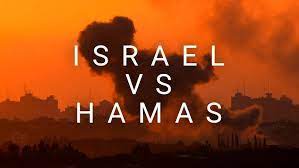
In the world of Israeli military strategy, terms like “mowing the grass” or “mowing the lawn” Vividly illustrate how they handle prolonged asymmetric warfare. These phrases paint a picture of regular military actions that are similar to keeping overgrown grass in check- meant more for containment than complete elimination. The idea is to keep threats under control, preventing them from spiralling out of hand, even though regrowth is expected. The term was introduced by Israeli scholars Efraim Inbar and Eitan Shamir in a 2014 paper, marking a practical shift away from the desire for decisive victories against state enemies. Instead, the focus has moved towards managing groups like Hamas through strategies of attrition and deterrence. This concept emerged in the early 2000s following the Second Intifada (2000–2005), reflecting the ongoing difficulty in resolving the Israeli-Palestinian conflict, where political solutions seem hard to reach amid deep-seated ideological differences.
At its core, the strategy reflects Israel’s defensive stance in a challenging regional environment. Instead of aiming for complete elimination—which might require a costly reoccupation of Gaza—Israel prefers to carry out cyclical operations to weaken militant capabilities and create moments of relative calm. This approach resonates with conflicts involving groups like Hamas, who took control of Gaza in 2007 and have since built a complex network of tunnels, rockets, and fighters. The metaphor highlights a sense of resigned acceptance: there’s no permanent resolution without tackling underlying issues like occupation, settlements, and blockades, which both sides see as non-negotiable.
Mow the Grass Strategy
Concept. The “mowing the grass” doctrine operates on the principle of limited warfare in asymmetric settings. Its objective is to limit Hamas’s ability to launch rockets, construct tunnels, or escalate attacks, thereby protecting Israeli civilians without committing to full-scale conquest. Means include airstrikes, targeted assassinations of leaders, and the destruction of weapon stockpiles and command centres. These actions aim for temporary threat reduction, often yielding years of reduced hostilities. Unlike traditional military strategies seeking an endgame, this one assumes endless cycles, calibrated to manage risks while avoiding the political and human costs of prolonged occupation.
Operational Logic. Operationally, it draws from the “Dahiya Doctrine,” which advocates disproportionate force to deter future aggression, as seen in the 2006 Lebanon War. This involves a “force/casualty tradeoff,” prioritising Israeli lives by accepting higher enemy losses, including civilians in densely populated areas. Proponents argue this is necessary against an implacable foe ideologically committed to Israel’s destruction, where pure deterrence fails. By imposing costs and delaying rearmament, the strategy reduces attack frequency and scale, allowing Israel to focus on economic growth and alliances.
Key Features. Key features include periodic operations triggered by escalations, such as rocket barrages from Gaza. These are short and sharp, designed to debilitate without toppling regimes that could spawn worse chaos. Escalation is controlled: powerful enough to erode capabilities but limited to minimise international backlash. The strategy reflects broader Israeli security philosophy, conflict management over conflict resolution, until a viable political settlement emerges.
Historical Implementation. Israel’s “mow the grass” strategy has been implemented through several significant military operations in Gaza since Hamas’s 2007 takeover. These operations, characterised by periodic and limited interventions, aim to degrade militant capabilities and achieve temporary deterrence. Below is a detailed overview of the significant operations, their key actions, and their outcomes.
-
- Operation Cast Lead (2008–2009). Israel launched a combined air and ground assault on Hamas targets, coupled with the stringent enforcement of the Gaza blockade. The 22 days operation targeted militant infrastructure, including rocket launch sites and command centers. Approximately 1,400 Palestinians were killed, including around 300 militants, while 13 Israelis lost their lives. The operation achieved a temporary reduction in rocket attacks, but Hamas quickly rebuilt its capabilities, underscoring the cyclical nature of the strategy.
-
- Operation Pillar of Defence (2012). Focused on airstrikes targeting rocket launch sites and assassinations of key Hamas operatives, this operation aimed to curb escalating rocket fire from Gaza. The 8-day conflict resulted in about 170 Palestinian deaths and 6 Israeli fatalities. An Egypt-mediated ceasefire led to roughly one year of reduced hostilities, demonstrating short-term deterrence but no lasting resolution.
-
- Operation Protective Edge (2014). This 50-day operation involved a ground invasion alongside extensive airstrikes, with a focus on destroying Hamas’s tunnel network and weapons stockpiles. Approximately 2,200 Palestinians, mostly civilians, and 73 Israelis were killed. Israel’s Iron Dome system effectively intercepted rockets, but the high civilian toll in Gaza drew significant international criticism, eroding global support despite tactical successes.
-
- Operation Guardian of the Walls (2021). Israel conducted airstrikes targeting high-rise buildings and tunnel systems used by Hamas in response to rocket barrages and regional tensions. Around 260 Palestinians and 13 Israelis were killed. The 11-day operation secured a brief period of calm but contributed to deepened radicalisation among Palestinians, highlighting the strategy’s limitations in fostering long-term stability.
-
- Operation Breaking Dawn (2022). Targeted strikes were carried out against Palestinian Islamic Jihad, focusing on preemptive disruption of rocket capabilities and leadership. The 3-day operation resulted in 49 Palestinian deaths, including civilians, with no Israeli fatalities due to the Iron Dome’s 97% interception rate. It achieved short-term deterrence but did not alter the broader conflict dynamics.
-
- Operation Iron Swords (2023–Ongoing). Triggered by the October 7, 2023, Hamas attack, this operation escalated into a full-scale invasion targeting Hamas’s regime and infrastructure, with unprecedented intensity. Reportedly, approximately 65,000 Palestinians and 2000 Israelis have been killed, with massive displacement in Gaza. This operation marks a shift from containment to an attempt at regime change, with ongoing regional ramifications and no clear resolution.
Views and Criticisms.
Divergent Views. Advocates see it as realistic for an unwinnable war. Hamas’s charter calls for Israel’s elimination, rendering diplomacy futile; thus, periodic mowing imposes costs, delays threats, and maintains deterrence. Israeli officials argue it’s the only viable option absent a partner for peace, preventing adversaries from gaining decisive edges like advanced weaponry. In think tanks, it’s praised for buying time until broader changes, such as regional normalisation deals.
Criticisms. Critics, including Palestinian voices and international observers, decry it as unsustainable and morally flawed. It treats symptoms (militant attacks) without addressing causes like the blockade’s humanitarian crisis, fostering poverty and radicalisation. The human cost is staggering: casualty disparities (thousands of Palestinians vs. dozens of Israelis) invite accusations of collective punishment and war crimes. The metaphor itself is dehumanising, equating people to “weeds” in a “lawn” to be mowed, and perpetuating a cycle of violence that boosts Hamas recruitment.
Palestinian Stand. From a Palestinian perspective, it’s seen as a tool of oppression, making Gaza unlivable through periodic “mowing” that destroys infrastructure and lives. Al Jazeera and others label it genocidal anatomy, arguing it normalises asymmetrical warfare where Israel “mows” without accountability. Human rights groups condemn the lack of proportionality, eroding Israel’s international legitimacy amid growing global criticism. Strategically, Hamas adapts with drones and longer-range rockets, exposing the approach’s hubris. Western analysts contrast it with counterinsurgency models emphasising governance, not just force.
Change in Strategy
The Hamas-led attack on October 7, 2023, killing 1,200 Israelis and taking 250 hostages, shattered the strategy’s assumptions, revealing deterrence failures. Israel’s response, Operation Iron Swords, marked a pivot from mowing to “uprooting” Hamas via regime change and demilitarisation. As of now, the campaign has killed thousands of Palestinians, displaced millions, and expanded to confront Hezbollah and Iran proxies. Some of the Israeli strategists, including Efraim Inbar, now advocate for a “complete victory” approach, arguing that periodic containment operations are inadequate to counter existential threats posed by groups like Hamas. This shift emphasises decisive regime change and demilitarisation to achieve lasting security.
This shift risks quagmire and regional war, with critics warning of self-perpetuating escalation without diplomacy. Palestinian analysts see it as an intensification of genocide, while Israeli doves lament the abandonment of management for maximalism. Stalled ceasefires underscore the impasse, with no clear endgame.
Conclusion
In a broader context, “mow the grass” encapsulates Israel’s adaptation to non-state threats, prioritising survival over resolution. Yet, post-October 7, it highlights the limits of management: delayed catastrophe but not prevention. Debates rage on whether bolder diplomacy or force offers a path forward, substantiated by decades of cycles. As Gaza’s humanitarian crisis deepens, the strategy’s evolution tests Israel’s resilience and global standing. Ultimately, without addressing underlying grievances, mowing or uprooting may only sow seeds for future conflict.
Please Add Value to the write-up with your views on the subject.
For regular updates, please register your email here:-
References and credits
To all the online sites and channels.
Pics Courtesy: Internet
Disclaimer:
Information and data included in the blog are for educational & non-commercial purposes only and have been carefully adapted, excerpted, or edited from reliable and accurate sources. All copyrighted material belongs to respective owners and is provided only for wider dissemination.
References:-
MeHr News Agency. 2024. “Israel Shifts Strategy: From ‘Mowing the Grass’ to ‘Victory.’” October 24, 2022.
Abu Amer, Adnan. 2024. “Is Israel Using Gaza’s ‘Mowing the Lawn’ Strategy in the West Bank?” The New Arab, September 5.
Cohen, Raphael S. 2023. “The Inevitable, Ongoing Failure of Israel’s Gaza Strategy.” RAND Commentary, October 18.
Gibilisco, Michael. 2023. “Mowing the Grass: A Theory of Conflict and Counterinsurgency.” Working Paper.
Shamir, Eitan. 2023. “The End of Mowing the Grass: If Israel Wants to Continue to Exist, It Must Uproot Hamas from Gaza.” BESA Center Perspectives Paper. Ramat Gan, Israel: Begin-Sadat Center for Strategic Studies. October 22.
Taylor, Adam. 2021. “The History of Israel ‘Mowing the Grass’ in Gaza.” Washington Post, May 14.
Reiff, Ben. 2018. “‘Mowing the Grass’ and the Force/Casualty Tradeoff: Israel’s Predictable Response to the Gaza Protests.” Middle East Centre Blog, London School of Economics and Political Science, May 10.
Cohen, Raphael S., David E. Johnson, David E. Thaler, Brenna Allen, Elizabeth M. Bartels, James Cahill, and Shira Efron. 2017. From Cast Lead to Protective Edge: Lessons from Israel’s Wars in Gaza. Research Report RR-1888. Santa Monica, CA: RAND Corporation.
Inbar, Efraim, and Eitan Shamir. 2014. “‘Mowing the Grass’: Israel’s Strategy for Protracted Intractable Conflict.” Journal of Strategic Studies 37 (1): 65–90.
Sherman, Martin, and Daniel Byman. 2014. “Mowing the Grass and Taking Out the Trash.” Foreign Policy, August 25.
Henriksen, Thomas H. 2014. “Mowing the Grass: Why Half-Measures Won’t Solve the Israeli-Palestinian Conflict.” Strategika (Hoover Institution Podcast), September 1.
Council for Arab-British Understanding (Caabu). 2012. “Humanitarian Factsheet: From ‘Cast Lead’ to ‘Pillar of Defence.’” London: Caabu.