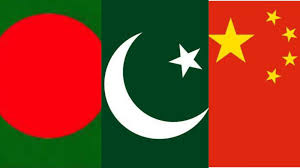
In recent years, the evolving geopolitical landscape of South Asia has been redefined by an emerging alignment among China, Pakistan, and Bangladesh. The growing convergence between these three countries, particularly under China’s Initiative, is reshaping regional dynamics and presenting new challenges to India and broader Indo-Pacific security arrangements.
China-Pakistan Relations. The China-Pakistan relationship, often described as an “all-weather friendship,” has been a cornerstone of regional geopolitics for decades. Rooted in shared strategic interests, particularly countering India, it has been institutionalised through defence cooperation, economic assistance, and infrastructural integration. It has been further deepened through initiatives like the China-Pakistan Economic Corridor (CPEC), a flagship project of China’s Belt and Road Initiative (BRI) launched in 2013, connecting China’s Xinjiang province to Pakistan’s Gwadar port on the Arabian Sea. This strategic partnership has been further solidified by China’s support for Pakistan’s nuclear program and military modernisation, with Pakistan acquiring 70–80% of its weapons from China over the past five years. China has also become Pakistan’s largest arms supplier and a crucial diplomatic ally at forums like the United Nations Security Council, where it has repeatedly shielded Pakistan from international scrutiny over terrorism-related issues.
Bangladesh’s Gradual Pivot. Bangladesh’s inclusion in this dynamic marks a shift, particularly following the ouster of Prime Minister Sheikh Hasina in July 2024. Hasina’s government maintained a balanced foreign policy, fostering close ties with India while engaging China economically. However, the interim government under Muhammad Yunus has pivoted toward closer relations with Beijing and Islamabad, driven by deteriorating India-Bangladesh ties and China’s proactive engagement. This shift was evident during Yunus’s March 2025 visit to China, where he positioned Bangladesh as a gateway for Chinese economic cooperation in the region, a move that strained relations with India. The motivations behind this convergence are multifaceted. For China, expanding influence in South Asia counters U.S.-India strategic alignment and secures access to the Bay of Bengal and Indian Ocean. Pakistan seeks to bolster its regional relevance. Bangladesh, navigating domestic political transitions, sees alignment with China and Pakistan as a means to secure economic and diplomatic support, particularly through BRI projects.
The Triangle Takes Shape. A pivotal development was the trilateral meeting in Kunming, China, on June 19, 2025, involving representatives from China, Pakistan, and Bangladesh. This “informal” consultation, hosted by China, focused on regional cooperation and connectivity, sparking speculation about a new regional bloc to replace SAARC. While Bangladesh’s interim government dismissed claims of a formal alliance, the meeting signaled a strategic intent to enhance collaboration among the three nations.
Implications for India. The proposed bloc poses a direct challenge to India. India’s concerns were heightened by comments from Bangladesh’s leadership, such as Yunus’s claim that Bangladesh is the “only guardian” of the Indian Ocean. India, finds itself encircled by Chinese-influenced states on nearly all fronts, Nepal to the north, Pakistan to the west, and Bangladesh and Myanmar to the east. From a maritime perspective, China’s presence in Gwadar (Pakistan) and Chittagong (Bangladesh) gives it a foothold in the Indian Ocean, threatening India’s naval supremacy and potentially undermining the U.S.-led Indo-Pacific strategy. The strategic alignment also threatens India’s northeastern states, especially the vulnerable Siliguri Corridor, which connects mainland India to its northeast.
Broader Geopolitical Ramifications. The China-Pakistan-Bangladesh convergence complicates the U.S.-China rivalry in the Indo-Pacific. The U.S., viewing China’s growing influence as a challenge to its regional strategy. This dynamic could intensify Sino-U.S. competition, with Bangladesh’s strategic choices shaping the regional balance of power. Smaller South Asian states, such as Nepal and Sri Lanka, may face pressure to align with either the China-Pakistan-Bangladesh bloc or India, complicating regional integration. The dormancy of SAARC, exacerbated by India’s boycott following the 2016 Uri attack, has created a vacuum that China seeks to fill, potentially reshaping South Asia’s geopolitical architecture.
Conclusion. The emerging China-Pakistan-Bangladesh alignment reflects a strategic realignment in South Asia, driven by shared economic and geopolitical interests. While not yet a formal alliance, this convergence challenges India’s regional dominance and complicates the Indo-Pacific strategic landscape. As China expands its influence through BRI and diplomatic engagements, India must navigate a complex dilemma, balancing regional influence with global partnerships. The future of South Asian stability hinges on how these dynamics evolve and whether a new regional bloc can foster cooperation without exacerbating tensions.
Please Add Value to the write-up with your views on the subject.
For regular updates, please register your email here:-
Information and data included in the blog are for educational & non-commercial purposes only and have been carefully adapted, excerpted, or edited from reliable and accurate sources. All copyrighted material belongs to respective owners and is provided only for wider dissemination.
References:-
Hindustan Times. “CDS Chauhan Says Convergence between China, Pakistan and Bangladesh Has Implications for Regional Stability.” July 9, 2025.2.
India Today. “To Counter India, China, Pakistan and Bangladesh Creating a Saarc-Replacement.” June 30, 2025.
The Hindu. “Bangladesh, Pakistan, China Hold Inaugural Trilateral Foreign Office Discussion.” June 20, 2025.
The Hindu. “Pakistan, China Working to Establish New Regional Bloc with Potential to Replace SAARC: Report.” June 30, 2025.
Modern Diplomacy. “Bangladesh-Pakistan Thaw and a Regional Realignment.” February 23, 2025.
South Asian Voices. “The Bangladesh-Pakistan-China Triangle and India’s Strategic Dilemma.” April 26, 2025.
The Express Tribune. “Ex-Bangladeshi General Urges China Alliance to Seize India’s Northeast If Pakistan Is Attacked.” May 3, 2025.
United States Institute of Peace. “China’s Influence on Conflict Dynamics in South Asia.” December 16, 2020
My Article published on the “Indus International Research Foundation” website on 18 Jul 25.
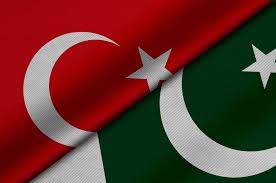
In the grand theater of global geopolitics, alliances and rivalries shape the dynamics of diplomacy. Over the past decade, Turkey under President Recep Tayyip Erdoğan has pursued an increasingly assertive foreign policy that extends well beyond its traditional spheres of influence. One of the most intriguing and consequential elements of this strategy is Turkey’s deepening engagement with India’s neighbours. Turkey’s relations with India’s immediate neighbours form a complex web of strategic, military, economic, and ideological engagements. Turkey has pursued a neo-Ottoman foreign policy, leveraging historical ties, Islamic solidarity, and defence exports to expand its influence in South Asia. This “strategic tango” has significant implications for South Asia’s balance of power, particularly from New Delhi’s perspective.
Turkey and Pakistan: Ideological Brotherhood beyond Diplomacy
The relationship between Turkey and Pakistan is characterised by its closeness and growing complexity, grounded in a shared Islamic identity, historical connections, and reciprocal geopolitical backing. Under the leadership of Erdoğan, these ties have developed into a strong strategic partnership.
The two nations have engaged in collaboration concerning military training, defence manufacturing, and joint naval exercises. Turkey ranks as Pakistan’s second-largest arms supplier, following China, providing sophisticated military equipment, including Bayraktar TB2 and Asisguard Songar drones, corvettes, missile systems, and enhancements for Pakistan’s F-16 fleet. These exports have strengthened Pakistan’s military capabilities, notably in drone warfare, which constitutes an increasing concern for India along the Line of Control (LoC) and other unstable border regions. During the recent India-Pakistan conflict (Operation Sindoor), reports suggest Turkey supplied Pakistan with between 300 and 400 drones, along with other military assistance, thereby intensifying tensions.
Turkey has also supported Pakistan’s stance on Kashmir, frequently raising the issue at the United Nations and other international forums. Ankara has consistently condemned India’s 2019 abrogation of Article 370, which nullified the special status of Jammu and Kashmir, and has articulated this position at various international platforms, including the United Nations. Conversely, Pakistan endorses Turkey on issues such as the Cyprus dispute and Azerbaijan’s stance in the Nagorno-Karabakh conflict, thereby reinforcing their strategic alliance.
By clearly aligning with Pakistan on a sensitive bilateral matter, Turkey has indicated its readiness to confront India on the international stage. This has led to a strong Indian reaction, with tourism bookings to Turkey decreasing by 60% and cancellations increasing by 250% in 2025, along with calls for trade boycotts.
Bangladesh: Growing Engagement and Deepening Ties.
Turkey’s diplomatic relations with Bangladesh have markedly strengthened, primarily due to defence collaboration and economic prospects. Ankara has employed a strategic approach incorporating humanitarian assistance, cultural diplomacy, and religious outreach to foster rapport with Dhaka. The Turkish Cooperation and Coordination Agency (TIKA) has been actively engaged in Bangladesh, financing educational institutions, healthcare facilities, and infrastructure developments. Furthermore, the administration of President Erdoğan has adopted a firm stance regarding the Rohingya crisis, providing refuge to displaced persons and vocally criticising Myanmar’s policies. This stance aligns closely with the perspectives held by Bangladesh.
Bangladesh has reportedly acquired Turkish Bayraktar TB2 drones. These drones, whilst augmenting Bangladesh’s military capabilities, evoke concerns in India regarding their possible deployment along the shared 4,096-kilometre border. Economically, Turkey has actively engaged with Bangladesh through trade and infrastructure initiatives, capitalising on Dhaka’s expanding economy and strategic positioning. Turkey’s neo-Ottoman ambitions align with certain political factions within Bangladesh, notably those sympathetic to Islamist rhetoric, thereby further fortifying bilateral relations.
This ideological alignment, coupled with defence cooperation, has raised concerns in New Delhi, which fears that Turkey’s influence could destabilise its eastern neighbourhood.
Emerging Engagements With Other Neighbours
Turkey has also expanded its focus to smaller South Asian nations, including Nepal, Sri Lanka, Bhutan, Myanmar, and the Maldives. These countries, often overlooked in global strategic considerations, possess significant geopolitical importance due to their strategic locations and vulnerability to external influences.
In Nepal, Turkey’s influence is predominantly diplomatic and cultural. Ankara has increased its embassy presence, provided scholarships, and facilitated interfaith dialogue through its Diyanet Foundation. Although not explicitly political, these initiatives form part of Turkey’s broader strategy to extend its influence via cultural engagement and religious diplomacy.
Turkey’s engagements with Sri Lanka are less pronounced but strategically significant. Turkey has pursued economic ties and limited defence cooperation, including potential drone exports. In Bhutan, Turkey’s presence is primarily economic, with investments in infrastructure and trade.
Myanmar, notwithstanding its political instability, has experienced Turkey’s outreach through humanitarian aid and limited defence negotiations, capitalising on shared Islamic affiliations with specific communities. Although these efforts are less advanced than those with Pakistan and Bangladesh, they demonstrate Turkey’s broader strategy to augment its presence in India’s vicinity.
The Maldives, a small island nation located in the Indian Ocean, has attracted interest from numerous international actors, including China, India, and currently Turkey. The government led by Erdoğan has enhanced bilateral engagements and extended development aid. As the archipelago increasingly assumes a pivotal position in the contest for influence within the Indian Ocean, Turkey’s engagement signifies its aspiration to participate actively in regional maritime geopolitics.
The China Factor: Converging Interests, Diverging Identities
While not a neighbour in the strict sense, China has a significant influence on India’s strategic outlook and is becoming increasingly important for Turkey as well. Ankara and Beijing share common viewpoints in criticising Western dominance and promoting multipolarity. Turkey participates in China’s Belt and Road Initiative (BRI), though with varying enthusiasm. Economic needs have motivated Erdoğan to pursue Chinese investment, especially during Turkey’s ongoing financial instability.
Nevertheless, the relationship encounters some friction. Turkey has historically been a vocal critic of China’s treatment of the Uighurs, a Turkic Muslim minority in Xinjiang. Erdoğan previously characterised Chinese policies as “genocide,” although such rhetoric has become less prominent in recent years as economic pragmatism has gained precedence.
From India’s perspective, Turkey’s ties with China heighten concerns. Both nations have shown a readiness to oppose India on Kashmir and support Pakistan. Although their ideological bases differ—Turkey with its neo-Ottoman and Islamist inclinations, and China with its authoritarian state capitalism—their strategic interests sometimes align, especially in efforts to counter Indian influence.
Strategic Implications for India
Turkey’s neo-Ottoman ambitions, propelled by President Erdoğan’s vision of global Islamic leadership, frequently conflict with India’s secular, multipolar foreign policy. Turkey’s increasing engagement with India’s neighbouring countries carries strategic implications that New Delhi must carefully consider. Although Turkey does not possess the economic strength or geographical proximity to directly challenge India, its ideological assertiveness and alignment with adversarial interests render it a disruptive presence in South Asia.
Ankara’s vocal endorsement of Pakistan regarding Kashmir elevates the issue to an international level, countering India’s stance that it is a bilateral matter. This not only strengthens Pakistan’s position but also offers diplomatic protection for narratives that contest India’s territorial sovereignty.
The Turkey-Pakistan alliance, fortified through defence cooperation and shared stances on issues such as Kashmir, remains highly contentious. Turkey’s provision of advanced weapons, including drones and naval equipment, boosts Pakistan’s military strength, directly challenging India’s security along its western border. Additionally, Turkey’s defence collaborations with Bangladesh and the Maldives pose a threat to India’s influence in South Asia and the Indian Ocean Region.
Turkey’s soft power efforts, particularly in Muslim-majority areas, aim to establish Ankara as a leader within the Islamic world. This contrasts with India’s approach, which focuses on building ties with Muslim-majority nations through economic and developmental partnerships, rather than religious solidarity.
Turkey’s growing collaboration with China and Pakistan may constitute a loose yet influential axis characterised by common objectives to curtail Indian influence. While the establishment of a formal alliance appears improbable, convergences on particular issues, such as opposing India’s ascent or supporting anti-Indian narratives, could pose a persistent strategic challenge.
India’s Options
In response to Turkey’s assertiveness, India needs to adopt a multifaceted strategy. India’s displeasure needs to be signalled by reducing high-level diplomatic exchanges, and through economic levers such as trade and tourism advisories. Another option is to strengthen ties with countries that view Turkish policies with suspicion. Enhancement of defence and economic cooperation with Greece, Armenia, Cyprus, Israel, and the United Arab Emirates (UAE) would convey the right message. Closer at home, India needs to leverage its cultural diplomacy, economic strength, and infrastructure investments to counter Turkish influence in neighbouring countries. Initiatives like the BIMSTEC (Bay of Bengal Initiative for Multi-Sectoral Technical and Economic Cooperation) and the Indo-Pacific outreach provide platforms that could be used to build alternative narratives to Ankara’s Islamic solidarity approach.
Conclusion
Turkey’s strategic engagement with its neighbours in South Asia, often described metaphorically as a Tango, appears to be more than mere diplomatic manoeuvring. It seems to constitute a deliberate effort to reshape regional alliances and enhance Ankara’s influence within the Muslim world and beyond. For India, this diplomatic dance presents both a challenge and an opportunity: a challenge to its strategic environment and regional influence, and an opportunity to refine its diplomatic strategies and foster resilient partnerships. India must navigate these intricate geopolitical developments with vigilance to safeguard its regional interests. By fortifying its alliances and leveraging its economic and military capacities, India should endeavour to ensure that Turkey’s actions do not destabilise the delicate balance of power in South Asia.
Please Add Value to the write-up with your views on the subject.
Information and data included in the blog are for educational & non-commercial purposes only and have been carefully adapted, excerpted, or edited from reliable and accurate sources. All copyrighted material belongs to respective owners and is provided only for wider dissemination.
References:-
Hindu, T. (2025, March 10). India Sees 60% Drop in Tourism to Turkey Amid Kashmir Tensions.
Dawn. (2025, February 15). Turkey Supplies 300–400 Drones to Pakistan During Operation Sindoor, Sources Say.
Jane’s Defence Weekly. (2024, November 20). Turkey’s Defence Exports to Pakistan: Bayraktar TB2 and Beyond.
Ministry of External Affairs, India. (2024). India’s Response to Turkey’s Stance on Kashmir at the UN. New Delhi: Government of India.
Reuters. (2025, January 5). Bangladesh Acquires Turkish TB2 Drones, Raising Concerns in India.
Sharma, A. (2023). Turkey’s Neo-Ottoman Ambitions in South Asia. New Delhi: Observer Research Foundation.
Siddiqui, N. (2024). Pakistan-Turkey Strategic Partnership: Defence and Diplomacy. Islamabad: Institute of Strategic Studies.
Times of India. (2025, April 2). 250% Surge in Cancellations of Turkey Travel Bookings After Operation Sindoor.
Yilmaz, I., & Shakil, K. (2023). Turkey’s Foreign Policy Under Erdoğan: The Rise of Neo-Ottomanism. Journal of South Asian Studies, 46(3), 231–245.
The Diplomat. (2023).Turkey’s Growing Footprint in South Asia: Soft Power or Strategic Intent?
Asia Foundation. (2022).Turkey’s Soft Power Diplomacy in Bangladesh and the Rohingya Crisis.
Pantucci, R. (2022).China-Turkey Relations: A New Axis of Authoritarian Influence? Royal United Services Institute (RUSI).
Sharma, R. (2021).India’s Strategic Realignment in the Eastern Mediterranean: Balancing Turkey’s Outreach. Institute of Peace and Conflict Studies (IPCS).
Kugelman, M. (2020).Turkey and Pakistan: A Budding Strategic Alliance? Wilson Center.
Anadolu Agency. (2020).Erdoğan Says Kashmir Is as Important to Turkey as It Is to Pakistan.
Raja Mohan, C. (2020).The Rise of Turkey in Asia: A Challenge to India’s Regional Position? Carnegie India.
Yavuz, M. H., & Hakan, M. (2019).Erdoğan’s Vision and the Transformation of Turkish Foreign Policy. Middle East Critique, 28(3), 217–232.
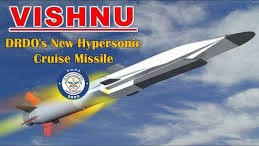
Between July 14-16, 2025, India reportedly conducted a successful test of a hypersonic cruise missile capable of reaching Mach 8 under Project Vishnu.
India’s defence ecosystem is currently undergoing a significant transformation, with Project Vishnu at the forefront. This classified initiative, led by the Defence Research and Development Organisation (DRDO), is a strategic leap for India. Project Vishnu aims to develop the Extended Trajectory-Long Duration Hypersonic Cruise Missile (ET-LDHCM), a weapon system that will fundamentally enhance India’s strategic capabilities. With its hypersonic speeds, advanced stealth characteristics, and multi-platform adaptability, Project Vishnu positions India among the leading nations in hypersonic technology, alongside the United States, China, and Russia.
Key Features: ET-LDHCM.
Project Vishnu represents India’s ambitious effort to create an indigenous hypersonic missile. It combines cutting-edge materials science, advanced propulsion systems, and precision-guided technology. While details are classified, available information suggests this missile is designed to fly at speeds between Mach 8 and Mach 10—almost three times faster than India’s fastest operational missile, the Brahmos, which reaches Mach 3.
With a range of 1,500 km, extendable to 2,500 km for a surface-to-surface configuration, the missile would have the capacity to penetrate deeply into adversary territory, targeting essential assets such as radar systems, command centres, and naval vessels. Its adaptable nature, with launching capabilities from land, aerial, or maritime platforms, would constitute a significant advantage, ensuring operational versatility across various scenarios and enhancing India’s strategic reach.
The core of the ET-LDHCM is its indigenous scramjet engine, a key technological breakthrough. This engine utilises atmospheric oxygen for combustion, thereby markedly improving fuel efficiency and facilitating sustained hypersonic flight. The propulsion system enables the missile to sustain speeds that surpass conventional air defences while covering extensive distances, making it a formidable weapon in India’s arsenal.
The missile’s airframe would be assembled with heat-resistant materials capable of enduring temperatures up to 2,000°C, generated by the intense friction associated with hypersonic travel. Furthermore, it would incorporate oxidation-resistant coatings to ensure durability in challenging environments, such as exposure to seawater or prolonged sunlight, making it suitable for naval deployment.
The ET-LDHCM is not just about speed and range; it also boasts formidable stealth capabilities. Operating at low altitudes, it significantly reduces radar detectability. Its mid-flight manoeuvres further enhance its capacity to evade missile defence systems. The plasma stealth effect, a result of ionised air at hypersonic velocities, absorbs radio waves, thereby further reducing its radar cross-section. This comprehensive stealth package ensures the ET-LDHCM’s ability to execute rapid, deep-penetration strikes with precision and confidence.
The missile would be capable of carrying payloads ranging from 1,000 to 2,000 kg, which may include conventional or nuclear warheads, thereby providing strategic flexibility for both tactical applications and deterrent purposes.
Project Vishnu
Named after the Hindu deity symbolising preservation and power, Project Vishnu reflects India’s aspiration to develop hypersonic missile systems capable of delivering rapid, precise, and virtually unstoppable strikes. The project is a natural evolution from India’s prior successes in missile technology, including the BrahMos (Mach 3), Shaurya missile, and the Hypersonic Technology Demonstrator Vehicle (HSTDV). However, Vishnu represents a quantum leap, not just an iteration.
The HSTDV, successfully tested in recent years, demonstrated India’s ability to sustain hypersonic speeds (above Mach 5) using an indigenous scramjet engine. A 1,000-second ground test of the scramjet engine marked a significant milestone, paving the way for the ET-LDHCM’s development. Unlike traditional ballistic missiles, hypersonic cruise missiles like the ET-LDHCM combine extreme speed with low-altitude flight and mid-course manoeuvrability, making them nearly impossible to intercept with current air defence systems.
Looking ahead, the successful test of the ET-LDHCM in 2025 will be a critical milestone. Operationalising the missile and its variants will require sustained investment, rigorous testing, and integration with existing platforms. The DRDO’s collaboration with industry and academia will be pivotal in overcoming technical challenges, such as scaling production and ensuring reliability under diverse operational conditions.
Implications and Impact
Project Vishnu positions India among a select group of nations possessing operational hypersonic capabilities. The United States, China, and Russia have dedicated substantial resources to similar technological advancements, with differing levels of success. India’s indigenous methodology, however, distinguishes it by minimising dependence on foreign technology and enhancing its strategic autonomy.
The Project represents a strategic initiative in direct response to the evolving security challenges within India’s neighbouring region. The progress made by China in hypersonic weaponry, including the DF-21D and DF-26 missiles, has heightened regional concerns regarding power asymmetries. Likewise, Pakistan’s missile development programs require the establishment of robust counter-capabilities. The ET-LDHCM’s capacity to execute rapid, deep-penetration strikes significantly enhances India’s deterrence posture, allowing for the neutralisation of threats with precision and expedience.
Beyond its military significance, Project Vishnu has far-reaching implications for India’s aerospace and civilian sectors. The advancements in hypersonic propulsion, materials science, and guidance systems could enhance satellite launch capabilities, reducing costs and increasing access to space. Economically, the project stimulates India’s defence-industrial ecosystem. Involving private firms and MSMEs creates opportunities for innovation, skill development, and export potential.
Conclusion
Project Vishnu signifies a significant advancement in India’s defence capabilities, reflecting the nation’s ambitions to establish itself as a prominent global technological and military power. The ET-LDHCM, distinguished by its exceptional speed, stealth, and adaptability, enhances India’s strategic deterrence and alters regional security dynamics. Through the utilisation of indigenous innovation and the promotion of public-private partnerships, the project not only fortifies national security but also promotes progress in the aerospace and civilian sectors. As India prepares for the 2025 testing phase, Project Vishnu exemplifies the country’s commitment to safeguarding its interests and asserting its presence on the international stage.
Please Add Value to the write-up with your views on the subject.
Information and data included in the blog are for educational & non-commercial purposes only and have been carefully adapted, excerpted, or edited from reliable and accurate sources. All copyrighted material belongs to respective owners and is provided only for wider dissemination.
References:-
Economic Times. (2025, July 15). India is testing a missile that flies at eight times the speed of sound, hits targets 1,500 km away.
Economic Times. (2025, July 16). Why India’s new hypersonic missile may outrun Israel’s Iron Dome and Russia’s S-500 and shift the balance in Asia.
Mathrubhumi English. (2025, July 14). Flies at 11,000 km/h: India’s new hypersonic missile outpaces and outguns BrahMos.
Defence Research and Development Organisation (DRDO). Official Website.
Pandit, Rajat. “India Steps Up Hypersonic Missile Development with Project Vishnu.” The Times of India, September 2022.
Pubby, Manu. “India’s Hypersonic Missile Programme Gains Momentum with Successful HSTDV Tests.” The Economic Times, October 2021.
Aroor, Shiv. “India’s Hypersonic Missile Ambitions: DRDO’s Project Vishnu and the Road Ahead.” India Today, November 2024.
Siddiqui, Huma. “India’s Scramjet Success: A Game-Changer for Hypersonic Missile Development.” The Hindu, December 2023.
Gupta, Shishir. “India’s Hypersonic Cruise Missile: DRDO Plans 2025 Test for ET-LDHCM.” Hindustan Times, January 2025.
Singh, Rahul. “Hypersonic Weapons and India’s Strategic Deterrence.” Strategic Analysis, Vol. 48, No. 3, 2024, pp. 245–260.
Ministry of Defence, Government of India. Annual Report 2024–2025.
Philip, Snehesh Alex. “India’s Hypersonic Push: DRDO’s Collaboration with Private Industry.” The Print, August 2023.