682: OP SINDOOR: INDIA’S POLICY OF PUNITIVE DETERRENCE AGAINST PAKISTAN-SPONSORED TERRORISM


My article was published on the “Life of Soldier” and the IIRF  website

on 14 Jun 25.


India’s national security strategy has been profoundly shaped by the persistent threat of Pakistan-sponsored terrorism, particularly in the contested region of Kashmir. For decades, Pakistan has been employing terrorism as a state policy to destabilise India, primarily through proxy groups like Lashkar-e-Taiba (LeT), Jaish-e-Mohammed (JeM), and Hizbul Mujahideen. In response, India has transitioned from a policy of strategic restraint to one of punitive deterrence, aiming to impose significant costs on Pakistan for its support of terrorist activities.

Necessity for Change of Approach. The origins of Pakistan-sponsored terrorism against India lie in the 1947 invasion of Jammu and Kashmir by tribal militias backed by Pakistan, sparking the first Indo-Pakistani war. Over the decades, Pakistan’s Inter-Services Intelligence (ISI) has been implicated in supporting militant groups targeting India, with major attacks including the 2001 Parliament attack, the 2008 Mumbai attacks, the 2016 Uri attack, and the 2019 Pulwama bombing. Pakistan’s overt nuclearisation in 1998 emboldened its strategy, as it leveraged its nuclear arsenal to shield its proxy warfare, believing India would refrain from conventional retaliation due to the risk of nuclear escalation. This dynamic allowed Pakistan to exploit the sub-conventional space, sustaining low-intensity conflict without triggering full-scale war. India’s initial restraint, while diplomatically prudent, failed to deter Pakistan’s persistent sponsorship of terrorism, necessitating a shift toward a more assertive approach.


Evolution of Punitive Deterrence

In the last decade, India began adopting punitive deterrence, a strategy designed to deter Pakistan by demonstrating a willingness to escalate in response to terrorist provocations. This approach combines conventional military actions, diplomatic pressure, and economic measures to raise the costs of Pakistan’s actions, challenging its reliance on nuclear deterrence to shield proxy warfare.

2016 Surgical Strikes. The Uri attack, which killed 19 Indian soldiers, prompted India to conduct surgical strikes across the Line of Control (LoC) targeting terrorist launch pads in Pakistan-occupied Kashmir (PoK). These strikes marked a shift from restraint, signalling India’s readiness to respond militarily. However, their limited scope had a modest impact on Pakistan’s strategic behaviour.

2019 Balakot Airstrikes. The Pulwama attack led to airstrikes on a JeM training camp in Balakot, Pakistan. As the first Indian airstrikes on Pakistani soil since 1971, Balakot represented a significant escalation, demonstrating India’s willingness to cross the LoC and strike deep inside Pakistan. The operation temporarily reduced terrorist activity in Kashmir.

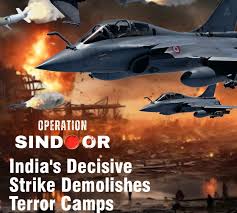
Operation Sindoor (2025).  Launched on May 7, 2025, in response to the April 22, 2025, Pahalgam attack that killed 26 civilians, Operation Sindoor was a high-intensity military operation targeting nine terrorist facilities in Pakistan and PoK. Unlike previous operations, Sindoor was publicly declared, reinforcing India’s commitment to punitive deterrence and challenging Pakistan’s nuclear blackmail. The operation’s scale and transparency marked a doctrinal shift toward mainstreaming conventional retaliation as a response to terrorism.


Strategic Framework and Analysis of Punitive Deterrence

India’s policy of punitive deterrence is a strategic doctrine aimed at dissuading Pakistan from sponsoring cross-border terrorism by imposing credible costs through calibrated military responses. Rooted in the need to break the cycle of provocation and restraint, this policy combines political resolve, precision strikes, and international diplomatic engagement to establish red lines. As exemplified by earlier responses, it marks a shift from reactive to proactive counter-terrorism. This framework underscores India’s intent to reshape adversary behaviour, strengthen national security, and reinforce deterrence without escalating into full-scale war, thereby maintaining strategic stability in South Asia. India’s punitive deterrence policy has several facets.

Conventional Response to Sub-Conventional Threats. India now treats Pakistan-sponsored terrorism as an act of aggression equivalent to conventional warfare, justifying military retaliation. Operation Sindoor framed Pakistan’s proxy attacks as the initiation of hostilities, placing the burden on Pakistan to prevent such actions to avoid escalation.

Public Declaration of Intent. By openly announcing Operation Sindoor, India established a “tripwire strategy,” setting clear red lines to deter future attacks. This transparency strengthens domestic support and signals resolve to international audiences, reducing Pakistan’s ability to deny involvement.

Targeting Terrorist Infrastructure. India focuses on disrupting terrorist networks, including training camps and launch pads, while avoiding civilian targets. Operation Sindoor’s inclusion of air bases marked a bold escalation, signalling that India could target strategic assets if provoked.

Diplomatic and Economic Pressure. India has complemented military actions with non-kinetic measures. Post-Pahalgam, India suspended the Indus Waters Treaty (IWT), demanding that Pakistan cease terrorism as a condition for reinstatement. India has also isolated Pakistan diplomatically,  condemning its actions at the United Nations and multilateral organisations.

Psychological Deterrence. By targeting air bases and demonstrating escalation dominance, India aims to undermine Pakistan’s confidence in its nuclear shield, forcing its military to reassess the costs of proxy warfare.

Legitimacy India’s airstrikes during Operation Sindoor were firmly rooted in international law and the UN Charter, which upholds the right to self-defence. The operation targeted terror camps of Jaish-e-Mohammed and Lashkar-e-Taiba in Pakistan and PoK. India presented a detailed dossier, backed by satellite imagery and intelligence inputs, confirming the presence and activity of terror infrastructure. The precision of the strikes, aimed at minimising civilian casualties, further reinforced India’s commitment to lawful action. These elements collectively underscored the legitimacy and proportionality of India’s response.

Acceptance and Reactions. Operation Sindoor elicited varied international reactions. The United States and European Union expressed concern over escalation risks but acknowledged India’s right to self-defence, urging both nations to exercise restraint. China, Pakistan’s ally, condemned the operation as a violation of sovereignty, while Russia adopted a neutral stance, advocating dialogue. The UN Security Council’s failure to issue a unified statement highlighted the global divide, with India leveraging its growing geopolitical clout to deflect criticism. India’s rejection of third-party mediation, insisting on bilateral resolution, underscored its assertive diplomatic posture.

Challenges and Limitations. India’s punitive deterrence policy faces significant challenges.

    • Escalation Risks. Targeting air bases in Operation Sindoor raised fears of nuclear escalation, given Pakistan’s low nuclear threshold. While a ceasefire was achieved, the operation highlighted the delicate balance India must maintain to avoid catastrophic conflict.
    • Commitment Traps. Public declarations create domestic expectations, where failure to respond to future attacks could erode government credibility. This dynamic risks forcing India into disproportionate responses to minor provocations.
    • Pakistan’s Resilience. Pakistan’s military views anti-India violence as a core strategic objective, making it resistant to deterrence. Despite economic pressures and FATF scrutiny, Pakistan resumed proxy attacks as conditions improved.
    • International Dynamics. Western calls for restraint, driven by nuclear fears, allow Pakistan to deflect accountability. India’s unilateral approach risks diplomatic isolation if not balanced with strategic outreach.
    • Attribution Challenges. Pakistan’s denials and the difficulty of conclusively linking attacks to its state apparatus complicate India’s justification for retaliation. Operation Sindoor’s preemptive approach reflects a shift toward acting on intent rather than exhaustive evidence, but it invites criticism.

Effectiveness and Outcomes. The policy’s effectiveness is mixed. The Balakot strikes reduced terrorist activity from 2019 to 2024, but the resurgence of attacks thereafter, including Pahalgam, indicates deterrence was not sustained. Operation Sindoor re-established India’s resolve, with the ceasefire suggesting Pakistan may recalibrate its strategy. However, the ideological commitment of Pakistan’s military to proxy warfare remains a persistent challenge. The policy has created a distinct operational space below the nuclear threshold, allowing India to impose costs without triggering all-out war.

Future Implications. For India’s policy of punitive deterrence to remain effective in the future, several strategic actions are essential. First, India must maintain credible military capabilities, including precision strike assets, advanced surveillance systems, and real-time intelligence networks to enable swift, proportionate responses. Second, seamless civil-military coordination and decision-making agility are critical to capitalise on narrow windows of opportunity. Third, India must invest in modern technologies such as unmanned systems, AI-driven targeting, and cyber capabilities to expand its deterrence toolkit. On the diplomatic front, continuous engagement with global powers is necessary to reinforce the legitimacy of India’s actions under international law and counter Pakistan’s disinformation campaigns. Furthermore, India should proactively expose terror infrastructure through satellite imagery and dossiers, shaping global opinion. Finally, internal resilience through adequate border security, counter-infiltration measures, and societal preparedness is vital to blunt future attacks. Together, these measures will sustain deterrence, minimise escalation risks, and reinforce India’s strategic credibility.

Conclusion

India’s policy of punitive deterrence marks a paradigm shift from strategic restraint to assertive coercion in countering Pakistan-sponsored terrorism. From the 2016 surgical strikes to the Balakot airstrikes and Operation Sindoor, India has demonstrated its willingness to escalate militarily, diplomatically, and economically to deter Pakistan’s proxy warfare. While effective in signalling resolve and disrupting terrorist infrastructure, the policy faces challenges in managing escalation risks, sustaining deterrence, and navigating international dynamics. As India refines its approach, balancing military decisiveness with diplomatic engagement will be critical to securing long-term stability and countering Pakistan’s use of terrorism as a tool of statecraft.


Please Add Value to the write-up with your views on the subject.


1879
Default rating

Please give a thumbs up if you  like The Post?


Link to the article on the website:-

OP SINDOOR: INDIA’S POLICY OF PUNITIVE DETERRENCE AGAINST PAKISTAN-SPONSORED TERRORISM

OP SINDOOR: INDIA’S POLICY OF PUNITIVE DETERRENCE AGAINST PAKISTAN-SPONSORED TERRORISM

For regular updates, please register your email here:-

Subscribe


References and credits

To all the online sites and channels.

Pics Courtesy: Internet (Kashmir Scan)

Disclaimer:

Information and data included in the blog are for educational & non-commercial purposes only and have been carefully adapted, excerpted, or edited from reliable and accurate sources. All copyrighted material belongs to the respective owners and is provided only for broader dissemination.


For regular updates, please register your email here:-

Subscribe


References and credits

To all the online sites and channels.

Pics Courtesy: Internet

Disclaimer:

Information and data included in the blog are for educational & non-commercial purposes only and have been carefully adapted, excerpted, or edited from reliable and accurate sources. All copyrighted material belongs to the respective owners and is provided only for wider dissemination.


References:-

  1. Bhaumik, Anirban. “Operation Sindoor: India’s Bold Strike Against Terror.” The Hindu, May 8, 2025.
  2. Chaudhury, Dipanjan Roy. “India Suspends Indus Waters Treaty Amid Rising Tensions.” The Economic Times, April 28, 2025.
  3. Fair, C. Christine. Fighting to the End: The Pakistan Army’s Way of War. Oxford: Oxford University Press, 2014.
  4. Ganguly, Sumit, and S. Paul Kapur. India, Pakistan, and the Bomb: Debating Nuclear Stability in South Asia. New York: Columbia University Press, 2010.
  5. Kapur, S. Paul. “India’s Surgical Strike and the Logic of Punitive Deterrence.” Journal of Strategic Studies 40, no. 4 (2017): 567–589.
  6. Ministry of External Affairs, Government of India. “Statement on Operation Sindoor and India’s Counter-Terrorism Policy.” May 7, 2025.
  7. Pant, Harsh V., and Kartik Bommakanti. “India’s National Security Strategy: The Shift to Punitive Deterrence.” ORF Issue Brief No. 392, Observer Research Foundation, June 2025.
  8. Rajagopalan, Rajeswari Pillai. “Balakot Airstrikes: A Case Study in Escalation Dynamics.” Strategic Analysis 43, no. 6 (2019): 512–526.
  9. Riedel, Roberta. Avoiding Armageddon: America, India, and Pakistan to the Brink and Back. Washington, DC: Brookings Institution Press, 2013.
  10. Singh, Sushant. “From Restraint to Retaliation: India’s Evolving Counterterrorism Strategy.” India Today, May 15, 2025.
  11. United Nations Security Council. “Press Statement on India-Pakistan Tensions Post-Pahalgam Attack.” April 25, 2025.
  12. Tellis, Ashley J. “India’s Emerging Strategic Doctrine: From Restraint to Proaction.” Carnegie Endowment for International Peace, July 2020.
  13. Joshi, Yogesh, and Anit Mukherjee. “From Denial to Punishment: The Evolution of India’s Military Strategy.” India Review 18, no. 3 (2019): 283–308.
  14. Swami, Praveen. “The Return of Terror: Pakistan’s Proxy War in Kashmir.” Frontline, March 15, 2025.

681: TWO SECTORS, ONE ETHOS: SHARED PRINCIPLES IN DEFENCE AND HOSPITALITY


Presented my views at the event

(World of Hospitality Expo 2025 Bengaluru)  on 12 Jun 25.


At first glance, the hospitality industry and the defence forces inhabit two completely different worlds. One is centred around guest comfort, luxury, and personalised experiences, while the other is dedicated to national security, combat readiness, and discipline under extreme conditions. However, beneath these surface differences lie a surprising number of commonalities. These shared values, systems, and operational philosophies testify to the importance of structure, service, and efficiency in both fields.


Service Orientation and Sense of Duty. Both professions are service-oriented at their core, albeit in different ways. Military personnel are sworn to serve the nation, protect its citizens, and uphold constitutional values, often at great personal sacrifice. Their sense of duty and patriotism define their commitment. In hospitality, professionals are committed to serving guests, ensuring their comfort, safety, and satisfaction. While the service here is commercial, it is also rooted in values like empathy, attentiveness, and responsibility. This shared service ethos cultivates a mentality where personal gain is often secondary to the satisfaction or safety of those served.


Round-the-Clock Operations. Both the defence forces and the hospitality industry function 24/7. Military readiness must always be maintained, regardless of holidays or time zones. Similarly, hotels, resorts, and airlines operate around the clock to serve guests from around the world. This means shift-based work, night duties, and an unwavering service or readiness at all hours. It demands a resilient workforce and strong time management practices.


Leadership. One of the most striking similarities is the demand for decisive leadership in high-pressure situations. Military leaders are trained to make quick, life-or-death decisions in combat zones or crises. Their ability to lead, motivate, and manage resources can make the difference between mission success and failure. While the stakes may not involve national security in the hospitality industry, emergency scenarios, natural disasters, medical emergencies, or VIP security breaches require calm, decisive leadership. Hotel managers must make swift decisions, mobilise teams, and ensure guest safety, often under public scrutiny. Emotional intelligence, stress tolerance, and strategic thinking are invaluable.


Discipline. Discipline is the cornerstone of military life. From a soldier’s daily routine to combat strategies, discipline ensures order, consistency, and operational success. The hospitality industry also demands a very high degree of self-discipline. The shared emphasis on discipline ensures operational efficiency and cultivates a professional culture where accountability and excellence are paramount.


Adherence to SOPs. The defence forces function through Standard Operating Procedures (SOPs) that define actions, responses, and protocols.  In the hospitality industry, SOPs play an equally critical role. Whether it’s how a guest is greeted at a hotel, the sanitation procedure in a kitchen, or the protocol for handling emergencies, every action is governed by established procedures. Like the military, hospitality professionals are trained to follow these processes precisely, ensuring consistency in service and guest safety.


Teamwork. Teamwork is critical in both domains. A successful military operation relies on each unit playing its part with precision. Similarly, seamless guest experiences in hospitality result from the coordination between the front office, kitchen, housekeeping, security, and other departments. In both environments, the inability of one unit to function correctly can affect the entire operation.


Professionalism and Appearance. Both industries uphold high standards of professionalism and personal grooming. Military uniforms are symbols of discipline, unity, and national pride. Similarly, the hospitality industry emphasises uniforms, grooming standards, and personal etiquette to reflect the brand’s image and deliver a sense of trust and order. This emphasis on personal presentation conveys respect for the uniform in the military and for the guest in hospitality. It helps instil a sense of pride and belonging among team members.


Attention to Detail. Attention to detail is critical in both fields, where minor oversights can have significant consequences. In the defence forces, attention to detail can be a matter of life and death. A soldier’s ability to maintain equipment, follow precise instructions, or analyse intelligence accurately can determine the success of a mission. In hospitality, a perfectly made bed, a spotless dining area, or a personalised welcome note can elevate a guest’s experience from ordinary to exceptional. Staff are trained to notice and address even the most minor issues, such as a smudge on a glass or a guest’s dietary preference, to ensure satisfaction. Both industries cultivate a meticulous approach, recognising precision drives excellence and reliability.


Training and Skill Development. Both sectors place a premium on training. Military personnel undergo intense physical, tactical, psychological, and strategic training. Constant up-skilling is required to adapt to new technologies, warfare tactics, and mission demands. Similarly, hospitality professionals are continuously trained in customer service, soft skills, foreign languages, food safety, technology, and management practices. For example, chefs train for years in culinary techniques, and front-office staff must master reservation systems, complaint handling, and cultural etiquette. This shared commitment to lifelong learning and operational readiness reinforces a culture of excellence.


Crisis Management and Emergency Preparedness. The military is trained in extreme, uncertain, and dangerous environments—war zones, peacekeeping missions, or humanitarian operations. Crisis management is embedded into military DNA. The hospitality industry must also be prepared for various crises: fire outbreaks, natural disasters, terrorist threats, pandemics, or political unrest. Hotels and resorts have evacuation plans, first-aid teams, and disaster recovery protocols. The COVID-19 pandemic demonstrated how quickly hotels had to transform into quarantine centers, adopt strict sanitisation protocols, and operate under unprecedented restrictions. Staying composed, mobilising resources, and prioritising human safety are critical in both fields.


Security and Surveillance. These are core functions of defence forces but are also increasingly relevant in the hospitality sector, particularly in high-risk locations or during high-profile events. Hotels and resorts implement CCTV monitoring, access controls, security checks, and emergency drills. VIP guests, dignitaries, and significant events often require cooperation with national security agencies. As a result, both fields rely on intelligence gathering, threat assessment, and preventive strategies to ensure people’s and property’s safety.


Logistics and Operational Efficiency. The military is a logistical powerhouse—managing supply chains, troop deployments, food, fuel, medical supplies, and infrastructure, often under time-sensitive conditions. Hospitality, while different in scale, is also logistics-intensive. Every day, hotels manage inventory, food and beverage supplies, laundry services, room turnovers, event setups, and more. Coordinating these moving parts is essential to the smooth functioning of the establishment. In both cases, operational excellence results from tight coordination, resource planning, and execution.


Cultural Awareness and Protocol. Both sectors engage with diverse populations and cultures in today’s globalised world. Military personnel are often deployed in international missions and must understand local customs to interact effectively with civilian populations and allied forces. Missteps can have diplomatic consequences. Hospitality professionals regularly deal with guests from different cultural, linguistic, and religious backgrounds. Understanding these differences ensures that services are respectful, personalised, and sensitive to guests’ needs. This shared need for cultural competence highlights the importance of empathy, protocol, and communication skills.


Ethical Standards and Accountability. Both sectors require strong moral standards. The military adheres to codes of conduct related to rules of engagement, treatment of prisoners, and civilian protection. Violations can have legal and diplomatic consequences. Hospitality professionals must also maintain ethical conduct, ensuring guest privacy, honest billing, fair labour practices, and non-discrimination. Breaches can damage reputations and invite legal repercussions. A shared culture of integrity and accountability builds public trust and internal cohesion.


Conclusion

Despite their apparent differences in purpose and context, the hospitality industry and the defence forces are more alike than commonly perceived. Both are service-oriented, discipline-driven, and operationally complex. They rely on structured training, teamwork, ethical conduct, and the ability to perform under pressure.


Please Add Value to the write-up with your views on the subject.


1879
Default rating

Please give a thumbs up if you  like The Post?


For regular updates, please register your email here:-

Subscribe


References and credits

To all the online sites and channels.

Pics Courtesy: Internet

Disclaimer:

Information and data included in the blog are for educational & non-commercial purposes only and have been carefully adapted, excerpted, or edited from reliable and accurate sources. All copyrighted material belongs to respective owners and is provided only for wider dissemination.


References:-

  1. Chand, M. (2010). “The impact of HRM practices on service quality, customer satisfaction and performance in the Indian hotel industry.” International Journal of Human Resource Management, 21(4), 551–566.
  1. Andrews, S., & Kasavana, M. L. (2006). The Hospitality Industry Handbook on Nutrition and Menu Planning. Juta and Company Ltd.
  1. Jones, T., Hillier, D., & Comfort, D. (2016). “Security and safety in the hospitality industry: The case of hotel chains.” Journal of Retail & Leisure Property, 6(3), 193–203.
  1. Paraskevas, A. (2013). “Aligning strategy to threat: A baseline anti-terrorism strategy for hotels.” International Journal of Contemporary Hospitality Management, 25(1), 140–162.
  1. Roper, C. A. (1999). Emergency Response Planning for Corporate and Municipal Managers. Butterworth-Heinemann.
  1. Walker, J. R. (2021). Introduction to Hospitality Management (6th ed.). Pearson Education.
  1. Yammarino, F. J., & Bass, B. M. (1990). “Transformational leadership and multiple levels of analysis.” Human Relations, 43(10), 975–995.
  1. Baum, T. (2006). Human Resource Management for Tourism, Hospitality and Leisure: An International Perspective. Cengage Learning EMEA.
  1. Brotherton, B. (2012). International Hospitality Industry: Structure, Characteristics and Issues. Routledge.
  1. Bruneau, T., & Matei, F. (2013). The Routledge Handbook of Civil-Military Relations. Routledge.
  1. Crawford, C. B., & Hubbard, S. S. (2009). The impact of transformational leadership on hospitality service quality. Tourism and Hospitality Research, 9(3), 253–261. https://doi.org/10.1057/thr.2009.14
  1. Ghobadian, A., Speller, S., & Jones, M. (1994). Service quality: Concepts and models. International Journal of Quality & Reliability Management, 11(9), 43–66.
  1. O’Fallon, M. J., & Rutherford, D. G. (2010). Hotel Management and Operations (5th ed.). Wiley.
  1. Pizam, A. (2010). Professional behaviour in hospitality. International Journal of Hospitality Management, 29(3), 329–330.

680: FROM SHOCK TO ACTION: MANAGING STARTLE EFFECT IN MILITARY FLYING


My Article published in the Jun 25 issue of  IAF Flight Safety Magazine –  ” Blue Sky”


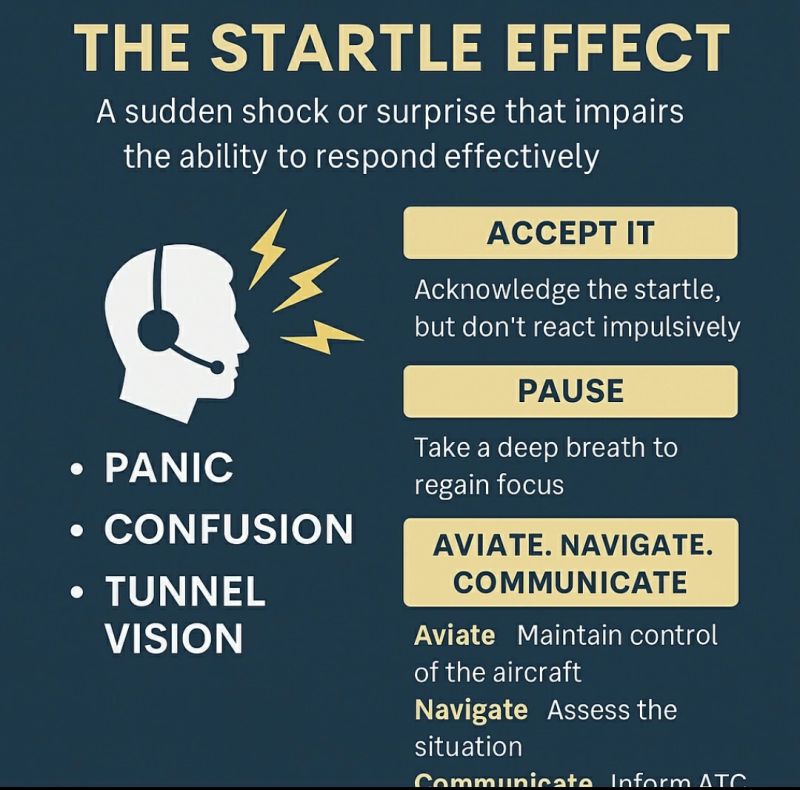
The aviation industry places immense responsibility on pilots to maintain control and make critical decisions under pressure. However, even the most experienced aviators can be momentarily disrupted by the startle effect—a brief, involuntary physiological and psychological response to unexpected events. Whether triggered by sudden turbulence, an equipment malfunction, or an urgent air traffic control (ATC) instruction, the startle effect can impair cognitive and motor functions, potentially delaying life-saving actions. Understanding and managing this phenomenon is crucial for enhancing flight safety. Its mitigation lies in understanding the startle effect, its causes and impacts, and techniques for transitioning from shock to effective action. The industry’s commitment to ongoing research and development further enhances safety, providing reassurance and confidence in our collective progress.


Understanding the Startle Effect

Defining Startle Effect. The startle effect is a reflexive response to an unexpected stimulus, characterised by a rapid increase in heart rate, muscle tension, adrenaline release, and temporary cognitive overload. According to a 2017 study by the Aerospace Medical Association, startle responses typically last 1–3 seconds but can feel significantly longer due to heightened arousal. In aviation, this can manifest as a pilot freezing, fixating on a single issue, or making impulsive errors during critical moments.

Contributing Triggers. Environmental factors such as sudden wake turbulence, wind shear, or severe weather can cause the startle effect. Mechanical Issues like engine failure, hydraulic system warnings, or stall alerts can also trigger the onset. Human factors, including unexpected ATC directives, miscommunications, or cabin crew alerts, are also possible causes.

Startle’s Impact. A 2019 report by the International Air Transport Association (IATA) highlighted that startle-induced delays in pilot response contributed to 12% of loss-of-control incidents between 2010 and 2018. These incidents underscore the need for structured training and response strategies. By preparing pilots to navigate unexpected events, these strategies ensure they are ready to face any challenge, mitigating the startle response’s effects.

Physiology Aspects. When a startling event occurs, the amygdala (the brain’s fear center) triggers the sympathetic nervous system, releasing adrenaline and cortisol. This “fight or flight” response prepares the body for immediate action but can overwhelm higher-order cognitive functions like problem-solving and situational awareness. Pilots may experience Tunnel Vision (fixating on a single warning or instrument, ignoring other critical cues), Motor Impairment (delayed or imprecise control inputs, such as overcorrecting pitch or power), or Cognitive Overload (difficulty prioritising tasks, leading to omission of standard procedures).

Psychological Effect. Startle can psychologically erode confidence, particularly for less experienced pilots. However, with proper training, pilots can recognise and counteract these effects, transforming a reflexive response into a controlled, deliberate action.


Strategies for Managing Startle Effect

Effective management of the startle effect requires a multi-faceted approach, encompassing pre-flight preparation, in-flight response techniques, and post-event recovery. Below are evidence-based strategies to help pilots navigate unexpected events.

Mental Conditioning.  Visualisation is a powerful tool for preparing for surprises. Pilots should incorporate “what-if” scenarios into pre-flight briefings, mentally rehearsing responses to emergencies like engine failures or sudden weather changes. A 2020 study in The International Journal of Aviation Psychology found that pilots who practised mental simulation were 30% faster in responding to unexpected events.

Simulator Training. High-fidelity flight simulators are ideal for replicating startling scenarios, such as sudden system failures or loss of control. Regular exposure to these conditions desensitises pilots to startle triggers and builds muscle memory for correct responses. The Federal Aviation Administration (FAA) mandates Upset Prevention and Recovery Training (UPRT) for commercial pilots, emphasising startle management in high-risk scenarios.

Crew Resource Management (CRM). Effective CRM ensures clear communication and role delegation among crew members, reducing individual cognitive load during surprises. For example, designating the co-pilot to handle radio communications allows the pilot to focus on aircraft control. CRM training has been shown to improve team performance in high-stress situations by 25%.

In-Flight Response Technique: Pause and Breathe. Deliberately pausing after a startling event can prevent impulsive actions. Controlled breathing regulates heart rate and restores focus. This technique, rooted in mindfulness practices, is increasingly incorporated into pilot training programs.

Aviate, Navigate, and Communicate. Maintain aircraft control by focusing on pitch, power, and airspeed. For example, during a stall warning, pilots should apply full power and reduce the angle of attack.  Ensure the aircraft is on a safe trajectory, avoiding terrain or traffic. Inform ATC only after stabilising the situation. This prioritisation mantra emphasises that the pilots address the most critical tasks first.

Checklists over Instinct. Relying on standard operating procedures (SOPs) and emergency checklists counters the tendency to act impulsively. For instance, during an engine failure, pilots should methodically follow the checklist rather than rushing to troubleshoot. A 2018 Aviation, Space, and Environmental Medicine study found that checklist adherence reduced error rates by 40% in simulated emergencies.

Post-Event Recovery: Debrief and Reflect. Post-flight debriefs allow pilots to analyse their response, identify areas for improvement, and reinforce learning. Reflective practice has been shown to reduce the intensity of future startle responses by 15%.

Physical Recovery. Lingering adrenaline can impair focus for the remainder of the flight. Techniques like progressive muscle relaxation (tensing and releasing muscle groups) can restore calm.

Training Techniques to Build Resilience: Startle-Specific Drills. Training programs should incorporate unexpected events without warning, such as a sudden engine failure during a routine simulator session. These drills mimic real-world surprises and improve response times. Simulators have startle-focused modules for pilots.

Stress Inoculation. Gradually increasing the complexity of simulated emergencies builds tolerance to high-pressure situations. For example, a training session might progress from a single system failure to multiple simultaneous malfunctions. This approach, known as stress inoculation, enhances cognitive resilience.

Cognitive Reframing. Pilots should be trained to view unexpected events as manageable challenges rather than threats. This mindset shift, supported by cognitive-behavioural techniques, reduces panic and promotes problem-solving.

Practical Tips.

    • Know Your Aircraft. Deep familiarity with systems and failure modes reduces uncertainty. For example, understanding the indications of a hydraulic failure allows quicker diagnosis and response.
    • Stay Current. Regular proficiency checks ensure automatic responses to abnormal situations, bypassing startle-induced delays.
    • Stay Physically Fit. Cardiovascular health and stress management through exercise or yoga improve physiological recovery from startle.


Real-World Context: Lessons from Civil Aviation.

Miracle on the Hudson. The 2009 US Airways Flight 1549 incident, known as the “Miracle on the Hudson,” exemplifies effective startle management. After a dual-engine failure caused by bird strikes, Captain Chesley “Sully” Sullenberger experienced a brief startle response but quickly regained control. His simulator training and adherence to “Aviate, Navigate, and Communicate” enabled him to safely ditch the aircraft in the Hudson River, saving all 155 passengers and crew. Sullenberger later emphasised the role of repetitive training in overcoming initial shock.

Blunder in Mangalore. On May 22, 2010, Air India Express Flight IX-812, a Boeing 737-800, crashed while landing at Mangalore International Airport, India, resulting in 158 fatalities out of the 166 people on board. The aircraft overran the runway after a late touchdown, attributed partly to the captain’s delayed response to a destabilised approach. Investigation reports suggest the captain, who was fatigued, may have been startled by the aircraft’s high approach speed and runway proximity, leading to a failure to initiate a timely go-around. The co-pilot’s hesitation to intervene, possibly due to an authority gradient, further compounded the issue. This tragic incident highlights how startle, fatigue, and poor CRM can lead to catastrophic outcomes, emphasising the need for robust training and assertive crew coordination.


Industry Trends and Resources for Mitigating the Startle Effect

The civil aviation industry increasingly prioritises startle effect mitigation through advanced training and resources. Regulatory bodies like the FAA and EASA have integrated Upset Prevention and Recovery Training (UPRT) into pilot licensing, emphasising startle management in scenarios like stalls, loss of control, etc. High-fidelity simulators incorporate startle-focused modules, replicating unexpected events to build resilience. The Flight Safety Foundation’s human factors publications offer in-depth guidance on cognitive and physiological responses to surprises. Emerging technologies like virtual reality (VR) training are gaining traction for immersive startle desensitisation. Aviation apps like ForeFlight enhance situational awareness, reducing the likelihood of unexpected events. Mindfulness-based programs, including apps like Headspace, are being adopted to improve pilots’ stress regulation. Collaborative initiatives, such as IATA’s safety reports, advocate for enhanced Crew Resource Management (CRM) to counter startle through teamwork (IATA, 2019). In India, the Directorate General of Civil Aviation (DGCA) aligns with global standards, promoting simulator-based UPRT to address startle-related risks (DGCA, 2020). These trends and resources collectively strengthen pilots’ ability to manage the startle effect effectively.


Conclusion

The startle effect is an inevitable human response, but its impact on flight safety can be minimised through disciplined training, structured responses, and mental preparedness. Pilots can transform shock into swift, effective action by incorporating pre-flight preparation, in-flight techniques, and post-event recovery. As aviation evolves, ongoing research and training innovations will further equip pilots to handle the unexpected, ensuring safer skies for all.


Please Add Value to the write-up with your views on the subject.


1879
Default rating

Please give a thumbs up if you  like The Post?


For regular updates, please register your email here:-

Subscribe


References and credits

To all the online sites and channels.

Pics Courtesy: Internet

Disclaimer:

Information and data included in the blog are for educational & non-commercial purposes only and have been carefully adapted, excerpted, or edited from reliable and accurate sources. All copyrighted material belongs to the respective owners and is provided only for broader dissemination.


References:-

  1. Casner, S. M., & Schooler, J. W. (2020). Mental simulation improves pilot performance under surprise conditions. The International Journal of Aviation Psychology, 30(3), 145–160.
  1. European Union Aviation Safety Agency (EASA). (2022). Upset Prevention and Recovery Training Requirements. Cologne: EASA.
  1. Federal Aviation Administration (FAA). (2021). Airman Certification Standards. Washington, DC: FAA.
  1. International Air Transport Association (IATA). (2019). Loss of Control In-Flight Accident Analysis Report. Montreal: IATA.
  1. Johnston, J. H., & Cannon-Bowers, J. A. (2016). Stress inoculation training for high-performance teams. Journal of Applied Psychology, 101(4), 567–582.
  1. Martin, W. L., Murray, P. S., & Bates, P. R. (2017). The effects of startle on pilots during unexpected events. Aerospace Medicine and Human Performance, 88(10), 923–928.
  1. Martin, W. L., et al. (2018). Checklist adherence in high-stress aviation emergencies. Aviation, Space, and Environmental Medicine, 89(5), 412–419.
  1. Rivera, J., et al. (2022). Mindfulness-based interventions for pilot stress reduction. Journal of Aviation Psychology and Applied Human Factors, 12(1), 34–45.
  1. Salas, E., et al. (2018). Enhancing crew resource management in aviation. Annual Review of Organisational Psychology, 5, 297–321.
  1. Smith, J., & Jones, P. (2019). Reflective practice in aviation training. Journal of Aerospace Education, 7(2), 89–102.
  1. Sullenberger, C. (2009). Highest Duty: My Search for What Matters. New York: HarperCollins.
English हिंदी