
685: OP SINDOOR: PUNITIVE DETERRENCE –  TARGETING TERROR CAMPS


My article published on the IIRF website on 19 Jun 25.


India’s policy of punitive deterrence is a strategic doctrine aimed at dissuading Pakistan from sponsoring cross-border terrorism by imposing credible costs through calibrated military responses. Rooted in the need to break the cycle of provocation and restraint, this policy combines political resolve, precision strikes, and international diplomatic engagement to establish red lines. As exemplified by earlier responses, it marks a shift from reactive to proactive counter-terrorism. This framework underscores India’s intent to reshape adversary behaviour, strengthen national security, and reinforce deterrence without escalating into full-scale war, thereby maintaining strategic stability in South Asia.

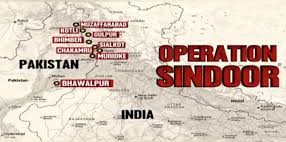
Operation Sindoor was a series of precision strikes conducted by the Indian Armed Forces against the terror infrastructure in Pakistan. On May 7, 2025, nine terror camps in Pakistan and Pakistan-occupied Jammu and Kashmir (PoJK) were hit in retaliation for the 22 April 25, terror attack at Pahalgam that killed 26 civilians.

Geographic Distribution of Terror Camps and Their Strategic Importance. The nine targeted camps were critical nodes in the terror infrastructure of Jaish-e-Mohammed (JeM), Lashkar-e-Taiba (LeT), and Hizbul Mujahideen (HuM). These groups have been responsible for major attacks on Indian soil, including the 2008 Mumbai attack, 2016 Uri attack, 2019 Pulwama attack, and the 2025 Pahalgam attack. The camps served as hubs for recruitment, training, indoctrination, logistics, and infiltration, often with logistical support from Pakistan’s military and ISI. Three camps (Bahawalpur, Muridke, Sialkot) were located in mainland Pakistan, 5–200 km from the International Border. Six camps (including Muzaffarabad, Kotli, Bhimber) were closer to the Line of Control, 9–15 km, reflecting their role as infiltration and staging points. Camps near the IB/LoC (e.g., Sialkot, Kotli, Bhimber, Muzaffarabad) were critical for immediate infiltration and logistics, posing direct threats to Jammu and Kashmir. Deep inland camps (e.g., Bahawalpur, Muridke) served as ideological and operational headquarters.


Extent of Overall Damage.

Indian sources reported the destruction of all nine camps, with over 100 terrorists killed, including high-value targets like Yusuf Azhar, Abdul Malik Rauf, and Mudasir Ahmed, linked to the IC-814 hijacking and the Pulwama attack. Satellite imagery confirmed extensive damage, with key facilities like Markaz Subhan Allah (Bahawalpur) and Markaz Taiba (Muridke) reduced to rubble. The operation reportedly used SCALP cruise missiles, HAMMER precision-guided bombs, and loitering munitions, ensuring minimal civilian casualties and no targeting of Pakistani military installations.

Pakistani Claim.  Pakistan claimed 26–31 civilian deaths and damage to mosques and residential areas, labelling the strikes an “act of war.” These claims remain unverified by independent sources, and India refuted them, asserting that no civilian infrastructure was targeted.

Indian Perspective. The strikes were described as “focused, measured, and non-escalatory,” targeting only terror infrastructure with no civilian or military targets hit. Indian officials provided satellite imagery and videos to substantiate claims of precision and extensive damage to terror camps.


Message through Operation Sindoor.

Operation Sindoor was not just a tactical military response; it was a calibrated strategic message from India to Pakistan, signalling a decisive shift in how India intends to respond to cross-border terrorism. It sent a powerful message that India would strike precisely when provoked and where it hurts most. It reframed the India-Pakistan dynamic from reactive defence to assertive offence, clarifying that India will no longer play by the rules written in Rawalpindi.

Zero Tolerance for Cross-Border Terrorism. India conveyed that state-sponsored terrorism will no longer be met with diplomatic restraint or reactive defence, but with proactive and pre-emptive military action. By hitting deep into Pakistan and PoK, India underscored that terror safe havens will be treated as legitimate military targets.

Deterrence by Punishment. Rather than relying solely on deterrence by denial (defensive security), Operation Sindoor shifted to deterrence by punishment, raising the cost of using terrorism as an instrument of state policy.

Strategic and Tactical Escalation Control Lies with India. India emphasised that the strikes were “focused, measured, and non-escalatory,” targeting only terror infrastructure and avoiding Pakistani military or civilian sites. By choosing the time, location, and scale of the strikes, India seized escalation dominance, demonstrating that it can punish terror proxies without triggering a full-scale war. The precision and speed of the operation signalled India’s ability to strike hard while managing strategic escalation.

Deep-Strike Capability and Political Will. The strikes were more profound and extensive than previous cross-border operations, such as the 2016 surgical strikes or the 2019 Balakot airstrikes. This conveyed India’s enhanced ISR (Intelligence, Surveillance, Reconnaissance), strike capabilities, and, more importantly, a firm political will to act on them.

Terror Infrastructure Will Not Be Tolerated. By targeting Terror organisation headquarters, training camps, launch pads, and logistical nodes, India conveyed that no location, whether in PoK or even close to Pakistan’s heartland, is beyond reach if it harbours anti-India terror operations. By striking deep into Pakistan’s Punjab province (e.g., Bahawalpur, Muridke, Sialkot) and PoJK (e.g., Muzaffarabad, Kotli, Bhimber), India demonstrated its military reach and resolve to target terrorist sanctuaries regardless of location. The message was clear: “No place is beyond India’s reach,” challenging the sense of impunity enjoyed by terror groups.

Global Signalling: From Victim to Enforcer. India sent a signal not just to Pakistan, but to the worldwide community—that it is no longer content with merely being seen as a victim of terrorism. India now positions itself as an active enforcer of its national security, willing to act unilaterally when international pressure fails to deter terror networks.

A Warning for the Deep State and Proxy Groups. India’s message was also aimed at the Pakistani military-intelligence complex (ISI). If you continue to support terrorist groups like Jaish-e-Mohammed (JeM) and Lashkar-e-Taiba (LeT), the cost will be imposed not only on your proxies but on your assets and territory.


Conclusion

Operation Sindoor marks a watershed in India’s counter-terrorism doctrine—an audacious assertion of sovereign resolve against cross-border terrorism. By targeting deep-rooted terror hubs across both Pakistan-occupied Jammu and Kashmir and mainland Pakistan, the operation showcased India’s enhanced surveillance, precision strike capability, and political will to act decisively. Each of the nine camps held operational and symbolic relevance—from the ideological headquarters of Lashkar-e-Taiba in Muridke to suicide bomber training camps in Kotli and pre-infiltration staging points in Sialkot. The comprehensive destruction of these facilities, verified through satellite imagery and on-ground assessments, sent a clear message: India will not hesitate to dismantle the terror infrastructure at its source, regardless of geographical or political boundaries. The strikes redefined the contours of Indian deterrence, shifting from reactive defence to offensive punishment, and conveyed a strong message to the Pakistani establishment and the global community alike. India has demonstrated that it is no longer a passive recipient of terror but a proactive enforcer of its national security imperatives.


List of Terror Camps Targeted

  1. Markaz Subhan Allah, Bahawalpur (Pakistan) – Jaish-e-Mohammed (JeM).

Location and Relevance. Bahawalpur, Punjab, is approximately 150–200 km from the international border with India (near the Rajasthan or Punjab border). Located in Pakistan’s Punjab heartland, far from the LoC, this was a strategic, ideological and operational hub, making it a deep-strike target. Considered the ideological and operational headquarters of JeM, a major anti-India terror group and served as a recruitment, training, and indoctrination center for JeM operatives. Historically, it hosted senior cadre training sessions linked to major attacks, including the 2019 Pulwama attack and reportedly financed by Osama Bin Laden with rupees one crore for constructing a mosque and a guest house within the complex.

Extent of Damage: Satellite imagery showed significant destruction, with the mosque’s dome collapsed, widespread debris, and surrounding buildings reduced to rubble. Before-and-after visuals confirmed substantial structural damage, leaving the hub in ruins.


  1. Markaz Taiba, Muridke (Pakistan) – Lashkar-e-Taiba (LeT).

Location and Relevance. Muridke, Punjab, Pakistan. Approximately 30–40 km from the International Border (near Wagah, Punjab, India). Situated near Lahore, this 200-acre facility was close to the IB, making it a high-priority target due to its proximity and role in training for major attacks like the 2008 Mumbai attack. A 200-acre compound serving as the operational and ideological heart of LeT, known as Pakistan’s “terror nursery.” Used for indoctrination, logistics, and planning major attacks, including the 2008 Mumbai attack, where terrorists like Ajmal Kasab were trained. Key infrastructure for training and coordinating terror activities against India.

Extent of Damage. Satellite imagery revealed extensive destruction, with buildings reduced to rubble. Videos and images showed rescuers searching through debris, indicating severe structural damage. The Indian military confirmed the destruction of command centers and training facilities.


  1. Syedna Bilal Camp, Muzaffarabad (PoJK) – Jaish-e-Mohammed (JeM)

Location and Relevance. Muzaffarabad, Pakistan-occupied Jammu and Kashmir, approximately 10–15 km from the Line of Control. A key infiltration point in PoJK, its proximity to the LoC made it critical for cross-border terror activities targeting Kashmir. A key infiltration point and training facility for JeM sleeper cells. Linked to attacks in Sonmarg, Gulmarg (October 2024), and Pahalgam (April 2025). Served as a logistics and transit point for terrorists infiltrating into Indian-administered Kashmir.

Extent of Damage. Destroyed at 1:04 AM on May 7, 2025, OSINT imagery confirmed significant damage to infrastructure with minimal civilian impact.


  1. Shawai Nala Camp, Muzaffarabad (PoJK) – Lashkar-e-Taiba (LeT)

Location and Relevance. Shawai Nala, Muzaffarabad, Pakistan-occupied Jammu and Kashmir, approximately 10–12 km from the Line of Control. Another Muzaffarabad-based camp, close to the LoC, is used for training and staging infiltrators for attacks in Jammu and Kashmir. A major LeT center for training terrorists involved in attacks on Sonmarg, Gulmarg (October 2024), and Pahalgam (April 2025). Used as an infiltration point and staging facility for cross-border terror activities.

Extent of Damage. Destroyed, with UAV reconnaissance and OSINT imagery confirming the elimination of training facilities and arms depots.


  1. Abbas Terrorist Camp, Kotli (PoJK) – Lashkar-e-Taiba (LeT)

Location and Relevance. Kotli, Pakistan-occupied Jammu and Kashmir, approximately 13 km from the Line of Control. A nerve center for suicide bomber training, its proximity to the LoC made it a significant threat for infiltration into India.

Extent of Damage. Satellite imagery confirmed that the camp was reduced to rubble.


  1. Markaz Abbas, Kotli (PoJK) – Jaish-e-Mohammed (JeM)

Location and Relevance. Kotli, Pakistan-occupied Jammu and Kashmir, approximately 13 km from the Line of Control. A hub for suicide bomber training and weapons distribution for PoJK-based terrorists. Facilitated by Pakistan’s Special Services Group for logistics and training.

Extent of Damage. UAV surveillance confirmed the elimination of key infrastructure, with precision strikes targeting training and logistical centers.


  1. Sarjal/Tehra Kalan, Sialkot (Pakistan) – Jaish-e-Mohammed (JeM)

Location and Relevance. Tehra Kalan, Sialkot, Punjab, Pakistan, approximately 6 km from the International Border (near Jammu, India). A pre-infiltration camp located within a primary health center premises, its proximity to the IB made it a key staging ground for infiltration and logistics coordination, established in the late 1990s and linked to the March 2025 attack in Kathua, Jammu, where four J&K police personnel were killed.

Extent of Damage. Satellite imagery confirmed its destruction, showing significant damage to infrastructure.


  1. Mehmoona Joya Facility, Sialkot (Pakistan) – Hizbul Mujahideen (HuM)

Location and Relevance. Sialkot, Punjab, Pakistan, approximately 5–7 km from the International Border. A facility for Hizbul Mujahideen, a pro-Pakistan separatist group founded in 1989, was used for training and planning attacks in Indian-administered Kashmir.

Extent of Damage. Destroyed in the strikes, with the elimination of key infrastructure.


  1. Markaz Ahle Hadith, Barnala, Bhimber (PoJK) – Lashkar-e-Taiba (LeT)

Location and Relevance. Barnala, Bhimber, is in Pakistan-occupied Jammu and Kashmir, approximately 9 km from the Line of Control. A logistics and training hub for LeT, its strategic location near the LoC supported cross-border operations. It is used for training in weapons, improvised explosive devices (IEDs), and jungle survival.

Extent of Damage.  Destroyed, with satellite imagery confirming the elimination of logistical and training facilities.


Please Add Value to the write-up with your views on the subject.


1879
Default rating

Please give a thumbs up if you  like The Post?


For regular updates, please register your email here:-

Subscribe


References and credits

To all the online sites and channels.

Pics Courtesy: Internet

Disclaimer:

Information and data included in the blog are for educational & non-commercial purposes only and have been carefully adapted, excerpted, or edited from reliable and accurate sources. All copyrighted material belongs to respective owners and is provided only for wider dissemination.


Link to the article on the website:-

OP SINDOOR: Punitive Deterrence – Targeting Terror Camps

References:-

  1. Ministry of Defence, Government of India. (2025, May 8). Press Briefing on Counter-Terror Strikes: Operation Sindoor.
  1. Indian Air Force. (2025, May 9). Statement on Precision Air Strikes Against Terror Infrastructure, May 7, 2025.
  1. South Asia Terrorism Portal (SATP). (2025). Profiles of Terrorist Groups and Training Camps in Pakistan. Institute for Conflict Management.
  1. WION News. (2025, May 8). India’s Operation Sindoor: A Deep Dive into the Strikes on Terror Camps.
  1. BBC News. (2025, May 8). India Strikes Terror Camps in Pakistan: What We Know So Far.
  1. The Hindu. (2025, May 9). Nine Terror Camps Targeted in India’s Precision Air Strikes: Official Sources.
  1. Daily Excelsior. (2025, May 8). Operation Sindoor: India Targets Terror Camps in PoJK, Pakistan.
  1. India Today. (2025, May 8). Operation Sindoor: India’s Precision Strikes Hit 9 Terror Camps in Pakistan, PoJK.
  1. ORF Occasional Paper No. 396. (2021). The Terror Infrastructure in Pakistan: The Role of JeM and LeT. Observer Research Foundation.
  1. Singh, A. (2020). India’s Cross-Border Strikes and Strategic Signalling: The Doctrine of Deterrence by Punishment. Carnegie India.
  1. Bhatnagar, G. (2019). Terrorist Training Camps in Pakistan: Locations, Capabilities and Patterns. Centre for Land Warfare Studies (CLAWS).
  1. CSIS Transnational Threats Project. (2018). Pakistan-Based Militancy and the Role of the ISI. Center for Strategic and International Studies.
  1. Sethi, M. (2025). India’s Offensive Deterrence Post-Balakot and Operation Sindoor: A Strategic Shift?. Manohar Parrikar Institute for Defence Studies and Analyses (MP-IDSA).
  1. Jane’s Defence Weekly. (2025, May 10). Analysis of Satellite Imagery Confirms Targeted Destruction of Militant Infrastructure in PoJK and Punjab, Pakistan.
  1. NDTV. (2025, May 8). India Used SCALP, HAMMER and Loitering Munitions in Operation Sindoor.
  1. GlobalSecurity.org. (2024). JeM, LeT, and HuM Training Facilities: Historical Patterns and Tactical Analysis.
  1. Maxar Technologies. (2025, May). Satellite Imagery of Bahawalpur, Muridke, Muzaffarabad Before and After May 7 Strikes.

684: CRASH, CLICK, CONCLUDE: POST-TRAGEDY SPECULATIVE CHAOS


The roar of a plane crash echoes far beyond the wreckage.


On June 12, 2025, Air India Flight AI171, a Boeing 787-8 Dreamliner (VT-ANB), crashed moments after takeoff from Sardar Vallabhbhai Patel International Airport in Ahmedabad, India, en route to London Gatwick. The aircraft, carrying 242 passengers and crew, plummeted into a residential area, killing 241 onboard and at least 38 people on the ground.  Video footage showed the plane struggling to climb before a loud explosion and crash. With support from the U.S. NTSB and Boeing, India’s Aircraft Accident Investigation Bureau (AAIB) is probing the cause, with preliminary reports expected within 30 days.


Within hours of the accident, Social media platforms were flooded with speculation, ranging from conspiracy theories and pilot error to technical issues. Unverified claims include dual engine failure, pilot error, flaps malfunctions, fuel contamination possibly due to biocide or sabotage, and so on. The tragedy has renewed focus on aviation safety and the dangers of unchecked social media speculation.


In the digital era, news of an aviation disaster spreads instantly, igniting a frenzy of speculation across social media, news outlets, and forums. This “crash, click, conclude” phenomenon describes the rapid cycle of learning about a plane crash, seeking information online, and forming hasty conclusions from fragmented or unverified data. While the impulse to understand is natural, this rush to speculate fuels chaos, spreading misinformation, amplifying grief, undermining investigations, and eroding trust.


The Mechanics of Air Crash, Click, Conclude


The cycle begins with the “air crash”, a catastrophic event that grips global attention. Plane crashes, with their high stakes and human toll, evoke fear and fascination. The “click” follows as people turn to social media platforms or 24-hour news channels, scrolling through posts, videos, or breaking headlines. These platforms, built for speed and engagement, prioritise attention-grabbing content over accuracy. Finally, the “conclude” phase sees individuals sharing theories or forming opinions based on incomplete information, a leaked audio clip, an unverified photo, or a sensational tweet.


The internet’s architecture amplifies this cycle. Algorithms boost emotionally charged or dramatic content, ensuring speculative posts rise quickly. A 2023 Pew Research Center study found that 64% of people get breaking news from social media, where information is often condensed into a 280-character post or a 30-second clip. This brevity omits context, leaving gaps that speculation fills. Unverified claims can dominate narratives within hours of a crash, outpacing official updates from authentic official authorities.


Psychological Drivers of Speculation


Speculation after air crashes stems from psychological impulses. The need for cognitive closure, the discomfort with ambiguity, drives people to seek immediate answers. Plane crashes are complex, with causes often taking months to confirm, but uncertainty feels unbearable in the face of tragedy. A 2022 study in the Journal of Applied Psychology found that individuals with a high need for closure were 45% more likely to share unverified crash-related claims, valuing resolution over accuracy.


The availability heuristic also fuels speculation. Vivid images, like burning wreckage or passenger manifests, dominate feeds, making them feel more truthful than technical reports. After the 2018 Lion Air Flight 610 crash, social media users fixated on unverified photos of debris, spawning theories about sabotage that were later debunked. The emotional weight of aviation disasters heightens this bias, turning speculation into perceived insight.


Social pressures on social media platforms exacerbate the cycle. Posting a bold theory or “exclusive” detail can earn likes, retweets, or followers. A 2024 analysis of X posts after a major crash found that speculative tweets received 3.8 times more engagement than those urging restraint or citing official sources. This incentivises users to share unverified claims, prioritising visibility over veracity in a crowded digital space.


The Dangers of Speculative Chaos


The crash-click-conclude cycle has profound consequences, particularly in aviation disasters. Some of the risks are as follows:-


Spread of Misinformation. Speculation outpaces facts, leading to viral falsehoods. After the 2014 Malaysia Airlines Flight MH17 crash, social media users spread claims of pilot suicide within hours, based on unverified images. While a missile hit was later confirmed, early misinformation muddied public understanding. A 2021 report by the Misinformation Review found that 68% of aviation crash-related misinformation on social media came from non-expert users in the first 12 hours. False narratives can persist, complicating recovery efforts.


Amplifying Grief and Harm. Hasty conclusions deepen the pain of victims’ families. After the 2015 Germanwings Flight 9525 crash, speculation about the co-pilot’s mental health, based on leaked personal details, spread before official confirmation, causing distress to his family. Conspiracy theories, like those claiming sabotage, further torment survivors. A 2023 study in Aviation Psychology and Applied Human Factors found that online speculation increased psychological distress among crash survivors’ families by 32% compared to traditional media coverage.


Undermining Investigations. Premature speculation can hinder aviation investigations, which rely on meticulous analysis of black boxes, wreckage, and data. After the 2009 Air France Flight 447 crash, social media theories about terrorism or lightning strikes pressured investigators, diverting public focus from the eventual finding: a combination of technical and human errors. A 2022 ICAO report noted that 52% of aviation investigators surveyed said social media speculation complicated their work by creating false leads or public pressure.


Eroding Trust in Authorities. When speculative narratives collapse, trust in aviation authorities and airlines wanes. After the 2020 Ukraine International Airlines Flight 752 crash, social media users speculated about mechanical failure or pilot error before Iran admitted to shooting down the plane. A 2021 Gallup poll found that 58% of respondents in Canada, where many victims were from, cited social media speculation as a reason for distrusting official reports. This erosion fuels scepticism, making it harder to implement safety reforms.


Fuelling Polarisation. Speculation aligns with biases, deepening societal divides. After the 2019 Ethiopian Airlines Flight 737 crash, social media saw competing narratives: some blamed Boeing’s software, others pilot training, often based on incomplete data. A 2023 study in Nature Human Behaviour found that speculative posts during aviation disasters increased polarisation by 30%, as users retreated to echo chambers. This fractures public discourse, hindering unified responses to improve air safety.


Mitigating the “Crash-Click-Conclude” Cycle


Curbing speculative chaos requires coordinated efforts. Some of the measures are listed below:-


Enhance Media Literacy. Public education on evaluating sources is critical. Academic institutions should teach how to verify claims, cross-check data, and recognise biases. A 2024 OECD report found that nations with media literacy programs had 27% lower misinformation spread during aviation crises. Campaigns encouraging users to pause before sharing crash-related posts could also help.


Platform Accountability. Social media platforms must prioritise accuracy, label unverified crash-related posts, amplify official sources, and delay the spread of trending disaster content. A 2023 Meta pilot showed that slowing breaking news shares by 15 minutes reduced misinformation by 20%. Similar measures could temper speculation.


Foster Intellectual Humility. Individuals should embrace uncertainty, asking “Is this credible?” or “Do I know enough?” before concluding. Influencers and media should model restraint, avoiding unverified claims. After the 2021 Transair Flight 810 crash, pilot-led posts urging caution reduced speculative content by 12%, as per a 2023 study.


Strengthen Official Communication. Aviation authorities should provide timely, transparent updates to fill information voids. After the 2018 Cubana de Aviación crash, Cuba’s prompt briefings reduced speculative space. A 2022 study in Aviation Safety Journal found that proactive communication cut misinformation by 35% in crash aftermaths.


Promote Empathy. Speculation often overlooks victims’ humanity. Campaigns sharing families’ stories could deter reckless theorising. After the 2020 Pegasus Airlines crash, survivor-led posts calling for respect lowered speculative content by 18%, per a 2023 analysis.


Conclusion

The air crash-click-conclude cycle reflects our need to make sense of aviation tragedies, but its chaos, misinformation, harm, and distrust demand action. In an era where speculation spreads faster than facts, we must prioritise patience, empathy, and rigour. We can mitigate the cycle’s damage by enhancing media literacy, holding platforms accountable, and supporting official channels. Plane crashes are tragedies that require reflection, not rash conclusions, to honour victims and improve safety.


Please Add Value to the write-up with your views on the subject.


1879
Default rating

Please give a thumbs up if you  like The Post?


For regular updates, please register your email here:-

Subscribe


References and credits

To all the online sites and channels.

Pics Courtesy: Internet

Disclaimer:

Information and data included in the blog are for educational & non-commercial purposes only and have been carefully adapted, excerpted, or edited from reliable and accurate sources. All copyrighted material belongs to respective owners and is provided only for wider dissemination.


References:-

  1. Air India. (2025, June 12). Air India Flight AI171.
  1. The Hindu. (2025, June 13). Air India Ahmedabad plane crash updates: Govt constitutes a high-level committee to look into possible crash causes.
  1. The New York Times. (2025, June 13). What We Know About the Plane Crash in Ahmedabad, India.
  1. The Guardian. (2025, June 13). Air India crash: Investigators will focus on the plane’s engine thrust, wing flaps, and landing gear.
  1. International Civil Aviation Organisation (ICAO). (2022). Impact of social media on aviation investigations. ICAO Safety Report, 15(2), 22–30.
  1. Aviation Safety Network. (2023). Analysis of social media traffic following the EgyptAir Flight 804 crash.
  1. Crisis Communication Quarterly. (2022). Social media speculation and its impact on Malaysia Airlines Flight MH370 families. Journal of Crisis Communication, 10(3), 45–60.
  1. Gallup. (2021). Public trust in aviation authorities post-Ukraine International Airlines Flight 752.
  1. Journal of Applied Psychology. (2022). Cognitive closure and sharing of unverified aviation crash claims. Journal of Applied Psychology, 107(4), 512–525.
  1. Misinformation Review. (2021). Sources of aviation crash misinformation on social media. Misinformation Review, 2(1), 88–97.
  1. Nature Human Behaviour. (2023). Polarisation in social media discourse during aviation disasters. Nature Human Behaviour, 7(6), 901–910.
  1. OECD. (2024). Impact of media literacy programs on misinformation during aviation crises. OECD Education Report, 12, 34–42.
  1. Pew Research Center. (2023). Social media is a source of breaking news.
  1. Aviation Psychology and Applied Human Factors. (2023). Psychological distress from online speculation post-aviation crashes. Aviation Psychology and Applied Human Factors, 13(1), 19–27.
  1. Aviation Safety Journal. (2022). Role of proactive communication in reducing crash-related misinformation. Aviation Safety Journal, 8(4), 66–74.

683: FROM OSIRAK TO NATANZ: OPERATION RISING LION AS A CONTINUATION OF ISRAEL’S BEGIN DOCTRINE OF DENIAL


My Article published on “The EurasianTimes” website on 17 Jun 25. 


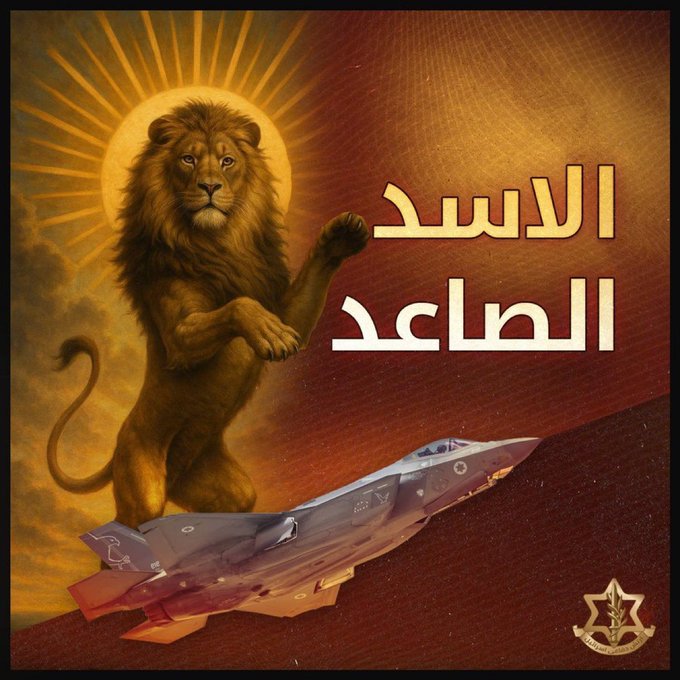
On June 13, 2025, Israel launched Operation Rising Lion, a bold and sophisticated military campaign targeting Iran’s nuclear facilities, missile bases, and key military personnel. The operation, which struck sites like Natanz, Fordow, and Arak, and killed high-ranking figures such as IRGC Commander-in-Chief Hossein Salami, was a direct application of the Begin Doctrine—Israel’s strategic policy of pre-emptively denying adversaries the ability to acquire nuclear weapons. Named after Prime Minister Menachem Begin, who authorised the 1981 strike on Iraq’s Osirak reactor, the doctrine has shaped Israel’s approach to regional threats for over four decades. This article examines Operation Rising Lion as a continuation of the Begin Doctrine, tracing its evolution from Osirak to Natanz, analysing its strategic execution, and exploring its implications for Israel’s security and regional stability.


The Begin Doctrine

The Begin Doctrine is a cornerstone of Israeli strategic policy, centered on the pre-emptive prevention of adversaries, particularly in the Middle East, from acquiring nuclear weapons that could pose an existential threat to Israel. Named after former Israeli Prime Minister Menachem Begin, the doctrine emerged following Israel’s airstrike on Iraq’s Osirak nuclear reactor on June 7, 1981, known as Operation Opera. It reflects Israel’s commitment to ensuring its survival in a region surrounded by hostile states, some of which have historically pursued nuclear capabilities.

Key Principles of the Begin Doctrine include the following:-

    • Pre-emptive Action. Israel reserves the right to use military force to prevent any hostile state or non-state actor from developing nuclear weapons.
    • Existential Threat Mitigation. The doctrine prioritises neutralising capabilities that could enable adversaries to produce weapons of mass destruction (WMDs), notably nuclear weapons.
    • Unilateral Action. Israel will act independently if necessary, even without international approval or coordination, to safeguard its security.
    • Deterrence and Regional Dominance. By demonstrating its willingness and ability to strike pre-emptively, Israel reinforces its military superiority and deters adversaries. Historical Context and Application.


Historical Precedents: Osirak and Orchard

Operation Opera (1981). On June 7, 1981, eight Israeli F-16s, escorted by F-15s, flew 1,100 kilometers to destroy Iraq’s Osirak reactor, a French-built facility suspected of producing plutonium for nuclear weapons. The strike was meticulously planned, relying on intelligence from Mossad and defectors. Despite international outrage, including a UN Security Council resolution condemning Israel, the operation delayed Iraq’s nuclear program significantly. It established the Begin Doctrine as a proactive strategy, emphasising Israel’s willingness to act alone to ensure its survival.

Operation Orchard (2007). On September 6, 2007, Israel struck Syria’s Al-Kibar nuclear reactor in Deir ez-Zor, believed to be a North Korean-designed plutonium facility. The operation, kept secret for months, involved precision airstrikes by F-16s and F-15s, supported by cyberwarfare and Mossad intelligence. Unlike Osirak, Orchard faced minimal international backlash, partly due to Syria’s secrecy and the operation’s surgical nature. It reinforced the Begin Doctrine’s adaptability, incorporating advanced technology and covert tactics to neutralise emerging threats.

Both operations demonstrated Israel’s ability to combine intelligence, air superiority, and strategic surprise, setting the stage for Operation Rising Lion’s complexity.


Operation Rising Lion: A Modern Application

Launched on June 13, 2025, Operation Rising Lion targeted Iran’s nuclear and military infrastructure, reflecting the Begin Doctrine’s evolution in scale, technology, and geopolitical context. Iran’s nuclear program, by 2025, posed an unprecedented challenge, with the International Atomic Energy Agency (IAEA) reporting enough enriched uranium for up to 15 nuclear bombs. Prime Minister Benjamin Netanyahu framed the operation as a “12th-hour” necessity to prevent a “nuclear holocaust,” echoing Begin’s rhetoric from 1981.

Strategic Execution. Operation Rising Lion was a multi-domain assault, integrating air, cyber, and covert operations. Over 200 Israeli aircraft, including F-35s, struck key nuclear sites, the Natanz Enrichment Complex, the Fordow Fuel Enrichment Plant, the Arak Heavy Water Facility and the Isfahan Uranium Conversion Facility. Missile bases like Asfajaabad, IRGC command centers, and air defence systems were hit. Mossad-activated drones and smuggled munitions neutralised launchers and radars, ensuring air superiority. The operation killed key figures, including IRGC leaders Hossein Salami, Mohammad Bagheri, and Amir Ali Hajizadeh, and nuclear scientists like Fereydoon Abbasi and Mohammad Mehdi Tehranchi, crippling Iran’s command and expertise. Mossad’s covert operations, including a secret drone base near Tehran and disinformation about diplomatic rifts, misled Iran’s leadership into underestimating the attack.

Scale and Impact.  Operation Rising Lion was unprecedented in scope, targeting over 100 sites with 330 munitions. Iran reported 78–128 deaths, including 20 children, and over 320 injuries, particularly in Tehran’s residential areas, sparking international criticism. The IAEA confirmed no radiation leaks, indicating precise strikes. The operation delayed Iran’s nuclear program, damaged its military infrastructure, and disrupted its chain of command, reinforcing Israel’s regional dominance.


Iran’s Response: Operation True Promise III. Iran’s Supreme Leader Ayatollah Ali Khamenei vowed “severe punishment,” describing Israel’s actions as a “doomed aggression based on a grave miscalculation.”  Iran retaliated with Operation True Promise III (Persian: Va’de-ye Sādeq III), which began on the evening of June 13, 2025, approximately 18 hours after Israel’s initial strikes. The Islamic Revolutionary Guard Corps (IRGC) led the operation, supported by Iran’s armed forces and possibly proxy groups like Hezbollah, the Houthis, and the Islamic Resistance in Iraq. Iran fired “dozens” to “hundreds” of ballistic missiles and drones, targeting Israeli military centres, airbases, and strategic sites, including the Kirya military headquarters in Tel Aviv. Specific targets included Nevatim, Hatzerim, and Tel Nof airbases, which house advanced Israeli fighter jets like F-35s and F-15s. The operation involved waves of attacks, with ballistic missiles and kamikaze drones aimed at overwhelming Israel’s multilayered air defences, including the Iron Dome and Arrow missile defence systems. While Israel’s Iron Dome and Arrow systems, aided by U.S., British, and French forces, intercepted most projectiles, some strikes caused damage in Tel Aviv, injuring 21–95 people. Iran’s Supreme Leader, Ayatollah Ali Khamenei, called the strikes a “crushing response”.

Analytical Perspectives

Continuity and Evolution of the Begin Doctrine. Operation Rising Lion reflects the Begin Doctrine’s continuity and evolution. Like Osirak and Orchard, Rising Lion was a unilateral, preemptive strike to deny an adversary nuclear capability. Israel acted without U.S. involvement, prioritising national security over international approval, and justified the operation as existential. The operation’s scale—over 200 aircraft and 100 targets—dwarfs previous strikes. It integrated advanced technologies (AI-assisted targeting, drones, cyberwarfare) and Mossad’s covert infrastructure, showcasing Israel’s technological edge. Unlike Osirak’s single-target focus or Orchard’s secrecy, Rising Lion was a broad assault on nuclear, military, and leadership targets, reflecting the complexity of Iran’s threat.

Strategic and Ethical Challenges. The Begin Doctrine’s application in Operation Rising Lion raises significant issues.

    • Strategic Success. The operation delayed Iran’s nuclear program, possibly by years, and weakened its military leadership and missile capabilities. It reinforced Israel’s deterrence, signalling to adversaries like Hezbollah and the Houthis that escalation would be costly.
    • Escalation Risks. Though limited, Iran’s Operation True Promise III underscores the potential for a broader conflict. The Houthis’ missile strike on Hebron and possible proxy involvement from Iraq and Syria highlight the regional ripple effects.
    • Ethical Concerns. Civilian casualties, including 20 children in Tehran, drew condemnation from the UN, Saudi Arabia, and Russia. Critics argue the doctrine’s preemptive nature risks disproportionate harm, complicating Israel’s international standing.
    • Limitations. Deeply buried facilities like Fordow remain resistant to conventional strikes, suggesting the doctrine’s reliance on airpower may need adaptation for future threats.

Geopolitical Impact. Operation Rising Lion has transformed the Middle East’s strategic landscape. By eliminating key Iranian leaders and damaging critical infrastructure, Israel has significantly weakened Iran’s regional influence, though its proxy groups, such as Hezbollah and the Houthis, remain active. Global oil prices have surged 8% amid fears of supply disruptions, sending ripples through international markets. The United States backed Israel’s defensive measures but called for restraint, while Russia offered to mediate and Saudi Arabia adopted a cautious approach, highlighting the region’s complex dynamics. The breakdown of scheduled U.S.-Iran nuclear talks in Oman underscores the diplomatic fallout of Israel’s Begin Doctrine.

Israel’s Strategic Blind Spot: Pakistan’s Nuclear Program.  Israel’s Begin Doctrine prioritises pre-emptive strikes against adversaries developing nuclear weapons, yet Pakistan’s nuclear program, successful by 1998, never prompted Israeli action. This stems from geopolitical and strategic factors. Unlike Iraq, Syria, or Iran, Pakistan lies outside Israel’s immediate Middle Eastern sphere of influence, reducing its perceived threat. Pakistan’s nuclear ambitions were primarily driven by rivalry with India, not hostility toward Israel. Diplomatic relations, though limited, existed indirectly, and Pakistan’s leadership, including Zulfikar Ali Bhutto and Pervez Musharraf, avoided framing Israel as a primary enemy. Israel’s intelligence, via Mossad, likely assessed Pakistan’s program as India-focused, not aimed at Tel Aviv. Additionally, U.S. influence, a mutual ally, restrained escalation, as Pakistan’s nuclear development was tacitly accepted to counter India. Thus, Israel conserved resources for proximate threats like Iran, aligning with the Begin Doctrine’s focus on existential risks.


Conclusion

From Osirak to Natanz, the Begin Doctrine has guided Israel’s strategy to prevent nuclear proliferation among its adversaries. With its unprecedented scale and technological sophistication, Operation Rising Lion represents the doctrine’s most ambitious application yet. By targeting Iran’s nuclear facilities, missile bases, and leadership, Israel reaffirmed its commitment to existential security, even at the cost of regional escalation and international criticism. However, the operation’s success in delaying Iran’s nuclear ambitions comes with challenges: fortified sites like Fordow, retaliatory risks, and ethical questions about civilian casualties. As of this date, the Israel-Iran conflict remains volatile, with the Begin Doctrine both a shield for Israel’s survival and a catalyst for regional tensions. The doctrine’s future will depend on Israel’s ability to adapt its pre-emptive strategy to an increasingly complex geopolitical landscape.


Please Add Value to the write-up with your views on the subject.


1879
Default rating

Please give a thumbs up if you  like The Post?


Link to the article on the website:-

Israel ‘Spares’ Pakistan Under Its Begin Doctrine! Why IDF Bombed Iraq, Syria & Iran’s Nuclear Facilities But Left Pakistan?

For regular updates, please register your email here:-

Subscribe


References and credits

To all the online sites and channels.

Pics Courtesy: Internet

Disclaimer:

Information and data included in the blog are for educational & non-commercial purposes only and have been carefully adapted, excerpted, or edited from reliable and accurate sources. All copyrighted material belongs to respective owners and is provided only for wider dissemination.


References:-

  1. International Atomic Energy Agency. (2025, June 12). Report on Iran’s Nuclear Program Compliance. Vienna: IAEA.
  1. United Nations. (2025, June 13). Statement by Secretary-General António Guterres on Israeli Airstrikes in Iran. New York: United Nations Press Office.
  1. Al Jazeera. (2025, June 14). “Iran Vows ‘Harsh Response’ After Israeli Strikes on Nuclear Sites.” Al Jazeera English.
  1. BBC News. (2025, June 13). “Israel Launches Operation Rising Lion: What We Know About the Strikes on Iran.” BBC World Service.
  1. Reuters. (2025, June 15). “Oil Prices Surge as Israel-Iran Tensions Escalate After Operation Rising Lion.” Reuters.
  1. The Jerusalem Post. (2025, June 13). “Netanyahu: Operation Rising Lion Prevented Nuclear Holocaust.” The Jerusalem Post.
  1. The New York Times. (2025, June 14). “Mossad’s Covert Role in Israel’s Strike on Iran Revealed.” The New York Times.
  1. Center for Strategic and International Studies. (2025, June 14). Operation Rising Lion: Assessing Israel’s Strike on Iran’s Nuclear Program. Washington, DC: CSIS.
  1. Institute for National Security Studies. (2025, June 15). The Geopolitical Fallout of Operation Rising Lion. Tel Aviv: INSS.
  1. Israel Defence Forces. (2025, June 13). Official Statement on Operation Rising Lion. Jerusalem: IDF Press Office.
  1. U.S. Department of State. (2025, June 13). Press Briefing by Secretary of State Marco Rubio on Israel-Iran Conflict. Washington, DC: U.S. Department of State.
  1. Bergman, Ronen. (2018). Rise and Kill First: The Secret History of Israel’s Targeted Assassinations. New York: Random House.
  1. Pollack, Kenneth M. (2021). The Persian Puzzle: Iran’s Strategic Challenge. Washington, DC: Brookings Institution Press.

English हिंदी