
778:PAKISTAN’S RISKY DIPLOMATIC REBALANCING BETWEEN WASHINGTON AND BEIJING: TRANSACTIONAL TRIUMPH OR STRATEGIC TRAP


(Inputs to the media questions)

 General Asim Munir has developed a notably close public relationship with U.S. President Donald Trump, marked by multiple high-profile meetings and mutual praise. Trump has repeatedly described Munir as his “favourite field marshal,” a “great fighter,” and an “exceptional human,” crediting him with de-escalating tensions and highlighting Pakistan’s resources, such as rare earth minerals. This rapport has helped repair strained U.S.-Pakistan ties, including discussions on security cooperation and potential deals involving minerals or military support. However, this alignment carries risks for Pakistan.

This engagement positions Pakistan as overly dependent on U.S. favour, potentially drawing it into American geopolitical agendas, such as in the Middle East (e.g., Gaza or Israel-Iran tensions), where U.S. policies may conflict with Pakistan’s interests or public sentiment. This could exacerbate internal divisions, fuel anti-U.S. narratives from opposition groups, or strain relations with other allies. Munir’s engagement with the US symbolises a broader sell-out of Pakistani sovereignty for personal or short-term gains, potentially harming national pride or long-term stability. The danger level is moderate: it boosts short-term U.S. aid and influence but risks isolating Pakistan if perceived as subservient.


Question 1: To what extent does Field Marshal Asim Munir’s close personal and strategic alignment with President Donald Trump increase Pakistan’s external vulnerabilities and internal distortions in civil–military decision-making?​


Potential risks if Pakistan appears overly aligned with Trump-style politics:

Unpredictability. Trump’s foreign policy is transactional, not strategic. Pakistan could be treated as a short-term bargaining chip rather than a long-term partner.

Domestic instability. Any perception that the army favours the US political camp can lead to internal polarisation. It strengthens the narrative that Pakistan’s sovereignty is influenced externally.

Damage to institutional credibility. The army historically benefits from appearing neutral internationally. Open alignment with controversial figures can weaken that image.

Pakistan’s military cannot afford ideological loyalty to any US leader. Any engagement with Trump would likely be pragmatic, not emotional. It is not inherently dangerous, but overdependence or symbolic alignment could prove to be risky.


Question 2: How, and through which strategic and economic channels, could Munir’s renewed tilt towards the United States under Trump dilute Pakistan’s partnership with China, and what specific costs might this impose on Pakistan’s security, CPEC-related geoeconomics, and regional balancing posture?​

China’s Interests

  • China’s interest in Pakistan is structural, not emotional.
  • CPEC
  • Indian containment
  • Arabian Sea access
  • Beijing understands Pakistan’s need to balance relations.


China’s Concerns

Security trust. China would be extremely sensitive to Pakistan’s intelligence-sharing with the US (especially about the Chinese military equipment).

CPEC momentum. China would prefer stability and predictability in Pakistan. Political chaos or Western pressure could delay Chinese investment.

Strategic ambiguity. Pakistan’s strength has always been its ability to balance great powers. Losing that balance could be disastrous. Harm if balance is lost:

  • Slower infrastructure development
  • Reduced military technology transfer
  • Weaker bargaining position globally

China will not leave Pakistan—but China can disengage quietly, which is often more damaging than open conflict. A tilt toward the US does not automatically alienate China, but mismanagement can.


Question 3: In what ways does Munir’s current diplomacy—simultaneously projecting Pakistan as a leading military voice in the Muslim world while deepening dependency on the U.S. and Gulf monarchies—undermine Pakistan’s long-term project to emerge as an autonomous “commander” or agenda-setter in the Muslim world?​

Pakistan has positioned itself as a prominent leader in the Muslim world and a defender of Islamic values. It aims to strengthen relationships with Gulf states and others, presenting itself as a stable nuclear power that supports Muslim stability. While Pakistan often claims to be the “leader of the Muslim world,” this role is mainly symbolic rather than literal. Its pro-U.S. stance undermines this claim, and its Islamist rhetoric is often regarded as superficial. Pakistan faces the risk of alienating anti-Western Muslim groups or revealing hypocrisy in international forums like the OIC. The success of this strategy is debated—though it may boost domestic morale, it could also weaken regional alliances.

Reasons for the rhetoric.

  • It works domestically.
  • It reinforces Pakistan’s self-image as strategically important.
  • It helps justify military influence in foreign policy.

The notion is weakening:

  • Economic weakness. Leadership requires economic power. Pakistan currently relies on the IMF and bilateral bailouts.
    • Internal instability. No country follows a state that appears politically fragmented.
    • Military-first diplomacy. Muslim countries prioritise trade and investment over ideology.
    • The Muslim world is deeply divided – Saudi Arabia vs Iran, Turkey’s independent ambitions and Gulf states’ alignment with the West

The claim is promoted rhetorically while being weakened in practice, not necessarily by intent, but by Pakistan’s current limitations.


Analytical Assessment (Bottom Lines)

  • There is no evident ideological “love” for Trump/USA.
  • Pakistan’s strength historically has lain in multi-alignment, not in loyalty.
  • Pakistan’s real danger is losing balance, not choosing sides.
  • The Muslim leadership narrative is symbolic, not operational.


Munir vs Bajwa vs Musharraf – Strategic Comparison


Pervez Musharraf (1999–2008): Strategic Alignment Era

Approach. Open, explicit alliance with the US after 9/11. Clear “camp selection”

Strengths. Massive military and financial inflows. High international visibility. Clear command-and-control internally

Costs. Severe internal radicalisation. Long-term sovereignty damage. Blowback terrorism. China ties slowed (not broken)

Summary. Musharraf traded long-term stability for short-term power and money.

Qamar Javed Bajwa (2016–2022): Balancing & Ambiguity

Approach. “Geo-economics” doctrine. Tried to balance the US, China, the Gulf, and the IMF. Avoided loud alignment

Strengths. Kept China engaged. Reduced external pressure. Maintained strategic ambiguity

Weaknesses. Indecisive leadership. Over-politicisation internally. Failed to deliver economic transformation

Summary. Bajwa tried to balance everyone but ended up satisfying no one fully.


Asim Munir (2022–Present): Control & Reset

Approach. Priority: internal control and institutional authority. Quiet reset with the US. Less public emphasis on China, more on “stability”

Strengths. Strong internal command. Clear institutional discipline. Reduced public confusion

Risks. Appears transactional externally. Less narrative clarity internationally. Overreliance on coercive stability

Summary. Munir prioritises order first, strategy second.


Please Add Value to the write-up with your views on the subject.


1879
Default rating

Please give a thumbs up if you  like The Post?


For regular updates, please register your email here:-

Subscribe


References and credits

To all the online sites and channels.

Pics Courtesy: Internet

Disclaimer:

Information and data included in the blog are for educational & non-commercial purposes only and have been carefully adapted, excerpted, or edited from reliable and accurate sources. All copyrighted material belongs to respective owners and is provided only for wider dissemination.
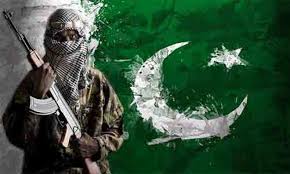
 

665: OP SINDOOR – DESPERATE MEN DO DESPERATE THINGS IN DESPERATE SITUATIONS: PAKISTAN ARMY CHIEF PLAYING WITH FIRE


My article was published on The EurasianTimes website

on 01 May 25.


The recent terrorist attack in Phalgam, Jammu and Kashmir, has once again brought the spotlight on Pakistan’s deep state and its time-tested strategy of using militant proxies to pursue its strategic aims in the region. Coming at a time when Pakistan is facing extraordinary internal and external pressures, the timing and nature of the attack raise pressing questions about the motives behind this provocation and the extent to which the current military leadership may be resorting to desperation-driven tactics. The phrase “desperate men do desperate things in desperate situations” encapsulates the narrative that Munir, grappling with Pakistan’s cascading crises, resorted to terrorism to unify a fractured nation and reassert military dominance. The question remains whether it is a calculated move or a strategic blunder that would result in a bigger crisis.


Desperate Act

On April 22, 2025, the serene Baisaran Valley in Pahalgam became the site of a horrific terror attack. Armed militants, later identified as members of Lashkar-e-Taiba (LeT), stormed a tourist campsite, killing 26  civilians, predominantly Hindu tourists. The attackers, wielding M4 carbines and AK-47s, verified victims’ religious identities before executing them, marking the deadliest assault in the region since the 2008 Mumbai attacks. The Pahalgam attack was no ordinary act of terrorism. Its precision, weaponry, and targeting suggest sophistication beyond typical militant operations. The attackers, led by Hashim Musa, a former Pakistan Army para-commando dismissed from service, infiltrated deep to strike a tourist hotspot 100 kilometres from the Line of Control (Loc).

The attack in Phalgam was a brazen act of desperation, targeting unarmed, innocent tourists in a relatively stable and tourist-frequented part of Kashmir. The use of high-grade weaponry and coordinated execution points toward sophisticated planning, likely beyond the capabilities of isolated local cells. Indian officials allege the attack was planned by Pakistan’s Inter-Services Intelligence (ISI), with direct oversight from Munir. A key piece of evidence is Musa’s background. Sources claim he was “loaned” by Pakistan’s Special Service Group (SSG) to Let, and the attackers’ weaponry, M4 carbines, are rare in militant hands, further pointing to state backing.

The attack’s communal nature adds another layer. The militants spared Muslim tourists, targeting Hindus in a deliberate bid to inflame religious tensions. This aligns with Munir’s April 16, 2025, speech, where he emphasised Pakistan’s Islamic identity and the Two-Nation Theory, framing India as an existential threat. The timing—six days after the hate speech—suggests a deliberate signal to terror groups. The Resistance Front (TRF), a LeT offshoot, initially claimed responsibility but later retracted, a move Indian analysts attribute to Pakistan’s attempt to distance itself from the backlash.


Desperate Situation

Under General Asim Munir, the Pakistan Army faces a precarious state that is a unique and combustible blend of crises, a collapsing economy, surging insurgencies, and eroding public trust in the military.

Economic Collapse. Pakistan’s GDP growth is under 2%, inflation is soaring past 20%, and the Pakistani rupee is plummeting. A $7-billion IMF loan, secured in 2024, imposes austerity measures that have sparked nationwide protests. The Karachi Stock Exchange crashed 3% in a single day post-Pahalgam, reflecting investor fears of regional instability. Pakistan’s economy is on life support, with an IMF deal hanging by a thread and foreign reserves dipping dangerously low. The economic hardship is palpable across society, eroding public faith in national institutions.

 Political Instability. Politically, Pakistan is a tinderbox. The 2023 arrest of former Prime Minister Imran Khan, widely seen as orchestrated by the military, has galvanised his Pakistan Tehreek-e-Insaf (PTI) party. The military’s overt role in political engineering has backfired, leading to widespread public discontent and intra-elite fragmentation. Mass protests, often met with brutal crackdowns, have eroded the military’s legitimacy. Social media campaigns like #ResignAsimMunir, despite Pakistan’s ban on X, highlight Munir’s unpopularity. Analysts describe the military’s public support as at its lowest since the 1971 Bangladesh liberation, when Pakistan lost its eastern wing. For Munir, appointed Army Chief in November 2022, these crises threaten his leadership and the military’s grip on power.

Institutional Crisis. Militarily, Pakistan is under siege. The Tehreek-e-Taliban Pakistan (TTP) has intensified attacks in Khyber-Pakhtunkhwa, including a March 2025 train hijacking that killed several passengers. In Balochistan, separatist groups like the Baloch Liberation Army (BLA) target Chinese-funded CPEC projects, undermining Pakistan’s strategic ties with Beijing. The military, once revered as the nation’s protector, struggles to contain these threats, with over 1,200 security personnel killed in 2024 alone. For perhaps the first time in decades, the Pakistan Army’s credibility is under sustained attack. Retired officers have voiced dissent, and social media campaigns have openly criticised the top brass—something previously unthinkable.

 Strategic Isolation. Once seen as a pivotal state in the U.S.-China rivalry, Pakistan is increasingly isolated. China’s Belt and Road investments have slowed, while Gulf nations redirect capital elsewhere. Washington remains wary, and New Delhi has successfully lobbied global forums to pressure Islamabad on terror financing.


Desperation Levels and Motives

The narrative of Munir’s desperation hinges on his need to reverse the military’s declining fortunes. With Pakistan unravelling, the Army Chief faces pressure to reassert control. Possible motives for orchestrating the Pahalgam attack include the following:-

Rallying Domestic Support. By reigniting the Kashmir issue, Munir seeks to unify Pakistanis under the military’s narrative of India as the eternal enemy. The military has historically used anti-India sentiment to deflect domestic criticism, as seen after the 1999 Kargil War and the 2016 Uri attack. With protests and insurgencies eroding public trust, a high-profile attack could galvanise nationalist fervour.

Disrupting India’s Kashmir Narrative. The region has seen relative stability since India revoked Article 370 in 2019, stripping Jammu and Kashmir of its autonomy. Record tourism (2 million visitors in 2024), successful elections, and infrastructure development have undermined Pakistan’s claim to Kashmir. The Pahalgam attack, targeting tourists, aims to deter visitors, disrupt normalcy, and revive Pakistan’s relevance in the dispute.

Risking Controlled Escalation. A limited conflict with India could restore the military’s image as Pakistan’s protector. Past crises, like the 2019 Pulwama attack, saw Pakistan weather Indian airstrikes while rallying domestic support. Munir may have calculated that India’s response—diplomatic measures, border skirmishes—would remain containable, avoiding all-out war given both nations’ nuclear arsenals.


Calculated Act or Strategic Miscalculation?

General Munir, a former ISI chief, is acutely aware of the strategic value and political risk of cross-border terrorism. His tenure began with promises of internal reform and a clean break from overt politicking. However, Munir has returned to the tried-and-tested path of external diversion under mounting internal pressures and the erosion of military dominance in domestic affairs.

A terrorist attack in Kashmir achieves several aims simultaneously: it unites domestic opinion around a perceived external threat, deflects criticism from internal dysfunction, and tests India’s threshold for retaliation. It may also galvanise the rank and file within the army, reasserting its role as the sole guardian of Pakistan’s ideological and territorial integrity.

The attack has plunged India-Pakistan relations into crisis. India responded with punitive measures: suspending the Indus Waters Treaty, closing borders, expelling diplomats, and cancelling Visas.  Small-arms fire along the LoC has escalated, with Pakistan closing its airspace to Indian flights. Indian Prime Minister Narendra Modi vowed a “befitting reply,” raising speculation of Military action.


India’s Options

India faces a complex decision matrix. A kinetic response, such as surgical strikes or air raids like Balakot in 2019, may yield short-term political dividends, especially if the Pakistan Army is seeking precisely such a reaction to rally domestic support. Conversely, restraint may embolden further provocations, especially if it is perceived as a lack of resolve. Therefore, India must pursue a calibrated strategy that combines tactical counter-terror operations with strategic multi-domain actions.

India’s response will be shaped by the need to address domestic outrage, signal strength to Pakistan, and manage international pressure to avoid escalation between the two nuclear-armed states.  The response is likely to be multi-pronged in several domains.

Diplomatic Offensive. India has already accused Pakistan of sponsoring terrorism, with Prime Minister Narendra Modi calling Pakistan a “rogue state” at the UN and vowing to pursue attackers “to the ends of the earth.” India will likely intensify efforts to diplomatically isolate Pakistan by raising the issue in international forums like the UN, G20, or bilateral talks with allies like the US, UK, and France.

Severing Diplomatic Ties. India has already expelled Pakistani diplomats and may further downgrade diplomatic ties, potentially recalling its high commissioner from Islamabad or imposing additional visa restrictions.

Economic and Trade Restrictions. India has suspended the Indus Waters Treaty, a significant move signalling economic retaliation. Further steps could include tightening trade restrictions or pushing for international financial scrutiny of Pakistan, leveraging India’s influence with institutions like the Financial Action Task Force (FATF), where Pakistan has faced grey-listing for terrorism financing concerns.

Cultural and Sporting Bans. To sustain domestic momentum against Pakistan, India may reinforce existing bans on cultural exchanges, sports events, and media collaborations.

Strategic Military Posturing.  India is likely to increase military deployments along the Line of Control (LoC) and international border, as implied by Modi’s “complete operational freedom” grant to the armed forces.

Surgical Strikes or Targeted Operations. India’s response to the 2019 Pulwama attack—a surgical airstrike on a Jaish-e-Mohammed camp in Balakot, Pakistan—sets a precedent. A similar operation targeting an appropriate target in Pakistan is possible.

Escalation of Skirmishes. Intermittent cross-border firing along the LOC, reported since the attack, may intensify. If not controlled, these skirmishes may escalate to a full-fledged war.


A Dangerous Game of Desperation

The Phalgam attack is not an isolated incident—it is a symptom of deeper rot within Pakistan’s civil-military structure. It underscores the Pakistan military’s enduring reliance on terrorism to counter internal and external pressures. But the diminishing returns of this strategy, combined with growing international scrutiny and a more assertive India, make this a dangerous game.

Desperate men in desperate institutions often resort to desperate measures. For Pakistan’s military, external provocation has long served as a tool to distract, deflect, and dominate. The costs may outweigh the benefits if General Munir pivots back to cross-border militancy as a pressure valve. Whether driven by Munir’s desperation or institutional strategy, the operation has reignited India-Pakistan tensions, risking escalation in a nuclear-armed region.

India must remain wise enough not to be baited, yet take appropriate multi-pronged, multi-domain retaliatory action, stay alert, agile, and strategically ready to counter these designs. India would be willing to climb the escalatory ladder, as Indian patience has run out, and a red line has been crossed this time. Once again, regional peace teeters on the edge of a dangerous gamble from across the border.


Please Add Value to the write-up with your views on the subject.


1879
Default rating

Please give a thumbs up if you  like The Post?


For regular updates, please register your email here:-

Subscribe


References and credits

To all the online sites and channels.

Pics Courtesy: Internet

Disclaimer:

Information and data included in the blog are for educational & non-commercial purposes only and have been carefully adapted, excerpted, or edited from reliable and accurate sources. All copyrighted material belongs to the respective owners and is provided only for wider dissemination.


References:-

1. The Hindu, “Tourism Terror Targeted: Pahalgam Massacre,” April 23, 2025. https://www.thehindu.com

2. Indian Express, “How Pakistan’s Proxy War Is Mutating,” April 2025.

3. Dawn (Pakistan), “General Munir’s Gamble: What the Army’s Silence Hides,” April 25, 2025.

4. Reuters, “India Accuses Pakistan of Orchestrating Deadly Kashmir Attack,” April 2025.

5. Al Jazeera, “Terror Returns to Kashmir: Who Gains?” April 24, 2025.

6. Institute for Defence Studies and Analyses (IDSA), India – Dossiers on LeT, TRF, ISI

Home Page

7. RAND Corporation Reports – “Proxy Warfare and Strategic Risk in South Asia” (2021). https://www.rand.org

8. Brookings Institution – “The Pakistan Army’s Strategic Calculus in a Post-Imran Era” (2024), https://www.brookings.edu

9. Carnegie India – “Pakistan’s New Military Doctrine: Continuity or Crisis?” (2023).

10. Observer Research Foundation (ORF), India – Reports on terrorism, India-Pakistan conflict cycles, https://www.orfonline.org

11. Council on Foreign Relations (CFR) – “Pakistan’s Internal Security Collapse” (2024), https://www.cfr.org

12. Ministry of External Affairs, Government of India – Official statements on the Phalgam attack and diplomatic responses. https://www.mea.gov.in

13. United Nations Security Council (UNSC) Briefings – Historical and recent discussions on Pakistan-sponsored terrorism. https://www.un.org/securitycouncil/

14. Inter-Services Public Relations (ISPR), Pakistan – Official statements from Pakistan’s military. https://www.ispr.gov.pk/

English हिंदी