Article published in the Sep 26 edition of “Life of Soldier” Magazine
Air power is entering a period of structural transformation. For decades, air superiority was largely defined by advanced fighter aircraft’s ability to defeat enemy aircraft, suppress air defences, and provide freedom of action to other elements of the joint force. The emergence of inexpensive unmanned aerial systems (UAS), autonomous technologies, artificial intelligence (AI), electronic warfare and increasingly networked sensors is challenging that model.
The transformation is not simply about drone proliferation. It is about the emergence of a different architecture for warfare in which crewed and uncrewed platforms, sensors, weapons, communications networks and decision-support systems operate as an interconnected combat ecosystem.
Recent conflicts have demonstrated the operational value of relatively inexpensive drones for intelligence, surveillance and reconnaissance, targeting, precision attack, battle-damage assessment and battlefield communications. At the same time, the increasing use of drones in massed attacks has exposed the economic and operational limitations of traditional air-defence concepts.
For air forces, the strategic challenge is therefore two-sided. They must develop the means to exploit unmanned systems. At the same time, they have to protect their own forces and infrastructure from increasingly capable autonomous and semi-autonomous threats.
Autonomous Combat Ecosystem
The traditional air forces were organised around platforms. Fighter aircraft, bombers, airborne early-warning aircraft, tankers and transport aircraft each performed specialised missions. Their effectiveness depended heavily on their individual capabilities and the quality of the personnel operating them.
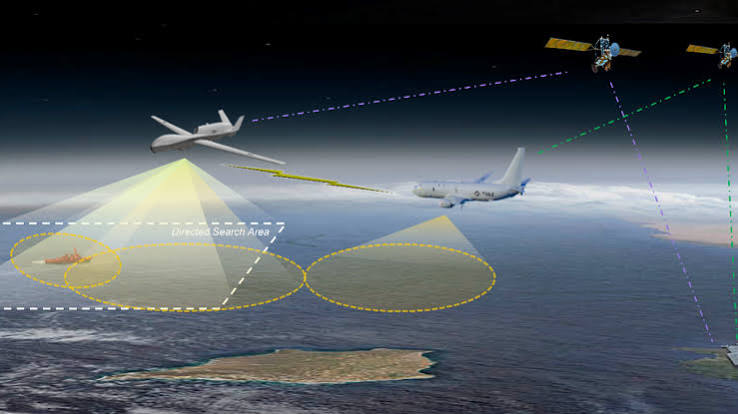
The drone age is accelerating a shift toward network-centric and distributed operations. A future combat aircraft may simultaneously function as a sensor, command node, communications relay and weapons platform. An uncrewed aircraft operating ahead of it may extend its sensor coverage. Another one may perform electronic warfare. A third may act as a decoy, while a fourth carries weapons. Ground-based radars and space-based sensors can contribute additional information to the same operational picture.
The objective is not necessarily to replace expensive crewed aircraft with drones. Rather, it is to create a force mix in which high-end platforms are supported and amplified by larger numbers of lower-cost autonomous or remotely operated systems. Such an approach could increase the number of sensors, weapons and potential targets available to a commander without proportionally increasing the number of pilots placed at risk.
Future Air Superiority Models
The future air-superiority model is likely to consist of several overlapping components rather than a single dominant capability.
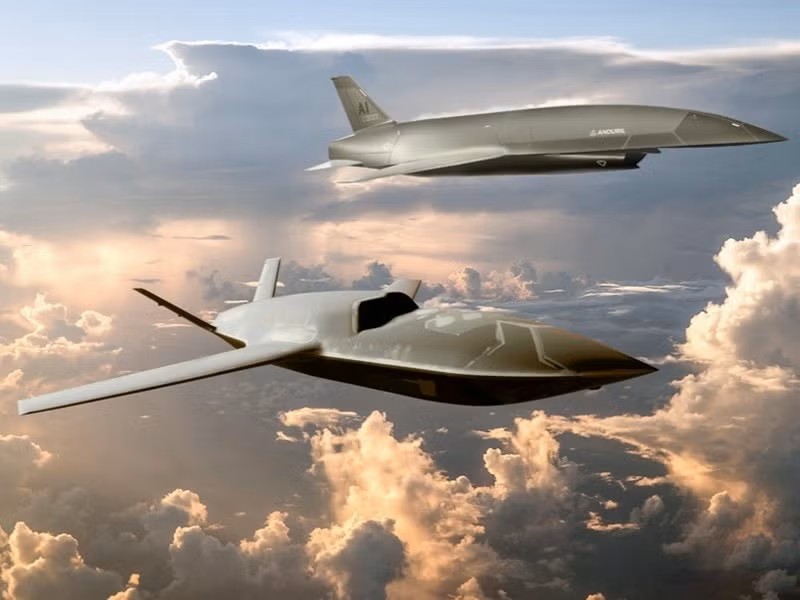
The Manned-Unmanned Team. Advanced crewed aircraft will increasingly function as command-and-control nodes for uncrewed systems. Instead of sending a pilot into every high-risk environment, commanders can distribute risk among a mixture of platforms. This would allow expensive crewed aircraft to remain focused on missions requiring human judgement while autonomous systems provide additional mass.
Distributed Air Power. Future air forces will need to operate despite attacks on bases, runways and communications infrastructure. Dispersal, mobility and rapid reconstitution will therefore become increasingly important. The relevant question will not simply be whether an air force can generate sorties under ideal conditions. It will be whether it can continue generating combat power after its infrastructure has been attacked.
Persistent Sensing. Small unmanned platforms can provide persistent surveillance at relatively low cost. When integrated with ground, maritime, space and airborne sensors, they can contribute to a continuous picture of the battlespace. This creates a paradox for conventional military operations: greater visibility can improve targeting, but it also makes concealment increasingly difficult. Camouflage, deception, emissions control and mobility will therefore become more important, even as sensor technology improves.
Information and Electronic Superiority. Air superiority increasingly depends on the ability to sense, communicate and coordinate. An aircraft with excellent aerodynamic performance that cannot maintain communications or trust its sensor information may be comparatively less effective. Electronic warfare will therefore become an integral component of air combat rather than a specialist supporting function. The battle for the electromagnetic spectrum will increasingly accompany the battle for physical airspace.
Air Defence Against Swarms
Drone swarms represent one of the most difficult challenges for contemporary air defence because they combine low cost, numbers, flexibility and uncertainty. A conventional air-defence architecture may be highly effective against a limited number of sophisticated threats yet struggle economically when confronted by large numbers of inexpensive UAS. The problem is fundamentally one of cost-benefit comparison.
This makes layered defence essential. The first requirement is detection. Traditional radar must increasingly operate alongside electro-optical, infrared, acoustic and other sensing technologies. The objective is to build a multi-sensor picture that can identify small, slow-moving objects.
The second requirement is automated classification. A large raid can generate more tracks than human operators can efficiently evaluate. AI-assisted systems may therefore become essential for filtering sensor data and prioritising potential threats.
The third requirement is a response mechanism. Different threats require different responses. Expensive interceptors may be used against high-value, sophisticated targets. Low-cost defensive systems can address simpler threats.
Electronic warfare provides another layer. Other technologies, including directed-energy systems, may eventually augment the defensive options where operational conditions permit.
The key principle is that air defence against swarms cannot depend upon a single weapon. It must be an integrated system of sensors, command networks, electronic warfare and multiple classes of interceptors.
Adaptation Trends
Air forces worldwide are fundamentally redesigning how they conceive, plan, and execute air operations. Air forces are increasingly adapting their force structures around three major developments: distributed operations, manned-unmanned teaming and rapid technological adaptation.
Distributed operations seek to reduce dependence on a small number of vulnerable air bases and command nodes. A concentrated air force may possess extremely capable aircraft but still face operational paralysis if its runways, fuel infrastructure, command centres or communications nodes are disabled. Aircraft, sensors, logistics and command functions need to be dispersed across a wider geographical area. This complicates an adversary’s targeting problem and increases the force’s resilience. The concept is particularly relevant in an era of long-range precision weapons.
Manned-unmanned teaming is another trend. A future fighter may coordinate multiple uncrewed systems rather than operating alone. These platforms could undertake sensing, communications, electronic warfare, decoy and other missions while keeping human decision-makers at an appropriate level of control. This approach effectively increases the combat mass available to each crewed platform.
The third transformation is the increasing importance of software and data. Aircraft increasingly depend on digital mission systems, secure communications, electronic warfare databases and AI-enabled decision support. The ability to update these capabilities rapidly can become a strategic advantage.
This creates a different procurement philosophy. Rather than treating an aircraft as a fixed capability acquired for several decades, air forces increasingly need platforms that can accept frequent software, sensor and weapons upgrades.
Analytical Perspective
Extent of Autonomy. Autonomy is likely to be a defining feature of future air warfare, but it should not be confused with the complete removal of humans from the kill chain. The more consequential development is the creation of autonomous combat ecosystems in which machines perform increasingly complex supporting tasks while humans retain command authority over critical decisions. AI can process enormous quantities of sensor data, identify patterns, prioritise potential threats and provide recommendations to operators. Autonomous systems can maintain formations, navigate contested environments, coordinate movement and respond to changing conditions within pre-established parameters. The military advantage comes from speed. Modern battlespaces can generate more information than human operators can absorb. A system that can process multiple sensor feeds simultaneously may identify an emerging threat far faster than a human-centred process.
New Vulnerabilities. Autonomy also creates new vulnerabilities. A sophisticated autonomous system depends upon software, communications, navigation and data. These dependencies create opportunities for cyber-attack, electronic warfare and deception. An adversary may attempt to corrupt the information an autonomous system relies on rather than physically destroying the platform. The future contest will therefore involve not only physical survivability but also algorithmic and informational survivability. Military organisations will need confidence that autonomous systems can continue operating when communications are degraded, GPS or other navigation services are disrupted, and sensor information becomes incomplete or contradictory. The most resilient systems may therefore be those that can operate with degraded connectivity while retaining clear human-defined constraints and mission objectives.
The Industrial Scalability. The drone age is making industrial capacity a key part of military power. A traditional air force measures strength through the number and sophistication of aircraft in its inventory (Quantity and Quality). Future conflicts would require scalability: the ability to rapidly manufacture autonomous systems, replenish losses, update software, produce sensors, and maintain secure communications. Modular design, commercial technology, software-defined systems and rapid manufacturing could allow air forces to shorten development cycles.
The Continuing Role of the Fighter. The rise of drones should not be interpreted as the end of the fighter aircraft. High-performance crewed aircraft continue to provide capabilities that autonomous systems cannot easily replicate across every mission. Human judgement, flexibility, situational awareness and the ability to respond to unexpected circumstances remain important. The change is that the fighter may no longer operate as an isolated platform, but as part of a networked ecosystem. Integrating the fighter into a wider ecosystem would make it more valuable, not less relevant.
Concluding Thoughts
This transformation highlights several important aspects.
- Mass is once again a strategic necessity; even though high-end capability matters, affordable mass can impose excessive operational and economic costs on the opponent.
- Resilience is as important as performance. Networks, bases and command systems must be capable of absorbing disruption.
- Software and data are becoming combat capabilities rather than merely supporting functions.
- Neutralising the swarm’s ability to coordinate is more important than physically destroying every individual drone.
- Air defence must evolve from a capability to merely intercept platforms to disrupting the networked operating systems.
- Human-machine integration will define command and control. The objective should not be unrestricted autonomy but the intelligent allocation of tasks between humans and machines.
Bottom Line
The future of air dominance will consequently be determined less by individual platforms and more by the ability to integrate manned aircraft, autonomous systems, sensors, networks, electronic warfare and air defence into a resilient force.
Please Add Value to the write-up with your views on the subject.
For regular updates, please register your email here:-
References and credits
To all the online sites and channels.
Pics Courtesy: Internet
Disclaimer:
Information and data included in the blog are for educational & non-commercial purposes only and have been carefully adapted, excerpted, or edited from reliable and accurate sources. All copyrighted material belongs to the respective owners and is provided only for wider dissemination.
References: –
- Dhakate S, “Synergistic applications of autonomous UCAVs, swarm robotics and cloud computing in future air warfare”, Journal of Defence Studies, 17(4), (2023).
- Khosla, A. “Wings of dominance: The future of air warfare. Air Marshal’s Perspective”. (2026, June 26).
- Upadhyay, A. “Counter UAS technologies for India: A prognosis”. Journal of Defence Studies, 16(4). (2022).
- Sharma, A. “Counter-Unmanned Aircraft Systems (C-UAS): Future of warfare”. Journal of Defence Studies, 16(4). (2022).
- Khosla, A. “India’s tryst with combat drones: SP’s Aviation, 8 (2025).
- Khosla, A. “Air power and war endurance in the Indian context”. CLAWS Journal, 16(2), 30–48. (2023).
- Scharre, P. “Army of none: Autonomous weapons and the future of war”. W. W. Norton. (2018).
- Ansari, H. Z. “Unmanned combat aerial vehicles: Some ethical considerations for the defence applications of AI”. Journal of Defence Studies, 16(4). (2022).
- Palkar, D., & Pande, D. “Rethinking ‘air power’ for the governance of unmanned aerial vehicles in India”, Journal of Defence Studies. (2023).
- RAND Corporation. “Countering small unmanned aircraft systems”. RAND Corporation. (2022).