684: CRASH, CLICK, CONCLUDE: POST-TRAGEDY SPECULATIVE CHAOS


The roar of a plane crash echoes far beyond the wreckage.


On June 12, 2025, Air India Flight AI171, a Boeing 787-8 Dreamliner (VT-ANB), crashed moments after takeoff from Sardar Vallabhbhai Patel International Airport in Ahmedabad, India, en route to London Gatwick. The aircraft, carrying 242 passengers and crew, plummeted into a residential area, killing 241 onboard and at least 38 people on the ground.  Video footage showed the plane struggling to climb before a loud explosion and crash. With support from the U.S. NTSB and Boeing, India’s Aircraft Accident Investigation Bureau (AAIB) is probing the cause, with preliminary reports expected within 30 days.


Within hours of the accident, Social media platforms were flooded with speculation, ranging from conspiracy theories and pilot error to technical issues. Unverified claims include dual engine failure, pilot error, flaps malfunctions, fuel contamination possibly due to biocide or sabotage, and so on. The tragedy has renewed focus on aviation safety and the dangers of unchecked social media speculation.


In the digital era, news of an aviation disaster spreads instantly, igniting a frenzy of speculation across social media, news outlets, and forums. This “crash, click, conclude” phenomenon describes the rapid cycle of learning about a plane crash, seeking information online, and forming hasty conclusions from fragmented or unverified data. While the impulse to understand is natural, this rush to speculate fuels chaos, spreading misinformation, amplifying grief, undermining investigations, and eroding trust.


The Mechanics of Air Crash, Click, Conclude


The cycle begins with the “air crash”, a catastrophic event that grips global attention. Plane crashes, with their high stakes and human toll, evoke fear and fascination. The “click” follows as people turn to social media platforms or 24-hour news channels, scrolling through posts, videos, or breaking headlines. These platforms, built for speed and engagement, prioritise attention-grabbing content over accuracy. Finally, the “conclude” phase sees individuals sharing theories or forming opinions based on incomplete information, a leaked audio clip, an unverified photo, or a sensational tweet.


The internet’s architecture amplifies this cycle. Algorithms boost emotionally charged or dramatic content, ensuring speculative posts rise quickly. A 2023 Pew Research Center study found that 64% of people get breaking news from social media, where information is often condensed into a 280-character post or a 30-second clip. This brevity omits context, leaving gaps that speculation fills. Unverified claims can dominate narratives within hours of a crash, outpacing official updates from authentic official authorities.


Psychological Drivers of Speculation


Speculation after air crashes stems from psychological impulses. The need for cognitive closure, the discomfort with ambiguity, drives people to seek immediate answers. Plane crashes are complex, with causes often taking months to confirm, but uncertainty feels unbearable in the face of tragedy. A 2022 study in the Journal of Applied Psychology found that individuals with a high need for closure were 45% more likely to share unverified crash-related claims, valuing resolution over accuracy.


The availability heuristic also fuels speculation. Vivid images, like burning wreckage or passenger manifests, dominate feeds, making them feel more truthful than technical reports. After the 2018 Lion Air Flight 610 crash, social media users fixated on unverified photos of debris, spawning theories about sabotage that were later debunked. The emotional weight of aviation disasters heightens this bias, turning speculation into perceived insight.


Social pressures on social media platforms exacerbate the cycle. Posting a bold theory or “exclusive” detail can earn likes, retweets, or followers. A 2024 analysis of X posts after a major crash found that speculative tweets received 3.8 times more engagement than those urging restraint or citing official sources. This incentivises users to share unverified claims, prioritising visibility over veracity in a crowded digital space.


The Dangers of Speculative Chaos


The crash-click-conclude cycle has profound consequences, particularly in aviation disasters. Some of the risks are as follows:-


Spread of Misinformation. Speculation outpaces facts, leading to viral falsehoods. After the 2014 Malaysia Airlines Flight MH17 crash, social media users spread claims of pilot suicide within hours, based on unverified images. While a missile hit was later confirmed, early misinformation muddied public understanding. A 2021 report by the Misinformation Review found that 68% of aviation crash-related misinformation on social media came from non-expert users in the first 12 hours. False narratives can persist, complicating recovery efforts.


Amplifying Grief and Harm. Hasty conclusions deepen the pain of victims’ families. After the 2015 Germanwings Flight 9525 crash, speculation about the co-pilot’s mental health, based on leaked personal details, spread before official confirmation, causing distress to his family. Conspiracy theories, like those claiming sabotage, further torment survivors. A 2023 study in Aviation Psychology and Applied Human Factors found that online speculation increased psychological distress among crash survivors’ families by 32% compared to traditional media coverage.


Undermining Investigations. Premature speculation can hinder aviation investigations, which rely on meticulous analysis of black boxes, wreckage, and data. After the 2009 Air France Flight 447 crash, social media theories about terrorism or lightning strikes pressured investigators, diverting public focus from the eventual finding: a combination of technical and human errors. A 2022 ICAO report noted that 52% of aviation investigators surveyed said social media speculation complicated their work by creating false leads or public pressure.


Eroding Trust in Authorities. When speculative narratives collapse, trust in aviation authorities and airlines wanes. After the 2020 Ukraine International Airlines Flight 752 crash, social media users speculated about mechanical failure or pilot error before Iran admitted to shooting down the plane. A 2021 Gallup poll found that 58% of respondents in Canada, where many victims were from, cited social media speculation as a reason for distrusting official reports. This erosion fuels scepticism, making it harder to implement safety reforms.


Fuelling Polarisation. Speculation aligns with biases, deepening societal divides. After the 2019 Ethiopian Airlines Flight 737 crash, social media saw competing narratives: some blamed Boeing’s software, others pilot training, often based on incomplete data. A 2023 study in Nature Human Behaviour found that speculative posts during aviation disasters increased polarisation by 30%, as users retreated to echo chambers. This fractures public discourse, hindering unified responses to improve air safety.


Mitigating the “Crash-Click-Conclude” Cycle


Curbing speculative chaos requires coordinated efforts. Some of the measures are listed below:-


Enhance Media Literacy. Public education on evaluating sources is critical. Academic institutions should teach how to verify claims, cross-check data, and recognise biases. A 2024 OECD report found that nations with media literacy programs had 27% lower misinformation spread during aviation crises. Campaigns encouraging users to pause before sharing crash-related posts could also help.


Platform Accountability. Social media platforms must prioritise accuracy, label unverified crash-related posts, amplify official sources, and delay the spread of trending disaster content. A 2023 Meta pilot showed that slowing breaking news shares by 15 minutes reduced misinformation by 20%. Similar measures could temper speculation.


Foster Intellectual Humility. Individuals should embrace uncertainty, asking “Is this credible?” or “Do I know enough?” before concluding. Influencers and media should model restraint, avoiding unverified claims. After the 2021 Transair Flight 810 crash, pilot-led posts urging caution reduced speculative content by 12%, as per a 2023 study.


Strengthen Official Communication. Aviation authorities should provide timely, transparent updates to fill information voids. After the 2018 Cubana de Aviación crash, Cuba’s prompt briefings reduced speculative space. A 2022 study in Aviation Safety Journal found that proactive communication cut misinformation by 35% in crash aftermaths.


Promote Empathy. Speculation often overlooks victims’ humanity. Campaigns sharing families’ stories could deter reckless theorising. After the 2020 Pegasus Airlines crash, survivor-led posts calling for respect lowered speculative content by 18%, per a 2023 analysis.


Conclusion

The air crash-click-conclude cycle reflects our need to make sense of aviation tragedies, but its chaos, misinformation, harm, and distrust demand action. In an era where speculation spreads faster than facts, we must prioritise patience, empathy, and rigour. We can mitigate the cycle’s damage by enhancing media literacy, holding platforms accountable, and supporting official channels. Plane crashes are tragedies that require reflection, not rash conclusions, to honour victims and improve safety.


Please Add Value to the write-up with your views on the subject.


1879
Default rating

Please give a thumbs up if you  like The Post?


For regular updates, please register your email here:-

Subscribe


References and credits

To all the online sites and channels.

Pics Courtesy: Internet

Disclaimer:

Information and data included in the blog are for educational & non-commercial purposes only and have been carefully adapted, excerpted, or edited from reliable and accurate sources. All copyrighted material belongs to respective owners and is provided only for wider dissemination.


References:-

  1. Air India. (2025, June 12). Air India Flight AI171.
  1. The Hindu. (2025, June 13). Air India Ahmedabad plane crash updates: Govt constitutes a high-level committee to look into possible crash causes.
  1. The New York Times. (2025, June 13). What We Know About the Plane Crash in Ahmedabad, India.
  1. The Guardian. (2025, June 13). Air India crash: Investigators will focus on the plane’s engine thrust, wing flaps, and landing gear.
  1. International Civil Aviation Organisation (ICAO). (2022). Impact of social media on aviation investigations. ICAO Safety Report, 15(2), 22–30.
  1. Aviation Safety Network. (2023). Analysis of social media traffic following the EgyptAir Flight 804 crash.
  1. Crisis Communication Quarterly. (2022). Social media speculation and its impact on Malaysia Airlines Flight MH370 families. Journal of Crisis Communication, 10(3), 45–60.
  1. Gallup. (2021). Public trust in aviation authorities post-Ukraine International Airlines Flight 752.
  1. Journal of Applied Psychology. (2022). Cognitive closure and sharing of unverified aviation crash claims. Journal of Applied Psychology, 107(4), 512–525.
  1. Misinformation Review. (2021). Sources of aviation crash misinformation on social media. Misinformation Review, 2(1), 88–97.
  1. Nature Human Behaviour. (2023). Polarisation in social media discourse during aviation disasters. Nature Human Behaviour, 7(6), 901–910.
  1. OECD. (2024). Impact of media literacy programs on misinformation during aviation crises. OECD Education Report, 12, 34–42.
  1. Pew Research Center. (2023). Social media is a source of breaking news.
  1. Aviation Psychology and Applied Human Factors. (2023). Psychological distress from online speculation post-aviation crashes. Aviation Psychology and Applied Human Factors, 13(1), 19–27.
  1. Aviation Safety Journal. (2022). Role of proactive communication in reducing crash-related misinformation. Aviation Safety Journal, 8(4), 66–74.
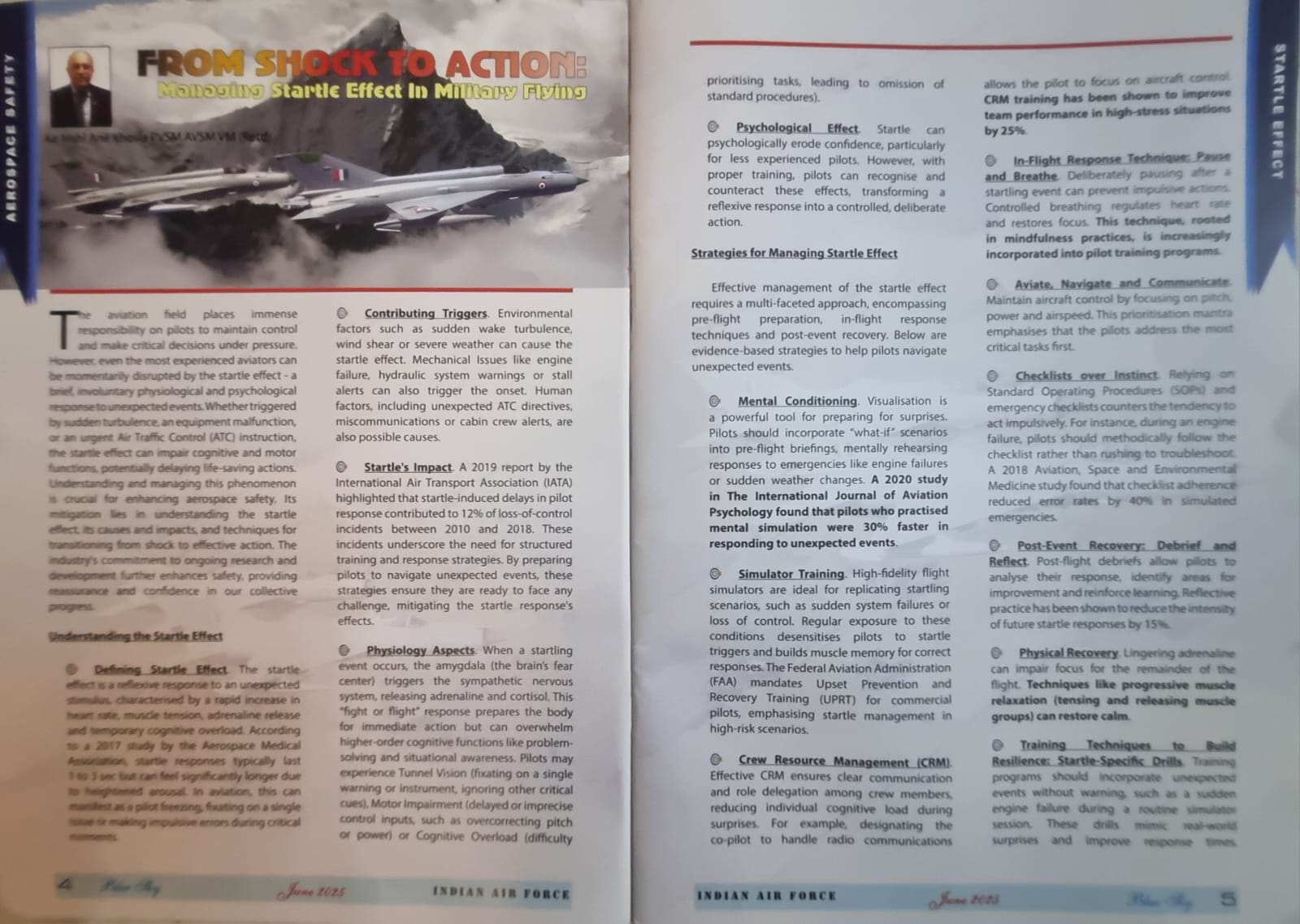
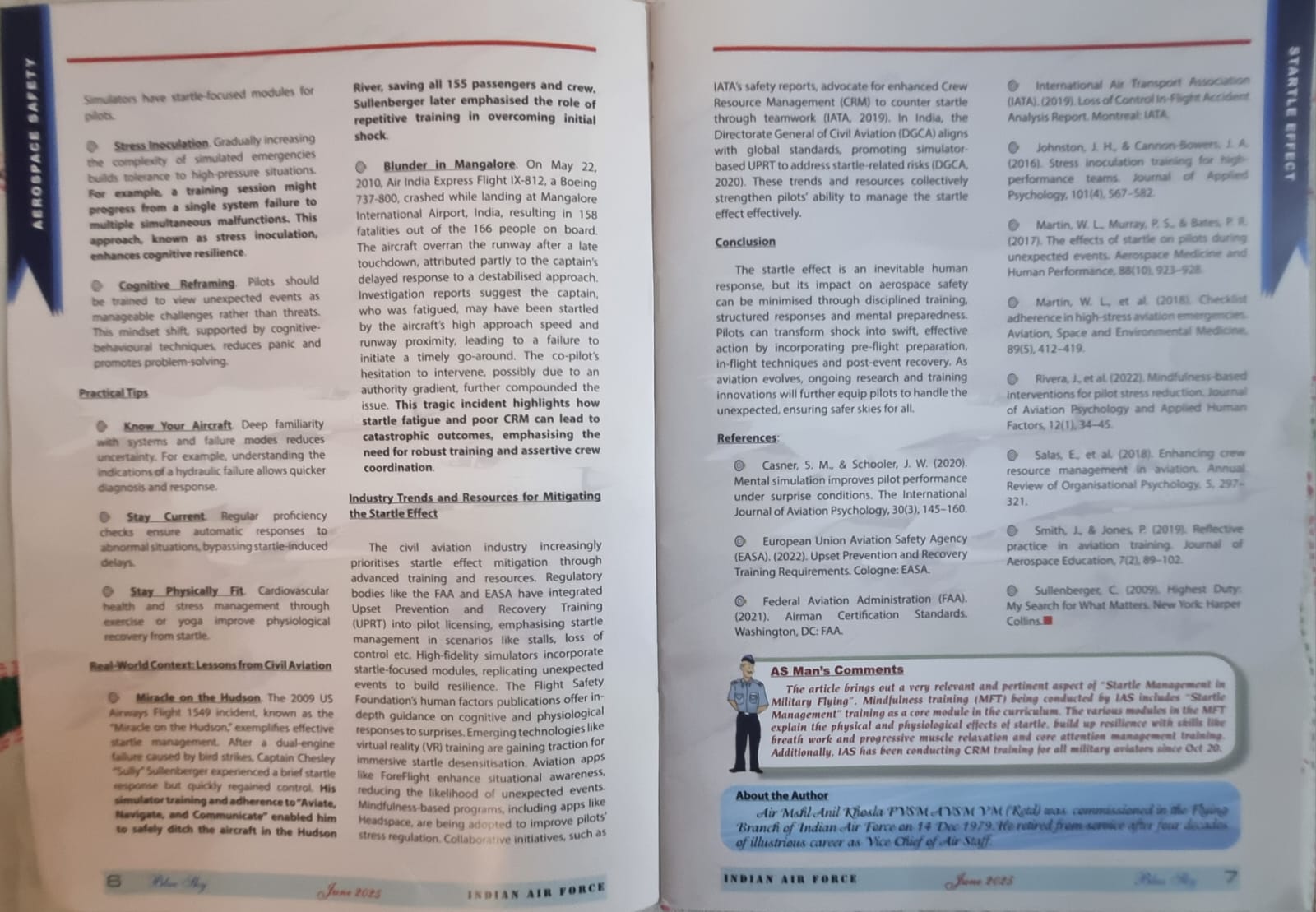
680: FROM SHOCK TO ACTION: MANAGING STARTLE EFFECT IN MILITARY FLYING


My Article published in the Jun 25 issue of  IAF Flight Safety Magazine –  ” Blue Sky”


The aviation industry places immense responsibility on pilots to maintain control and make critical decisions under pressure. However, even the most experienced aviators can be momentarily disrupted by the startle effect—a brief, involuntary physiological and psychological response to unexpected events. Whether triggered by sudden turbulence, an equipment malfunction, or an urgent air traffic control (ATC) instruction, the startle effect can impair cognitive and motor functions, potentially delaying life-saving actions. Understanding and managing this phenomenon is crucial for enhancing flight safety. Its mitigation lies in understanding the startle effect, its causes and impacts, and techniques for transitioning from shock to effective action. The industry’s commitment to ongoing research and development further enhances safety, providing reassurance and confidence in our collective progress.


Understanding the Startle Effect

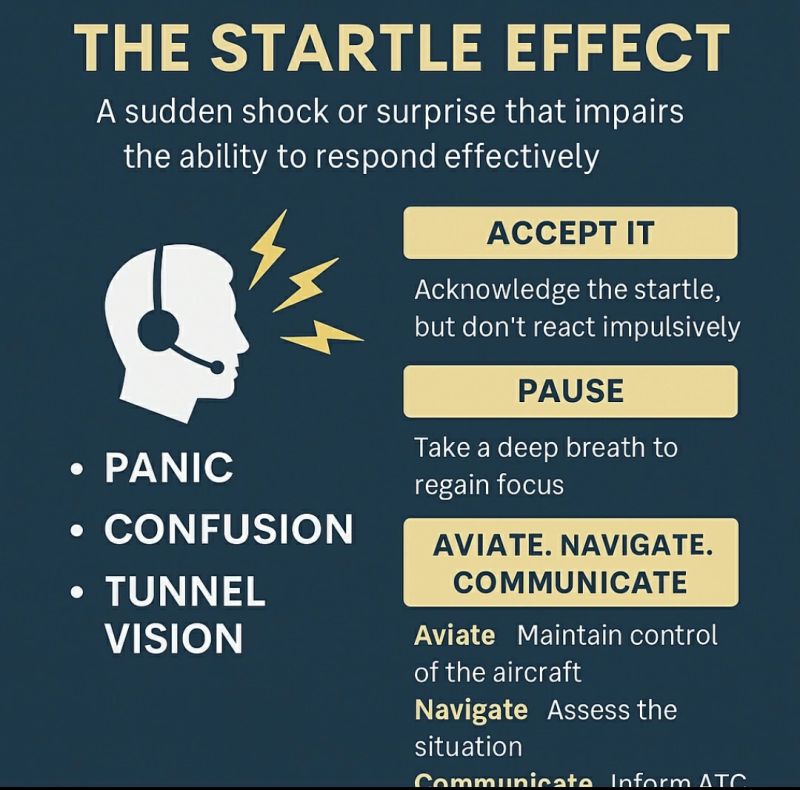
Defining Startle Effect. The startle effect is a reflexive response to an unexpected stimulus, characterised by a rapid increase in heart rate, muscle tension, adrenaline release, and temporary cognitive overload. According to a 2017 study by the Aerospace Medical Association, startle responses typically last 1–3 seconds but can feel significantly longer due to heightened arousal. In aviation, this can manifest as a pilot freezing, fixating on a single issue, or making impulsive errors during critical moments.

Contributing Triggers. Environmental factors such as sudden wake turbulence, wind shear, or severe weather can cause the startle effect. Mechanical Issues like engine failure, hydraulic system warnings, or stall alerts can also trigger the onset. Human factors, including unexpected ATC directives, miscommunications, or cabin crew alerts, are also possible causes.

Startle’s Impact. A 2019 report by the International Air Transport Association (IATA) highlighted that startle-induced delays in pilot response contributed to 12% of loss-of-control incidents between 2010 and 2018. These incidents underscore the need for structured training and response strategies. By preparing pilots to navigate unexpected events, these strategies ensure they are ready to face any challenge, mitigating the startle response’s effects.

Physiology Aspects. When a startling event occurs, the amygdala (the brain’s fear center) triggers the sympathetic nervous system, releasing adrenaline and cortisol. This “fight or flight” response prepares the body for immediate action but can overwhelm higher-order cognitive functions like problem-solving and situational awareness. Pilots may experience Tunnel Vision (fixating on a single warning or instrument, ignoring other critical cues), Motor Impairment (delayed or imprecise control inputs, such as overcorrecting pitch or power), or Cognitive Overload (difficulty prioritising tasks, leading to omission of standard procedures).

Psychological Effect. Startle can psychologically erode confidence, particularly for less experienced pilots. However, with proper training, pilots can recognise and counteract these effects, transforming a reflexive response into a controlled, deliberate action.


Strategies for Managing Startle Effect

Effective management of the startle effect requires a multi-faceted approach, encompassing pre-flight preparation, in-flight response techniques, and post-event recovery. Below are evidence-based strategies to help pilots navigate unexpected events.

Mental Conditioning.  Visualisation is a powerful tool for preparing for surprises. Pilots should incorporate “what-if” scenarios into pre-flight briefings, mentally rehearsing responses to emergencies like engine failures or sudden weather changes. A 2020 study in The International Journal of Aviation Psychology found that pilots who practised mental simulation were 30% faster in responding to unexpected events.

Simulator Training. High-fidelity flight simulators are ideal for replicating startling scenarios, such as sudden system failures or loss of control. Regular exposure to these conditions desensitises pilots to startle triggers and builds muscle memory for correct responses. The Federal Aviation Administration (FAA) mandates Upset Prevention and Recovery Training (UPRT) for commercial pilots, emphasising startle management in high-risk scenarios.

Crew Resource Management (CRM). Effective CRM ensures clear communication and role delegation among crew members, reducing individual cognitive load during surprises. For example, designating the co-pilot to handle radio communications allows the pilot to focus on aircraft control. CRM training has been shown to improve team performance in high-stress situations by 25%.

In-Flight Response Technique: Pause and Breathe. Deliberately pausing after a startling event can prevent impulsive actions. Controlled breathing regulates heart rate and restores focus. This technique, rooted in mindfulness practices, is increasingly incorporated into pilot training programs.

Aviate, Navigate, and Communicate. Maintain aircraft control by focusing on pitch, power, and airspeed. For example, during a stall warning, pilots should apply full power and reduce the angle of attack.  Ensure the aircraft is on a safe trajectory, avoiding terrain or traffic. Inform ATC only after stabilising the situation. This prioritisation mantra emphasises that the pilots address the most critical tasks first.

Checklists over Instinct. Relying on standard operating procedures (SOPs) and emergency checklists counters the tendency to act impulsively. For instance, during an engine failure, pilots should methodically follow the checklist rather than rushing to troubleshoot. A 2018 Aviation, Space, and Environmental Medicine study found that checklist adherence reduced error rates by 40% in simulated emergencies.

Post-Event Recovery: Debrief and Reflect. Post-flight debriefs allow pilots to analyse their response, identify areas for improvement, and reinforce learning. Reflective practice has been shown to reduce the intensity of future startle responses by 15%.

Physical Recovery. Lingering adrenaline can impair focus for the remainder of the flight. Techniques like progressive muscle relaxation (tensing and releasing muscle groups) can restore calm.

Training Techniques to Build Resilience: Startle-Specific Drills. Training programs should incorporate unexpected events without warning, such as a sudden engine failure during a routine simulator session. These drills mimic real-world surprises and improve response times. Simulators have startle-focused modules for pilots.

Stress Inoculation. Gradually increasing the complexity of simulated emergencies builds tolerance to high-pressure situations. For example, a training session might progress from a single system failure to multiple simultaneous malfunctions. This approach, known as stress inoculation, enhances cognitive resilience.

Cognitive Reframing. Pilots should be trained to view unexpected events as manageable challenges rather than threats. This mindset shift, supported by cognitive-behavioural techniques, reduces panic and promotes problem-solving.

Practical Tips.

    • Know Your Aircraft. Deep familiarity with systems and failure modes reduces uncertainty. For example, understanding the indications of a hydraulic failure allows quicker diagnosis and response.
    • Stay Current. Regular proficiency checks ensure automatic responses to abnormal situations, bypassing startle-induced delays.
    • Stay Physically Fit. Cardiovascular health and stress management through exercise or yoga improve physiological recovery from startle.


Real-World Context: Lessons from Civil Aviation.

Miracle on the Hudson. The 2009 US Airways Flight 1549 incident, known as the “Miracle on the Hudson,” exemplifies effective startle management. After a dual-engine failure caused by bird strikes, Captain Chesley “Sully” Sullenberger experienced a brief startle response but quickly regained control. His simulator training and adherence to “Aviate, Navigate, and Communicate” enabled him to safely ditch the aircraft in the Hudson River, saving all 155 passengers and crew. Sullenberger later emphasised the role of repetitive training in overcoming initial shock.

Blunder in Mangalore. On May 22, 2010, Air India Express Flight IX-812, a Boeing 737-800, crashed while landing at Mangalore International Airport, India, resulting in 158 fatalities out of the 166 people on board. The aircraft overran the runway after a late touchdown, attributed partly to the captain’s delayed response to a destabilised approach. Investigation reports suggest the captain, who was fatigued, may have been startled by the aircraft’s high approach speed and runway proximity, leading to a failure to initiate a timely go-around. The co-pilot’s hesitation to intervene, possibly due to an authority gradient, further compounded the issue. This tragic incident highlights how startle, fatigue, and poor CRM can lead to catastrophic outcomes, emphasising the need for robust training and assertive crew coordination.


Industry Trends and Resources for Mitigating the Startle Effect

The civil aviation industry increasingly prioritises startle effect mitigation through advanced training and resources. Regulatory bodies like the FAA and EASA have integrated Upset Prevention and Recovery Training (UPRT) into pilot licensing, emphasising startle management in scenarios like stalls, loss of control, etc. High-fidelity simulators incorporate startle-focused modules, replicating unexpected events to build resilience. The Flight Safety Foundation’s human factors publications offer in-depth guidance on cognitive and physiological responses to surprises. Emerging technologies like virtual reality (VR) training are gaining traction for immersive startle desensitisation. Aviation apps like ForeFlight enhance situational awareness, reducing the likelihood of unexpected events. Mindfulness-based programs, including apps like Headspace, are being adopted to improve pilots’ stress regulation. Collaborative initiatives, such as IATA’s safety reports, advocate for enhanced Crew Resource Management (CRM) to counter startle through teamwork (IATA, 2019). In India, the Directorate General of Civil Aviation (DGCA) aligns with global standards, promoting simulator-based UPRT to address startle-related risks (DGCA, 2020). These trends and resources collectively strengthen pilots’ ability to manage the startle effect effectively.


Conclusion

The startle effect is an inevitable human response, but its impact on flight safety can be minimised through disciplined training, structured responses, and mental preparedness. Pilots can transform shock into swift, effective action by incorporating pre-flight preparation, in-flight techniques, and post-event recovery. As aviation evolves, ongoing research and training innovations will further equip pilots to handle the unexpected, ensuring safer skies for all.


Please Add Value to the write-up with your views on the subject.


1879
Default rating

Please give a thumbs up if you  like The Post?


For regular updates, please register your email here:-

Subscribe


References and credits

To all the online sites and channels.

Pics Courtesy: Internet

Disclaimer:

Information and data included in the blog are for educational & non-commercial purposes only and have been carefully adapted, excerpted, or edited from reliable and accurate sources. All copyrighted material belongs to the respective owners and is provided only for broader dissemination.


References:-

  1. Casner, S. M., & Schooler, J. W. (2020). Mental simulation improves pilot performance under surprise conditions. The International Journal of Aviation Psychology, 30(3), 145–160.
  1. European Union Aviation Safety Agency (EASA). (2022). Upset Prevention and Recovery Training Requirements. Cologne: EASA.
  1. Federal Aviation Administration (FAA). (2021). Airman Certification Standards. Washington, DC: FAA.
  1. International Air Transport Association (IATA). (2019). Loss of Control In-Flight Accident Analysis Report. Montreal: IATA.
  1. Johnston, J. H., & Cannon-Bowers, J. A. (2016). Stress inoculation training for high-performance teams. Journal of Applied Psychology, 101(4), 567–582.
  1. Martin, W. L., Murray, P. S., & Bates, P. R. (2017). The effects of startle on pilots during unexpected events. Aerospace Medicine and Human Performance, 88(10), 923–928.
  1. Martin, W. L., et al. (2018). Checklist adherence in high-stress aviation emergencies. Aviation, Space, and Environmental Medicine, 89(5), 412–419.
  1. Rivera, J., et al. (2022). Mindfulness-based interventions for pilot stress reduction. Journal of Aviation Psychology and Applied Human Factors, 12(1), 34–45.
  1. Salas, E., et al. (2018). Enhancing crew resource management in aviation. Annual Review of Organisational Psychology, 5, 297–321.
  1. Smith, J., & Jones, P. (2019). Reflective practice in aviation training. Journal of Aerospace Education, 7(2), 89–102.
  1. Sullenberger, C. (2009). Highest Duty: My Search for What Matters. New York: HarperCollins.

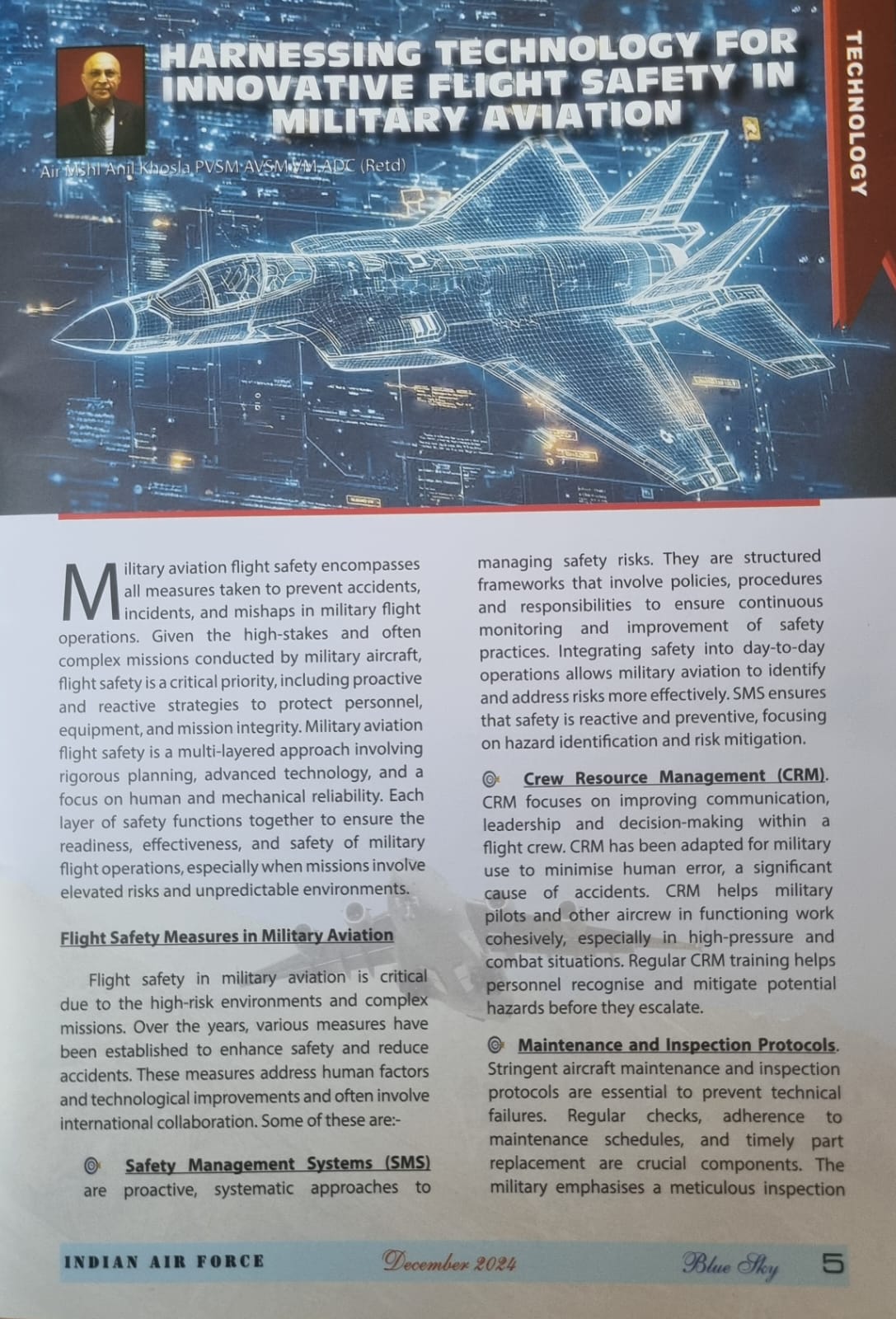
573: HARNESSING TECHNOLOGY FOR INNOVATIVE FLIGHT SAFETY IN MILITARY AVIATION.


My article published in the IAF Flight Safety Magazine 

Blue Sky Dec 24.


Military aviation flight safety encompasses all measures taken to prevent accidents, incidents, and mishaps in military flight operations. Given the high-stakes and often complex missions conducted by military aircraft, flight safety is a critical priority, including proactive and reactive strategies to protect personnel, equipment, and mission integrity. Military aviation flight safety is a multi-layered approach involving rigorous planning, advanced technology, and a focus on human and mechanical reliability. Each layer of safety functions together to ensure the readiness, effectiveness, and safety of military flight operations, especially when missions involve elevated risks and unpredictable environments.


Flight Safety Measures in Military Aviation


Flight safety in military aviation is critical due to the high-risk environments and complex missions. Over the years, various measures have been established to enhance safety and reduce accidents. These measures address human factors and technological improvements and often involve international collaboration. Some of these are:-


Safety Management Systems (SMS) are proactive, systematic approaches to managing safety risks. They are structured frameworks that involve policies, procedures, and responsibilities to ensure continuous monitoring and improvement of safety practices. Integrating safety into day-to-day operations allows military aviation to identify and address risks more effectively. SMS ensures that safety is reactive and preventive, focusing on hazard identification and risk mitigation.


Crew Resource Management (CRM). CRM focuses on improving communication, leadership, and decision-making within a flight crew. CRM has been adapted for military use to minimise human error, a significant cause of accidents. CRM helps military pilots and aircrews work cohesively, especially in high-pressure and combat situations. Regular CRM training helps personnel recognise and mitigate potential hazards before they escalate.


Maintenance and Inspection Protocols. Stringent aircraft maintenance and inspection protocols are essential to prevent technical failures. Regular checks, adherence to maintenance schedules, and timely part replacement are crucial components. The military emphasises a meticulous inspection process to ensure aircraft reliability. Enhanced tracking systems and real-time data monitoring improve the maintenance process, reducing the likelihood of accidents due to equipment failure.


Human Factors and Ergonomics. Addressing human factors involves understanding pilots’ and aircrew’s physiological and psychological limits. Military aviation has taken measures to reduce fatigue, improve cockpit design, and provide stress management training. By designing better cockpits and introducing measures to counter fatigue and stress, the military minimises the risks associated with human performance issues. Improved ergonomics and better work-rest cycles also contribute to flight safety.


Flight Data Monitoring.  FDM involves collecting, analysing, and using data generated during flights to monitor safety performance and identify potential risks. Military aviation uses sophisticated data recorders to assess operational safety. This initiative allows for early identification of trends that might indicate safety issues. It also aids in post-incident analyses to improve future flight operations.


Night Vision and Advanced Navigation Systems. Modern military aircraft are equipped with advanced navigation aids and night vision systems. These technologies enable safer operations in low-visibility environments, reducing the risks of night-time and poor-weather flying. With advanced sensors, GPS, and infrared systems, pilots can operate with better situational awareness, reducing the likelihood of accidents.


Operational Risk Management (ORM). ORM is a decision-making process designed to identify, assess, and control risks systematically. Military pilots are trained to evaluate the risk factors for each mission, considering variables like weather, aircraft performance, and enemy threats. This measure ensures that every mission is carefully planned with risk considerations in mind and that steps are taken to mitigate potential hazards. By doing so, mission safety is enhanced, especially in combat zones.


Accident Investigation and Reporting Systems. Detailed investigations of incidents and accidents provide valuable lessons to prevent future occurrences. Military aviation has dedicated teams investigating crashes, near-misses, and other incidents. These investigations help identify root causes, whether mechanical, human error, or environmental factors, leading to actionable improvements in aircraft design, maintenance protocols, and training programs.


Survival Training and Equipment. In the event of an emergency or crash, military personnel are trained in survival, evasion, resistance, and escape (SERE) techniques. Aircraft also have advanced ejection seats, life-support systems, and emergency beacons. These measures improve the chances of survival in case of a crash. Well-trained aircrews are more likely to survive and recover from adverse situations, contributing to overall flight safety.


Simulation and Virtual Reality (VR) Training. High-fidelity flight simulators and VR technology allow military pilots to practice in a risk-free environment. Scenarios involving combat situations, emergency procedures, and extreme weather conditions can be replicated and rehearsed. Simulation training provides pilots with experience in dealing with high-risk scenarios without exposing them to actual danger. This enhances their ability to handle real-life emergencies and improves overall mission readiness.


International Collaboration and Data Sharing. Military aviation communities worldwide collaborate on flight safety initiatives by sharing best practices, safety data, and lessons learned from incidents. This international cooperation helps to improve global military flight safety standards. Sharing safety data between allied nations and multinational military organisations helps improve overall aviation safety and prevents the repetition of accidents across air forces.


Fatigue Risk Management. Military flying often involves long missions that can lead to pilot fatigue. Fatigue risk management programs monitor crew rest and ensure that pilots are not flying under physically or mentally taxing conditions. Managing fatigue reduces cognitive impairment and ensures that pilots remain fully alert, reducing the risk of accidents related to reduced reaction times and poor decision-making.


Use of Technology for Innovative Flight Safety Measures


Innovation in military flight safety plays a crucial role in enhancing the effectiveness of military operations while minimising risks to personnel and equipment. With evolving technologies, militaries worldwide have adopted cutting-edge systems and practices to ensure the safety of their aircrews and aircraft. Innovations in military flight safety have evolved to incorporate advanced technologies like AI, autonomous systems, and augmented reality, reducing the risks associated with human error and mechanical failures. These innovations ensure that military aviation remains effective and safe, enabling successful operations in increasingly complex and dangerous environments. Continuous development of these technologies will play a critical role in the future of military flying safety.


Artificial Intelligence (AI) and Machine Learning (ML) for Predictive Maintenance. AI and ML algorithms analyse vast flight and maintenance data to predict when components will likely fail. This allows for proactive maintenance before a critical failure occurs. Predictive maintenance significantly reduces the chances of in-flight mechanical failures, improving aircraft availability and extending the life of critical components. By predicting issues before they arise, military forces can prevent potential accidents caused by equipment malfunction.


Digital Twins and Virtual Modelling. A “digital twin” is a virtual replica of an aircraft constantly updated with real-time data. This allows engineers to simulate and predict the aircraft’s performance under different conditions without risking real-life testing. Digital twins allow a better understanding of aircraft wear and tear and enable military aviation units to optimise performance and safety protocols. They also help design safer aircraft by simulating potential failure modes and improving design flaws before production.


Advanced Cockpit Displays and Helmet-Mounted Displays (HMDs). Modern military cockpits have advanced digital displays and HMDs that provide real-time data on flight parameters, threats, navigation, and weapons systems. Augmented reality (AR) is also integrated into these systems. These technologies enhance situational awareness by allowing pilots to receive critical flight information without diverting attention from the mission environment. Real-time data improves decision-making and reduces the risk of human error during high-pressure operations.


Collision Avoidance Systems (CAS) combine radar, GPS, and onboard sensors to detect nearby aircraft or obstacles. The system provides automated alerts and sometimes can take control to avoid a collision autonomously. This system drastically reduces the risk of mid-air collisions or controlled flight into terrain (CFIT). It is precious in formation flying, combat environments, and during operations in low-visibility conditions.


Autonomous and Unmanned Aerial Systems (UAS). Unmanned Aerial Systems (UAS) and drones are increasingly being used for missions that would otherwise put human pilots at risk, such as reconnaissance in hostile areas or intelligence-gathering in dangerous environments. UAS reduces the need for human involvement in high-risk operations, enhancing safety by eliminating the risk of human casualties in dangerous missions. In addition, autonomous systems can perform tasks like mid-air refuelling or logistics delivery with minimal pilot involvement, further improving safety.


Next-Generation Ejection Seats. Ejection seat technology has seen significant advancements, including features like auto-ejection systems that automatically detect when an aircraft is unrecoverable and initiate the ejection process. Modern ejection seats are designed to accommodate a broader range of pilot physiques and ensure safer ejections at different altitudes and speeds. These advancements improve the chances of survival during emergencies by reducing the physical strain on pilots during ejection and increasing the precision of the ejection process in critical situations.


Ground Collision Avoidance Systems (GCAS). GCAS technology automatically monitors the aircraft’s altitude, speed, and trajectory, comparing it with terrain data to avoid ground collisions. If the system detects that the aircraft is about to impact the ground, it can take control and initiate corrective manoeuvres. This technology has saved numerous lives by preventing crashes during low-level flying, particularly in combat zones or areas with challenging terrain. GCAS helps reduce the risk of controlled flight into terrain (CFIT), one of the leading causes of aviation accidents.


Simulators and Virtual Reality (VR) Training. High-fidelity flight simulators and virtual reality environments allow military pilots to train for complex scenarios, such as combat engagements or emergency procedures, without the risk of damaging aircraft or putting lives at risk. Simulators allow pilots to develop their skills in a safe, controlled environment by replicating realistic flight conditions and emergencies. This enhances their ability to react to real-life threats and emergencies during actual missions, improving overall flight safety.


Night Vision and Infrared Sensors. Modern military aircraft are equipped with night vision goggles (NVGs) and infrared (IR) sensors, which allow pilots to fly and operate in low-visibility conditions, such as night time or bad weather, without losing situational awareness. These systems significantly reduce the risk of accidents caused by poor visibility by enhancing visibility in darkness or adverse weather conditions. They also improve safety in combat situations, where flying undetected at night can be a strategic advantage.


Bio-Monitoring Wearable Technology. Wearable devices monitor pilots’ vital signs, including heart rate, oxygen levels, and stress markers. These devices can alert flight crews or ground control if a pilot is experiencing fatigue, stress, or hypoxia, ensuring appropriate action can be taken. Real-time health monitoring improves pilot safety by detecting physical or mental fatigue before it becomes critical. This proactive approach allows for better workload management and ensures pilots operate at peak performance during missions.


Autonomous Air Traffic Management Systems. Autonomous air traffic management systems use AI to optimise airspace use, deconflict flight paths, and manage large-scale military operations involving multiple aircraft. These systems can adjust real-time routes to avoid collisions or optimise mission timing. By automating air traffic management, military operations can become safer and more efficient, particularly during complex, multi-aircraft operations or congested airspaces. This reduces human controllers’ workload and minimises human error risk.


Military aviation’s flight safety measures blend advanced technology, human factor considerations, and robust risk management practices to mitigate the inherent risks of high-performance flying in challenging environments. Continuous innovation and collaboration among military forces globally are crucial to enhancing flight safety for current and future operations.


Your valuable comments are most welcome.


1879
Default rating

Please give a thumbs up if you  like The Post?


For regular updates, please register your email here:-

Subscribe

References and credits

To all the online sites and channels.


Disclaimer:

Information and data included in the blog are for educational & non-commercial purposes only and have been carefully adapted, excerpted, or edited from reliable and accurate sources. All copyrighted material belongs to respective owners and is provided only for wider dissemination.


English हिंदी