
756: HYBRID WAR IN THE BALTICS: AT RISK – CRITICAL INFRASTRUCTURE


Article Published in the Oct 25 Issue of The News Analytics Journal.


Hybrid operations, unlike traditional warfare, bridge martial coercion with non-military measures like sabotage, cyberattack, disinformation, interference in elections, energy blackmail, and weaponised migration. These processes are intentionally vague, cheap but high-impact, allowing state / non-state actors to destabilise their competitors without crossing transparent thresholds.

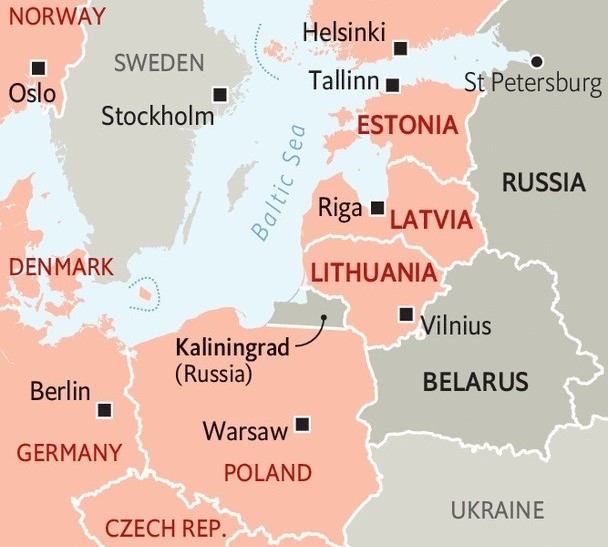
The Russian hybrid war strategy has been a security concern for the Baltic states of Estonia, Latvia, and Lithuania. They are improperly exposed to geography, population, and history relative to Russia. But the danger does not end there in the Baltics: Poland, Finland, and Germany are also at risk from shared energy and digital infrastructure, political interdependence, and disinformation.

Critical infrastructure, notably submarine cables, energy supplies, and digital networks, has also been a key target. With an assault upon such an asset requiring minimal effort but with the ripple effect containing security, economic, and psychological consequences, at least 11 North and Baltic Sea underwater cables have been severed since 2023, both demonstrating the technical possibility and the deniable nature of such an act. This article examines hybrid war strategy across the Baltic states, quantifying regional resiliency and defining policy measures to be taken in defence of their infrastructure.


Hybrid Threats and Activities

Hybrid war threatens Estonia, Latvia, and Lithuania seriously, attacking the cohesion of society, infrastructure, and democratic procedures using methods of sabotage, cyberattacks, disinformation, and disruptions of energy supplies. These are intended to destabilise the Baltic States without triggering traditional war, exploiting vulnerabilities in linked systems.

Information Warfare and Propaganda. Disinformation works extremely well in hybrid warfare, often used through AI-generated content, deepfakes, and tailored social media campaigns on Telegram, TikTok, and local networks. All are designed to produce narratives around specific strategic interests, and linguistic or cultural minorities are the target to be manipulated into divisions. For example, messages can utilise themes of discrimination, nostalgia for the past, or suspicion of international coalition-building. Cultural projects, including patronage of institutions that advance other narratives, can build dual information spaces that undermine social cohesion. Classic cases such as the 2003 Lithuanian presidential foreign-linked funding scandal illustrate how external actors exploit political weaknesses. Current disinformation operations are more likely to derogate support for active conflicts, destabilise international partnership trust, and amplify societal fault lines.

Subversion and Sabotage. Low-tech sabotage can be thoroughly debilitating to social cohesion and infrastructure. For example, the 2024 arson assault on a Vilnius storage facility disclosed weakness in key logistics networks. Likewise, the demolition of historic monuments across regions has been utilised as a means of stirring ethnic or cultural tensions. Deployment of incendiary devices transported through logistics networks in attacks also demonstrates the capabilities for covert disruption. Attacks on key infrastructure, e.g., submarine cables carrying transatlantic communications, financial transactions, and military communications, are conventionally attributed to an accident but cause concern about intentional sabotage. These attacks highlight the asymmetric benefits pursued through precision disruption, taking advantage of vulnerabilities in interdependent systems.

Cyberattacks. Cyber war is a key component of a hybrid strategy, and organisations often conduct distributed denial-of-service (DDoS) attacks on government buildings, energy organisations, and public services. For instance, in 2022, a cyberattack on a Baltic energy organisation disconnected thousands of customers’ services. In showpiece events, as for the 2023 Vilnius NATO Summit, cyberattacks were conducted on public websites and ministries to cause embarrassment and instability.

Espionage. Espionage is used to support these activities, with nationals being said to be recruited to collect intelligence or conduct minor sabotage operations. These activities are intended to erode confidence and destabilise institutions by taking advantage of insider access or local dissatisfaction.

Energy Security Risks. Energy infrastructure is the main target in hybrid warfare as well, and physical and cyberattacks are employed to discredit confidence in alternative energy sources. Diversification policies like Baltic connection to the EU power grid in 2024 or construction of LNG terminals and pipelines have mitigated these risks. Nevertheless, ongoing attacks on critical infrastructure are employed to point towards the long-term problem of safeguarding energy networks against hybrid methods.

Organised Migration. Organised waves of migration, such as the 2021 EU border crisis, demonstrate that humanitarian crises can be manipulated for strategic motives. Migrants from war-torn areas were redirected to border areas, swamping indigenous governments and challenging regional security responses. Such crises are intended to challenge global coalitions and politicise public discussion of migration and security, exerting pressure on governments and societies.

Military Intimidation and Amplification of Support for Hybrid Operations. A display of military strength in strategic regions can serve to enhance hybrid strategies by providing the context of a credible threat. Mass movements, mimicking rapid penetrations into extensive areas of terrain or clandestine activities in border regions, increase tensions and augment the impact of clandestine operations. They capitalise on geographical proximity and cultural ties to vulnerable areas, thereby enhancing the perceived threat of escalation.

Election Interference. Election interference is a popular hybrid method that employs cyberattacks, the leakage of sensitive information, and disinformation as tools to influence public opinion. Social media mobilisation campaigns predicated on the amplification of controversial issues—whether nationalist feelings or ethnic grievances—can influence closely fought elections. They seek to de-legitimise the democratic institutions and undermine those governments amenable to confronting strategic interests.


Preparedness and Reactions of the Baltic States

Despite the seriousness of the threat, the Baltic States have largely been resilient. They have come a long way in countering such vulnerabilities with modernisation, social integration, and neighbourhood cooperation. Investments in energy diversification, for instance, Lithuania’s terminal for liquefied natural gas and Baltic disconnection of old energy grids in 2024, have been curtailing reliance on the outside world. Nevertheless, critical infrastructure such as underwater cables, energy networks, and democratic systems is an attractive target for low-cost, deniable assaults.

Societal and Institutional Resilience. The NATO Cooperative Cyber Defence Centre of Excellence (CCDCOE) is hosted by Estonia. Cyber defence and information warfare coordination are instead functions of Lithuania’s National Cyber Security Centre and Latvia’s Strategic Communications Centre of Excellence. Civil defence institutions—such as Estonia’s 15,000-strong National Guard—facilitate rapid mobilisation in times of crisis.

Energy Independence. Integration of the Baltic States’ power grid with European grids, the Świnoujście terminal in Poland, and the Klaipėda LNG terminal are achievements of energy security. These steps limit Moscow’s influence and bolster NATO’s strategic depth.

Integration of Russian speakers. Rights of citizenship have been granted, investments made in learning the Russian language, and the recognition of cultural identities. These steps reduce alienation, but existing tensions between policies of integration and nationalist explanations that emphasise linguistic homogeneity.

Interagency Coordination. Interagency coordination is weak. Border control, crisis management, and intelligence exchange often do not operate in a coordinated manner. Latvia’s border guards, for example, have been criticised compared to more advanced Estonian and Nordic counterparts. NATO and American surveillance capabilities compensate to some extent, but reform at the national level remains to be accomplished.


Strengthening Baltic Defences against Hybrid Threats

Strengthening Baltic defences against hybrid threats involves building inclusive integration, establishing a Comprehensive Resilience Ecosystem (CORE), protecting critical infrastructure, modernising electricity laws, enhancing transparency, and strengthening regional and international cooperation. The following are recommendations:

Facilitate Inclusive Integration. Enlarge programmes to provide equal civic, economic, and political opportunities to cultural and language minorities to build national unity in Estonia, Latvia, and Lithuania.

Envision a Comprehensive Resilience Ecosystem (CORE). Design an integrated system among the defence, cybersecurity, energy, and communications sectors to develop national resilience in the context of hybrid threats, tailored to Baltic priorities and imperatives.

Guard Critical Infrastructure. Prioritise the protection of submarine communications cables and offshore energy installations, taking advantage of regional cooperation in protecting these critical networks.

Modernise Legal Frameworks. Encourage the modernisation of international treaties, such as the UN Convention on the Law of the Sea (UNCLOS), to counter hybrid threats to maritime and critical infrastructure, with the Baltic States coordinating regional action.

Increase Transparency in Deployments. Clearly inform Baltic citizens of regional defence measures to reassure them while dissuading potential aggressors, highlighting national sovereignty.

Upgrade Specialised Forces. Upgrade the Baltic special forces and civilian defence units with assistance from premier intelligence and surveillance capabilities in cooperation with allied countries.

Upgrade Regional Exercises. Regularly conduct exercises such as BALTOPS and Baltic Sentry, which include cyber, maritime, and information warfare exercises, to attain greater readiness and interoperability of the Baltic forces.

Launch Multilingual Campaigns. Develop multiple-language communication strategies to address different communities, counter fake information, and foster social cohesion across Baltic communities.

Enhance Monitoring and Reaction. Collaborate with national cyber units and regional allies to track disinformation in real-time, quickly discredit fakes, and possess a Baltic-led reaction.

Enhance Intelligence Sharing. Enhance Baltic States and European and Indo-Pacific partner cooperation to enhance early warning and reaction to hybrid threats.

Advance Global Norms. Advance global norms to safeguard crucial infrastructure such as submarine cables and cyberspace, and make the Baltic States leaders in securing the global commons.


Conclusion

Defending Estonia, Latvia, and Lithuania against hybrid war is not a regional security problem, but ensuring democratic nations and preserving resilience in a conflict-filled environment that insinuates informational, digital, and physical space. By investing in societal cohesion, infrastructure security, and regional cooperation, the Baltic States can put the solution to hybrid threats and ensure long-term stability.


Please Add Value to the write-up with your views on the subject.


1878
Default rating

Please give a thumbs up if you  like The Post?


For regular updates, please register your email here:-

Subscribe


References and credits

To all the online sites and channels.

Pics Courtesy: Internet

Disclaimer:

Information and data included in the blog are for educational & non-commercial purposes only and have been carefully adapted, excerpted, or edited from reliable and accurate sources. All copyrighted material belongs to respective owners and is provided only for wider dissemination.


References:-

  1. Financial Times, “Russia’s Hybrid Playbook Targets NATO’s Weak Spots”, Dec 2024.
  2. Financial Times, “Why Underwater Cables in the Baltic Sea Are Vital and Vulnerable”, Jun 2025.
  3. Reuters, “Baltic Governments Strengthen Cyber Defence Amid Hybrid Threats”, Apr 2025.
  4. Chivvis C. S, “Understanding Russian Hybrid Warfare and What Can Be Done About It”, Santa Monica, CA: RAND Corporation, 2017.
  5. European Council on Foreign Relations, “Russian Influence and Hybrid Strategies in the Baltic Sea Region”, Policy Brief, 2023.
  6. Kasekamp A, “Baltic Security Strategy Report”, Tallinn: International Centre for Defence and Security (ICDS), 2019.
  7. Åtland K, “Russia’s Hybrid Warfare and the Baltic States: An Assessment of Threats and Responses”, Journal of Slavic Military Studies, 36(2), 123–145, 2023.
  8. Bērziņa I, “The Baltic States’ Response to Russian Hybrid Threats”, Defence Studies, 22(3), 345–367, 2022.
  9. Berzins J, “The Baltic Security Dilemma: Hybrid Threats and NATO’s Response”, Riga: Latvian Institute of International Affairs, 2024.
  10. Clark, D. & Hakala, E, “Submarine Cable Security in the Baltic Sea: Vulnerabilities and NATO’s Role”, NATO Review, 15(4), 1–12, 2023.
  11. Galeotti M, “Hybrid War and Little Green Men: How It Works and How to Counter It,” The Journal of Slavic Military Studies, 29(3), 401–423, 2016.
  12. Kofman M. & Rojansky M, “Russia’s Hybrid Warfare Toolkit: Lessons from the Baltics and Ukraine”, Foreign Affairs, 102(5), 78–90, 2023.
  13. Pynnöniemi K. & Saari S, “Russia’s Information Warfare in the Baltic States: Actors, Tools, and Impacts”, Helsinki: Finnish Institute of International Affairs, 2022.airs, 2022.



641: FEAR OF HONEY TRAPS: U.S. BANS ITS DIPLOMATS FROM GETTING IN ANY ‘RELATIONSHIPS’ WITH CHINESE NATIONALS


My Article was published on The EurasianTimes Website

on 05 Apr 25.


The U.S. has implemented a policy prohibiting its diplomats, their families, and security-cleared contractors in China from engaging in romantic or sexual relationships with Chinese nationals. This directive, enacted in January 2025 by former U.S. Ambassador Nicholas Burns, applies to personnel at the U.S. embassy in Beijing and consulates in Guangzhou, Shanghai, Shenyang, Wuhan, and Hong Kong. The policy stems from heightened concerns over espionage, particularly fears of Chinese intelligence using personal relationships, often referred to as “honeypot” tactics, to access sensitive information.

In the US, concerns about Chinese intelligence using honey traps surfaced when Axios reported in 2020 that a suspected Chinese operative, Fang Fang (aka Christine Fang), cultivated relationships with American politicians, including then-Congressman Eric Swalwell. While no evidence of espionage was confirmed, Fang’s fundraising and networking efforts raised alarms about potential honey trap tactics targeting rising political figures.

Previously, U.S. personnel were required to report intimate contacts with Chinese citizens, and some agencies had restrictions, but a blanket ban like this hasn’t been seen since Cold War-era policies targeting Soviet and Chinese nationals. A more limited version of the rule, introduced last summer, barred relationships with Chinese citizens working as support staff, like guards, at U.S. missions. The new policy expands this to all Chinese nationals in China, though exemptions can be requested for pre-existing relationships. If denied, individuals must end the relationship or leave their post. Violators face immediate expulsion from China, which could disrupt diplomatic operations and strain U.S.-China relations.

The policy reflects broader U.S.-China tensions, with Washington citing national security risks, while some critics argue it infringes on personal freedoms. China’s foreign ministry has declined to comment directly, referring to the U.S. The State Department has not publicly detailed the policy’s enforcement or exact definitions of prohibited relationships, which has sparked debate about its scope and implications. The ban could strain U.S.-China relations and complicate diplomatic efforts, particularly if Chinese officials view it as infringing on their sovereignty.


Honey Trap Tactics: Deception Through Seduction

Honey trap tactics, often called “honeypot” operations in espionage and intelligence circles, involve using romantic or sexual allure to manipulate, compromise, or extract information from a target. This age-old strategy exploits human vulnerabilities, desire, loneliness, or trust to achieve objectives ranging from espionage to personal gain. While commonly associated with intelligence agencies, honey traps are also used in corporate espionage, criminal schemes, and interpersonal conflicts.

Honey Trap. A honey trap is a form of social engineering in which an operative, often referred to as a “swallow” (female) or “raven” (male) in espionage terminology, uses charm, flirtation, or romantic promises to ensnare a target. The goal is typically to extract sensitive information, compromise the target’s reputation, or manipulate their actions. The tactic relies on creating an emotional or physical connection that clouds the target’s judgment, making them more likely to divulge secrets or act against their interests. Honey traps are effective because they exploit universal human emotions. A target may lower their guard in the presence of someone they find attractive or trustworthy, especially if they feel isolated or undervalued. The operative often tailors their approach to the target’s personality, preferences, or vulnerabilities, making the deception highly personalised. This personalisation can make the betrayal even more devastating, as the target may feel a deep sense of loss and betrayal once they realise they have been manipulated.


Mechanics of a Honey Trap. A successful honey trap requires careful planning and execution. Technology has modernised honey traps, with operatives using social media, dating apps, and encrypted messaging to lure targets. Online honey traps can be conducted remotely, reducing the need for physical meetings while maintaining anonymity. The process typically involves the following steps:-

  • Target Selection. Operatives identify a target with access to valuable information or influence. This could be a government official, corporate executive, or even a low-level employee with insider knowledge.
  • Profiling. The operative gathers intelligence on the target’s personality, habits, and weaknesses. Are they lonely? Susceptible to flattery? Drawn to a specific type of person? This information shapes the approach.
  • Initial Contact. The operative engineers a seemingly chance encounter, such as meeting at a social event, conference, or online platform. The interaction feels natural to avoid suspicion.
  • Building Rapport. Over time, the operative builds trust through shared interests, flattery, or romantic overtures. This phase may involve multiple meetings to deepen the emotional connection.
  • Exploitation. Once trust is established, the operative extracts information, manipulates the target’s decisions, or creates a compromising situation (e.g., recording intimate moments for blackmail).
  • Exit Strategy. The operative disengages without arousing suspicion, often leaving the target unaware they were manipulated.


Historical Context of Honey Traps

Honey traps have been used for centuries, with roots in ancient warfare and diplomacy. In biblical accounts, figures like Delilah used seduction to extract secrets from Samson, illustrating an early example of the tactic. During the 20th century, honey traps became a staple of espionage, particularly during the Cold War, when intelligence agencies like the KGB, CIA, and MI6 employed operatives to target diplomats, scientists, and military personnel. This historical context helps us understand the honey trap’s evolution and continued relevance in modern espionage.

The KGB was notorious for its use of honey traps, often deploying female agents to seduce Western officials. These operatives were trained in charm, psychology, and manipulation, and their missions frequently took place in carefully controlled environments like hotels or embassies. The goal was to gather intelligence and blackmail targets into becoming double agents by threatening to expose compromising behaviour.

Mata Hari (World War I). Perhaps the most famous alleged honey trap operative, Margaretha Zelle, known as Mata Hari, was an exotic dancer accused of spying for Germany during World War I. While her role as a spy remains debated, French authorities claimed she seduced military officers to gather intelligence. She was executed in 1917, cementing her legend as a femme fatale.

The Profumo Affair (1963). In the UK, Christine Keeler, a model, became entangled in a scandal involving John Profumo, the British Secretary of State for War, and a Soviet naval attaché, Yevgeny Ivanov. Keeler’s romantic relationships with both men raised fears of a honey trap orchestrated by Soviet intelligence. Profumo’s affair led to his resignation and damaged the British government’s credibility.

Markus Wolf’s Romeo Spies (Cold War). The East German Stasi, under spymaster Markus Wolf, deployed male operatives known as “Romeo spies” to seduce lonely West German women, particularly secretaries in government offices. These relationships yielded sensitive NATO and West German intelligence. One such case involved Gabriele Kliem, a secretary who passed documents to her Stasi lover for years before being arrested.


Modern Methods of Honey Traps: Adapting to the Digital Age

Corporate Espionage. In the private sector, honey traps are used to steal trade secrets. In one case, a tech executive was targeted at a conference by an attractive individual who engaged him in conversation and later extracted details about proprietary software during a private meeting. Such tactics are often more brutal to detect than state-sponsored espionage.

Online Catfishing Scams. Criminals use honey trap tactics in romance scams, posing as attractive individuals on dating platforms to defraud victims. For example, in 2021, the FBI reported that romance scams cost Americans over $600 million annually, with perpetrators often building months-long relationships to extract money or personal information,


Indian Cases.

Defence and Espionage: The BrahMos Missile Leak (2010s). Between 2015 and 2018, Indian Army and Air Force personnel were targeted by a Pakistani operative using the alias “Sejal Kapoor” on Facebook. The operative engaged targets with flirtatious messages to hack their systems and sent provocative content embedded with malware, such as the Whisper and GravityRAT viruses. The malware allowed the operative to mask their identity while extracting sensitive data. Indian authorities identified the breach, arrested involved personnel, and issued advisories restricting social media use among military personnel to prevent further incidents.

Diplomatic Espionage: Madhuri Gupta Case (2010). Madhuri Gupta, a second secretary at the Indian High Commission in Islamabad, was arrested in 2010 for allegedly passing classified information to Pakistan’s Inter-Services Intelligence (ISI). Gupta was reportedly cultivated through a romantic relationship with a Pakistani operative named Jamshed, who posed as a divorcee and proposed marriage. Jamshed and his superior manipulated her into sharing sensitive diplomatic and defence-related information. Her case highlighted vulnerabilities in diplomatic postings in high-risk regions.

Corporate Espionage: 2015 Scandal. In 2015, a corporate espionage scandal exposed how female operatives posing as employees or consultants targeted executives in Indian companies. These women used honey trap tactics to build relationships, often meeting targets at conferences or social events. Once trust was established, they coerced executives into sharing trade secrets, sometimes recording compromising situations for blackmail. The scandal, uncovered in Delhi, involved leaks of sensitive documents from ministries and corporations, prompting companies to strengthen employee training on social engineering risks.

Military Personnel and Online Traps: Operation Dolphin Nose (2019-2020). The Indian Navy’s Operation Dolphin Nose, conducted in 2019 and 2020, uncovered honey trap attempts targeting naval personnel. Operatives posing as attractive women contacted sailors via Facebook and WhatsApp, liking posts or sending flattering messages to initiate contact. Conversations moved to private chats, where operatives requested photos of naval bases or equipment, later using blackmail to extract operational details. Several sailors were arrested for leaking sensitive information. The Navy responded by banning personnel from using specific apps, including Facebook and dating platforms, and enhancing counterintelligence measures.

DRDO Scientist Case (2023). In 2023, Pradeep Kurulkar, a senior scientist at the Defence Research and Development Organisation (DRDO), was arrested by Maharashtra’s Anti-Terrorism Squad for allegedly sharing sensitive information with a suspected Pakistani operative. Using the alias “Zara Dasgupta” and posing as a UK-based software engineer, the operative contacted Kurulkar through social media. Over several months, she sent provocative images and engaged in video calls, convincing him to download malicious software that compromised his device. He was charged under the Official Secrets Act, underscoring the threat of digital honey traps in India’s defence sector.


Defending Against Honey Traps

These cases demonstrate the diverse applications of honey traps, from state-sponsored espionage to political vendettas and financial scams. Social media has amplified the threat, enabling operatives to create fake profiles and deploy malware remotely. Indian authorities have responded with social media bans for military personnel, mandatory cyber security training, and public advisories. For instance, the Indian Military issued guidelines in 2018 urging personnel to avoid unknown social media contacts. In political and corporate spheres, enhanced security protocols and scrutiny of personal conduct aim to mitigate risks. Culturally, honey traps exploit societal pressures, such as expectations of masculinity or ambition, and victims often face stigma, discouraging reporting. Public awareness and stricter legal enforcement are critical to countering this evolving threat.

Awareness is the first line of defence. Organisations must train employees to recognise suspicious behaviour, such as overly personal questions or rapid romantic advances. Governments and corporations should also conduct background checks and monitor unusual activity. Individually, scepticism toward unsolicited attention, especially in high-stakes environments, can prevent falling prey to a honey trap.


Conclusion

Honey trap tactics remain potent in espionage, crime, and personal deception, leveraging human emotions to achieve strategic goals. From Mata Hari’s alleged seductions to modern catfishing scams, the tactic has evolved while retaining its core principle: exploiting trust through allure. As technology reshapes these operations, understanding their mechanics and historical context is crucial for recognising and countering their use. In an interconnected world, the honey trap’s blend of charm and deceit continues to captivate and compromise those who fall under its spell.


Please Add Value to the write-up with your views on the subject.


1878
Default rating

Please give a thumbs up if you  like The Post?


For regular updates, please register your email here:-

Subscribe


Link to the Article on the website:-

Fear Of Chinese Espionage Prompts U.S. To Impose “Blanket Ban” On Its Diplomats In China; What’s Cooking?

References and credits

To all the online sites and channels.

Pics Courtesy: Internet

Disclaimer:

Information and data included in the blog are for educational & non-commercial purposes only and have been carefully adapted, excerpted, or edited from reliable and accurate sources. All copyrighted material belongs to respective owners and is provided only for wider dissemination.


References:-

  1. Kumar, D. (2018, July 29). “ISI uses honey trap to hack Indian Army, Air Force personnel’s phones.” The Times of India.
  1. Pandit, R. (2010, April 28). “Indian diplomat arrested for spying for Pakistan.” The Times of India.
  1. Bagchi, I. (2010, May 2). “Madhuri Gupta felt ignored, sought recognition.” The Indian Express.
  1. PTI. (2015, February 20). “Corporate espionage: Five arrested, documents leaked from Petroleum Ministry.” The Hindu.
  1. Sethi, N. (2015, February 21). “Corporate espionage scandal rocks Delhi.” Business Standard.
  1. DHNS. (2021, March 3). “Karnataka Minister Ramesh Jarkiholi resigns over sex tape controversy.” Deccan Herald.
  1. PTI. (2025, January 15). “Karnataka Minister KN Rajanna claims honey trap attempt.” The New Indian Express.
  1. ANI. (2019, December 30). “Indian Navy busts Pakistan’s honey trap racket, arrests seven sailors.” The Economic Times.
  1. Philip, S. (2020, January 5). “Operation Dolphin Nose: How Navy foiled ISI’s honey trap.” The Indian Express.
  1. PTI. (2023, May 4). “DRDO scientist arrested for sharing missile details with Pakistani agent.” The Times of India.
  1. Shrivastava, R. (2023, May 5). “Honey trap: How DRDO scientist was lured by fake profile.” India Today.
  1. TNN. (2020, August 15). “Hapur farmer duped of Rs 30 lakh in online honey trap.” The Times of India.
  1. Helderman, R. S., & Hamburger, T. (2019, April 18). “Maria Butina, Russian who infiltrated NRA and GOP circles, sentenced to 18 months.” The Washington Post.
  1. Macintyre, B. (2015). A Spy Among Friends: Kim Philby and the Great Betrayal. Bloomsbury Publishing.
  1. Nakashima, E. (2015, October 30). “Chinese national charged with stealing trade secrets from U.S. firm.” The Washington Post.
  1. Shipman, P. (2007). Femme Fatale: Love, Lies, and the Unknown Life of Mata Hari. William Morrow.
  1. Warrick, J. (2011, July 14). “Iranian scientist’s return raises questions about CIA tactics.” The Washington Post.
  1. Weaver, M. (2018). The Art of Deception: Espionage Tactics in the Modern Age. Journal of Intelligence Studies, 12(3), 45-60.
  1. Wolf, M. (1997). Man Without a Face: The Autobiography of Communism’s Greatest Spymaster. PublicAffairs.

English हिंदी