

714: PAKISTAN’S SOARING DEFENCE BUDGET: BULLETS FROM BORROWED MONEY


My Article published on the IIRF website on 02 Aug 25.


On June 10, 2025, Pakistan’s Finance Minister Muhammad Aurangzeb announced the national budget for the fiscal year 2025-26, revealing a notable 20.4% increase in defence expenditure, the highest in ten years. The budget allocation for the nation’s armed forces increased to 2.55 trillion rupees (equivalent to $9 billion), up from 2.12 trillion rupees in the preceding fiscal year. This increment constitutes 1.97% of Pakistan’s gross domestic product (GDP), compared to 1.7% in the previous year. The rise in defence spending prompts inquiries regarding its funding sources, economic trade-offs, and broader implications for Pakistan’s fiscal stability and geopolitical strategy.


Funding the Defence Budget Hike

The defence allocation of 2.55 trillion rupees, supplemented by an additional 742 billion rupees (equivalent to $2.63 billion) designated for military pensions, results in a total military expenditure of 3.292 trillion rupees (approximately $11.67 billion). This escalation occurs amidst a context of a 6.9% contraction in the overall federal budget, which decreased from 18.9 trillion rupees to 17.57 trillion rupees (about $62 billion). To accommodate this increase in defence spending, Pakistan is employing a combination of tax revenue, non-tax revenue, borrowing, and reallocation of resources from other sectors, managing to stay somehow within the framework of fiscal constraints imposed under an International Monetary Fund (IMF) program.

Tax Revenue: The Ordinary Citizen Pays. The principal source of funding for the defence budget is an assertive tax collection target. The 2025-26 budget anticipates total gross revenue of 19.298 trillion rupees, with 14.131 trillion rupees expected from the Federal Board of Revenue (FBR). This signifies a 19% increase from the revised 12.33 trillion rupees collected in the preceding fiscal year. The government aims to achieve a tax-to-GDP ratio of 11.4%, up from 9.5%, by expanding the tax base and improving compliance. Essential measures encompass taxing agricultural incomes, augmenting levies on salaried individuals, and imposing higher taxes on retailers and exporters. Nevertheless, Pakistan’s sluggish economic growth, estimated at 3.5% for 2025-26, casts doubt on the achievability of this target.

Non-Tax Revenue: State–owned and Private Enterprises Contribute.  Non-tax revenue, projected at 5.167 trillion rupees, constitutes a significant component of fiscal income. This includes proceeds from privatisation (87 billion rupees), dividends from state-owned enterprises, and various other sources, such as regulatory fees. Although these funds do not directly target defence expenditures, they augment the overall revenue pool, thereby enhancing the government’s capacity to allocate additional resources to the military. Nonetheless, privatisation initiatives have historically yielded limited results, and dependence on non-tax revenue remains a precarious strategy amid Pakistan’s economic volatility.

Borrowing for Bullets. The budget projects a fiscal deficit of 6.5 trillion rupees (approximately $23 billion), representing 3.9% of Gross Domestic Product (GDP), a decrease from 5.9% in the preceding year. This deficit will be financed through both domestic and external borrowing, including commercial loans and multilateral assistance. Domestic borrowing, primarily via government bonds, is anticipated to cover a substantial portion. Concurrently, external loans from entities such as the International Monetary Fund (IMF) and friendly nations, including China and Saudi Arabia, will also contribute. The escalation in defence expenditure, coupled with a 24% increase in debt servicing costs amounting to 8.8 trillion rupees, highlights Pakistan’s significant dependence on borrowing. Such an approach poses risks of exacerbating the country’s debt burden, which, according to IMF estimates, already accounts for approximately 90% of the country’s GDP.

Reallocation from Social Sectors: At The Cost of Development. To accommodate the defence hike, the government has significantly reduced expenditures in critical social sectors. The federal budget allocated for health was decreased to 32 billion rupees, and education received a mere 113 billion rupees, reflecting a 7% overall reduction in development expenditure. These reductions have elicited widespread criticism, particularly in rural regions where healthcare and educational infrastructure are already under significant strain. By prioritising defence over development, Pakistan is redirecting resources away from long-term growth drivers, thereby potentially aggravating socio-economic inequalities.

IMF Program and Fiscal Discipline: Spending on Defence but Borrowing for Essentials. Pakistan’s economy operates under an IMF Extended Fund Facility, which imposes strict fiscal targets, including a primary surplus of 1.6% of GDP. While IMF funds are not directly allocated to defence, they stabilise the economy by supporting the balance of payments and stabilising the Pakistani rupee. This stability allows the government to redirect domestic resources to military spending. However, the IMF’s emphasis on fiscal consolidation limits Pakistan’s ability to expand social spending, forcing trade-offs that favour defence. The government’s commitment to meeting IMF conditions, such as reducing subsidies and increasing taxes, further constrains its fiscal flexibility.


Implications of the Defence Surge

The significant increase in defence spending has far-reaching implications for Pakistan’s economy, society, and regional standing.

Economic Trade-Offs: Vicious Cycle. The prioritisation of defence over social sectors risks undermining Pakistan’s long-term financial stability. Reduced investment in health and education could exacerbate poverty and illiteracy, which already affect 40% and 43% of the population, respectively, according to World Bank data. The reliance on borrowing to finance the fiscal deficit, including defence spending, increases Pakistan’s debt servicing burden, which now consumes nearly 50% of the budget. This could lead to a vicious cycle of borrowing and repayment, limiting fiscal space for future development. Moreover, the ambitious tax targets may strain businesses and households, potentially stifling economic growth. Higher taxes on salaried workers and retailers could exacerbate inflation, a persistent issue with annual rates of 9-12%. If tax collection falls short, the government may resort to further borrowing or austerity measures, both of which could destabilise the economy.

Geopolitical Context: Regional Arms Race. The increase in the defence budget is a direct response to heightened tensions with India. Pakistan’s military assesses the necessity of strengthening its capabilities to counter India’s superior defence expenditures, projected to reach $80 billion by 2025. Nonetheless, this escalation poses the risk of intensifying an arms race in South Asia, which may further strain Pakistan’s economy and divert resources from essential domestic priorities.

Social and Political Ramifications: Political Instability and Tension. The budget’s focus on defence at the expense of social services has sparked public discontent in Pakistan. Critics argue that neglecting health and education undermines human capital development, critical for Pakistan’s young and growing population. Political opposition parties, including the Pakistan Tehreek-e-Insaf, have capitalised on this, accusing the government of prioritising military interests over public welfare. This could exacerbate political instability, a concern already present in Pakistan’s history of civil-military tensions.

International Relations and IMF Oversight: External Debt Vulnerabilities. The defence hike may complicate Pakistan’s relations with the IMF and other international partners. While the IMF does not directly dictate defence spending, its focus on fiscal discipline could lead to scrutiny of Pakistan’s budgetary priorities. Friendly nations like China, which provide significant loans and investments, may support the defence increase due to their strategic interests in countering India. However, reliance on foreign loans risks deepening Pakistan’s external debt vulnerabilities.


Conclusion

Pakistan’s decision to augment defence expenditure by over 20% in the 2025-26 budget reflects its strategic imperatives amid tensions with India. Funded through increased taxes, non-tax revenue, borrowing, and reductions in social sectors, this increase underscores the government’s prioritisation of security over development. While the augmentation may enhance military capabilities, it entails considerable costs to economic stability and public welfare. The dependence on borrowing and ambitious fiscal targets, coupled with curtailed social spending, risks exacerbating poverty, inequality, and fiscal vulnerabilities. As Pakistan navigates these challenges, establishing a balance between defence requirements and economic and social priorities will be essential for ensuring long-term stability in a volatile region.


Please Add Value to the write-up with your views on the subject.


1878
Default rating

Please give a thumbs up if you  like The Post?


For regular updates, please register your email here:-

Subscribe

Link to the article on the website:-

PAKISTAN’S SOARING DEFENCE BUDGET: BULLETS FROM BORROWED MONEY by Air Mshl Anil Khosla (Retd)


References and credits

To all the online sites and channels.

Pics Courtesy: Internet

Disclaimer:

Information and data included in the blog are for educational & non-commercial purposes only and have been carefully adapted, excerpted, or edited from reliable and accurate sources. All copyrighted material belongs to respective owners and is provided only for wider dissemination.


References:-

 1. Aurangzeb, Muhammad. “Federal Budget Speech 2025-26.” Government of Pakistan, Ministry of Finance, June 10, 2025.

2.International Monetary Fund (IMF). “Pakistan: 2023 Article IV Consultation and Request for an Arrangement Under the Extended Fund Facility.” IMF Country Report No. 23/260, July 2023.

3. World Bank. “Pakistan Economic Update: Macroeconomic Challenges and Outlook.” World Bank, October 2024.

4. Government of Pakistan, Ministry of Finance. “Budget in Brief 2025-26.” June 2025.

5. Stockholm International Peace Research Institute (SIPRI). “Military Expenditure Database: India.” SIPRI, 2024.

6. The Express Tribune. “Pakistan’s Defence Budget Jumps 20.4% Amid Tensions with India.” June 11, 2025.

7. Dawn News. “Budget 2025-26: Fiscal Deficit and Borrowing Challenges.” June 12, 2025.

8. Pakistan Bureau of Statistics. “Economic Indicators: Inflation and Exchange Rates.” June 2025.

9. Geo News. “Opposition Slams Budget for Neglecting Social Sectors.” June 15, 2025.
589: WINDS OF CHANGE IN GLOBAL DEFENCE


Pic Courtesy Net


My Article published on the Life of Soldier website on 29 Jan 25


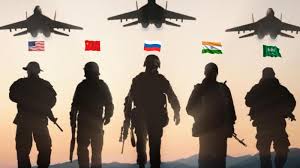
The global defence landscape is transforming significantly, driven by technological advancements, shifting geopolitical dynamics, and evolving security threats. Nations increasingly prioritise developing cutting-edge technologies such as hypersonic missiles, artificial intelligence, and quantum radar to enhance military capabilities. The rise of non-traditional threats, including cyber-attacks and space-based warfare, also reshapes defence strategies. As countries adjust to these changes, the winds of change in global defence are prompting nations to rethink military priorities, strategies, and international relations. The winds of change in global defence are characterised by rising defence spending and a shift toward advanced military technologies. Countries are increasing their military budgets in response to escalating geopolitical tensions and emerging threats. This surge in defence spending reflects a global shift toward preparedness, emphasising modernisation, strategic alliances, and a more proactive approach to defence.


New Weapons and Dimensions of Warfare


AI-Powered Autonomous Weapons. The first fully autonomous AI-controlled weapon systems have been deployed in active combat zones. The deployment of AI-powered autonomous weapons in active combat zones marks a significant leap in military technology, raising concerns over their implications for global security. These systems, capable of making real-time decisions without human intervention, are being tested in conflicts such as those in the Middle East and Eastern Europe. While proponents argue they enhance precision and reduce human casualties, critics fear they could lead to uncontrolled escalation, with machines making life-and-death decisions. Ethical dilemmas arise over accountability for actions taken by autonomous systems, and there are growing calls for international regulations to govern the development and use of such advanced weapons.


Intensification of the Hypersonic Missile Arms Race. The hypersonic missile arms race has intensified as countries like the United States, China, and Russia race to develop advanced, high-speed weaponry capable of travelling at speeds greater than five times the speed of sound. These missiles can manoeuvre unpredictably, making them difficult to intercept with existing defence systems. This technological leap raises concerns about the potential for destabilising global security as nations vie for strategic advantage in an increasingly competitive and unpredictable arms race. The growing development and testing of hypersonic missiles signal a new era in military warfare, potentially altering the balance of power and escalation risks worldwide.


Cyber Attacks on Critical Infrastructure. Cyber attacks on critical infrastructure have become a growing threat to national security and economic stability. These attacks target essential sectors such as energy, transportation, finance, and healthcare, aiming to disrupt operations, steal sensitive data, or cause widespread damage. Notable incidents, including the 2021 Colonial Pipeline attack in the U.S. and various ransomware campaigns, highlight vulnerabilities in critical systems. As cyber warfare becomes an increasingly prominent tactic, governments and organisations are prioritising cyber security measures and investing in advanced technologies to prevent, detect, and mitigate such threats. These attacks’ rising frequency and sophistication emphasise the urgent need for robust cyber defence strategies globally.


Militarisation of Space. Space-based weapons systems are emerging as a new frontier in global defence. Several countries (the U.S., China, India, and France) have unveiled plans for orbital weapons platforms, signalling the militarisation of space and threatening existing space treaties to prevent such developments. These systems, which include anti-satellite missiles, directed energy weapons, and satellite-based lasers, are designed to target and neutralise adversary satellites or other space assets. The growing militarisation of space raises concerns over the potential for conflict beyond Earth’s atmosphere as nations seek to secure space-based resources and gain strategic advantage. The development of space-based weapons could disrupt communications, navigation, and surveillance capabilities, escalating tensions and prompting calls for international regulation of space militarisation.


Quantum Radar Military Breakthrough. Quantum radar represents a ground-breaking military technology with the potential to revolutionise defence systems. Unlike conventional radar, which relies on radio waves, quantum radar uses quantum entanglement to detect objects with unprecedented accuracy. This technology can potentially detect stealth aircraft and missiles, which are designed to evade traditional radar. By exploiting the quantum properties of light, quantum radar can function in environments where traditional systems struggle, such as in electronic warfare scenarios. As nations like China and the United States race to develop quantum radar, it could significantly alter the balance of military power, enhancing defence capabilities and complicating interception strategies. China has announced the development of quantum radar technology, which has the potential to render stealth aircraft obsolete and revolutionise detection capabilities in military operations.


Research on Genetic Bioweapons. Leaked documents have revealed ongoing research into genetic-based bioweapons, heightening fears of engineered pandemics and the ethical implications of such advancements. Research on genetic bioweapons has raised significant concerns over the moral, legal, and security implications of manipulating biological agents for warfare. Advances in genetic engineering, particularly CRISPR technology (Clustered Regularly Interspaced Short Palindromic Repeats enable precise editing of genes), have made it possible to modify pathogens, potentially creating more lethal or targeted biological weapons. The idea of designing diseases that could specifically target specific populations based on genetic markers adds a disturbing dimension to bioweapons research. Although international treaties like the Biological Weapons Convention aim to prevent such developments, the growing accessibility of genetic technologies makes the risk of bioengineered weapons a pressing global concern, necessitating stronger regulations and monitoring.


Successful Test of EMP Weapons. Successful electromagnetic pulse (EMP) weapons tests have raised alarms about the potential impact on global security. EMP weapons generate intense bursts of electromagnetic radiation capable of disabling electronic systems, including power grids, communication networks, and military technologies. In recent tests, countries like the United States, China, and Russia have demonstrated the destructive potential of EMPs, which could paralyse critical infrastructure on a large scale. While EMP weapons are seen as strategic tools for disrupting adversaries, their use also carries significant risks of unintended global consequences, including widespread civilian suffering and the collapse of essential services.


Devastating Swarm Drones.  Swarm drones, groups of autonomous or semi-autonomous drones operating in coordination, are emerging as a devastating new tool in modern air warfare. These drones can be deployed in large numbers, overwhelming enemy defences with precision strikes and creating significant disruption. Equipped with advanced sensors and artificial intelligence, swarm drones can navigate complex environments, target multiple objectives simultaneously, and adapt to changing conditions. Their use in military conflicts has raised concerns about their potential for widespread destruction, especially when used for surveillance, sabotage, or large-scale attacks. As drone technology evolves, swarm drones are expected to become a significant threat to global security.


Neural Interface Weapons. Neural interface weapons represent a new frontier in military technology, leveraging direct connections between the human brain and machines to control or disrupt enemy forces. These weapons could potentially manipulate neural functions, influencing behaviour and decision-making, or even incapacitating individuals through targeted brain stimulation. Research into brain-machine interfaces (BMIs) is advancing rapidly, opening possibilities for offensive and defensive warfare applications. While these technologies could enhance soldier performance or create new forms of non-lethal warfare, they raise significant ethical, privacy, and security concerns. Developing neural interface weapons could redefine the nature of conflict, blurring the lines between technology and human cognition.


Military Expenditure & Arms Race Trends


Record-Breaking Global Military Expenditure. Global military expenditure has reached unprecedented levels, with countries worldwide allocating record-breaking budgets for defence in recent years. In 2023, global military spending surpassed $2.44 trillion, marking a 3.7% increase from the previous year. This surge is driven by escalating geopolitical tensions, the ongoing war in Ukraine, and growing security concerns, particularly in regions like the Indo-Pacific. Nations like the United States, China, and Russia are leading the charge with significant investments in advanced technologies, including cyber capabilities and artificial intelligence. This increase in military spending raises concerns about global stability and resource allocation.


China’s Military Growth. China’s military growth has been a defining feature of its rise as a global power. The country has significantly expanded its defence budget in recent years, investing heavily in advanced technologies such as artificial intelligence, cyber capabilities, and next-generation weaponry. China’s (official) defence budget has grown over the past decade, totalling $296 billion in 2023. However, defence spending could be at least triple that value, closing in on the U.S. figures of about $1 trillion. Modernising its armed forces includes developing sophisticated missile systems, stealth aircraft, and a growing naval fleet, positioning China as a formidable military presence, especially in the Indo-Pacific region. This rapid military expansion is fuelled by Beijing’s strategic goals of asserting territorial claims, enhancing regional influence, and strengthening its global geopolitical stance amidst rising tensions with the West.


China’s Growing Influence in the Global Defence Industry. China’s growing influence in the global defence industry has become increasingly evident as the country emerges as a leading producer and exporter of military technology. Five Chinese firms now rank among the world’s top 12 defence companies, with the Aviation Industry Corporation of China (AVIC) securing the second position globally. China’s military exports are expanding across Africa, Asia, and the Middle East, offering competitive alternatives to Western suppliers. The country’s focus on innovation and its strategic partnerships and initiatives like the Belt and Road position China as a key player in reshaping the global defence landscape and challenging traditional arms-exporting powers.


Escalation in East Asia’s Defence Budgets. Defence budgets in East Asia are escalating rapidly as regional security concerns intensify, driven by the growing influence of China and its military advancements, as well as North Korea’s continued missile tests. Countries like Japan, South Korea, and Taiwan are significantly increasing their military spending to counter these threats and bolster national defence capabilities. Japan is modernising its forces with advanced missile defence systems and fighter jets, while South Korea is focusing on strengthening its air and missile defence systems. This regional arms build-up reflects heightened tensions, with countries investing in cutting-edge technologies such as hypersonic missiles, cyber security, and naval assets to safeguard their security.


Surge in Japan and South Korea Defence Sales. Japan and South Korea have seen a significant rise in defence sales, driven by increasing regional security concerns and growing defence budgets. In 2023, both nations ramped up military spending, fuelled by North Korea’s missile threats and heightened tensions with China. Traditionally focused on self-defence, Japan is expanding its defence capabilities, including advanced missile defence systems and fighter jets. South Korea is boosting its arms production, particularly in defence technology such as drones and military vehicles. This surge in defence sales highlights both countries’ shifts towards more proactive defence strategies amidst evolving security dynamics in the Indo-Pacific region.


Rise in EU Defence Spending. European Union defence spending has sharply increased recently, reflecting growing concerns over regional security and the need for stronger military deterrence. In 2023, EU member states collectively raised their defence budgets by over 10%, with countries like Germany, France, and Poland leading the charge. The Russian invasion of Ukraine drives the surge, prompting EU nations to reassess their defence strategies and military preparedness. Increased investments are being directed toward modernising the armed forces, enhancing cyber defence, and strengthening NATO collaborations. This rise in defence spending signals a shift towards greater military autonomy and readiness within Europe.


Boost in Russian Defence Budget. Russia has significantly increased its defence budget recently, primarily driven by ongoing military operations in Ukraine and growing security concerns over NATO expansion. Russia’s defence spending is set to reach unprecedented levels in the coming years. The Kremlin plans to allocate 13.5 trillion roubles ($145 billion) to military expenditures in 2025, a 25% increase from the 2024 budget of 10.4 trillion roubles. This boost reflects Russia’s strategy to enhance its military readiness and maintain a robust defence posture amidst international sanctions and geopolitical isolation. The surge in defence spending also aims to reinforce Russia’s strategic interests, both domestically and globally.


Middle East Arms Race. The Middle East is witnessing an escalating arms race as regional powers invest heavily in military technology to assert influence and ensure security. Nations like Saudi Arabia, Iran, and the United Arab Emirates are significantly expanding their defence budgets, purchasing advanced weaponry, including missile defence systems, fighter jets, and drones. Tensions surrounding Iran’s nuclear ambitions, the conflict in Yemen, and rivalries between Sunni and Shia factions fuel the competition. This arms race intensifies the region’s instability, as military buildups may provoke further conflict and exacerbate existing geopolitical rivalries. The influx of modern arms also poses challenges for regional and global security. Iran has announced plans to triple its military budget for the upcoming fiscal year. Government spokeswoman Fatemeh Mohajerani has revealed the proposed 200% increase in defence funding. Iran’s current military spending is estimated at $10.3 billion.


North African Arms Race. The North African arms race is intensifying as countries in the region ramp up military spending in response to regional instability, terrorism, and geopolitical rivalries. Nations like Algeria, Egypt, and Morocco are significantly increasing their defence budgets, investing in advanced weaponry, including fighter jets, tanks, and missile systems. The competition is fuelled by territorial disputes, especially over Western Sahara, and concerns over militant groups operating in the Sahel region. In addition to conventional arms, there is growing interest in acquiring cutting-edge technologies, such as drones and cyber warfare capabilities. This arms race threatens to exacerbate tensions and destabilise an already volatile region. Morocco and Algeria are driving a regional military spending surge, accounting for 82% of North African and 45.5% of total African defence expenditure, intensifying the arms race on the continent.


Technology for Conflict Prevention


Advancements in technology are playing a crucial role in conflict prevention by enhancing early warning systems, improving diplomacy, and facilitating timely interventions. AI-driven data analysis can predict potential hotspots by monitoring social, political, and economic trends and identifying signs of instability before they escalate into violence. Satellite surveillance and geospatial technologies help track military movements, border disputes, and natural resource conflicts. Additionally, communication platforms allow for quicker international coordination, enabling global response mechanisms. Technologies like blockchain can foster transparency in peace agreements. At the same time, social media monitoring tools provide real-time insights into public sentiment, empowering governments and organisations to take preventive action effectively.


Please do Comment.


Link to the article on the website:-

Winds of Change in Global Defence


1878
Default rating

Please give a thumbs up if you  like The Post?


For regular updates, please register your email here:-

Subscribe


References and credits

To all the online sites and channels.

References:-

  1. “The Future of Defense: AI, Cybersecurity, and Emerging Technologies”, Journal of Strategic Studies (2022).
  1. “Hybrid Warfare: The New Face of Conflict”, The RUSI Journal (2023).
  1. “2024 Global Defense Outlook”, Jane’s Defence.
  1. “The Future of Military Technologies”, RAND Corporation (2023).
  1. “Global Trends 2040: A More Contested World”, National Intelligence Council (NIC) (2021).
  2. “Defense Expenditure Trends in Asia-Pacific”, Stockholm International Peace Research Institute (SIPRI) (2022).
  1. “Global Security in the Twenty-First Century” by Sean Kay.

Disclaimer:

Information and data included in the blog are for educational & non-commercial purposes only and have been carefully adapted, excerpted, or edited from reliable and accurate sources. All copyrighted material belongs to respective owners and is provided only for wider dissemination.


English हिंदी