730: BATTLEFIELD BEYOND BOUNDARIES: MILITARY CONFLICTS AND INDUSTRY


Presented my views at the Best Practices Meet 2025, organised by Data Security Council of India on 21 Aug 25.


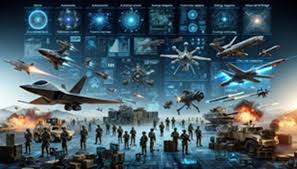
The concept of “battlefield beyond boundaries” encapsulates the evolution of modern warfare, where conflicts transcend traditional geographic and physical limits, intertwining with industries that develop, supply, and profit from advanced technologies. This convergence blurs the lines between military and civilian spheres, raising critical questions about economics, security, ethics, and global governance. Modern battlefields extend across land, sea, air, cyberspace, and outer space, driven by technological advancements and the increasing integration of commercial industries into military operations.


  1. The Expanding Nature of Military Conflicts

Modern warfare has evolved beyond traditional battlefields, incorporating multiple domains and strategies that challenge conventional doctrines.

  • Multi-Domain Warfare: Conflicts are no longer confined to land, sea, and air. Cyberspace and outer space have become critical battlegrounds, with operations involving satellites, cyberattacks, and digital infrastructure. For instance, the Russia-Ukraine conflict highlights the use of commercial satellites like Starlink for real-time communication and coordination.
  • Hybrid Warfare: This approach combines conventional military forces with non-kinetic elements such as cyberattacks, disinformation campaigns, economic sanctions, and energy weaponisation. These tactics influence global public opinion and blur the lines between combatants and civilians.
  • Asymmetric Warfare: The rise of non-state actors and unconventional tactics, such as the use of commercial off-the-shelf (COTS) drones for reconnaissance and attacks, demonstrates the adaptability and affordability of modern tools in conflicts, as seen in Ukraine.
  • Globalisation of Conflict: Military engagements impact global supply chains, financial systems, and trade, with long-range weapons like hypersonic missiles and drones enabling strikes far from traditional frontlines, making civilian areas vulnerable.


  1. Impact of Emerging Technologies

Technological advancements are reshaping the battlefield, enhancing capabilities while introducing new challenges.

  • Artificial Intelligence (AI): AI revolutionises military operations by enabling faster decision-making, predictive analytics, and autonomous systems. It enhances surveillance, logistics, and battlefield awareness by analysing vast datasets from sensors, satellites, and civilian devices.
  • Robotics and Autonomous Systems (RAS): Unmanned vehicles (UAVs, UUVs, UGVs) and robotic systems reduce human risk in hazardous environments, improve logistics, and provide real-time intelligence. Military robotics is projected to reach a market size of $21.2 billion by 2032.
  • Cybersecurity: With increased reliance on networked systems, protecting critical defence infrastructure from cyberattacks is paramount. Technologies like blockchain and private 5G networks ensure secure, real-time coordination across sprawling battlefield networks.
  • Space-Based Technologies: Satellites provide critical intelligence, precision targeting, and communication capabilities. Companies like SpaceX play a pivotal role by supplying infrastructure like Starlink, which has proven vital in modern conflicts.
  • Hypersonic Weapons: These high-speed, manoeuvrable missiles challenge existing defence systems, potentially destabilising traditional deterrence mechanisms.
  • Additive Manufacturing (3D Printing): Enables rapid production of complex components, reducing reliance on traditional supply chains and addressing wartime shortages, such as artillery shells in the Russia-Ukraine conflict.
  • Directed Energy Weapons (DEWs): Lasers and high-power microwaves offer defence against high-speed threats but face challenges related to power requirements and atmospheric conditions.
  • Electrification and Sustainability: The defence industry is shifting toward electric and hydrogen-powered systems and eco-friendly materials to lower costs and meet regulatory demands, balancing military innovation with sustainability goals.


  1. Transformation of the Defence Industry

The global defence sector is undergoing significant changes, driven by technological advancements, economic factors, and geopolitical dynamics.

  • Military-Industrial Complex (MIC): The MIC, encompassing defence contractors like Lockheed Martin, BAE Systems, and Raytheon, drives innovation and production. This relationship influences economic policies, technological development, and societal structures.
  • Commercial Technology Integration: Companies traditionally associated with civilian sectors, such as SpaceX and Silicon Valley tech firms, are increasingly vital to military applications, providing solutions like satellites, AI, and cybersecurity.
  • Increased R&D Investment: Nations are investing heavily in research and development to maintain technological superiority, with the global defence equipment market projected to grow from $517.2 billion in 2023 to $762.1 billion by 2032.
  • Globalised Defence Markets and Supply Chains: International collaboration, foreign direct investment, and interconnected supply chains are increasing, though conflicts expose vulnerabilities, such as semiconductor shortages and reliance on critical resources like rare earth minerals.
  • Rapid Procurement and Indigenous Innovation: Active conflicts, like the 2025 India-Pakistan confrontation, accelerate defence spending and local production, as seen in policies like “Make in India,” which aim to boost self-reliance.
  • Dual-Use Technology: Military R&D, such as GPS and drones, benefits civilian sectors but also risks militarising civilian infrastructure, making it a target in conflicts.


  1. Industry as a Battlefield

Industries are not just enablers of warfare but have become battlegrounds themselves, targeted and leveraged in geopolitical conflicts.

  • Cyberwarfare: Tech companies are frontline defenders against nation-state hackers targeting critical infrastructure, such as data centres and telecom networks.
  • Supply Chain Warfare: Semiconductor shortages and sanctions highlight how industries are weaponised, with control over resources like rare earth minerals, oil, and gas becoming strategic priorities.
  • War Economies: Conflicts generate industries of private security, cyber defence, reconstruction, and resource extraction, but economies tied to war may find peace less profitable.


  1. Ethical and Policy Considerations

The integration of advanced technologies and industries into warfare raises significant ethical and legal challenges.

  • Lethal Autonomous Weapons (LAWs): The development of fully autonomous weapons raises concerns about accountability and the role of humans in targeting decisions, complicating compliance with international humanitarian law (IHL).
  • Civilian Infrastructure as Targets: The use of civilian technologies in military operations risks designating them as legitimate targets, raising humanitarian concerns and questions about the scope of cyber warfare.
  • Maintaining Strategic Stability: Emerging technologies like hypersonics and AI-driven weapons could destabilise deterrence mechanisms, increasing the risk of miscalculation and escalation.
  • Global Governance and Arms Control: The rapid pace of technological change necessitates international cooperation to address regulatory gaps in existing frameworks, like the Geneva Conventions, and promote responsible development of new military technologies.
  • Profit vs. Peace: The profitability of conflict-driven industries raises ethical questions about whether corporations should benefit from wars that cause humanitarian crises.
  • Privatisation of War: The rise of private military companies blurs accountability for violence, challenging traditional notions of state-controlled warfare.


  1. Global and Societal Impacts

The interplay of military conflicts and industry has far-reaching consequences for economies, societies, and global power dynamics.

  • Economic Ramifications: Conflicts disrupt global supply chains, food security, and economies, while industries adapt to meet wartime demands or mitigate losses. For nations like India, heightened conflict drives job creation but exposes vulnerabilities in supply chains and technology.
  • Technological Spillover: Wartime innovations, such as radar from WWII, often lead to civilian applications, driving broader industrial and societal advancements.
  • Geopolitical Shifts: The race for technological supremacy in AI, autonomous systems, and space militarisation influences global power dynamics, with nations like China and the U.S. competing for dominance.
  • Sustainability vs. Security: Defence industries face pressure to balance military innovation with climate goals, integrating eco-friendly technologies while maintaining operational effectiveness.


Conclusion

The “battlefield beyond boundaries” reflects a paradigm where military conflicts are no longer confined to physical spaces but extend into digital, economic, and societal domains, deeply intertwined with industrial advancements. The integration of commercial technologies, the rise of autonomous systems, and the globalisation of defence markets challenge traditional warfare doctrines, requiring new strategies, ethical frameworks, and international regulations. As battlefields expand to encompass industries, economies, and technologies, understanding this interdependence is essential to navigating the complex ethical, economic, and political challenges of modern warfare. The future of conflict will be defined not only by armies and strategies but by the global industries that design, supply, and sustain the mechanisms of war.


Please Add Value to the write-up with your views on the subject.


1878
Default rating

Please give a thumbs up if you  like The Post?


For regular updates, please register your email here:-

Subscribe


References and credits

To all the online sites and channels.

Pics Courtesy: Internet

Disclaimer:

Information and data included in the blog are for educational & non-commercial purposes only and have been carefully adapted, excerpted, or edited from reliable and accurate sources. All copyrighted material belongs to respective owners and is provided only for wider dissemination.


References:-


  1. Singer, P. W. (2009). *Wired for War: The Robotics Revolution and Conflict in the 21st Century*. Penguin Books.
  2. Kaldor, M. (2012). *New and Old Wars: Organised Violence in a Global Era* (3rd ed.). Stanford University Press.
  3. Grey, C. S. (2015). *The Future of Strategy*. Polity Press.
  4. Latiff, R. H. (2017). *Future War: Preparing for the New Global Battlefield*. Knopf.
  5. Bitzinger, R. A. (2021). “The Global Defence Industry in the 21st Century: Trends and Transformations.” *Journal of Strategic Studies*, 44(3), 321–345.
  6. Gilli, A., & Gilli, M. (2019). “The Diffusion of Drone Warfare? Industrial, Organisational, and Infrastructural Constraints.” *Security Studies*, 28(4), 661–696.
  7. Horowitz, M. C. (2018). “Artificial Intelligence, International Competition, and the Balance of Power.” *Texas National Security Review*, 1(3), 36–57.
  8. Lin, J., & Singer, P. W. (2022). “The Cyber Battlefield: How Nation-States and Non-State Actors Are Redefining Warfare.” *Foreign Affairs*, 101(2), 88–97.
  9. Raska, M. (2020). “The Sixth RMA Wave: Disruption in Military Affairs?” *Journal of Strategic Studies*, 43(6), 834–860.
  10. International Institute for Strategic Studies (IISS). (2023). *The Military Balance 2023*. IISS.
  11. RAND Corporation. (2021). *The Future of Warfare in 2030: Projecting Conflict in a Highly Networked World*. RAND Corporation.
  12. Stockholm International Peace Research Institute (SIPRI). (2024). *SIPRI Yearbook 2024: Armaments, Disarmament, and International Security*. Oxford University Press.
  13. NATO Science and Technology Organisation. (2022). *Emerging and Disruptive Technologies: Implications for NATO Defence Planning*. NATO.
  14. United Nations Institute for Disarmament Research (UNIDIR). (2023). *The Weaponisation of Emerging Technologies: Ethical and Legal Challenges*. UNIDIR.
 

717: EVOLUTION OF INDIA’S DEFENCE PREPAREDNESS AND THE PATH TO TRUE SELF-RELIANCE


Presented my Paper at the Economic Times-sponsored “Aerospace and Defence Manufacturing Summit 2025”

on 06 Aug 25.


India’s defence preparedness has undergone a transformative journey, evolving from a reliance on imports to a robust push for indigenous development under the Aatmanirbhar Bharat initiative. This transformation, driven by strategic vision and policy reforms, has been exemplified by platforms like the Tejas Light Combat Aircraft (LCA). However, achieving genuine self-reliance requires not just assembling equipment but building deep capabilities in design, systems integration, and advanced materials. This article explores India’s defence evolution, the role of indigenous platforms, and the critical building blocks, industrial strategies, collaborative ecosystems, technological leadership, and talent development needed to ensure sustained preparedness and global competitiveness.


Evolution of India’s Defence Preparedness

Post-Independence to 1990s: Heavy Import Reliance. In the decades following independence, India’s defence capabilities were heavily dependent on foreign suppliers, primarily the Soviet Union/Russia. Aircraft like the MiG-21, tanks such as the T-72, and submarines sourced from these partners ensured operational readiness. However, this reliance exposed vulnerabilities, including inconsistent supply chains for spares, limited technological autonomy, and exposure to geopolitical pressures. The lack of indigenous capabilities meant that India was often at the mercy of external suppliers, which impacted its long-term strategic flexibility.

 1990s to Early 2010s: Shift to Indigenous Development. The 1990s marked a pivotal shift toward self-reliance, with investments in research and development through organisations like the Defence Research and Development Organisation (DRDO), Hindustan Aeronautics Limited (HAL), and Bharat Electronics Limited (BEL). Key programs, including the LCA Tejas, Arjun Main Battle Tank (MBT), Akash missile system, and INSAS rifle, were initiated to reduce import dependency. While these programs faced significant challenges—such as delays, cost overruns, and technological hurdles—they laid the foundation for indigenous defence manufacturing. The Tejas program, conceptualised in the 1980s, began to take shape as a symbol of India’s ambitions, despite early setbacks in development and production.

2015 Onwards: Strategic Autonomy and Aatmanirbhar Bharat. Since 2015, India’s defence strategy has aligned with the Aatmanirbhar Bharat initiative, emphasising indigenous design, development, and production. Programs like the Tejas Mk1A, Arjun Mk1A, Dhanush/ATAGS artillery, and Ballistic Missile Defence system reflect a maturing ecosystem. The government has actively promoted private sector and MSME participation, reducing import dependency from approximately 70% in the early 2000s to around 50% today. Policies such as Defence Corridors, the Strategic Partnership Model, and Positive Indigenisation Lists have incentivised local manufacturing. Additionally, the integration of emerging technologies—unmanned aerial vehicles (UAVs), artificial intelligence (AI), cyber defence, and space assets—has modernised India’s strategic doctrine to address both conventional and non-traditional threats.

Current Focus. India’s defence strategy now centers on creating an ecosystem for self-reliance, technological leadership, and rapid innovation. The focus is on building capabilities to counter evolving threats, including border tensions, cyber warfare, and space-based challenges. Indigenous platforms, such as the Tejas, coupled with policy reforms, are driving this transformation; however, gaps in production timelines, supply chain robustness, and the adoption of cutting-edge technology remain critical challenges.


Tejas and the Rise of Indigenous Platforms

The Tejas LCA, a 4.5-generation fighter, represents a cornerstone of India’s indigenous defence capabilities. Evolving from a 1980s concept to the advanced Tejas Mk1A, it incorporates cutting-edge avionics, the Uttam Active Electronically Scanned Array (AESA) radar, and modern weaponry. The Indian Air Force’s (IAF) commitment to procure 240 units underscores confidence in the platform. Tejas symbolises advancements in avionics, flight control systems, and composite materials, showcasing India’s growing expertise in aerospace engineering.

Beyond Tejas, other platforms highlight India’s progress:-

    • Arjun Tank. A domestically developed MBT with improved variants like the Arjun Mk1A.
    • Pinaka Rocket System. A multi-barrel rocket launcher enhances artillery capabilities.
    • Dhruv Helicopter. A versatile utility helicopter for diverse operational roles.
    • BrahMos and Akash Missiles. Precision strike and air defence systems with global recognition.
    • INS Vikrant. India’s first indigenous aircraft carrier is demonstrating naval engineering prowess.

The “Make in India” and Aatmanirbhar Bharat initiatives have bolstered these achievements by fostering local supply chains, private sector involvement, and export potential. However, challenges such as delayed production, supply chain vulnerabilities, and gaps in advanced systems integration persist, necessitating accelerated efforts to meet global standards.


Building Blocks for Deep Self-Reliance

Genuine self-reliance in defence requires more than assembling equipment; it demands mastery over design, systems integration, and advanced materials. The following building blocks are critical:-

    • R&D Investment. Increased funding for DRDO, the Council of Scientific and Industrial Research (CSIR), and private-sector R&D is essential for developing technologies like stealth, AI, and hypersonics. Public-private partnerships can bridge the gap between laboratory research and battlefield deployment.
    • Advanced Materials Expertise. India must develop domestic capabilities in composites, titanium alloys, rare earths, and electronics. Investments in material science research and industrial-scale production facilities are crucial for reducing import reliance.
    • Systems Integration. Expertise in integrating complex systems—such as sensors, weapons, and communication networks—is vital. Collaboration between Defence Public Sector Undertakings (DPSUs), private firms, and global Original Equipment Manufacturers (OEMs) can facilitate knowledge transfer.
    • IP and Design Ownership. Developing internationally recognised Indian technologies ensures design autonomy and reduces dependence on foreign intellectual property rights.
    • Robust Testing Infrastructure. Establishing state-of-the-art facilities for rapid validation of platforms will accelerate deployment and ensure reliability.
    • Innovation Ecosystem. Fostering startups and public-private partnerships in AI, avionics, and propulsion systems will drive innovation and competitiveness.
    • Skilled Workforce. Specialised training programs through academia-industry partnerships are essential to build a talent pool proficient in advanced defence technologies.
    • Policy and Vision. A long-term vision, consistent policy support, incentives, and export-oriented production are critical to sustaining self-reliance.


Scaling The Industry for Sustained Preparedness

Achieving scale in defence production involves more than numbers—it requires consistent supply chains, high-quality spares, and system-level readiness. Indian industry must take the following steps:

    • Robust Supply Chains. Develop tiered supplier networks with MSMEs to ensure component availability and redundancy. Localisation efforts can reduce import dependence.
    • Quality Assurance. Implement global-standard quality control systems, such as AS9100 certification, and establish robust audit mechanisms to ensure consistency and reliability.
    • Scalable Production. Invest in modular manufacturing facilities and automation to enable flexible scaling and production. Expanding production lines, such as HAL’s Tejas facility, is crucial to meeting volume demands.
    • Digital Integration. Adopt Industry 4.0 technologies, such as IoT, AI, and digital twins, for real-time supply chain management and predictive maintenance.
    • Public-Private Synergy. Encourage private players, such as Tata, L&T, and Mahindra, to co-invest with DPSUs in production infrastructure. Partnerships with the armed forces can align production with demand.
    • Strategic Partnerships. Form joint ventures with global leaders to facilitate technology transfer and process excellence, thereby enhancing production capabilities.
    • Government Support. Faster clearances, tax incentives, and long-term contracts are essential to sustain momentum. Clear targets for indigenous procurement under Make-in-India initiatives will drive accountability.


Collaborative Ecosystem for Innovation

Unlocking the innovation potential of India’s defence manufacturing sector requires a cohesive ecosystem involving DPSUs, private manufacturers, MSMEs, and startups. Key elements include:-

    • Collaborative Framework. Platforms like the Innovations for Defence Excellence (iDEX) should be scaled to enable co-development and co-ownership of intellectual property.
    • Clear Role Demarcation. DPSUs should focus on strategic systems, private players on innovation, and MSMEs on specialised components to optimise contributions.
    • Innovation Hubs. Defence innovation clusters near industrial and academic centers (e.g., Bengaluru, Hyderabad) can drive R&D, prototyping, and testing.
    • Technology Transfer. Joint ventures with global OEMs can facilitate knowledge transfer while ensuring Indian firms retain critical expertise.
    • Policy Support. Simplified procurement processes, timely payments to MSMEs, and tax incentives for R&D will encourage participation. Defence corridors can streamline production.
    • Knowledge and Data Sharing. Secure platforms for sharing design and production data will enhance integration and collaboration, ultimately improving the overall workflow. Regular workshops and technology meets can foster collaboration.
    • Shared Infrastructure. Access to shared testing, certification, and validation facilities will reduce duplication and expedite time-to-market.
    • Open Innovation. Funding and mentoring startups and academia through open innovation challenges will drive breakthroughs.
    • Trust and Transparency. Transparent procurement policies and predictable orders will encourage private sector investment and risk-taking.


Leading in Cutting-Edge Technologies

 To remain future-ready, India must transition from adopting technologies to leading their development. This is particularly critical in aerospace and defence, where disruptive technologies such as AI, unmanned systems, hypersonics, quantum computing, and directed-energy weapons are reshaping warfare. Key strategies include:-

    • Leadership in Disruptive Technologies. Prioritise R&D in next-generation technologies and integrate them into programs like the Advanced Medium Combat Aircraft (AMCA).
    • Indigenous Capability Development. Develop standards and patents in semiconductors, encrypted communications, and radar for technological sovereignty.
    • Global Partnerships. Collaborate with allies like the US, Israel, and France for co-development while retaining IP rights.
    • Agile Procurement and Doctrine. Reform procurement to rapidly adopt emerging technologies, drawing inspiration from global models like DARPA. Adaptable doctrines will align with technological advancements.
    • Future-Proof Infrastructure. Develop testing and simulation facilities for emerging domains, such as space and cyber warfare.
    • Support for Deep-Tech Startups. Promote dual-use and export-oriented technologies through funding and mentorship.
    • Talent Retention. Attract and retain talent with competitive incentives and global exposure.
    • Continuous Feedback Loop. Close collaboration between defence forces and industry will ensure technological responses align with operational needs.
    • Strategic Foresight. Proactive investment and policy agility will position India as a technology leader by 2035.


Building a Robust Talent Pipeline

 A strong defence system requires skilled professionals—from aerospace engineers to machinists and systems designers. Building a robust talent pipeline involves:-

    • Curriculum Alignment. Universities, such as IITs and NITs, should offer specialised programs in aerospace, materials science, and emerging technologies, aligned with industry needs through partnerships with DRDO, HAL, and private firms.
    • Practical Training. Industry-led internships, apprenticeships, and on-the-job training in MSMEs and startups will bridge the gap between theory and practice, providing a valuable connection between academic knowledge and real-world applications.
    • Centres of Excellence. Academia-industry-government collaboration can establish defence-focused research and skills development centres to drive innovation and talent development.
    • Dedicated Skilling Institutes. Training centers under ITIs and the National Skill Development Corporation (NSDC) should focus on advanced manufacturing, CNC machining, 3D printing, and avionics.
    • Faculty and Trainer Upskilling. Regular programs will ensure educators stay updated with industry advancements.
    • Industry-Led Initiatives. Private firms and DPSUs should fund university research chairs and provide hands-on training to foster practical expertise.
    • Government Support. Scholarships, STEM programs, and grants will incentivise collaboration. A national mission to train 100,000 defence professionals by 2030 can drive scale.
    • Global Exposure. Exchange programs with leading international defence institutes will upskill talent.
    • Reskilling Workforce. Programs in advanced manufacturing, AI, and cybersecurity will keep the existing workforce relevant and up-to-date.
    • Tripartite Collaboration. A coordinated framework of academia, industry, and government will ensure a steady supply of world-class talent.


Conclusion

India’s defence preparedness has evolved significantly, from dependence on imports to a robust push for self-reliance, exemplified by platforms like the Tejas. Achieving genuine self-reliance requires deep capabilities in design, systems integration, and advanced materials, supported by scalable production, collaborative ecosystems, and technological leadership. A robust talent pipeline, driven by synergy among academia, industry, and government, is critical to sustaining this momentum. By addressing challenges in production timelines, supply chain robustness, and technology adoption, India can not only meet its defence needs but also emerge as a global leader in defence innovation by 2035.


Please Add Value to the write-up with your views on the subject.

1878
Default rating

Please give a thumbs up if you  like The Post?


For regular updates, please register your email here:-

Subscribe


References and credits

To all the online sites and channels.

Pics Courtesy: Internet

Disclaimer:

Information and data included in the blog are for educational & non-commercial purposes only and have been carefully adapted, excerpted, or edited from reliable and accurate sources. All copyrighted material belongs to respective owners and is provided only for wider dissemination.


References:-


  1. Bitzinger, R. A. (2020). India’s Defence Industrial Base: Opportunities and Challenges. Rajaratnam School of International Studies.
  1. DRDO. (2023). Annual Report 2022-23. Defence Research and Development Organisation, Ministry of Defence, Government of India.
  1. Government of India. (2020). Aatmanirbhar Bharat: Self-Reliant India Mission. Ministry of Defence, Government of India.
  1. Hindustan Aeronautics Limited. (2024). Tejas Light Combat Aircraft: Technical Specifications and Development Timeline. HAL Official Website.
  1. Ministry of Defence. (2022). Defence Production and Export Promotion Policy (DPEPP) 2020. Government of India.
  1. Mishra, A. (2021). India’s Defence Manufacturing: The Road to Self-Reliance. Observer Research Foundation.
  1. Pant, H. V., & Bommakanti, K. (2022). India’s National Security: Emerging Challenges and Opportunities. Routledge India.
  1. Press Information Bureau. (2023). Aatmanirbhar Bharat in Defence: Achievements and Roadmap. Ministry of Defence, Government of India.
  1. Singh, A. (2019). India’s Defence Modernisation: Challenges and Prospects. Institute for Defence Studies and Analyses.
  1. Stockholm International Peace Research Institute (SIPRI). (2024). Trends in Global Arms Transfers, 2023. SIPRI Database.

637: THE GEOPOLITICS OF FIGHTER EXPORTS AND JOINT VENTURES


My Article was published on the Indus International Research Foundation Website on 02 April 25.


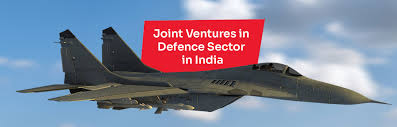
Fighter aircraft exports and development are more than commercial transactions or technological endeavours. Fighter exports and joint ventures serve as key instruments of statecraft, influencing alliances, shaping military doctrines, and reinforcing spheres of influence. Beyond economic interests, fighter exports often signal political alignment, with buyers and sellers engaging in long-term defence cooperation that extends beyond individual transactions. Complex negotiations usually accompany the sale of advanced fighter jets, offset agreements, and technology transfer arrangements, which carry significant diplomatic and security implications. The United States, Russia, China, and European powers dominate this space, but emerging players like India, South Korea, and Turkey increasingly assert themselves. There is a need to explore the multifaceted dimensions of fighter exports and joint ventures, analysing their impact on global security, economic interests, and diplomatic manoeuvring.


The Strategic Significance of Fighter Aircraft Development Programs

Fighter aircraft represent the apex of military aviation, integrating state-of-the-art engineering, advanced technology, and substantial financial investment. These platforms are key instruments in modern warfare, providing air superiority, precision ground attack capabilities, and deterrence. The strategic significance of fighter jets extends well beyond their battlefield utility, influencing geopolitical alignments, economic landscapes, and technological advancements.


Power Projection. The export and co-development of fighter aircraft significantly enhance a nation’s ability to project power beyond its borders. Supplying fighter jets to allies, an exporting nation extends its strategic reach, ensuring its influence in key regions. Nations with advanced fighter capabilities can assert dominance over contested airspace, deter potential adversaries, and support allied operations with force projection.


Alliance Building. Defence agreements involving fighter jets are instrumental in solidifying alliances. The procurement of these aircraft often necessitates long-term agreements that go beyond a simple arms transaction. Training programs, maintenance support, and logistical cooperation ensure sustained engagement between supplier and recipient nations. For instance, the U.S. sale of F-35 fighters to NATO allies strengthens collective defence, while India’s collaboration with France on the Rafale program deepens bilateral ties.


Economic Impact. Fighter aircraft programs play a crucial role in economic development for exporting and recipient nations. Manufacturing these sophisticated platforms generates high-skilled jobs, fosters technological innovation, and stimulates the defence industry. For importing nations, participation in joint ventures or localised production can help build a domestic aerospace sector, reducing long-term dependence on foreign suppliers and fostering economic self-reliance.


Technological Sharing. Collaborative fighter programs provide an avenue for technological transfer, enabling recipient nations to develop indigenous capabilities. By engaging in co-development projects, such as India’s involvement with Russia on the Su-30MKI or Japan’s partnership with the U.K. and Italy on the next-generation fighter program, nations acquire critical knowledge in avionics, stealth technology, and aerospace engineering. This reduces reliance on foreign manufacturers and strengthens national security.


Geopolitical Dimensions of Fighter Exports

Fighter aircraft exports are deeply intertwined with the geopolitical strategies of major military powers. Beyond economic gains, these transactions serve as instruments of influence, shaping alliances, regional security dynamics, and global power structures. Exporting fighters enables nations to strengthen partnerships, enforce strategic conditions, and maintain regional balances of power.


Exporting Influence. Fighter aircraft exports are often tied to the exporting nation’s broader geopolitical objectives. The U.S. dominates global fighter exports, offering aircraft such as the F-16, F-15, and F-35. These sales typically include conditions that align recipient nations with U.S. strategic goals, such as interoperability with NATO forces and adherence to U.S.-led arms control policies. For example, selling F-35 fighters to NATO allies and Gulf Cooperation Council (GCC) states strengthens collective security frameworks and reinforces U.S. influence in these regions. On the other hand, Russian fighter exports, including the Su-30, Su-35, and MiG-29, play a crucial role in Moscow’s foreign policy. Russia leverages these sales to sustain its geopolitical clout in South Asia, Africa, and the Middle East. India’s long-standing acquisition of Su-30MKI fighters exemplifies this strategic relationship, ensuring continued defence cooperation between the two nations. China is emerging as a formidable player in the fighter export market. The JF-17 Thunder, co-developed with Pakistan, exemplifies Beijing’s ambitions to challenge U.S. and Russian dominance. With its affordability and modularity, the JF-17 has gained traction among developing nations seeking capable yet cost-effective fighter platforms.


Export Restrictions and Conditionality. Exporting nations often impose restrictions to safeguard their strategic interests and limit the recipient’s operational autonomy. Exporting nations usually restrict access to critical fighter technologies to prevent potential adversaries from gaining sensitive capabilities. This limitation affects recipient nations that seek to develop indigenous aerospace industries but must navigate restrictions on advanced avionics, stealth technology, and weapon systems. The U.S. enforces strict end-user agreements to regulate how exported fighters are used and resold. For instance, Turkey’s removal from the F-35 program following its purchase of Russia’s S-400 air defence system underscores the geopolitical stakes of such agreements.


Regional Balance of Power. Fighter aircraft exports significantly influence regional security landscapes. Exporting nations frequently calibrate their sales to maintain a delicate balance and prevent regional destabilisation. The U.S. sells advanced fighters like the F-15 and F-35 to Saudi Arabia and Israel. While supporting GCC states against Iran, Washington ensures that Israel retains a qualitative military edge through exclusive access to superior variants and additional defence systems. Russia’s fighter sales to India and China highlight its efforts to balance relationships with two regional powers with a complex strategic rivalry. By equipping both nations with advanced aircraft, Moscow maintains leverage while preventing either from becoming overly dependent on Western defence suppliers.


Joint Ventures: A Collaborative Approach.

Joint ventures in fighter aircraft development represent a strategic approach to balancing technological advancement, economic efficiency, and national security interests. Participating nations can foster technological independence by sharing costs, risks, and expertise while strengthening geopolitical alliances. These collaborations play a crucial role in shaping the global defence landscape.


Technology Sharing and Sovereignty. Joint fighter development programs enable nations to develop cutting-edge aircraft while enhancing domestic aerospace capabilities. Notable examples include. A collaboration between Germany, the UK, Italy, and Spain, the Eurofighter Typhoon exemplifies how nations can pool resources to produce a world-class multirole fighter. The program has enhanced European defence capabilities and reinforced industrial cooperation among partner nations. A joint project between Pakistan and China, the JF-17 Thunder allowed Pakistan to develop an affordable and capable fighter while gaining valuable experience in aircraft manufacturing. This partnership has strengthened Pakistan’s aerospace industry, reducing reliance on Western suppliers.


Geopolitical Complications. Despite their advantages, joint ventures are often complex and fraught with challenges. Competing interests among partner nations can lead to inefficiencies, delays, and disputes over work share. For instance, the Eurofighter program experienced significant delays due to disagreements over each partner’s production priorities and technological contributions. Nations involved in joint ventures may have differing operational requirements or export policies, leading to complications in decision-making. Varying national security interests can hinder smooth cooperation and affect the program’s long-term success.


Emerging Collaborations. New joint ventures reflect the evolving nature of global defence partnerships and the push for technological superiority. A Franco-German-Spanish initiative aimed at developing a 6th-generation fighter, FCAS underscores Europe’s desire for strategic autonomy in military aviation. The program will integrate next-generation technologies such as AI, stealth, and advanced networking capabilities. Led by the UK in collaboration with Italy and Japan, the Tempest program highlights the growing trend of non-U.S. defence collaborations. This initiative aims to develop a highly advanced fighter with state-of-the-art avionics, weaponry, and data fusion technologies, demonstrating a shift in defence cooperation beyond traditional alliances.


Challenges in Fighter Exports and Joint Ventures

Exporting fighter aircraft and international joint ventures in military aviation face significant challenges. These range from economic constraints and technological dependencies to political risks and intense competition. Each of these factors shapes the global fighter aircraft market and influences the success of such programs.


Economic Constraints. Modern fighter jets are prohibitively expensive, limiting their affordability for many nations. A single advanced multirole fighter can cost tens or even hundreds of millions of dollars, not including operational and maintenance expenses. Exporters often offer financing options, leasing arrangements, or government-backed subsidies to mitigate this. However, these financial mechanisms can strain national budgets and face domestic political scrutiny. For instance, India’s procurement of Dassault Rafale jets from France was marred by alleged controversy over pricing, alleged favouritism, and offset agreements. Such economic considerations can delay or cancel deals, affecting both export and importers.


Technological Dependencies. Fighter aircraft exports often create long-term dependencies on the supplying nation for maintenance, spare parts, and upgrades. This dependence extends to software updates, weapons integration, and operational training. The geopolitical implications of such dependencies can be significant, as the exporter retains leverage over the recipient. For example, many nations operating American-made fighters must seek U.S. approval for upgrades or modifications, restricting their operational autonomy. Similarly, India’s reliance on Russian aircraft like the Su-30MKI has led to logistical challenges due to The Russia-Ukraine war and Western sanctions on Russia, disrupting the supply of critical components.


Political Risks. Defence cooperation and fighter exports are susceptible to shifts in political leadership and international alliances. Changes in foreign policy or diplomatic disputes can abruptly halt ongoing programs. The United States’ decision to exclude Turkey from the F-35 Joint Strike Fighter program after Ankara purchased the Russian S-400 missile system exemplifies how political disagreements impact military collaboration. Such disruptions affect the purchasing nation and have economic and strategic consequences for the supplier.


Export Competition. The global fighter jet market is fiercely competitive, with the U.S., Russia, China, and France among the key players. Nations engage in aggressive marketing, offering attractive offset deals, technology transfers, and financing packages to secure contracts. The competition is further intensified by geopolitical alignments, with countries often choosing suppliers based on broader strategic partnerships rather than purely technical or economic factors. Fighter exports are highly competitive, with nations like the U.S., Russia, China, and France vying for market dominance. This competition can lead to aggressive marketing tactics and the provision of offset deals to sweeten contracts.


The Future of Fighter Exports and Joint Ventures

The landscape of fighter exports and joint ventures is set to evolve significantly, driven by technological advancements, the rise of new defence players, and shifting geopolitical dynamics.


Sixth-Generation Fighters. The development of sixth-generation fighters will reshape the geopolitics of fighter exports. Nations investing in advanced capabilities such as artificial intelligence, stealth, and directed-energy weapons will dominate future markets. Programs like NGAD (U.S.), FCAS (Europe), Tempest (UK-Japan-Italy), and the HAL CATS Program highlight the race to define the next generation of air power. These aircraft will demand extensive collaboration and significant financial investments, potentially altering traditional supplier-recipient relationships.


Regional Players. Emerging defence producers like South Korea (KF-21 Boramae) and India (Tejas MK2, AMCA) are entering the global market, challenging established exporters. These nations aim to reduce reliance on imports while expanding their geopolitical influence through exports. Their ability to offer cost-effective alternatives and localised production incentives could shift market dynamics and disrupt the dominance of traditional suppliers like the U.S., Russia, and France.


Unmanned Combat Aerial Vehicles (UCAVs). The growing adoption of UCAVs presents a parallel trend in fighter exports. Nations like Turkey (Bayraktar TB2) and Israel (Heron, Harop) have already established themselves as leaders in this field, with significant geopolitical implications. As unmanned systems become more capable and cost-effective, they may replace or complement traditional manned fighters, leading to a worldwide shift in defence procurement strategies.


Realignments. As global power shifts, fighter exports and joint ventures reflect new alliances and rivalries. The U.S.-China competition, the rise of multipolarity, and regional conflicts will shape the market’s future dynamics. Countries will increasingly seek defence partnerships that align with their strategic interests, making flexibility and technology-sharing critical for successful export programs.


Conclusion

The geopolitics of fighter exports and joint ventures is a multifaceted domain where technology, economics, and strategy converge. As nations pursue advanced capabilities and seek to bolster their influence, fighter programs will continue to serve as instruments of diplomacy, deterrence, and power projection. The interplay of competition and collaboration in this field will shape the future of airpower and the broader contours of international relations.


Please Do Comment.


1878
Default rating

Please give a thumbs up if you  like The Post?


Link to the article on the website:-

The Geopolitics of Fighter Exports and Joint Ventures

For regular updates, please register your email here:-

Subscribe


References and credits

To all the online sites and channels.

Pics Courtesy: Internet

Disclaimer:

Information and data included in the blog are for educational & non-commercial purposes only and have been carefully adapted, excerpted, or edited from reliable and accurate sources. All copyrighted material belongs to respective owners and is provided only for wider dissemination.


References:-

  1. Bitzinger, R. A. (2008). “The Global Arms Trade: The Shifting Strategic Landscape.” Survival, 50(2), 55-68.
  1. Eriksson, M. (2021). “The Mirage of European Defence Autonomy: Fighter Jet Collaboration and Transatlantic Tensions.” Journal of Strategic Studies, 44(5), 767-789.
  1. Gilli, A., & Gilli, M. (2019). “Why China Has Not Caught Up Yet: Military-Technological Superiority and the Limits of Imitation, Reverse Engineering, and Cyber Espionage.” International Security, 43(3), 141-189.
  1. Taylor, T. (2013). “Offsets, Technology Transfer, and Defense Industrialization: The Case of India’s Fighter Jet Programs.” Defense & Peace Economics, 24(5), 453-472.
  1. Stockholm International Peace Research Institute (SIPRI). (2024). Trends in International Arms Transfers.
  1. European Union Institute for Security Studies (EUISS). (2023). The Future of European Fighter Jet Collaboration: FCAS vs. Tempest.
  1. Indian Ministry of Defence. (2023). Defence Production and Export Policy 2023.
  1. China’s State Administration for Science, Technology, and Industry for National Defense (SASTIND). (2023). China’s Defense Industrial Reforms and Export Strategies.
  1. The Diplomat. (2023). “China’s Fighter Jet Exports: How JF-17 and FC-31 Are Changing the Market.”
  1. Hartley, K. (2014). The Economics of Defence Policy: A New Perspective. Routledge.
  1. Bitzinger, R. A. (2017). Arming Asia: Technonationalism and the Dynamics of Defence Industrialization. Routledge.
  1. Sapolsky, H. M., Gholz, E., & Kaufman, A. (2009). US Defense Politics: The Origins of Security Policy. Routledge.
English हिंदी