760: THE MUNIR DOCTRINE:  PAKISTAN’S PATH TO MILITANCY


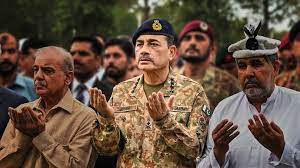
In the volatile aftermath of the May 2025 border conflict with India, Pakistan’s Chief of Army Staff, General Syed Asim Munir, elevated himself to Field Marshal. Amid economic malaise, political fragmentation, and heightened Indo-Pak tensions, Munir seized the crisis to present himself as the defender of Pakistan’s Islamic identity, echoing the authoritarian legacies of Generals Ayub Khan and Zia-ul-Haq. Munir has become the central figure in Pakistan’s governance, overshadowing the Prime Minister and the judiciary in decision-making.


Munir’s worldview blends military strategy with Islamic theology, reminiscent of General Zia-ul-Haq’s Islamisation policies in the 1970s and 1980s. He overtly infuses religious ideology into military affairs. In a speech to a grand jirga in Peshawar, Munir explicitly stated that the Pakistan Army operates under the principles of “imaan, taqwa, and jihad fi sabeelillah”, the Arabic phrase translates to “Faith, Piety, and Struggle in the path of God”.  Although these are core concepts in Islam, the phrase has been adopted as the official motto of the Pakistani Army. These statements are more in line with militant organisations than modern militaries. Munir’s rhetoric has emboldened radical groups and blurred the line between conventional military operations and religious militancy.


This “Munir Doctrine,” a hardline military and ideological framework, has redefined Pakistan’s strategic posture.  The doctrine signifies a regressive shift away from the geo-economic pragmatism of Munir’s predecessor, General Qamar Javed Bajwa, toward a fusion of religious fervour, proxy warfare, and unyielding military dominance. This regressive and incendiary worldview intensifies longstanding themes in the Pakistan Army’s ethos, positioning it as the guardian of both territorial borders and ideological frontiers.


Core Tenets of Munir Doctrine


Emphasis on Religious Ideology. At its heart, the doctrine invokes a narrow interpretation of the Two-Nation Theory, portraying India as an existential threat to Pakistan’s Islamic identity. Munir elevates religious scholars and clerics to influential roles, fusing military command with faith-based justification, a “militarisation of faith” that narrows pluralism. Speeches brim with symbolism, recasting soldiers as “martyrs of the faith” in state media and school curricula infused with jihadist vignettes. This exclusivist stance, critics argue, echoes Zia’s Islamisation but with 21st-century tools like fatwas endorsing preemption.


Shift from Geo-Economics to Jihadism. Reversing Bajwa’s focus on trade corridors, pragmatic diplomacy, and Gulf investments, Munir decries “economic surrender” as a “Zionist-Indian ploy.” A leaked June 2025 memo to corps commanders revives proxy warfare. At a Lahore rally, he quipped, “Jihad feeds the soul; dollars feed the enemy.” He has been redirecting external aid to madrasa expansions, border fortifications, and drone upgrades.


Military Dominance. Exploiting external threats, the doctrine justifies deeper military intervention in governance. Some of the enhancements to the military power include the reinstatement of military trials for civilians (the Pakistan Army Act permits the prosecution of civilians in military courts) and the expansion of preventive detention powers (military and civil armed forces can detain terror suspects for up to 3 months without charge).


Political Consolidation. Recent developments have increased the military’s influence over governance in Pakistan. This has been achieved through political manoeuvring and the erosion of democratic institutions. Military leaders have historically exerted control over key policies (including foreign policy) by manipulating civilian governments with the notion of “ideological threats” to justify their interventions in political and judicial affairs.

Aggressive Posture toward India. Asim Munir has adopted an aggressive posture toward India through provocative rhetoric and support to terrorist organisations. His fiery, inciting speeches are a testament to explicit brinkmanship against India.


Harsh Measures against Opposition. Munir’s repression mirrors Zia’s tactics. Opposition leaders like Imran Khan face sedition from Adiala jail. Women’s groups report a surge in honour killings, excused as “faith preservation.” Media is muzzled with shuttered outlets for “defeatist” coverage, weaponising “ideological purity” to delegitimise critics as “enemies of Islam” or Indian agents.


Analytical Perspective


Comparisons with Past Doctrines. The Munir Doctrine evokes General Zia-ul-Haq’s 1980s Islamisation, which used religion to legitimise authoritarianism and arm the Afghan mujahideen. Like Zia, Munir blends barracks and belief, but his explicit nuclear threats and economic abandonment heightens the peril. Unlike Ayub Khan or Pervez Musharraf, who balanced ideology with modernisation, Munir prioritises perpetual conflict to entrench military authority, risking the collapse of a fragile state under the weight of its own dogma.


Implications for Pakistan. The Munir Doctrine, with its emphasis on ideological militancy over pragmatic reform, is steering Pakistan into treacherous waters, exacerbating its already dire economic, social, and political crises. By prioritising religious fervour and military dominance, Field Marshal Asim Munir risks threatening its stability. IMF negotiations, critical for averting default, have stalled due to what analysts call “militarised budgeting”. Foreign reserves cannot sustain imports, while remittances are plummeting.


Radicalisation. The situation in Pakistan is compounded by social polarisation. The doctrine’s appeal prioritising Islamic identity delivers short-term unity by rallying the pious middle class and rural heartlands around a narrative of “faith under siege.” However, it masks a dangerous long-term trend, the radicalisation of public discourse and the marginalisation of moderate voices. By weaponising “ideological purity,” the military alienates secular intellectuals, urban professionals, and minority communities, pushing them to the fringes.


Regional Consequences. Regionally, the Munir Doctrine’s revival of proxy warfare inflames tensions in Kashmir and Afghanistan, destabilising South Asia. Renewed support for militant groups like Lashkar-e-Taiba, evidenced by a spike in arms flows, would escalate cross-border violence with India. In Afghanistan, Pakistan’s interference strains ties with the Taliban, once proxies but now rivals in jihadist branding, risking spillover into China’s Xinjiang region, where Uighur militancy could threaten Beijing’s interests. This jeopardises fears of a broader regional conflagration.


Conclusion

The Munir Doctrine marks a profoundly regressive turn, elevating jihadist statecraft, authoritarian control, and aggression toward India. While consolidating short-term power, it risks economic despair, isolation, and regional catastrophe. The Munir Doctrine, whether it forges a fortress or a funeral for Pakistan, remains South Asia’s most perilous risk.


Bottom Line

Stay Alert, Keep a lookout, Be ready and Keep the powder dry.


Please Add Value to the write-up with your views on the subject.


1878
Default rating

Please give a thumbs up if you  like The Post?


For regular updates, please register your email here:-

Subscribe


References and credits

To all the online sites and channels.

Pics Courtesy: Internet

Disclaimer:

Information and data included in the blog are for educational & non-commercial purposes only and have been carefully adapted, excerpted, or edited from reliable and accurate sources. All copyrighted material belongs to respective owners and is provided only for wider dissemination.


References:-

 Pande, Aparna. “Munir’s Dangerous Doctrine.” Observer Research Foundation, May 16, 2025.


  1. Shah, Aqil. “Pakistan’s Military and Foreign Policy under Gen. Asim Munir.” Middle East Institute, 2023.


  1. Bisaria, Ajay. “Asim Munir, Pakistan’s ‘Hafiz-e-Quran’ Army Chief Who Aimed for the Jugular Days Before Pahalgam.” The Print, May 20, 2025.


  1. Haqqani, Husain. “Munir’s Mad, Bad Doctrine.” The Times of India, May 8, 2025.


  1. Rizvi, Hasan-Askari. “The Asim Munir Doctrine: Redefining Civil-Military Dynamics in Pakistan.” Foreign Affairs Forum, June 1, 2025.


  1. Jalal, Ayesha. The State of Martial Rule: The Origins of Pakistan’s Political Economy of Defence. Cambridge: Cambridge University Press, 1990.


  1. Shaikh, Farzana. Making Sense of Pakistan. New York: Columbia University Press, 2009.


  1. Tankel, Stephen. “The Supporting Structures for Pakistan’s Proxy War in Jammu & Kashmir.” Strategic Analysis 25, no. 6 (2001): 769–788.


  1. Ganguly, Sumit. “Proxy War in Jammu & Kashmir: Jehad or State-Sponsored Terrorism?” Strategic Analysis 23, no. 10 (2000): 1693–1713.


  1. Paul, T. V. “Why Pakistan’s Proxy War Will Now Intensify.” The Tribune, May 8, 2020 (updated 2025 context).


  1. Husain, Ishrat. “Rescuing Pakistan’s Economy.” Atlantic Council, April 8, 2025.
  2. Cloughley, Brian. A History of the Pakistan Army: Wars and Insurrections. 5th ed. Oxford: Oxford University Press, 2016.


  1. Nawaz, Shuja. Crossed Swords: Pakistan, Its Army, and the Wars Within. New York: Oxford University Press, 2008.


  1. Cohen, Stephen P. The Idea of Pakistan. Washington, DC: Brookings Institution Press, 2004.


671: OP SINDOOR: PAKISTAN’S BACKWARDS MARCH – LED BY THE GENERALS, PAID FOR BY THE PEOPLE


My article published on the IIRF  and  “Life of Soldier” website on 08 May 25.


“While most nations have an army, in Pakistan, the army has a nation.”

— Widely cited in analyses of Pakistan’s civil-military ties


Pakistan, a nation born from the aspirations of a free and prosperous Muslim homeland, finds itself trapped in a cycle of stagnation and regression. The title “Pakistan’s Backwards March” encapsulates a grim reality: a country with immense potential is being held hostage by its power structures, particularly the omnipresent influence of its military establishment. Led by the generals, this march backwards is a betrayal of the nation’s founding ideals and a burden borne disproportionately by its people. Understanding the historical and contemporary dynamics of military dominance reveals that Pakistan’s elusive path toward a more democratic and equitable future can only be charted by its citizens. However, the time for this charting is not just now, but now or never.


The Generals’ Grip: A Historical Perspective

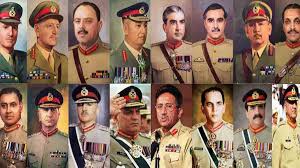
Since its inception in 1947, Pakistan’s military has positioned itself as the ultimate arbiter of the nation’s destiny. The country’s early years were marked by political instability, with weak civilian governments unable to consolidate power. This vacuum allowed the military to subtly and overtly step in as the self-proclaimed guardian of national interests. The first military coup in 1958, led by General Ayub Khan, set a precedent that still haunts Pakistan. Subsequent coups under Yahya Khan, Zia-ul-Haq, and Pervez Musharraf entrenched the military’s role as the dominant force in politics.

The military’s justification for its interventions has often been cloaked in the rhetoric of stability and security. Pakistan’s volatile geopolitical environment has been cited as a reason for the need for a strong, centralised authority. The Kashmir conflict, the Soviet invasion of Afghanistan, and the post-9/11 war on terror further amplified the military’s influence, as it positioned itself as the bulwark against external and internal threats. However, this narrative conveniently obscures the military’s role in perpetuating instability to maintain its grip on power.

The military’s dominance is not merely political; it extends into the nation’s economic and social fabric. Through sprawling business empires like the Fauji Foundation and the Army Welfare Trust, the military controls vast sectors of the economy, from agriculture to real estate. These enterprises, often tax-exempt, operate with little transparency, siphoning resources that could otherwise fund public services. Meanwhile, the military’s influence over media and civil society stifles dissent, ensuring its narrative remains unchallenged.


The People’s Burden: Economic and Social Costs

 The consequences of this military-led governance model are borne by Pakistan’s 240 million citizens, who face a litany of challenges exacerbated by the generals’ priorities. The economy, perpetually on the brink, is a stark reflection of mismanagement and skewed resource allocation. Pakistan’s GDP growth has lagged behind its South Asian neighbours, averaging around 3-4% annually over the past decade, compared to India’s 6-7%. Public debt has skyrocketed, with external debt surpassing $130 billion in 2024, driven by loans from the IMF and bilateral creditors like China. This economic burden is not just a statistic, but a daily struggle for the people.

The military’s outsized budget is a significant drain on national resources. In 2023, defence spending accounted for roughly 4% of GDP, dwarfing allocations for education (1.7%) and healthcare (1.4%). While the military justifies its budget by citing security threats, the lack of transparency raises questions about how these funds are used. Meanwhile, ordinary Pakistanis grapple with inflation rates hovering around 10-12%, unemployment affecting nearly 10% of the workforce, and a poverty rate that leaves over 40% of the population below the international poverty line.

Socially, likewise, the military’s dominance has stifled democratic institutions and civil liberties. The judiciary struggles to uphold the rule of law, often cowed by military pressure. Political parties, while complicit in their failures, are frequently manipulated or sidelined through engineered elections or disqualifications. The 2018 elections, widely criticised for military interference, saw the rise of Imran Khan’s PTI, only for Khan to later fall out with the establishment, leading to his ouster in 2022 and subsequent imprisonment. This cycle of co-optation and discardment undermines democratic continuity and public trust.

Once a vibrant space for debate, the media now operates under severe constraints. Journalists face harassment, censorship, and even violence for criticising the military. Social media platforms, while offering some resistance, are increasingly monitored, with laws like the Prevention of Electronic Crimes Act used to silence dissent. Civil society organisations, too, face restrictions, leaving little room for grassroots movements to challenge the status quo.

Education and healthcare, critical for human development, remain woefully underfunded. Pakistan’s literacy rate hovers around 60%, and its public schools are plagued by dilapidated infrastructure and teacher shortages. Strained by population growth and inadequate facilities, the healthcare system leaves millions without access to basic care. These failures are not merely administrative; they reflect a deliberate prioritisation of military interests over human welfare.


The Vicious Cycle: Instability and Dependency

 The military’s dominance creates a vicious cycle of instability and dependency. By undermining civilian institutions, the generals ensure that no alternative power center can emerge, perpetuating their indispensability. This weakens governance, leading to economic crises that necessitate foreign bailouts. The IMF’s repeated interventions (Pakistan has availed itself of 23 IMF programs since 1958) come with austerity measures that hit the poor hardest, further fuelling discontent.

Foreign policy, too, is shaped by military priorities, often at the expense of national interests. Pakistan’s alignment with the U.S. during the Cold War and the war on terror brought billions in aid but also drew the country into conflicts that destabilised its northwest. While promising infrastructure development, the China-Pakistan Economic Corridor (CPEC) has deepened Pakistan’s debt to China, with opaque agreements raising concerns about sovereignty. The military’s control over foreign policy limits diplomatic flexibility, as seen in Pakistan’s strained relations with India and its delicate balancing act between the U.S. and China.

Internally, the military’s counterterrorism operations, while necessary, have often been heavy-handed, alienating communities in regions like Balochistan and Khyber Pakhtunkhwa. The Baloch insurgency, fuelled by economic marginalisation and human rights abuses, is a case in point. Forced disappearances and extrajudicial killings, attributed to security forces, have deepened mistrust, making reconciliation elusive.


A Path Forward: Reclaiming Pakistan’s Future

 Breaking the backwards march of Pakistan requires a fundamental reorientation of its entrenched power dynamics. For decades, the military establishment has held disproportionate sway over national policy, foreign relations, and even economic priorities, often at the expense of democratic development and civilian governance. This imbalance has fostered instability, weakened institutions, and stifled public dissent. To move forward, the people of Pakistan must reclaim their agency and demand accountability from both military and civilian leaders. This means bolstering civil society, protecting press freedom, and empowering grassroots democratic movements. Actual progress will not come from external aid or authoritarian “stability,” but from an engaged citizenry that insists on transparency, the rule of law, and genuine representation. Reclaiming power from entrenched elites will be difficult. Still, it is the only path toward a more equitable, prosperous, and sovereign Pakistan—one where the state serves its citizens, not the other way around.

The first step would be strengthening civilian institutions. A robust judiciary, free from military influence, is essential for upholding the rule of law. Political parties must prioritise internal democracy and governance reforms over short-term alliances with the military. Civil society, including media and NGOs, needs space to operate without fear, fostering a culture of accountability.

Economically, reallocating resources from defence to development is critical. Investing in education and healthcare can unlock Pakistan’s human potential, creating a more skilled and productive workforce. Economic diversification, beyond reliance on agriculture and textiles, is also necessary to reduce vulnerability to global shocks.

Foreign policy must be wrested from military control and aligned with national interests. Normalising relations with India, particularly through trade, could unlock economic benefits for both nations. A balanced approach to global powers, avoiding over-dependence on any single ally, would enhance Pakistan’s sovereignty and diplomatic leverage.


Conclusion

 Pakistan’s backwards march, orchestrated by its generals, is a tragedy of squandered potential. The military’s dominance has enriched a small elite while impoverishing the masses economically and democratically. Yet, the resilience of Pakistan’s people offers hope. Pakistan can reverse its trajectory by empowering civilian institutions, prioritising human development, and fostering a culture of accountability. The path is fraught with challenges, but the alternative of continued regression is unthinkable. The generals may lead the march, but it is the people who pay the price, and it is they who must ultimately chart a new course.


Breaking this backwards march requires a fundamental reorientation of Pakistan’s power dynamics. Most importantly, the people must reclaim their agency. The time to act is now, for Pakistan’s future is in the hands of its people.


Please Add Value to the write-up with your views on the subject.

1878
Default rating

Please give a thumbs up if you  like The Post?


For regular updates, please register your email here:-

Subscribe


References and credits

To all the online sites and channels.

Pics Courtesy: Internet

Disclaimer:

Information and data included in the blog are for educational & non-commercial purposes only and have been carefully adapted, excerpted, or edited from reliable and accurate sources. All copyrighted material belongs to respective owners and is provided only for wider dissemination.


References:

1. Haqqani, H. (2005). Pakistan: Between Mosque and Military. Carnegie Endowment for International Peace.

2. Siddiqa, A. (2007). Military Inc.: Inside Pakistan’s Military Economy. Pluto Press.

3. Cohen, S. P. (2004). The Idea of Pakistan. Brookings Institution Press.

4. Jalal, A. (1990). The State of Martial Rule: The Origins of Pakistan’s Political Economy of Defence. Cambridge University Press.

5. World Bank. (2024). Pakistan Economic Update 2024. World Bank Group.https://www.worldbank.org/en/country/pakistan/publication/pakistan-economic-update

6. International Monetary Fund (IMF). (2023). Pakistan: Staff Report for the 2023 Article IV Consultation. IMF.

7. Pakistan Bureau of Statistics. (2023). Pakistan Economic Survey 2022-23. Government of Pakistan.

8. Freedom House. (2023). Freedom in the World 2023: Pakistan. Freedom House.

9. Rizvi, H. A. (2000). Military, State and Society in Pakistan. Palgrave Macmillan.

10. Small, A. (2015). The China-Pakistan Axis: Asia’s New Geopolitics. Oxford University Press.

11. Lieven, A. (2011). Pakistan: A Hard Country. PublicAffairs.

12. Malik, I. H. (2016). Pakistan: Democracy, Development, and Security Issues. Oxford University Press.

13. Ahmed, Z. S. (2013). Civil Society and Democracy in Pakistan. Routledge.

14. The Economist. (2023). Pakistan’s Political Crisis: The Military’s Long Shadow. The Economist.

English हिंदी