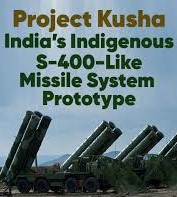
731: AIR SUPERIORITY AND SEAD/DEAD OPERATIONS: EVOLUTION, TECHNOLOGIES, AND STRATEGIC IMPORTANCE


Presented my views on the subject (corelating it to you context) at a seminar in Leh on 26 Aug 25.


Air superiority, the ability to control the airspace over a battlefield, is essential to modern military strategy. It allows for unrestricted air operations, supports joint force manoeuvres, facilitates deep strike campaigns, and strengthens deterrence against opponents. Achieving and maintaining air superiority relies heavily on Suppression of Enemy Air Defences (SEAD) and Destruction of Enemy Air Defences (DEAD). These crucial techniques have evolved from basic tactics during the World Wars to complex, multi-domain operations in modern conflicts. This article discusses the strategic importance of air superiority, outlines the historical development of SEAD and DEAD, examines key concepts and technologies, and looks at their role in contemporary air campaign planning and joint force doctrine.


Air Superiority: A Strategic Importance 

Air superiority allows friendly forces the freedom to conduct air operations while denying that capability to the enemy. Its strategic value lies in its enabling role in multiple areas of warfare: 

Unrestricted Aerial Operations. Control of the air lets aircraft carry out reconnaissance, close air support, intelligence, surveillance, reconnaissance, and precision strikes with little risk from enemy air defences or fighters. This freedom is vital for maintaining operational pace and reaching mission objectives. 

Joint Force Operations. Air superiority protects ground and naval forces from enemy air attacks, allowing freedom of movement. It also provides real-time intelligence, improving awareness across the joint force. 

Deep Strike Campaigns. Dominating the air enables strikes against key targets deep within enemy territory, such as command and control nodes, logistics centers, or infrastructure. These operations disrupt the enemy’s ability to conduct combat operations. 

  1. Ensuring Deterrence. Having credible air superiority helps deter adversaries by showcasing the ability to neutralise their air defences and project power effectively. This can prevent conflicts by signalling a strong military presence.

Historical examples highlight the significance of air superiority. During World War II, the Allies’ air control over Normandy contributed to the success of D-Day. In the 1991 Gulf War, coalition forces quickly achieved air superiority, effectively crippling Iraq’s capacity to resist. In current conflicts, such as those in Iraq, Syria, and Ukraine, air superiority has been crucial for enabling precision strikes, protecting ground forces, and maintaining supply lines. Without air superiority, joint operations are at greater risk, and deep strikes or deterrent efforts become less effective.


The Origin and Evolution of SEAD: Concepts and Technologies 

The roots of SEAD can be traced back to the World Wars, when early air defences, mainly anti-aircraft artillery, posed serious threats to air operations. SEAD has since developed into a complex, multi-domain discipline in response to more sophisticated integrated air defence systems. 

World Wars I and II (1914–1945). In World War I, air defences were limited to anti-aircraft artillery and small arms. Efforts to suppress enemy defences involved strafing gun placements or avoiding known threats. Air superiority was mostly achieved through air-to-air combat. By World War II, the introduction of radar-guided anti-aircraft artillery necessitated focused SEAD tactics. Allied forces undertook “Flak Neutralisation Missions,” using bombers or fighters to suppress anti-aircraft guns with bombs, rockets, or machine guns. These missions depended on visual targeting and massive formations, using electronic countermeasures like chaff to disrupt radar. They carried high risks due to limited precision and awareness, depending heavily on pilot skill and overwhelming force.  The development of radar jamming technology was another significant step. The British, for instance, deployed the “Window” system, which involved dropping strips of aluminium foil to confuse enemy radar systems. These early efforts laid the foundation for the sophisticated SEAD tactics employed in later conflicts.

Cold War and Vietnam War (1950s–1970s). The Korean War introduced jet aircraft, but did not see significant advancements in SEAD due to less sophisticated air defences. However, the Vietnam War marked a turning point. North Vietnam deployed a vast network of radar-guided surface-to-air missiles, particularly the Soviet SA-2, which posed a new threat to U.S. air operations. This spurred the development of the “Wild Weasel” program, where aircraft like the F-100F, F-105G, and later F-4G featured radar warning receivers and electronic warfare systems to locate and destroy missile sites. These high-risk missions involved luring missile radars to emit signals, then attacking with bombs or early anti-radiation missiles. The F-4G and later F-16CJ integrated advanced electronic warfare systems and anti-radiation missiles, raising effectiveness. This “find-fix-finish” method greatly reduced missile threats and improved survival for strike missions. 

Post-Vietnam to Gulf War (1980s–1991). SEAD doctrine progressed during the Cold War as enemy integrated air defence systems grew more advanced. Anti-Radiation Missiles became vital to SEAD, evolving from the basic AGM-45 Shrike to the AGM-88 HARM, which offered better speed, range, and targeting. The AGM-88E Advanced Anti-Radiation Guided Missile features improved seekers and network-enabled targeting, allowing it to hit radars even if they shut down. 

SEAD / DEAD Campaign. During Operation Desert Storm, coalition forces launched a thorough SEAD-DEAD campaign, using stealth aircraft, stand-off weapons, electronic jamming platforms, and anti-radiation missiles to dismantle Iraq’s integrated air defence systems in a matter of hours, establishing a model for future operations.


Modern Conflicts (2000s–Present). Today, SEAD counters advanced integrated air defence systems, such as Russia’s S-400 or China’s HQ-9, which feature layered defences. Actions in Iraq, Syria, and Ukraine show how stealth aircraft, drones, and loitering munitions are used to disrupt enemy defences. SEAD is now a multi-domain effort, leveraging air, space, cyber, and ground capabilities to tackle mobile and electronic warfare-resistant air defence systems.

    • Stealth. Stealth aircraft like the F-117 Nighthawk, F-22 Raptor, and F-35 Lightning II minimise radar visibility, enabling them to penetrate heavily defended airspace.
    • EW. Modern SEAD (suppression of Enemy Air Defences) also fundamentally depends on electronic warfare (EW) techniques. Jamming and spoofing adversary radar systems have evolved to become more sophisticated, employing advanced electronic countermeasures to effectively disrupt and deceive enemy defences. Advanced electronic warfare systems are capable of jamming or confusing enemy radars. Dedicated electronic warfare aircraft provide jamming support, effectively blinding enemy radars and communication systems.
    • Drones and Loitering Munitions. Unmanned Aerial Vehicles have transformed SEAD. Drones like the MQ-9 Reaper provide intelligence gathering and strike capabilities, while loitering munitions offer low-cost, ongoing threats. These systems can saturate air defences, overwhelm operators, or strike urgent targets, improving safety for human pilots.
    • Cyber and Electronic Attack Cooperation. Cyber warfare is becoming central to SEAD, disrupting or damaging air defence networks, making it harder for adversaries to coordinate, and misleading sensors. When combined with electronic warfare and kinetic strikes, these methods create a layered suppression strategy that prevents opponents from effectively contesting airspace.


Integration into Air Campaign Planning and Joint Force Doctrine

SEAD has evolved from a specialised air force task to a key part of joint operations across various domains. Its incorporation into air campaign planning and joint doctrine shows its strategic value: 

Air Campaign Planning. SEAD is prioritised during the initial stages of air campaigns to neutralise integrated air defence systems, creating a safe environment for subsequent strikes. In Operation Desert Storm, SEAD operations dismantled Iraq’s radar network, yielding air dominance for coalition forces. Modern campaigns combine SEAD with offensive counter-air and defensive counter-air efforts to gain air superiority, coordinating fixed-wing fighters, electronic warfare aircraft, drones, and ground-based assets. 

Joint Force Doctrine. SEAD has to be embedded in doctrines. It requires coordination across air, land, sea, space, and cyber domains. Aspects related to Joint tactics standardise collaborative efforts, enabling centralised planning and decentralised execution for greater agility have to be highlighted.

Network-Centric SEAD. The shift to network-centric warfare has changed SEAD into a multi-platform and multi-domain effort. Real-time data sharing enables quick target detection, identification, and engagement. For instance, an F-35 can find a radar, share its location with an F-16CJ or EA-18G Growler, and guide a missile to the target. Space-based intelligence gathering and cyber operations enhance targeting precision, while new technologies like hypersonic missiles and directed-energy weapons are being tested to counter advanced air defences.

Multi-Platform Coordination. Modern SEAD combines stealth fighters, electronic warfare aircraft, drones, and ground systems. The new doctrine of Manned-Unmanned Teaming boosts SEAD effectiveness by pairing human pilots’ flexibility with drones’ endurance and expendability. Platforms like the F-35 act as “quarterbacks,” working with legacy fighters, drones, and cyber assets to suppress enemy defences.


SEAD as a Strategic Deterrence Tool 

Beyond its tactical and operational functions, SEAD is key to strategic deterrence. The ability to suppress and destroy enemy air defences imposes significant psychological and operational costs on adversaries, undermining their anti-access strategies. By showcasing the ability to breach defended airspace and threaten vital targets, SEAD strengthens deterrent postures, especially in regions with sophisticated air defence systems like the Indo-Pacific and Eastern Europe. This capability ensures freedom of movement in high-stakes conflicts, contributing to strategic stability.


Future Trends in SEAD Operations 

The ongoing evolution of SEAD will rely more on autonomy, artificial intelligence, and multi-domain operations. Autonomous platforms with advanced sensors and decision-making abilities will support manned systems, lowering risks and boosting endurance over contested areas. AI-enhanced loitering munitions will improve target identification and strikes, speeding up responses to mobile threats. 

Integration with space-based intelligence gathering and cyber warfare will further weaken enemy air defences. Hypersonic weapons, directed-energy systems, and advanced electronic warfare capabilities will tackle next-generation integrated air defence systems, ensuring low visibility and network functionality. SEAD will increasingly be a comprehensive warfare effort, coordinated in real time across global defence networks.


Conclusion 

Air superiority remains a critical requirement, enabling unrestricted operations, joint force collaboration, deep strikes, and deterrence. SEAD and DEAD have evolved from basic flak suppression in World War II to complex, network-based practices driven by innovations like the Wild Weasel program, anti-radiation missiles, stealth aircraft, drones, and cyber warfare. Their incorporation into air campaign planning and joint doctrine highlights their role as force multipliers. As enemy air defences become more complex, SEAD will continue to adapt, using multi-domain capabilities to secure air dominance in future conflicts. The success of future operations depends on advancing SEAD capabilities to ensure the freedom, flexibility, and strength that characterise modern military power projection.


Please Add Value to the write-up with your views on the subject.


1878
Default rating

Please give a thumbs up if you  like The Post?


For regular updates, please register your email here:-

Subscribe


References and credits

To all the online sites and channels.

Pics Courtesy: Internet

Disclaimer:

Information and data included in the blog are for educational & non-commercial purposes only and have been carefully adapted, excerpted, or edited from reliable and accurate sources. All copyrighted material belongs to respective owners and is provided only for wider dissemination.


References:-


  1. Air superiority: What the wars in the Middle East and Ukraine can teach Europeans about NATO readiness. (2025). European Council on Foreign Relations.


  1. Doctrine of the Indian Air Force. (2023). Indian Air Force.


  1. Finding, fixing, and finishing the guideline: The development of SEAD. (n.d.). Defense Technical Information Center.


  1. Hewitt, T. (2017). Planting the seeds of SEAD: The Wild Weasel in Vietnam. Air University.


  1. Johnson, D. E. (2014). The challenges of the “Anti-Access/Area Denial” (A2/AD) environment. RAND Corporation.


  1. Joint Publication 3-01.4: Joint tactics, techniques, and procedures for joint suppression of enemy air defences (J-SEAD). (n.d.). Defense Technical Information Center.


  1. Peck, G. (2023, March 15). The rise of loitering munitions in modern SEAD operations. Defence News.


  1. Price, A. (2017). The history of U.S. Wild Weasels: Suppression of enemy air defences (SEAD) from Vietnam to the Gulf War. Air Power Review, 20(3), 22–35.


  1. Putting the “J” in J-SEAD. (n.d.). Defense Technical Information Center.

Rethinking strategic advantages of air supremacy in modern warfare. (n.d.). SciELO.


  1. SEAD operations of the future. (n.d.). Joint Air Power Competence Centre.


  1. Sweetman, B. (2015). SEAD operations in the 21st century: An integrated approach to air defence suppression. Jane’s Defence Weekly, 52(4), 42–49.


  1. The evolution of SEAD: From World War II to modern warfare. (n.d.). SchoolTube.


  1. U.S. Air Force. (1990). The Wild Weasel mission: A history of SEAD operations. Air Force Historical Research Agency.


  1. U.S. Marine Corps. (n.d.). MCWP 3-22.2: Suppression of enemy air defences. U.S. Marine Corps.
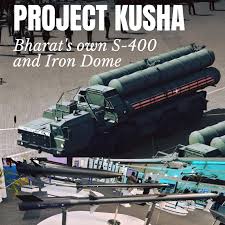


678: PROJECT KUSHA: INDIA’S INDIGENOUS SKY SHIELD


My Article published on “The EurasianTimes” website on 10 Jun 25.


On June 8, 2025, the Defence Research and Development Organisation (DRDO) chief announced that Project Kusha is equivalent to Russia’s S-500 and surpasses the S-400 in capabilities. This positions it as a “game-changer” for India’s air defence. It is designed to counter stealth jets, drones, aircraft, and Mach 7 anti-ship ballistic missiles with an 80–90% interception success rate.

Project Kusha is an ambitious Indigenous long-range air defence system being developed by the DRDO. It is also known as the Extended Range Air Defence System (ERADS) or Precision-Guided Long-Range Surface-to-Air Missile (PGLRSAM). Project Kusha bridges the gap between the 80 km MR-SAM and 400 km S-400, integrating with systems like Akash and Barak-8.

It is a critical part of India’s self-reliance initiative, “Atmanirbhar Bharat”.  The home-grown solution aims to safeguard India’s airspace from aerial threats by strengthening defences against regional threats, particularly from Pakistan and China. The project has gained attention after the May 2025 India-Pakistan conflict, where air defence systems proved vital against drones and missiles, underscoring the need for indigenous capabilities like Kusha. With a projected deployment timeline of 2028–2029, this system is poised to enhance the operational readiness of the Indian Air Force (IAF) and Indian Navy.


System Specifications

Interceptor Missiles. Project Kusha’s core strength lies in its three-tiered interceptor missile system, designed to neutralise various aerial threats at varying ranges. The M1 Interceptor (150 km) missile would target threats like fighter jets, drones, and cruise missiles at shorter ranges. Its compact 250 mm diameter kill vehicle, equipped with a dual-pulse solid rocket motor and thrust vector control, ensures high manoeuvrability and precision, making it ideal for tactical engagements. The M2 Interceptor (250 km) missile with an extended range can engage advanced targets, including airborne early warning and control systems (AEW&CS) and anti-ship ballistic missiles (ASBMs). It shares the M1’s 250 mm kill vehicle, optimised for agility and accuracy against mid-range threats. The M3 Interceptor (350–400 km), the longest-range missile in the system, is designed to counter larger aircraft and potentially short- and medium-range ballistic missiles (SRBMs and IRBMs). It may feature a larger 450 mm diameter kill vehicle to achieve its extended range and enhanced lethality.

Capabilities. These interceptors boast an impressive single-shot kill probability of 85%, which rises to 98.5% when two missiles are launched in salvo mode, five seconds apart. The missiles likely employ hit-to-kill (HTK) technology, relying on kinetic energy rather than explosive warheads, similar to advanced systems like the US THAAD or SM-3. Dual-seeker technology, combining radar and infrared guidance, enhances their ability to track and destroy low-radar-signature targets, such as stealth aircraft and cruise missiles.

Advanced Radar Systems. The effectiveness of Project Kusha hinges on its state-of-the-art radar systems, particularly the Long Range Battle Management Radar (LRBMR), an S-band radar with a detection range exceeding 500 km. This radar can scan 500–600 km into enemy territory, providing early warning against stealth aircraft, drones, precision-guided munitions, and ballistic missiles. The system integrates seamlessly with India’s Integrated Air Command and Control System (IACCS), enabling real-time coordination with other air defence systems, including Akash, MRSAM, and the S-400. For naval applications, the Indian Navy is developing a 6×6-meter radar for its Next Generation Destroyer, four times larger than the radar on the Visakhapatnam-class destroyer, to detect sea-skimming missiles and ASBMs with ranges up to 1,000 km.

Multi-Layered Defence Architecture. Project Kusha is designed as a multi-layered air defence system. It provides strategic and tactical cover for critical infrastructure, military bases, and urban centers. The system’s versatility allows it to counter various threats, from low-flying cruise missiles to high-altitude aircraft and limited ballistic missile threats. By integrating with India’s Ballistic Missile Defence (BMD) program, including the AD-1 and AD-2 interceptors, Project Kusha forms a robust shield against both conventional and strategic threats.

Technological Innovations. Project Kusha incorporates cutting-edge technologies to ensure operational superiority:-

    • AI-Enabled Decision Support. The system may leverage artificial intelligence to coordinate intercepts, process real-time data from satellites, radars, AWACS, and UAVs, and optimise target engagement.
    • Dual-Seeker Technology. Combining radar and infrared seekers enhances the system’s ability to track and destroy stealthy or low-observable targets.
    • Compact Design. The M1 and M2 interceptors’ 250 mm diameter kill vehicles are notably smaller than comparable systems like the US SM-2 or SM-6, showcasing DRDO’s innovative approach to missile design.


Comparison with Global Systems


S-400 Triumf (Russia). The S-400 can engage 36 targets simultaneously at a range of 400 km. Project Kusha aims to match this range with its M3 interceptor and offers better integration with India’s defence architecture, reducing reliance on foreign maintenance and support.

Patriot (USA). While the Patriot is a proven system, Kusha’s lower cost and indigenous design provide a tailored alternative for India’s needs, with potential for greater scalability.

David’s Sling and Iron Dome (Israel). Although similar in some aspects, such as dual-seeker technology, Kusha’s M2 and M3 missiles offer longer ranges and limited BMD capabilities, unlike David’s Sling’s focus on shorter-range threats. The Iron Dome is optimised for short-range rocket interception, while Kusha targets long-range strategic threats, making it more comparable to the S-400 or Patriot.


Project Details & Development Journey

Approval and Funding. In May 2022, the Cabinet Committee on Security (CCS) approved the development of Project Kusha. In September 2023, the Ministry of Defence granted the Acceptance of Necessity (AoN) for procuring five IAF squadrons at an estimated cost of ₹21,700 crore (approximately US$2.6 billion). This investment reflects India’s commitment to building a self-reliant defence ecosystem that addresses modern threats.

Key Partners. The DRDO is leading the Project Kusha, with Bharat Electronics Limited (BEL) playing a pivotal role in developing critical subsystems like radars and battle management systems. The Defence Research and Development Laboratory (DRDL) is responsible for designing the interceptor missiles, while the Research Centre Imarat (RCI) focuses on advanced seeker technology. Collaboration with private industry partners is expected to accelerate development and production, aligning with India’s push for public-private partnerships in defence.

Timeline. As of May 2025, the DRDO has reportedly completed the design phase, with development of critical components underway. BEL aims to complete a prototype within 12–18 months (by November 2026–May 2027). The user trials are expected to last 12–36 months, paving the way for operational deployment by 2028–2029.


Strategic Significance

Self-Reliance and Cost-Effectiveness. Project Kusha is a cornerstone of India’s Atmanirbhar Bharat initiative, reducing dependence on foreign systems like the S-400, which faced delivery delays due to the Russia-Ukraine conflict. At ₹21,700 crore for five IAF squadrons, it is significantly more cost-effective than the $5.25 billion deal for five S-400 units, offering comparable capabilities tailored to India’s operational needs. This cost advantage enhances India’s ability to scale its air defence infrastructure without straining its defence budget.

Regional Deterrence.  With China and Pakistan modernising their air forces and missile arsenals, Project Kusha strengthens India’s deterrence posture. Its ability to counter stealth aircraft, cruise missiles, and ASBMs addresses emerging threats in the Indo-Pacific, particularly China’s growing naval and missile capabilities. The system’s integration with the IACCS ensures a cohesive defence network, enabling rapid response to multi-domain threats and enhancing India’s strategic autonomy.

Export Potential. Project Kusha’s advanced technology and competitive pricing position India as a potential global air defence market player. Countries seeking alternatives to Western and Russian systems may find Kusha attractive, boosting India’s defence exports and geopolitical influence. Success in this arena could elevate India’s status as a defence technology provider, complementing its exports like the BrahMos missile.


Challenges and Considerations

Technical Challenges. Achieving the claimed ranges with compact interceptors, particularly the 150 km M1, has raised scepticism due to its small size compared to US SM-2 or SM-6 systems. Ensuring reliability and accuracy against stealthy and hypersonic threats will require rigorous testing and validation.

Development Timeline. The 2028–2029 deployment target is ambitious, given the complexity of integrating advanced radars, AI systems, and interceptors. Delays in prototype development or user trials could push back operational readiness, as seen in past DRDO projects.

System Integration. Seamless integration with existing systems (Akash, MRSAM, S-400) and future systems (AD-1, AD-2) is essential for a cohesive air defence network. Any interoperability issues could undermine the system’s effectiveness and delay deployment.

International Competition. India will face stiff competition from established players like the US, Russia, and Israel in the global air defence market. Demonstrating technological superiority and reliability will be critical for export success and domestic adoption.


Future Phases

Naval Integration. The Indian Navy plans to deploy the M1 and M2 interceptors on next-generation surface combatants, such as destroyers, to counter ASBMs and other maritime threats. The enhanced naval radar system will provide 360-degree coverage, enabling early detection and interception of sea-skimming missiles. This integration underscores Project Kusha’s role in strengthening India’s maritime security, particularly in the Indo-Pacific region, where threats like China’s DF-21D “carrier-killer” missiles pose significant challenges.

Future Enhancement. Project Kusha is the first phase of a multi-phase program. Phase II aims to develop interceptors with ranges exceeding 400 km and anti-hypersonic capabilities, potentially rivalling Russia’s S-500 system. This long-term vision underscores India’s ambition to remain at the forefront of air defence technology, addressing future threats like hypersonic missiles and advanced stealth platforms.


Conclusion

Project Kusha represents a monumental leap in India’s quest for self-reliance in defence technology. It promises to deliver a versatile, multi-layered air defence shield capable of countering diverse threats by combining advanced interceptors, long-range radars, and AI-driven systems. A cost-effective price tag and a focus on indigenous innovation strengthen India’s strategic autonomy and position the country as a potential leader in the global defence market. However, overcoming technical challenges and meeting the ambitious 2028–2029 timeline will be critical to realising its full potential. As India advances toward operational deployment, Project Kusha is a testament to its growing technological prowess and commitment to safeguarding its skies.


Please Add Value to the write-up with your views on the subject.


1878
Default rating

Please give a thumbs up if you  like The Post?


Link to the article on the website:-

India’s Own S-500 & THAAD! DRDO Announces Project Kusha Sky Shield Program That Could Revolutionize Indian Defenses

For regular updates, please register your email here:-

Subscribe


References and credits

To all the online sites and channels.

Pics Courtesy: Internet

Disclaimer:

Information and data included in the blog are for educational & non-commercial purposes only and have been carefully adapted, excerpted, or edited from reliable and accurate sources. All copyrighted material belongs to respective owners and is provided only for wider dissemination.

References:-

  1. Press Information Bureau (PIB), Government of India, “DRDO Chief Briefs on Indigenous Long-Range Air Defence System ‘Project Kusha’.” PIB Release, June 8, 2025.
  2. Bedi, R. (2023, September 10). India approves indigenous long-range air defence system under Project Kusha—Jane’s Defence Weekly.
  3. Bharat Electronics Limited. (2025, May 15). Annual report 2024–2025: Progress on Project Kusha.
  4. Defence Research and Development Organisation. (2024). DRDO newsletter: Advances in air defence systems.
  5. Gupta, S. (2024, December 12). Project Kusha: India’s answer to the S-400. The Times of India.
  6. Indian Ministry of Defence. (2023, September 15). Acceptance of Necessity (AoN) for Project Kusha. Press Information Bureau.
  7. Sagar, P. (2024, November 20). Project Kusha and India’s multi-layered air defence strategy. The Diplomat.
  8. Singh, R. (2025, March 15). How Project Kusha could transform India’s defence exports. India Today.
  9. The Hindu, “Project Kusha Will Be India’s Answer to S-500, Says DRDO Chief.” The Hindu Defence Correspondent, June 8, 2025.
  10. Hindustan Times, “Explained: What Is Project Kusha and Why It Is a Game-Changer for India’s Air Defence?” Hindustan Times Defence Desk, June 9, 2025.
  11. Economic Times (ET Defence), “DRDO’s Project Kusha: India’s Indigenous Answer to S-400 and THAAD.” ET Defence, May 2025.
  12. Livefist Defence, Shukla, Shiv Aroor. “India’s Kusha Air Defence System: Details, Development and Deployment Plans.” Livefist, June 2025.
  13. Business Standard, “DRDO’s Project Kusha: DRDL, BEL, RCI Key Partners in Long-Range SAM System.” Business Standard Defence, September 2023.
  14. Jane’s Defence Weekly, “India Advances Work on Multi-Layered Air Defence with Project Kusha.” Janes.com, February 2025.
  15. ORF (Observer Research Foundation), Das, Abhijit Iyer-Mitra. “Strategic Implications of India’s Long-Range Air Defence Ambitions.” ORF Occasional Paper, March 2025.
  16. Vayu Aerospace and Defence Review, “Kusha, Akash-NG, and the Future of Indian Air Defence.” Vayu Defence Review, Issue Q2 2025.
  17. South Asia Monitor, “India’s Air Defence Evolution: From Akash to Kusha.” South Asia Monitor, April 2025.

English हिंदी